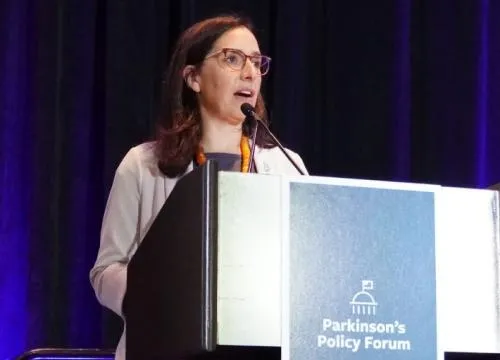
Episode 188: Improving Safety and Parkinson’s Care in the Hospital
People with Parkinson’s disease (PD) are at a higher risk of being hospitalized and often face even greater challenges once admitted. Of the more than 1 million people living with PD in the US, nearly one third are hospitalized each year. During a hospital stay, they are more likely to receive the wrong medication, encounter missed or delayed dosages, receive medications known to worsen PD symptoms, experience limited mobility, and face a higher risk of dysphagia (difficulty swallowing). These gaps in care can lead to avoidable complications, longer hospital stays, and worse overall health outcomes.
The Parkinson’s Foundation Hospital Care Initiative, launched in 2020, aims to eliminate preventable harm and promote higher quality PD inpatient care. Through this initiative, the Foundation provides hospitals with the opportunity for education, training, expertise, and the guidance necessary to improve hospital care for people with PD.
As a component of this work, the Parkinson’s Foundation Hospital Care Learning Collaborative was established to foster a peer-led group of hospitals, emergency departments, and health systems committed to improving care for people with PD. This national network of hospital and clinical leaders share best practices and lessons learned from national experts to enhance care before, during, and after hospitalization.
In this episode, we speak with Rebecca Miller, an associate professor at the Yale School of Medicine in the Department of Psychiatry, and a person living with young-onset Parkinson’s. She is joined by Leslie Pelton, a senior program officer with the John A. Hartford Foundation. Together, they do a deep dive into why hospital safety is especially critical for people with Parkinson’s and highlight ongoing efforts to advance safer care, including initiatives such as the Age-Friendly Health Systems and the 4Ms framework.
During the episode, Leslie mentions the 4Ms Worksheet and My Health Checklist as additional tools for preparing for a hospital visit.
Released: March 6, 2026
Rebecca (Becca) Miller, PhD, is a licensed clinical psychologist and Associate Professor at the Yale School of Medicine, Department of Psychiatry. She received her masters and doctorate from Long Island University, Brooklyn, and currently works as Director of Peer Support at the Connecticut Mental Health Center in New Haven, CT. Becca was diagnosed with Young Onset Parkinson’s Disease at age 39 after living with undiagnosed symptoms for 10 years prior. She has served as a delegate and spoken on YOPD and parenting at the World Parkinson Congress in Portland, OR and Kyoto, Japan. She had DBS surgery in 2021 and currently lives in New Haven, CT, with her teenage daughter.
Leslie J. Pelton, MPA, is a senior program officer at The John A. Hartford Foundation. She is an outcome-oriented leader who catalyzes innovation in health systems and transforms passion into impactful action. She brings more than twenty years of experience partnering with health care leaders to transform how care is delivered and has brought these talents to the improvement of health and health care of older adults and their family caregivers in community, health care practices, hospitals and nursing home-based care. Leslie is a nationally recognized leader in the Age-Friendly Health Systems movement improving the health and health care of older adults across the US.
My path to becoming a movement disorders specialist (a neurologist with specialized training) has not been a straight line. I started as an engineering student, fascinated by how the brain controls movement. Early research on eye movements drew me to neurology and led me to explore how technology could help solve problems for patients with Parkinson’s disease (PD).
During my training, I realized that to understand movement, I needed to learn from both neurologists and physical therapists. Those relationships shaped the first decade of my career and continue to influence how I care for patients.
Then, a second passion emerged. I wanted to understand how technology can help us deliver better care. At the University of California, Los Angeles, I became involved in a group of physicians committed to adopting electronic health records and found myself enjoying the work at the intersection of clinical care and health information systems.
Today, I serve as the Clinical Informatics fellowship director at Northwestern Medicine Parkinson's Disease and Movement Disorders Center, a Parkinson’s Foundation Center of Excellence, helping physicians learn how to maximize value from electronic health record systems to improve patient care.
My two interests merged when I began working with the Parkinson’s Foundation more than a decade ago. What started as a small involvement grew into a national effort to improve hospital safety for people with PD. This work brings together the Foundation, Epic — one of the largest electronic health record companies — and a committed group of physicians and patient advocates.
One of the most meaningful achievements has been adding Parkinson’s‑specific hospital safety features into Epic:
When a patient with PD is admitted to a hospital that uses Epic, a flag alerts the care team
With one click on this alert, care team members can open a link to Parkinson’s Foundation Hospital Safety Guide for recommendations on medication timing, medications to avoid, mobility needs and more.
The patient’s neurologists can receive an automatic notification if their patient is admitted.
Standardized reports help hospitals identify patients at risk, track medication timing and recognize those who may need extra support during their stay.
Recently, we reached a breakthrough. Neurologists can now prescribe exact medication times in outpatient visits, and those schedules automatically carry over to inpatient and discharge plans.
This change may seem small, but it solves one of the most common and critical issues people with PD face in the hospital: receiving medications on time, every time.
Our goal is simple but ambitious: to ensure every person with Parkinson’s receives safe, informed and consistent care, no matter where they are hospitalized.
For patients and families, I recommend downloading the Hospital Safety Guide. Bring it with you to the hospital and call your neurologist whenever you are admitted. These small steps, along with broader improvements in health systems, can make a real difference.
Together with patients, caregivers, clinicians and partners nationwide, we are building a safer and smarter future for Parkinson’s care.
4 High-Impact Solutions to Transform Parkinson’s Care in the U.S.
Parkinson’s disease (PD) care in the U.S. is at a critical crossroads. As the population ages, more people are being diagnosed with PD. The growing number of people living with PD is outpacing the number of neurologists, creating gaps in access to PD care and impacting quality of life for people with PD and their loved ones. The Parkinson’s Foundation is taking action, identifying ways to improve Parkinson’s care on a national scale.
On September 4, 2025, the Parkinson’s Foundation led The National Roundtable on Parkinson’s Care and Innovation in Washington, D.C., with support provided by Manatt Health. The Foundation organized this first-of-its-kind convening with the goal of identifying solutions to address the most pressing national challenges in Parkinson’s care. Participants included people living with PD, care partners, physicians, health care providers, health system leaders, policy experts and innovators across disciplines and industries — inside and outside of the PD space.
Roundtable participants discussed what is and is not working in PD care and what must change to improve outcomes, reduce costs and ease care partner strain. Their discussion resulted in a new multiyear roadmap to transform PD care called Parkinson’s Care and Innovation: A Patient-Centered Agenda for Change.
“The four priorities in care that came out of the roundtable are not one-size-fits-all solutions, they reflect the nuances of living with this disease. These priorities identify practical, actionable steps to strengthen Parkinson’s care, improve coordination and ensure that people with Parkinson’s receive the support they need to live well,” said Chief Medical Officer of the Parkinson’s Foundation, Sneha Mantri, MD, MS.
Below are the four high-impact, actionable solutions to transform PD care in the U.S.:
1. Create networks to support general neurologists and primary care who provide Parkinson's care.
With only 660 movement disorder specialists practicing in the U.S., most people with Parkinson’s receive their PD care from a general neurologist or primary care provider. These community clinicians often have less experience and expertise in PD.
To ensure that all people with PD have access to high-quality, evidence-based care regardless of where they live or receive treatment, it is critical that we extend PD expertise to community clinicians.
Education and consultation networks that connect community clinicians with movement disorders specialists can provide the support community clinicians need to navigate the complexities of PD diagnosis and treatment. Equipping community clinicians with these resources and tools can help people with PD access high-quality Parkinson’s care closer to home.
Resources available now to help make this a reality:
People with Parkinson’s and care partners can explore ways to play an active role in optimizing their care.
2. Develop a care model that makes it easier for people with PD to access services they need to live well.
Quality Parkinson’s care uses a team-based approach that focuses on what matters most to the person with PD. PD care should be tailored to each person and connect them to rehabilitative therapies, mental health and complementary medicine.
However, across the U.S., the availability of providers varies, making it difficult for people with PD and care partners to navigate and access services. For example, compared to those in urban areas, people with PD living in rural areas typically have less access to movement disorders specialists and can find it difficult to build a care team trained in PD.
The PD community needs an evidence-based care model that can be adapted to communities across the U.S. Among many positive outcomes, goals of creating this care model include accelerating time to diagnosis, helping people get the services they need, and addressing the impact of care coordination often felt by care partners.
Resources available now to help make this a reality:
3. Make it easier for health professionals to share information across care settings.
Parkinson’s requires care from a variety of health professionals across many care settings. Ideally, when a person with PD moves between doctors and specialists, these providers would be able to share information with one another. However, limitations in current systems and technology make it challenging for clinicians to communicate, even when treating the same person.
To address this challenge, the PD community needs a standardized clinical data set. This universal data set would serve as a common language across all care settings, ensuring that every time a person with PD sees a clinician, that provider can access essential information, such as past and current treatment plans.
A standardized PD data set would allow health care providers to see the full picture of their patient, and better tailor treatment for them. In the long-term, this data set could also help improve our understanding of Parkinson’s and lay the groundwork for future innovations in care.
Resources available now to help make this a reality:
4. Encourage technological developments grounded in real PD experiences.
Every year there are new ways people with PD can use technology to help manage symptoms. A variety of tech-driven tools are now available to support people with PD, care partners and clinicians. However, these tools have not been widely adopted.
Technology has the potential to transform Parkinson’s care — but only if it reflects real-world needs. Tech-driven tools and innovations must be grounded in the lived experiences of people with Parkinson’s and care partners and must generate data that is easily used by clinicians to inform treatment.
The PD community needs a framework that guides innovation and investment in Parkinson’s technology. This framework would identify the most important problems to address, those who would realistically use this technology and the collaboration and investments needed to bring the technology to life. The framework will ensure innovation is centered on people with Parkinson’s and care partners.
What’s Next: How to Implement These Changes
Bringing attention to these four high-impact solutions to transform PD care in the U.S. are only the beginning.
“This specific, achievable, and robust agenda gives our community a much-needed action plan to address the challenges that so many of us face. Following these steps will make life better for people with Parkinson’s now and in the future. Time is precious and we have no time to waste!"
-Kathy Blake, Chair of the People with Parkinson’s Advisory Council, retired cardiologist and Roundtable participant
Improving Parkinson’s care on a national scale requires bold ideas, working across PD organizations and the continued commitment to make life better for people with Parkinson’s. As a national leader in Parkinson’s care, the Foundation is has built these four priorities into its strategic plan. Through working with policymakers, clinicians, researchers, industry partners and people living with Parkinson’s, the Foundation works to drive change when it comes to care.
Today, the Foundation is working to drive change through policy. Once the National Parkinson’s Project Advisory Council is seated, council members can use these four ways to improve Parkinson’s care in the U.S. as a roadmap to improve health outcomes for people with PD.
The Parkinson’s Foundation is committed to playing a role in advancing these solutions, ensuring the voices of people with Parkinson’s are heard.
4 soluciones de gran impacto para transformar los cuidados para el Parkinson en los EE.UU.
La atención para la enfermedad de Parkinson (EP) en los EE.UU. se encuentra en una encrucijada crítica. A medida que envejece la población, hay más diagnósticos de la EP. El creciente número de personas que viven con la EP está superando al número de neurólogos, creando lagunas en el acceso a la atención de la EP e impactando en la calidad de vida de las personas con la EP y de sus seres queridos. La Parkinson's Foundation está actuando, identificando formas de mejorar los cuidados para el Parkinson a escala nacional.
El 4 de septiembre de 2025, la Parkinson's Foundation dirigió la National Roundtable on Parkinson’s Care and Innovation, (Mesa Redonda Nacional sobre Cuidados e Innovación para el Parkinson) en Washington, D.C., con el apoyo de Manatt Health. La Fundación organizó esta primera reunión de su tipo con el objetivo de identificar soluciones para abordar los desafíos nacionales más apremiantes en los cuidados para el Parkinson. Entre los participantes se encontraban personas que viven con la EP, aliados en el cuidado, médicos, proveedores de atención para la salud, líderes de sistemas de salud, expertos en políticas e innovadores de distintas disciplinas e industrias, dentro y fuera del ámbito de la EP.
Los participantes en la mesa redonda debatieron acerca de lo que funciona y lo que no en la atención para la EP y de lo que debe cambiar para mejorar los resultados, reducir costos y aliviar la tensión de los cuidadores. Su debate dio lugar a una nueva hoja de ruta plurianual para transformar la atención de la EP denominada Parkinson's Care and Innovation: A Patient-Centered Agenda for Change, (Cuidado e innovación para el Parkinson: una agenda para el cambio centrada en el paciente).
"Las cuatro prioridades de atención que surgieron de la mesa redonda no son soluciones “unitalla”, sino que reflejan los matices de vivir con esta enfermedad. Esas prioridades identifican pasos prácticos y factibles para fortalecer los cuidados para el Parkinson, mejorar la coordinación y asegurar que las personas con Parkinson reciban el apoyo que necesitan para vivir bien", dijo la Dra. Sneha Mantri, MD, MS, FAAN, directora médica en jefe de la Parkinson's Foundation.
Las siguientes son las cuatro soluciones de alto impacto y factibles para transformar los cuidados para la EP en los EE.UU.:
1. Crear redes de apoyo para los neurólogos generales y de atención primaria que atienden el Parkinson.
Con sólo 660 especialistas en trastornos del movimiento ejerciendo en los EE.UU., la mayoría de las personas con Parkinson reciben su atención para la EP de un neurólogo general o de un proveedor de atención primaria. Estos médicos comunitarios suelen tener menos experiencia y conocimientos en la EP.
Para garantizar que todas las personas con la EP tengan acceso a una atención de alta calidad basada en evidencia sin importar dónde vivan o reciban tratamiento, es fundamental que ampliemos los conocimientos en la EP a los médicos comunitarios.
Las redes de educación y consulta que conectan a los médicos de la comunidad con los especialistas en trastornos del movimiento pueden proporcionar el apoyo que los médicos de la comunidad necesitan para navegar por las complejidades del diagnóstico y el tratamiento de la EP. Equipar a los médicos comunitarios con estos recursos y herramientas puede ayudar a las personas con la EP a acceder a una atención de alta calidad para el Parkinson más cerca de casa.
Recursos disponibles ahora para ayudar a hacerlo realidad:
Las personas con Parkinson y sus aliados en el cuidado pueden explorar formas de jugar un papel activo en optimizar sus cuidados.
Los neurólogos generales y los proveedores de atención primaria pueden explorar recursos de la Parkinson’s Foundation y materiales educativos para pacientes.
2. Desarrollar un modelo de atención que facilite a las personas con la EP el acceso a los servicios que necesitan para vivir bien.
La atención de calidad para el Parkinson utiliza un enfoque basado en el trabajo en equipo que se centra en lo más importante para la persona con la EP. Los cuidados para la EP deberían adaptarse a cada persona y conectarla con terapias de rehabilitación, salud mental y medicina complementaria.
Sin embargo, la disponibilidad de proveedores varía en los EE.UU., lo que dificulta a las personas con la EP y a sus cuidadores navegar y acceder a los servicios. Por ejemplo, en comparación con las que viven en zonas urbanas, las personas con la EP en zonas rurales suelen tener menos acceso a especialistas en trastornos del movimiento y les puede resultar difícil formar un equipo de atención con formación en la EP.
La comunidad de la EP necesita un modelo de atención basado en evidencia que pueda adaptarse a las comunidades alrededor de los EE.UU. Entre los muchos resultados positivos, los objetivos de crear este modelo de atención incluyen acelerar el tiempo hasta el diagnóstico, ayudar a las personas a obtener los servicios que necesitan y abordar el impacto de coordinar los cuidados, que a menudo experimentan los aliados en el cuidado.
Recursos disponibles ahora para ayudar a hacerlo realidad:
3. Facilitar a los profesionales de la salud intercambiar información entre centros de atención.
El Parkinson requiere cuidados de diversos profesionales de la salud en muchos entornos de atención. Lo ideal sería que, cuando una persona con la EP alterna entre médicos y especialistas, éstos pudieran compartir información entre sí. Sin embargo, las limitaciones de los sistemas y la tecnología actuales dificultan la comunicación entre los profesionales, incluso cuando tratan a la misma persona.
Para abordar este desafío, la comunidad de la EP necesita un conjunto de datos clínicos estandarizados. Este conjunto de datos universales serviría como lenguaje común en todos los entornos de atención, garantizando que cada vez que una persona con la EP vea a un médico, éste pueda acceder a información esencial, como los planes de tratamiento pasados y actuales.
Un conjunto de datos estandarizados acerca de la EP permitiría a los profesionales de la salud tener un panorama completo del paciente y adaptar mejor el tratamiento a sus necesidades. A largo plazo, este conjunto de datos también podría ayudar a mejorar nuestra comprensión del Parkinson y sentar las bases para futuras innovaciones en la atención.
Recursos disponibles ahora para ayudar a hacerlo realidad:
La Red Global de Atención de la Parkinson’s Foundation conecta a las personas diagnosticadas de la EP con expertos de atención clínica que les ayudan a controlar los síntomas y a mejorar su calidad de vida.
4. Fomentar desarrollos tecnológicos basados en experiencias reales de la EP.
Cada año aparecen nuevas formas en las que las personas con la EP pueden utilizar la tecnología para ayudar a manejar los síntomas. Actualmente existen varias herramientas tecnológicas para ayudar a las personas con la EP, a sus cuidadores y a los médicos. Sin embargo, estas herramientas no se han adoptado de forma generalizada.
La tecnología tiene el potencial de transformar los cuidados para el Parkinson, pero sólo si refleja las necesidades del mundo real. Las herramientas e innovaciones tecnológicas deben basarse en las experiencias vividas por las personas con Parkinson y sus aliados en el cuidado y deben generar datos que los médicos puedan utilizar fácilmente para informar acerca del tratamiento.
La comunidad de la EP necesita un marco que guíe la innovación y la inversión en tecnología para el Parkinson. Este marco identificaría los problemas más importantes que hay que resolver, quiénes utilizarían esta tecnología de forma realista y la colaboración e inversiones necesarias para hacerla realidad. El marco garantizará que la innovación se centre en las personas con Parkinson y en los aliados en el cuidado.
Recursos disponibles ahora para ayudar a hacerlo realidad:
Explore las herramientas tecnológicas para la vida diaria con Parkinson
Qué sigue: cómo aplicar estos cambios
Enfocar la atención en estas cuatro soluciones de gran impacto para transformar los cuidados para la EP en los EE.UU. es sólo el principio.
"Esta agenda específica, alcanzable y sólida ofrece a nuestra comunidad un plan de acción muy necesario para abordar los desafíos a los que tantos nos enfrentamos. Seguir estos pasos mejorará la vida de las personas con Parkinson ahora y en el futuro. ¡El tiempo es oro y no tenemos tiempo que perder!"
-Kathy Blake, presidenta del Consejo Asesor para Personas con Parkinson de la Parkinson’s Foundation (Parkinson’s Foundation People with Parkinson’s Advisory Council), cardióloga jubilada y participante en la mesa redonda.
Mejorar los cuidados para el Parkinson a escala nacional requiere ideas audaces, trabajar a través de las organizaciones de la EP y el compromiso continuo de mejorar la vida de las personas con Parkinson. Como líder nacional en la atención para el Parkinson, la Fundación ha incorporado estas cuatro prioridades en su plan estratégico. A través de la colaboración con legisladores, médicos, investigadores, socios de la industria y personas que viven con Parkinson, la Fundación trabaja para impulsar el cambio en lo que respecta a la atención.
Hoy en día, la Fundación trabaja para impulsar el cambio a través de políticas. Una vez que se constituya el Consejo Asesor del Proyecto Nacional sobre el Parkinson (National Parkinson’s Project Advisory Council), los miembros del consejo podrán utilizar estas cuatro formas de mejorar la atención para el Parkinson en los EE.UU. como hoja de ruta para mejorar los resultados de salud de las personas con la EP.
La Parkinson's Foundation se compromete a desempeñar un papel en el avance de estas soluciones, asegurando que las voces de las personas con Parkinson sean escuchadas.
Shaping the Future of Parkinson’s Policy: Meet Our Chief Strategy and Policy Officer
🧠 What will you learn in this article?
This article highlights how the Parkinson’s Foundation plans to create change, and protect Parkinson’s research and care, through its new policy efforts. It features:
An interview with our Chief Strategy and Policy Officer, Andi Lipstein Fristedt
Top policy issues for the Parkinson’s community
A sneak peek into the Parkinson’s Foundation advocacy plan
For the first time, the Parkinson’s Foundation is connecting its mission and vision to policy and advocacy work that drives change at the federal and state levels. Through this work, the Foundation aims to shape a future where Parkinson’s disease (PD) research is steadily funded, every person with PD has access to the care and support they deserve, and fewer people develop PD in the first place.
Leading these efforts is Andi Lipstein Fristedt, Executive Vice President, Chief Strategy and Policy Officer. Andi leads the Foundation’s strategic direction and policy initiatives. Andi brings nearly 20 years of leadership experience to the Parkinson’s Foundation. In this interview, Andi shares how she views policy as an opportunity and powerful tool to accelerate progress and create meaningful change — starting now.
1. Can you tell us about your prior policy experience in the health space?
Before joining the Parkinson's Foundation, I spent most of my career in government. Most recently, I served as Deputy Director at the Centers for Disease Control (CDC) where I led the agency’s global health work, as well as its cross cutting offices related to policy, budget, communications and congressional engagement. Before that I was at the Food and Drug Administration (FDA) as Deputy Commissioner for Policy, Legislation & International Affairs where I advanced key policies to strengthen the agency’s regulatory agenda. I previously served on Capitol Hill for almost a decade with the Senate Committee on Health, Education, Labor and Pensions and as Chief of Staff in the Oregon State Legislature.
These diverse experiences fuel my passion to bridge the gap between Parkinson’s research, care and policy at both the state and federal level.
2. Why bring your talents to the Parkinson’s community?
Like so many others, Parkinson’s disease has impacted people I care deeply about. I am excited about the opportunity to come to an organization that understands the people it serves, centers them in the work, and is positioned to drive progress alongside them. I’m here to lead change for people living with Parkinson’s and their care partners. These are challenging times in public policy, but there's a real opportunity to reimagine what’s possible. The federal and state policy landscape gives us opportunity to make short- and long-term changes to strengthen public health and health care for years to come.
3. What are the top policy issues for people with Parkinson’s? How is the Parkinson’s Foundation addressing them?
Right now, the Foundation is advancing a number of policy priorities:
Protecting and advancing the National Parkinson's Project. The National Plan to End Parkinson’s Act was signed into law in 2024, creating the National Parkinson’s Project, and now we’re working to push the administration to implement it in a timely manner. This is the first federal project dedicated to PD research, prevention and care — our policy work will help ensure it delivers real results for people with PD.
Research funding. Parkinson's is the fastest-growing neurodegenerative disease, yet federal funding has not kept pace with its rise. In addition to advocating for more funding at the National Institutes of Health (NIH) and other federal agencies, we're starting to see research funding opportunities in state governments. Our goal is to secure $600 million a year for Parkinson's research at the NIH by 2028. We aim to fully deliver on the promise of this pivotal moment in PD discovery.
“Our goal is to secure $600 million a year of Parkinson's disease research at the NIH by 2028. We aim to fully deliver on the promise of this pivotal moment in PD discovery.”
Environmental health threats. Environmental factors, such as chemicals like paraquat and trichloroethylene (TCE) have been tied to Parkinson's, and this is where policy changes can make a big difference. Paraquat is banned in more than 70 countries, including China, even though they still sell it to the U.S. It's something that we have the power to change by working with the Environmental Protection Agency (EPA) and engaging with state governments.
Helping people access PD care. There's so much work to do here at the federal and state levels, making sure that we're supporting policies that help people with Parkinson’s access timely, quality and affordable care wherever they live. For example, we’ve seen how hard the uncertainty around telehealth coverage has made care for providers and people with PD.
Supporting public health agencies. Public health agencies need the tools and the authority to advance prevention and support new PD treatments and care breakthroughs. This is not a given. We work to ensure the strongest possible public health programs, to ensure that we're moving towards better treatments and a cure for Parkinson's.
4. How can people with Parkinson’s and allies get involved?
There are a lot of opportunities for people with Parkinson's and the people who care about them to engage in policy. Policymakers need to hear your stories and experiences as they are considering policy changes, and we’re working to help people engage with policymakers, year-round.
One exciting opportunity to engage with Congress is coming up March 15 to 18, in Washington, D.C., through our Parkinson's Policy Forum and Day of Action. We will host this event alongside The Michael J. Fox Foundation for Parkinson’s Research and the American Parkinson Disease Association. We’ll be inviting advocates to come to D.C., spend time together as a community and engage lawmakers around key priorities for the Parkinson's community.
But you don’t have to be in Washington, D.C. or a state capital to reach out to your lawmakers, and there are lots of other ways to be involved in advocacy. The Parkinson’s Foundation is building and expanding our platform to share timely action items and help support advocates who want to do that work and make their voices heard.
5. Why should policymakers care about policies that impact Parkinson’s?
Parkinson’s is the fastest-growing neurodegenerative disease, with more than 1 million Americans living with PD and 90,000 new people diagnosed each year. Policymakers have a responsibility to address diseases like PD that impact communities and drive up health care costs. Research for cures has always been, and must remain, bipartisan. When policymakers hear stories from their constituents facing life-altering issues, they listen — especially when those voices unite.
We are at a pivotal moment, with scientific advancements within reach. Now is not the time to pump the breaks — but hit the gas to take advantage of the incredible scientific progress that has been happening to yield real changes for people living with PD. Sustained congressional investment in research and programs leads directly to earlier detection, better treatments, and a cure. And today, we know policy actions by state and federal agencies can protect people from developing PD in the first place.
6. What should people in the PD community tell their Congressperson or State Representative?
Part of the Parkinson’s Foundation policy strategy is showing how policy decisions shape the daily lives of people with Parkinson's and, in turn, ensuring that policy changes reflect lived experience. We need legislators to see a future where new disease-modifying therapies exist, where there are enough specialists to treat people with Parkinson’s, where people are protected from toxic chemicals that contribute to the development of PD and where there's a cure. People with Parkinson’s and their families play a critical role in sharing what these possibilities mean to them.
Lawmakers respond to personal stories — they make this disease tangible. Connecting policy to the realities of living with Parkinson’s is a vital component of our policy work.
7. What gives you hope about helping people with Parkinson’s advocate for policy change?
The community. There are so many people across the country and world, demanding a different future where we think more about Parkinson's disease on a federal and state policy level. The strength and passion of this community is what will ultimately make the difference in the policy space.
8. What’s next for Parkinson’s Foundation policy and advocacy work?
At the Parkinson’s Foundation, we’re focused on policies that improve life for people living with PD today and accelerate progress toward better care and a cure. There's so much change happening across health agencies, and we know that a strong, effective policy strategy will help advance care, research and support for people with Parkinson's.
We’re excited for the Parkinson's Policy Forum and Day of Actioncoming up in March and the launch of our policy priorities.
We also invite our community to help raise PD awareness. Join us at the local level, stay connected with us and share information with friends and family.
Make your voice heard. Sign up today to receive our emails and take part in Parkinson’s Foundation advocacy work. If you already receive our emails, sign in to the Online Supporter Center and opt into Policy emails under Communication Preferences.
The Kensington: Leading the Way in Compassionate Parkinson’s Care
🧠 What will you learn in this article?
This article highlights a Parkinson’s Foundation Community Partner in Parkinson’s Care, The Kensington, and how it provides person‑centered Parkinson’s care. It discusses:
How the team receives extensive PD education and experiential learning to better support residents with Parkinson’s disease and movement disorders.
The importance of medication timing in resident living.
PD-tailored programs like vocal gym and support group that foster independence and community.
Questions family members and people with Parkinson’s can ask potential living communities.
At The Kensington in White Plains, NY, compassionate care for people living with Parkinson’s disease (PD) isn’t just a promise, it is a practice grounded in training and personalization.
Through expert-led training and measurable outcomes, the Parkinson’s Foundation Community Partners in Parkinson’s Care educates and prepares care staff working in senior living communities and home care agencies to provide optimal support for people living with Parkinson’s disease (PD). The program focuses on practical, day-to-day strategies on how Parkinson’s affects movement and mood — and how PD care can improve quality of life.
The Kensington Associate Executive Director Joanne Hubbard
As a community partner, The Kensington ensures residents with Parkinson’s receive individualized, person-centered support. In this article, The Kensington Associate Executive Director Joanne Hubbard shares how her team puts these practices into action every day.
How prevalent is Parkinson’s disease at The Kensington?
Joanne: It fluctuates but about 15 to 30% of our total resident population are living with Parkinson's. In New York, there's a special license for assisted living communities called an enhanced license that allows our residents to age in place. The Kensington has that license, which enables people to remain in our community while receiving higher acuity care as their condition progresses.
Our promise is to love and care for our residents like we would our own family. Parkinson’s care is more than managing symptoms, we aim to preserve dignity, purpose, voice and quality of life at every stage.
Why did you become a Community Partner?
Joanne: Community Partners in Parkinson’s Care training equips our team to do more than share information — it builds a shared understanding that allows residents, families and team members to navigate Parkinson’s together. Our team and most residents recognize how Parkinson’s can affect daily activities and symptoms related to Parkinson's. Because of our commitment to excellence in Parkinson’s care, and our partnership with Community Partners in Parkinson’s Care, we support more people with Parkinson’s. The Community Partners provides our team, residents and families with information they need to succeed now.
What are some examples of how staff provides specialized Parkinson’s care?
Joanne: Our THRIVE with Parkinson’s program for residents with Parkinson’s and other movement disorders and their family members stands for: Therapeutic, Holistic, Revitalizing, Inspiring Independence, Vocally Vibrant and Empowering. When it comes to Parkinson’s, our team staff is trained to be intentional with time. They know to slow down, allow medication time to take effect, and adjust communication so instructions are clear and manageable. They know to give residents extra time for a response if they're having an off episode.
Explore Parkinson's Foundation resources about advanced Parkinson's.
When you see these strategies making a difference, it reinforces that Parkinson’s training truly works. Anyone coming into this work is doing it because you love people and you want to help. These strategies enable you to actualize that goal.
How do you train staff to provide better Parkinson’s care?
Joanne: We use the Community Partners Portal, which staff can complete at their own pace, but I'm an advocate of the classroom approach so we watch the courses together. When a new team member starts, they participate in a full day of Parkinson's training. I also advocate for experiential learning — if you're not doing it yourself, you are less likely to apply it. I want people to feel scenarios in their bodies. We practice in real time and discuss scenarios. We also have some of our residents with Parkinson’s join the training for a Q&A, which is highly impactful.
As a Community Partner we are given educational resources for our team like the Experiential Toolkit. The kit includes heavyweight shoes with Velcro that especially resonate with staff because they get stuck to the carpet. So, when they get up from a chair wearing these shoes, they can’t take that first step. They can really imagine what a freezing of gait episode feels like. And they can apply that feeling to helping a resident who freezes when going through a threshold or walking into the elevator.
Our team also customizes routines for residents with Parkinson’s. We promote independence. For example, we schedule time to help Ben complete his night routine while seated, or if he wants to stand, we will stand behind him. Our goal is to not do things for residents they can do for themselves.
The Kensington is known for its ability to deliver Parkinson’s medication on time. How and why is this a goal for your center?
Joanne: Providing Parkinson’s medication on time is a major key of the Community Partner program. It was the main area that made me start digging into what do we need to do differently to improve our Parkinson’s care.
After joining the Parkinson’s Foundation Community Partners program, we created an additional nursing position to administer Parkinson's medication. Many of our residents with Parkinson’s require up to eight medication passes a day. That level of frequency made it an impossible task for one nurse to get to all residents on time.
Today, our residents with Parkinson's get their PD medications within a 15-minute window. We recognize that many care centers do not have the same level of resources available. That is one of the reasons I am so proud to work at The Kensington, our leadership understands it's always about the people. Our promise is to love and care for our residents as if they're our own family. And when there is a need, we look at how we can solve it.
What’s your favorite Kensington program?
Joanne: We offer programs that serve the body, mind, spirit. Our music therapy program is led by a therapist with a background in neurologic music therapy. He encompasses a lot of neurology-based approaches — a mix of coordination, range of motion and movement. He also does a lot of breathing, meditation and relaxation exercises. Our residents experience a lot of stiffness and anxiety, so it’s a win if we can give them tools they can then use in their own time.
I also run our vocal gym that focuses on our vocal structure, monotone speech, issues with breath support and voice control. I educate attendees about dopamine and how we need it to have coordination and movement. I talk a lot about Parkinson’s in the vocal gym and what's happening in the brain and the body. This helps the residents understand what is happening and gives them a sense of control.
One way Kensington is unique is that it educates residents about Parkinson’s too. Why?
Joanne: We keep our Parkinson's programming open for everybody. Our residents were noticing when their friends’ symptoms were interfering with something they were doing and would bring it up to staff, saying “hey, I'm noticing Joanne's having a harder time at breakfast with her utensils.” We provide a context and understand about Parkinson’s in how maybe Joanne’s experiencing an “off” time to help them understand what is happening rather than feel concerned or confused.
How does Kensington offer emotional support for residents?
Joanne: We offer Parkinson’s and movement disorders support groups for residents and a separate one for care givers and family members. They help residents better understand their own experiences and relate to others. We meet monthly and they run the group; I just facilitate it — it's an amazing group. They find support in one another.
What has surprised you about Parkinson’s disease?
Joanne: My support group told me I can share this, but I was surprised to learn how isolated people in the group felt because of Parkinson’s. They felt misunderstood and judged, some were told they were making their Parkinson’s up. For them to be able to come to this group and be able to talk has given them a community within the community.
Just last month I brought up delusions to the group, a topic we don't hear a lot from the residents about. Like an onion, the group unfolded. Some people were very aware they had experienced delusions, while others were realizing it during the group. It was a powerful session to say the least.
Can you share a resident story that inspired you?
Joanne: We have a resident that was unable to walk unassisted. Right away he expressed his goal, which was to walk his daughter down the aisle for her upcoming wedding. It was helpful for staff to know his goal. With hard work, steady Parkinson’s care and therapy, he walked her down the aisle. He danced with her at her wedding, and he even gave a speech. The impression we got is that these things weren’t even on his radar when he joined us. We were all so moved.
Do you have any advice for family members of people with Parkinson’s considering community living?
Joanne: When looking at potential senior living communities, always ask questions. I would start with these topics and avoid feeding staff answers:
Ask all the PD medication questions: How are medications managed? Who manages them? Can the person manage their own medications or does a nurse or a medication aide administer it? What is the window of time that they'll get medications?
What kind of specialized programs do you have for people with Parkinson's?
What support opportunities do you have for residents? And for the families?
Ask about their training in Parkinson’s care. Look for the Parkinson's Foundation Community Partners badge, which shows they’ve completed additional Parkinson’s training.
The Parkinson’s Foundation is grateful to Acadia Pharmaceuticals and the Edmond J. Safra Foundation for their support of Community Partners in Parkinson’s Care.
Episodio 36: Manejo de los periodos en “off” en el Parkinson
Cuando los síntomas del Parkinson están bajo control durante el día, esto se conoce como estar en "on". Cuando los efectos de los medicamentos empiezan a desaparecer y los síntomas reaparecen o empeoran, se consideran periodos en "off". Estas fluctuaciones de los síntomas pueden variar de una persona a otra; algunas personas pueden notar más síntomas motores durante los períodos en "off”, mientras que otras pueden verse más afectadas por síntomas no motores.
Los periodos en "off" pueden complicar las tareas diarias, sobre todo si suceden con mayor frecuencia a lo largo del día. En este episodio, hablamos con el Dr. Enrique Urrea Mendoza, neurólogo y especialista en trastornos del movimiento en Tallahassee Memorial Healthcare, para entender mejor por qué se producen los periodos en "off". Habla de los desencadenantes habituales que pueden contribuir a los periodos en "off" y comparte estrategias para manejar mejor estas fluctuaciones.
Publicado: 20 de enero de 2026
Enrique Urrea Mendoza, MD es neurologo con especializacion en movimientos anormales, tales como enfermedad de Parkinson y otros tipos de temblores. Actualmente es el director de la Clinica de Movimientos Anormales en Tallahassee Memorial Healthcare en Florida USA, y professor del Departamento de Ciencias Clinicas de la Universidad Estatal de la Florida (FSU). Es el director ademas de la clinica para Parkinsonismos atipicos, coordinador del Grupo de apoyo para la Enfermedad de Parkinson en Tallahassee, y es investigador clinico en enfermedades como Parkinson, parkinsonismos atipicos y enfermedad de Huntington.
Dr. Urrea es medico de la Universidad del Rosario, neurologo clinico de la Fundacion Universitaria de Ciencias de la Salud, quien posteriormente realizo un entrenamiento mas profundo en trastornos del movimiento, completando un fellowship y realizando neurologia clinica e investigacion, en la Universidad de Cincinnati, USA.
Exploring Complementary Therapies and Functional Medicine in Parkinson’s Care
Integrative medicine combines evidence-based medicine with proven complementary therapies and functional medicine, treatment that seeks to treat the whole person, to manage Parkinson’s disease (PD) symptoms. Explore how non-drug treatments — such as massage, acupuncture, red light therapy and CBD — are sometimes used to support well-being alongside traditional Parkinson’s care.
The following article is based on a Parkinson’s Foundation Expert Briefing exploring complementary therapies and holistic medicine in Parkinson's care, hosted by Britt Stone, MD, assistant clinical professor, Movement Disorders division, Department of Neurology at Vanderbilt University Medical Center (VUMC), a Parkinson's Foundation Center of Excellence, and clinical operations director for VUMC’s main campus neurology clinics.
Bridging Modern Medicine and Complementary Care
Traditional Western-medicine therapies include care your neurologist might prescribe, whether levodopa or other prescription medications, physical or occupational therapy or psychiatry referrals or a home health aide recommendation.
Integrative medicine blends medicine with proven complementary therapies to encourage optimal well-being.
Functional medicine falls under the umbrella of integrative medicine; it seeks to identify the root cause of illness and treat the entire person through a personalized care plan.
Complementary therapies are a component of functional medicine — these can include mindfulness, art or dance therapy or other treatments.
Taking a Deeper Look at Functional Medicine
Living well with Parkinson’s requires ongoing management — the right medications, dedicated exercise, a balanced diet and the ability to adapt to changing needs. Functional medicine also takes whole-body approach to care, with an emphasis on sustained nutrition, gut health and lifestyle factors.
At its core, functional medicine incorporates habits, routines and rhythms into daily living that contribute to overall health. From there, specific therapies to target individual needs are integrated into a care plan. These might include tailored exercise, supplements or herbal remedies or other complementary therapies.
Functional medicine can also include laboratory or diagnostic testing to uncover whether factors such as genetics or environmental exposures, including allergens, are impacting body function. Lab testing, which is not always covered by insurance, could include screening for environmental mold or other toxins in the body or assessments of:
Vitamin and mineral levels
Gut health
Inflammatory markers
Food sensitivities
To some extent, genetics, environment, previous illnesses, social and behavioral factors influence the health outcomes of every person. Functional medicine considers all these aspects and aims to slow disease progression and optimize quality of life.
Complementary Therapies
Parkinson’s can cause various non-movement symptoms — including stiffness, pain, anxiety, sleep and mood changes — and medications might not relieve them all. Non-drug complementary therapies have been moving into mainstream use for Parkinson’s symptom management, particularly for symptoms that don’t respond as well to prescription medications.
Certain complementary therapies that foster social connections and creativity while promoting purpose and play have been shown to improve quality of life. A 2020 meta-analysis showed that dance improved movement and non-movement symptoms and quality of life in people with Parkinson’s. A 2013 six-week clay art therapy program for Parkinson’s showed a decrease in depression, stress and obsessive-compulsive thinking among participants.
Some complementary therapies are rooted in Chinese philosophy and medicine and the concept of chi, or qi — the energy or life force that animates a person. Sluggish or deficient chi is thought to cause illness. Mind-body breathwork, such as Tai Chi and qigong, used to improve balance, function and mood in Parkinson’s, aims to improve energy flow.
Other therapies include:
Acupuncture: One study showed acupuncture, which also aims to balance energy flow, could possibly relieve musculoskeletal pain in Parkinson’s. Other case reports and clinical studies show that acupuncture may improve activities of daily living for people with Parkinson’s. Dry needling, a physical therapy technique used to ease pain, speed healing and improve movement, also uses small thin needles, but the technique is different and the goal is targeted muscle treatment, rather than improved energy flow.
Massage: It is used to boost relaxation and ease muscle spasms and cramps. A 2020 review looking at 12 studies of massage therapy and its benefits in Parkinson's found that:
Multiple types of massage induced relaxation.
Participants reported improvements in mood, fatigue, sleep and pain.
Some research shows neuromuscular types of massage, including shiatsu, tuina and Thai neuromuscular massage, might improve motor symptoms.
A 2020 review of 12 massage therapy studies and its benefit on Parkinson's symptoms, found that:
Multiple types of massage induced relaxation
Participants reported improvements in mood, fatigue, sleep and pain.
Some research shows neuromuscular types of massage, including shiatsu, tuina and Thai neuromuscular massage, might improve movement symptoms.
Red-light therapy: Emerging research shows low-level red-light therapy, also called photobiomodulation, may hold neuroprotective potential for Parkinson’s. However, more studies are needed. The potential health benefits of red-light therapy were discovered by NASA scientists who, when experimenting with light-emitting diodes to boost plant growth, noticed the lights also sped up wound healing.
Red-light therapy is currently used as part of photodynamic therapy in dermatology to treat certain types of skin cancer (the red light activates a photosensitizing drug). It is also used to treat psoriasis and acne. Red-light therapy is thought to work by stimulating the mitochondria in the cells being treated, leading to more efficient cellular activity and new cell growth. It is important to protect the eyes when using any sort of red-light therapy.
Cannabidiol (CBD): This compound is found in hemp and marijuana cannabis plants and interacts with the body's endocannabinoid system. CB1 and CB2 receptors, key components of this system, are involved in communication between brain cells and gut and immune system health.
There are higher concentrations in marijuana of THC, the compound that gets people high. Hemp is typically rich in CBD, a compound that may be helpful for sleep, anxiety or pain, though more research is needed. Epidiolex is a prescription form of CBD, approved by the Food and Drug Administration to treat certain types of seizures.
Medical and recreational marijuana legalization varies by state. There can be safety considerations, depending on your symptoms or medications you may be taking.
Working Complementary Therapy into Your Routine
Creating a personalized, balanced plan to manage Parkinson’s can help you maintain independence. Complementary therapies, therapeutic touch, a practitioner who listens to you, downtime and mindfulness can all benefit quality of life and improve sense of wellness.
When deciding what therapies might benefit you, think about your goals and what symptoms bother you the most. Have an open conversation with your healthcare team and discuss what treatment options are available. Talking about potential therapies with your doctor can help you avoid potential interactions and ensure the best outcomes. Connecting online or in person with people in the Parkinson’s community can also give you an opportunity to talk about what has worked for others and share your own experiences.
Consider therapies that align with your needs that are also accessible, affordable and manageable. Add in one new thing, observe the effects or benefits and adjust or change plans, with input from your healthcare team, as needed.
Learn More
Explore our resources about complementary therapies and symptom management in Parkinson’s:
Explorando las terapias complementarias y la medicina funcional en el cuidado del Parkinson
La medicina integrativa combina la medicina basada en la evidencia con terapias complementarias de eficacia comprobada y la medicina funcional; tratamiento que pretende atender a la persona en su totalidad, para controlar los síntomas de la enfermedad de Parkinson (EP). Explore cómo los tratamientos no farmacológicos, como los masajes, la acupuntura, la terapia con luz roja y el CBD, se utilizan a veces para favorecer el bienestar junto con los cuidados tradicionales del Parkinson.
El siguiente artículo se basa en una de las Charlas con Expertos - Expert Briefings de la Parkinson's Foundation, que explora las terapias complementarias y la medicina holística en el cuidado del Parkinson, presentada por la Dra. Britt Stone, profesora clínica adjunta, división de Trastornos del Movimiento, Departamento de Neurología en el Vanderbilt University Medical Center (VUMC, por sus siglas en inglés), un Centro de Excelencia de la Parkinson's Foundation y directora de operaciones clínicas para las clínicas de neurología del campus principal de VUMC.
Un puente entre la medicina moderna y los cuidados complementarios
Las terapias tradicionales de medicina occidental incluyen los cuidados que pueda recetar su neurólogo, ya sea levodopa u otros medicamentos recetados, fisioterapia o terapia ocupacional o psiquiatría o la recomendación de un asistente de salud a domicilio.
La medicina integrativa combina la medicina con terapias complementarias de eficacia probada para fomentar un bienestar óptimo.
La medicina funcional se engloba dentro de la medicina integrativa; busca identificar la causa raíz de la enfermedad y tratar a la persona en su totalidad mediante un plan de atención personalizado.
Las terapias complementarias son un elemento de la medicina funcional: pueden incluir atención plena (mindfulness), terapia artística o de danza u otros tratamientos.
Una mirada más profunda a la medicina funcional
Vivir bien con Parkinson requiere un manejo continuo: los medicamentos adecuados, ejercicio estructurado, una dieta equilibrada y la capacidad de adaptarse a las necesidades cambiantes. La medicina funcional también adopta un enfoque integral de la atención, haciendo hincapié en factores constantes de nutrición, salud intestinal y estilo de vida.
En esencia, la medicina funcional incorpora a la vida diaria hábitos, rutinas y ritmos que contribuyen a la salud general. A partir de ahí, las terapias específicas para atender las necesidades individuales se integran en un plan de cuidados. Éstos pueden incluir ejercicios adaptados, suplementos, hierbas medicinales u otras terapias complementarias.
La medicina funcional también puede incluir pruebas de laboratorio o diagnósticas para descubrir si factores como la genética o la exposición ambiental, incluidos los alérgenos, influyen en el funcionamiento del organismo. Las pruebas de laboratorio, que no siempre cubre el seguro, podrían incluir la detección de moho ambiental u otras toxinas en el organismo o evaluaciones de:
Niveles de vitaminas y minerales
Salud intestinal
Marcadores inflamatorios
Sensibilidad alimentaria
Hasta cierto punto, la genética, el medio ambiente, las enfermedades previas y los factores sociales y de conducta influyen en los resultados de la salud de cada persona. La medicina funcional toma en cuenta todos estos aspectos y busca ralentizar la progresión de la enfermedad y optimizar la calidad de vida.
Terapias complementarias
El Parkinson puede causar diversos síntomas no motores, como rigidez, dolor, ansiedad, sueño y cambios de humor, y es posible que los medicamentos no los alivien todos. Las terapias complementarias no farmacológicas se han ido generalizando para el tratamiento de los síntomas del Parkinson, sobre todo para aquellos que no responden tan bien a los medicamentos recetados.
Ciertas terapias complementarias que fomentan las conexiones sociales y la creatividad al tiempo que promueven el propósito y el juego han demostrado mejorar la calidad de vida. Un metaanálisis de 2020 demostró que el baile mejoraba los síntomas motores y no motores y la calidad de vida en personas con Parkinson. Un programa de seis semanas de arteterapia con barro para Parkinson mostró una disminución de la depresión, el estrés y el pensamiento obsesivo-compulsivo entre los participantes.
Algunas terapias complementarias están basadas en la filosofía y la medicina chinas y en el concepto de chi o qi, la energía o fuerza vital que anima a una persona. Se cree que un chi lento o deficiente provoca enfermedades. El trabajo de respiración mente-cuerpo, como el Tai Chi y el qigong, utilizados para mejorar el equilibrio, el funcionamiento y el estado de ánimo en el Parkinson, busca mejorar el flujo de energía.
Hay otras terapias como:
Acupuntura: Un estudio demostró que la acupuntura, que también busca equilibrar el flujo de energía, podría aliviar el dolor musculoesquelético en el Parkinson. Otros informes de casos y estudios clínicos muestran que la acupuntura puede mejorar las actividades de la vida diaria de las personas con Parkinson. La punción seca, una técnica de fisioterapia utilizada para aliviar el dolor, acelerar la curación y mejorar el movimiento, también utiliza pequeñas agujas finas, pero la técnica es diferente y el objetivo es el tratamiento del músculo específico, en lugar de mejorar el flujo de energía.
Masaje: Se utiliza para aumentar la relajación y aliviar los espasmos y calambres musculares. Una revisión de 2020 que analizaba 12 estudios acerca de la terapia de masaje y sus beneficios en el Parkinson descubrió que:
Múltiples tipos de masaje inducían relajación.
Los participantes reportaron mejoras en el estado de ánimo, la fatiga, el sueño y el dolor.
Algunas investigaciones demuestran que los tipos de masaje neuromuscular, como el shiatsu, el tui na y el masaje neuromuscular tailandés, podrían mejorar los síntomas motores.
Terapia de luz roja: Las nuevas investigaciones muestran que la terapia con luz roja de bajo nivel, también llamada fotobiomodulación, puede tener un potencial neuroprotector en el Parkinson. Sin embargo, se necesitan más estudios. Los beneficios potenciales para la salud de la terapia con luz roja fueron descubiertos por científicos de la NASA que, al experimentar con diodos emisores de luz para estimular el crecimiento de las plantas, observaron que las luces también aceleraban la cicatrización de las heridas.
La terapia con luz roja se utiliza actualmente como parte de la terapia fotodinámica en dermatología para tratar ciertos tipos de cáncer de piel (la luz roja activa un fármaco fotosensibilizante). También se utiliza para tratar la psoriasis y el acné. Se cree que la terapia con luz roja actúa estimulando las mitocondrias de las células tratadas, lo que conduce a una actividad celular más eficaz y al crecimiento de nuevas células. Es importante proteger los ojos cuando se utiliza cualquier tipo de terapia con luz roja.
Cannabidiol (CBD): Este compuesto se encuentra en las plantas de cannabis como cáñamo y marihuana e interactúa con el sistema endocannabinoide del organismo. Los receptores CB1 y CB2, componentes clave de este sistema, intervienen en la comunicación entre las células cerebrales y la salud intestinal e inmunitaria.
En la marihuana, hay mayores concentraciones de THC, el compuesto que produce un efecto psicoactivo. El cáñamo suele ser rico en CBD, un compuesto que puede ser útil para el sueño, la ansiedad o el dolor, aunque se necesita más investigación. Epidiolex es una forma recetada de CBD, aprobada por la Food and Drug Administration (Administración de Alimentos y Medicamentos) para tratar ciertos tipos de convulsiones.
La legalización de la marihuana medicinal y recreativa varía según el estado. Puede haber consideraciones de seguridad, dependiendo de sus síntomas o de los medicamentos que esté tomando.
Incorporación de la terapia complementaria a su rutina
La creación de un plan personalizado y equilibrado para manejar el Parkinson puede ayudarle a mantener su independencia. Las terapias complementarias, el contacto terapéutico, un profesional que escuche, el tiempo de descanso y la atención plena pueden mejorar la calidad de vida y la sensación de bienestar.
A la hora de decidir qué terapias podrían beneficiarle, piense en sus objetivos y en los síntomas que más le molestan. Mantenga una conversación abierta con su equipo de atención médica y analice las opciones de tratamiento disponibles. Hablar acerca de las posibles terapias con su doctor puede ayudarle a evitar posibles interacciones y garantizar los mejores resultados. Conectarse en línea o en persona con personas de la comunidad de Parkinson también puede darle la oportunidad de hablar acerca de lo que ha funcionado para otros y compartir sus propias experiencias.
Considere terapias que se ajusten a sus necesidades y que además sean accesibles, asequibles y manejables. Añada un elemento nuevo, observe los efectos o beneficios y ajuste o cambie los planes, con la opinión de su equipo de atención médica, según sea necesario.
Aprenda más
Explore nuestros recursos acerca de las terapias complementarias y el manejo de los síntomas en el Parkinson:
I first met my husband, Mark, in 2010, married in 2013, and on August 26, 2025, he passed away unexpectedly due to balance issues caused by his Parkinson’s disease (PD). In November 2010, we noticed a tremor in his hand while watching a performance of Jersey Boys on Broadway in New York.
Following this, Mark consulted his doctor and was initially diagnosed with benign essential tremors. He then researched further and sought the expertise of a leading neurologist in New England, receiving the shocking diagnosis of Parkinson’s disease. Until that point, throughout his 50 years he had enjoyed excellent health.
Three years later, we married in Kennebunkport, ME, at a venue called Hidden Pond, despite his PD. We believed we were prepared for the challenges of Parkinson’s, but true readiness is elusive until faced with adversity. Initially, we enjoyed life, traveling and spending quality time with family and friends. We planned for retirement by purchasing land in Kennebunkport and spending time at our condo in Naples, FL. Little did we know that the backyard of our wedding reception venue would become our dream retirement home. Life has a way of cracking back.
Mark, my best friend and love of my life, was known for his wit, sense of fun and gentlemanly demeanor. He was incredibly kind and had a playful spirit. Let me share how he embodied all these qualities.
Our love story inspired our wedding theme: the “Love Fest.” Our wedding reflected Mark’s elegance; he made me laugh daily with his humorous remarks and the sparkle in his eyes. He was lively and spirited, often dancing and singing karaoke in our living room. Even during car rides, he could shift from being upset one moment to bursting into song the next. He embraced my enthusiasm for New Year’s Eve, donning a festive hat, garland and noisemakers.
Mark was adventurous, though not in the traditional sense; he was spontaneous and would suggest late-night bowling on New Year’s Eve. During this time, we lived life to the fullest and Parkinson’s was a distant cousin. We were aware, took progressive measures, but did not let “it” control our daily lives.
Over the years, we did our best to navigate Mark’s condition, including undergoing deep brain stimulation (DBS) surgery. This past summer, he was thrilled to have his device replaced with a new Abbott chargeable model with the help of Christipher Hennessey, Dr. Cosgrove and his Brigham and Women’s team. Despite the daily struggles with Parkinson’s, Mark remained resilient and rarely complained, and we cherished our love and life together. I was preparing for retirement, and we aimed to build a future that would allow us to enjoy a few more years before facing the advanced stages of Parkinson’s.
However, in the last two years, Mark encountered numerous challenges as his condition progressed. This summer, he grappled with balance issues, festination (or shuffling) and freezing episodes. We witnessed a decline, and I found myself unprepared for the emotional toll of being his caregiver.
One late Sunday afternoon, after returning home from a weekend in Kennebunkport, mile walks on the beach, seafood, family, card games and laughter, we were about to enjoy some takeout Chinese food. I called him outside to admire the tomatoes that had ripened over the weekend.
Moments later, I discovered him unresponsive on the ground. He had suffered a fracture of his top vertebra and passed away instantly. This was not the way it was supposed to end! But I’m sure in his mind it was; no pain, no stage four, and no burden on others. This was Mark. In my mind, I’m rejecting the loss of my husband and wanted to squeeze out a few more years.
The date of his death certificate reads August 26, 2025; however, I believe the true date of his passing was August 24, 2025, as that was when all life departed from his body. A silver lining in this tragedy is that Mark, with his generous spirit, chose to be an organ donor. He gave two kidneys and one liver, which is why he remained on life support for two additional days.
Parkinson’s disease is a debilitating condition that robbed my best friend, Mark, of his spark but also affected me, our family members, and all who loved him. I miss him severely, and my life will never be the same. While I am saddened that we were so close to having the future we planned together, I also recognize that I was fortunate to share 15 wonderful years with Mark, years that many people may never experience in a lifetime.
To honor Mark and the time we had together, I decided to raise Parkinson’s awareness and funds to end Parkinson’s and become a Parkinson’s Champion. I ran in the 2025 Manchester Half Marathon in Mark’s memory. I have run for 40 years but never has a run meant so much to me. This is not the end but a beginning in my fight against this ugly disease.
As an educator by trade, I will advocate and be a voice for people living with Parkinson’s and care partners.
Parkinson’s Champions athletes raise funds and awareness for the Parkinson’s Foundation while competing in some of the world’s most popular endurance events. Become a Parkinson’s Champion today and explore our upcoming endurance events.