Episode 123: Managing Stress with a Mindful Approach
-
Dan Keller 0:02 Welcome to this episode of Substantial Matters: Life and Science of Parkinson's. I'm your host, Dan Keller. At the Parkinson's Foundation, we want all people with Parkinson's and their families to get the care and support they need. Better care starts with better research and leads to better lives. In this podcast series, we highlight the fruits of that research—the treatments and techniques that can help you live a better life now, as well as research that can bring a better tomorrow.
Eliminating all daily factors that cause stress is unrealistic, but there is a way to cope and ease this stress. The key is to mentally put aside those outside forces and to become more in touch with oneself in the moment—the sensations and feelings right then, without judging or interpreting them; they are what they are. A widespread technique for achieving this sort of insight, leading to stress reduction and more inner calm, is the practice of mindfulness meditation. It can be learned through in-person or online courses, community programs, or right on the Parkinson's Foundation website as part of the PD Health at Home program.
In this episode, Crista Ellis, community program manager with the foundation and a certified yoga and meditation teacher, explains what mindfulness meditation is, what mental, emotional, and even physical benefits it can provide to people with Parkinson's disease, and how to get started with it. She says that mindfulness meditation aims to identify stresses as a first step to coping with them.
Crista Ellis 2:01 Stress is every day for the general public, and it's even more so with people with Parkinson's. When you try to incorporate a mindful approach to your stress, you're really examining what's making you feel stressed, what your perceived stress is, and once you understand where that stressor is coming from, you become aware of it. Another word that we use for mindfulness is awareness. You're able to kind of embrace that stress from a different perspective.
Dan Keller 2:30 Is stress particularly harmful in Parkinson's? Can it exacerbate motor or non-motor symptoms?
Crista Ellis 2:38 Yes, actually it can. In Parkinson's disease, stress can cause people with Parkinson's to have more anxiety. It can even exacerbate moods of depression, and it can also start to influence people's sleep with Parkinson's. It can make their tremor more present, and it can also cause more bradykinesia—what we call slowness of movement—and also feeling kind of stuck. So, some people with Parkinson's have this freezing gait, and stress can really influence all those symptoms of Parkinson's disease.
Dan Keller 3:14 I take it care partners also experience stress from their responsibilities, so when we're talking about mindfulness practices, I take it that applies to them too.
Crista Ellis 3:26 Absolutely. So care partners are notorious for putting other people first, especially their loved one living with Parkinson's, and when you use mindfulness in a care partner's position, they're able to kind of take a step back at what they're doing for others and take a few moments just for themselves by using mindfulness meditation.
Dan Keller 3:49 Why is mindful movement important for Parkinson's?
Crista Ellis 3:54 Movement is an essential treatment approach for people with Parkinson's, and when you move mindfully—so mindful movement is breath awareness, breathing as you move, very fluid movement—mindful movement not only stimulates the physical exercise of Parkinson's, but also the cognitive side of treatment for people with Parkinson's. So when you adopt the two—physical activity and also mental activity—it can really benefit people with Parkinson's disease.
Dan Keller 4:28 You are involved in the Mindfulness Mondays program, which has been pretty successful on the Parkinson's website. So, how did that begin?
Crista Ellis 4:39 Right in the wake of Covid, March 2020, my team and I were kind of exploring how we can continue to educate and empower our Parkinson's communities through a virtual world, because we weren't able to see each other in person. So, with my background in yoga, I immediately was inspired to teach meditation or educate people about meditation and its benefits for people with Parkinson's in our community, and that became Mindfulness Mondays, a program that we host every Monday for our global Parkinson's community.
Dan Keller 5:12 How's it done?
Crista Ellis 5:14 Extremely well. At the very beginning, you know, it was slow to take off, just because of the virtual, I would say hesitation to embrace the virtual world, our Parkinson's community. Just recently we've really skyrocketed in participation numbers, and I think people have really become quite fond of our communal approach. So it's not necessarily a lecture presentation kind of style; people who come to our Mindfulness Mondays have a space to be heard, a space to be seen, and a space to really be a part of their Parkinson's community, while being in the safety of their homes.
Dan Keller 5:53 Have people reported back to you any benefits that they've seen? Is there anything specific?
Crista Ellis 6:00 Absolutely, we've heard some very specific feedback from our community as far as feeling more grateful for their Parkinson's disease, which is kind of contradictory, right? But people are identifying that their Parkinson's disease is giving them a different understanding of what mobility means and how to care for one another.
We've also found that the care partners in our group are very thankful for the space to be able to have some time for themselves, while also being able to connect with other care partners. People around the globe are finding that Parkinson's disease is not an individual dis-ease—is what I like to call it—but they're seeing that many people around the world are suffering with some of the same problems that they do themselves, and it gives them a sense of acceptance.
Dan Keller 6:52 I know a couple of yoga instructors, and since the pandemic began, they've really expanded their classes and their practice all across the country, which they hadn't expected. They just wanted to reach the local community. We think of the Parkinson's Foundation as operating mainly in the US, although there are centers of excellence outside the US. But have you attracted people from outside the US?
Crista Ellis 7:18 Many, yes. In fact, we, I think we are touching now 13 countries outside of the United States, including Canada and Mexico, and places all the way across the world, in Australia, New Zealand, Italy, and Spain, just to name a few.
Dan Keller 7:36 Mindfulness really can be done anytime, anywhere, almost. So, do people do it outside of, say, Mindfulness Mondays? Have they adopted a practice on a regular basis, or whenever they feel they need it?
Crista Ellis 7:50 Absolutely. So, I think the first step to adopting a mindful practice, if you're interested in learning about it, is to attend a group such as ours that kind of holds you accountable for that time and that space. Once you kind of become comfortable with a practice of mindfulness, you can carry that on to every day, any time of the day that you need it. You don't need a prescription for mindfulness. What's beautiful about having this awareness practice in your life is you can take five minutes just to connect to your breath and recenter your thoughts and kind of come back to the point of action, or a moment just to slow down for yourself.
Dan Keller 8:29 You said you don't need a prescription for it, but in terms of Parkinson's symptoms, have people invoked mindfulness when they do experience an exacerbation of a symptom? I mean, can it be used almost therapeutically?
Crista Ellis 8:45 Absolutely. I think a really significant example of how mindfulness can be used is when a person with Parkinson's is experiencing, say, freezing of gait. They feel like they cannot move and they're stuck—their feet are stuck almost like they're in mud—and you take that moment and just come into a state of awareness or mindfulness, and you take a few deep breaths, and you practice mindfulness, and then you're able to move again. So that is a very good example of how mindfulness can relieve the symptoms of Parkinson's disease.
Dan Keller 9:20 For people who are new to this, can you just describe what you mean by mindfulness? What does it encompass?
Crista Ellis 9:28 Sure, so mindfulness is a practice of being aware of what surrounds you—that can be sights, smells, tastes, sounds, thoughts—and trying to become aware of these things without judgment, and that's the caveat there: without judgment. So we're becoming aware of our lives in this present moment without judgment, so not wishing things were any other way, or wishing that we had something more or different, but just being aware of what we do have and finding a sense of gratitude and all the abundance in our lives.
Dan Keller 10:02 Why is it called a practice? Does it require developing expertise, or is there a different meaning to that?
Crista Ellis 10:10 It's interesting that this question comes up regularly. Mindfulness is a practice because it isn't necessarily easy to do. Our minds are naturally thinking machines—we have thoughts all the time in the brain, or what I like to say is our inner voice is constantly talking. So we practice mindfulness to refocus and bring our awareness back to our intention of the practice, whether that be focusing on your breath, focusing on something that you're grateful for, or focusing on a mantra. So they call it a practice because the mind does race, and when we find our minds racing, we come back to our point of focus. So that's why we call it a practice. No, it's never a perfect exercise. We're always constantly practicing.
Dan Keller 10:57 I know when people have a particular problem in mind, whether it's family or financial or their business or something, you tend to fixate on it. Does mindfulness help them get away from that fixation and really put things in perspective?
Crista Ellis 11:16 It can. Yes, and I'm careful to say about fixation, because rumination and fixation is something that is common with people with Parkinson's disease. When you're in a place of mindful awareness, it can offer an opportunity to kind of accept what is and let go of what is not. So, when we talk about fixation and rumination with Parkinson's disease, having a mindful approach to the daily challenges—or monthly, or yearly, even, challenges of our lives—can really give us a sense of calm when we approach it with mindfulness.
Dan Keller 11:55 Like any exercise, does it become more natural the more you do it? Is it easier to get into that mindset when you want to?
Crista Ellis 12:06 Absolutely. You know, with anything new, there's always this sense of anxiousness or feeling not able to achieve, and so with anything novel, especially people with Parkinson's, we have to find that courage to try something new that might be really outside of our comfort zone. So when you're challenged physically, it's one thing, but when you're challenged mentally—when someone asks you to sit with your thoughts—it's basically exercising the brain muscle. The brain is a muscle, in fact, and when you use mindfulness, we are exercising certain muscles of the brain to create new patterns of thought, so as you practice more, it does get easier.
Dan Keller 12:50 Is it easy or difficult to maintain? Do you kind of have to remind yourself at some point, like "mindfulness would be helpful right now"?
Crista Ellis 13:00 Sure, I think it really depends on the person and what you're going through in life at the time. Mindfulness is a tool that we can pull out of our Parkinson's toolbox, but it is important to have little reminders set around the house, on the phone, or some way to remind us to be mindful in the activities that we decide to participate in. So for some of us it might be easy to maintain that practice. If you're a more routine individual, it might be easier for us to maintain our mindful meditation, and if not, we might just need a little extra help to support our mindfulness practice. And that's why we have our Mindfulness Mondays every week.
Dan Keller 13:41 Is the Mindfulness Mondays program the way to get into it, if someone wants to, or how do people start?
Crista Ellis 13:50 Sure, so there's lots of ways to get started with mindfulness, mindful meditation, or awareness, and if you do have Parkinson's disease, or you're part of the Parkinson's community, I would certainly encourage you to try our Mindfulness Mondays. There are apps that people can download for free to start their meditation journey. There's all kinds of videos and guides online through YouTube that they could start, but if you're really looking to be a part of a community and be present with that community, I would certainly encourage trying Mindfulness Mondays with the Parkinson's Foundation.
Dan Keller 14:26 Is there anything we've missed or important to add or interesting to let people know about mindfulness?
Crista Ellis 14:34 I think it's important to just note that there has been research on mindfulness and its effects on Parkinson's disease. There's a lot of research that indicates alleviating a lot of the Parkinson's disease symptoms that are motor and non-motor, and there's many benefits that mindfulness can bring to the quality of life for everyone. So everyone has access to this tool at any time during their day, and at any time during their Parkinson's journey.
Dan Keller 15:05 Do you find that the person with Parkinson's and their care partner do it together, or is this sort of an—even though communal—individual practice?
Crista Ellis 15:16 I would say it's a mixed end. We have couples that join together, we have grandmothers and their granddaughters join. We have individuals with Parkinson's. We have advanced people with Parkinson's. We have recently diagnosed people with Parkinson's join us. We have care partners join us solely by themselves. We have allied health professionals in the Parkinson's field joining us. So, really, it's a diverse community of people with Parkinson's that join us every Monday.
Dan Keller 15:44 When does it occur on Mondays? Is there a specific time? Do you have to be there live?
Crista Ellis 15:51 You don't have to be there live. I'll start with that. We do record each session, and they are posted to our YouTube channel. If you would like to join us live, you'll visit parkinson.org/pdhealth and sign up for Mindfulness Mondays, and we go live at 1 o'clock p.m. Eastern time, just about every Monday. We do reserve one Monday for our Spanish-speaking communities, but I'll always give them an update of the Mondays that we won't be meeting live.
Dan Keller 16:20 Very good. I hope some people take advantage of it who are not yet trying mindfulness practices. So, thanks for all the information. It's been great.
For more on mindfulness and our Mindfulness Monday sessions, visit parkinson.org/pdhealth. You can also search our site at parkinson.org for Mindfulness Mondays and Stress for more information and suggestions. There you'll find resources for both people with Parkinson's and for care partners, including links to many previous podcasts. To search specifically for past podcasts on mindfulness or coping with stress, there's a search box on the podcast page at parkinson.org/podcasts, just below the listing of the most recent podcasts.
As Crista mentioned, Mindfulness Mondays—just one part of our PD Health at Home program—happen live every Monday at 1 p.m. Eastern time. The live events are free but require registration. They're presented on our website using Zoom, with instructions for Zoom appearing after registering, or you can find a guide to using Zoom at parkinson.org/zoom. The sessions are later posted to YouTube if you want to access them on your own schedule.
Besides our online events, live local events happen in many communities. Our helpline information specialists can see if there are any near you. You can reach them at 1-800-4PD-INFO. As always, our helpline information specialists are available to answer questions in English or Spanish about today's topic or anything else having to do with Parkinson's. News and updates about future events and resources are available by joining our email list at the bottom of our website's homepage. If you want to leave feedback on this podcast or any other subject, you can do it at parkinson.org/feedback.
If you enjoyed this podcast, be sure to subscribe and rate and review the series on Apple Podcasts or wherever you get your podcasts. At the Parkinson's Foundation, our mission is to help every person diagnosed with Parkinson's live the best possible life today. To that end, we'll be bringing you a new episode in this podcast series every other week. Till next time, for more information and resources, visit parkinson.org or call our toll-free helpline at 1-800-473-4636. Thank you for listening. Thank you.
Stress is almost a constant in our lives and especially when coping with changing symptoms of Parkinson’s disease. Adding to the usual stresses are the pandemic with its social isolation and uncertainty of when it will be over, as well as the flood of local and international news. So we all deserve some time to focus on ourselves, and one useful technique is mindfulness meditation, in which a person focuses on being intensely aware of what they are sensing and feeling in that moment. This focus helps give insight into those senses and feelings without interpreting them or judging them. Various techniques can facilitate this practice to reduce stress, including breathing methods and guided imagery. In this episode, Crista Ellis, Community Program Manager with the Parkinson’s Foundation and a certified yoga and meditation educator, describes what mindfulness meditation is, how people can begin the practice, including the Foundation’s Mindfulness Mondays sessions, and what it can do for them.
Released: February 22, 2022
-
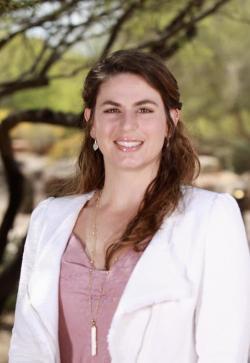
Crista Ellis was born and raised in the suburbs of Cincinnati, Ohio. She graduated from Miami University of Oxford with a degree in psychology. She is a certified yoga and meditation educator and a community program manager with the Parkinson’s Foundation. Crista leads the Parkinson’s Foundation international Mindfulness Monday program where she guides meditation practices for people with Parkinson’s, care partners, allied professionals, and more across the world. She joins us today to share with us about the benefits of cultivating a mindfulness practice when living with or affected by Parkinson’s disease.

Want more?
Don't forget to subscribe! There are many ways to listen: Apple Podcasts, TuneIn (Amazon Echo), Spotify or RSS Feed. (Need help subscribing? See our quick guide.)
For all of our Substantial Matters podcast episodes, visit Parkinson.org/Podcast.
Related Materials
Related Blog Posts

How Stress and Stress Management Impact Parkinson’s

A Beginner's Guide to Managing Pain Through Mindfulness
