Episode 160: Atypical Parkinsonism Series: Treatment and Interdisciplinary Approach to Care
-
Dan Keller 0:02
Welcome to this episode of Substantial Matters: Life and Science of Parkinson's. I'm your host, Dan Keller. At the Parkinson's Foundation, we want all people with Parkinson's and their families to get the care and support they need. Better care starts with better research and leads to better lives. In this podcast series, we highlight the fruits of that research, the treatments and techniques that can help you live a better life now, as well as research that can bring a better tomorrow.
Before kicking off today's episode, I would like to confirm that I have no relevant financial disclosures. This is the second of three podcast episodes within our atypical Parkinsonism podcast series, organized in collaboration with CurePSP, and designed to increase awareness and improve the care of progressive supranuclear palsy (PSP for short), corticobasal degeneration (CBD), and multiple system atrophy (MSA)—neurodegenerative diseases often considered atypical Parkinsonian syndromes.
Over half of people with PSP, CBD, and MSA are initially diagnosed with Parkinson's disease (PD) due to common early Parkinsonian symptoms, including bradykinesia, rigidity, tremor, and gait changes. They are rare diseases affecting less than 60,000 people in the US, compared to over 1 million people in the US with PD. Due to the lack of understanding and experience among healthcare providers, it takes an average of two and a half years to arrive at a clinical diagnosis of PSP, CBD, or MSA, and it is thought that only 25% of people with PSP, CBD, and MSA are accurately diagnosed. Currently, there is little to no formal training available on atypical Parkinson's for clinicians, and most become familiar with their assessment, diagnosis, and treatment on the job.
To address this gap, we have produced this podcast series, which is part of a larger program we have developed in partnership with CurePSP to educate the medical community. If you are a healthcare professional and would like to receive credit for your time listening to this three-part podcast series, please visit the Parkinson's Foundation Learning Lab. You can learn more about this opportunity at the end of this episode.
Today's guests, Heather Cianci, outpatient neurological team leader and founding therapist of the Dan Aaron Parkinson's Rehabilitation Center Penn Therapy and Fitness at Pennsylvania Hospital in Philadelphia, Pennsylvania, and Julia Wood, Director of Professional and Community Education at the Lewy Body Dementia Association, share how to apply interprofessional approaches to symptom management for PSP, CBD, and MSA, and share how to incorporate the healthcare team in assessing needs and crafting a plan of care for patients with these diseases. Julia Wood and Heather Cianci have disclosed that they have no relevant financial disclosures. What's the benefit of having an interdisciplinary care team for people with atypical parkinsonisms?
Heather Cianci 3:54
Well, our folks with the atypical parkinsonisms have various symptoms, various problems, so many different things that are going on that it quite possibly isn't possible for one person to be able to take care of them. So, things that I may look at through the lens of a physical therapist, I may not be thinking about something the way an occupational therapist or speech-language pathologist would look at it. And being able to talk to one another to really look at that patient as a whole, not just as that one symptom that I'm looking at, and being able to discuss quality of life—how do we all help this person together? I think really benefits them. It puts that patient at the center of the care.
Dan Keller 4:35
Also, is it important for family members to attend therapy sessions with their loved ones? Are they really integral to the care team?
Julia Wood 4:42
Absolutely, and I know in Dr. Pantelat's podcast, he talked about both the care team, as in the interdisciplinary psychologist and OT and PT and speech-language, but also at home. You know, it really does take a village on both ends. Often people are going to need assistance earlier at home, even if it's just cueing or assistance for safety. It really does take the coordination between both teams with both teams to make sure that all of the complexities are well-managed for people with atypical Parkinson's.
Dan Keller 5:17
Is it really an educational component for the caregivers, the care partners?
Heather Cianci 5:23
It's a huge component of what we do, and I'm going to give you a recent example. I have two gentlemen right now with progressive supranuclear palsy: one who lives alone in a three-story walk-up to a small efficiency apartment, and I have another gentleman who is living in a first-floor setup with his wife, who works at home. The ability to teach her how to speak to him, how to cue him, how to use his rollator, how to help him maneuver safely in the home, versus my gentleman who has no carryover with anything other than pictures that I can give him, signs, things like that.
The gentleman who has the family at home, who is helping, is actually flourishing—doing great, has really kind of stopped his falls, and is experiencing a much happier life. The gentleman living alone recently, unfortunately, fell backward into his bathtub, hit his head, and was found a day later by his family member. Unfortunately, these falls are so prominent, especially in our folks with PSP with the falling backward, but without the family's help and their supervision and our education for them, some really bad things can happen.
Dan Keller 6:32
What can be done to help decrease the amount of falls for people with atypical Parkinson's?
Julia Wood 6:39
I think it's really twofold. As an occupational therapist, I really look at the person factors—so we know that falls are a big part of these conditions—but also the environment. This is where, in full disclosure, Heather and I treated together for many years in our interdisciplinary clinic, and the two of us really had to put our heads together about what balance challenges they're going to have. She had to look at what appropriate gait device there might be, cueing for that gait device, training the family. I had to look at using that said device in different activities of daily living, but then also looking at the environmental hazards: throw rugs, even lighting.
We know that with these conditions they often have a lot of visuospatial issues, so their vision in the environment can be an issue, as well as cognition. We can see some impulsivity at times, especially with progressive supranuclear palsy, where they may not remember to use their assistive device, like their walker, when they get up to move. So then we always have to put our heads together as PT and OT and see how can we train the family, how can we make the person as safe as possible in their environment, in their home, and in their community.
Heather Cianci 7:52
We also have to think about things from a different standpoint that might be sort of out of our realm sometimes. I think some PTs and OTs aren't prepared to think about people who have bowel and bladder issues, and those autonomic problems with people who have MSA can be very problematic. Having orthostasis—so when they get up and move, they lose that blood pressure, it bottoms out, and they can pass out, they can fall. A lot of changes from that, but also, as well, with bladder issues, where the focus is, "I need to go to the bathroom, and I need to go right now," and I'm not thinking about how I can safely get to the bathroom.
So, a lot of times we will team up with other specialists within our profession, such as a pelvic floor therapist, who could be an occupational or a physical therapist. So, we really look at it from that whole standpoint of the person, the environment, the people around them, and I often say to my patients, you know, if there's something I can't change in you, unfortunately, due to the disease, I need to change what's around you, because it's my job to keep you as safe and as functional and as happy for as long as possible.
Dan Keller 8:53
Is there ever a component of timed voiding so people don't have urgency?
Julia Wood 8:58
Yes, absolutely, and that's something a lot of times we'll work on early on, anyway, as a timed voiding schedule, but sometimes that's not enough. As Heather mentioned, they may need to see a pelvic floor therapist. Often a urologist might be brought in as part of that care team as well. And then different incontinence products or adaptations to the environment—maybe having a handheld urinal or something closer by if the bathroom is really far away. Often we have to look at the safety in the bathroom too. So, once they get in the bathroom, that they can find the toilet from a visuospatial perspective, that they can be safe transferring to it, especially with that urgency, like Heather mentioned.
Dan Keller 9:36
Are there overlaps and differences among the atypical Parkinson's, both in symptoms and approach and treatment on your end?
Heather Cianci 9:46
When we think of the atypicals, I know we like to group them together, but I can say for my team we look at each person as an individual. So, even though I have an idea as to what may be prominent or common in someone with MSA, it doesn't mean that I'm just looking for those things; I'm going to keep an eye out for what are the functional problems first and foremost.
Probably the commonality in all of them is the sooner you can get them into treatment, the better. Unfortunately, as Dr. Alex was talking about, a lot of these folks are misdiagnosed, and we do get to them later. If we do have the ability to get to people soon after diagnosis, starting therapy sooner rather than later is paramount in all of these diseases, because we need to get them moving, we need to get them socializing, we need to, like Julia said, start thinking about things before they become a problem.
Dan Keller 10:40
Are there any exercises that are particularly good for people with atypical Parkinson's?
Heather Cianci 10:46
So, we know in the world of Parkinson's disease, we have just a wonderful amount of information that's out there, so we tend to glean most of our information from that, because of the huge amount of randomized controlled trials. Unfortunately, with the atypicals, we do not have that. We are very limited in what the research does to guide us, but I think, as therapists, anecdotally, we can speak to the importance of a healthy body.
So, one of the first things is aerobic exercise—getting people to do something that gets the heart rate up. And I'm not talking about people going out and running, or people, you know, diving into the pool and doing laps and laps; you could do a wonderful seated program with music, with stimulation, by moving the arms and legs and moving in the chair, so we can always adapt it. So, I would say number one is aerobic.
The second one we know is strength, and I would say strength is there just because people stop being active—they stop being able to work, they stop being able to drive, they stop going out. And when you sit and you don't move, you get weak. We know this in this population; we know this in every population, as to what happened during COVID, when we all stopped moving around, and this was even worse for our folks with the atypicals. So absolutely strength training—if I had to pick those top two that people could really do at home, it would be aerobic and strength.
When they're with a therapy team, whether it's OT or PT, we're trying to challenge their balance, we're trying to work on protective balance reactions again sooner rather than later. Another thing to add to that for this population too—and there's been some research—is eye gaze exercises. We know that, especially with the gaze palsy issues with progressive supranuclear palsy, keeping the eye muscles moving and having people work to continue to track and use their eye muscles is very, very important as well, and it can be something fun. I know people think sometimes exercise is boring. I'll give you an example of one of the things that we did a lot in our clinic is simply having a patient standing on an unstable surface, and then looking for different things around the room. So we might hide different objects and have them work on looking for things, or saying, "How many red objects can I find in this room? How many places would I normally sit in this room?" and having people look at all of those things. "What shapes are in this room that I can find?" So it's something that may not necessarily feel like exercise, but still could be very beneficial for them.
Dan Keller 13:06
Getting back to safety and falls, do people make home visits to check out the home environment to make it safe—throw rugs and doorways and all sorts of things?
Julia Wood 13:15
Yes, that's something that's very common. So often an occupational therapist and physical therapist will go in and do a home safety evaluation. Sometimes this can happen through the local corporation or area agency on aging too. So, really looking at all of those factors, just like you're saying, considering where handrails are placed, grab bars, those throw rugs, you know, even just the obstacles in the environment. Because with that visuospatial issue that we see so often, an area might seem like you can navigate it fine, but when you're having trouble, a lot of times things might appear closer to them than they are, or further away, and so it's important to have open pathways and good lighting, and all of those safety hazards, like those throw rugs and tripping hazards, eliminated.
Heather Cianci 14:02
And it doesn't have to just be a home care therapist. If you have a patient who has Medicare Part B, we are allowed to see patients in the home for those home safety assessments. So that's just an important thing for people to know.
Dan Keller 14:16
Getting back to the topic of interdisciplinary care team, what framework is there for delivering care to people with PSP, CBD, and MSA? How's it organized? Who coordinates it? What's the framework?
Heather Cianci 14:32
So I can speak about how it's run at our clinic at University of Penn. We consist of the therapy team (PT, OT, and speech), we have a nurse, a nurse practitioner, and a physician. We have a palliative care physician as well, social worker, nursing. And it seems like that's a lot of people to coordinate, but when you have a main focus and a goal of patient-centered care, it actually flows pretty beautifully if you have one person who's sort of taking the lead.
And I would say in our clinic, it probably comes down to our nurse practitioner and our social worker. So someone does need to take the lead to make the phone calls, to establish the relationship, to set up those appointments. And then we all work together as to what are the times that are going to work that we're going to see these people. So there's a lot of pre-planning that goes into that day when you actually see the patient. In speaking from experience, I think you get to know your team members so well that you're able to kind of think ahead as to what they're going to need and what they're going to do, that we just really get it down to a fine-oiled machine. And that might not be the start for everybody, but I think once you start seeing how it works and you're able to communicate well together—that's the key—you can really make some wonderful changes in the lives of those patients.
Julia Wood 15:44
And I think it's important to note that that's not always a top-down approach. I think that people still have this kind of hierarchical model that the doctor is the one who drives every single referral, but when you have a fully functioning interdisciplinary care team, we're all going to catch different aspects of needs for that person. So I may go to the physician and say, "Hey, they really need that home safety evaluation," or "They need that swallowing assessment," or whatever the issue is. So often it's other members in the team that kind of have to raise the flag for that referral, and I think that's something that gets lost sometimes when I listen to discussions on interdisciplinary care. It's like we still think that the doctor drives everything, and we kind of all have to have our eyes and ears out on the ground and communicate with each other to ensure best care.
Dan Keller 16:30
Ultimately, does the doctor have to write the order, or can it be generated from an OT or a PT and proceed without intervention of the doctor?
Heather Cianci 16:40
So, if you're not part of an interdisciplinary care clinic, and let's say someone has PSP and they want to see a physical therapist, depending on what state they live in and what insurance they have, physical therapists do have something called direct access, where you can see a physical therapist without a prescription. They would need, again, though, to check with their insurance company to see if this is a benefit they have in their state. For our clinic, we do make sure that everyone has the prescriptions ahead of time, just because we want to make sure that everything is covered by the insurance and these family members aren't left with a high cost.
Dan Keller 17:14
Besides one-to-one communication—the OT with the PT or with the physician, or whatever—does the team get together on a routine basis and review what's going on?
Heather Cianci 17:25
At the completion of the day, when we have our atypical clinic, we do get together and discuss. Everyone has the same amount of time to voice their opinions, their concerns, their questions. It's pretty amazing as to when you'll hear from someone—it might be the social worker said, "Well, the family member told me this," and we'll think in PT, "Wow, that wasn't expressed to me that way; I wouldn't have known that had they not talked to you."
So, again, even when the patient is not with us in the room, we're still learning about the patient and the family member, and I think that's just a critical service that has to be put forth. And then everyone understands, kind of, where are we? What's the roadmap moving forth with this patient? Because it's not a once-and-done. When you have atypical Parkinson's, you're going to need substantial care over a long course of time.
Dan Keller 18:12
Even with Parkinson's disease, each disease and each person is individual—it can take its own course—but there you've got a lot of people to study; the incidence is much higher. Here, the incidence is very low. So, are there rules? Are there guidelines? And if not, how does this differ from dealing with Parkinson's disease?
Julia Wood 18:35
Yeah, that's a really, really good point, that there aren't specific guidelines or many research articles that get into directives for people with atypical Parkinson's. So this is where creativity, I think, really comes in on the part of the clinician. I think that you have to look at all of the research, as Heather mentioned, that's there for Parkinson's and the little that we have on atypical Parkinson's, and then we really have to be creative and think on our feet.
Number one is safety. I think that always has to be first and foremost. We need to realize too that it's a much more rapid progression with these conditions, so it's important to get in there early and intervene often. We're not going to see them every six months a lot of times, or once a year; it's probably going to be more like every three months, possibly. It's really working together as a team to try to see what you can extrapolate from the research, but then also really using your best clinical judgment and also looking to the family to collaborate on what their needs are.
Heather Cianci 19:30
What their wants are, because ultimately, I think sometimes what gets lost when we think about these complex conditions is we get lost in the symptoms. What's really, really important is that engagement for that person, and what's meaningful and relevant to them. So, you want to look at the things they've lost or given up, maybe things that they would like to continue to do. Can you adapt how they do that?
The ultimate goal is keeping that person engaged and active and maintaining their quality of life. It's looking through the lens of function, not just from the standpoint of "can they get up from the chair, can they walk to the bathroom," but can they sit comfortably in a chair and still exercise, can they use a wheelchair to be able to get out into the community and do the things that they want to. Like Julia said, with adaptations and modifications, it's functioning as a person in their home, a person in their community, a person in their book club. However that function is seen through their lens. We don't want to think about it just as mobility; it's functioning in life.
Dan Keller 20:33
Even though there's not as much evidence here as, say, with Parkinson's disease, there is some evidence. Are there algorithms or decision trees that you follow?
Heather Cianci 20:45
Unfortunately, right now there isn't anything that's out there for us. There are, like I said, limited research studies. I would say yes, probably start with your aerobic exercise. There is some research out there that suggests if it is a lower-level patient, you might want to use the Berg Balance Test.
I am not of the thought process that I want to put everyone in a silo. I really want to sit in front of that one person, speaking with them and figuring out how to test them individually. So it always comes back to me for the function of the person—function in mobility, but function in life. And when they tell me what they can't do, I figure out what is the outcome measure that's best for them, for me to test them, and then it's my job to figure out how to help them to get back into doing what they're doing. So it goes back to what Julia said: creativity, being able to think on your feet, and being able to talk to that team of people as to how you can make those things happen.
Dan Keller 21:40
How does maintenance therapy change from early stages to late stages?
Heather Cianci 21:45
So, I think a lot of therapists—and Julia and I have spoken about this a lot—fear the word "maintenance." There was a misperception for a very long time that many of the insurance companies would not pay for quote-unquote "maintenance therapy." You might want to think about it as preventative therapy. So what are we trying to do? It may not be that we're trying to attain a goal of making something better, but what we're trying to do is attain a goal of not letting something get worse.
We don't want that person to lose the ability to do something, we don't want the falls to continue, we don't want injury to happen. So maintenance therapy can absolutely happen. There are guidelines, at least for physical therapists, through the American Physical Therapy Association, and there are ways to be more educated about that if therapists want to learn more.
Dan Keller 22:33
What are appropriate outcome measures? Maintaining or staying at the level they're at, staying safe, or are there others?
Julia Wood 22:42
Absolutely, I think that that's something that gets lost sometimes, and some of this comes down to billing and reimbursement. We also want to look at what the person wants to do, so there are things like Goal Attainment Scaling, for example, that is really standing out in the research and in a lot of different methodology as a way to take something that that person wants or needs to do and make the goal specific to that individual.
For this population, for example, a lot of times the goal is not going to be independence; it's going to be "with cues"—you know, with a verbal cue or with minimal physical assist—that they're going to do that sit-to-stand transfer. And so a lot of it, I think, comes down to setting appropriate goals and how to find appropriate outcome measures. There's other things too, like the Bangor Goal Setting Interview, which also helps with this; the Canadian Occupational Performance Measure; and the Patient-Specific Functional Scale. And I think when you go from that place of "what does this person want to do, what's meaningful to them," then you can see if maybe there are other outcome measures, like looking at balance, the Timed Up and Go, maybe things like fine motor coordination that you might want to do. But ultimately, like Heather said, the goal is that function. So you want to see what am I going to do to get them back to doing this functional activity, not just some rote improvement on objective measures.
Dan Keller 24:00
Are there screening tools that would prompt you to bring in other medical specialties—ophthalmology, urology, respiratory, speech-language kind of consults?
Heather Cianci 24:13
So oftentimes we will get people who come to us with a prescription that says they have Parkinson's disease, and it may be that we're starting to notice—even though they were newly diagnosed with Parkinson's—they're having way too many falls too early in what would be typical for Parkinson's. We're starting to notice that there are subtle visual problems with the gaze—so the loss of the ability to have a vertical gaze in people with PSP—that's not typical of our patients with PD.
So, there are certain things that you notice, and then you say, okay, it's time to pull in a different team member. Maybe if I'm seeing some more cognitive issues here, maybe I need to get occupational therapy and speech involved. If I'm seeing these visual problems, maybe I need to get the neuro-ophthalmologist involved with this.
Julia Wood 24:56
And also mood. So often we'll see people are really struggling with depression and anxiety, and sometimes that can even be a barrier to them accessing therapy or following the recommendations from therapy. So, I think having a counselor, a psychologist, or someone that you can refer to is very important too, so that you make sure you're addressing those challenges—be they just mood changes as a symptom, but then also those coping strategies of just dealing with a progressive illness.
Dan Keller 25:23
One thing that the Parkinson's Foundation has for people with Parkinson's disease is the Aware in Care kit. Would that be useful here too? I mean, do these people end up in the hospital, and would it be good to have a record of where they stand and what they're on and all that? Seems like the kit shouldn't be just restricted to PD.
Heather Cianci 25:44
Absolutely. A lot of our folks with the atypicals are taking the common medication for Parkinson's disease early on in the course of their illness with Sinemet. So, yes, it is important for them to get that medication on time. It's important for those hospital teams to know that the symptoms can vary and that also there is a higher likelihood of falls and cognitive changes early on, and so they really need to be aware of this for safety.
Dan Keller 26:09
What are the key takeaways?
Julia Wood 26:11
I think one is to intervene early and often. I think you really want to get that care team in and get rehab started. One thing that I hope to abolish in my lifetime is this idea of somebody not being quote "bad enough" for therapy. And we hear that both with Parkinson's and with this, and I think it becomes almost a type of denial where it's like, "Well, I'm not that bad yet." But the whole point of coming to therapy is so that you hopefully don't get that bad, and we keep you engaged, and we keep you doing the things that you love and prevent those falls and injuries. So, I think one of the key takeaways is early and often intervention, and really recognizing that it does take a care team to manage these complex conditions.
Heather Cianci 26:55
And I would agree with Julia, and in part saying put that family into that care team sooner rather than later. Oftentimes, people will drop their family member off at therapy, maybe run some errands, maybe it's some time for them to get away. Unfortunately, we need those people there. They need to be educated. Oftentimes, they're frustrated; they may need social services. Then we can help to jump in there. So, yes, early, often, and the village is not just medical professionals—it's that family team as well.
Dan Keller 27:32
We hope you were able to listen to our first episode of the Atypical Parkinson's podcast series, where we cover common early symptoms of PSP, CBD, and MSA, and the overlaps and differences with Parkinson's disease. Be sure to tune into the third and final episode of this series, where we will discuss the unique care needs of people living with PSP, CBD, and MSA, and resources to support quality of life for patients and families.
You can also visit our PD library at parkinson.org/library to read our fact sheet on the topic titled Parkinson's Disease versus Parkinsonism, as well as visit CurePSP's website at www.curepsp.org to learn more about PSP, CBD, and MSA and other resources available. And if you are a healthcare professional seeking accreditation for this podcast series, you can visit the Parkinson's Foundation Learning Lab at education.parkinson.org/atypical to log in and claim your continuing medical education credit.
If you want to leave feedback on this podcast or any other subject, you can do it at parkinson.org/feedback. If you enjoyed this podcast, be sure to subscribe and rate and review the series on Apple Podcasts, or wherever you get your podcasts. At the Parkinson's Foundation, our mission is to help every person diagnosed with Parkinson's live the best possible life today. To that end, we'll be bringing you a new episode in this podcast series every other week. Till next time, for more information and resources, visit parkinson.org or call our toll-free helpline at 1-800-4PD-INFO. That's 1-800-473-4636. Thank you for listening.
Considered “atypical Parkinsonian syndromes,” over half of people with progressive supranuclear palsy (PSP), corticobasal degeneration (CBD) and multiple system atrophy (MSA) are initially misdiagnosed with Parkinson’s disease (PD) due to similarities in early symptoms as well as lack of awareness of these rare, neurodegenerative diseases among many healthcare professionals and the general public.
This is the second of three podcast episodes within our atypical parkinsonism podcast series, organized in partnership with CurePSP and designed to address the treatment interdisciplinary approach of PSP, CBD and MSA.
In this second episode of the series, Heather Cianci, Outpatient Neurological Team Leader and founding therapist of the Dan Aaron Parkinson’s Rehabilitation Center, Penn Therapy & Fitness at Pennsylvania Hospital in Philadelphia, Pennsylvania and Julia Wood, Director of Professional and Community Education at the Lewy Body Dementia Association, cover the treatment and interdisciplinary approach to care for atypical parkinsonism.
Julia Wood, Heather Cianci, and podcast host, Dan Keller, have disclosed that they have no relevant financial disclosures.
Released: October 3, 2023
-
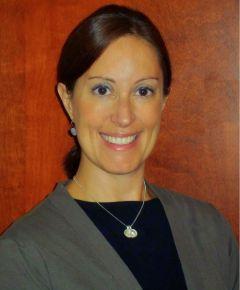
Heather is the founding therapist of the Dan Aaron Parkinson’s Rehabilitation Center (Penn Therapy & Fitness) at Pennsylvania Hospital in Philadelphia, PA – a partner with the University of Pennsylvania’s Parkinson’s Disease and Movement Disorders Center (PDMDC). Heather received her Bachelor’s in Physical Therapy from the University of Scranton in Scranton, PA and her Master’s in Gerontology from Saint Joseph’s University in Philadelphia. She has been a physical therapist since 1994 and received her board certification in geriatrics in 1999 from the American Board of Physical Therapy Specialties. She is a LSVT® BIG certified clinician, PWR! certified clinician, graduate of the Rock Steady Boxing for Parkinson’s, certified in Music and Memory®, and is an ACTIVATOR® Trainer. She serves as an LSVT® BIG Faculty Instructor for LSVT Global, Inc., and Co-coordinator and PT Faculty for the Parkinson’s Foundation’s (PF) Team Training Program. Heather has authored book chapters on rehabilitative strategies for PD and Frontotemporal Degeneration. She also is the author of the PF educational manual “Fitness Counts.”
Heather has taught for several CEU organizations including Medbridge and Elite Learning. Her research includes movement strategies for bed mobility, falls, freezing of gait, and functional movement disorders. She teaches about rehabilitation and PD at Thomas Jefferson University (Philadelphia, PA) and Neumann University (Aston, PA). Heather is a former board member of CurePSP and team member of both the COPE Clinic (Comprehensive Outpatient Atypical Parkinsonism Evaluation) and Huntington’s Disease Clinic at the PDMDC.
-
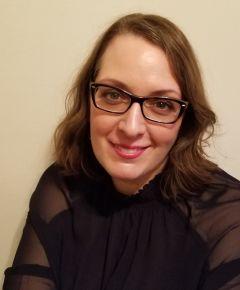
Julia Wood, MOT, OTR/L graduated with her master’s degree in occupational therapy (OT) from the University of Minnesota after completion of her clinical fieldwork in neurological rehabilitation from the Mayo Clinic, St. Mary’s Hospital campus in Rochester, Minnesota. Julia has an extensive clinical background in rehabilitation, interdisciplinary and palliative care in Parkinson’s disease and related dementias. She served as the lead OT at the University of Pennsylvania’s Parkinson’s disease and movement disorders Center of Excellence for ten years where she continues to develop and facilitate community engagement programs for people with PD and related dementias and care partners. Julia is currently the Director of Professional and Community Education for the Lewy Body Dementia Association and serves as certification and training faculty for the LSVT BIG® program. Julia has served as faculty for the Parkinson’s Foundation’s Team Training for Parkinson program since 2016 and served on the Parkinson’s Foundation Rehabilitation Task Force in 2021. She co-authored the first American Occupational Therapy Association Practice Guideline for Adults with Parkinson’s Disease in 2022. Julia served on the steering committee for the 2022 International Lewy Body Dementia Conference and on the Comprehensive Care Subcommittee for the 2023 World Parkinson’s Congress (WPC).


Want more?
Don't forget to subscribe! There are many ways to listen: Apple Podcasts, TuneIn (Amazon Echo), Spotify or RSS Feed. (Need help subscribing? See our quick guide.)
For all of our Substantial Matters podcast episodes, visit Parkinson.org/Podcast.
Related Materials
Related Blog Posts

Parkinson’s Foundation, with support from CVS Health Foundation, Launch New Courses to Educate Healthcare Professionals


