Episode 112: Non-pharmaceutical Treatments for PD: DBS and Focused Ultrasound
-
Dan Keller 0:02
Welcome to this episode of Substantial Matters: Life and Science of Parkinson's. I'm your host, Dan Keller, at the Parkinson's Foundation. We want all people with Parkinson's and their families to get the care and support they need. Better care starts with better research and leads to better lives. In this podcast series, we highlight the fruits of that research—the treatments and techniques that can help you live a better life now, as well as research that can bring a better tomorrow.
When the time comes for drug therapy, most people with Parkinson's start off on levodopa. Later, other medications may be added, but at some point, they may consider other treatments—specifically deep brain stimulation, or DBS, or a somewhat newer technology, focused ultrasound.
DBS requires surgical implantation of electrodes in the brain, as well as a pulse generator in the upper chest to supply electrical impulses to the brain. Focused ultrasound does not require surgery, but works by aiming high-frequency sound waves at a specific part of the brain responsible for Parkinson's motor symptoms, thereby heating it and scarring the tissue. Each has its advantages and disadvantages, and careful patient selection for either technique is important to achieve the best results.
This episode is made possible with an educational grant from Medtronic. I spoke with Dr. Kyle Mitchell of Duke University about these two technologies. He first discussed who could most benefit from DBS and what symptoms it can control.
Dr. Kyle Mitchell 2:03
Deep brain stimulation is really useful for a select set of people with Parkinson's disease, with the goal of treating some specific symptoms. The most common would be treating a tremor that is either responding or not responding to medication. We would expect deep brain stimulation to have a high chance of helping with that.
Second is if medications are working well, but there are some limitations to how they're working. That can present as either dyskinesia—which is a description of the wiggling or writhing movements that people can experience when they're on medication—or the ups and downs or fluctuations that people can experience when they're on Parkinson's medicines, where one minute they're feeling fine, and a couple of hours later maybe they're not moving as well. Deep brain stimulation is good at smoothing that out and really maximizing that "on" or good time during the day when oral medications are no longer cutting it.
Dan Keller 2:57
Does it address any of the other symptoms—gastrointestinal slowness of movement, bradykinesia, any of those things?
Dr. Kyle Mitchell 3:05
Deep brain stimulation is really just helpful for symptoms that can also respond to levodopa or similar medicines. So bradykinesia can apply; if that's a symptom that responds for an individual when they take medicine, I would also expect that to improve with deep brain stimulation, or DBS.
Things like GI symptoms, constipation, or really what are considered non-motor symptoms—like cognitive or other symptoms—are not expected to improve with DBS. So we're looking primarily at motor or movement-related symptoms that respond to Parkinson's medicines, and also tremor, regardless of whether or not it responds to medicine.
Dan Keller 3:44
Are there any predictors of a good outcome with deep brain stimulation?
Dr. Kyle Mitchell 3:52
Yes, there are several predictors for who's going to do well, and a lot of that is really quantified or calculated when we're trying to see if we think this would be a good idea for an individual. The biggest predictor is how well someone responds to levodopa.
The way we assess this is by having someone come in completely off their medications, and we can get a score on a scale which assesses how severe the symptoms are, like tremor or stiffness or slowness of movements. Then we have that person take medication—take levodopa—and then record that same scale when they're optimized and feeling "on" medicine. The people who improve the most from that "off" state to the "on" state are the people who are also likely to have the more dramatic improvement when they undergo DBS and DBS programming. In general, people with tremor also do very well with DBS.
Dan Keller 4:43
I guess a very basic question would be: what is DBS, and how is it done?
Dr. Kyle Mitchell 4:48
DBS is a surgical procedure that's done by a neurosurgeon, with or without the help of a neurologist to help localize the target. I guess it's best thought of as a pacemaker for the brain, so it's a way that we can modulate brain rhythms in order to make them more normal.
In Parkinson's, we see when we're recording people's brains that the brain can get out of rhythm, much like a heart could get out of rhythm. DBS is using electricity to restore a more normal brain rhythm, just like a pacemaker would for the heart. What it is physically is small electrodes, which are about as wide as the end of a pen, placed into very specific spots in the brain known to be involved with Parkinson's symptoms. Then we connect those electrodes or wires to a small computer and battery pack that we can adjust. We can make those adjustments to normalize that brain rhythm, and when we do that, it helps with those motor symptoms of Parkinson's.
Dan Keller 5:47
Does patient age affect predicted outcomes with DBS?
Dr. Kyle Mitchell 5:53
That is a topic that is not fully known. I think the trend has been that people who are younger more reliably do well, but I'd say it's somewhat controversial in the literature. There have been several studies that have shown people in their 70s and even people in their early 80s still having quite a good response with DBS.
Other medical issues can come up the longer someone lives with Parkinson's that could make surgery more risky—things like heart disease, lung disease, trouble with anesthesia, or maybe memory problems. So age is really a relative term when it comes to DBS. It depends heavily on how healthy the person is overall, regardless of chronological age.
Dan Keller 6:32
What's coming along in DBS? We see all sorts of electronics in every sphere getting better over time. What's going on here?
Dr. Kyle Mitchell 6:41
DBS has really undergone a big explosion in technology over the last few years, primarily triggered by a few different companies entering the market and creating different ways of doing DBS. I could focus on a few key things.
One is directional DBS. This is DBS where the doctor, the neurologist, can steer the electrical current in the brain instead of just stimulating all around the wire. That allows the neurologist to focus the electricity in the brain just where it's needed, making it very targeted and very individualized. This seems to reduce the chance of causing side effects from that electrical stimulation.
Another innovation has been rechargeable batteries. Batteries deplete and batteries die—that's what they do. Typically with DBS, people would need a new battery every three to five years, which required a minor surgery to replace it. But with rechargeable batteries, someone can have the same battery for up to 15 years, so that's been a really nice addition.
The last thing is a new technology on the market called brain-sensing DBS. This allows the DBS device to record the brain signals of a person. Neurologists can find those bad brain signals or those abnormal rhythms in the brain, and they can use that information to better program the DBS to treat them.
Dan Keller 7:57
Artificial intelligence is a big topic. Do you think at some point the DBS units will reprogram themselves moment-to-moment depending on what's going on?
Dr. Kyle Mitchell 8:06
It's a very exciting topic within DBS, and an area of a lot of ongoing research. That is a field called adaptive DBS. I think "artificial intelligence" is a little too far right now; I would think of it more as DBS that can adjust on the fly according to someone's immediate brain signals.
The thought behind that would be that people probably don't need the same amount of stimulation when they're sleeping or when their oral medications are working perfectly. So DBS would be better if it adjusted only when the patient needs it, and then kind of turned down when the patient doesn't need it as much. The best way to think about that would be like a thermostat in your house. You set it to a temperature—we'll call that good control of tremor or good control of stiffness—and that thermostat only turns the air conditioning on when it gets hot enough in the room, and then when the temperature is ideal, that thermostat turns off. We would envision the DBS doing that in the same way: turning up when it's needed, and then turning down when the brain rhythms look more normal.
Dan Keller 9:04
Why don't we turn to a different technology, which is focused ultrasound, or FUS. How is that different from DBS, and how is it done?
Dr. Kyle Mitchell 9:15
Focused ultrasound is a relatively newer procedure from just over the last few years. This is different from DBS in that it doesn't involve hardware implanted in the body; it doesn't involve a computer or a battery. This is done by using an MRI scan of the brain to find the specific brain target, and then using high-intensity ultrasound. It's just like the ultrasound you see in other technologies, but this is so high in intensity that it can actually heat up a very small target in the brain—similar to the targets we use in DBS. When that part of the brain heats up enough, it creates what's called a lesion or a scar in the brain. It turns out that if you make a lesion in a very specific spot in the brain, it can actually help symptoms like stiffness and tremor.
So I would say the biggest differences are that you don't leave anything in the body when you're done, and it doesn't require making a hole in the skull so that a wire can go in—it's all done outside of the skull. Another key difference is that it's only really done at this point for one side of the body, due to concern that if it's done on both sides of the brain for both sides of the body, there's a much higher chance of severe side effects or complications from it. So it's typically done just if someone has a lot more symptoms on one side versus the other.
What's interesting is that focused ultrasound is somewhat of a new way of performing an old surgery. These lesions or scars were actually made in the same areas of the brain back as early as the 1950s and '60s. The main difference was that back then, it was using a wire that went physically into the brain and heated up until it made that lesion or scar. Focused ultrasound is doing the exact same thing at its core, but it doesn't require placing instruments into the brain or making that hole in the skull. A new, more elegant way of doing a somewhat older procedure is the best way to think about it.
Dan Keller 11:03
When I was a kid, I saw on TV they were doing very early cryoablation on a woman for Parkinson's with refrigerated or cooled alcohol in some sort of device that would go into the brain. So I guess that was a real forerunner of this sort of stuff.
Dr. Kyle Mitchell 11:21
Very interesting. You know, those lesions were actually performed even before levodopa was discovered for Parkinson's, so for a time, they were the only treatment for the motor symptoms of Parkinson's. They kind of went out of favor for a while after people were doing so well with levodopa and other medical treatments. This is really a neat resurgence of that approach, made possible with this new technology of focused ultrasound.
Dan Keller 11:44
The one thing focused ultrasound does that DBS doesn't is it wipes out a specific spot in the brain, so I take it it's irreversible.
Dr. Kyle Mitchell 11:54
That's right, and that's a good way of looking at it. I don't like to talk about focused ultrasound as a completely non-invasive procedure, even though you're not leaving hardware in, because you're still making a lesion or a scar. By definition, a scar is not reversible; it creates that small area of permanent damage there. So it's something where, once it's done, it's there—it either works or it doesn't, but that lesion has been made.
Dan Keller 12:16
Why would you choose DBS versus focused ultrasound, or the reverse, for a patient?
Dr. Kyle Mitchell 12:23
I think there are a couple of reasons for either. I'll talk first about focused ultrasound, since it's newer and maybe a little more controversial on exactly who would benefit and who wouldn't. I see focused ultrasound as being best for someone with really asymmetric symptoms—meaning symptoms that are much more severe on just one side of the body—and a person who maybe strongly wants to avoid having implanted hardware in their body for whatever reason. That may be someone who does better with focused ultrasound.
I think DBS would be best for someone with Parkinson's disease who is completely okay with that hardware, who would benefit from the option of treating both sides of the brain for both sides of the body, and who likes the idea of adjustability over time. They understand that Parkinson's changes and worsens as time goes on, and they want that ability to adjust the computer and adjust the stimulator to address those changing symptoms.
I think some surgical patients will be candidates for focused ultrasound, and the majority will undergo DBS for the time being. But a big caveat to that is DBS has been around for over 20 years, and early on, it didn't really look like what it looks like now; there have been a lot of technological improvements. I would expect a similar trajectory for focused ultrasound and really any new surgical method that comes around. There's always room for improving it, and maybe that group of people who would benefit from it will expand as time goes on.
Dan Keller 13:40
With today's technologies for either of them, what kind of long-term results or benefits can people expect? I understand every patient is different, but do these things lose their effect over time?
Dr. Kyle Mitchell 13:54
That's a really great question. We certainly have more data when it comes to DBS just because we have people who have been treated with it for decades, as opposed to just a few years with focused ultrasound. On average, DBS is still going to treat those same symptoms that improved initially—tremor, stiffness, and slowness. It's still going to treat those throughout the life of the person.
However, the Parkinson's is still getting worse slowly in the background as time goes on, and certain new things may come up: maybe worsening balance, worsening memory, or more freezing of gait, meaning your feet kind of getting stuck to the ground. If those things never responded to DBS for that person initially, those things wouldn't be expected to improve later on. That's another way of saying that just because new issues may crop up that are not going to respond to the DBS that's already there, the main reasons DBS was initially implanted for a person—tremor, stiffness, dyskinesia—would be expected to continue to gain improvement or continue to have some symptom control as time goes on, over the course of years to decades. It's not a cure for Parkinson's. These things can and do get worse as time goes on, but the specific symptoms that DBS is targeting will continue to be treated.
Dan Keller 15:04
So much of this gages its efficacy based on the Unified Parkinson's Disease Rating Scale, Part III—the UPDRS Part III—which measures motor function. Is it really better to look at overall quality of life, which would take into account motor function, side effects, and daily functioning after either of these kinds of technologies are applied?
Dr. Kyle Mitchell 15:30
Absolutely, and you're right. A lot of the time, the main outcome that's been evaluated in scientific trials is simply how someone looks from a motor standpoint, like tremor and stiffness. But what does that really mean for quality of life?
Fortunately, with those early, large DBS studies—very large trials in Europe and in the US—quality of life outcomes were evaluated. The main outcome wasn't just how much their score on the UPDRS improved; it was how many more hours of "on" time or good time per day a person experienced. They found a very dramatic improvement of about four and a half hours of more "on" time per day, and this was in the early days of DBS.
There are also scales that assess quality of life specifically, looking at things like reactions to medication and side effects of medicines, and fortunately, those also improve with DBS. It's been nice that when these large studies were done, they really looked at a comprehensive set of outcomes. While people often focus on what percentage someone improves on their motor rating scale, these other quality of life outcomes have been shown to get significantly better with DBS in carefully selected patients. The same thing applies to focused ultrasound: the UPDRS is certainly looked at, but the same quality of life surveys are also evaluated, and there have definitely been clear indications that it's helping in those areas as well.
Dan Keller 16:55
Have we missed anything that's interesting or important to add?
Dr. Kyle Mitchell 16:59
I think one thing that anyone will think about when they're considering surgery for themselves or a loved one would be what the risks are. Any kind of surgery has risks that come along with it, whether that be a risk of stroke or hemorrhage, which we see hovering around that 1% to 2% chance. There is also infection; infection primarily applies to DBS because of the implanted hardware, which carries a 3% to 5% risk. Infection is not as much of an issue with focused ultrasound.
However, in a recent study with focused ultrasound, there was concern for some long-lasting side effects that could last months, even up to a year in some people. Side effects like clumsiness on the treated side affected a low number of people, but it was still 5% to 10% of participants. There were also speech issues, which maybe lasted a couple of months and then eventually got better. These are not minor; these are significant side effects that can happen with surgery, and something that definitely needs to be taken into consideration before undergoing either.
They really have different side effect profiles, as I've mentioned: a higher chance of infection with DBS, but a higher chance of persistent speech issues, clumsiness, or dyskinesia with focused ultrasound at a year, and we don't know if those eventually go away, but certainly they can stick around a good long time. It's just important to know that there are risks with any surgical procedure. Before undergoing any of them, I would recommend any person with Parkinson's get a clear idea of what those are so they can make an educated decision on the best treatment for them.
Dan Keller 18:31
Very wise advice to end on. Thank you very much, this was informative. I'm sure people who are getting to the point of considering either of these technologies will find this helps put them in perspective and sort them out.
For more on DBS, go to our online library at parkinson.org/library and choose "deep brain stimulation" in the topic drop-down menu. You'll find fact sheets, relevant podcast episodes on the subject, and videos featuring our National Medical Advisor, Dr. Michael S. Okun, on how the DBS device works, the risks and benefits of the surgery, what family members need to know about it, and who is a good candidate for DBS. You can also download our book titled Surgical Options, which includes focused ultrasound as well as extensive information on DBS. The book concludes with a section on what developments are on the horizon, appendices with useful suggestions and advice, and a glossary of common and technical terms.
If you're considering DBS or focused ultrasound, you may find other people with similar interests or who have experience with one of these therapies in our online PD Conversations section. At parkinson.org/pdconversations, you can even pose your questions to experts.
If you have questions about today's topic or anything else having to do with Parkinson's, our information specialists can provide answers in English or Spanish. You can reach them at 1-800-4PD-INFO. News and updates about future events and resources are available by joining our email list at the bottom of our website's homepage.
If you want to leave feedback on this podcast or any other subject, you can do it at parkinson.org/feedback. If you enjoyed this podcast, be sure to subscribe, rate, and review the series on Apple Podcasts or wherever you get your podcasts.
At the Parkinson's Foundation, our mission is to help every person diagnosed with Parkinson's live the best possible life today. To that end, we'll be bringing you a new episode in this podcast series every other week. This episode was made possible with an educational grant from Medtronic. Until next time, for more information and resources, visit parkinson.org or call our toll-free helpline at 1-800-4PD-INFO, that's 1-800-473-4636. Thank you for listening
Not all medical interventions for Parkinson’s disease (PD) involve drugs. Two other main treatments are deep brain stimulation (DBS) and focused ultrasound (FUS). DBS uses a surgically implanted electrical pulse generator connected to electrodes placed in the brain to stimulate areas involved in PD. FUS does not require surgery but aims ultrasound – high frequency sound waves – at a specific area of the brain to relieve Parkinson’s symptoms.
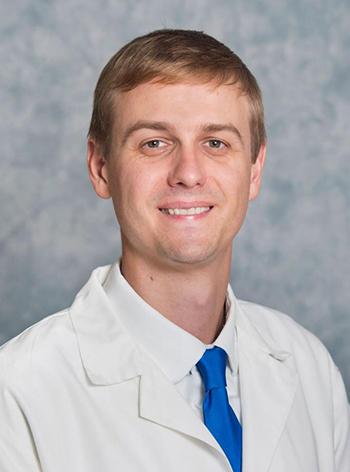
Each technology has its uses, advantages, and disadvantages. In this podcast episode, Kyle Mitchell, MD of Duke University in North Carolina discusses the two treatments, how each works, which patients may do best with either of them, and some caveats. He also looks ahead at what is in development.
Released: September 7, 2021
-
Kyle Mitchell, MD is an assistant professor in neurology at Duke University and a movement disorders specialist. In the clinic, he treats patients with Parkinson’s disease and other movement disorders. He is an expert in complex deep brain stimulation (DBS) evaluation as well as intraoperative and postoperative DBS programming and care. He also manages and studies interdisciplinary evaluations and care of people with Parkinson’s disease. His research focuses on improving deep brain stimulation. He works in collaboration with engineers and neurosurgeons on developing new technology to enhance the effectiveness and reduce side effects of DBS. He also studies patient outcomes of people with DBS to help improve how we target specific brain structures and how we select patients who are most likely to benefit from surgery. He has published in multiple neurology and neurosurgery peer reviewed journals and books and has presented his research at international conferences and educational events. He is a member of the American Academy of Neurology, Movement Disorders Society, and the Parkinson’s Study Group and is part of Duke’s Parkinson’s Foundation Center of Excellence.

Want more?
Don't forget to subscribe! There are many ways to listen: Apple Podcasts, TuneIn (Amazon Echo), Spotify or RSS Feed. (Need help subscribing? See our quick guide.)
For all of our Substantial Matters podcast episodes, visit Parkinson.org/Podcast.