Episode 43: Parenting and Parkinson's: Raising Children While Living with Parkinson's
-
Dan Keller 0:00
Welcome to this episode of Substantial Matters: Life and Science of Parkinson's. I'm your host, Dan Keller. At the Parkinson's Foundation, we want all people with Parkinson's and their families to get the care and support they need. Better care starts with better research and leads to better lives. In this podcast series, we highlight the fruits of that research, the treatments and techniques that can help you live a better life now, as well as research that can bring a better tomorrow. Parkinson's disease, like any chronic condition, affects entire families and can change relationships and dynamics among family members, including the children. So parenting becomes an important issue when Parkinson's comes on the scene. The abilities and roles of the affected parent may change, and they may continue to change over the course of PD. It is important to keep children informed and help them cope with having a parent with Parkinson's. Today we kick off our first of two episodes in our holiday series, Families and Parkinson's, as we interview social worker Elaine Book of the University of British Columbia in Canada, who shares how she counsels families about parenting around the time of diagnosis and as the disease progresses. So I guess the first question would be: should kids be informed, and how informed, and when?Elaine Book 1:43
So really good question. And yes, absolutely, we often say that Parkinson's is a family affair, and it does impact everybody in the family, and certainly that includes the children, the teens, the young adults, the young adults living at home, the young adults living away. And so for the most part, I absolutely recommend to the families that I work with that they do share the diagnosis with their children for a variety of reasons. You know, children are very perceptive, and you know, they may detect that there's something going on, and if they're not told what that something's going on there, they can go to someplace far worse than a Parkinson's disease diagnosis. So even overhearing a conversation that the couple might be having, or a conversation on the telephone with a doctor's office or looking at pills that have now appeared on the countertop. These are things that they're picking up on, and without the explanation, they could be going down a very different path. And it's also about building trust and teaching them about adversity and how to cope with it, and how you model good coping skills for your kids.Dan Keller 3:04
How much should be delivered at a time, and what's age appropriate?Elaine Book 3:08
Right. So I think that is the key. With sharing the diagnosis, the language that you use—let's talk about timing first. Of course, you really do want to pick the right time for yourself that you are able to have this conversation without completely breaking down, that you're able to have this conversation with being able to answer their questions and to provide a good understanding of what life is going to look like for your family as best as you can, and that you're able to do that in a way that also inspires some hope and a positive attitude. So you need to be in a place to be able to do that. So that's one thing in terms of timing. Again, sooner rather than later as well. In terms of age appropriate information, I think that's just kind of looking at how old is your kid, what is their understanding, what is their intellectual capability as well, and then picking and choosing your language accordingly, being mindful that with the internet age, kids are going to go and Google Parkinson's, so they're going to get some information in other ways as well. So again, answering their questions in an age appropriate way, using language to explain things like dopamine or neurotransmitters or those sorts of things, so that they can have an understanding of what this condition really means.Dan Keller 4:38
Can there be any positive aspects for the kids?Elaine Book 4:41
I believe there can be, and I certainly have witnessed that in my practice as well. So I do believe that there are positive outcomes that can exist for the family and certainly for the kids. Kids who become either just more resilient, more self sufficient, more empathic, more caring about somebody other than themselves, because they may have to take on roles in the home. They may have to take on chores. They may have to get themselves to and from places by themselves, where if Parkinson's wasn't in the family, that might not have been the case. So there are a variety of different positives. A family can actually become closer as a result of having to deal with something together.Dan Keller 5:27
Do parents need to be encouraged to continue their parenting roles, essentially keep the kids in line, discipline, schedules, all this kind of stuff, as much as they can in light of their disease?Elaine Book 5:41
Absolutely. So, you know, I always encourage parents to maintain the same style of parenting they had prior to the diagnosis—the same rules, the same expectations, the same boundaries that they had in place before—to continue. I mean, part of that is about stability for the children, that nothing significantly is going to change in the way their family is, you know, the values, the rules, those aren't going to change because Parkinson's has come into play. There's certainly no question that there are times when parents condition is going to prevent them from being able to sit through an evening of homework together or something. So they may need to make some changes in the way they do things, but ultimately, their involvement in parenting should remain as active as possible. I think we will always have to be mindful that there's going to be the motor and the non motor symptoms that may interfere with that, but that ultimately, the goal is to maintain involvement and that role as a parent. You are a parent with Parkinson's disease, as opposed to someone with Parkinson's.Dan Keller 6:56
What about privacy issues? Kids have friends, kids talk. So how do you instill in them that we'd like to maintain some boundary and not have the whole community know, if that's the parents feeling, because it might affect an employment situation, all sorts of things?Elaine Book 7:13
Yeah, and I've certainly seen that as well, where the parent has disclosed to their family but for employment reasons do not want it going out more broadly, and so those are really conversations that are very individual situations, and they are conversations that need to be had within the family. I think ultimately what's important is that that child is given the opportunity to talk about it with whomever they need to talk. If they need to see a counselor about it, they should be provided with that opportunity, or aunt or an uncle. Not all children want to just talk to their parents about Parkinson's disease. Sometimes they want to talk to somebody who is an arm's length away so that they can say things that they really need to say. So as long as they're still provided with that opportunity, privacy should be respected, but opportunities need to be provided.Dan Keller 8:10
I take a conversation is not a one shot deal. These would be ongoing.Elaine Book 8:15
They are absolutely ongoing. This is a progressive condition that spans the time at time, and so how it impacts the family today is not how it's going to impact the family differently in two years from now and five years from now. So these conversations are absolutely ongoing. I in fact, often recommend to families that they kind of do a monthly check in. So what's gone right this month? What's not gone so well this month? What could we do differently and just check in? And it doesn't have to be a formal around the dining room table taking notes and minutes kind of a meeting, but it can be in the car on the way to a movie or, you know, and again, that's the other thing. Is that all of these conversations kind of should wrap up with something positive, something enjoyable at the end of it.Dan Keller 9:06
Is there a benefit to instilling some kind of optimism in the kid, telling them you're getting good care, or there's good research going on, things like that?Elaine Book 9:17
Absolutely, I think that that's all about establishing overall coping skills and attitude and resilience. And the reality of it is there is a lot of research going on, a lot of improvements in terms of treatment, but also in terms of care, and letting them know that there's physiotherapists and occupational therapists and speech therapists and social workers and teams of doctors and researchers and scientists who are all working very hard, very tirelessly to improve care for people with Parkinson's and in order to help them all live life positively. And you know, there's lots of other opportunities for kids to jump on that too. If they want to do a science project at school and raise awareness for Parkinson's, or if they want to do some sort of a fundraiser in their community or join a super walk or a moving day. So there's ways to be engaged with this thing called Parkinson's disease that can be quite positive.Dan Keller 10:20
Adolescents often have stresses and express anger. It's just part of being a teenager. It seems that maybe it's not all due to the Parkinson's disease in the family. But how do you separate out what's just being a normal adolescent and what the disease is causing in them?Elaine Book 10:40
You know? And I mean, this is a conversation I have with people all the time, because I think we always have to remember that age and stage development with our kids at any point in time, and that they may be acting out or angry, as you said, or not excelling at school or sports in the way that they did in the past, and there is a tendency to assume that that's all because of the Parkinson's disease, and in actual fact, oftentimes it has nothing to do with Parkinson's disease. So we always have to keep that in mind that whatever might be a struggle for your kid is not necessarily because of the Parkinson's, certainly could be a part of it, but be open to just the trials and tribulations of growing up and navigating friends and navigating school and future life choices, these are all big things that are impactful on kids' behaviors, regardless of Parkinson's.Dan Keller 11:41
But then again, it seems that some of the anger may be because of the Parkinson's. I would think kids would express anger because their parent can't do something with them, or even fear coming out as anger because the parent's role is being diminished, and they're afraid of losing the parent that they expected things like that. So who's the person to deal with the kid? Should kids see their own therapist, or should be handled within the family? Or how do you do it?Elaine Book 12:09
I think, first and foremost, you know you as a parent. You know your child best, and you know kind of what their patterns are for coping. And you know if you notice that there's been a change in them, either at school or in their family relationship, and that lasts for a few weeks, and it's kind of not resolving, because the more age and stage stuff tends to resolve a little bit more quickly. If there's something more pervasive going on, it's going to last a little bit longer then it absolutely is appropriate to connect them with somebody who's going to be supportive to them. Now that could be starting with a family doctor to get a referral to a counselor, that could be a teacher or a coach who they have a really good connection with, that could be a priest or a rabbi who they might be connected to. It's really just about finding who is going to be the best fit to meet this kid's needs, and it may not necessarily be you as the parent.Dan Keller 13:11
Do you have any points of advice, starting points for parents who are just starting to face this what's the first thing they should do?Elaine Book 13:20
Generally, it's to share the diagnosis with your children, to provide information on the disease and really to communicate your best understanding of what's going to happen and how you as a family are going to cope with this. That's probably my first recommendation.Dan Keller 13:39
If it's just soon after the diagnosis, is it worthwhile for a parent to say to their child or children, let's learn about this together?Elaine Book 13:49
Absolutely. You know, again, I had mentioned earlier that sometimes kids will just go to the internet and Google Parkinson's, and you can get to all sorts of sites that are not necessarily accurate information. So I do recommend to family members that they might want to look at those websites together. But there are also a number of tip sheets out there. Parkinson's Foundation themselves have it available online, and there's a variety of other ones. Once you go to the Parkinson's site, where kids can go and get accurate information that they can read on their own, if that is their choice as well. But I have worked with other people who've actually gone to the library together, pulled out some books, pictures of the brain, and they are learning about it. I think it really just depends on the age and the personality type and the relationship between the parents and the kids and what's really going to work best. There are no rules.Dan Keller 14:48
Is there anything to add or that we've missed that's important?Elaine Book 14:48
Maybe one of the other most important things is that you have to recognize that children are going to grieve in the same way that you as a person with Parkinson's getting the diagnosis is going to grieve, and that there are going to be these changes and these losses in their life, and that they really need to be given the permission to do that. They shouldn't always be expected to be holding it together, and they're going to have to work through some sadness at different points along the continuum of living life with this condition. And so it's just important to be aware of that.Dan Keller 15:22
Great, thank you. For more resources on parenting with Parkinson's, visit parkinson.org/parent fact sheet, where you will find the two new fact sheets that Elaine helped create: PD and Your Children and Teenagers, and My Parent Has PD: What Does It Mean? Both can be found on our website, where you can also view an expert briefing with Elaine, in which she discusses parenting with Parkinson's and its impact on children and young adults. Be sure to tune into our next episode of our holiday series, Families and Parkinson's, when I interview Sonia Mather, MDCCFP about talking to children about PD. As always, PD information specialists are available on our toll-free helpline. They can answer questions and provide information about this topic or anything else having to do with Parkinson's. You can reach them at 1-800-4-PD-INFO. If you have any questions about the topics discussed today, or if you want to leave feedback on this podcast or any other subject, you can do it at parkinson.org/feedback. At the Parkinson's Foundation, our mission is to help every person diagnosed with Parkinson's live the best possible life today. To that end, we'll be bringing you a new episode in this podcast series every other week. Till then, for more information and resources, visit parkinson.org or call our toll-free helpline at 1-800-4-PD-INFO, that's 1-800-470-3463 4734636. Thank you for listening.
Parenting has its challenges and surprises under the best of circumstances, but when a parent has Parkinson’s disease, it can put added stresses on the family, both for the parents and the children. As parents’ abilities and roles change, children need to come to understand the disease, how it may change their routines, and the potential need to take on additional responsibilities. Today we kick off our first of two episodes in our Holiday Series: Families and Parkinson’s, as we interview Social worker Elaine Book of the Pacific Parkinson’s Research Center and the University of British Columbia Movement Disorders Clinic in Vancouver, BC, a Parkinson’s Foundation Center of Excellence. Elaine shares how she helps families cope with PD by discussing some of the new challenges and demands, what changes may occur in the family, and those things that remain the same. She says there may even be some benefits to the family members when they cope well that would not otherwise accrue under other circumstances.
Released: December 4, 2018
-
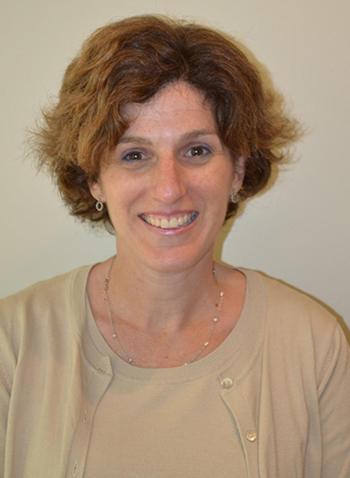
Ms. Book has worked in the field of Social Work for over 30 years in a variety of community and hospital settings with an interest in the geriatric population. She has worked with individuals, families and as a leader of support groups. She is the Center Coordinator and Clinic Social Worker for the Pacific Parkinson’s Research Centre, a PF Center of Excellence, at the University of British Columbia in Vancouver, Canada.
She has become a leader in the PD community, serving as a speaker at support groups, a presenter at neurology meetings, a faculty member of the Allied Team Training Program, mentor with the Parkinson Foundation, planning committee member of the World Parkinson Congress (2016,2019) and a member of the Parkinson Canada Medical Advisory Council. Ms. Book also coordinates a blog designed for neurological social workers and has a special interest in raising awareness and developing resources for PWP and their children/teens.
Ms. Book earned her B.S.W. from the University of Manitoba and her M.S.W. from the University of British Columbia, with her thesis focusing on caregiver stress. She has continued to expand her training throughout her career, including cognitive behavioral therapy, advance care planning and social work instruction.

Want more?
Don't forget to subscribe! There are many ways to listen: Apple Podcasts, TuneIn (Amazon Echo), Spotify or RSS Feed. (Need help subscribing? See our quick guide.)
For all of our Substantial Matters podcast episodes, visit Parkinson.org/Podcast.