Episode 103: Best Practices & Guidance: Navigating Assisted Living and Skilled Nursing Facilities
-
Dan Keller 0:08
Welcome to this episode of Substantial Matters: Life and Science of Parkinson's. I'm your host, Dan Keller, at the Parkinson's Foundation. We want all people with Parkinson's and their families to get the care and support they need. Better care starts with better research and leads to better lives. In this podcast series, we highlight the fruits of that research—the treatments and techniques that can help you live a better life now, as well as research that can bring a better tomorrow.
At some point in the course of Parkinson's disease, it may be necessary to consider admission to an assisted living facility or a skilled nursing facility, as this is most likely a long-term prospect. Making the right choice of a facility is critical, raising many questions, including location, physical layout, services, experience of the staff in caring for people with Parkinson's, cost, and more. Nurse Clinician Joan Gardner and physical therapist Rose Wichmann of the Struthers Parkinson's Center, with locations in the Minneapolis area, explore some of the issues in choosing a facility and offer some questions to get answered in making the choice. Today's podcast is sponsored by Kyowa Kirin. To kick off our conversation, I asked Joan what people should think about first.
Joan Gardner 1:39
It's important to think about location. Is the future facility in a location that's accessible for families and friends, or in an area of town that's difficult to get to, or unsafe to get to? Are you thinking about... are you comfortable coming and going? That is one key point. Another point—and not always an easily achievable level of care—is something also for people to think about. Will there need to be a move to another facility if symptoms increase? What is the capability of staffing to manage symptoms as Parkinson's symptoms progress? What is the staffing? Can they meet staffing needs with increased symptoms?
What kind of activities are offered? Are there exercise classes, other activity classes? What's the opportunity for making social connections? Oftentimes, people with Parkinson's throughout their journey with PD need rehab care, so are there rehab therapies on-site, or do they contract with another company? And if so, what is the level of understanding of Parkinson's disease from those rehab staff?
What about transportation? Are there outings to grocery stores or to other things like museums or other kinds of field trips? And of course, what is the knowledge of staff around Parkinson's, manageability of symptoms, and things like that? So that speaks to Parkinson's awareness. Do staff understand that symptoms are really variable from person to person, that Parkinson's will progress over time, and the very important question of the understanding of the needs for pills on time for Parkinson's, which we'll talk about later.
Rose Wichmann 3:32
I think there's a few other important things to consider as well. One is just the reality of cost. There may be a place that someone thinks is perfect, but if it is not an affordable place, there are questions that need to be answered. Is there a flat rate for the services that are provided, or are costs based on the cares that are provided? Do they accept what are called state waiver programs, or do they accept medical assistance if that financial need is there?
And then there are also just practical concerns. Where would the apartment or the room be located within the site, considering things like walking distance from the dining room or activities? Is there an elevator that the person with Parkinson's needs to get on and off, which can sometimes be very difficult for someone with freezing? And then there's just approachability, and the willingness to partner and listen to the unique needs of the individual with Parkinson's disease.
Dan Keller 4:35
Is it a mistake to assume that staff at most places know about dealing with Parkinson's disease? And I guess that includes staff not only the professional staff, but all the way down to aides and people who would be doing hands-on care at various times.
Joan Gardner 4:54
I think that Parkinson's disease education for staff is not mandated as education for dementia is, and so most staff members have not had formal education. However, there are some short training programs through some of the online programs, but we find that these programs don't really address practical strategies in managing symptoms of Parkinson's disease. Usually, they give a much higher-level overview of Parkinson's symptoms, and that obviously isn't helpful information for providing day-to-day care, especially from the direct care providers, the nursing assistants. So most staff are not educated in Parkinson's care.
Dan Keller 5:45
Do they often misunderstand or misinterpret Parkinson's symptoms?
Rose Wichmann 5:52
There are several symptoms that are kind of widely misunderstood that people with Parkinson's may have. Probably one of the most common misinterpretations is the lack of facial expression, or facial masking, that's caused by Parkinson's disease. Because people with Parkinson's don't usually have a lot of facial expression, they can sometimes be labeled as depressed, or disinterested, or even confused, or not understanding what's being said, when that's not the case. It's simply the loss of facial expression that can happen in Parkinson's.
Another misunderstanding is what are referred to as motor fluctuations—the "ons and offs" of Parkinson's. A care assistant might see someone walking down the hall at 10:00 AM, only to have that same person ask for assistance around noon. Sometimes that's misinterpreted as attention-seeking or manipulative behavior, when, in fact, it just has to do with where the person is in their medication cycle and how their symptoms are doing.
And I think the third main one that I can think of is freezing—freezing of gait, where that person gets stuck, literally unable to move. Sometimes people misinterpret that as someone who, again, is being obstinate or resistant, when indeed their feet are really just kind of stuck at that moment due to that freezing of gait that can happen in Parkinson's disease.
Dan Keller 7:26
Some of these symptoms may be related to "off" times. So, what is the importance of delivering medication on time, and how realistic is that?
Rose Wichmann 7:40
I think pills on time is an extremely important part, as we all know, in Parkinson's disease. Usually, the federal and state laws provide flexibility in that if a pill is scheduled at a certain time of the day, the person administering that pill may have an hour before or an hour after to give that pill and have it be considered on time. That just doesn't work for people with Parkinson's, and so staff really need to understand the importance of pills on time, every time.
Dan Keller 8:13
Have you ever been able to study, or have there been studies of how often that happens and if it's adhered to?
Joan Gardner 8:21
Yes, we have a couple of things—projects that we've been involved with here at the Struthers Parkinson's Center. One actually involved our affiliated hospital setting, Methodist Hospital in St. Louis Park, Minnesota, where we worked with nursing leadership, the pharmacy, and nursing departments to really drill in the importance of pills on time. We actually used the electronic medical record in providing cues to nurses to signal the need for timeliness in the administration of carbidopa-levodopa for Parkinson's disease.
Another project Rose and I are involved with is the Struthers Parkinson's Care Network, where we use an acronym called TULIPS to describe the care needs of those living with Parkinson's. One of the letters in that acronym is P, for pills on time. We conduct medication audits—or actually, the sites in the care network conduct medication audits several times a year—where we study the scheduled time and the administered times of carbidopa-levodopa. We do find that with education, nurses and other levels of staff who distribute medications—the med techs in most assisted livings—are able to change their habits once they understand the importance of pills on time, and we see changes in those numbers.
Dan Keller 9:51
You defined the P in TULIPS as pills, but the whole thing is T-U-L-I-P-S. So, what do the other letters stand for, and how do they inform the staff about the needs of people with Parkinson's?
Rose Wichmann 10:06
A red tulip is the international symbol of Parkinson's awareness, which is why Joan and I chose that word to develop the acronym TULIPS.
The T in the TULIPS acronym stands for Time. We know that with the slowness of movement that is caused by Parkinson's disease, it is very difficult for someone with Parkinson's to try and hurry or rush. If they're feeling stressed, like they feel like they must hurry, they generally get even slower because stress makes all the symptoms worse. So, the T in the acronym stands for time.
The U in the acronym stands for Understanding, and that's kind of the need for understanding these "ons and offs" that can happen in Parkinson's, or the freezing of gait, or some of the other kind of mobility issues that we see in people with Parkinson's, and in kind of understanding the cues that people might benefit from in helping them to move.
The L in the TULIPS acronym stands for Life, quality of life. We all need a good quality of life, but people with Parkinson's sometimes need modifications in order to achieve a good quality of life. The importance of exercise in Parkinson's is well known, and so incorporating exercise into the daily routine is very, very important. Modifications of leisure interests, you know—people may garden in a raised bed from a seated position rather than being able to stand and garden because of balance issues, if gardening is something that someone would be interested in doing. Or someone might need an adaptive equipment piece in order to eat more easily or get dressed more easily. So, there's a variety of things that can offer a good quality of life.
Joan Gardner 11:54
And then the I in the TULIPS acronym stands for Increased Awareness. This kind of goes back to the thinking about symptoms of Parkinson's disease. Most people kind of equate symptoms with motor symptoms: the tremor, the slowness of movement, the stiffness that somebody might have, and the changes in balance. But the non-motor symptoms in Parkinson's disease are just as important as motor symptoms, and there is a very large lack of awareness of non-motor symptoms, such as mood changes, depression, or anxiety, low blood pressure, constipation, changes in skin, sleep changes, and cognitive changes. So there's a great opportunity for awareness of non-motor symptoms with staff who work in residential care communities.
We talked about the pills on time, the P in the TULIPS acronym, but I'd like to add that one of the things we like to really teach our patients and families, along with healthcare providers, is when you're translating a medication schedule for a resident living with Parkinson's, it's important to enter specific times. So, carbidopa-levodopa 25/100 at 8:00, 12:00, 4:00, and 8:00, not QID, which is medical language for four times a day. QID is different in every computer program out there, and so it's really important for staff to enter in specific times, and that will hopefully translate into that resident receiving pills on time.
And then, lastly, the S in the TULIPS acronym stands for Support. Obviously, we all need support in order to live well, but in particular, for a symptom of Parkinson's like low voice volume—which is a very key characteristic and way of speaking for individuals with Parkinson's—oftentimes it's difficult to hear what they're saying. Just teaching staff to ask that resident with Parkinson's to sit up tall, take a deep breath, and say it again with a loud voice, because we want to hear what they have to say. And also, supporting them through mood changes—supporting that depression or anxiety are common in Parkinson's disease, and how can we support that individual as they live and work through those symptoms? And then the last thing is supporting family caregivers and including them in the care plan and in communication.
Dan Keller 14:49
They have a role as an advocate, also overseeing the care.
Rose Wichmann 14:54
I think family caregivers need to understand that even if their loved one may be transitioning to a different living situation, they'll always be the family caregiver, and they're a really important member of the team. They do have a role as an advocate to ensure that their loved one is receiving care in the best possible manner. It may be a family caregiver who's raising awareness of those important things, like pills on time or understanding Parkinson's symptoms.
They also may be the person who catches a misunderstanding or an error. You know, as people transition from hospital to senior living, or from home to another community, sometimes there are errors inadvertently made as to how medication schedules are transcribed or how other things may have been changed within a hospitalization. So a family caregiver could recognize that error and inform the staff.
And then, they know the individual with Parkinson's best. They knew that person likely before Parkinson's, and they know them now, and they have great awareness of their personal preferences and choices, and what kinds of things would be their likes and dislikes. All those things are extremely important in the plan of care.
Dan Keller 16:18
What have we missed, or what might be interesting to add?
Joan Gardner 16:22
I think that one thing that we could add here is one of the early questions about whether sites are familiar with Parkinson's disease, and I think sometimes that depends on who the staff is and the experience of the staff. But what we have found over the years is that you don't know what you don't know, right? So a health professional may think, "Well, I've worked with five or ten people with Parkinson's, and I certainly know everything there is to know about Parkinson's disease." But really, then, when they start learning, they kind of open their mouth and are aghast because of what they didn't know. Invariably, people will say, "Oh, I wish I would have known that for Mr. Such-and-Thus," and, "Oh, Mrs. Smith, I could have done so much better if I would have known this." So knowledge is power, and it really gives staff confidence if they understand symptoms and, again, understand practical strategies on how best to manage those symptoms person-to-person, because again, Parkinson's is really a variable disease and has variable symptoms person-to-person.
Dan Keller 17:37
The care partner probably is a good educator for the staff in a non-threatening, gentle manner—to say, "Well, actually, everybody's different, and my partner often exhibits this or that."
Rose Wichmann 17:53
Most definitely. We all know that Parkinson's disease is unique to each person. Everyone's symptoms are just a bit different, and if an individual has worked with a person with Parkinson's, they kind of know one person with Parkinson's. The next person that they meet or care for may exhibit completely different symptoms and have completely different preferences. So I think we have to be attuned to that and know that Parkinson's looks a bit different in each and every individual.
Joan Gardner 18:24
You made an insightful comment about caregiver education and their role in educating staff about their loved ones' particular care needs. However, it can become a burden to caregivers because staff changes so often at residential care communities. The staff attrition rate is usually around 50%, and more in some geographical areas of the United States, and so caregivers often tell stories of, "At every shift change, I'd have to say it all again, and then I'd finally get staff to work with my loved one, and they would leave, and then I had to start all over again." So, some kind of process for education that is ongoing to meet the needs of staff coming and going within a facility is important. We have to say that the Struthers Parkinson's Care Network can serve that purpose. It has a way to keep education up and manage staff attrition.
Rose Wichmann 19:23
A point of clarification, though, that I would also like to say is I think it's very appropriate to say that there are online training programs or some online education about Parkinson's. They tend to be very brief, and they don't tend to offer, as Joan mentioned earlier, the practical strategies of care for Parkinson's disease. I'm a little uncomfortable saying one is not good, but I think we need to say that they can be rather brief, and that people really don't get a lot of background information or a lot of hands-on suggestions on what may be the most helpful.
Dan Keller 20:05
So it sounds like they can be useful, but they're not the end-all and be-all.
Rose Wichmann 20:09
Exactly.
Joan Gardner 20:11
I agree.
Dan Keller 20:13
Well, very good. I appreciate this, and I'm sure that people considering moving to an assisted living facility or the like will take away quite a bit from it. And of course, there's quite a bit on the Parkinson's Foundation website, too.
For more information on choosing an assisted living or skilled nursing facility, you can search for assisted living and skilled nursing in our library at parkinson.org/library. There you can see fact sheets with tips on finding the right facility of each kind, along with detailed worksheets with questions and room for answers that you can use to evaluate each facility that you may be considering. While the task may seem overwhelming at first, these worksheets should help you keep each facility's attributes better organized to be able to make a good choice.
To learn more about the importance of receiving medications on time through our Aware in Care hospitalization kit and resources, please visit parkinson.org/awareincare. You can also download or order our publication on medications by visiting parkinson.org/store.
If you have questions about today's topic or anything else having to do with Parkinson's, our information specialists can provide answers in English or Spanish. You can reach them at 1-800-4PD-INFO. News and updates about future events and resources are available by joining our email list at the bottom of our website's homepage. If you want to leave feedback on this podcast or any other subject, you can do it at parkinson.org/feedback.
If you enjoyed this podcast, be sure to subscribe and rate and review the series on Apple Podcasts, or wherever you get your podcasts. At the Parkinson's Foundation, our mission is to help every person diagnosed with Parkinson's live the best possible life today. To that end, we'll be bringing you a new episode in this podcast series every other week. Until then, for more information and resources, visit parkinson.org or call our toll-free helpline at 1-800-4PD-INFO, that's 1-800-473-4636. And thanks again to Kyowa Kirin for sponsoring today's podcast. Thank you for listening.
When to consider an assisted living facility or a skilled nursing facility for someone with Parkinson’s disease (PD) is a monumental decision, raising a list of questions, including quality of the facility, location, physical layout, services, staff training and experience in caring for people with PD, financial aspects, and more. A care partner is integral in helping to research facilities and evaluate their appropriateness based on their partner’s needs and preferences. But the role of the care partner does not end there. Once a person is in such a facility, the partner can help implement best care practices, letting staff know about particular symptoms, needs, habits, and preferences of the resident, as well as advocate for them when necessary.
In this podcast episode, Joan Gardner, BSN, nurse clinician, and Rose Wichmann, PT, director of the Struthers Parkinson’s Center in the Minneapolis area, a Parkinson’s Foundation Center of Excellence, explore many of the issues that are central to choosing an assisted living or skilled nursing facility as well as ensuring the best experience once someone resides there.
Released: May 4, 2021
-
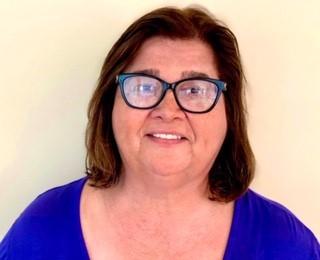
Joan Gardner is a Nurse Clinician at the Struthers Parkinson’s Center in Golden Valley, MN. She is the co-coordinator for the Parkinson’s Foundation Center of Excellence at that site, and co- developed the Struthers Parkinson’s Care Network, a multi-state program that partners with senior residential communities and home care agencies to provide Parkinson’s Disease (PD) education and outcomes to its members.
Joan has worked in the Parkinson’s community for over 25 years, including with families living with Parkinson’s as a nursing leader on the interdisciplinary team at Struthers, as co-author of numerous publications and resources for the Parkinson’s Foundation, and as nursing faculty for national PD educational programs for health professionals. Joan is a frequent speaker at patient educational events, and has been a part of projects to improve care for those living with PD, including a project to improve timely administration of levodopa within her local affiliated hospital. Joan currently participates on several national and international PD task forces.
Joan was the 2018 recipient of the Methodist Hospital Sarah Harrison Knight Award for excellence in nursing leadership and community outreach, a 2014 Health Partners Team Presidents award and a 2009 recipient of the Paul M. Silverstein community service award.
Prior to working with the Parkinson’s community, Joan was a home care nurse for 16 years for agencies in Massachusetts, Wisconsin and Minnesota. Joan received her Bachelors of Science in Nursing at the University of Wisconsin-Madison.

-
Rose Wichmann is the director of the Struthers Parkinson's Center, part of Park Nicollet Health Services. Located in Golden Valley MN, Struthers Parkinson’s Center is designated a Center of Excellence of the Parkinson’s Foundation The center is nationally recognized for its comprehensive team approach to management of Parkinson’s and related movement disorders.
In addition to her 30+ years of experience as a physical therapist, Rose is involved in educational programs designed to improve Parkinson’s awareness for patients, family care partners, senior residential communities home care agencies, and rural outreach areas. She is a frequent speaker, co- developer of the Struthers Parkinson’s Care Network, past president of Parkinson Association of Minnesota, and a past recipient of the Silverstein Community Service Award for her work to improve programs and services for the Parkinson’s community in the Upper Midwest.
Rose is a graduate from the University Of Minnesota School Of Physical Therapy. She has been a contributing author to several textbooks on Parkinson’s disease, and is the co –author of a number of publications distributed by the Parkinson’s Foundation. In 2012, she co-authored a book titled “Navigating Life with Parkinson’s Disease” for the American Academy of Neurology. A second edition of this book was recently released in 2020.


Want more?
Don't forget to subscribe! There are many ways to listen: Apple Podcasts, TuneIn (Amazon Echo), Spotify or RSS Feed. (Need help subscribing? See our quick guide.)
For all of our Substantial Matters podcast episodes, visit Parkinson.org/Podcast.