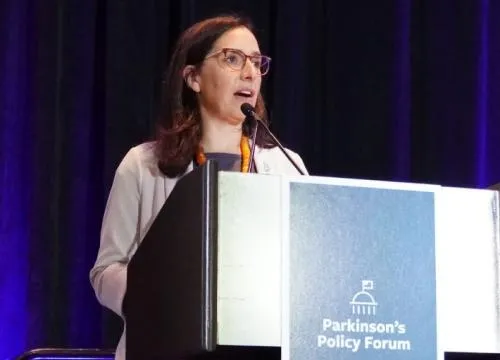
Check-in, lunch and resource fair begin at 11 a.m.
Living with Parkinson's can be challenging, but there are many things you can do to maintain and improve your quality of life. Join us to learn about important lifestyle factors to help you live your best life, including exercise, nutrition and sleep, as well as a live Q&A session with Parkinson's experts.
Expert Speakers
Tran Le, MD
UT Southwestern Medical Center
Valerie Johnson, PT, DPT
Balance Therapy LLC
Michael Salvatore, PhD
UNT Health Science Center
Vicki A. Nejtek-Salvatore, PhD
Parkinson Discovery Institute
Ali Mahmood, MD
UT Southwestern Medical Center
Sarah Diesing, MS, CCC-SLP
Parkinson Voice Project
This is an in-person program. Check-in, lunch, and resource fair begin at 11 a.m.
Parking: Parking is complimentary for program attendees. For driving directions, please click here.
There is no charge to attend, but registration is required as lunch is provided. This program is open to people with Parkinson's, their families and friends, medical providers/practitioners, and the community.
Tengo aproximadamente 8 años trabajando en la comunidad de Chicago y suburbios ofreciendo clases y recursos de salud en la comunidad de la 3ra edad latina.
Mi experiencia laboral me ha llevado a educar, ayudar y convivir con personas de la tercera edad y a romper las barreras del idioma, entre otros determinantes sociales en la salud.
Trabajé en una agencia que ayudaba en la lucha contra el Alzheimer y así es como conocí la Parkinson’s Foundation ya que, al ser tipos de demencia, están relacionadas con las funciones del cerebro que afectan a personas de la tercera edad.
Actualmente, estoy tomando entrenamientos sobre el Parkinson y llevando los recursos a las comunidades latinas y de bajos recursos para romper estigmas de la enfermedad y dando a conocer los avances de la lucha contra el Parkinson.
He podido conocer y convivir con personas que actualmente tienen Parkinson, así como con sus cuidadores y familiares. Me alegra poder ayudarlos con los recursos que ofrece la Fundación. Es importante que sepan que no están solos; que sepan que en la Parkinson’s Foundation hay muchas personas trabajando para lograr tener una cura en un futuro.
Recientemente, pude participar en la elaboración de un anuncio de servicio a la comunidad para la Fundación que se hizo en español e inglés. Para mí, fue emocionante saber que estaba en español porque la información llegará a la comunidad hispanohablante en nuestro idioma.
¡La importancia de este comercial es para que sepan que no están solos y que pueden acercarse a la Fundación y encontrar muchos recursos en español!
¡Espero que puedan compartir con las personas para que sepa que la Parkinson Foundation es una comunidad que los puede ayudar y guiar!
Yo seguiré educándome y llevando los recursos en eventos de salud, presentaciones y participando en la carrera de la Parkinson’s Foundation donde espero conocerlos y platicar.
4 High-Impact Solutions to Transform Parkinson’s Care in the U.S.
Parkinson’s disease (PD) care in the U.S. is at a critical crossroads. As the population ages, more people are being diagnosed with PD. The growing number of people living with PD is outpacing the number of neurologists, creating gaps in access to PD care and impacting quality of life for people with PD and their loved ones. The Parkinson’s Foundation is taking action, identifying ways to improve Parkinson’s care on a national scale.
On September 4, 2025, the Parkinson’s Foundation led The National Roundtable on Parkinson’s Care and Innovation in Washington, D.C., with support provided by Manatt Health. The Foundation organized this first-of-its-kind convening with the goal of identifying solutions to address the most pressing national challenges in Parkinson’s care. Participants included people living with PD, care partners, physicians, health care providers, health system leaders, policy experts and innovators across disciplines and industries — inside and outside of the PD space.
Roundtable participants discussed what is and is not working in PD care and what must change to improve outcomes, reduce costs and ease care partner strain. Their discussion resulted in a new multiyear roadmap to transform PD care called Parkinson’s Care and Innovation: A Patient-Centered Agenda for Change.
“The four priorities in care that came out of the roundtable are not one-size-fits-all solutions, they reflect the nuances of living with this disease. These priorities identify practical, actionable steps to strengthen Parkinson’s care, improve coordination and ensure that people with Parkinson’s receive the support they need to live well,” said Chief Medical Officer of the Parkinson’s Foundation, Sneha Mantri, MD, MS.
Below are the four high-impact, actionable solutions to transform PD care in the U.S.:
1. Create networks to support general neurologists and primary care who provide Parkinson's care.
With only 660 movement disorder specialists practicing in the U.S., most people with Parkinson’s receive their PD care from a general neurologist or primary care provider. These community clinicians often have less experience and expertise in PD.
To ensure that all people with PD have access to high-quality, evidence-based care regardless of where they live or receive treatment, it is critical that we extend PD expertise to community clinicians.
Education and consultation networks that connect community clinicians with movement disorders specialists can provide the support community clinicians need to navigate the complexities of PD diagnosis and treatment. Equipping community clinicians with these resources and tools can help people with PD access high-quality Parkinson’s care closer to home.
Resources available now to help make this a reality:
People with Parkinson’s and care partners can explore ways to play an active role in optimizing their care.
2. Develop a care model that makes it easier for people with PD to access services they need to live well.
Quality Parkinson’s care uses a team-based approach that focuses on what matters most to the person with PD. PD care should be tailored to each person and connect them to rehabilitative therapies, mental health and complementary medicine.
However, across the U.S., the availability of providers varies, making it difficult for people with PD and care partners to navigate and access services. For example, compared to those in urban areas, people with PD living in rural areas typically have less access to movement disorders specialists and can find it difficult to build a care team trained in PD.
The PD community needs an evidence-based care model that can be adapted to communities across the U.S. Among many positive outcomes, goals of creating this care model include accelerating time to diagnosis, helping people get the services they need, and addressing the impact of care coordination often felt by care partners.
Resources available now to help make this a reality:
3. Make it easier for health professionals to share information across care settings.
Parkinson’s requires care from a variety of health professionals across many care settings. Ideally, when a person with PD moves between doctors and specialists, these providers would be able to share information with one another. However, limitations in current systems and technology make it challenging for clinicians to communicate, even when treating the same person.
To address this challenge, the PD community needs a standardized clinical data set. This universal data set would serve as a common language across all care settings, ensuring that every time a person with PD sees a clinician, that provider can access essential information, such as past and current treatment plans.
A standardized PD data set would allow health care providers to see the full picture of their patient, and better tailor treatment for them. In the long-term, this data set could also help improve our understanding of Parkinson’s and lay the groundwork for future innovations in care.
Resources available now to help make this a reality:
4. Encourage technological developments grounded in real PD experiences.
Every year there are new ways people with PD can use technology to help manage symptoms. A variety of tech-driven tools are now available to support people with PD, care partners and clinicians. However, these tools have not been widely adopted.
Technology has the potential to transform Parkinson’s care — but only if it reflects real-world needs. Tech-driven tools and innovations must be grounded in the lived experiences of people with Parkinson’s and care partners and must generate data that is easily used by clinicians to inform treatment.
The PD community needs a framework that guides innovation and investment in Parkinson’s technology. This framework would identify the most important problems to address, those who would realistically use this technology and the collaboration and investments needed to bring the technology to life. The framework will ensure innovation is centered on people with Parkinson’s and care partners.
What’s Next: How to Implement These Changes
Bringing attention to these four high-impact solutions to transform PD care in the U.S. are only the beginning.
“This specific, achievable, and robust agenda gives our community a much-needed action plan to address the challenges that so many of us face. Following these steps will make life better for people with Parkinson’s now and in the future. Time is precious and we have no time to waste!"
-Kathy Blake, Chair of the People with Parkinson’s Advisory Council, retired cardiologist and Roundtable participant
Improving Parkinson’s care on a national scale requires bold ideas, working across PD organizations and the continued commitment to make life better for people with Parkinson’s. As a national leader in Parkinson’s care, the Foundation is has built these four priorities into its strategic plan. Through working with policymakers, clinicians, researchers, industry partners and people living with Parkinson’s, the Foundation works to drive change when it comes to care.
Today, the Foundation is working to drive change through policy. Once the National Parkinson’s Project Advisory Council is seated, council members can use these four ways to improve Parkinson’s care in the U.S. as a roadmap to improve health outcomes for people with PD.
The Parkinson’s Foundation is committed to playing a role in advancing these solutions, ensuring the voices of people with Parkinson’s are heard.
4 soluciones de gran impacto para transformar los cuidados para el Parkinson en los EE.UU.
La atención para la enfermedad de Parkinson (EP) en los EE.UU. se encuentra en una encrucijada crítica. A medida que envejece la población, hay más diagnósticos de la EP. El creciente número de personas que viven con la EP está superando al número de neurólogos, creando lagunas en el acceso a la atención de la EP e impactando en la calidad de vida de las personas con la EP y de sus seres queridos. La Parkinson's Foundation está actuando, identificando formas de mejorar los cuidados para el Parkinson a escala nacional.
El 4 de septiembre de 2025, la Parkinson's Foundation dirigió la National Roundtable on Parkinson’s Care and Innovation, (Mesa Redonda Nacional sobre Cuidados e Innovación para el Parkinson) en Washington, D.C., con el apoyo de Manatt Health. La Fundación organizó esta primera reunión de su tipo con el objetivo de identificar soluciones para abordar los desafíos nacionales más apremiantes en los cuidados para el Parkinson. Entre los participantes se encontraban personas que viven con la EP, aliados en el cuidado, médicos, proveedores de atención para la salud, líderes de sistemas de salud, expertos en políticas e innovadores de distintas disciplinas e industrias, dentro y fuera del ámbito de la EP.
Los participantes en la mesa redonda debatieron acerca de lo que funciona y lo que no en la atención para la EP y de lo que debe cambiar para mejorar los resultados, reducir costos y aliviar la tensión de los cuidadores. Su debate dio lugar a una nueva hoja de ruta plurianual para transformar la atención de la EP denominada Parkinson's Care and Innovation: A Patient-Centered Agenda for Change, (Cuidado e innovación para el Parkinson: una agenda para el cambio centrada en el paciente).
"Las cuatro prioridades de atención que surgieron de la mesa redonda no son soluciones “unitalla”, sino que reflejan los matices de vivir con esta enfermedad. Esas prioridades identifican pasos prácticos y factibles para fortalecer los cuidados para el Parkinson, mejorar la coordinación y asegurar que las personas con Parkinson reciban el apoyo que necesitan para vivir bien", dijo la Dra. Sneha Mantri, MD, MS, FAAN, directora médica en jefe de la Parkinson's Foundation.
Las siguientes son las cuatro soluciones de alto impacto y factibles para transformar los cuidados para la EP en los EE.UU.:
1. Crear redes de apoyo para los neurólogos generales y de atención primaria que atienden el Parkinson.
Con sólo 660 especialistas en trastornos del movimiento ejerciendo en los EE.UU., la mayoría de las personas con Parkinson reciben su atención para la EP de un neurólogo general o de un proveedor de atención primaria. Estos médicos comunitarios suelen tener menos experiencia y conocimientos en la EP.
Para garantizar que todas las personas con la EP tengan acceso a una atención de alta calidad basada en evidencia sin importar dónde vivan o reciban tratamiento, es fundamental que ampliemos los conocimientos en la EP a los médicos comunitarios.
Las redes de educación y consulta que conectan a los médicos de la comunidad con los especialistas en trastornos del movimiento pueden proporcionar el apoyo que los médicos de la comunidad necesitan para navegar por las complejidades del diagnóstico y el tratamiento de la EP. Equipar a los médicos comunitarios con estos recursos y herramientas puede ayudar a las personas con la EP a acceder a una atención de alta calidad para el Parkinson más cerca de casa.
Recursos disponibles ahora para ayudar a hacerlo realidad:
Las personas con Parkinson y sus aliados en el cuidado pueden explorar formas de jugar un papel activo en optimizar sus cuidados.
Los neurólogos generales y los proveedores de atención primaria pueden explorar recursos de la Parkinson’s Foundation y materiales educativos para pacientes.
2. Desarrollar un modelo de atención que facilite a las personas con la EP el acceso a los servicios que necesitan para vivir bien.
La atención de calidad para el Parkinson utiliza un enfoque basado en el trabajo en equipo que se centra en lo más importante para la persona con la EP. Los cuidados para la EP deberían adaptarse a cada persona y conectarla con terapias de rehabilitación, salud mental y medicina complementaria.
Sin embargo, la disponibilidad de proveedores varía en los EE.UU., lo que dificulta a las personas con la EP y a sus cuidadores navegar y acceder a los servicios. Por ejemplo, en comparación con las que viven en zonas urbanas, las personas con la EP en zonas rurales suelen tener menos acceso a especialistas en trastornos del movimiento y les puede resultar difícil formar un equipo de atención con formación en la EP.
La comunidad de la EP necesita un modelo de atención basado en evidencia que pueda adaptarse a las comunidades alrededor de los EE.UU. Entre los muchos resultados positivos, los objetivos de crear este modelo de atención incluyen acelerar el tiempo hasta el diagnóstico, ayudar a las personas a obtener los servicios que necesitan y abordar el impacto de coordinar los cuidados, que a menudo experimentan los aliados en el cuidado.
Recursos disponibles ahora para ayudar a hacerlo realidad:
3. Facilitar a los profesionales de la salud intercambiar información entre centros de atención.
El Parkinson requiere cuidados de diversos profesionales de la salud en muchos entornos de atención. Lo ideal sería que, cuando una persona con la EP alterna entre médicos y especialistas, éstos pudieran compartir información entre sí. Sin embargo, las limitaciones de los sistemas y la tecnología actuales dificultan la comunicación entre los profesionales, incluso cuando tratan a la misma persona.
Para abordar este desafío, la comunidad de la EP necesita un conjunto de datos clínicos estandarizados. Este conjunto de datos universales serviría como lenguaje común en todos los entornos de atención, garantizando que cada vez que una persona con la EP vea a un médico, éste pueda acceder a información esencial, como los planes de tratamiento pasados y actuales.
Un conjunto de datos estandarizados acerca de la EP permitiría a los profesionales de la salud tener un panorama completo del paciente y adaptar mejor el tratamiento a sus necesidades. A largo plazo, este conjunto de datos también podría ayudar a mejorar nuestra comprensión del Parkinson y sentar las bases para futuras innovaciones en la atención.
Recursos disponibles ahora para ayudar a hacerlo realidad:
La Red Global de Atención de la Parkinson’s Foundation conecta a las personas diagnosticadas de la EP con expertos de atención clínica que les ayudan a controlar los síntomas y a mejorar su calidad de vida.
4. Fomentar desarrollos tecnológicos basados en experiencias reales de la EP.
Cada año aparecen nuevas formas en las que las personas con la EP pueden utilizar la tecnología para ayudar a manejar los síntomas. Actualmente existen varias herramientas tecnológicas para ayudar a las personas con la EP, a sus cuidadores y a los médicos. Sin embargo, estas herramientas no se han adoptado de forma generalizada.
La tecnología tiene el potencial de transformar los cuidados para el Parkinson, pero sólo si refleja las necesidades del mundo real. Las herramientas e innovaciones tecnológicas deben basarse en las experiencias vividas por las personas con Parkinson y sus aliados en el cuidado y deben generar datos que los médicos puedan utilizar fácilmente para informar acerca del tratamiento.
La comunidad de la EP necesita un marco que guíe la innovación y la inversión en tecnología para el Parkinson. Este marco identificaría los problemas más importantes que hay que resolver, quiénes utilizarían esta tecnología de forma realista y la colaboración e inversiones necesarias para hacerla realidad. El marco garantizará que la innovación se centre en las personas con Parkinson y en los aliados en el cuidado.
Recursos disponibles ahora para ayudar a hacerlo realidad:
Explore las herramientas tecnológicas para la vida diaria con Parkinson
Qué sigue: cómo aplicar estos cambios
Enfocar la atención en estas cuatro soluciones de gran impacto para transformar los cuidados para la EP en los EE.UU. es sólo el principio.
"Esta agenda específica, alcanzable y sólida ofrece a nuestra comunidad un plan de acción muy necesario para abordar los desafíos a los que tantos nos enfrentamos. Seguir estos pasos mejorará la vida de las personas con Parkinson ahora y en el futuro. ¡El tiempo es oro y no tenemos tiempo que perder!"
-Kathy Blake, presidenta del Consejo Asesor para Personas con Parkinson de la Parkinson’s Foundation (Parkinson’s Foundation People with Parkinson’s Advisory Council), cardióloga jubilada y participante en la mesa redonda.
Mejorar los cuidados para el Parkinson a escala nacional requiere ideas audaces, trabajar a través de las organizaciones de la EP y el compromiso continuo de mejorar la vida de las personas con Parkinson. Como líder nacional en la atención para el Parkinson, la Fundación ha incorporado estas cuatro prioridades en su plan estratégico. A través de la colaboración con legisladores, médicos, investigadores, socios de la industria y personas que viven con Parkinson, la Fundación trabaja para impulsar el cambio en lo que respecta a la atención.
Hoy en día, la Fundación trabaja para impulsar el cambio a través de políticas. Una vez que se constituya el Consejo Asesor del Proyecto Nacional sobre el Parkinson (National Parkinson’s Project Advisory Council), los miembros del consejo podrán utilizar estas cuatro formas de mejorar la atención para el Parkinson en los EE.UU. como hoja de ruta para mejorar los resultados de salud de las personas con la EP.
La Parkinson's Foundation se compromete a desempeñar un papel en el avance de estas soluciones, asegurando que las voces de las personas con Parkinson sean escuchadas.
Join us for a live fitness class, offered once a month. Each Friday, we share a PD-tailored video that features a different focus every week, from balance to coordination and more.
Instructor
Dr. Meredith Roberts Lo, DPT
Founder, Parkinson's Pointe
There is no charge to attend, but registration is required. This program is open to people with Parkinson's, their family, friends, and the community.
Grow your knowledge of support, classes, and services for your journey with Parkinson’s. Visit with local resources at exhibit tables to learn about their offerings. Complimentary refreshments.
Speakers:
Panel discussion with speakers from M Health Fairview
There is no charge to attend, but registration is required. This program is open to people with Parkinson's, their family, friends and the community.
1:00-2:00 pm: Resource table visits in the gym
2:00-3:00 pm: Panel discussion with expert from M Health Fairview
3:00-3:30 pm: Last chance for attendees to pick up materials from vendor tables following the presentation
Navigating transitions between the emergency department, inpatient, and outpatient can be challenging not only for patients, but also for care team members. This discussion will highlight the significance of care team communication and collaboration and learning opportunities from different hospitals' successes and challenges.
Featuring special guests: Nicholas Thalken, DO, Annie Brooks, MSW & Maggie Ivancic, MSW, LCSW and moderator, Sneha Mantri, MD, MS, FAAN.
Join the Parkinson's Foundation for our inaugural Ski for Science: Supporting Parkinson’s Research event at Loveland Ski Area.
Ski for Science is an alpine ski event for all ages, featuring live music, a mountain scavenger hunt, barbecue lunch, raffle prizes, and a silent auction—all in support of Parkinson’s research. Come enjoy a day on the slopes, connect with community (including a PD researcher), and help move science forward toward better treatments and a cure.
Event timeline: Check in begins at 9:30am, with the scavenger hunt beginning at 10:30am. A barbecue lunch will be served at noon and will be followed by a short program starting at 2:30pm. Live music and activities will continue from 3-5pm, with the lifts closing at 4pm.
Check-in, Lunch and Resource Fair begin at Noon. Program begins at 1 pm.
Even after years of good symptom control, Parkinson's disease can take unexpected turns. This program explores the "mid-stride" changes that happen and offers strategies to manage them. Learn about treatment options, when to adjust your care team, and how to stay independent and supported as your needs change.
Expert Speakers
Daniel G. DiLuca, MD, MSc
Assistant Professor of Neurology
Washington University School of Medicine
Nathan Wachter, MD
Neurology—Movement Disorders
Mercy Hospital St. Louis
This is an in-person program. Check-in, lunch, and Resource Fair begin at Noon.
Parking: Complimentary parking is available in the parking garage and outside surface lot. Convenient drop-off is available at the west entrance. For driving directions, please click here.
There is no charge to attend, but registration is required as lunch is provided. This program is open to people with Parkinson's, their families and friends, medical providers/practitioners, and the community.
I was diagnosed with Parkinson’s disease (PD) in 2019 after my wife noticed a tremor in my left hand. Like many people, I left that initial doctor appointment with more questions than answers. For a period of time, I focused on following medical advice, maintaining my routine and not projecting too far into the future. I believed I was managing Parkinson’s, but in reality, I was largely reacting to it.
Over time, it became clear that a passive approach wasn’t neutral — it had consequences. I noticed gradual changes and realized that waiting for Parkinson’s to dictate next steps limited my options. That marked a shift in how I approached the disease. I decided to take a more active role, both in managing my own health and in contributing to broader efforts aimed at improving outcomes for people with Parkinson’s.
One of my first focus areas was exercise. As I began educating myself, the Parkinson’s Foundation resources on movement were critical. Their recommendation to incorporate four types of exercise — aerobicactivity,strengthtraining,balanceandagilitywork,andflexibility — gave me a clear, practical framework. It became the foundation of my exercise plan. I used it to structure my weekly training, build variety into my workouts and ensure I was addressing multiple aspects of movement.
From that base, I began setting goals and layering in events as a way to stay consistent and accountable.
Over the past few years, that approach led me to complete seven triathlons, eleven Spartan obstacle course races and three races up the Empire State Building stairs. These events weren’t about competition. They provided structure, measurable milestones and a reason to remain engaged over the long term. Training for events helped translate an abstract recommendation (exerciseisimportant) into a concrete, sustainable practice.
With each event, I gained confidence — not only in my physical capacity, but in my ability to influence my own trajectory. That confidence began to shape how I approached other aspects of living with Parkinson’s.
I took a broader focus on wellness. Again, Parkinson’s Foundation information played an important role, particularly around nutrition, sleep, stress management and overall lifestyle balance. None of these elements are cures, but together they help tilt the playing field in my favor. I became more intentional about what I eat, how I recover, how I manage stress and how consistently I support my body and brain. The goal wasn’t perfection; it was building habits that support resilience over time.
Advocacy followed. I became involved in efforts supporting the National Plan to End Parkinson’s Act, meeting with the staff of seven U.S. Senators. Three ultimately committed to supporting the legislation. That experience demonstrated how individual stories, shared clearly and persistently, can influence policy. It also reinforced my belief that advocacy isn’t limited to professionals — it’s accessible to anyone willing to engage.
At the same time, I became increasingly involved in Parkinson’s research. What began as curiosity developed into active participation. I enrolled in studies, learned directly from researchers and gained insight into how essential patient involvement is to scientific progress. Research provided clarity and purpose, and it led me to become both a Parkinson’s Foundation Ambassador and a Research Advocate — roles that enable me to help ensure patient perspectives are reflected in the work shaping future treatments.
Looking back, I realized I hadn’t just been responding to Parkinson’s. I had been building a framework for how to live well with it.
Once that became clear, I felt a responsibility to share what I had learned. It all led me to write a book, LivingParkinson’s, and to create livingparkinsons.comas a place to organize information, resources and lessons learned along the way. My goal was to document practical strategies — grounded in lived experience and supported by science — that together form the core of an actionable plan anyone can adapt. Rather than offering prescriptions or guarantees, the focus is on helping people take ownership of their disease and actively fight back in ways that fit their own circumstances.
This journey I’m on has been about agency. Parkinson’s changes life, but it doesn’t eliminate the ability to influence outcomes. Whether it’s exercise, wellness, education, advocacy or research participation, each step builds momentum.
Parkinson’s has altered my story, but it hasn’t determined its direction. My journey isn’t defined by a diagnosis — it’s defined by how I’ve chosen to respond. If sharing that perspective can help someone else take a more active role in their own journey, then the effort has been well worth it.
Help champion policy changes that make life better for people with Parkinson's. Get involved today.