Dr. James Beck 00:00:00
Hello everyone, and welcome to the Parkinson's Foundation Expert Briefing. I'm Dr. James Beck, Chief Scientific Officer of the Parkinson's Foundation, and it's a pleasure to have you here today. In today's briefing, we will explore the latest discoveries, where the science is headed, which I think is going to be really exciting today, and how these advances may guide new and more effective treatments.
Before we begin, I'd like to give a warm, generous thanks to Genentech Therapeutics for sponsoring today's Expert Briefing. Their generous support helps make programs like this possible, and we appreciate their commitment to the Parkinson's Foundation's mission.
As we go to our next slide, I want to ask everyone who's out there listening today: please tell us what your connection is to Parkinson's disease. This is something we like to do on a regular basis. A little poll should pop up. If you're on Facebook, just put into the comments what your connection is to Parkinson's disease. We like to keep track of who our audience is, and our speaker gets to see this as well and can really make certain we're recognizing our audience today even though we can't see you, ensuring that what is being delivered is something that you find really interesting, as I think we will today.
And so we'll just give that another few seconds and see where that goes.
Great. Not surprisingly, a lot of people with Parkinson's or closely related to Parkinson's, a few scientists and physicians mixed in, healthcare professionals.
Welcome, everyone. I'm really excited to move on with our Expert Briefing today. But before I do, I always like to let everyone remind everyone that our focus at the Parkinson's Foundation is to really make lives better for those living with Parkinson's disease. We enhance care and advance research.
These efforts are deeply rooted in collaboration with the Parkinson's community, ensuring that everything we do aligns with the needs and priorities of those who live with PD, you and your loved ones. Today's program is just yet another example of how we're working with you to meet those goals. One of our key initiatives at the Parkinson's Foundation is PD GENEration. Here at PD GENEration, we offer free genetic testing and counseling to people living with Parkinson's, and by participating, you can learn more about your genetic connection to PD and contribute to Parkinson's research, with the idea that one day this information will help drive treatments towards a cure. And with your commitment, I'm sure we will.
So I think this is an example of where, together, we can really make a difference in Parkinson's disease. As we do every time, we're recording this Expert Briefing and we'll make it available to everyone after this is over. If you have to step away and you miss something, or you have friends who weren't able to attend, you'll be able to download this and watch it at your leisure, over and over again if you like. I think this will be one of those oft-repeated ones.
As we talk about this Expert Briefing now, let me introduce our speaker today, Dr. Laurie Sanders. She's an associate professor of neurology at Duke University and a leader in translational neuroscience focused on Parkinson's and other neurodegenerative diseases. She serves as the faculty lead at the Duke Clinical Research Institute, where she also co-directs clinical trials and has led multiple studies as a principal investigator. Dr. Sanders is widely recognized for innovative work in biomarkers and therapeutics and with several awards and patents that are there to advance the field in Parkinson's disease.
Dr. Sanders, thank you very much for your time and for joining us today.
Dr. Laurie Sanders 00:03:30
Thank you so much, Jim. I'm going to now see if I can share my presentation. Thank you, everybody, as I navigate through here. Can you see it okay?
Dr. James Beck 00:03:50
Not yet.
Dr. Laurie Sanders 00:03:51
Oh, okay. Let's see...
Dr. James Beck 00:03:55
There. Starting now.
Dr. Laurie Sanders 00:03:57
There we go.
Dr. Laurie Sanders 00:03:58
Okay, thank you everybody for your patience as we get technology to catch up here. Thank you for this opportunity from the Parkinson's Foundation to speak with all of you today. I must admit that this is really such a privilege for me to be able to engage with all of you. I will also say that for those of you that live in the South, as I do in Durham, you know that it's pollen season. So excuse me as I'm a little congested with the allergies right now, because it's a major pollen season for us. Thank you for your patience.
I did want to mention a few of my disclosures, which again don't have any influence or any impact on what I'm going to talk about today. But I did want to mention that I do sit on a scientific advisory board for Neolaia Bio. I will be talking a little bit about how we've used our patent for a blood-based biomarker today, and I will share a little bit about some of the studies that integrate into some of the very, very exciting work that's going on around the world for a couple clinical trials and a new consortium that I'm so privileged to lead in terms of the Gut-Brain Parkinson's Disease Consortium.
So for today, the science is moving so fast. I can tell you, as a scientist in the Parkinson's field, it's such an amazing time to be in the Parkinson's field, and I'm going to have the pleasure of being able to describe to all of you today how our scientific understanding of Parkinson's has really evolved over the last several years and why researchers like me are increasingly hopeful with the new science that's emerging.
I'm going to focus on three key research areas that I think are really being transformative in the field: alpha-synuclein, mitochondrial function and inflammation, sort of separately, but really how all those key research areas are integrated and how we're thinking of them now more as a pathway with each other.
And then I'm going to be able to identify where I think the current research trends may shape future treatment strategies for Parkinson's disease. Of course, at the end, I'm very excited to take questions and engage with all of you.
Dr. Laurie Sanders 00:06:45
Unfortunately, I really don't need to mention the big picture and why this matters. We all know that Parkinson's disease is the most common movement neurodegenerative disorder. It's staggering that the latest numbers are over 11 million cases globally. That's over a million in the U.S. alone.
It's remarkable to even think about the estimates that, by 2050, we're projected to exceed over 25 million cases. And while there certainly, unfortunately, is no cure yet, the progress is accelerating at such a rapid pace that you'll see why I'm so optimistic that all this research really is leading us to better treatments and towards disease-modifying therapies.
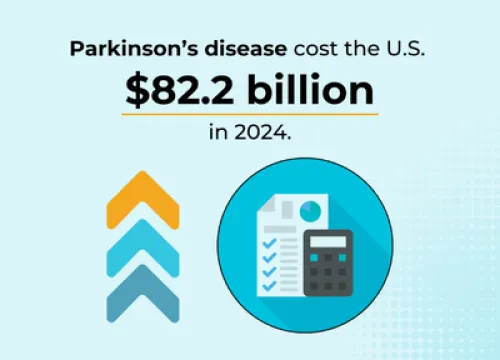
And partly due to the Parkinson's Foundation and other Parkinson's disease-related foundations, this is just released, sort of hot off the press, that in 2024, Parkinson's disease cost the U.S. $82.2 billion. I'm sure that's even more in 2025 and 2026. It's hard to even wrap your mind around that economic impact.
While I'm sharing with you the numbers of total people with Parkinson's disease and the economic impact, I think it's really important that this is all of us, right? This is impacting all of us at such a personal level. While these numbers are staggering, these are our families, these are our friends, these are people that we really care about. I've been a scientist in the Parkinson's disease field for a long time, and I just want to share that it affects me personally as well.
My postdoc mentor, Dr. J. Timothy Greenamyre, who many of you may know, in Pittsburgh, a few years ago shared in a Science article that I encourage all of you to check out. You can find it. I'm happy to share it afterwards, where he described being a physician-scientist and being diagnosed himself. And so this has really deeply affected me as well. I will say that more recently my mom has been diagnosed with Parkinson's disease.
And so I can tell you that I have been a hundred percent committed towards moving the field forward towards better treatments and cures. And now it's even more personal for me. I can tell you that, from my perspective, I'm really optimistic and hopeful, even with all that I described, that we're really moving in such an exciting direction.
Dr. Laurie Sanders 00:10:15
So what's driving this progress? For you history buffs, there are some really interesting ancient scripts talking about Parkinson's disease and the symptomatology. Even over this last several hundred years, and this is by no means exhaustive, really showing from those initial James Parkinson essays describing the symptomatology and the movement symptoms of Parkinson's disease to the pathology, over time, this has really started to change and evolve and shape how we're thinking about Parkinson's disease.
This is sort of a nice roadmap, I think, again, not exhaustive, of where we've traveled since those initial essays from James Parkinson, where, in the mid-20th century, we really began to understand the pathology around Parkinson's disease and that it's this dopamine loss in the substantia nigra that then really led to the development of levodopa therapy in 1961 as the first symptomatic treatment against Parkinson's disease.
Even honestly from the 60s until maybe about 20 years ago, there was really that focus on motor symptoms and symptomatic treatment. But that's begun to change, even since I've started to train in the Parkinson's disease field, where certainly, of course, there are the motor symptoms of bradykinesia and increased risk of falling and others associated, but even the refinement of those motor symptoms and how it might affect one's speech or difficulty in swallowing.
But even beyond the motor symptoms is really beginning to appreciate the non-motor features of Parkinson's disease, and that this really extends and goes beyond into this multi-system involvement. Certainly, there can be cognitive effects, GI symptoms, urinary problems, sleep disorders and many others that are not mentioned here. We're really thinking of this now as a whole-body and multi-system disease, as opposed to just this motor symptomatology.
Beyond that, and this has really happened in the last 20 or so years, is that due to these molecular and genetic insights into Parkinson's disease. Here I have a map of some of the most well-known and now studied genetic risk factors for Parkinson's disease. It has really been a game changer for us in understanding what might be causing the risk and the development of Parkinson's disease, and maybe even the progression.
Dr. Laurie Sanders 00:13:33
Here on the lower-frequency end, these are rarer genetic risk factors for Parkinson's disease, like LRRK2 or SNCA, which is synuclein, or even PINK1 and Parkin. While these are rare, these have really taught us a lot about those molecular changes and insights into pathway dysfunction that is underlying Parkinson's disease. On the more high-frequency end, over 90 genes now have been associated with a risk at what we call loci, or genetic loci, in the development of Parkinson's disease.
And so this has really opened our eyes into not just the motor and now non-motor features, but those underlying cellular pathways that may be dysfunctional, which is so important because that gives us a window into understanding how we might be able to best treat Parkinson's disease.
And so I was mentioning those cellular pathways and what we call cellular pathogenesis. That's the underlying pathology that may be driving what we're seeing as those clinical manifestations of the motor and the non-motor symptoms. We're kind of focused on proteinopathy, or that synuclein, mitochondrial dysfunction and neuroinflammation. Each of these are critical components to what we call the hallmarks of neurodegenerative diseases and Parkinson's disease.
I did want to mention there are other cellular pathogenic pathways here in terms of synaptic and neuronal networks, cytoskeletal abnormalities, and DNA and RNA defects that also play important roles towards ultimately driving this neuronal cell death and pathogenesis that we see in Parkinson's disease.
Where I think our field is really evolving and changing is thinking about how not any one of these separate pathways may be influencing the biology underlying Parkinson's disease, but how they're now all interconnected, and what might come first and, on the other hand, what might be a consequence of many of these other pathways. That more holistic understanding of these hallmarks has really been breakthroughs in understanding again how to treat Parkinson's disease.
Dr. Laurie Sanders 00:16:24
But I can't even mention all of the amazing other advances that have been occurring in the field that have really been driving a lot of the progress at light speed. Certainly advances in imaging, so PET ligands, high-resolution MRI, other diffusion imaging, have given us new insights into imaging into the brain, not just in animal models of Parkinson's disease, but in humans as well, so that we can really begin to understand some of the inflammation that's occurring in the brain, but also some of those protein aggregates such as synuclein.
I'm excited to talk about the discoveries of the biomarkers in the field, certainly the alpha-synuclein seeding assays, also known as RT-QuIC, other fluid biomarkers such as neurofilament light, or NFL, and other inflammatory markers that really began to, at a molecular level, be able to define that cellular pathway in people with Parkinson's disease.
Molecular tools, so single RNA-seq, CRISPR screens, cryo-EM structures of these synuclein fibrils and other conformations. Improved models: these are all, again, not perfect models, but being able to have induced pluripotent stem cells derived from either people with Parkinson's disease or people without Parkinson's disease, neurons, microglia, even organoids, little brains in dishes and refined animal models, gives us better tools to be able to test some of our hypotheses for that cellular dysfunction.
It's just sort of a 10,000-foot view, too, I think, and this is certainly hats off to the Parkinson's Foundation in terms of really encouraging and fostering global collaboration, not just within the U.S., but all around the world, certainly PD GENEration and other efforts that are going on internationally so that we as a community can get a better understanding in all different cultures of how Parkinson's disease manifests and what might be the genetic drivers.
And certainly, thanks to probably many on the call here, I would certainly encourage you that we can't make some of these discoveries without patient populations and research, and it's fundamental for our progress forward. That's really, and many, many others that I haven't mentioned here, in terms of driving progress in the field.
Dr. Laurie Sanders 00:18:54
This has really led to the translational momentum and the clinical trial landscape. I have here the citation of this great summary of all of the clinical trials that are in the pipeline currently. The last one here was 2024. Hopefully what you can appreciate here is that there is a ton in the clinical trial pipeline, certainly in that early phase trials and even the later phase trials of phase two or three.
What's exciting to me is, I just did it right before I logged on here, to see how many clinical trials are, if you go into clinicaltrials.gov and just type in Parkinson's disease, there are over 200 clinical trials currently either actively recruiting or about to recruit. I think this really speaks towards this momentum of being able to test not just symptomatic therapies, which are obviously critical and key, but also this shift towards testing the disease-modifying therapies and being able to hopefully halt or stop the progression of Parkinson's disease.
And so there's a lot here to be optimistic about. This has really, I think, shifted our evolution of our understanding of where in the field we historically had been thinking about focusing on that dopamine loss, more motor symptoms and really thinking it through that primary lens.
But now we have a much better understanding of how Parkinson's disease is really this whole-body, multi-system disease, and that this includes not, which is obviously very important, the motor, but also these very key non-motor symptoms that really matter to people, and that we now have tools for earlier detection and intervention than we have ever had before. Hopefully you can tell that there is a lot of hope, which I share genuinely.
I think this is really due to what happens when people with Parkinson's disease, researchers and clinicians work together, because we really have the same goal. Hopefully, from what I've explained so far and what I'm going to share now with you, you all will share the hope that I have with me every day, that we are working closer and closer towards disease-modifying therapies for people with Parkinson's disease.
Dr. Laurie Sanders 00:22:12
Alright. So what's happening in the brain?
Certainly, we know that loss of dopamine-producing neurons in the substantia nigra in people with Parkinson's disease, but also this protein buildup of synuclein and other proteinopathies in the substantia nigra and also throughout the brain, and we'll talk a little bit also about the gut, and how this leads to cellular stress and dysfunction through the mitochondria and immune system, and how these are all interrelated.
So I'm going to first start with focusing on alpha-synuclein.
Dr. Laurie Sanders 00:22:54
So we think what's really important to understand about alpha-synuclein is that, while it certainly is causing havoc in Parkinson's disease, alpha-synuclein has a physiological and normal role in the brain. This is a protein that's found normally in all our cells and our brain, myself included, and has specific roles in our brains that help us. It's a protein that's known to be in the presynaptic part of our neurons that helps us with neurotransmitter release, such as dopamine, as well as what's called vesicular trafficking, so moving things around in our cells or neurons normally, and other pathways that are really important in terms of learning and other pathways in our brain.
This really, synuclein helps us communicate between neurons and between different parts of our brain. However, what we know happens in Parkinson's disease is that synuclein begins to misfold and clump together, and this starts to cause pathway dysfunction. Its role is not really fully understood in how it does this, but we know certainly that it's a good target for disease.
There's been a lot of work focused on the pathological role of synuclein in Parkinson's disease. But I think it's really important to mention that because it has this normal and physiological role in our brains, this makes it tricky in order to target it, right? Because you don't want to affect the normal and physiological role of synuclein.
And so there's been a lot of work in trying to figure out how to specifically, selectively target the pathological or the misfolded types of synuclein, so we can protect the monomeric or physiological role of synuclein. In our dopamine neurons, which have really interesting biology around them, there are incredibly long neurons in terms of their terminals.
Dr. Laurie Sanders 00:25:36
From the substantia nigra, all the axons and dendrites that go all the way into the striatum are really, really, really long and travel really far in our brain. The synuclein is not just in the cell body of neurons but also along that track and those axons and dendrites. Understanding whether to target within the cell body and along sort of that, you can think of it like train tracks, into different parts of the brain has led to some barriers in trying to figure out how to target synuclein.
From that monomer, this is sort of what we think of as synuclein going wrong, that misfolding and what we then call oligomers and fibrils. These are these higher-order structures, and I have a picture of that represented here, that then form these Lewy bodies, which is sort of the hallmark of Parkinson's disease in the brain.
I would say that there's still some controversy and context dependency about whether we think those Lewy bodies are protective or are actually causing part of the problem in Parkinson's disease. But what's really come to light over, I'd say, the last decade or so is this idea that synuclein actually can propagate between cells, almost like this prion-like seeding. It's this interaction with lipids, and those are fats, and membranes of different organelles that will then lead to this cellular dysfunction, including mitochondrial effects and inflammation. That's what we're really trying to target in Parkinson's disease.
There's very strong genetic and pathological evidence linking synuclein to Parkinson's disease. We know that point mutations and multiplications in the synuclein gene cause familial Parkinson's disease, and there's a dose-dependent severity here in terms of clinical severity.
There are genetic modifiers, such as GBA and LRRK2, that actually influence the biology and risk with regards to synuclein. We know it's a central pathological hallmark of Parkinson's disease, although I will mention that even beta-amyloid and tau have become really significant and important, too, in terms of these protein aggregates that are co-occurring in the brain.
Dr. Laurie Sanders 00:28:32
And we know that synuclein pathology is correlated with cognition and linked to disease progression. All of this taken together has really formed the foundation, or rationale, for many different approaches for targeting synuclein and the development of some groundbreaking biomarkers around synuclein pathology that we can then use in clinical trials and clinical practice.
Okay. So there are many key questions and challenges that are still ongoing in the synuclein field. You perhaps might have seen that there's been this proposed biological definition of neuronal alpha-synuclein disease as defined by the seed amplification assay. I think there's a lot of controversy around this and what this means clinically, and around using a biological definition instead of a clinical one.
We'll see if some of the questions come up around this, and I'm happy to talk about that. It wouldn't have been possible to have that biological definition without the seed amplification assay. I will say one of the barriers and challenges there of the seed amplification assay is that right now, it works really well in the CSF, or from a lumbar puncture, but obviously that's very invasive.
Currently, there's no blood iteration of the seed amplification assay, but there are a lot of people working on that to be able to get it to work in the blood. I think we're going to see some really exciting developments in the next couple of years about that.
One of the most exciting things that's come out in the last couple of years is that, in addition to these oligomers and fibrils that I talked about, these different higher-order conformations of synuclein, there are so many different conformations and forms of synuclein, close to a hundred, and there's probably even more. I think the real question is which are the most toxic, and that's important because which are the best to target?
And so that's where I really see part of this synuclein field putting their efforts towards better understanding that.
So, I kind of focused on the brain, talking about synuclein, but now we know that synuclein is not just found in the brain. Synuclein is also found in our olfactory system as well as the gut. There are these really interesting hypotheses around sort of gut-first and then into brain, in terms of development of Parkinson's disease, or brain-first and sort of going the other way to the gut. This is exploding research in the field, which is really exciting.
I'm really pleased to share with you that our website just went live for our Gut-Brain Parkinson's Disease Consortium. We think it's really important to be able to define those GI symptoms in a snapshot and then longitudinally over time. You can find out more information about our human study so that we can really begin to answer some of those questions of the peripheral versus more central nervous system, or brain, origin.
The heterogeneity, in that not all Parkinson's disease, I think, is equally driven by alpha-synuclein biology. There's emerging evidence for tau, especially in LRRK2 Parkinson's disease. How do we think about targeting that? I think this is one example of working on a drug, buntanetap, which targets synuclein, tau, amyloid and many of these other types of co-pathologies.
And so, I think this is a really interesting perspective in thinking about how we can tackle the disease from multiple angles.
Again, toward that optimism, there are many therapeutics that are targeting right now, or in development for, synuclein in terms of reducing production, reducing aggregation, clearing these aggregates from an immunotherapy perspective, blocking the propagation, enhancing the clearance, boosting glucocerebrosidase activity, which is that GBA protein and enzyme that are intimately involved with synuclein clearance, and proteostasis enhancers.
Those are just the general categories of all the exciting developments that are happening just in focusing on synuclein and trying to be able to reduce that pathology burden. So, so much to be excited about.
Okay.
Dr. Laurie Sanders 00:34:14
And I could talk all day about synuclein, but we're going to pivot to mitochondria, again, another love of mine. Certainly, that's close to my heart in terms of thinking about mitochondrial function. So, what are mitochondria? I think they're probably well known for being the powerhouses of the cell and producing energy for important brain function. However, what I'm hoping that you all walk away with today is that the mitochondria are so much more than just producing energy for the brain.
They are these double membrane-bound organelles that are found in almost every cell type in your body. They contain their own DNA, so as opposed to the nucleus, where it has chromosomes, the mitochondria actually have their own set of DNA called mitochondrial DNA that encodes many proteins and RNA and all these things, just like the nucleus. And there's a lot of cross-talk between mitochondria and nucleus to maintain homeostatic function for the cell.
So, in addition to obviously the respiration or energy functions of mitochondria, they do so much more. This is just a pictorial example that there's protein import and processing that happens at that double membrane of the mitochondria. So, sort of shuttling these important proteins. Sometimes, actually, synuclein and tau get inside aberrantly into the mitochondria.
There's the biosynthesis of really important iron-sulfur clusters and other cofactors that are used not just for function within the mitochondria but also outside of the cell and are critical. The mitochondria not only have the cross-talk with the nucleus that I spoke about, but have all these other organelle contacts, such as the ER and others, that really help with maintaining that function and homeostatic function. As opposed to the nucleus, mitochondria can be selectively targeted and purged from the cell when they become dysfunctional or sort of wear out during a normal aging process, during a process called mitophagy.
We think that this is actually dysfunctional in Parkinson's disease. And so it's this accumulation of dysfunctional mitochondria that build up. But beyond that, there's sort of signaling and all these redox processes and the metabolism of amino acids, lipids and nucleotides, and the transport of these metabolites, in addition to energy metabolism. Think of the mitochondria managing all these processes and really important functions of the cell that, when things start to go wrong, actually will send a signal to the rest of the cell, or neuron in this case, for cell death.
Mitochondria are key in terms of that signaling of whether or not that neuron will survive. There are many consequences to mitochondrial dysfunction, in addition to obviously this energetic failure, but an increase of this oxidative stress or reactive oxygen species, impaired mitophagy as a consequence or cause of dysfunctional mitochondria.
Where we focus a lot of our efforts is in terms of damage to that DNA, that can either lead to mitochondrial DNA damage or mutations that we know definitely happen in Parkinson's disease and ultimately can drive cell death. We know that neurons are especially vulnerable to this mitochondrial dysfunction, and so this is a really exciting area of research, not just in my lab but many, many others around the world.
There is a strong rationale, from many, many decades of research that's been done, both in the preclinical space as well as in humans living with Parkinson's disease, that really substantiates this idea that mitochondrial dysfunction is playing a key role in the pathogenesis of Parkinson's disease.
We know from toxins such as paraquat, rotenone and MPTP that, when administered to animals, they reproduce, not perfectly, but reproduce many of the features that we know happen in human Parkinson's disease. We know that this is due to complex I deficits. So it's that first initial part of the respiratory chain that helps us produce our energy in the mitochondria, that there's this specific complex I defect that we can reproduce with many of these toxins. But also, we know from human Parkinson's disease and tissues that there's this complex I defect not just in the brain, but also systemically, in muscle and blood and other tissues.
We know that mutations of select genes cause Parkinson's disease. Some examples of that are DJ-1, PINK1, Parkin and LRRK2. More recently, we know that even POLG, that mutations in POLG will lead to nigrostriatal degeneration in carriers of mutations with POLG and sort of look parkinsonian.
Many, many data that I can't even describe here show that we certainly know that mitochondrial pathology has been observed both in the brain and the periphery in many of these monogenic forms of Parkinson's disease, as well as idiopathic forms of Parkinson's disease. Why this really matters is that our brain cells really need this high energy. Our brain cells are one of the highest consumers of this high-energy demand, and as that dysfunction starts to occur, this contributes to risk and maybe even disease progression for Parkinson's disease.
Dr. Laurie Sanders 00:40:52
So, I just want to briefly comment that while we've certainly known that mitochondrial dysfunction is such a key part of the pathogenic cascade in Parkinson's disease, what's been a challenge in the field is the development of a biomarker to be able to use this for clinical trials and clinical practice. We've spent a lot of efforts towards developing a biomarker around mitochondrial dysfunction.
There are many different types of biomarkers, and the one that we've really concentrated on is one to be able to patient stratify. What that means is to be able to identify people with Parkinson's disease with that particular cellular dysfunction so that we can then match that person with Parkinson's disease to the right therapeutic with that biomarker.
And so, of course, I'm always happy to talk about this in great detail, but we've been able to really develop our mitochondrial DNA damage as a blood-based biomarker of early Parkinson's disease. This was enabled through technology called MitoDNADX. This is published, and I'm happy to geek out in the technology here. It's in the question-and-answer session, or later you can email me. I'm always happy to geek out about this.
We're essentially able to measure whether mitochondrial DNA damage is out of homeostasis. What that means is if there's an increased DNA damage or a decrease that might be due to DNA repair or mitophagy or others. Why we've been able to move this along the translational pathway is that this is a PCR-based assay. We can do this in a high-throughput manner, and we can go from sample to answer in a day from a blood sample. And so we're really excited about moving this.
This has been published. You can find some commentaries about our work, about our blood test. I'm really excited to share that we are moving this along so that we can be able to use this in clinical trials and hopefully, ultimately, into clinical practice, so that we really can start to use this as a way towards precision medicine.
I think I didn't mention this in the beginning part of how we're evolving and how we're thinking about Parkinson's disease, but part of that is really this precision, or what you might know as this personalized medicine, approach. This is really coming, I think, to Parkinson's disease clinical trials. Our assay, or thinking about mitochondrial dysfunction, is just one example of that. But this can be applied to any pathways of lysosomes, immune systems, synuclein, right?
We're really being able, at a molecular level, to identify that underlying pathology so that we can identify, or as they say, patient stratify, and find that person with Parkinson's disease with, let's say, that mitochondrial dysfunction so that we can then best match them to a mitochondrial therapeutic, for example, and, equally as important, stratify out those that would not benefit from these drugs. I can't tell you how exciting it is that we are really moving in this direction in Parkinson's disease.
This sort of precision neurology approach has been taken in cancer, right, for decades and decades, but it's really coming to neurology and Parkinson's disease in terms of the biomarkers as well as therapeutics. It's really evolving our way in which we can design clinical trials and hopefully be able to get approvals and an FDA win.
So, I think one of the really open questions in the mitochondrial function space is: is mitochondrial dysfunction really the driver? Is it the cause of many of those downstream cellular dysfunctions? Or is it secondary? Is it a consequence from synuclein and immune disturbances? And so, really distinguishing that causality versus consequence.
That might be really different for different people, which makes it a challenge, but certainly one that I think we really need to tackle. An interesting development in general in the mitochondrial field is this idea of mitochondrial donations, where you can take a healthy mitochondria and actually donate and transfer them from cell to cell. I really have my eye on those developments and, if they should prove successful, how we might be able to apply those in Parkinson's disease.
But there's a challenge in these beautiful neurons that we have in our brain, especially these dopamine neurons. As I said, those are really long axons, right? How do we deliver some of these therapeutics to certainly mitochondria in the cell body versus these long axons or the dendrites that are really far from the cell body? Because the mitochondria, in terms of their dysfunction, differ whether they're really far away from that cell body or not.
Now, hopefully, what you're taking away is that mitochondria are much, much more than these sources of energetic function. How do we modulate mitochondrial function safely, where we can rescue maybe some of those defects without harming some of the other functions of mitochondria? As I mentioned, that patient-level heterogeneity, you're going to see that in all of these key challenges. Not everybody is manifesting the same pathology, even though the clinical manifestations may be the same.
How do we account for that? I think part of that is through biomarkers. Certainly, I'm excited about all of the developments in terms of mitochondrial therapies for Parkinson's disease, and these include mitophagy enhancers, metabolic enhancers, some of these through the NAD pathways that some of you may be familiar about, and gene therapy approaches to rescue mitochondrial function.
Dr. Laurie Sanders 00:48:11
Okay, so inflammation. So, now we've walked through the mitochondria and synuclein, but equally as important is the inflammatory cascades. Just like you might think about inflammation throughout the rest of your body, it's your body's response to harm. This is where your brain cells, such as microglia or astrocytes, become active, and then they release these chemicals in trying to protect or sort of clean up that damage that might be occurring in your brain.
For the most part, the response is short and very well controlled, and it's helpful. However, when the inflammation response becomes chronic or too strong, this can actually damage a healthy brain and make some problems worse. We think that some of that might be happening in Parkinson's disease. One of the brain cells, microglia, you can view as sort of the cleanup crew. They sense the trouble, and most of the time they're helping with that cleanup.
But when they become really activated, which, again, we have evidence in Parkinson's disease that they do this, it starts to harm those connections and signaling. Now, what's interesting is that synuclein aggregates, as well as dying neurons, can actually trigger microglia to switch on. This releases those cytokines and inflammatory and other toxic substances, which will then increase further that inflammation, right?
So, really thinking about that, there's this vicious cycle between the inflammation trying to help, but then it gets activated and it can't turn off. During normal healthy aging, what happens is that there's this decline in immune cell function, with also this immunosenescence and actually loss of some of these functions of the immune system. We think that's enhanced in Parkinson's disease.
So there's that normal aging that's happening, in addition to certain gene risk factors and environmental exposures, that are all conferring this risk and maybe contributing to that vicious cycle with our immune system, but also synuclein and mitochondrial dysfunction.
As part of this, our blood-brain barrier can become leaky. What that means is that the immune system that normally is in the periphery can now get into our brain. This is really important because now there's this two-way highway that doesn't exist physiologically and is contributing to that immune activation. This is really significant, as now we know that immune activation is not just happening in the brain, but it's also happening in our gut. That also may be happening through our vagus nerve, sort of in two-way traffic.
Why this really matters is that now this is connecting multiple disease pathways. As I said, this is really integrating now. None of these pathways are happening sort of in silos or in isolation. This actually may accelerate disease progression, but also gives us opportunity, with our better understanding of this, as a potential for new treatment targets that we can actually target all of these simultaneously.
So there's a lot of research momentum certainly in inflammation, with many strategies to reduce those immune responses, to dampen them, so that hopefully we can develop some of these neuroprotective strategies and really also take advantage of that better understanding of that role of the gut-brain connection. This has been a development of drug development focus from many different angles.
Some of the key research questions that stand out, at least to me, are: Is inflammation friend, foe or both? I think the answer is probably all of them, but it's really going to matter in terms of stage of disease. It's going to be really context- and cell-dependent, really understanding when we want to harness the immune system and what its job is normally doing, but then also to be able to dampen it when we need to, if it might be causing that activation that we want to turn off.
What I find particularly exciting that's happening in the last few years in the inflammation space in Parkinson's disease is that we can actually measure some of that immune activation in the brain with PET imaging, what's called TSPO. In addition to some of the other very exciting imaging in the brain that we can use, we can now do this and understand better who has this activation and inflammation and who may not.
Where it starts to really tie together is this idea of immune exhaustion and how this may be caused by metabolism and mitochondrial dysfunction. Hopefully, what you're gathering by this point is how these are all interconnected. Synuclein can be driving also that immune exhaustion and mitochondrial dysfunction, and vice versa, and how these are all intertwined together.
Dr. Laurie Sanders 00:54:13
Again, that heterogeneity, where we're thinking about these immune signatures that really vary across people with Parkinson's disease and different stages, gives us a real opportunity to target in terms of dampening or supporting the immune responses.
We are not at a loss. There's a plethora of different therapies that are in the pipeline targeting inflammation. Obviously, that anti-inflammatory perspective, but also specifically microglia and innate immune modulators, the adaptive immune strategies specifically, and how that might be different from the innate strategies.
What if we just target the peripheral immune systems and take advantage of what we now know in terms of dysbiosis of the microbiome, also gut-targeted therapies, and how that might actually help in the brain without even directly targeting the brain? Even vagus nerve stimulation and how that might improve brain function.
So, bringing it all together, with all these exciting developments that are happening across synuclein, mitochondrial function and the immune system, there's so much cross-talk between synuclein, mitochondria and the immune system. It's not just in the brain. This is a whole-system and multi-system disorder that we now have such a better understanding of.
There's this cross-talk between what may be happening at the immune cell system as a result of that mitochondrial dysfunction and synuclein triggers, or vice versa. You'll see that these arrows are going in both directions, right? Really understanding what might be initially the trigger versus what might be perpetuating that vicious cycle between all of these different pathways.
This is not just happening in neurons. It's happening in the immune system, in our brain and peripherally, as well as in our guts and other tissue types throughout our bodies, and really understanding how that is now contributing to not just the motor dysfunction but many of the non-motor features of Parkinson's disease, which are so important.
So, we're not really thinking about these laterally anymore, right? It's more of how synuclein, inflammation and mitochondrial function are all intertwined, and that these are interconnected and no longer thinking of these as isolated issues.
Dr. Laurie Sanders 00:57:09
So, I will continue to maintain why I am so hopeful and that we're really moving beyond these dopamine-only therapies. This has only been possible with a really stronger understanding of disease biology. This is due to earlier detection possibilities with a seeding assay, better tools and technology for imaging, and all the other things that I mentioned, where we're able to now really be able to target disease progression.
I feel really optimistic about these disease-modifying therapies that are in the pipeline and the many, many growing pipelines for the clinical trials. We can move not just away from dopamine-only therapies and really disease-modifying, but toward that personalized precision medicine approach to be able to identify the right target and therapy for the right patient in Parkinson's disease.
So, what this means for all of you that are here today is that, while symptom-only therapy is key and is still in development for better treatments for symptoms, we're really light years going against development for slowing progression. It's this shift towards disease-modifying therapies in our clinical trial pipeline. The research is ongoing, evolving and so fast.
It's only because of the participation, as well, from all of you in the research that's helping us move at such a fast pace. It's important because then we can all make informed decisions about our health, and that really empowers us moving forward. So, what's ahead?
Certainly, biomarker development in Alzheimer's disease and Parkinson's disease is allowing for better and earlier diagnosis, which is really feeding this ongoing clinical trial space. But also, an area that we're starting to get into as well is really thinking about these combination therapies. We know now all of these pathways are intertwined and feeding each other. Can we use combination therapies to really tackle these multiple pathways so that we can have a better outcome for these disease-modifying therapies? I'm really excited about the development of those.
So, the key takeaways for today are that understanding Parkinson's is evolving rapidly, and I'm sure it's going to be very different even 10 years from now. There are three major drivers: alpha-synuclein pathology, mitochondrial dysfunction and inflammatory cascades. We're really moving towards not just treating the disease, but really being able to tackle the underlying pathology to develop these disease-modifying therapies.
Thank you so much for listening and your attention. I'm excited to engage with all of you during this question-and-answer period of time. I thought it was also important to show some of the faces that are doing the research. Such an amazing crew of dedicated researchers are really dedicated and committed towards making a difference for people with Parkinson's disease.
I want to thank them and certainly all of our funders and collaborators that really help us move and make this research move forward. So, I'll stop there. Thank you.
Dr. James Beck 01:01:09
Thank you very much, Dr. Sanders, for that excellent presentation. Before we jump into questions, I'll just remind our audience that our team is organizing questions as they come in, but understand that we can really only address, because we've got an overwhelming number of questions, the ones that are really specific to today's subject. Those will be addressed first. If we have time, we can get to some of the others, but know that we look to answer just about every question that comes in, either here or through my colleagues who are eminently capable on the Helpline as part of that process.
That was a really interesting presentation. I think it's really great to hear as we begin to think about the trials that are coming to the fore, what three areas are. I like the idea of your focus on biomarkers and gut-brain, and we've got questions ranging the whole course of what you covered. It's amazing, these questions that come in as part of the process.
I think one of the interesting questions I'd like to start off with is from one of our listeners, Ronny, who just talks about how no two people with Parkinson's have the same symptoms. How does that impact your research? You've mentioned time and time again the heterogeneity of this disease.
How do you account for that when you begin to take a look at this? I think also, again, you kind of touched on it maybe a little bit with your biomarker approach, maybe mitochondria. Do you think there might be a biological basis to this heterogeneity?
Dr. Laurie Sanders 01:02:48
Yeah, thank you. Thank you for that question, Ronny. I will say that this idea of heterogeneity, and that a person with Parkinson's disease, their journey, looks so different from one another, right? That experience is just so different. That really struck me as a postdoc, actually, where I thought it was really important to meet and talk with people with Parkinson's disease to really understand from their perspective what's happening.
What really struck me, and I think that's really changed the course of how I studied this in the lab, is that I think you can't model a lot of that. This is a real heterogeneity that people are experiencing from a biological perspective as well as a symptom perspective.
One approach that we've taken is that we start with the patient first and then we go back to the lab to model it. We do human studies, and sometimes that's taking patient material from a wide range of people to best understand what might be happening across that patient experience, but we can see that molecularly, and then take that understanding and model that particular aspect in the lab, because our models are just not doing that justice.
Then, from what we get from those modeling in cells or neurons or animals, we go back and see if it actually works in our human cells. To get at your question, I think that's been a lot of the barrier to the progress in being able to really nail down and understand that heterogeneity that we know is happening in human Parkinson's disease.
Dr. James Beck 01:05:06
Yeah. So, that's a really interesting answer. It just makes me think, one of our listeners also had the foresight to ask this question as well, Charles. I appreciate the effort to try to model what you're seeing in people in animal models. As a researcher, maybe this is an unfair question to ask of you because I kind of know the bind you're in, but do you think our clinical trials have failed to date because of our lack of ability to model adequately?
Or is it something else that you're working on too, which is trying to find a way with which to measure PD, the biomarker approach? What do you think is maybe behind some of the struggles the community has faced to really put a stop to this disease?
Dr. Laurie Sanders 01:05:58
Yeah, no, that's such an insightful question, and one that we think a lot about. Unfortunately, right, we all want wins, being able to get these approvals. Why are these clinical trials failing? Why are they not reaching endpoints?
I think part of it is our inability to model the complexity of the pathways and cellular dysfunction that we know is happening in human Parkinson's disease. Our models have just been inadequate in that way. So, that's one piece of it. That's why I think of it as, we distill a little bit. We know we're just studying that one angle.
But also, I think, as sort of alluding to, now that we have a better understanding of the complexity and how these pathways are interrelated, we've been doing one at a time.
Dr. James Beck 01:07:00
Yeah.
Dr. Laurie Sanders 01:07:01
What if we took more of a multi-pronged approach and targeted multiple of these pathways at once? I think that's also part of why we've not seen successes, and that we really need to tackle the immune system, cytokine, mitochondrial systems and others in order to really move the needle. I think there are a lot of reasons, but those are two really key reasons as to why I think those have been such barriers in clinical trials.
Dr. James Beck 01:07:34
Yeah. Okay, yeah, I very much appreciate that answer because it's one we clearly don't know the answer to, right? Because if we did, then we could have solved for it and then we'd be that much closer to a cure for Parkinson's.
A lot of questions come in about aggregation of alpha-synuclein. It's interesting how you also started at the very beginning, and I do think it's controversial, this idea of neuronal synuclein disorder. Not in the sense that it's bad to try to define Parkinson's disease as a biological disease. Right now, it's a clinical presentation.
I think everyone in the audience knows firsthand the implications of that, which means it's hard to diagnose, your diagnosis is uncertain, and it can be a long time to do it. If there was a biological basis of the disease, like with diabetes, oh, your A1C level is above the norm, you need to really target your insulin level to this, it would be entirely different for us as a community to be able to tackle this disease.
So, getting to the point about aggregation with alpha-synuclein, what are your thoughts then? Are we looking at the bystander of what's contributing to Parkinson's? Because you've talked about mitochondria, you've talked about inflammation, and these things could lead to the proteostatic dyshomeostasis where you have problems with proteins inside cells. Sorry, I'll use the right words for my audience.
Is that leading to this? And then we now see this cyclic effect where, in essence, you've got something like a stain in the normal. Something pushes it out of whack, and now it just becomes a spiraling cycle. So, lots for you to go on, Dr. Sanders. Maybe just narrow it down. Let's talk a little bit about aggregation and alpha-synuclein maybe as a start.
Dr. Laurie Sanders 01:09:24
I certainly acknowledge that that is a very tough question, right? Very controversial. So, I will try to answer that.
I think it's useful to have definitions that we can then use and build upon, much like the Alzheimer's disease field, in terms of these biomarkers and staging and biological definition. I will say where I struggle is that there are, for example, in the LRRK2 field, we know that patients with the LRRK2 mutation don't have synuclein aggregation, but they have Parkinson's disease. And they're negative, right, for this.
In one answer to your question, I will say that we know you can get to Parkinson's disease without maybe that trigger of the synuclein aggregation. Now, there might be Lewy neurite pathology. There have been a couple papers to suggest that maybe you don't have the Lewy bodies, but maybe you have these Lewy neurites, right? That's also controversial. So, there might be, but it's not this full-blown Lewy body disease that we know that defines it. I think there are multiple ways in which you could get there, and it's not always through synuclein.
That being said, we know that synuclein pathology happens really early. It can be in the gut decades before somebody might manifest clinical symptoms. Certainly, over time, that's going to drive many of the clinical symptoms that we might see and certainly can drive disease, right? I'm not sure that that's an answer, because there are just these examples of different ways. I think that's understanding that maybe you get to the same point eventually. It may not matter from that perspective of symptoms, but it's going to matter for disease-modifying therapies, what those initial triggers are.
I think that's where we need to define it, and it's really critical for some people that synuclein pathology is driving the mitochondrial dysfunction, is driving the immune system dysfunction, and that's when we need to intervene and how. But it's not going to be the same for each patient.
Dr. James Beck 01:11:52
Yeah, for sure. Pesticides are a topic du jour. Lots of questions come in about that. I think about that as we run a large genetic study with PD GENEration, people come back negative, yet they have a family history of Parkinson's. I think one of the biggest things that we haven't really talked about and are beginning to explore as an organization at the Foundation is: what is the environmental influence for Parkinson's disease?
In your work, what role, I mean your thoughts just broadly about what pesticides might be doing here, what kind of toxins might be playing a role within Parkinson's?
Dr. Laurie Sanders 01:12:32
Yeah, absolutely. Of course, I will say, from doing my postdoc at Tim Greenamyre's lab, I certainly have thought about, since his rotenone discovery and with Caroline Tanner showing risk, obviously, for developing Parkinson's disease. At least the way I think about it is that what we've been able to identify in the field is increasing one's risk for developing Parkinson's disease. They have a common denominator in the way that they're working in the cell, and that's been through mitochondria.
I think, at least where I would see putting the efforts, is understanding that pathway dysfunction and then how that's generating disease, as opposed to the specific exposures. That's at least where I would put my efforts because there are a lot of even just plant derivatives that mimic these complex I disruptors. I think that's what it's really telling us that they're working through.
Maybe there are some other types of exposures that might be working through different mechanisms that would be of interest because then we know at least where it is that we could start to block or be able to understand that dysfunction, as opposed to the specific exposure per se, if that makes sense.
Dr. James Beck 01:14:00
It does, and I think what you're alluding to is really the pathway, and we have different drivers of perhaps the same pathway. Here you're talking about mitochondrial dysfunction. If one can figure out how to solve that problem, you might be able to then prevent PD from toxin exposure, because if it's driving that same pathway, then a medication in theory could be of benefit for everyone, whether it's a genetically driven form or not, which I think is really exciting.
This is where I think fields like your work are helping to advance, to find these commonalities from different aspects that could be driving the disease.
I know we're at time right now. So, Dr. Sanders, I want to thank you very much again for your time today and really presenting what I thought was a really interesting topic. It led to a lot of questions. I apologize again that we haven't been able to get to them all as part of that process, but I think this is something that will be food for thought for us as we go on. I know we have a discussion around pesticides later this year in November, and coming up in May, we have some really interesting things about AI involved in Parkinson's. I love to think about how that can happen today.
I want to thank everyone for their time, and just a reminder to continue on with our program and to follow on with what we have coming up. We've got one more episode in May. As I said before, we take a pause during the summer and continue again in the fall. If you have questions, sorry, I'm a little out of order with our slides. If you have questions, feel free to reach our Helpline, 1-800-4PD-INFO.
My colleagues there are phenomenal and can really answer a wide variety of questions, either from today or just around Parkinson's disease in general. So, I really encourage you to do that.
I would like to just at the end thank again Genentech for their support for this particular expert briefing. It was fantastic. I'd also like to thank the Light of Day Foundation for supporting the PD Health @ Home series. They are a great supporter of education and outreach for people with Parkinson's disease. So thank you very much for their generosity for doing this.
As we end the webinar, this is a Zoom world, and so what will happen is the screen will go black, but what should happen is a questionnaire pops up in your browser. Please feel free to fill that out. We use that feedback. It's really important to us to understand how we can always improve our presentations, share that with our speaker and be able to ensure that we're there and meeting your needs as a Parkinson's community. So, until we speak again in May, take care.