Episode 174: The Evolution of PD GENEration for Genetic Testing & Counseling
-
Dan Keller 0:08 Welcome to this episode of Substantial Matters: Life and Science of Parkinson's. I'm your host, Dan Keller. At the Parkinson's Foundation, we want all people with Parkinson's and their families to get the care and support they need. Better care star
ts with better research and leads to better lives. In this podcast series, we highlight the fruits of that research, the treatments and techniques that can help you live a better life now, as well as research that can bring a better tomorrow, the Parkinson's Foundation launched one of the largest research initiatives seeking to better understand the genetic makeup of 1000s of individuals with a confirmed diagnosis of Parkinson's disease, PD generation mapping the future of Parkinson's disease will improve Parkinson's treatment options, accelerate enrollment in clinical trials, and help researchers better understand the underlying genetics that may contribute to PD by providing genetic testing and counseling at no cost to participants. People with PD can learn more about their unique genetic makeup, facilitating more personalized treatment plans and opening additional opportunities to enroll in clinical trials. I spoke with Dr. James Beck, Chief Scientific Officer of the Parkinson's Foundation, to find out about the foundation's research initiatives and priorities with a focus on PD generation, I first asked him just what the chief scientific officer does. Dr. Jim Beck 1:52 In my role, I oversee all the research activities at the foundation, and I play an advisory role to our chief executive officer for science policy, helping to set the direction for the Parkinson's Foundation. What we need to invest in as an organization, and to stay current with what are the latest happenings in the scientific community involving Parkinson's disease.
Dan Keller 2:15 What are some of the research initiatives or studies that are currently being funded by the Parkinson's Foundation,
Dr. Jim Beck 2:22 we're funding a number of different projects, particularly around basic science research that involve trying to understand the role of the gut in Parkinson's disease and how it may process dopamine medications that people with Parkinson's take to the impact of the microbiota, the bacteria living in the gut, and how that might affect symptom progression and the disease itself. We're trying to understand the genetics behind Parkinson's disease, what that may impact on a cellular level within the brain for people with Parkinson's disease, as well as a number of other items. In particular, I think one of the biggest things we're funding is a very large clinical registry called PD generation, and in PD generation, what we're offering to people with Parkinson's disease, essentially anybody with a PD diagnosis over the age of 18, is an opportunity to get genetic testing and genetic counseling at no cost to them as part of this registry study. Our goal here is three fold, we would really like to be able to empower people with Parkinson's disease, give them the knowledge about their disease that they don't already have, so that they can use that knowledge to better understand their disease, to even potentially enrolling in clinical trials. We would like to be able to use this information that we garner, letting people know their genetic status, sharing that with their clinicians to see if we can accelerate precision medicine for people with Parkinson's. Precision medicine isn't always about a new medication for a person, but it's about tailoring the therapies for a person based upon their individual characteristics, and I think by adding genetic information to this, along with other research that's going on in the field, be able to pave a pathway to better care for people with Parkinson's, and the last is really to accelerate clinical trials. There are a number of trials that are on the rise, and some actually just beginning underway right now, where a key enrollment criteria is having a certain genetic form of Parkinson's disease, and these new therapies that are being tested may potentially slow or stop the disease, and the only way that we're going to be able to understand that is having people who know that they have a genetic form of Parkinson's disease to be able to enroll in these trials in order to test whether their hypothesis, whether these medicines may actually be successful or not, is all part of the process
Dan Keller 4:40 with PD generation, is there an enrollment goal, so many 10s of 1000s of people, or how many people do you have by now?
Dr. Jim Beck 4:49 Yeah, so that's a great question. So, when we started this study way back at the end of 2019 beginning of 2020 we had an almost impossible goal of reaching 15,000 per. Participants in five years. Fast forward to today, we were able to reach that goal almost a year and a half early, so we crossed the 15,000 mark in March of this year. And as we close out the year, we're about to reach 20,000 individuals with Parkinson's disease in PD generation. Our goal for the next six months is to really be able to increase enrollment and see if we can get 6000 individuals within the next six months who are willing to participate in PD generation. The
Dan Keller 5:29 study has gone beyond just the continental United States, I guess it's into the Caribbean and Latin America. What are you finding there? Are you getting good enrollment?
Dr. Jim Beck 5:41 Yeah, yeah, we're getting fantastic enrollment, but we find, regardless of where people live with Parkinson's, they want to know more about their disease, and so PD generation is an opportunity to do that. This is a CLIA accredited test, which means that it has met certain clinical guidelines to be able to take in DNA samples, process them, and ensure that accuracy in returning the results back to the people who provided them. So, this is something that's incredibly expensive to do on your own, and generally not an opportunity that people get who have Parkinson's disease. Currently, genetic testing isn't the standard of care for people with Parkinson's. Another goal of PD generation is to see if we can change that standard of care, so that when someone receives that unfortunate diagnosis of that they have Parkinson's disease, that the next thing the doctor says is, let's get a blood test and see what, whether you have a genetic link to Parkinson's disease, because we hope that there's new therapies that might be able to be brought to bear to help so or stop that disease for those individuals. So, whether Canada all the way down south to Chile, we find that there's a tremendous interest in people learning about their genetic status, and we're very pleased with that.
Dan Keller 6:54 Besides doing the genetic testing and genetic counseling, are you gathering demographic and occupational kinds of exposures, environmental exposures, where people are to see if those things affect the risk for Parkinson's disease. Just this week, the Environmental Protection Agency has decided to ban trichloroethylene, which has been linked to developing Parkinson's disease.
Dr. Jim Beck 7:19 Yeah, that's a great question, so we do collect demographic information. We're very interested in understanding the genetic diversity of Parkinson's disease, and here it's really important to note that about 90% of all the genetic data that's been accumulated for people living with Parkinson's are from those who are of European ancestry, and we know from other scientific work that understanding the genetic architecture of disease really requires understanding the breadth of the disease and the populations it affects, and so one of the goals of PD generation for this past calendar year has been to recruit as many people as we can who come from diverse backgrounds, so these are people who are identified as essentially as non-European, we want to recruit as many black and African Americans we can, as many people with Asian ancestry, people who may identify from an indigenous population, whether in Latin America or North America. We feel that the more information we're able to gather and combine it together with our colleagues who are really doing the data analysis on this aspect, I think the closer we'll be to better understanding the Parkinson's disease and potentially finding new therapies for it.
Dan Keller 8:26 What went into developing the PD generation study, the planning process, whether you got advisory group input, things like that.
Dr. Jim Beck 8:38 Yeah, absolutely. So it first started with an idea, and we built on that idea, came from one of our SAB members, and turned that into a living, breathing study. One of the things you quickly appreciate, having been involved in the studies, how many moving pieces there are in order to get it up and off the ground. And one of the first things we did was take it out to the community, talk to people with Parkinson's disease, talk to clinicians, trying to understand what they thought about genetic testing, what role it might have in their lives within their practice, and we heard, needless to say, a lot of positive feedback as part of that, and incorporated it into the development of our study. So one of the things we do with PD generations, we only test for seven genes, and these seven genes are ones that are really most affected for a person with Parkinson's disease. These are the most common of what are really rare forms of Parkinson's disease. Only about 13% of individuals who have Parkinson's disease will actually have a genetic link to their disease. When we talk about genetic forms of Parkinson's, this isn't something that everybody has, but it's not a small number, so it's really worthy of investigation as part of the process. We worked with bioethicists to understand about how we should craft our informed consent. Talked with people with Parkinson's to see how they felt about it. Incorporated people with Parkinson's as part of our steering committee. We have a person with early onset park. Parkinson's disease. Who's been there from the beginning, advising us and providing some key feedback on how we conduct our study as part of the process. We've gone through several iterations. Our very first effort with PD generation, the first roughly 2000 individuals we recruited, we really collected a lot of detailed information on individuals and their Parkinson's disease really had a detailed family history, understood the medicines they were taking. We asked people to participate in assessments of their Parkinson's disease through an instrument called the Unified Parkinson's disease Rating Scale, the UPDRS, as well as understanding any cognitive impairment that people might have. That was fantastic, and collected a fair bit of data in a short period of time, but one of the issues we face is we'd reached 2000 and a fair bit of time had gone by. We still had this incredible goal, seemingly insurmountable goal of reaching 15,000 people, and so what we did is we simplified our study to really, I think, again, based upon feedback from the community, what was really necessary in order to offer genetic testing and counseling to individuals with PD, so as I mentioned earlier, we do capture ethnic information, ancestry, we understand limited family history, date of diagnosis, where people live as part of the process, just so we have a basic framework to understand the individuals within the study, how that might relate to their genetic status for Parkinson's disease. One of the really nice things about our study is that our informed consent allows us to re-contact individuals, and again, this is something that was, we asked our community people living with Parkinson's about, and they agreed a multi-step process is really a good thing to not overwhelm them with the many things at once. And so, what we hope to do in the near future is start to begin to ask questions, just like you alluded to. What about someone's environment? What about their exposure history for things that might contribute to Parkinson's disease that we didn't capture in our initial assessment, in order to be able to get a fuller picture of Parkinson's disease and how it might impact things as part of the process, so these are some of the efforts that we've done, and part of the planning that's been involved in trying to get this study off the ground.
Dan Keller 12:10 It sounds sort of like a learning process as you go, rather than asking for a gallon of information all at once, asking for a teaspoon every so often, and I guess it lowers the hurdle to getting into the study, or people's desire to participate. It
Dr. Jim Beck 12:25 really does, and what's the interesting thing is, we've just had a large conference that the foundation put on, or centers leadership conference, and what we heard from the feedback from many of the clinicians who were there was how wonderful PD generation has been as an introduction to clinical research for their patients, for many people within PDG generation, in fact, a majority of them, roughly 70% of the people in PDG generation, they've never participated in a clinical study before. So this is their first stab at what clinical research is, and what's really so exciting is, unlike many other clinical research studies, they get something back and pretty fast on top of that, so when someone participates in PD generation, we are working to get the results back to them in roughly an eight week time frame, and have been pretty good about meeting that, so that people get a really good feeling about clinical research and appreciate the impact that they can have not only on their own lives but on the lives of others, as they're everyone who participates in PD generation, their DNA is contributed in a de-identified way to the greater research efforts to understand Parkinson's disease.
Dan Keller 13:30 Do you have their permission to contact them for future studies? I mean, once they're introduced to the value of research, maybe they would be more willing to participate again.
Dr. Jim Beck 13:42 Yes, absolutely. So that is one of the things we hope to do, is to be able to contact individuals to see whether they'll participate in either sub studies, other aspects of PD generation, where we may delve into some other questions, or reach out to partners who are interested in individuals who may have a certain genetic background to participate in the study, and what's really exciting is your understanding of Parkinson's disease and the genetics behind it is evolving as we speak. So, whereas when we started this study, we were thinking that only people who had, like, a clear genetic link to Parkinson's disease might be able to participate in some precision medicine studies, but lo and behold, in parallel to our efforts, researchers are advancing, and they've developed a genetic understanding of Parkinson's disease, so that people who might not test positive on our seven gene panel, but may have other genetic risk markers for expression of a particular enzyme, might be eligible for a clinical trial, so we have gone back and asked individuals with the PD generation whether they might be interested in participating in another trial, and if they meet the criteria, we hand them off to our partners, so that they can learn more about a study, and then they can decide whether they want to participate or not based upon what is offered as part of the process. We think the whole goal of. Is to really empower people with Parkinson's, put them in the driver's seat, they need to be able to make these decisions on their own, and here again, providing that information about what their genetic status and what options might be available to them is really key to that.
Dan Keller 15:14 I take it the Parkinson's Foundation is in charge of the privacy of the data, and if it goes somewhere else, you probably anonymize it, so it's not connected to any specific person, is that correct? And how do you offer these kinds of findings to say drug developers, if they have a trial, they have to go through you,
Dr. Jim Beck 15:37 that's correct. So you're correct on all fronts, there, Dan. So what we do is ensure that our databases are separate, so we have genetic information is not intertwined in a common database with protected health information, so we do our best to provide anonymized codes that will allow us to link it on the back end between these two databases, even when we do the genetic testing, the information that goes to our genetic testing provider, they don't receive any personal health information other than the fact that the person who's submitting the sample is biologically male or female. We provide codes for what would go in the place of names and birth dates, for instance, that goes to the genetic testing lab. We work very hard to ensure that the data remains anonymous and unavailable to those who don't have privy to it. The data we do share on the back end, personal health information is never there, but we also strip off PD gene identifiers and create a unique ID that's separate from it. So, again, one more step removed from the study database, and then that gets shared more broadly in a database that's run by AMPD, the Accelerating Medicine Partnership for Parkinson's disease, that's run by the NIH as part of a private public partnership. So that data then becomes, in a de-identified way, made available to the larger research community as a whole.
Dan Keller 16:59 The question is, What are your obligations?
Dr. Jim Beck 17:02 So our obligations are that we're running a clinical study, we're registered on clinical.gov we go through the standard institutional review board to ensure that what we're doing meets the standards when it comes to personal health information to how we run a trial. We have a number of clinicians which are part of our steering committee, and we use a clinical research organization that has deep experience in clinical trials, you know, Navitas, and so through, you know, all these different measures, we're ensuring that private health information individuals remains private, so we have certainly that ethical obligation in order to maintain that privacy.
Dan Keller 17:38 Are there collaborations between the Parkinson's Foundation and other organizations, I can think of some of these organizations that represent diseases that are considered atypical parkinsonism, multiple system atrophy, and related sorts of things. So, is there collaboration between them?
Dr. Jim Beck 17:57 Yes, we certainly collaborate with a number of organizations. Collaboration is one of the core values of the Parkinson's Foundation. So, I think one of our biggest collaborators is the Global Parkinson's Genetic Project, GP Two, which is funded through Aligning Science Across Parkinson's, and the GP Two program is there, the scientific force behind trying to understand the genetic architecture of Parkinson's disease, so our data gets shared with them on an ongoing basis, so that they can look to utilize the incredibly large data set we're providing to better understand Parkinson's disease as part of the process. We've collaborated with the Michael J. Fox Foundation around some of their studies, and we look to collaborate with as many groups as possible to really be able to leverage our understanding of Parkinson's disease to see if we can potentially not only solve Parkinson's, but maybe make progress in other diseases as well.
Dan Keller 18:51 What do you see coming for the future? What's going to be, in your estimation, exciting coming out of studies, especially this one?
Dr. Jim Beck 18:59 Yeah, I think one of the exciting things coming out of this study is that really the basic tenet of the study, which is empowering people with Parkinson's disease to know their genetic status. So, my excitement is that we have reached out to 20,000 individuals and have been able to help them better understand their Parkinson's disease, and that's led to well over 2000 individuals who now know that they have a genetic link to the disease, a clear genetic link, and can allow them to, you know, consider enrolling in clinical trials that might be able to help not only them, but, you know, the community as a whole, gives gives people with Parkinson's an opportunity to give back. I'm also excited that, you know, there's a number of other, again, clinical trials that are taking advantage of what we're doing to be able to leverage this for their own benefits, and I think that's an important thing to again to distinguish here is that what we're doing here is for the common good of people with Parkinson's disease, but it can also be used to help advance efforts to solve the disease. Is
Dan Keller 20:01 are you still looking for volunteers for PD generation? Sounds like the more you get, the more you'll know.
Dr. Jim Beck 20:09 Absolutely, the case. We are totally very interested in as many participants who are willing to join the study as possible. Sorry, and we set an ambitious goal of reaching 6000 individuals over the next six months,
Dan Keller 20:22 well, based on your history, it sounds like you'll probably achieve it, and the more people you have, the more word of mouth you have. People with Parkinson's seem to congregate.
Dr. Jim Beck 20:29 Yes, yes, absolutely. And what we've heard is that, you know, people with PD, that's really one of the best ways been able to spread the word about the study, is that, you know, a person with Parkinson's talking about their positive experience of going through the study and getting the opportunity to hear those results back. Most people will find out they don't have a clear genetic link to Parkinson's disease, but I think that's something that's very useful information as well. And what's also exciting is that as we begin to bring more scientists to bear to understand the genetics aspects of Parkinson's, we might find some new information. So, what that means is, if a person were to test negative today, it just means that this is what we know now. We don't have the knowledge that establishes a link between you, your Parkinson's, and your genetics, but science is progressing, and so again, our informed consent allows us to reach back out to people and let them know that, hey, we have an update, we may have some new information, and we give them the opportunity to say, nope, I'm fine, I've got the information I need, or I'd be happy to learn more about what's going on. Again, the goal here is to put the person with Parkinson's in the driver's seat. They are the ones who are making the decisions, not that decisions are made for them or on behalf of them.
Dan Keller 21:44 Is there anything we missed or important to add?
Dr. Jim Beck 21:47 I think one of the things to note, if anybody's interested in participating in PD generation, I guide them to our website, parkinson.org's forward slash PD generation, and there they can look to see if there is a local site where they can go visit a doctor to participate in the study, or if they aren't near a doctor that can do this, they can enroll online, and a kit sample collection kit can be sent to them in the mail, and they can participate that way. One of the things to note is that because we're now doing whole genome sequencing, we need blood. Blood's the only way to get this sufficient amount of DNA as part of the process, but we've partnered with a great company called Tasso, and their Tasso Plus device, which allows, I think, almost painlessly to collect just a little bit of blood - it's less than a quarter of a teaspoon of blood using this kit. It looks like the staple is an easy button that you kind of stick on your upper arm, you press the button. It's a little hard to press, but you press it hard and creates a little bit of a suction and allows the blood to collect in a little tube, and it only takes about five minutes. But it's really easy, and we found that a lot of people who are afraid of needles really love this device as a way with which to participate in the study. So, again, regardless of where someone lives within our study area, with anywhere within the United States, Canada. This is a way for people to be able to participate. We know that in Latin American countries, it's the way we've worked with our colleagues down there at the different clinics. It's much easier for them to process samples on site, so people come in and visit the clinic and get a blood draw that way versus sending it in the mail as part of the process, but either way, whether someone is able to participate in clinic with their physician or online through our website, both are very easy ways with which to participate in the study.
Dan Keller 23:34 Great, I really appreciate it. It's been a very interesting discussion, and sounds like you're well on your way to gathering a whole lot of useful actionable information, so thanks.
Dr. Jim Beck 23:46 Yeah, absolutely. And thank you very much for the opportunity to speak with you.
Dan Keller 23:58 As Jim mentioned, you can find out more about PD generation, and how you can participate in the study by going to parkinson.org/pd's generation. That's parkinson.org/pd's G E N E R A T I O N. Genetic testing and counseling can be done either in a clinic or at home, and are offered in both English and Spanish. You can play a vital role in advancing breakthroughs that could transform the quality of life for those living with PD and their loved ones. To find out more about the foundation's research programs currently funded investigators and their work, or how to become a research advocate. Visit our website@parkinson.org and type research in the search box. If you'd like to leave feedback on this episode, or let us know what other topics you'd like a. To cover, visit parkinson.org/feedback's Be sure to subscribe and rate us on Apple Podcasts, or wherever you get your podcasts. At the Parkinson's Foundation, our mission is to help every person diagnosed with Parkinson's live the best possible life today. To that end, we'll be bringing you a new episode in this pod
cast series eve ry month. Till next time, for more information and resources, visit parkinson.org's or call our toll-free helpline at one 804 pd info, that's one 804 7346 34636 Thank you for listening.
The Parkinson’s Foundation makes life better for people with Parkinson’s disease (PD) by improving care and advancing research toward a cure. The Foundation recognizes the importance of funding and supporting research studies dedicated to better understanding the causes of PD, developing more effective treatments, and ultimately finding a cure. The Foundation awards research grants to support investigators working on diverse research projects, along with collaborating with other institutions to advance PD research.
One of its major initiatives is exploring the genes and other factors associated with the development of PD through an international project, PD GENEration: Mapping the Future of Parkinson’s Disease. By gathering genetic information from tens of thousands of people with PD, this study offers genetic testing for relevant disease-related genes and genetic counseling to help participants understand their results, all at no cost to them. At the same time, knowledge gathered through PD GENEration will promote more focused, gene-specific clinical trials of drugs and may lead to novel therapy options for people with PD. In this episode, we explore the origins of PD GENEration, its growth over the years, and its goals with Dr. James Beck, Chief Scientific Officer of the Parkinson’s Foundation.
Released: December 31, 2024
-
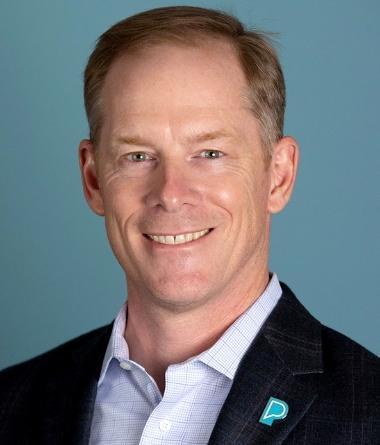
As Chief Scientific Officer, James Beck, PhD, sets the strategic direction for the Parkinson’s Foundation research vision. Dr. Beck oversees a portfolio that has guided more than $400 million in research to explore what causes Parkinson’s disease (PD) and how to improve treatments, working towards a world without Parkinson’s disease. He has played an integral role in positioning the organization as a world leader in accelerating Parkinson’s research.
Dr. Beck launched PD GENEration: Mapping the Future of Parkinson's Disease, a national study started by the Parkinson’s Foundation in 2019 that offers genetic testing for Parkinson’s-related genes and genetic counseling at no cost for participants with a confirmed PD diagnosis. Additionally, he led the team that updated the estimated prevalence of PD in the U.S. and globally and collaborated with several organizations to develop the economic burden of Parkinson’s disease.

Want more?
Don't forget to subscribe! There are many ways to listen: Apple Podcasts, TuneIn (Amazon Echo), Spotify or RSS Feed. (Need help subscribing? See our quick guide.)
For all of our Substantial Matters podcast episodes, visit Parkinson.org/Podcast.
Related Materials
Getting Involved in Research
Genetics
Neuro Talk: Top 3 Parkinson’s Disease Research Areas We Fund
Related Blog Posts

Neuro Talk: PD GENEration 2024 Update

Disease-Modifying Research Pipeline Holds Possibility for Parkinson’s
