Episode 137: CEO John Lehr Offers Broad Insight into the Parkinson's Foundation
-
Dan Keller 0:02 Welcome to this episode of Substantial Matters: Life and Science of Parkinson's. I'm your host, Dan Keller, at the Parkinson's Foundation. We want all people with Parkinson's and their families to get the care and support they need. Better care starts with better research and leads to better lives. In this podcast series, we highlight the fruits of that research, the treatments and techniques that can help you live a better life now, as well as research that can bring a better tomorrow.
From listening to this podcast series, perusing the Parkinson's Foundation website, and perhaps participating in foundation programs, people may have insights into some aspects of its functions, initiatives, staff roles, volunteer opportunities, and outreach efforts, but to give a broader and deeper view into the organization, I spoke with its president and CEO, John Lehr. He described the top three areas that the Parkinson's Foundation supports, its sources of funding, its accomplishments under his leadership, and its goals for the future. In our conversation, he emphasized the vital role of the Parkinson's community in its functioning and in shaping its future directions.
Welcome, John. Before we get to it, why don't you tell me when and why you joined the Parkinson's Foundation?
John Lehr 1:39 So I joined the Parkinson's Foundation in January 2017. I was recruited to the position following the merger of two legacy organizations, one based in Miami, one based in New York. These are two organizations that were coincidentally both founded in 1957 and likely competed with each other only in the last 10 or 15 years of their coexistence, more in the internet age than otherwise, and then they realized that for these two organizations to be out there on their own was really inefficient, and that it would be much better to bring the two organizations together. They had a lot of similar programs, but different programs, and so it was a happy merger. I was brought in to make sure that the merger was successful, and that the unified organization proceeded from there, and did better every year than it did the year before, and expanded mission programs that matter to people with Parkinson's.
Dan Keller 2:32 Why don't you tell me the top three areas that the foundation supports?
John Lehr 2:37 We have what we call our three mission pillars: one is in research, the other is in care, and third is in patient education and care partner education. And so our research pillar is really focused on investing in the underlying causes and the basic biology of Parkinson's disease. So, Parkinson's is a very complex neurodegenerative disorder that affects lots of areas of the body, but most notably the brain, and there's still a lot of unknowns in Parkinson's—why it's caused, how it progresses, the different mechanisms biologically that are involved. So the foundation has been investing a lot to understand those underlying causes.
In basic biology, we also invest in clinical research to examine different areas of focus, and we invest in patient outcomes. So, we have the largest outcome study in the Parkinson's world, our Parkinson's Outcomes Project, which has been collecting longitudinal data on people living with Parkinson's for the last decade plus.
Dan Keller 3:35 All those areas sound like they require sufficient funding. So, what's the source of the funds?
John Lehr 3:40 So, the vast majority of the funds that the Parkinson's Foundation gets are from individual donors making small donations to large donations. So yeah, it does require a good deal of investment, but we believe that the best way forward for new and better therapies, and for ultimately a cure, is going to come through our research.
But we also invest highly in care. We want to make sure that standards of care are consistent across all settings, and that people living with Parkinson's disease can get the very best care that's available today. So, we have a global care network, which consists of 47 Centers of Excellence around the world, but mostly here in the United States and in Canada, and those centers are really evaluating different approaches to care, and through that we raise the standards, and we disseminate those to providers all across the country.
And the last thing that we do, just from a mission perspective, is patient education and care partner education. Getting a diagnosis, or thinking you may have a diagnosis of Parkinson's, can be really daunting, and so the foundation has, through so many different, you know, media, including our website parkinson.org, digital materials, print materials, our helpline, 1-800-4PD-INFO, that provide people living with Parkinson's and their care partners with a wealth of information and resources, so that they can navigate a diagnosis of Parkinson's to the best of their ability.
Dan Keller 5:01 Does the foundation accept pharmaceutical or device manufacturer funding? And if you do, is there some sort of firewall, so there's not undue influence on programs? Yeah.
John Lehr 5:10 So pharma and other industry support comes to the foundation as sponsorships and as educational programming. There are firewalls well established now with pharma; they have to give for certain things, not for other things, and so we do a good job of making sure that our pharma partners are doing things that benefit people with Parkinson's, but aren't necessarily out there selling to people with Parkinson's, you know, that's something they do outside of the Parkinson's Foundation relationship, and we very much appreciate their support.
Dan Keller 5:43 The Parkinson's Foundation gets a very good rating from Charity Navigator, which is an evaluator of nonprofits. Do you feel you're running a lean operation in terms of staffing and expenditures?
John Lehr 5:58 Very much so. Before the merger, we had a 76% mission ratio, which meant 76 cents on every dollar went toward mission programs. Last year we took that up to 87 cents on the dollar. We are very much focused on getting the most out of every dollar that is raised. We understand that comes from public donations and private donations to the foundation, and we want to make sure that we're using that money most wisely. So we spend a lot of time making sure that it goes directly to mission.
But you do have to run an organization, you have to have fundraising staff, you have to have administrative, so we do have those, but we keep them to the lowest level possible. I would say we're a full-time staff of 148; we could probably use a few more staff, just because we've got a lot of work to do and we want to continue the growth trajectory that we're on.
Dan Keller 6:46 What do you think are some of the bigger accomplishments that the foundation has achieved under your leadership?
John Lehr 6:52 So I think I'm very proud of the fact that we put out information and materials and resources to people that are incredibly meaningful. One statistic I'll share is that in a one-year period of time, the number of visits to our website went from 4 million to 5.9 million, essentially a 2 million increase in web traffic. What that means to me is that people are going to our website because it's a trusted website, it's got good and useful information, and they're coming back and back and back because we're being helpful to them, so that's incredibly important to me.
We've expanded our helpline hours, so that I think a lot more people around the country and around the world can call in and get advice and information and resources from a human being on the other end of that line. So that's something I'm really proud of. I'm proud that we've expanded our global network. We've added a number of sites, so we're in more communities than we've ever been before.
We've greatly increased the amount of money we put out into the community through our community grants program. So, when I came on board, we were doing about $700,000 worth of grants on an annual basis, and we were well over $2 million last year. So, that's a significant reinvestment in local communities that are working in Parkinson's.
The last thing I think I'm most proud of is our PD GENEration initiative. This is something that we developed from scratch, so most people don't realize that there is a genetic component to Parkinson's. About 15% of individuals will have a diagnosis of Parkinson's that's related to their genetics, but what's happening is that there are a lot of potential therapies out there that are targeting those genetic mutations, but most people don't know whether they have those. So our job has been to recruit and identify people, test them, provide them with free genetic counseling, so that when we're ready to develop clinical trials, we'll have the patients we need to enroll in clinical trials, which I think is a really important advance in the Parkinson's space.
Dan Keller 8:45 You've also expanded the Center of Excellence network.
John Lehr 8:49 Yeah, we have. So our goal is to get to 60 Centers of Excellence. So we're at 47 now. We add another six within the next couple of months, but we've also added another tier, which is what we call our Comprehensive Care Centers. So these are centers out in the community that are caring for a lot of patients, hundreds of people with Parkinson's each year. They may not necessarily be doing clinical research, but they're really first-rate care centers, and we believe we can learn from them. And we didn't want to exclude them from a Center of Excellence designation because they were smaller. So, we've come up with a whole new designation of Comprehensive Care Center, and we're rolling that out to five new sites in the next couple of months, as well.
Dan Keller 9:27 There's also the initiative for newly diagnosed people with Parkinson's.
John Lehr 9:31 Exactly. We know that at least 60,000 individuals are newly diagnosed with Parkinson's. That number may actually be higher, and there's a new incidence study that's coming out in a couple of months that may demonstrate that, but what we also know from lots of anecdotal information is that when people learn about the Parkinson's Foundation after they've been diagnosed, it puts them on a better journey than if they were just given a prescription in their doctor's office and sent on their way. So we want to make sure that everybody who's newly diagnosed is aware of the Parkinson's Foundation, of our resources, the information, our 800 helpline number, so that they can be as engaged as much as they want to be or need to be in the early stages of their disease.
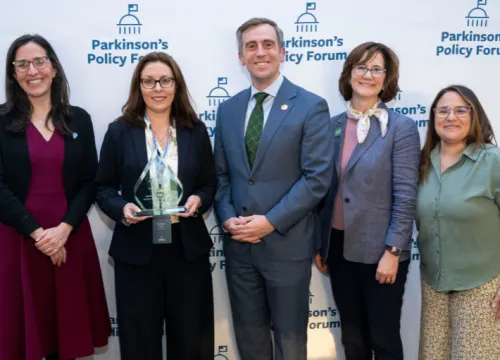
Dan Keller 10:12 There's also the Parkinson's Policy Forum to state and federal legislators. What message are you trying to get to them?
John Lehr 10:20 So there's a lot of things that need to be done in terms of advocacy for Parkinson's. One, at the federal level, we want to advocate for increased funding from the National Institutes of Health. Our sister disease, Alzheimer's, has been getting a great deal more money. Parkinson's is not getting quite as much money. Alzheimer's affects more people, that's true, but they're both drawing from the same pool of neuroscientists, and so we want to make sure that we have enough money to attract the very best minds in science, and that actually comes in large measure through the NIH and NIH funding. So that's something we do at the national, federal level. But there are many issues that affect people with Parkinson's at the local level, and so we're looking for things that can help people in their local communities that address issues of medication—there's a whole range of things that we focus on throughout the whole advocacy continuum.
Dan Keller 11:11 Do you, and if so, how do you get feedback from constituents that you serve?
John Lehr 11:18 So volunteers, particularly people living with the disease or affected by the disease, are the lifeblood of our organization. In fact, I'm at a conference right now where we've brought in what we call our Parkinson's Advisory Council, what we call PPAC. These are 15 individuals, most of them have Parkinson's or are care partners of people with Parkinson's, and we meet monthly, we ask them questions about living with Parkinson's. We ask them questions about our programs, how our programs can be better, where they think we should be investing more resources. So we use PPAC as sort of our high-level touch of what's going on in the community and what's important.
But we have a whole surveys component where we will put out, almost on a monthly basis, surveys to our community about issues of the day. It might be medical cannabis. It might be, "Tell us about your activities of daily living. Are you doing better? Are you doing worse? What helps you?" Whatever the subject is, we're routinely surveying and asking our community, "Tell us about this, tell us more, tell us what's of interest to you."
Dan Keller 12:19 Do you think the people you survey or get feedback from feel more connected or more empowered because of it?
John Lehr 12:26 Oh, for sure. I mean, we hear that over and over again. It's a point of pride for our foundation that we're so regularly in touch with people living with this disease. We're not exclusively a research organization, so we're not really narrow that way. I mean, we're about education, we're about care, we're about people living with this disease every day, and helping them to have the best healthcare and the best quality of life possible. So, that requires a lot of back and forth, a lot of exchanging of information.
We have a community grants program that goes out into the community. I think this year nearly almost 100,000 individuals have participated in our community education programs, so that's a huge number of people who are coming to get information and resources from the foundation.
Dan Keller 13:10 Can you think of one or two things that maybe you've made changes in because of the feedback?
John Lehr 13:15 Yeah, so at one of our Parkinson's Advisory Council meetings, we were hearing from the team about the importance of mental health—how people with Parkinson's really struggle with depression and anxiety and apathy—and so we launched a whole initiative to look at mental health, how referrals are done, where they're done, where they're being referred to, what the uptake on that is, and that's an ongoing study that we're going to continue to have implementation factors as we learn more about it, so that was one thing.
The other thing is, in the last 10 or 15 years, exercise has become incredibly important in the Parkinson's community, but we also realized and got input from our key stakeholders that there wasn't a lot of guidance about what good exercise was for people with Parkinson's. So we pulled together a whole bunch of national organizations in exercise and sports medicine, the YMCA, and we established standards, so that if somebody's going to participate in exercise for Parkinson's, they could be assured that wherever they were going, these were places that were adhering to the highest standards. That's a new program, so the rollout is still happening, but that directly came from people that we talked to in our community.
Dan Keller 14:27 How many local chapters do you have, and besides the services they give locally, what do you get back from them? Do they implement programs or give you suggestions?
John Lehr 14:37 Yeah, so when the merger happened, we were two legacy organizations; one of the organizations had sort of a very informal chapter structure. Following the merger, we divided ourselves into five regions nationally, and then 17 chapters within those five regions. These are mostly virtual chapters—they're not bricks and mortar, although we do have a few offices in a couple of cities. These are chapters built out completely with volunteer leadership who help us identify programs to put on in the community, whether it's related to living with the disease, whether it's something specific. I was just talking to somebody about a women's event that we did, and how to navigate Parkinson's as a woman, and all the different issues that arise.
So, our chapters are very involved on both the programming side, but they're also involved in our fundraising programs, helping us put on Moving Day, which, you know, is our premier peer-to-peer fundraising event, very much of a walk. There are so many educational activities that take place at Moving Day. Again, our chapters and our volunteers and our staff are very involved in all of that.
Dan Keller 15:39 What does the future look like? What do you want to see done, or what do you want to accomplish?
John Lehr 15:43 I'm very excited for the future. I think we just completed our second strategic plan for the next four years, that really does focus on our three mission pillars of research, education, and care.
In research, what we'd like to do is continue to advance research, so that new and better therapies come about. We're still living with therapies that were developed 50 and 60 years ago; they are helpful, but they are not exactly what we want. We want better therapies. We ultimately want a cure. We want to put more money into our research program so we can understand this disease in a better way, and then develop therapies that are really going to not only control the symptoms of the disease, but attack the underlying defect.
In care, we just want to elevate the standard of care. There's a lot of disparity between people who are seen maybe in rural settings and people who are seen at our COEs, and everywhere in between. We want everybody with Parkinson's to get the same high level of care, and we know that's not the case now. So, that's something that we're really going to push.
And then, in our education, we just want to make sure that we're disseminating as much information as broadly and widely to people living with this disease. There are a million Americans who have Parkinson's. There are 10 million individuals worldwide. I think we can do even more to get information and resources into people's hands so that they can live well. So, as I think about the next five to 10 years, we just want to continue to expand and execute on our three mission pillars, and that's going to require more resources, so we're actively out there fundraising. With greater resources, we can do more for our community.
Dan Keller 17:08 Have we missed anything interesting to add or important?
John Lehr 17:11 I think this has been a great discussion. I think it captures our organization. I would just say, you know, we're a people-oriented foundation. We are as good as the people who engage with us and inform us and are working with us, and that's really volunteer staff, and all of the great providers out there who are caring for people with Parkinson's. It's a good community. The Parkinson's community is just an outstanding community working really collegially with each other to try to advance the collective mission.
Dan Keller 17:38 Great, thank you.
John Lehr 17:39 Thank you. Thank you very much.
Dan Keller 17:50 If you would like to find opportunities to get involved with the Parkinson's Foundation, go to our website at parkinson.org, scroll to the upper right of our homepage, and click on the section titled "How you can help." There are options to volunteer, help fundraise, and ways to donate. In the same drop-down menu, see the heading "Advancing Research," if you'd like to see some of the research programs that the foundation supports, as well as ways that you can participate.
Finally, for an objective and independent look at the foundation's operation as a charity, go to Charity Navigator, the world's largest and most used independent evaluator of nonprofit organizations. At charitynavigator.org you can do a deeper dive into the foundation, but the top line is that Charity Navigator's most recent evaluation gives it a four-star out of four-star rating based on financials, accountability, and transparency.
As always, our helpline information specialists are available to answer questions in English or Spanish about today's topic, or anything else having to do with Parkinson's, including finding your way around our newly redesigned website. News and updates about future events and resources are available by joining our email list at the bottom of our website's homepage. If you want to leave feedback on this podcast or any other subject, you can do it at parkinson.org/feedback. If you enjoyed this podcast, be sure to subscribe and rate and review the series on Apple Podcasts or wherever you get your podcasts.
At the Parkinson's Foundation, our mission is to help every person diagnosed with Parkinson's live the best possible life today. To that end, we'll be bringing you a new episode in this podcast series every other week. Till next time, for more information and resources, visit parkinson.org or call our toll-free helpline at 1-800-4PD-INFO. That's 1-800-473-4636. Thank you for listening.
Past podcasts have given glimpses into the broad range of programs and initiatives that the Parkinson’s Foundation has developed and supports. But to give a better understanding of the Foundation’s mission, its operation, reach, and funding, we spoke with John Lehr, its president and CEO. He discussed the reasons for the merger of the National Parkinson Foundation and the Parkinson’s Disease Foundation to form today’s Parkinson’s Foundation, what the new organization has accomplished, and its plans for the future.
Released: September 20, 2022
-
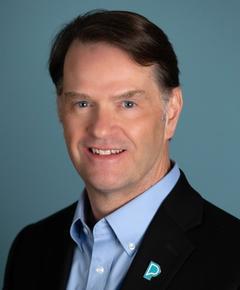
John L. Lehr leads the Parkinson's Foundation as president and chief executive officer. John guides the overall Foundation’s strategy of mission programs and resources that make life better for people with Parkinson’s. He works to expand the Foundation’s reach, research initiatives and presence, while working to improve health equity among the Parkinson’s community and the underserved. He ensures that all Foundation programs and resources aim to improve care and advance research toward a cure.

Want more?
Don't forget to subscribe! There are many ways to listen: Apple Podcasts, TuneIn (Amazon Echo), Spotify or RSS Feed. (Need help subscribing? See our quick guide.)
For all of our Substantial Matters podcast episodes, visit Parkinson.org/Podcast.
Related Materials
Related Blog Posts

Meet Our Top Volunteers Who Are Making A Difference