Episode 183: Stories From Our Volunteers
-
Dan Keller 0:02
Welcome to this episode of Substantial Matters: Life and Science of Parkinson's. I'm your host, Dan Keller. At the Parkinson's Foundation, we want all people with Parkinson's and their families to get the care and support they need. Better care starts with better research and leads to better lives. In this podcast series,
we highlight the fruits of that research, the treatments and techniques that can help you live a better life now, as well as research that can bring a better tomorrow. The foundation engages in a wide array of activities to make life better for people with Parkinson's disease. Our mission is to improve care and advance research toward finding a cure for Parkinson's. The success of many of these efforts wouldn't be possible without our volunteers. They connect with families, raise awareness in their communities, and bring their own personal stories to the work they do. Volunteers participate for various reasons and show their commitment through many kinds of activities. Today's guest, Holly Bloom, is a caregiver for her husband, who was diagnosed with young-onset Parkinson's at age 38 some years ago.
Holly Bloom 1:30
I've also become a volunteer for the Parkinson's Foundation, and most recently completed all of my training as an ambassador. So, I'm looking forward to the work that's ahead for that, and I'm also a committee member for Moving Day San Antonio.
Dan Keller 1:48
Okay, good. Let me just ask you first, remember how you first came across the Parkinson's Foundation?
Holly Bloom 1:58
It's quite vividly how I remember really getting introduced to the Parkinson's Foundation. My husband has had Parkinson's for the past 13 years. He was diagnosed at age 38, and much of our time dealing with what this means for him and me as his caregiver has been done really in isolation. It was actually about two years ago his neurologist had a poster in his office, and it's not necessarily with the Parkinson's Foundation, it was a walk called Walk with Your Doc. And we went out there, there was about maybe 20 people, and this is our very first like community event, very small community.
The walk lasted about a quarter of a mile, but at that walk I noticed this lady, she was walking up a pretty steep hill, and it was a very hot day in San Antonio, and I could tell she was struggling. And so I asked my family to go ahead, and I was going to hang back with her and try to help her catch her breath and walk with her. And so we took a little beat, we got off of the track we were walking on, and we're standing underneath a tree in the shade, and just introduced myself. As we started talking, she was actually a committee member for Moving Day San Antonio, and explained what Moving Day was, and the walk, and how it was a fundraising for the Parkinson's Foundation, and really explained what the mission was, and what it was about, and that was my first time really just understanding the true resources and what was available, and the whole cause for the Parkinson's Foundation. And it intrigued me. I wanted to participate. I didn't want to just sit on the sidelines anymore, and so she asked if I wanted to be a part of her team for the walk, and the rest is history.
Dan Keller 3:55
Looking back, were there any moments or experiences as a volunteer that really stand out for you, that you think are worthwhile to recount to other people, to say these are fulfilling sorts of things you can get out of it?
Holly Bloom 4:10
It has been a truly fulfilling journey, and even mostly why I'm wanting to continue to do this work. There are several moments that I can recall. This is like very special connections. My husband is not an extrovert, he's shy, and typically, you know, he won't be the first to speak at a conversation. You can ask him a question and he'll engage with you, but I remember it was a very special part of actually the support group that we became a part of. We arrived—we got some miscommunication on the day we were supposed to arrive, and we arrived on a day, and nobody was there. We realized it had been moved to the following Saturday, and in the parking lot was a person who was actually arriving to that same support group and explained, he's like, "This is my first time here. I recognize nobody's here. You know, what's going on?" He said, "We've got miscommunication as well, and it's actually next weekend."
But he's standing in the parking lot, and it was my husband and this gentleman who had just newly been diagnosed with Parkinson's, and he was going through all the questions and all of the worry and all of the curiosities of what this would be for him. And it was really where I first heard my husband share what the Parkinson's Foundation has done for him, and he was the one speaking firsthand as someone who needed answers when we were originally dealing with this disease by ourselves, and didn't feel like we had answers. We had more questions than answers. And then we leaned into all the resources that are available. We realized those resources are not only to help us—and we had a lot of help and support—but we were actually able to also share firsthand for someone who's trying to navigate the waters. It was a really special moment to see my husband step up and be the one helping someone else who's going through the same things at the beginning of their journey, where we actually now had a little bit of experience.
Another special moment that we both realized was actually at Moving Day. Moving Day San Antonio is really a fundraising walk for the Parkinson's Foundation, and it brings your community together. When I understood what community was—people focused on the same cause, but it's more than that. People not only focus on the same cause, but you get to see them repeatedly and share in each other's journey along the way. That walk brought together people in our lives that would not normally cross paths: my friends and family from work, my husband's physicians, folks that we actually had made connections with. To give you an example, my husband took up triking, and we met a bike shop owner who a lot of their customers are Parkinson's patients. And so we brought a vendor out to the event, and they brought out their bikes, and they were able to show what a great avenue that was for exercise. Folks that would not normally cross paths all got to be in the same place, and that was really a special moment for my husband and I, because it was feeling very much not only were we not alone, we were heavily supported, and we were also able to give back to those that we've made friends with to support them in that same cause.
Dan Keller 7:43
It sounds like your husband is comfortable doing it in an impromptu sort of situation. Does he also volunteer officially with the Parkinson's Foundation?
Holly Bloom 7:55
He doesn't, as much as I do. I think sometimes his energy levels are fluctuating. I alongside him bring that energy, and I think that's why it's so important for both those that have Parkinson's disease, but also the caregivers. We do a lot of work as caregivers. It's the day in and day out. Sometimes you feel it may be hopeless or helpless at times. This is the energy that fuels us and keeps us going, because we have answers to the questions that we have. We have answers to like real practical problems that we have.
If you were to think about maybe someone's journey—I shared this with a friend of mine just the other day—about sometimes Parkinson's is distracting, and I think we can all relate to it when we realize you have all your medications that you're having to maintain and keep up throughout the day, but that distraction also has remedies. There's a lot of organization that can happen, like an app that's reminding you when it's time to take your medications. There's also been times in our lives where Parkinson's has been just purely disruptive. We want to go out and have a good day out—shopping, going to a park, what have you—and fatigue sets in. So we realize we're going to have to align our day and work out a nap schedule, so in the middle of the day we can both, both my husband and I, have a little bit of recharge.
But there's also aspects of our life where Parkinson's—and I maybe don't want to sound melodramatic—but it's actually almost been destructive. My husband had a side effect of the medications that he was taking that caused impulse control disorder, and it's very taboo to talk about, but it's a reality of what we experienced. And if you meet one person who has Parkinson's, you've met one person who has Parkinson's, because Parkinson's, it affects people in different ways. So this was his unique journey, and he actually started gambling, and that was something that we didn't really see before, and he was gambling more excessively than we understood. We realized later on that that was actually a side effect of some of the medication, and had we known about that sooner we would have been able to recognize it or ask our physician about it. And so I think that's really important to have your community, and you speak up about these things, and you realize other people might be suffering with these same type of situations, and it comes down to you're not alone, you're not unique in this in certain ways. With that support, you can recognize things sooner, and really be a team with your physician, and bring these questions forward. And it was my community that helped me realize that this was a fact of the medication, and it wasn't something that my husband was going through a midlife crisis or anything, and so we were able to find the treatment and support that he needed in order to combat that, and we are fortunate it is not something that he exhibits any longer, and we're able to get a hold of it and get a grip on ICD.
Dan Keller 11:14
Now that you bring it up, impulse control can go along with medications: gambling, shopping, hypersexuality, all sorts of things. I guess neurologists should mention it, but on the other hand, it's good to talk to other people with Parkinson's and hear their experiences and get clued into things that you were never told, I guess.
Holly Bloom 11:39
I should not feel ashamed about it, either. Right.
Dan Keller 11:42
Right. People expect drugs to have some sort of action. They have various actions, some are welcome, some are not, and they all go with the package, but it's not an insurmountable problem. The foundation's annual volunteer leadership summit is coming up soon, and I understand you're part of the planning committee. For those who might not be familiar, what is the summit all about?
Holly Bloom 12:12
Yes, it's a great way for volunteers to come together and truly learn the tricks of the trade, if you will. We're going to be in some workshops where we will be hearing from speakers and some ideas and practical ways to volunteer, and there's a variety of different ways in which you can make an impact in your volunteer work. The summit is really designed to help us learn, help us engage, build connections, and network, and walk away with some real practical tools that will help us in our own journeys within our cities and our communities to volunteer for the Parkinson's Foundation.
Dan Keller 12:54
Are there specific presentations or just networking? And what are you looking forward to most?
Holly Bloom 13:01
There'll be breakout sessions, so we'll have intimate chances to work with smaller groups and work on things like elevator pitches, like how do you say what you're doing in a matter of words. There also is going to be some person-to-person panels where we will hear from some of the volunteers that have done the work over the years, share their testimony, what they've done that has made a difference, and some practical tips that you can take away from that workshop and that event, then really turn around and make a great impact. So, yes, a lot of things that are designed with the volunteer in mind.
Dan Keller 13:37
I assume there's still opportunities for people to become involved as a volunteer, but are there some things you've noticed that the foundation particularly needs help with, either locally in San Antonio, or do you see sort of overall nationally?
Holly Bloom 13:53
I don't know if I'll have the best answer for that one, Dan. I'll be honest, this will be my first time at the summit, and I will be a participant as well. So for me, I know that locally in San Antonio, with Moving Day, we always are looking for volunteers in a variety of capacity, especially leading up to and on the day of the event, but as far as what's needed locally, I'm, as a brand new ambassador, I'm looking to understand that myself.
Dan Keller 14:22
Have we missed anything that is interesting or important to add?
Holly Bloom 14:28
If someone is considering volunteering, and perhaps they don't understand, like, what skill set they have that would make a difference, whether you are volunteering in a small amount of your time, really, it's when we build connections with other people that we feel stronger, and that we can overcome really any other obstacle, because we have each other's support. So, if you have time, if you have desire to volunteer, whether it is in small amount of time or even larger chunks of time.
Dan Keller 15:07
Not that the main goal of volunteering is for your own support, but it sounds like it's almost a support group in itself.
Holly Bloom 15:16
It definitely is, because as you volunteer, you're making those connections, and it quite happens when you're at an event, you just look around and see what's needed, either make a connection with someone, or to hand out material, or to help organize something that will allow that particular event to be a success. Recently, we spent the weekend at the zoo, and Ozzy Osbourne, as you might have heard, has passed away, and he made a considerable donation in his estate to the Parkinson's Foundation, and our local San Antonio Zoo was supporting an Ozzy Day, and we hosted a tent. We actually had a table out where we had material and really creating a welcoming environment, and the traffic was really consistent and people were coming up to the table asking questions about Parkinson's disease, whether they had a connection with someone in their family or they themselves had Parkinson's, and they wanted to know more—what resources are out there.
And whether you're newly diagnosed or you've been on this journey for a while, there's always questions that others can help you with, and so it was a really great experience, as a learning experience for me as a volunteer. We had one of our local representatives from the Parkinson's Foundation there, and really just taking in how she was making those connections, and kind of her way that she would answer questions and respond to people who are passing by, helped me learn, like, how I could also do that independently and create greater awareness for our communities. I didn't always have all the answers, but it's okay. The material gave direction. She showed me how to have my two or three sentence way of describing how what the Parkinson's Foundation did, and it gave me an opportunity to learn, and then turn around and have that conversation yet with the next person by myself. And you realize once you open the conversation with someone who's inquiring, really, you're just meeting friends, that's what it's about.
Dan Keller 17:31
What you've just described is sort of the thing they talk about, teaching young doctors: see one, do one, teach one, so you can pass it on too, I guess. I really appreciate it. Thanks for all the information. I think it'll get people thinking of volunteering and what they can put into it and what they can get out of it. So, thanks.
Holly Bloom 17:53
Absolutely. I feel like when we are building connections with other people and we feel stronger, we can overcome, and really we can do better to support one another.
Dan Keller 18:14
If you have energy, drive, and a desire to help make life better for people with Parkinson's disease, just go to our website at parkinson.org/volunteer. You'll find all the different ways to engage with the foundation, along with a volunteer interest form to share what you're most interested in. Your passion and drive are always welcome, and can find a home at the Parkinson's Foundation. Whatever you decide to do as a volunteer, you'll be joining a group of dedicated people who really are making a difference.
As always, our PD information specialists can answer questions and provide information in English or Spanish about this topic or anything else having to do with Parkinson's; you can reach them at 1-800-4PD-INFO.
If you have questions or want to leave feedback on this podcast or any other subject, you can do it at parkinson.org/feedback. If you enjoyed this podcast, be sure to subscribe and rate and review the series on Apple Podcasts, or wherever you get your podc asts. At the Parkinson's Foundation, our mission is to help every person diagnosed with Parkinson's live the best poss ible life today. To that end, we'll be bringing you a new episode in this podcast series eve ry month. Till then, for more information and resources, visit parkinson.org or call our toll-free helpline at 1-800-4PD-INFO, that's 1-800-473-4636. Thank you for listening.
Our Parkinson’s Foundation Ambassadors are the backbone of our outreach, bringing awareness about Parkinson’s disease (PD) directly into local communities. From leading community walks, to staffing tables at resource fairs, to starting meaningful conversations about the urgency of PD -- there are many ways to get involved with the Foundation.
Each of our ambassadors has their own story and special reason for choosing to volunteer with us. In this special episode, we speak with Holly Bloom, who was recently recognized as a Rising Star in the South Central Chapter. She shares her volunteer experience with the Foundation and her personal journey as a care partner.
Released: September 8, 2025
-
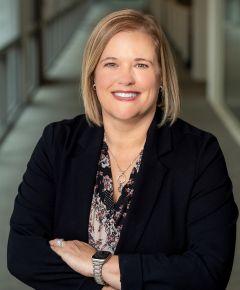
Holly Bloom is a dedicated caregiver to her husband, Tim, who was diagnosed with young-onset Parkinson’s disease at age 38. Her personal journey has inspired her advocacy as an Ambassador for the Parkinson’s Foundation, where she supports awareness and education efforts. Holly also volunteers as a committee member for Moving Day San Antonio, helping organize community events that unite and empower those affected by Parkinson’s. Through her roles, she brings compassion, strength, and a deep commitment to making a difference.

Want more?
Don't forget to subscribe! There are many ways to listen: Apple Podcasts, TuneIn (Amazon Echo), Spotify or RSS Feed. (Need help subscribing? See our quick guide.)
For all of our Substantial Matters podcast episodes, visit Parkinson.org/Podcast.
Related Materials
Related Blog Posts

Meet 4 Volunteers Making Life Better for People with Parkinson’s

How Empowered Volunteers Make An Extraordinary Impact
