Episode 95: The Healing Power of Social Work
-
Dan Keller 0:08
Welcome to this episode of Substantial Matters: Life and Science of Parkinson's. I'm your host, Dan Keller. At the Parkinson's Foundation, we want all people with Parkinson's and their families to get the care and support they need. Better care starts with better research and leads to better lives. In this podcast series, we highlight the fruits of that research—the treatments and techniques that can help you live a better life now, as well as research that can bring a better tomorrow.
Parkinson's is a complex disease involving motor and non-motor symptoms, mental and emotional aspects, relationship issues, and more. So, some of the best outcomes often come from a team approach involving health professionals with expertise in different fields, such as neurology, physical, occupational, and speech-language therapy, and more. One important member of the team is the social worker, who can work with people with PD and their care partners to identify areas of need and find the resources to address those needs. Some social workers are licensed to provide emotional and relationship therapy themselves.
I spoke with Elizabeth Delaney, a licensed clinical social worker in the Movement Disorders Division at Columbia University, to get a good picture of the role of social workers and why they should be an integral part of the PD healthcare team. She started off with a general description of what social workers do.
Elizabeth Delaney 1:48
Social workers across the board, I think, are there to kind of provide support to people and kind of assess not just the person and how they're feeling kind of emotionally on the inside, but how they're functioning within their world and their environment. So whatever that setting may be, the social worker is really taking into account that person and how they're functioning or interacting with other people or their environment. So typically across the board, social workers can provide assessments to assess family structure and the support system that a person might have, their physical or cognitive functioning, which might include their mood or how they feel about themselves, and we could provide supportive counseling.
Some social workers, as I mentioned, can be licensed clinical social workers, so they can actually provide psychotherapy as well. And some social workers provide case management services, so that could be coordinating certain concrete services or resources for a person to make their lives a little bit better, you know. I entered social work to help people, and I think that's what most social workers do. So, in any setting, it can kind of be, how can I help this person, while taking into account the context that they're in and their life, essentially.
Dan Keller 3:04
What are some specific problems that arise with Parkinson's disease that social workers can address?
Elizabeth Delaney 3:10
So, with people with Parkinson's, it's kind of complex, because there are a lot of moving parts in order to make sure that they have the best quality of life. So it's not just the movement disorder specialist, or the physical therapist, or the care partner, or how they're doing at home—it's all those things together. So, the challenge for the social worker is kind of to make sure that all of those pieces are connected. And my role in my center, I'm there to make sure that there's continuity of care, so from when they come into the office, see the movement disorder specialist, making sure they're connected to resources within the community.
So, in terms of Parkinson's, that can be wellness programs, it can be support groups to make sure that I'm providing the support when they come in, but I want to make sure that that support continues in the community. So that might be connecting them to support groups, it might be evaluating not only them, but their caregiver, to make sure that the caregiver has the support they need to provide the care to the person with Parkinson's. So, I think there are a lot of moving parts in the care of someone with Parkinson's, and that's the challenging part, is to make sure those moving parts are working together to make sure that the care is effective, and that the person with Parkinson's is being connected and receiving the resources that they need to have a good quality of life, and that can vary in the different stages that they're in with their Parkinson's.
Dan Keller 4:30
So, this sounds like it's more ongoing continuity of care, a chronic sort of interaction, as opposed to some of the things social workers do, like homelessness and abuse and conflict, and things like that, is that right?
Elizabeth Delaney 4:43
Correct. In an outpatient setting, like I'm in, you know, there, of course, can be those moments where there are urgent referrals to me in cases of abuse or homelessness, but certainly it differs from maybe someone that's in the inpatient realm of social work, where they're focused on discharging the patient safely, but there's not really that continuity there. There's no follow-up unless that person maybe is rehospitalized and readmitted, and then that social worker comes across them.
So it's a little bit different in an outpatient setting, where we're continuing to see these patients, and we're able to check in. So that's kind of where the role differs in an outpatient Parkinson's center, as opposed to a social worker that might be dealing with more urgent acute issues in the inpatient hospital setting, such as you mentioned homelessness or abuse that has put them in the hospital.
Dan Keller 5:32
Are there social workers who have particular expertise in the Parkinson's area, and should people with Parkinson's, if there are such people, seek them out?
Elizabeth Delaney 5:42
Sure. So, I think at least at Columbia University, there was no real coursework that specified Parkinson's or maybe Alzheimer's dementia that specific, but certainly we learned about the health system and mental health issues. So, to find a social worker that's specific to Parkinson's might be a little difficult, just as, you know, a lot of patients want the people that are providing care to know about their condition, and that is completely understandable. It just might be a little difficult, since the education in social work school is not particular to Parkinson's.
What I would recommend is to find a social worker that knows about chronic illnesses. So, a lot of times social workers will gain that experience in hospital settings or nursing home settings, where they might come across more chronic illnesses, and they get that knowledge through experience. So, asking or looking for someone that has experience in chronic illness or neurological conditions can certainly be helpful, as opposed to a social worker that might not have that same background.
And hopefully a lot of centers, or Centers of Excellence, the Parkinson's Foundation specifically, might have those social workers in place at their centers, and they would know or be more familiar with Parkinson's. So certainly, if you are looking for a social worker, going to a Center of Excellence would be a good place to start, especially if you're looking for one that knows about Parkinson's.
Dan Keller 7:06
Do other health practitioners, including general neurologists and even movement disorder specialists, fully understand the role of social workers?
Elizabeth Delaney 7:15
Well, I think that's a good question. I think initially physicians get their training through residency programs in hospital settings, so they might be more familiar with those social workers that perform in crisis situations. So they might indicate a social worker for someone that's homeless or abused, but when they go into the private setting or medical center, they might not have that same exposure to social work. So it might be difficult for them to know if there is a social worker in their center, what exactly they help with. So, I think there can be a lack of understanding of what social workers do, especially since the profession is so broad and they're seen in so many different locations. It might be hard for them to know exactly what we could provide in an outpatient setting specifically.
Dan Keller 8:01
You're at a Center of Excellence. I take it that they put together interprofessional teams, and patients really have a pretty comprehensive evaluation and treatment and ongoing care. How common is this? Can this be found in the community? Do most places operate this way?
Elizabeth Delaney 8:20
So, I would say that maybe not most places operate this way, but I definitely think it's to their benefit to do so, especially with the chronic illnesses. There are a lot of moving parts, as we mentioned, so I think that a lot of maybe community centers or senior centers have social workers there that can help provide similar services—specifically more so concrete services, if they need, like meal delivery programs, or just kind of some support—but I don't think it's as common. But I think it's certainly gaining traction. I think there's a lot more focus on integrated care and better coordination of care, and I think that's starting to expand beyond just Centers of Excellence, and I think that's for the better, especially for our patients.
Dan Keller 9:03
Are there barriers to integrating social workers into the healthcare team? We have always, or traditionally, focused on sort of a medical model. It's a person walks in and has a disease, as opposed to a person walks in and has a whole life that involves the disease and social, economic, psychological, and all sorts of aspects of their lives. So, how well are social workers integrated into the healthcare team, given the sort of traditional nature of the medical model?
Elizabeth Delaney 9:35
Yes, so I think there is still a little bit of work to be done. Certainly if there's a social worker on the team, the integration piece can be sometimes missed, or they underutilize their social workers, so that goes hand in hand with knowing what a social worker can do. So, if they are knowledgeable about what actions the social worker can take, they might better delegate clinical tasks to that social worker. And an important piece here is, or to go to integrating in a better way, is to educate the healthcare professionals, or that team, in what a social worker can do, because I think the reason that the integration might not be there is that they just don't know. So for the social worker to sit down with their team, especially if the team already has case conferences, a social worker to explain how they could have helped in certain situations, and I think over time it will kind of work itself out in terms of what referrals are appropriate for a social worker and what might not be.
Dan Keller 10:36
Are there enough social workers around who have expertise in Parkinson's disease, or as you said, chronic disease, that people can readily find them and see them?
Elizabeth Delaney 10:46
I think that there definitely are social workers that have familiarity with chronic disease. So, you know, a good resource that I usually use is I go on Psychology Today, and you can actually search for social workers. Now, this will be more of a mental health focus, there to kind of provide psychotherapy and support, but given their social work background, they will be kind of used to providing resources as well. You can kind of search by specialty, so I usually put chronic illness, or you can put coping skills and strategies, because a lot of these more progressive illnesses, the focus could be on coping with the changes that come. So certainly that's a resource that I usually use.
And also, you know, senior centers or community centers, they certainly have social workers in place that can help provide concrete resources. Another option is there's private social workers—they're called senior care managers—that, you know, perform specifically kind of the same tasks that I do, just in the community for a private fee. And they usually have exposure to neurological illnesses or people with dementia as well, because those people tend to need a little bit more help and especially a lot more coordination with their care. So I think Psychology Today, your local senior center or community center, and private senior care managers are certainly a few ways that they can access social workers.
Dan Keller 12:12
Are social work services generally covered by private insurance or employer insurance or Medicare?
Elizabeth Delaney 12:18
Yes, so I think a lot of the people that you would find on Psychology Today would accept certain insurances, and you could certainly find that by filtering. The care managers would certainly function in more of a private manner, so wouldn't be covered, although there are some long-term care insurance policies that might allow for that and might cover that. If you find a social worker in your center, for example, in our center, I don't charge for my services—as long as you're a patient that comes to our center, you can speak freely with me, and I can provide support and services at no cost to you without billing your insurance. And certainly in some centers where that social worker might provide psychotherapy, they could bill your insurance, and your insurance would cover it if they're in network with it.
Dan Keller 13:03
Are there ways to measure and validate better outcomes if social workers are involved in patient care?
Elizabeth Delaney 13:09
Yeah, so I think there could be some measures in terms of continuity of care. So I think if social workers are involved in making sure that a person comes to the center and they're given a prescription for a piece of medical equipment, or they're told they need more help in the home, if they walk out of there and are unsure about how to go about that, that is something that could be measured. If they come back again and say that they didn't get the equipment, they never got an increase in their home health aide hours, that is something that a social worker could intervene. You could certainly measure that and see how that kind of enhanced their quality of life.
There's, I think, a Parkinson's disease quality of life scale that could be given to patients, and you could certainly see if those patients that have interacted with a social worker are scoring kind of higher on that scale—if they are doing better because there is more continuity of care, because they have been introduced to a social worker. So I think there are ways to measure specifically surrounding treatment plans and how effective those plans were with or without the introduction of a social worker.
Dan Keller 14:15
Is there anything important to add that you'd like to touch on?
Elizabeth Delaney 14:19
In my personal experience in working with people with Parkinson's, they do appreciate someone knowing about their disease. So, I think it might be important for schools of social work to teach the importance of knowing about chronic illnesses or progressive illnesses. I think that's important, and I also think that it's important for people with Parkinson's to know that there's someone there at their center, or just in general, that they can go to if they have a question. I get a lot of times people calling just specifically to say, you know, I had a question for someone there, I just don't know who to ask, and I always say, you could always ask me, and if I don't have the answer, I could certainly point you in the right direction. And that's kind of what I want people to know, is that social workers are there to help navigate this very complex healthcare system to make sure that you get the best quality of life that you can get.
Dan Keller 15:10
Very good, I appreciate it.
If you're a social worker and want to find educational resources designed for social workers in all care settings who want to provide the best care for people living with PD, you can visit parkinson.org/socialwork. Here you'll find a list of materials, including webinars, podcast episodes, and fact sheets that you can share with your patients and colleagues.
If you are a person with PD or a care partner and want to learn more about how social workers are integral to the multidisciplinary care of people like you, search our site at parkinson.org for social workers, and you'll find a recent presentation in our PD Health at Home series, titled Psychologists, Social Workers, and Counselors: How Can They Help, by social worker Annie Wallace, Associate Director of Education at the Parkinson's Foundation.
In an earlier episode of this podcast series, licensed clinical social worker Jessica Shurer discussed the emotional changes that may occur throughout the course of the disease, along with suggestions for how people who are unable to travel to large medical centers may find help to address their emotional needs. That episode is titled More Than a Movement Disorder: Addressing Mood and Coping, which you can find at parkinson.org/podcast or on your podcast streaming platform of choice.
In our blog series, Jessica talks about how social workers collaborate as part of a PD multidisciplinary team. You can find her blog post under the Living with Parkinson's tab near the top of our website pages. In her blog, she also talks about the mission of social work and how it drew her to enter the field.
If you have questions about today's topic or anything else having to do with Parkinson's, our information specialists can provide answers in English or Spanish. They can also help you find a social worker in your area with expertise in movement disorders or chronic diseases. You can reach them at 1-800-4PD-INFO to receive news and updates about future events and resources. You can opt into our email list at the bottom of our website's homepage.
If you want to leave feedback on this podcast or any other subject, you can do it at parkinson.org/feedback. If you enjoyed this podcast, be sure to subscribe and rate and review the series on Apple Podcasts, or wherever you get your podcasts.
At the Parkinson's Foundation, our mission is to help every person diagnosed with Parkinson's live the best possible life today. To that end, we'll be bringing you a new episode in this podcast series every other week. Until then, for more information and resources, visit parkinson.org or call our toll-free helpline at 1-800-4PD-INFO, that's 1-800-473-4636. Thank you for listening.
A team approach to Parkinson’s disease (PD) often results in better outcomes and quality of life for people with PD and their care partners. Members of the team have specific expertise in evaluating and fulfilling the needs of the person and family. One of those members is the social worker, and ideally, one who specializes in chronic or progressive diseases. He or she can assess how the person is functioning in their environment, their emotional state, and their needs. Once the assessment is done, the social worker can help meet those needs by directing people to the most appropriate resources, or in the case of Licensed Clinical Social Workers (LCSW’s), (or the equivalent in some states, Licensed Independent Social Workers), by directly providing therapy in the areas of mental and emotional health. Social workers also can function as a “point person” or starting point for people with PD and care partners who may know what they need but not where to find it or how to access it.
In this podcast episode, Elizabeth Delaney, LCSW, social worker in Columbia University’s movement disorders division and the center coordinator of the Parkinson’s Foundation Center of Excellence at Columbia, describes the role of social workers as part of a Parkinson’s health care team, and she offers suggestions on how people with PD can find a social worker experienced in working with people with progressive diseases.
Released: December 15, 2020
-
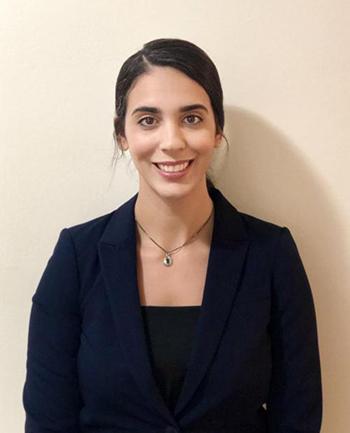
Elizabeth Delaney, LMSW, joined the Columbia University Irving Medical Center (CUIMC) Movement Disorders team as a Licensed Social Worker and Center of Excellence Coordinator in June 2017. She got her start in the field of movement disorders during her second year of social work internship at New York Presbyterian Brooklyn Methodist Hospital Neuroscience Department, working within the outpatient Parkinson’s’ center. She has particular interest in mental health, health disparities, and community education. She completed the Allied Team Training for Parkinson’s in 2017 and continues to grow as a movement disorders mental health clinician. Elizabeth completed her Bachelor’s degree in psychology at Pace University and earned her Master’s degree in Social work from Columbia University.

Want more?
Don't forget to subscribe! There are many ways to listen: Apple Podcasts, TuneIn (Amazon Echo), Spotify or RSS Feed. (Need help subscribing? See our quick guide.)
For all of our Substantial Matters podcast episodes, visit Parkinson.org/Podcast.