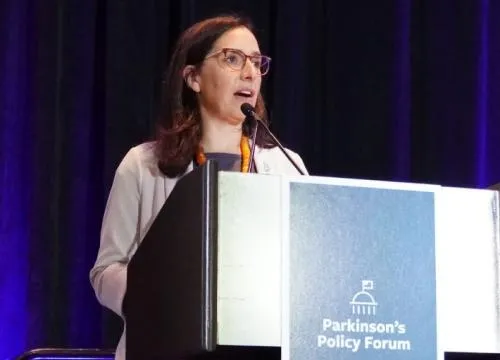
Expert Briefing: Complementary Therapies & Functional Medicine in Parkinson's Care
-
Dr. James Beck 00:00:01
Hello everyone, and welcome to the Parkinson's Foundation Expert Briefings. I'm Dr. James Beck, Chief Scientific Officer at the Foundation, and it's a pleasure to have you with us today. In today's briefing, we'll explore functional medicine and non-drug options, such as massage, acupuncture, red light therapy, and CBD. All this is done to help relieve symptoms and enhance daily well-being in people with Parkinson's. But before we get started, let's do what we always do, which is to get a sense of who is there in our audience today. So we're going to launch a poll, and if you're joining on Facebook Live, feel free to go into the comment section and tell us a little bit about you. Tell us what describes your connection to Parkinson's: a person with PD, spouse, partner, a parent. What is your relationship? Tell us, and then I'll get a sense of who we are, and we can let our speaker know as well and get a sense of who we're talking to today.Okay, probably a fair number of people are still joining and filling out this poll as we come in. We always have a strong presence for those living with Parkinson's disease and their care partners. Let's see if that's going to be the case today.
All right. Let's take a look at the results of that poll and see where we stand.
Ah, of course. As I suspected, a lot of people with Parkinson's and their care partners here today. That's great. Some children of those, other family members and health professionals, welcome each of you. I think today will be a really interesting discussion that we're going to have as we get going. Thank you, everyone, for sharing your connection to Parkinson's disease.
Before we begin our formal briefing, I'd like to just, as I always do, take a moment to introduce the Parkinson's Foundation for those of you who are not familiar with us. We're a nonprofit organization dedicated to improving the lives of those living with Parkinson's by enhancing care and advancing research.
Our efforts are deeply rooted in collaboration with the Parkinson's community, ensuring that everything we do aligns with the needs and the priorities of you, those living with Parkinson's. Today's program is an example of how we're working with you to meet those goals. One of our key initiatives is PD GENEration, which offers free genetic testing and counseling to people with Parkinson's. By participating, you can learn about your genetic connection to Parkinson's and contribute to research that hopefully will drive new treatments and one day a cure for those living with Parkinson's. We encourage you to share this opportunity with your community if you've already participated. Together, as we always say, we can make a difference.
For those of you who are furiously trying to take notes and transcribe what's going to be talked about today, just remember we're going to record our session today. For your convenience, we'll have that recording available shortly after our presentation. It takes about a week, and then we'll email you a link to the recording, as well as other resources related to today's topic.
Now, as we begin our Expert Briefing, I'm pleased to introduce Dr. Britt Stone. Dr. Stone is an assistant clinical professor of neurology at Vanderbilt University Medical Center in the division of movement disorders, and she is also at a Parkinson's Foundation Center of Excellence. Dr. Stone earned her medical degree at Meharry Medical College and completed her neurology residency at the University of Pennsylvania, followed by a movement disorder fellowship at NYU Langone in New York City. She also trained in integrative medicine through the Andrew Weil Center at the University of Arizona, and her work focuses on integrative and holistic care for people living with Parkinson's disease.
Dr. Stone, thank you for your time and for joining us today.
Dr. Britt Stone 00:03:39
Thank you so much, Jim and the Parkinson's Foundation, for having me. So now, so that we have lots of time for questions, we're going to get into it. Let me share my screen. You all will hold, and we'll see if technology is on our side and everything is smooth.Okay. Today, we're going to be talking about complementary therapies and functional medicine and Parkinson's care. We're going to highlight a few key modalities and talk about the research in those modalities, what we know and what we should be looking forward to in the future. Hopefully, this will empower you as you collaborate with your providers regarding Parkinson's disease.
I have nothing pertinent to disclose today.
Where we're going: we're going to first understand the potential benefits of non-drug therapies for managing Parkinson's disease symptoms. We're going to learn how functional medicine focuses on root causes and whole-body wellness to provide a holistic approach to Parkinson's care. We're going to gain insights into how complementary and functional medicine therapies can improve daily well-being and enhance quality of life for individuals with Parkinson's disease, and then recognize the importance of integrating personalized, non-traditional approaches with traditional treatments for a balanced management plan.
First, some definitions. What is functional medicine? When I think of functional medicine and complementary therapies and integrative medicine, which you might have also heard, these are not actually interchangeable terms. This picture of an umbrella is a perfect idea for thinking about this. Integrative medicine is kind of the umbrella under which functional medicine can live and complementary therapies. When you're thinking about integrative medicine, underneath that umbrella, in addition, is also traditional Western medicine.
All the things that your movement disorder specialist will prescribe for you, whether that's your medications, your therapies, seeing the psychiatrist, home health, all of these things are your Western medicine modalities. Then you have functional medicine, which is this idea of looking for the root cause, and we'll talk about this a little bit later and what that entails. Then there's complementary therapies, of which there are many, and we'll talk about a few of those today.
Functional medicine addresses the root cause and not just symptoms. It's looking at a whole-body system approach to medical care with an emphasis on nutrition, gut health and lifestyle factors. Think about it as if you have a pyramid. The base of this pyramid is the habits, routines and rhythms of your life that we're trying to help stabilize. As you move up the pyramid, you then have more acute therapies that you might add in. Specific things like going to an acupuncturist, getting bodywork or massage therapy, your exercise regimen that is tailored to you specifically, supplements and herbal remedies that you might take, and some other therapies we'll talk about later.
Dr. Britt Stone 00:06:58
Functional medicine also focuses on genetics and environmental exposures. Often, there will be extensive laboratory and diagnostic testing that maybe in your general Western medicine schema is not done. A lot of times, these labs may not be covered by insurance and might be out of pocket. They're looking at things like how people metabolize particular compounds. It might look at allergies, exposures to things in the environment, mold comes to mind, for example, inflammatory markers, lots of vitamin labs and things of that nature.Functional medicine and Parkinson's: functional medicine is particularly ideal from a preventive perspective because it's identifying susceptibilities and vulnerabilities in the individual. As we know, we are not perfect, sadly, and we all have been impacted by our genetics, by our environment and by what we have experienced: traumas, our career, where we've lived. All sorts of things bring us to the moment we now arrive at. If we've had other illnesses, if we've had other incidents, functional medicine considers all of these things and is trying to then help set you up for ideally the best sort of prospective moving forward as you age. Once someone is diagnosed with Parkinson's disease, functional medicine can help with optimizing quality of life moving forward.
Under this integrative umbrella, we're now moving into what are the non-drug therapies. First, what is a drug? A drug is any medicine or substance that actually causes a physiologic effect in the body. That's very broad, so it might not just be the drug that is written on a prescription pad by your physician. When you are actually taking herbal supplements, there is this drug component to it because it is actually impacting your body.
When we're talking about the natural remedies, they aren't these things that are completely separate from drugs, but they might not be pharmaceutical. That's how we often separate them out. Then there are non-pharmacological therapies, and I think that's a more clear description when we're talking about things like acupuncture, massage, red light therapy, breath work and more.
These are all modalities that have been moving out of specific communities where they have been heralded as things that are very helpful for people's general health and well-being and for some symptom management, and they're moving into mainstream awareness now, as lots of people are incorporating this into their clinical practices. You have physicians who are now recommending this to the patients they're taking care of. You have patients who are asking their physicians, "What do you think about this?" whereas before maybe they wouldn't have done that. You also have people who are in the healthcare space in Western medicine doing these therapies for themselves as well, for their own healthcare maintenance.
Some benefits of non-drug therapies for Parkinson's disease: there is this concept of, can you get symptom relief? We're thinking about what symptoms seem to often respond to non-drug therapies. Symptoms include stiffness, pain, anxiety, sleep and mood, particularly for non-motor symptoms that might not respond as well to pharmaceuticals. The key when you're thinking about what works for you or how to individualize this approach is to actually consider what are the things that bother you the most that you're trying to get some management of.
I'd be remiss if I didn't talk about the concept of placebo. Placebo effect, which often, when you think about it, sometimes might evoke this negative connotation, but really it shouldn't. It is our brain's way, our mind's way of healing itself. This idea that when we have hope, when we are optimistic that something we are doing for our health can make us feel better, that we actually do feel better.
Dr. Britt Stone 00:11:20
When you're talking about pharmacological therapies, often the goal is that you have a therapy that is better than the placebo effect, because then you know it's not just my positive thinking that's making this thing work. If it's just positive thinking making this thing work, then I really maybe don't need to take this drug, right? But in the non-drug therapies, particularly when there's this caveat of first do no harm, whether that is physical harm or financial harm, or something that's really time-consuming and stressful for a patient, if you're not having those harmful components to these therapies, placebo effect might actually be really great.Some spotlights on key therapies. We have massage therapy, which, when I think about what that can actually lend toward people, is hopefully relaxation. Of course, that idea of physical touch being something that actually helps to relax muscles, a calming effect. There's a therapeutic component of hands on another individual that also can be very helpful. People who have muscle spasm and cramp and muscle tightness, we know that massage therapy is helpful for this, especially at the direct time it's happening, and then there can be some long-term benefits when this is a regular practice.
There's also acupuncture, which we'll talk about each of these a little more specifically, fear not. We're talking about the concept of energy flow. In Eastern medicine, the idea of energy, or qi, that is the life force that animates a person. When that qi is stuck, stagnant or low, then you could have symptoms. That's the whole philosophy around Chinese medicine.
Acupuncture, along with a lot of herbal remedies in Chinese medicine and movement like Tai Chi and Qigong, are modalities to help move qi more effectively through the body, keep it from being stagnant and also build the qi up. There's some hope for potential motor symptom support there.
There's also red light therapy, which everyone's been talking about and it's everywhere: anti-aging for the skin and a host of other potential emerging research about potential neuroprotection for red light therapy.
Then there's also CBD in our herbal land, which is the cannabinoids. It is a compound in cannabis, which is the plant that includes both hemp and marijuana. The difference between those two, because they're practically the same plant, is the amount of THC in the plant. THC is the part that gives people the high, whereas CBD, the other compound that's often very well known, has some potential in being helpful in sleep, anxiety and pain, although there are some legal safety considerations depending on what state you live in and other medicines you might be on, and things of that nature.
A little deep dive into massage therapy. In March 2020, there was a literature review looking at 12 studies of massage therapy and its benefit on Parkinson's symptoms. Multiple types of massage induce relaxation, and when patients reported, they reported benefit in some non-motor symptoms, such as mood, fatigue, sleep disturbance and pain, which is actually not too surprising. There were some neuromuscular types of massage, the East Asian categories, shiatsu, Tui Na and Thai. Tui Na, if I remember correctly, I think is the Chinese massage. Of course, Thai is self-explanatory and might improve motor symptoms. This was also seen in a randomized controlled trial and in three case-control studies, that this particular neuromuscular type, which is kind of manipulating body parts around the joints, might improve motor symptoms.
Dr. Britt Stone 00:16:09
Acupuncture, which we mentioned earlier, is a component of traditional East Asian medicine with the fundamental principle of the life force, qi, that flows through energy meridians in the body, and disruptions of this flow can manifest in illnesses. In acupuncture, depending on what symptoms you might have, there might then be a particular protocol of these small needles that are placed along the meridians. They're usually placed, and I actually have acupuncture myself, and it's not painful. It's a little interesting.You feel the needle, while it's quite tiny, and then the needles are placed. Then you will be lying in a very calm, quiet, often dark place for about 30 to 45 minutes. After that, those needles are removed. Sometimes you might feel a little bit of an ache or just kind of a weird, buzzy sort of feeling, different from a nervy shock from the needle. Of course, you give feedback to your acupuncturist about what you're feeling when the needles are being placed.
I've had many patients anecdotally who have gone for acupuncture for symptoms like constipation, fatigue, anxiety and sleep issues. There was a small study that showed that maybe in Parkinson's disease, there could be some improvement in pain, musculoskeletal pain in particular, and that maybe that's because of some modulation of brain regions that causes relief of pain with acupuncture.
In the Western medicine philosophy, for those of you who maybe have gone to physical therapy and have used dry needling, that is a similar concept, although often the protocol is very different. It's not that they're thinking about the energy meridians when they're placing these needles. It's more about pressure points and places that might be particularly painful. This idea that maybe because of this micro-injury effect, you flood the system with blood flow and a bunch of anti-inflammatory compounds that then can result in some improvement of pain.
Then we have red light therapy. Just to separate this out, I know since we have lots of individuals living with Parkinson's on the webinar, you might have heard of the Light-PD trial, which is a clinical study looking at actual ambient light. That's different, this general light therapy, from red light therapy. Red light therapy is a treatment using low levels of red light therapeutically. It was initially used by NASA in experimentation of plant growth in space and to help with wound healing in astronauts.
It's already been used in photodynamic therapies in dermatology to treat psoriasis, acne and skin cancer, actually activating a photosensitizer drug. Then the red light activates that and can be helpful. It's used a lot in anti-aging. You've probably seen the red light mask that everyone's using or the red light that's like a wand that people put on their face. Also, a lot of people who might go to chiropractors or other physical therapy and massage, you might see people with the red light mats that people are lying on. They say that this can help with inflammation in the body and with pain.
It's thought to work by stimulating the mitochondria in the cells that are being treated, resulting in more efficient cellular activity and new cell growth. There's a lot of potential for anti-inflammatory effects that could maybe result in some treatment benefit in the future, but there hasn't been enough studies, and the ones that have been done have been very small. Many haven't been done or conducted in humans. So the jury's still out as to if there's some benefit specifically for people living with Parkinson's disease. Red light therapy, is this a thing that could be helpful? The jury is still out.
Dr. Britt Stone 00:20:27
There are some safety considerations for skin or eye damage if it's used inappropriately, but it appears that up to this point, there hasn't been any particular dangers or hazards to this. Like most things, it will most likely require ongoing treatments. There's one theme throughout most therapies, which is the concept of maintenance. I think we know that to be true with levodopa, with exercise and with a healthy diet. Unfortunately, to live is to have to maintain, and unless there's a cure that is one and done, everything's about maintenance, including any non-pharmacological therapies that you might decide to use.Now, one of my favorite things to talk about is CBD, which, unless you are Epidiolex, and Epidiolex is actually the pharmaceutical for CBD or cannabis. It's actually used in epilepsy for seizure disorders. You've probably heard of maybe Marinol. For people who have anorexia secondary to profound nausea or failure to thrive, people living with cancer getting chemotherapeutic agents, things of that nature, Marinol is also used. These are both pharmaceuticals that were synthetically derived around the idea of CBD, which is of course from your cannabis plant.
We talk about the fact that CBD is one of the most well-known compounds in cannabis. We talked earlier about how hemp and marijuana are the same plant, it's just the amount of THC that separates them. We do have an endocannabinoid system in our body, and that is actually why a cannabinoid that we take has impact. The idea that CB1 and CB2 receptors can act as modulators of other neurotransmitters and also might be immune-modulating, especially in the gut, is really interesting. Respectively, CB1 is more prevalent in the nervous system, central nervous system area, whereas this immune-modulating CB2 receptor is mostly in the gut.
Complementary therapies and quality of life. A systematic review and a meta-analysis in 2020 showed that dance improves motor impairments, non-motor symptoms and quality of life. A six-week program in 2013 of art therapy, which was actually clay manipulation and making pottery and building things out of clay for individuals with Parkinson's disease, showed a decrease in depression, stress and obsessive-compulsive thinking. Then a case report that acupuncture resulted in improvement in activities of daily living on the Parkinson's Disease Questionnaire-39 survey.
We definitely can see that a lot of complementary therapies, not just the ones we highlighted today, can actually improve quality of life. There's lots of different reasons for this. Often, complementary therapies are also involving, one, a community aspect. When you're thinking about dance or maybe being in an art therapy class, you are meeting other people. There's a social component to it. There's a creative component to both of those things, which I think engenders a sense of purpose and also a sense of play.
Dr. Britt Stone 00:24:13
These things are definitely going to impact someone's quality of life and a sense of well-being. When you're talking about things like acupuncture and massage therapy, you of course have the sense of a therapeutic touch. You have a practitioner who is listening to you with your particular concerns and issues, incorporating that in and then making a plan of therapy that is particularly tailored to you. I think that's also very impactful as well, that extra bit of actual corporal work and also attention.The time to just be, right? When you're being massaged, often you can let your mind go lots of places. You could be thinking about maybe what you need to do when you leave the session, but odds are you're probably going to fall asleep or just be fixated on how good this feels, in addition to what is actually happening in the body. That's going to also reflect with quality of life and a sense of wellness.
In the same way, when you think about acupuncture, for that 30 to 45 minutes when you're in a quiet and dark room, that is a time for yourself, a time of presence, which we also know, this mindfulness component, is incredibly impactful for people and the improvement in being able to just, when that's over, get up and move and do the things that they need to do.
We're talking about integrating complementary and traditional care. The importance of open communication with your healthcare team is of the utmost because it's going to take a personalized and balanced management plan. Often, when I think about even in my own clinic, when a patient will come and they'll ask me what I think about various modalities, the first question is, well, what are you trying to make better, right? And seeing what do we have here right now that we can optimize, and then what are some things that we can do that have low barriers to entry for a host of reasons? They're accessible because of where you live. They're not financially exclusive. They aren't horribly time-consuming. They don't interact negatively with other things you're already doing.
Often, perfection is the enemy of good. If you can come up with maybe adding in one new thing, giving it a good try for a period of time and then being able to monitor that outcome and adjust as needed, then I think that is a huge benefit to people. I think that also what can sometimes be a hard thing is when you bring these options up to your provider, it might be that they're not familiar with some of the modalities. It's a perfect collaborative, educational time where it's like, well, I haven't heard of this. I'm going to go do a little bit of reading and see if it's something that seems to be worth your time. Or anecdotally, it seems like maybe this has been beneficial. Let's see if we can try this or not. I think just having an open conversation that is dynamic is always key.
Dr. Britt Stone 00:27:35
I think some other things to keep in mind are: what does it mean to have a good life while living with Parkinson's disease? Because that differs from person to person. For someone, it might mean a good life is being able to do a hobby, whether that's playing a sport, playing an instrument, doing some sort of creative pursuit of art. It might be just spending time with your family, being able to enjoy your grandchildren, enjoy your spouse, play bridge with your friends. It might be travel. It might be being a part of your community or continuing to do the job that you're doing for as long as you can.The idea that social connection, body movement, learning new things and creating all have healing properties. These are really hard things to test, right? Because how can you isolate out one of these things from all the other components you're doing? If I wanted to do a study for social connection, there's so many moving parts to that that could confound the results. But we do know, and it's very intuitive, that being with people you enjoy, moving and innovating is healing.
Talking with your movement disorder specialist and your medical team about how to incorporate some of these therapies into your life as it makes sense for you is also very important. As I said before, perfection's the enemy of good. You don't have to do all the things. You can just start with one thing that you're interested in. Don't get overwhelmed. You don't have to do it all. You can try something for a period of time, and if you don't find it beneficial, you can pivot to something else. I think what's really encouraging is there's lots of scholarly interest in a lot of these modalities now, and we're continuing to learn new information. I think that is also really encouraging.
I'd also say that Parkinson's does not exist in a vacuum. Often, there are people who are living with Parkinson's who might be living with other chronic illnesses where some of these modalities might be beneficial to those other issues as well. In which case, if you have a good baseline of health management for everything, that is going to set you up for your Parkinson's disease to be better managed as well.
Some resources that I have for you are, of course, the Parkinson's Foundation has a host of resources. There's also local support groups, because there's the power of crowdsourcing and talking to other people who are living with Parkinson's disease that I think is absolutely key. The PMD Alliance is another support group that is also really great at helping people throw the net wide at other options for ideas and how to approach these kinds of conversations with your care team. I can't say enough about candid discussions with your care team.
It's really important to feel that you have a therapeutic alliance with the people that are walking alongside you through this illness, and that you are heard and validated and seen. As I look at the clock, I'm like, oh my goodness, I've gone fast. But I know we have lots of questions, so we'll get into that shortly.
Thank you so much for your time. I hope this was helpful.
Dr. James Beck 00:31:12
Dr. Stone, thank you very much. I really appreciate your presentation, and I think you covered a lot of really interesting things. Before we jump into the questions, I want everyone who's listening to know that our team is organizing the questions as they come in, and we really want to keep our questions relevant to today's subject. We get a bunch of questions around many things related to Parkinson's disease, and know my colleagues are there to help guide you as part of the process.Kudos to Dr. Stone for giving us an adequate amount of time for questions. It's a rarity here for Expert Briefings, so thank you very much for that. I want to jump right in with this one, because we talk about integrative medicine, these different approaches to treating Parkinson's disease. This is something you probably see as well as a movement disorder neurologist. Do you have people who come into your clinic who are early in their disease and they're asking you, do I have to take medicine? Because there are people who just don't like taking medicine. They've got mild symptoms, for instance, and they're just trying to think about other therapies.
The question we have coming in is this listener is worried that their doctor will be upset if they refuse the medicine. How do they have that conversation with them? When do they have to take carbidopa-levodopa? How do you advise your patients, like, okay, I think we're at the point where you should consider this medicine. I know you've been reluctant to, but we're at that point. How does that conversation go? It's an open-ended question, Dr. Stone, but I'm sure one you've probably had more than once.
Dr. Britt Stone 00:32:45
Oh, yes. Yes, had one just this morning, actually. I think first it comes down to, what is my role as your movement disorder specialist? To me, it is to be a guide for you. I am not the one making the decision. I always say that ultimately, you're the master of the ship, and I'm there to help facilitate that. To that end, I'm going to be honest with you. If you're asking for my feedback, I'm going to tell you when I'm like, well, it sounds like you're pretty miserable, and maybe this might be a time to now consider a medicine. Some situations come to mind to me.If I meet someone who's early in the disease process and they don't have a lot of symptoms that are bothersome, or a little tremor but it's manageable, I tell them, you know what? Increase your activity.
Let's get exercise. Let's have physical therapy see you, get a baseline, and let's up the ante on your exercise and your activity. Let's make sure your sleep is good. Let's make sure your general health is good, that you're eating well, that we've optimized all these things, and that you're managing stress and learning how to manage stress accordingly in a healthy fashion. This is what I tell people to do at the beginning. And then if someone is hesitant to take medicine, I tell them, look, this is a symptom manager. This is not changing the outcome of your disease, as far as we know at this point. Therefore, I'm not going to be pushing anything down your throat. Also, I'm not getting any kickback on this. You take the medicine when you feel like, together, we are going, "I think it's time."
Often what happens is I kind of lay out for people all the options, and then I say, you can think about this. You don't have to make a decision right now. Send me a message or give me a call, and if you decide you want to start the medicine before our next visit, which is usually a couple of months after I've initially met someone, we'll do it. Then we go from there. I've had people who've started medicine, then maybe they had a side effect, maybe they had lots of nausea or low blood pressure, and they were very reticent to continue to move forward or try an alternative. I let them reset. I say, okay, we can hold for a bit and let you get comfortable with the idea again, because often eventually things will declare themselves in such a way where someone says, "Okay, I think I'm ready to see what needs to be done." I just kind of am there as people figure that out.
Dr. James Beck 00:35:07
Got it. I think that's great. You're the advisor, or a shepherd, if you will, for these people as they're moving forward. Maybe this is an obvious question or response for you, Dr. Stone, but the approaches you're suggesting here and talking about today, they're meant to augment prescription medicines, right? They're not a replacement. They're not as effective. There's a reason why almost all your patients are taking carbidopa levodopa, whether they may want to or not, just because there's only so much we can do to control symptoms.Is it fair to say there's only so much we can do to control symptoms, but some people will eventually need to loop in that medicine as part of that process? Is that part of your conversation, to just level set so they have expectations as they move forward?
Dr. Britt Stone 00:35:58
Yes. I definitely do say that to people. In fact, I often tell them how I think of levodopa as actually making it easier to then do the exercise and the movement and the activity. Sometimes if you have profound rigidity and slowness, it might be really hard to hike or run or do these things that you'd like to do. So then if you have the medicine there to help actually facilitate that, it's kind of laying the foundation so that you can then do the actual work, which is the active lifestyle, the social engagement, all of the other things.Without fail, unless someone just doesn't tolerate levodopa, people end up on the medicine. I would say that if we knew that it was just like these other therapies and just leaning into those therapies did it, trust me, there are many people who I think would have loved for that to have been the answer because they were doing it. And yet still, they ultimately came to me and they were like, okay, yeah, I'm going to try the levodopa now.
Dr. James Beck 00:37:01
Okay. I think it's clear that there's no secrets here. It's all pretty clear. You talked a little bit about functional medicine and complementary medicine. They're not exactly the same. Would you mind just reiterating the definitions of that? I think it may still be a little unclear, and I want to make sure that I'm using it as we continue our conversation. Maybe it's more for me than our audience, but let's just assume our audience needs a refresher.Dr. Britt Stone 00:37:27
Sure. When I think of functional medicine, I think of it as a subset underneath the integrative medicine umbrella, which is all the medical modalities that exist: Western medicine and then your complementary therapies, Ayurveda, East Asian medicine, Indigenous medicines, functional medicine. The specific philosophy of functional medicine is looking for the root cause.What separates it from maybe Chinese medicine or Ayurveda or these other things is they might not be full of, let's do a bunch of laboratory tests and send off labs on your stool and your urine and your hair, and look for heavy metals, and look for genetic metabolizing, how you metabolize different compounds, or mold or things of that nature. So it's very heavy in looking at tests to get an idea of what you might be like from a kind of biochemical makeup, and then seeing if it can figure out a root cause that's contributing to your issues.
Then you have the complementary therapies that can be used if there's something that then needs to be addressed. That's where we talk about things like herbalism, supplements, which to your point before, a supplement is an add-on, it's not a substitution. Then massage therapy and body work, mind-body medicine, meditation, all these other modalities that can be used in therapies.
Dr. James Beck 00:38:52
Fantastic. That's a really good point. I like that supplement is not a substitution. I'll have to remember that. Some of these non-drug therapies you talked about are expensive, and they're not always covered by insurance. The benefits aren't always guaranteed either, because of the costs involved. How do you advise patients on deciding which therapies are worth trying, which may have limited value, and what can they realistically expect in the short term or long term in terms of time or effort in order to go through this?That's one of the things I think you brought up. How do you handle those kinds of conversations when people come to you either with an idea or you have some suggestions for them?
Dr. Britt Stone 00:39:36
I think the first thing that I often tell people is this idea that placebo effect also increases the more invasive or the more expensive something is. The more skin in the game you have, the more you are invested in something working. It makes sense then that spending maybe $3,000 for a red light therapy mat, you're like, this is going to work. It's going to help my pain, because in the back of your head, subconsciously, you've spent thousands of dollars on this mat.Often when I'm talking to people, the first thing I try to get them to do, and the human in us really is not excited by unglamorous things that work. We know that eating well and exercising and getting good sleep and all these things, we should all be doing this. Preaching to the choir here. But we're so seduced by, ooh, here's this glamorous new technology thing that I can do that's going to make everything better. It's just kind of reminding people, I know the bright and shiny thing seems really fun, but first, let's just do the thing that's free, the thing that everyone can do.
When you think about things like tai chi and qigong, which I have seen such benefits for people from a social standpoint and then from core strength and helping with managing anxiety and mood disorders, you can find free courses of that at your senior center. If you live in New York City, oh my gosh, the elders are in the parks doing their tai chi. They'd be thrilled to have you join. That doesn't cost any money.
I often say, let's first start with the things that are really accessible for everyone. If someone's really adamant and they have the means and they're like, I want to do this thing, I'm like, okay, if we're not breaking the bank and this is not going to be a risk, feel free. Then I want you to report back to me and let me know how you're doing.
Dr. James Beck 00:41:36
Yeah, I think that's a really good point. I like how you touched on some of these other mental health issues, because that's an important thing you've touched on in your presentation here. When we talk about complementary therapies, these other approaches involved as part of integrative medicine, they can help emotional and mental health issues as part of the process.Is that something you advise people to do specifically to help them cope with some of these non-motor issues that sometimes appear with Parkinson's disease?
Dr. Britt Stone 00:42:15
It definitely is. I think that the mood disorders in particular are the sorts of things that can be really hard to get a handle on because they're not just biochemical; they are also situational. So there's this concept of you have a chronic illness that has a weight on you. Also, there's your own facing of one's mortality that has a weight, and it's acutely present when you have an illness that you know gets worse over time.Then I think you've got the social components of, I don't want to be a burden on my family. This is impacting the aging I expected to have. How's this going to impact my finances? How do I actually feel? Being able to parse out what is the neurochemical component, because we know in Parkinson's people can often have an uptick in anxiety or depression just because of the disease, even if all those things are already okay, but then these other things, life itself, are also contributing.
So when you can maybe add in a modality that is helping you with how to actually live, and how to be, and reconnect to your body and take the time to be still, I think that the return on that is pretty limitless.
Dr. James Beck 00:43:29
Yeah, fantastic. One question that's come in, and I've seen this before and I'm sure you're well aware of it. You have people who can intellectually recognize the value of the exercise and getting involved in things, but one of the real burdens of Parkinson's for some individuals is fatigue. They just don't have that energy or emotional energy to get up and do it. How do you help them move forward on that?I imagine that's a difficult situation to try to overcome. What advice would you have to give to the loved ones, the care partners, who are there to really be the cheerleaders of those living with Parkinson's so they can help get them going? I suspect that if someone can get going on these things, as you've mentioned, maybe some of that will turn around a little bit. I'm not saying it's going to make everything go from night to day, but hopefully it can make enough of an impact that they can see it's worthwhile to pursue these things. What would you suggest?
Dr. Britt Stone 00:44:34
That's a very good question, and that is a very difficult thing. Actually, it kind of is the segue between that continuum of fatigue and then the apathy component, which, oh, apathy is like our least favorite symptom because there is not a pill for that. I think that those two things are interconnected sometimes, too, where the motivation to do something is not there, and so then it doesn't happen because, I just can't even, is what a lot of people say.What I tell people is, first, you can't make anyone do anything that they don't want to do for themselves. That is a hard thing when you are a care partner and you know, if I could just get them to do the thing. But like any other sort of issue when you're dealing with health and well-being, it has to come from that person of, I want to feel better.
Sometimes you can Jedi mind trick people. I had a patient in particular who kept complaining about her apathy, and I said, well, did you want to come to your appointment today? No. I was like, well, why'd you come? She's like, well, because I figured maybe you'd have some answers. And I smiled, and she goes, oh, I see what you did there. I said, you know you're apathetic. So your motivation is a moot point. You're not going to get it.
That doesn't mean you still don't do stuff. If you're not going to get the motivation, but you know that it could probably make things better, just like brushing your teeth, like taking a shower, I'm going to put this exercise thing on the calendar, and we're going to start low. We're going to start with me just walking a little bit a few days a week, and then we're going to go up from there. Then maybe I'll do a class, but maybe I'll make a friend, and then I'll have the social obligation of having to show up. Because there's something about that sort of shame, not the shame that is toxic, but the shame that, I don't want to let people down because I said I'm going to show up.
That can actually really motivate people in a way that themselves cannot. I know I'm not this person who can exercise on my own, but if I have a class that I've paid for and that people expect me to be there, I'm like, well, I can't flake because people are going to want to know where I was. I think it's just being really honest about that.
With fatigue, that idea that you're fatigued so you don't move, so then you don't move. But if you move, you would have been fatigued after, so you're going to be tired anyway. You might as well just move through that fatigue, and you actually might get a bit energized. Then the fatigue is like, I worked for it. So now I did that class and I'm going to go take a nap, as opposed to I just sat on the couch all day.
Dr. James Beck 00:47:08
Yeah, that's a really good point. I like the idea of you've earned your fatigue. You've worked for it. It's part of the process. Can we talk a little bit about some contraindications here? People with deep brain stimulation, DBS surgery, are they able to take advantage of these things, or are there any concerns with your DBS patients about taking advantage of this?Dr. Britt Stone 00:47:29
There are no interactions. Red light therapy doesn't seem to be a problem with DBS. I've had patients who have gone for red light therapy for pain and such, lying on the mats, or they wear their mask for their anti-aging or whatever they might be doing. No problem there.If people go for massage, because of course there's a tunneling on the side of the neck, I just tell them, make sure that your masseuse is aware so they're just careful in that area and they're not manipulating over the pocket and over that area. But you can still go for massage and body work, and the same for acupuncture, as long as you just avoid any needling over the actual region. There's really not any, I can't think of any meridians that people would be putting needles in that region anyway. So no interactions or contraindications from any of these things.
Dr. James Beck 00:48:16
Okay. We talk about CBD, and it is a pharmacologic mechanism. It may not be something that comes from pharma, but it certainly has a chemical potency in the body. Are there concerns there? I mean, there are some folks who are concerned that high doses of this stuff can maybe be mood altering, schizophrenia or things like that. How do you advise your patients about this who come to you and say, I'm thinking about doing this? What kind of advice can you give me?Dr. Britt Stone 00:48:47
Absolutely. I'm in Tennessee, where we do not have recreational use of marijuana, but hemp products are still used quite a bit here. Of course, you can find them anywhere: the farmers market, the grocery store. So often I tell people first, once again, what is it for, right? If it's a pain issue, like I have a sore knee or a muscle that's crampy, then I say go for a topical balm. That's the local focal place that you have the issue.If it's sleep or anxiety, I've had people who will use either the tincture or a hemp oil or gummies that sometimes have melatonin in them on occasion. I always say just the lowest dose to start. Usually, if it's just CBD, the most that people have said is either it doesn't do anything at all, or maybe they're a little extra drowsy.
If it's marijuana, that is different. I actually have a vivid memory of a very beloved patient who had gone to visit family in Illinois, where it's legal, and so she went to the dispensary and got her candy or whatever and misinterpreted the dose. So she took a little bit and then thought, "Oh, I don't feel anything," and took a little bit more and then thought she was dying because she was actually just very high. The metabolism through the gut is slower, so it took a while for it to actually catch up. For some people, this might be an anti-anxiety effect, but for others, it can actually make some people anxious or confused or disoriented. That can be a fall risk and that can be a safety risk, or people can have some hallucinations.
You have to be careful, especially because with all the various strains and the dispensaries for marijuana in particular, they're more potent. That can have an effect. I always tell anyone who's interested in any of those, if you're going to start, start with the absolute lowest dose. If you have issues with cognitive impairment and such, I really try to stay away from marijuana and go more toward a CBD-based thing only, so there's no high THC component to hopefully mitigate some of that psychiatric, neuropsychiatric symptom that people can have.
Dr. James Beck 00:51:08
Yeah, I think that's a really good point. I know the Foundation has some good materials on that as well, medical cannabis and other products, as part of the process. For red light therapy with melanoma, is it an issue? Do you have concern about skin cancer and red light therapy? You mentioned everything has to be used properly, but assuming that people are following the instructions, is that a concern, skin cancer?Dr. Britt Stone 00:51:33
It is, interestingly, not a concern. In fact, red light therapy is being used by dermatology for some of the skin cancers, which is very interesting. It activates a photosensitizer drug. When I was doing the research for the talk, I was like, oh, I didn't even think about that. But one of the drugs they use as a chemotherapeutic is activated by the red light therapy. So it is actually not a risk.Dr. James Beck 00:51:59
Okay. Interesting. That's interesting. We've talked a lot about practitioners. You are very accomplished in this area, but you're in Nashville. You can't see people all throughout the country. How do people find experts in this area who can help them and practitioners who specialize in massage or acupuncture for PD? Or maybe a better way to ask is, do you need to find someone who's a specialist in acupuncture and massage for PD, or can you go to someone who's more broadly trained? I imagine it's harder to find those specialists as opposed to other folks.Dr. Britt Stone 00:52:37
I think it might depend on where you are. There are some places where you might be able to find someone that's specialized just because, if you're in New York City, for example, I'm sure there's somebody who is skilled specifically for this niche. But there might be places where that isn't the case specifically. Even here, while there are acupuncturists that are not specific for PD, they see a lot of patients with Parkinson's. So then the practice evolves, where they're like, oh, this is now the practice I have where I see a lot of people who have this condition, so I'm more familiar.I often say if you're interested in a place, ask them, do you have any clients who have this condition? That way you're not the guinea pig, and I think that's reasonable. Also, integrative medicine actually has a fellowship now, and for the board for integrative medicine, there is actually a website where you can find practitioners that are MDs who are skilled in integrative medicine. Often, wherever they might happen to be, and they're all throughout the country, they can help guide you in, here are the specialists that we recommend for these particular modalities.
Dr. James Beck 00:53:52
Fantastic. We have a question in from a person who is a therapist, and they're asking how to provide massages and different modalities to help folks with PD. Is there a place for them to go to get some expertise on this? I know we have some very good guidelines around exercise, but I don't think we have anything regarding massage or some of these other integrative therapies. I'm curious if you happen to know anything because you certainly received some specialized training, and I don't know if that's available just for clinicians or more broadly for other folks, other specialties.Dr. Britt Stone 00:54:29
That's an excellent question. Offhand, I don't know of anything specifically, but I would venture to say, if you're a therapist interested in that, I think about, of course, if there's massage therapy for particular things, like when I talked about the studies of some of the East Asian modalities for massage, like shiatsu and tuina, that might be helpful for Parkinson's motor symptoms in particular. Maybe then if you did a course in that, that would give you that sort of expertise.I think really, if you're thinking about what are the things that patients with Parkinson's are having issues with, like what body parts are most impactful for them, there might be lots of neck rigidity or lots of extremities. If they have inversion of the foot, like a dystonia or something, or a lot of tremor, you might have pain in the upper or lower extremity. Then being able to maybe focus your massage around some of the areas. But I don't know of a particular place for training. That does not mean it doesn't exist. In fact, I bet you it has to.
Dr. James Beck 00:55:37
Okay. Fair enough. It's an opportunity to do some investigation as part of it. One last question, if I can, Dr. Stone. We haven't talked about supplements. They're not substitutions, but are we talking vitamins? What kind of things would you recommend just people overall maybe worthwhile taking versus other people who may have specific areas that may need addressing?Dr. Britt Stone 00:56:04
Absolutely. First, I always think about, is something low? Am I deficient in something? If you are on levodopa, things you should consider to always keep an eye on that could be coming low because they can compete with absorption. Vitamin B6 is the number one that competes with carbidopa levodopa for absorption. So if you ever start to get some numbness or pins and needles, tingling in the feet, let your doctor know. They can check your B6, check your B12. Those are easy things you can supplement.If you're not low, you don't have to worry about taking extra B vitamins in that regard. Vitamin D, most of us are low because we're not walking around at peak sun without sunscreen these days. That can contribute to fatigue, mental fogginess and pain. So getting your vitamin D checked, making sure that, and we should probably all be taking a supplement of vitamin D daily.
Magnesium is another one. So if you don't have kidney issues, heavy on chronic kidney disease, especially women a lot of times, particularly if we have any young-onset individuals, women still of childbearing age with menses and such, magnesium can be really great for muscle cramps and general calming and relaxation before bed. If you're looking to relax and not stimulate the bowels, then magnesium glycinate and threonate are really wonderful. Then Milk of Magnesia, magnesium citrate, great for if you have constipation. Those are the ones that I always say you can't go wrong with these supplements.
Dr. James Beck 00:57:45
Fantastic. Thank you very much, Dr. Stone. Really appreciate your time today. It's been fantastic, your expert briefing on functional medicine and complementary therapies in Parkinson's. I want to also thank everyone in the audience today who joined us. It's been fantastic to have lots of questions come in. I hope we were able to address almost all of them, or at least a good chunk of them. I understand if you weren't able to get your question answered. We did have, I've seen now, a lot of questions come in.Please call our Helpline: 1-800-473-4636, 1-800-4PD-INFO. You can also reach out by email, if that's easier for you, at Helpline@Parkinson.org. That's always a good resource. I've got fantastic colleagues there who are really good at answering all kinds of questions. They're really quite good.
Just something to keep in note: this is just part of our PD Health @ Home series, and we have a range of these virtual education and wellness programs each week. If you're interested in them, feel free to visit Parkinson.org/PDHealth, and you can learn more and register by taking a look at these options. Again, my colleagues do a great job at organizing these things.
Before you go, I just want to let you all know that we're in the Zoom world. It's going to go to black, but hopefully what will happen is a website will open up in your browser and give you an opportunity to give us feedback. How did we do? How did Dr. Stone do? We really value this feedback. Please let us know because this is the type of information we use in order to improve the programming, give feedback to our speakers, and ensure that what we're doing, as always, is aligned with the needs and priorities of those living with Parkinson's disease, you, our audience.
Before we go, I just want to say thank you again. I think we are closing up. This is the last one of our series for the winter, and we'll start again in the new year. Thank you, everyone, and take care.
November 12, 2025
Managing Parkinson’s disease (PD) symptoms goes beyond traditional medications, with complementary therapies and holistic approaches offering additional support. This program introduces participants to non-drug options—such as massage, acupuncture, red light therapy, and CBD—that can help relieve symptoms and enhance daily well-being. By exploring functional medicine's focus on root causes and whole-body wellness, participants will gain a deeper understanding of how these therapies can address symptoms and improve overall quality of life, providing a more balanced and individualized approach to PD management.
Presenter
Britt A. Stone, MD
Assistant Clinical Professor, Clinical Director — Vanderbilt Neurology Main Campus Clinics
Medical Director — Parkinson's Foundation Center of Excellence
Division of Movement Disorders, Department of Neurology, Vanderbilt University Medical Center