Episode 91: The Newly Diagnosed Experience
-
Dan Keller 0:07
Welcome to this episode of Substantial Matters: Life and Science of Parkinson's. I'm your host, Dan Keller. At the Parkinson's Foundation, we want all people with Parkinson's and their families to get the care and support they need. The Parkinson's Foundation strives to support the 60,000 people who are newly diagnosed each year in the United States.
Through a survey shared with the Parkinson's Foundation community, we found that close to 50% of people with Parkinson's and their care partners leave the doctor's office following a diagnosis without educational resources or information on what the future holds. To arm people who are newly diagnosed with the knowledge, tools, and resources they need as they begin their own personal journey with the disease, the Parkinson's Foundation launched the newly diagnosed Building a Better Life with Parkinson's Disease initiative in October 2019. This is the first national initiative ever launched specifically targeting the needs and priorities for people newly diagnosed with PD.
Visit the Foundation's website at parkinson.org/newlydiagnosed, where you can take time to understand how Parkinson's can impact you physically and how it can impact your mood and emotions. The website offers many tools and resources to support you on your journey, and also outlines five first steps identified by other people with PD that we recommend to begin to live well with PD.
For today's episode, I spoke with Anna Hedges, a Parkinson's Foundation helpline specialist, who has fielded calls from people with PD—many of them first-time callers—after receiving a new diagnosis. She describes some of the many questions people have asked and the kinds of resources the foundation can provide. Gretchen Rosswurm, now the chair of the People with Parkinson's Council at the foundation, describes her path to getting a new Parkinson's diagnosis, how she came to terms with it, and how she found much needed and comforting resources through the Foundation.
Gretchen, we hear that for some people, a Parkinson's diagnosis is actually a relief. It's an explanation for what they've been experiencing but have unexplained symptoms. Other people might be stunned by it; they struggle with what the future may look like. So, can you tell us what your experience was when you received a diagnosis?
Gretchen Rosswurm 3:03
Well, I was very surprised, but I think that was more of a desire to not have Parkinson's. I was having a couple of years of different symptoms that we couldn't—as a doctor or as a family—couldn't figure out, including depression and a very small tremor in my foot. And I, as I said, ignored them for quite a while, and then eventually went to the doctor. So it was probably almost two years before I went to the doctor, and he sent me to the neurologist, and of course I got the diagnosis at that time.
And I was surprised, and I really should not have been because of what had been going on with me, and also my family. I know of at least four people in my kind of bigger family that have Parkinson's or had Parkinson's. It was somewhat of a relief to know, but still devastating in its own way when you've gone through that with others—with my sister, especially, having Parkinson's at a very young age. I had seen kind of how it goes, and it was terrifying, and so I turned my head the other way.
Dan Keller 4:13
It sounds like you had a fairly straight path, though, to getting a diagnosis from your primary care to a neurologist, but some people go through multiple doctors, I take it, before they get a definitive diagnosis.
Gretchen Rosswurm 4:27
My example is fairly unusual, I think, based on the number of people I've talked to who had all kinds of different and strange diagnoses—most of them being on the younger side. And if you don't see a neurologist, or especially a movement disorder specialist, you might not get a true diagnosis for a number of years.
Dan Keller 4:50
And you then joined the People with Parkinson's Council of the Parkinson's Foundation, is that right?
Gretchen Rosswurm 4:57
I did. I decided once I accepted the diagnosis—and everyone goes through a period of accepting, which can be immediately or over time, which is more my situation—but once I accepted the diagnosis, I started looking for things I could do to make a difference, in part because of the situation with my family and so many people having Parkinson's within my family, but also a desire to make a difference for the community.
So I looked at the Parkinson's Foundation and other Parkinson's-based foundations, and I selected the Parkinson's Foundation as the one that I wanted to be involved with because I called the helpline after my diagnosis, and I saw the wealth of materials and support that the foundation provides. And it gave me hope.
And so then I started to understand more about how the foundation supports the community, and one of those areas is through the People with Parkinson's Advisory Council. And I applied and was selected, and so that has been probably the biggest part of what I want to do in the Parkinson's community—to help others and to help guide and steer the strategy of connection with people with Parkinson's and their families and caregivers.
Dan Keller 6:12
You said the foundation has a wealth of material. Can it be overwhelming? Is it organized well enough so that someone who's newly diagnosed can come in and see very targeted, useful information?
Gretchen Rosswurm 6:25
It's very helpful. I remember the first time I visited the foundation website, I was looking for information specifically about depression, and I found it right away. I actually ordered several books from the foundation, which were sent to me, and I can remember opening them up and reading them, and what a difference that made to me because I didn't want to talk to other people about what was going on yet. Only my husband knew of my diagnosis, but when I connected with the Parkinson's Foundation, I started to feel like I could go beyond me. I could start to think about the bigger picture for my family, and, you know, in this case, I was worried about my mental health as well.
Dan Keller 7:09
Let me ask Anna, since you've been on the helpline for 10 years, what are some of the most commonly asked questions, and what kind of reactions do you get from callers who have been recently diagnosed?
Anna Hedges 7:22
For many callers, there's a sense of relief to just talk to someone who they can ask questions of that knows what they're talking about. So common questions include: is there a cure, is there a way to slow or stop progression, what is the best diet, what's the best exercise? It's really interesting because we did a survey in 2019 and we found that nearly 50% of people diagnosed leave the doctor's office without any educational information. So, the helpline and our newly diagnosed kit really helps fill that gap.
Dan Keller 8:03
There was nothing really before? Doctors didn't—would they have a brochure, or how did they deal with it?
Anna Hedges 8:10
At our Centers of Excellence, hopefully, we have a lot of materials that we spread to them, and they're spreading out, but a lot of people go to just a general neurologist, or maybe even just their primary care to get a diagnosis. And unfortunately, a lot of those doctors don't know about the great services that we have, and so they don't provide any information. I think a lot of the doctors just assume, "Well, they'll go on the internet and figure it out for themselves," and that's not really fair.
Dan Keller 8:43
And oftentimes they advise not going to the internet in general because you can get good information, questionable information, and probably bad information, too, without some guidance. What's in this kit for newly diagnosed people?
Anna Hedges 9:00
Well, it's a folder, and it has actionable steps listed in the folder. It also has a letter from our CEO and a member of our Parkinson's Council that sort of introduces them to the foundation and what materials we offer.
Dan Keller 9:19
Gretchen, did you have other questions when you first got your diagnosis? You had mentioned mental health and depression was one aspect. Was there something or some things else that you were interested in?
Gretchen Rosswurm 9:34
There were a lot of questions running through my mind. What I found is once I had the diagnosis, I wanted to understand more about the disease. One of the things I remember when I first started visiting the Parkinson's Foundation website, and after I had been diagnosed, I would read these feature stories about individuals and families who are living with Parkinson's. And it made me feel a relief there because I was connecting with people who felt like my people—they were going through some of the same things I had gone through, they were going through things that hadn't happened yet to me but could very well happen, and I just started to not feel alone. I started to feel like I had a community with me, and that's the way it's gone ever since. I mean, the foundation is a terrific way to connect with other people who are walking your walk, especially for caregivers, as well as people with Parkinson's. It's been a lifeline, I think, for many, many, many people.
Dan Keller 10:36
Did you find either a self-imposed stigma or feeling it from other people or perceiving it, even if it wasn't there?
Gretchen Rosswurm 10:45
I feel that some people are scared of Parkinson's, and that sometimes they almost think it's contagious. So, there is a need for people to understand more about what it is and what it isn't. I think that when I was diagnosed, people thought I would immediately quit work, you know? And it's been almost three years ago, and I'm still working, and I'm still extremely active and healthy, and that's part of the message that the foundation helps to get out—is this is not the end, but in many ways it's a new beginning.
Dan Keller 11:18
Anna, what do you think the helpline offers specifically to people who are newly diagnosed?
Anna Hedges 11:24
Well, I think it's a chance for people to talk freely and not be judged, and it's a place to get emotional support from someone who's not as emotionally intertwined as a family member might be. It's a first step to getting information about what to expect. Some people, you know, that are newly diagnosed may not feel comfortable going to an in-person support group, especially during COVID-19. So the helpline is a space to talk to someone who has an inkling of what they're going through.
And, you know, to Gretchen's point, if people don't understand or know that PD could affect their mood, we can be a sounding board, and we offer specialized materials about mental health and referrals to mental health specialists.
Dan Keller 12:15
I suppose it's a way to sort of ease into the acceptance. You're not in person; you're sort of separated from the person you're talking to. It's a little bit anonymous until you get comfortable with the whole thing, and then maybe go to in-person support groups when they're allowed outside of the pandemic.
Anna Hedges 12:35
Parkinson's creates a lot of activity in your body and brain that has to be managed in some way, and mindfulness is a way to do that. The Parkinson's Foundation offers Mindfulness Mondays, and it's a great way for all of us to connect with an opportunity to slow down our thoughts, calm down for those of us who may have anxiety. Mindfulness Monday—I may be sitting at home, but I'm connecting with a whole bunch of other people around the world, frankly, who are working together to find some mindfulness and relaxation as a large group of people with Parkinson's or caregivers.
Dan Keller 13:15
I think we'll also have a podcast coming up in a month or so, which talks about tai chi, which seems to be both a physical and meditative kind of activity.
Gretchen Rosswurm 13:28
I love tai chi, that's really been a good help for me.
Dan Keller 13:32
Now, there is also on the Parkinson's website available PD Conversations, which is people writing about their experiences, and it sort of provides peer-to-peer support. Is it helpful to see what other people have gone through or are thinking of, even at whatever stage they're at in their Parkinson's?
Gretchen Rosswurm 13:57
I have found PD Conversations to be very interesting and also impactful because, as we said, everyone's walking down the walk of Parkinson's, but they all have a little bit different walk that we're taking. We may have different symptoms or different issues, we may have emotional or family challenges, whatever it might be, and you can go into PD Conversations and very independently—not anyone knowing who you are—you can raise that issue or question and get back very thoughtful and different kind of suggestions and ideas from other people. I found it very helpful.
Dan Keller 14:35
We are sort of coming to the end here, but do either or both of you have anything you want to add—anything important we've missed, or things just based on your own experiences?
Anna Hedges 14:47
One thing I always tell newly diagnosed patients is that we did a study a while back and found that people that exercise 2.5 hours a week have a slower decline in quality of life than people that don't exercise, so we really encourage people to exercise. It's a great way to manage your mood, and a great way to, you know, as some researchers think, maybe be able to slow down the progression.
Dan Keller 15:16
I actually have a friend who was diagnosed. He was getting stiffness in his arms; he eventually, not too long after, went on medication. He's now doing the speed bag an hour a day, and saying his previously stiff arm is up to the speed of his other side. So he really got religion. He also has a boxing instructor once a week, and he's in good shape.
Anna Hedges 15:40
That's great.
Dan Keller 15:41
Well, I really appreciate it. This was very informative.
The Parkinson's Foundation aims to be the go-to resource for people when they receive a Parkinson's diagnosis. The newly diagnosed Building a Better Life with Parkinson's Disease campaign aims to arm people with the knowledge, tools, and resources they need as they begin their own personal journey with the disease. Visit the new section of our website geared towards those who have just received a Parkinson's diagnosis: parkinson.org/newlydiagnosed. There you can join PD Conversations, our new online discussion forum for all people with Parkinson's, where you can connect with the Foundation's information specialists and with others living with the disease.
As always, the Foundation's PD information specialists are available on the helpline to answer your questions about being newly diagnosed or about the disease itself. You can also call to order your newly diagnosed kit—a set of understandable, digestible, and actionable educational resources to help you begin your journey with Parkinson's. Call toll-free at 1-800-4PD-INFO, that's 1-800-473-4636.
If you have any questions about the topics discussed today, or if you want to leave feedback on this podcast or any other subject, you can do it at parkinson.org/feedback. If you enjoyed this podcast, be sure to subscribe, rate, and review the series on Apple Podcasts or wherever you get your podcasts.
At the Parkinson's Foundation, our mission is to help every person diagnosed with Parkinson's live the best possible life today. To that end, we will be re-releasing podcasts most pertinent to those who are newly diagnosed over the course of the next year as part of the newly diagnosed Building a Better Life with Parkinson's Disease campaign. Thank you for listening.
When a person shows up in a doctor’s office with symptoms that may be related to Parkinson’s disease (PD), the diagnosis may not be obvious since symptoms often differ from person to person or could be indicative of other conditions. It’s not uncommon for people go from doctor to doctor over months or even years before they get a correct diagnosis. A visit to a movement disorders neurologist may result in a faster PD diagnosis, but unless PD is suspected, that may not be the first medical specialist on someone’s list.
For some, a Parkinson’s diagnosis comes as a relief; an explanation for previously unexplained symptoms. Others may be stunned, struggling with what the future may look like. As you begin processing your emotions, which can be wide-ranging, it’s important to know you are not alone. In this episode, Gretchen Rosswurm describes her experience with getting a PD diagnosis and how she dealt with it. One way was to take advantage of many of the resources of the Parkinson’s Foundation. Gretchen is now the Chair of the People with Parkinson’s Council of the Foundation. Certainly not everyone accepts or approaches a new PD diagnosis in the same way. So Anna Hedges relates some of the questions she has fielded from newly diagnosed callers as a Parkinson’s Foundation Helpline Information Specialist for the past ten years.
Released: October 6, 2020
-
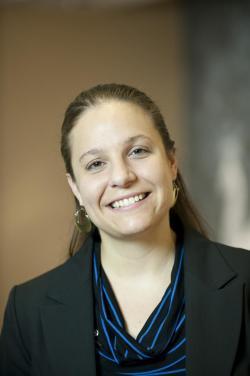
Gretchen Rosswurm was diagnosed with Parkinson’s Disease in 2017 at the age of 52. Her commitment to the Parkinson’s community springs from a deep history of PD in her family while at the same time believing that what seems an impossible challenge creates opportunities for connection, healing and hope. Professionally, Gretchen’s work experience centers around corporate philanthropy. She also blogs and writes short fiction. She lives with her family in Dallas. Gretchen was selected to join the Parkinson’s Foundation People with Parkinson’s Council in 2018 and was elected as Chair in 2020 after serving as vice chair.

-
Anna Hedges, MSW is a Parkinson's information specialist with the Parkinson's Foundation Helpline. She has a Master of Social work from Washington University in St. Louis and has been working on the Parkinson's Helpline for over 10 years. She enjoys interacting with patients and families and witnessing their amazing resiliency.


Want more?
Don't forget to subscribe! There are many ways to listen: Apple Podcasts, TuneIn (Amazon Echo), Spotify or RSS Feed. (Need help subscribing? See our quick guide.)
For all of our Substantial Matters podcast episodes, visit Parkinson.org/Podcast.


