Episode 158: Atypical Parkinsonism Series: Overview, Diagnosis and Prevalence
-
Dan Keller 0:03 Welcome to this episode of Substantial Matters: Life and Science of Parkinson's. I'm your host, Dan Keller. At the Parkinson's Foundation, we want all people with Parkinson's and their families to get the care and support they need. Better care starts with better research and leads to better lives. In this podcast series, we highlight the fruits of that research, the treatments and techniques that can help you live a better life now, as well as research that can bring a better tomorrow. Before kicking off today's episode, I would like to confirm that I have no relevant financial disclosures. This is the first of three podcast episodes within our atypical Parkinsonism podcast series, organized in collaboration with Cure PSP and designed to increase awareness and improve the care of progressive supranuclear palsy, or PSP, for short, corticobasal degeneration, or CBD, and multiple system atrophy, or MSA, neurodegenerative diseases often considered atypical Parkinsonian syndromes. Over half of people with PSP, CBD, and MSA are initially diagnosed with Parkinson's disease, or PD, due to common early Parkinsonian symptoms, including bradykinesia, rigidity, tremor, and gait changes. They are rare diseases affecting less than 60,000 people in the US, compared to over 1 million people in the US with PD. Due to the lack of understanding and experience among healthcare providers, it takes an average of two and a half years to arrive at a clinical diagnosis of PSP, CBD, or MSA, and it is thought that only 25% of people with PSP, CBD, and MSA are accurately diagnosed. Currently, there is little to no formal training available on atypical Parkinson's for clinicians, and most become familiar with their assessment, diagnosis, and treatment on the job. To address this gap, we have produced this podcast series, which is part of a larger program we have developed in partnership with Cure PSP to educate the medical community. If you are a healthcare professional and would like to receive credit for your time listening to this three part podcast series, please visit the Parkinson's Foundation Learning Lab. You can learn more about this opportunity at the end of this episode. Today's guest, Dr. Alexander Pantelyat, associate professor of neurology at Johns Hopkins University School of Medicine, shares common early symptoms of PSP, CBD, and MSA, and explains the overlaps and differences between the diagnostic process and typical disease progression of the atypical Parkinsonian syndromes and Parkinson's disease. Dr. Pantelyat has disclosed that he is a scientific advisory board consultant for Med Rhythms Incorporated and a consultant for both Ferrer Internacional SA and Sci Neuro Pharmaceuticals. What are progressive supranuclear palsy, corticobasal degeneration, and multiple system atrophy, and what are some of the common differential diagnoses?
Dr. Alexander Pantelyat 3:54 Collectively, we refer to progressive supranuclear palsy, or PSP, as I'll refer to it, corticobasal syndrome and degeneration, CBS, and multiple system atrophy, MSA, as atypical Parkinsonian disorders. An older term now favored is Parkinson's Plus disorders, and colloquially I refer to these as the evil cousins of Parkinson's disease, meaning that they have shared symptoms with Parkinson's disease, but they have additional symptoms, and their prognosis, as well as the way that the symptoms change over time, is quite different from Parkinson's disease. So, in this regard, the first thing I would emphasize is we have a descriptive term, parkinsonism, which is not equivalent to Parkinson's disease or any other diagnosis. Parkinsonism is the term that describes movement-related problems that commonly occur or appear together in certain illnesses, and so the four cardinal or main Parkinsonian findings are summarized by the mnemonic TRAP. T stands for tremor, so shaking of a limb or any other body part. R stands for rigidity, which is muscle stiffness affecting typically the large muscles of the arms and legs. And A stands for akinesia, referring to bradykinesia as slowness, a loss of speed and coordination of fine motor control, so that affects the fingers, the toes, the feet—so that bradykinesia, that's slowing down, loss of coordination. And P in the TRAP mnemonic stands for postural instability and gait difficulty, so changes in one's posture, leaning forward, typically difficulty with walking, slowing down, shuffling steps, and ultimately loss of balance that can lead to falls. So that TRAP mnemonic that I mentioned—tremor, rigidity, akinesia/bradykinesia, and postural instability/gait difficulty—collectively describes parkinsonism. Now, the most common cause as a diagnosis, the most common diagnosis behind parkinsonism, is Parkinson's disease, and in addition, in the differential diagnosis of Parkinson's disease, you have these evil cousins I mentioned that are atypical Parkinsonian disorders, and these include progressive supranuclear palsy, PSP, corticobasal syndrome, CBS, and multiple system atrophy, MSA.
Dan Keller 6:35 How prevalent are they? Do people see patients and immediately think Parkinson's and ascribe signs and symptoms to that, or how much should they keep these in mind?
Dr. Alexander Pantelyat 6:49 Great question. I think it really depends on where the patient is being seen, but just to give you a little bit of information, based on the studies published, there's a great difference in incidence and prevalence of Parkinson's disease, and the incidence and prevalence of these atypical Parkinsonian disorders. The atypical Parkinsonian disorders are much less common. So, just to put this in context, at age 60 or older, somebody has a one to 2% risk of developing Parkinson's disease, so what I'm saying is one out of 50 to one out of 100 people who are age 60 or older will develop Parkinson's disease. That's how common PD is. It's the second most common neurodegenerative age-related disorder after Alzheimer's disease. So we're talking at least a million and a half people living with Parkinson's disease or a disorder on that spectrum in the US currently. In contrast, PSP, MSA, and corticobasal syndrome affect anywhere between two and about 15 people per 100,000—that would be the range, so two to 15 per 100,000, which is of course much less common than the one to 2% incidence that we were talking about for Parkinson's disease. So these are far less common, but it is nevertheless very important to think about atypical features—we call them red flags—when seeing somebody who has these symptoms and these Parkinsonian features on examination.
Dan Keller 8:24 What's the lag time for getting a correct diagnosis of these parkinsonisms if they're not Parkinson's disease?
Dr. Alexander Pantelyat 8:32 Yes, this has been a major problem in our field. We've worked very hard at Cure PSP to try to improve the statistic, but in the US, again, depending on the study, lag time can be about two and a half, two to three years on average. Sometimes, in my experience with patients, it could take four years, even longer than four years from symptom onset, to get to a clear diagnosis. So, to some extent, this depends on how classic the features are that the patient is presenting with. So for example, in progressive supranuclear palsy, if someone is having clear difficulty with vertical up-down eye movements, that could cause double vision, difficulty reading, and also is having loss of balance very early on with backward falls—that classic combination of vertical eye movement restriction and backward falls within a year or two of any symptoms starting is really quite clear for PSP Richardson's syndrome (progressive supranuclear palsy Richardson syndrome), and that tends to be diagnosed sooner than, say, an unusual case presentation of PSP, where you don't have those early falls and clear vertical eye movement restrictions until later on.
Dan Keller 9:53 If there's a delay in diagnosis, can it change the course of the disease, or does it just diminish quality of life along the way and raise the possibility of other injuries, but does the disease progress as it would in any case?
Dr. Alexander Pantelyat 10:10 Well, unfortunately, we don't currently have disease-modifying or disease-slowing treatment for any of the atypical Parkinsonian disorders, so the delay in diagnosis, as you mentioned, impacts the quality of life for the patient and the entire family team that they have around them. It doesn't alter the natural history or the natural course of these diseases, because unfortunately we don't have disease-modifying treatments. What it certainly does impact is access to the appropriate clinical care for these patients, and that could really severely affect quality of life. It could lead to admission to an assisted living facility sooner than otherwise, to give just a few examples. So there is a lot of importance that we assign to earlier accurate diagnosis for these disorders.
Dan Keller 11:03 Given that, how do these differ from Parkinson's disease in their early symptoms, and how can they be distinguished?
Dr. Alexander Pantelyat 11:12 This is the key that I want to spend time discussing, because there are a series of findings that are red flags—we call them red flags—against the diagnosis of Parkinson's disease. This is part of the established Parkinson's disease criteria from the Movement Disorder Society in 2015. We don't have time to go into that, but suffice it to say that if these red flags are present in sufficient number, then Parkinson's disease, in fact, could be ruled out. So, for instance, clear challenges with blurred speech and ataxia, so cerebellar ataxia, balance loss of a certain kind, you know, that's exclusionary for Parkinson's disease. If somebody develops a slowing down of vertical eye movements, particularly downward movements, that is a clear red flag against Parkinson's disease, and a hint that this is progressive supranuclear palsy. This is a really important one to take away for the audience. If someone is exposed to levodopa, which is the key treatment that we use for Parkinson's disease and Parkinsonian symptoms generally across the full gamut of these disorders—if there's an appropriate dose trial of levodopa, which is typically nine to 12 pills a day, so 25/100 is the standard carbidopa/levodopa dose in the US, and nine to 12 pills a day is the appropriate trial—and if somebody has been exposed to that dose for at least a month and does not have a clear response that's evident both to the patient subjectively and to the clinician who is doing the examination, then this is a strong red flag against Parkinson's disease and a strong hint that one of the atypical Parkinsonian disorders may be afoot. If somebody has additional features like highly asymmetric presentation of dyspraxia—what I'm referring to is a loss of the ability to manipulate everyday tools and objects, so for example, loss of the ability to use a screwdriver, a hammer, a knife, a fork, a comb, a toothbrush, that's what I mean by dyspraxia—if someone has significant visuospatial difficulties, it's hard for them to orient in space. If they have significant dystonia, so muscle contractions, not just rigidity, but leading to certain positions of the limb and also myoclonic limb jerking, so kind of one-off irregular jerking, as opposed to a tremor, and finally the classic sign of corticobasal syndrome: one arm or one leg seems to have a mind of its own and moves without the voluntary control or awareness of the patient, and so the alien limb phenomenon is probably the most classic finding, but all of the other ones that I mentioned are hints toward corticobasal syndrome. Often it looks like people have had a stroke, so when you do the magnetic resonance imaging scan, the MRI of the brain, there is no stroke to be found, and so this is how corticobasal syndrome tends to be diagnosed. In the case of multiple system atrophy, early autonomic dysfunction is very important to keep in mind, so feeling foggy, woozy, or lightheaded upon standing up to the point of passing out, presyncope, nearly passing out, or actually losing consciousness, loss of bladder control early on, and especially retention, difficulty emptying the bladder fully—these are important red flags against Parkinson's disease and toward multiple system atrophy. Early unexplained erectile dysfunction in men is a harbinger of multiple system atrophy, if you could rule out other causes for the erectile dysfunction, such as diabetes or peripheral vascular disease. These are just a few red flags that should make you think somebody who presents with these Parkinsonian symptoms that I mentioned may not have Parkinson's, but one of the atypical Parkinsonian disorders.
Dan Keller 15:23 You mentioned using brain imaging to rule out stroke in the case of corticobasal syndrome, so you would not see signs of a stroke. But is imaging ever worthwhile to rule in, or are there specific signs of any of these that would show up in imaging?
Dr. Alexander Pantelyat 15:42 Wonderful question. The answer is absolutely yes. In fact, for anybody presenting with parkinsonism, it is really standard and routine to get a non-contrast MRI of the brain. We expect a clinical MRI of the brain to be normal in people with Parkinson's disease; we do not expect for the scan to be normal in people with multiple system atrophy, progressive supranuclear palsy, or corticobasal syndrome. So, just to give examples, in the case of progressive supranuclear palsy, we expect in most cases—not all, but most cases—for there to be loss of volume, shrinkage, atrophy of specific areas of the brain, particularly the midbrain, which is at the base of the brain or the brainstem, and also sometimes the cerebellum in the back, also the frontal lobes; it loses volume early on in PSP. With MSA, we're expecting atrophy lower down in the pons, so also in the brainstem, but lower, below PSP. There is a specific sign on imaging called the hot cross bun sign that we could detect on MRI. Also, cerebellar atrophy and several other findings have been extensively studied in MSA. For corticobasal syndrome, it's less established, but I already mentioned ruling out stroke with MRI is helpful, and also looking for disproportionate atrophy in the parietal lobe—the parts of the brain that direct visuospatial function, ability and knowledge to use tools, sensory control, integration of sensory-motor inputs and outputs—so the parietal lobes, they tend to lose volume, they tend to shrink in corticobasal syndrome. So the MRI is really a helpful tool for us when we're suspecting, based on history and examination, that this may not be relevant to Parkinson's disease.
Dan Keller 17:40 How do you respond when a patient asks you, "What does the future hold for me?"
Dr. Alexander Pantelyat 17:46 Yeah, great question. This is probably the question I'm asked most frequently towards the end of our initial patient visit. So, I have to be honest and tell the patients and family that they're all characterized by a more rapid progression to severe disability and death compared to Parkinson's disease. A large study out of Harvard several years ago in the US found that Parkinson's disease shortened lifespan compared to matched people without Parkinson's disease by about nine months, so less than a year on average. In contrast, average survival from symptom onset to death in PSP is about seven to eight years. It's similar in corticobasal syndrome, and it's about 10 years since symptom onset to death for multiple system atrophy. So that is really quite a different prognosis than the prognosis for Parkinson's disease. So for family members and patients who are interested in knowing this prognosis, I share it with them candidly, but I emphasize the variability in this, and really focus on putting one foot in front of the other, taking one day at a time, and doing everything possible to maximize quality of life, such as regular physical, occupational, and speech and swallow therapy. There are symptomatic treatments and ways of addressing symptoms available, such as botulinum toxins for drooling, excessive salivation, for dystonia or blepharospasm (difficulty with keeping the eyes open). For example, there are medications that we could use and non-pharmacological approaches to improve the quality of life in these diseases, and that is something that I emphasize.
Dan Keller 19:32 That sort of brings in the issue or topic of allied health professionals, other people who are members of the team. What are their roles early on in diagnosis and planning a treatment plan for people?
Dr. Alexander Pantelyat 19:47 As I always tell my patients and families, it really takes a village and it takes a team—it takes a team at home in terms of optimal care for the patient, and it takes a team on the clinical side. A typical team consists of the neurologist, who, of course, is the one who makes and confirms the diagnosis, does the appropriate workup, considers the differential diagnosis options. The social worker is very helpful in counseling families about advanced care planning, making sure that there is an order for life-sustaining treatment, discussing financial options, talking about connecting with an elder care attorney—these are all important considerations that should be discussed as early as feasible, so a social worker can also provide much-needed counseling for the patient and family, and so their role is very important. As I mentioned, rehabilitation is absolutely crucial for these disorders. It's crucial for Parkinson's disease, but it's even more important for these illnesses, and I know this because, you know, in patients who undergo physical therapy for walking and balance, say, and then the physical therapy ends, and they don't continue doing those exercises, they will go back to square one, as if the therapy never happened, within just one to two weeks of completing this. So ongoing physical therapy for walking and balance, occupational therapy for activities of daily living, that optimization for home safety, assessments for upper extremities, for, you know, hand and arm adaptive devices, such as, you know, larger utensils, heavier utensils—that's occupational therapy. And speech and swallow therapy to improve communication and address swallow safety—these are absolutely key team members that we involve in the care of patients with atypical Parkinsonian disorders. We also have other consultants. For example, neuro-ophthalmologists can be very helpful when assessing the eye movement challenges and difficulties for patients with PSP, so we refer to neuro-ophthalmology. A urologist can be very helpful because all of these illnesses share a significant burden of bladder difficulty. In the case of MSA, it's often retention, so they can do self-catheterization. There are medications that could help overactive bladder symptoms in these illnesses, and so a urologist can be very helpful in that regard. As you might imagine, the burden of anxiety and mood disorders that is comorbid, that co-occurs with these diseases, is tremendous. So certainly well over half of the patients have significant reactive anxiety and depression once the diagnosis is made. So working with psychiatry and psychology is very important as well, so these are just a few examples. The other good example would be nutrition, working in tandem with a swallow therapist, making customized dietary plans to eat enjoyably and also safely—this is something that a nutritionist or dietitian could help with.
Dan Keller 22:58 I think the team analogy is pretty appropriate, as a quarterback calls the play and gets everybody running it as they learned and as directed. Who coordinates all these people on these teams, whether you bring in people as needed, like psychiatrists or the core team of OT and PT and speech-language people for swallowing, who brings them all together?
Dr. Alexander Pantelyat 23:25 Great question. I think it really depends on the clinic setup. So our institution at Johns Hopkins, and our Atypical Parkinson's Center, we are lucky to have a wonderful nurse practitioner, Maria Schmidt, who really does a lot to coordinate the clinic. We have a separate coordinator who schedules and coordinates the scheduling of the clinic, who is, you know, a key part of the team as well, but for us, the nurse practitioner coordinates the needs assessment before and after clinic, you know, follows up in terms of making sure that patients and families are following through on our recommendations, and that our recommendations are being addressed. Typically, it's the neurologist as the coordinator of this team who puts the team together—that's been my experience in talking to colleagues in other centers—and it could also be a social worker. In certain instances, a social worker could be the coordinator, so it really does depend on any particular setup at one's institution. One thing I want to emphasize, though, for sure, is that when it comes to these atypical Parkinsonian disorders, early appropriate referrals to specialized movement disorder centers—in particular, centers of care; there are now 30 of them around the United States designated centers of care for PSP, MSA, and corticobasal syndrome by the Cure PSP Foundation—it is crucial for people to be referred to one of these centers who have the kind of setup that I'm discussing and really can provide optimal care for these patients.
Dan Keller 24:59 One of the things you said a little while ago was, if levodopa does not work, then it is not Parkinson's disease, but you also said there are certain dosages that should be tried. I know one case, a friend of mine's mother was diagnosed with multiple system atrophy because levodopa didn't work, but once they got to one of the Parkinson's Foundation Centers of Excellence in Philadelphia, they said you're on half the dose you need, and it turned out to be Parkinson's. So it's probably worthwhile emphasizing that the correct dose is needed to rule in or rule out something.
Dr. Alexander Pantelyat 25:41 I'm really, really glad you brought that up, because that raises an important related point. So, particularly pertaining to multiple system atrophy, yes, if somebody has not been tried on at least nine, and really up to 12 pills a day—900 to 1200 milligrams of the active ingredient levodopa per day—and this has not been tried for at least one month at the top dose, then somebody has not had a fair and full levodopa trial, and this is very important for the atypical Parkinsonian disorders, as well as for people with Parkinson's disease. That being said, 40% of patients with multiple system atrophy parkinsonian type, MSA-P—that's one of the two major types of multiple system atrophy—can have a partial response, sometimes a decent response to an appropriate dose of levodopa. The problem is that this response is not sustained. So, what I mean by a sustained response is somebody has a clear, predictable response to levodopa for really at least five years, and in cases when somebody has this response, following them over time is crucial to ascertain that this is not a response that's temporary and waning, because the waning response within three to five years of starting levodopa is a red flag towards an atypical Parkinsonian disorder, particularly MSA parkinsonian type and progressive supranuclear palsy parkinsonian type (PSP-P). Both of those types of atypical Parkinsonian disorders can really look like Parkinson's disease early on and may respond partially to levodopa treatment. So that does complicate things and delay diagnosis a bit.
Dan Keller 27:22 To wrap up, what are some of the main takeaways for someone who's just being introduced to these conditions? Some sort of a nutshell message, if that's possible.
Dr. Alexander Pantelyat 27:33 Be aware that when you see parkinsonism on a note or diagnosis list, it is not actually a diagnosis, it just describes symptoms. The most common cause of parkinsonism is Parkinson's disease, but there are atypical Parkinsonian disorders that need to be considered, and these are PSP, CBS, and MSA. Other items in the differential diagnosis also include drug-induced parkinsonism, stroke-related vascular parkinsonism, or normal pressure hydrocephalus. So, there are other things that need to be considered by the neurologist. It's important to think about the red flag symptoms that alert people and clinicians to the fact that this may not be Parkinson's disease, such as a lack of a clear, sustained response to levodopa treatment at an appropriate dose for at least five years; early balance loss with falls, especially within three years of symptom onset; early difficulty swallowing; early loss of bladder control or incomplete bladder emptying; in men, early erectile dysfunction unexplained by diabetes or peripheral vascular disease; and other findings that I discussed—these are just some of the red flag symptoms that should make one think this may not be Parkinson's disease. You need to dig deeper, look more closely, review the MRI of the brain for some of these telltale areas of volume loss or atrophy, and importantly, if there's a strong suspicion of one of these atypical Parkinson's disorders, to refer patients and families to one of the Cure PSP centers of care, certainly to a Parkinson's Foundation Center of Excellence, at a minimum, in order to get people the access to care that they need. Because it truly takes a village, both at home and as part of the clinical team, to care for people suffering from these atypical Parkinsonian disorders.
Dan Keller 29:30 Have we missed anything important or interesting to add?
Dr. Alexander Pantelyat 29:34 Yeah, I just want to emphasize, in response to the most common question I get from patients and families ("What does the future hold for me?"), I want to say that although progression in these atypical Parkinsonian disorders is more rapid than that for Parkinson's disease, there's a lot of variability in terms of how individual patients progress on their trajectory, and that needs to be kept in mind. And lastly, I would say, for patients diagnosed with atypical Parkinsonian disorders, not to delay bucket list things that they perhaps had put off previously, and just really try to do everything that they can to maximize doing what they enjoy on a day-to-day basis. Don't put things off.
Dan Keller 30:19 Great, I appreciate it. Thank you. A lot of information, and we'll have a couple more of these sessions in this learning module, so this really helps kick it off. Thanks. Be sure to tune into the next two episodes of the Atypical Parkinsonism podcast series, which will cover the interprofessional approaches to symptom management and the unique care needs of people living with PSP, CBD, and MSA. You can also visit our PD library at parkinson.org/library to read our fact sheet on the topic titled Parkinson's Disease vs. Parkinsonism, as well as visit the Cure PSP website at www.curepsp.org to learn more about PSP, CBD, and MSA and other resources available. And if you're a healthcare professional seeking accreditation for this podcast series, you can visit the Parkinson's Foundation Learning Lab at education.parkinson.org/atypical to log in and claim your continuing medical education credit. If you want to leave feedback on this podcast or any other subject, you can do it at parkinson.org/feedback. If you enjoyed this podcast, be sure to subscribe and rate and review the series on Apple Podcasts or wherever you get your podcasts. At the Parkinson's Foundation, our mission is to help every person diagnosed with Parkinson's live the best possible life today. To that end, we'll be bringing you a new episode in this podcast series every other week. Till next time, for more information and resources, visit parkinson.org or call our toll-free helpline at 1-800-4PD-INFO, that's 1-800-473-4636. Thank you for listening.
Considered “atypical Parkinsonian syndromes,” over half of people with progressive supranuclear palsy (PSP), corticobasal degeneration (CBD)/corticobasal syndrome (CBS), and multiple system atrophy (MSA) are initially misdiagnosed with Parkinson’s disease (PD) due to similarities in early symptoms as well as lack of awareness of these rare, neurodegenerative diseases among many healthcare professionals and the general public.
This is the first of three podcast episodes within our atypical parkinsonism podcast series, organized in partnership with CurePSP and designed to address the overview, treatment and care of PSP, CBD and MSA.
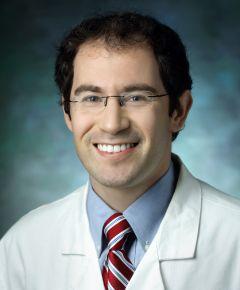
In this first episode of the series, Dr. Alex Pantelyat, Associate Professor of Neurology at Johns Hopkins University School of Medicine shares an overview of atypical parkinsonism, overlaps and differences with Parkinson's disease, the red flags and how PSP, CBD and MSA are diagnosed.
Dr. Pantelyat has disclosed that he is a Scientific Advisory Board Consultant for MedRhythms, Inc. and a consultant for both Ferrer Internacional, S.A. and SciNeuro Pharmaceuticals.
Podcast host, Dan Keller, has disclosed that he has no relevant financial disclosures.
Released: September 5, 2023
-
Alexander Pantelyat, MD, FAAN is an associate professor of Neurology at the Johns Hopkins University School of Medicine. He is the director of the Johns Hopkins Atypical Parkinsonism Center, the co-Director of the Johns Hopkins Movement Disorders Fellowship Program, and the co-Founder and Director of the Johns Hopkins Center for Music and Medicine.
Dr. Pantelyat's research is focused on the diagnosis and treatment of atypical parkinsonian disorders, such as dementia with Lewy bodies, progressive supranuclear palsy, corticobasal syndrome/degeneration and multiple system atrophy; cognitive aspects of movement disorders; and music-based rehabilitation of neurodegenerative diseases.
Dr. Pantelyat earned his medical degree from Temple University School of Medicine in Philadelphia, where he was elected a member of the Alpha Omega Alpha Honor Medical Society and received the Matthew T. Moore Prize in Neurology. He completed his residency training in Neurology at the University of Pennsylvania in Philadelphia, and a fellowship in movement disorders at the University of Pennsylvania/Philadelphia VA Medical Center.
He is a 2013 American Academy of Neurology Palatucci Advocacy Leader and grant recipient, a 2014-15 American Academy of Neurology Emerging Leader, and a 2014 Johns Hopkins University School of Medicine Osler Attending Program inductee.

Want more?
Don't forget to subscribe! There are many ways to listen: Apple Podcasts, TuneIn (Amazon Echo), Spotify or RSS Feed. (Need help subscribing? See our quick guide.)
For all of our Substantial Matters podcast episodes, visit Parkinson.org/Podcast.
Related Materials
Related Blog Posts

Tackling Parkinson’s from All Angles: A Movement Disorder Specialist’s Story

5 Tips for Navigating Parkinson’s-Related Life Changes
