Advancing Research

Medical Cannabis Convening Findings: Top Takeaways and Guidance

Many people with Parkinson’s disease (PD) have looked to medical cannabis (marijuana) to provide some relief to their range of non-motor and motor symptoms. However, little is known about the effects of medical cannabis for PD symptoms or their potential side effects and safety issues. To address this, the Parkinson’s Foundation published a statement to help guide the PD community in making informed decisions about using cannabis for Parkinson’s.

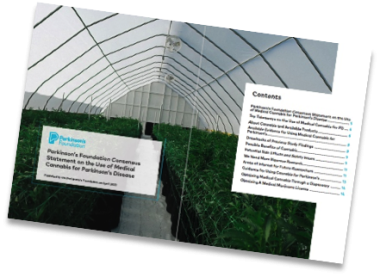
Medical Cannabis Cover

The statement is based on the input from experts who attended the Parkinson’s Foundation first-ever medical marijuana convening in March 2019. These 46 experts included neurologists, scientists, a pharmacist, a PD nurse, non-profit organizations, people with Parkinson’s and Foundation staff.

The primary goal of the statement is to provide guidance to people with Parkinson’s and their physicians for the safe use of medical cannabis for PD. The secondary goal is to establish cannabis and PD topics that should be addressed through rigorous research studies.

Regardless of whether a medical cannabis product is approved for Parkinson’s in the future, this statement will help to inform that it is used in the safest, most effective way possible.

Top Takeaways on the Use of Medical Cannabis for PD

  1. Our experts urge caution. There are adverse effects, toxicity issues and drug to drug interactions, and we do not fully know what this means for people with PD who are taking PD medications.
     
  2. We cannot endorse the use of medical cannabis for PD symptoms or disease progression because we need more data. However, because we realize that people with PD are interested in cannabis, we feel it is necessary to provide guidance for general safety as well as working with dispensaries.
     
  3. We need better studies. Some studies have suggested cannabis may be beneficial for non-motor symptoms such as sleep disturbances, pain, anxiety and gastrointestinal issues. However, these studies are generally small and are not conducted the most reliable kind of research studies.

Guidance for Using Cannabis for Parkinson’s

Without any clear data supporting the use of cannabinoid products in PD, while the Parkinson’s Foundation does not endorse their use in PD, we recognize that people may decide to try cannabinoid products for certain symptoms. If you decide to try cannabinoid products:

What is CBD?

Cannabidiol (CBD) and hemp products (defined as having less than 0.3% tetrahydrocannabinol - THC) are legally available in all 50 states.

  • Discuss the use of cannabinoid products with your healthcare providers. These products may interact with other medications or cause side effects that could influence your PD care.
  • Treat cannabis products as you would any new medication. Always start at a low dose and go up slowly. CBD-only products may also be less likely to cause side effects and could be considered before trying products also containing THC.
    • For pain in one specific area, consider creams or patches to reduce general side effects.
  • Be cautious when ingesting edible products, as they can have delayed side effects and increased toxicity.
  • Consider staying with the same dispensary. Since cannabis products are not regulated, do not assume the “dose” on a label from one dispensary will have the same effects as one obtained from a different dispensary.
  • Be aware of potential side effects, particularly dizziness, problems with balance, worsening motivation, dry mouth and impaired thinking and memory.

Read our Consensus Statement on the Use of Medical Cannabis for Parkinson’s Disease, which includes these sections:

  • Medical Cannabis inside

    Available Evidence for Using Medical Cannabis for Parkinson’s

  • Drawbacks of Previous Study Findings
  • Possible Benefits of Cannabis
  • Potential Side Effects and Safety Issues
  • Areas of Interest for Future Researchers
  • Guidance for Using Cannabis for Parkinson’s
  • Obtaining Medical Cannabis Through a Dispensary
  • Obtaining A Medical Marijuana License

Learn More

Learn more about Parkinson’s and medical cannabis in the below resources or by calling our free Helpline at 1-800-4PD-INFO (473-4636):

Advancing Research

Parkinson’s Foundation Drives Research with New Patient Engagement Framework

2 women in a doctors office

The Parkinson’s Foundation makes research more efficient and effective by involving those living with Parkinson’s disease (PD) in the research process. People  living with PD are experts because they know this disease, its symptoms and how it impacts their lives. The Parkinson’s Foundation Research Advocacy Program (formerly referred to as Patient Advocates in Research) trains research advocates ― people with Parkinson’s and care partners ― to provide their expertise to researchers in academia, government and pharmaceutical companies. Historically, there has not been a universal process in place to help researchers engage research advocates in their work. The Parkinson’s Foundation is changing that.

What is patient engagement?
Patient engagement is when people with Parkinson’s and care partners work alongside scientists to design and run research studies. Patient engagement speeds up research, making it more efficient and effective.

In May 2020, the Parkinson’s Foundation published an article in the scientific journal Health Expectations outlining a patient engagement framework developed from the Foundation’s 12 years of experience working with research advocates. The framework is designed to help researchers integrate and measure patient engagement in their work, ultimately leading to better studies.

“Over the last decade the Parkinson’s Foundation has learned that there is critical information pharmaceutical companies and academia are missing by not involving people living with Parkinson’s in the research process,” said Megan Feeney, author and Parkinson’s Foundation Senior Manager of Community Engagement. “There are also many researchers open to making patient engagement a priority, but we need evidence to promote this practice.”

This framework provides a clear outline for researchers to follow. “The goal of this framework is to make patient engagement a common practice in the research process for all health conditions, whether a researcher has experience working with patients or not,” Megan said. “This patient engagement framework can be customized by any researcher for any study.”

Patient Engagement Leads to Smarter Research

Why is patient engagement important? Without patient input, research may target the wrong outcomes or design trials without consideration of the preferences of people living with Parkinson’s. In one clinical trial, people with Parkinson’s were excited to help test a new PD medication. However, the clinical trial requirements were burdensome. Due to poor recruitment and retention, the trial could not continue. Had the researchers designed a clinical trial allowing for patient engagement, it could have been more patient friendly, while enrolling and retaining study participants. Read the article for more case studies.

“When you design a clinical study with input from people living with Parkinson’s, each part of the study can be tailored for the community you are trying to help without impacting the quality of the science, making  research  faster and better,” Megan said. The patient engagement framework is now available for all organizations to utilize and tailor to their needs to expedite research and make it relevant to their community.

Parkinson’s and Beyond

Infographic about advocating research and drug development

Not every organization has a patient engagement process in place, like the Parkinson’s Foundation. Parkinson’s is a complex disease with multiple symptoms (non-movement and movement) that can make the patient engagement process difficult to navigate without the proper planning and resources. The Foundation works to mediate patient engagement so that both people living with Parkinson’s and researchers can contribute and have a positive experience.

“We work with researchers and other patient advocacy organizations all over the world to overcome the challenges that people might experiences when engaging with patients for the first time,” said Karlin Schroeder, co-author and Parkinson’s Foundation Senior Director of Community Engagement. “The ultimate goal is to create an environment for success that helps the most people possible.”

The Parkinson’s Foundation will continue to use its patient engagement framework, helping people with Parkinson’s become empowered to fight this disease through active involvement. “We hope this framework can become a blueprint, reaching beyond Parkinson’s so other patient advocacy groups can utilize this model for other life-impacting diseases and increase patient engagement for the greater good,” Karlin said.

If you are interested in becoming a research advocate or working with research advocates, please email Karlin Schroeder at KSchroeder@Parkinson.org.

Read the full article online “Utilizing Patient Advocates in Parkinson’s Disease: A Proposed Framework for Patient Engagement and the Modern Metrics that Can Determine Its Success in Health Expectations” in Health Expectations.

Science News

One-Man Study: Brain Cell Transplant

Parkinson's Foundation Science News blogs

Parkinson’s disease (PD) results from the death and deterioration of dopamine-producing neurons (brain cells) in an area of the brain called the substantia nigra. What if those cells could be reprogrammed to function in a healthy way? That is the promise of a stem cell therapy that is called induced pluripotent stem cells (iPSCs). If this extraordinary reprogramming capability could be harnessed ― and if the results were sustainable ― that would be a scientific game changer for treating neurological diseases, including the symptoms of Parkinson’s. To be clear, we are not there yet, but we might be one step closer.

A recently published study in the New England Journal of Medicine titled “Personalized iPSC-Derived Dopamine Progenitor Cells for Parkinson’s Disease” (Schweitzer et al., 2020), tested whether a person with Parkinson’s can have a skin cell removed and transplanted into his brain in order to produce dopamine. That person was a 69-year-old man with a 10-year history of slowly, progressive PD. This was a highly complicated, multi-step procedure, involving surgically transplanting four million stem cells into both sides of his brain. It should be noted that the patient paid two million dollars to fund this procedure.

brain

Prior to implantation, the study participant reported poor control of his symptoms, with three hours of “off” time per day, which included worsening tremor, posture and fine motor control; he reported no dyskinesias. Neurologic examinations were performed and PD–specific measures were taken at one, three, six, nine and 12 months after each implantation and at six-month intervals thereafter. The patient first underwent the surgical implantation procedure in the left side of his brain, followed by the right side, six months later. 

Results

  • At 24 months after the first (left) implantation and 18 months after the second (right) implantation, the patient reported no adverse events or decline in function.
  • Imaging showed that the transplanted cells successfully survived and were functioning.
  • Slight motor improvements (6%) were achieved based upon the Movement Disorder Society Unified Parkinson’s Disease Rating Scale (MDS-UPDRS) part III, including the patient’s walking stride, and his ability to bike ride and swim.
  • The patient reported an improvement in quality of life, immediately after the surgery was performed. This kind of response suggests that he experienced a placebo effect.

What Does It Mean?

It is encouraging that 24 months after the surgical procedure, the transplanted cells survived and appeared to be functioning. However, survival of these transplanted cells was expected since they were derived from the patient’s own body making transplant rejection unlikely. In terms of the modest improvements in the patient’s motor skills, that too, is encouraging. He was able to reduce his levodopa intake from 12 pills to 11 per day. However, since the patient reported an immediate improvement in his quality of his life, this suggests that he experienced a placebo effect ― as instant improvements are not biologically possible.

Again, this study was administered to one person. Generally, clinical studies are administered in larger sample sizes and can establish a baseline to provide more accurate data and results with a smaller margin of error. At best, scientists believe stem cell therapy will only be a symptomatic treatment, helping in the same ways as levodopa or deep brain stimulation.

The bottom line is that while the one patient may experience an improvement in symptoms, this is not a cure for Parkinson’s nor will this procedure treat non-motor symptoms or help with walking, talking or thinking. In the future, a larger-scale study with a larger population size is the only way we will be able to better understand if a brain cell transplant can truly be a viable treatment option. 

A note of caution: while this study was a brain cell transplant, its findings can mislead people with Parkinson’s to seek stem cell treatments. Beware of stem cell tourism. Stem cell clinics are springing up across the globe, taking advantage of desperate patients. Often advertising their services directly to consumers through the Internet, they make extravagant, unfounded claims about the benefits, downplay the risks, and charge exorbitant fees. Stem cell transplants for Parkinson’s disease (and other neurological conditions) is in research stage, is not a treatment, and one should never pay for a clinical trial research. What these so-called stem cell clinics are offering, is false hope for real money.

Learn More

The Parkinson’s Foundation believes in empowering the Parkinson’s community through education. Learn more about Stem Cells by visiting the below Parkinson’s Foundation resources or by calling our free Helpline at 1-800-4PD-INFO (473-4636) for answers to all your Parkinson’s questions.

Tips for Daily Living

Looking Ahead: Parkinson's, COVID-19 & the New Normal

Women exercising with weights

As the COVID-19 pandemic continues to evolve and society slowly begins to reopen, what does the new normal look like for the Parkinson’s disease (PD) community?

On June 10, Michael S. Okun, MD, Parkinson’s Foundation National Medical Director and Executive Director of the University of Florida's Norman Fixel Institute for Neurological Diseases, answered your questions about the next stage of life with COVID-19 and Parkinson’s. 

When it comes to COVID-19 today, what does the PD community need to know?

The last few months have answered some questions for us. For instance, living with Parkinson’s does not put you at a higher risk of contracting COVID-19, but it does make it harder for you to recover if you contract it. This is because people with PD have slight differences in their immune systems. We also know that having COVID-19 increases your already elevated risk of getting pneumonia. Also, Hydroxychloroquine is not a viable treatment for COVID-19.

What should I be doing right now?

  1. The best treatment is prevention and the best prevention is to wear a mask.
  2. Until we have a vaccine, stay in full-on prevention mode.
  3. Maintain socially distance.
  4. Fight cabin fever, get outside, go on walks, but be careful and take precautions.

Does vitamin D help prevent you from getting COVID-19?

Preliminary research is pointing to the possibility that COVID-19 patients with higher levels of vitamin D have an easier time fighting the virus. If you have Parkinson’s, you are most likely safe to take a multi-vitamin that has vitamin D. Avoid high dosages and keep in mind that going outside is a natural source of vitamin D. We will need confirmation on this research and we also caution not to over dose with vitamin D until we know more. The amount of vitamin D in a multivitamin is usually safe.

How long should I wear a mask?

As long as COVID-19 is around, wear a mask. Wear a mask until the CDC recommends you don’t need to wear one for your specific zip code.

Should I wear a cloth or surgical mask?

They are both good, but a surgical mask is better. Some covering is better than none. COVID-19 is found more on the outside than inside of a mask, so try to avoid touching the front of your mask, then your face or eyes.

Can I attend exercise classes again?

When you attend an exercise class or go to a gym, you breathe heavier as you exercise and your chance of spreading the virus rises. Exercise instructors can spread the virus from student to student and class to class, while people in the class can spread it among themselves. A mask helps, but if you take it off during the class, you increase your risk. Continue to avoid big exercise classes. Instead, get back to one-on-one sessions with your physical or occupational therapist or try to see a personal trainer. Make sure you both mask up during the session. It’s always a good idea to get out and walk or try online classes.

Is it safe to undergo elective surgery again?

It depends on your hospital. How many COVID-19 patients do they have? Do they have enough protective gear for staff and patients? Right now, the risk of contracting COVID-19 in hospitals is low. In many cases, I would say you can undergo elective surgery, like deep brain stimulation.

Should I get the antibody test?

In a perfect world, an antibody test will tell you if you have been exposed to COVID-19, and if you have, your chance of reinfection would be very low. However, we still do not have enough data to prove their effectiveness. Know that there are different types of tests ― some are better, such as PCRs (polymerase chain reaction) and others are only accurate half the time.

Is feeling demoralized caused by the social distance?

Isolation can worsen a lot of things, like non-motor symptoms. Do not ignore feelings of demoralization or depression, which we see in 20% of our patients. Talk to your professional health workers, like a physiatrist, social worker or therapist. For more information, read Stopping the Spiral Toward Demoralization in Parkinson’s Disease.

Can quarantine be causing my dad to slow down?

With quarantine and social distance, we are seeing that some of our patients are getting worse ― slower with walking, talking and symptoms. You can safely start moving around, take walks, get outside while wearing a mask. Try to find an online program like PD Health @ Home, an online support group or try to schedule a one-on-one with his occupational or physical therapist. When you walk choose times and places without crowds. 

My community is not following social distancing guidelines. What should I do?

You will start to see restaurants and places where people are not wearing a mask. Fight the urge to stop wearing the mask. If you are a member of my family or a patient, I strongly recommend you wear a mask. This is not the time to stop all precautions.

grandparent video calling with grandchild

Can I see my grandchildren and/or children now?

Remember, we do not have a treatment or vaccine yet, but we do know that when people wear a mask, we are not seeing transmission. The best option is to see them virtually. If you really want to see them, do not hug them, try to keep 12-feet apart, and wear a mask.

Will there be a second wave? Will COVID-19 come back?

We really do not know. What we are seeing is that as we relax the restrictions, there seems to be a rise in numbers. The good news is that we are better prepared to deal with it.

What do you think will happen next on the COVID-19 front?

We will get through this. I do believe we will have a vaccine, but it is going to take time. We must remain careful, we can get out of the house, but do not overdo it. Remember that the Parkinson’s Foundation Helpline at 1-800-4PD-INFO (473-4636) and your healthcare team are here to assist.

The Parkinson's Foundation is dedicated to bringing you virtual educational, wellness and exercise programs through PD Health @ Home. Learn more at Parkinson.org/PDHealth.

Advancing Research

PD GENEration: Successful Pilot Study Uncovers New Findings

DNA

PD GENEration: Mapping the Future of Parkinson’s Disease, which launched last year, is one step closer to understanding the complex connection between Parkinson’s disease (PD) and genetics.

The goal of PD GENEration is to leverage genetics as a powerful tool to help us uncover what is responsible for slowing or stopping the progression of Parkinson’s, which will ultimately improve care and speed the development of new treatments. Study results will advance how we design clinical trials, for instance, testing a new medication based on what type of PD gene a person carries.

As the first national Parkinson’s study to offer bilingual genetic testing in a clinical setting with counseling, the Parkinson’s Foundation flagship study has unearthed exciting preliminary findings.

pd gene phase 1 infographic

Higher Detection Rate

Of the 291 people who have been tested as part of the study, 51 tested positive with a genetic mutation that is linked to PD. This amounts to 17% of all PD GENEration participants.

This percentage is higher than the current reported estimates of one to 10% of people with PD who have a genetic connection to the disease — a range that is not representative of the entire PD population since not everyone with Parkinson’s has been genetically tested. PD GENEration researchers theorize that as more people with PD get genetically tested, the rate of detection will most likely rise.

Discovering Rare Mutations

Genetic test results have led researchers to identify extremely rare genetic mutations linked to PD. Some study participants carry multiple mutations, meaning one person can carry two or three different genetic mutations associated with PD.

These multiple genetic mutation carriers have not been extensively studied — thus, we do not know how living with multiple genetic mutations affects PD symptoms or progression. This finding will significantly contribute to the biological understanding of the disease, helping us assess the impact of each mutation and which ones are more influential towards causing the disease, which will lead to better treatments.

Creating an International PD Panel

PD GENEration is working to finalize the development of a global leadership council on genetics and  PD. The international expert PD panel convenes leading clinicians, molecular biologists and geneticists who will develop global consensus to decide which genes and mutations are important for PD and will accelerate research efforts towards better PD treatments.

“This panel welcomes anyone and everyone who is significant in genetics and PD,” said James Beck, PhD, Parkinson’s Foundation Chief Scientific Officer. “It will be a platform for experts from around the world to assess PD GENEration data in real time — data that has already led us to new findings.”

A Community Dedicated to Research

As evidence that the study’s outreach to the PD community goes far beyond the Foundation’s immediate network, 33% of the PD GENEration participants came from outside of the Parkinson’s Foundation Centers of Excellence network. Participants traveled from 21 states to six pilot sites.

“This community is determined and resilient to do what it takes to contribute to Parkinson’s research, a great indication that we will be able to successfully complete our goal of enrolling 15,000 participants who want to know if they have a genetic link to this disease,” Dr. Beck said.

The Next Phase

The PD GENEration study will expand to more testing sites. In response to the current climate, PD GENEration leaders are designing a telemedicine-based approach, where participants can submit their test using an at-home kit and complete virtual, bilingual genetic counseling.

PD GENEration recently partnered with Biogen to accelerate the study. Looking ahead, once PD GENEration is complete, the partnership will help drug development companies, like Biogen and others, recruit for clinical trials faster. This will help speed up the development of better PD medications and recruitment for PD clinical trials.

Learn more about PD GENEration and sign up for email updates at Parkinson.org/PDGENEration.

Science News

What Happens in the Vagus Nerve: The PD Gut-Brain Connection

Parkinson's Foundation Science News blogs

The gut-brain relationship is real. Stomach or intestinal distress can lead to anxiety or depression. However, those gut-brain connections go much further: evidence from recent studies strongly suggest a link between the gut (the gastrointestinal system) and Parkinson’s disease (PD).

In the PD research field, the Braak Hypothesis states that the earliest signs of Parkinson's are found in the enteric nervous system (known as the brain in the gut). This theory is supported by evidence that in PD, non-motor symptoms, such as constipation, may appear before motor symptoms. Braak hypothesized that abnormal alpha-synuclein can spread from the gut via the vagus nerve to the midbrain, where it selectively kills dopamine neurons.

Get to Know the Brain

Alpha-synuclein: a protein found in the brain, central to Parkinson’s.

Central Nervous System:controls most functions of the body and mind. Consists of the brain and the spinal cord.

Prion: a protein that can harm a normal protein, causing damage to healthy brain cells. Some scientists believe alpha-synuclein can become a prion and lead to Lewy body clumps, the hallmark of PD.

Vagus Nerve: a nerve that connects the brain to the gut. Regulates organ functions, such as digestion, heart rate, respiratory rate, coughing, sneezing and swallowing.

Gut health

Published in Neuron, a 2019 study titled, “Transneuronal Propagation of Pathologic alpha-Synuclein from the Gut to the Brain Models Parkinson's Disease" (Kim et al., 2019) a group of scientists tested Braak’s hypotheses, mimicking the spread of abnormal alpha-synuclein observed in PD, scientists injected both normal mice and knock-out mice (mice with no alpha-synuclein) with misfolded alpha-synuclein directly into the stomach opening and part of the small intestine ― which are packed with vagus nerve branches.

To monitor the injected abnormal alpha-synuclein, scientists used a stain to observe the progression, if any, from the gut to the brain over several months. They also tested severing the vagus nerve in the mice, to see whether it might prevent the spread of the abnormal alpha-synuclein to the brain. Additionally, throughout the study, several tests were conducted on the mice to measure motor and non-motor symptoms.

Results
In normal mice:

  • Injecting abnormal alpha-synuclein into the gut did get taken by the vagus nerve and successfully traveled into the brain, causing the normal alpha-synuclein to transform into abnormal, misfolded alpha-synuclein.
  • This transformation process traveled from cell-to-cell, forming more Lewy body clumps. Remember, misfolded alpha-synuclein is the main component of Lewy bodies.   
  • Injecting abnormal alpha-synuclein into their gut resulted in significant dopamine loss.

In the mice with no alpha-synuclein:

  • Injecting abnormal alpha-synuclein into their gut successfully made it into the brain, but nothing happened. Since there was no normal alpha-synuclein, it was not able to start the clumping.

Motor and Non-Motor Findings

Seven months after injecting abnormal alpha-synuclein into the gut of normal mice:

  • There was a significant loss of dopamine in the brain.
  • There were non-motor cognitive impairments, including memory and social deficits, anxiety, depression and olfactory and gastrointestinal dysfunction.
  • Motor deficits included a loss of grip strength and agility.
  • Those mice that had their vagus nerve severed prevented the loss of grip strength and agility shortfalls.

What Does This Mean?
The major findings of this study support that abnormal alpha-synuclein is capable of spreading from the gastrointestinal tract (the gut) through the vagus nerve into the brain, leading to a loss of dopamine.

Further, the Kim et al. (2019) study also revealed that the misfolded alpha-synuclein in the brain causes the normal alpha-synuclein to misfold; and those misfolds form into clumps, resulting in Lewy bodies, which in turn, result in Parkinsonian symptoms. In terms of potential therapeutic applications, if this gut-brain PD connection via the vagus nerve works the same way in people, it may be possible to interfere with this trafficking to prevent PD symptom progression before it reaches the brain.

Learn More
The Parkinson’s Foundation believes in empowering the Parkinson’s community through education. Learn more about the Parkinson’s and LID in the below Parkinson’s Foundation resources or by calling our free Helpline at 1-800-4PD-INFO (473-4636).

My PD Story

Paolo Tatafiore playing piano
People with PD

Paolo Tatafiore

My name is Paolo Tatafiore. I'm 60 years old, born in Italy, now a permanent resident of the U.S. I will soon become a citizen. I used to be a concert pianist. You can check out some of my performances on YouTube. Two years ago, the first symptoms of a movement disorder started showing up out of the blue.

While performing on stage I was making mistakes I had never made before, and I realized that there was something wrong with my right hand. I was losing control of the fingers. A few months later (in October 2020) I developed a steady tremor in my right arm, that radiated to my right leg and neck. Muscles stiffness and twitching also affected the same areas. I had to give up concerts completely.

The next step was obviously to visit a neurologist. He diagnosed me with Parkinson’s disease (PD). I was devastated. My life disrupted.

At the moment, I receive care from a team of doctors at the University of Miami, a Parkinson’s Foundation Center of Excellence. I take a lot of medication in order to try and keep the tremor at bay. Without it I'm just a useless shaking mass of flesh and bones. My current neurologist is Danielle Shpiner, MD. She is one of the best doctors I have ever met. Patient, compassionate, excellent listener, she has all the knowledge and has answers to all questions. She is up to date with the cutting edge research.

We are now discussing the next steps for me to be put on schedule for a deep brain stimulation (DBS) surgery that will hopefully substitute the most part of the medication in controlling and eliminating the tremor and other symptoms.

Paolo Tatafiore riding an exercise bike for Revolution 2022

She put me in touch with social workers of the University and they introduced me to Parkinson’s Revolution. I want to do my part helping raise funds for initiatives that help the Parkinson’s community.

A book inspired me to exercise consistently to help with my symptoms. It has been about two years, and I have been taking long brisk walks every other day (two or three miles), alternating with short slow walks the remaining days. Sometimes instead of walking I bike ride on the boardwalk in front of the beach. I take a day off every now and then if I feel exhausted.

After two years I can say that the tremor has stopped in the right leg and the twitching has reduced to a minimum. They remain in the right arm though, which is not as much affected by walking and biking. I am now intensifying exercises with and without weights for the arms and neck and I hope to slow symptoms in the arm too, because I think that I have been able to reverse the symptoms in the leg. I can't find any other explanation. If it were the medication that produced the reversal, it would have done something for the arm as well. That didn't happen.

My advice for people who are new to Parkinson’s is to not rely on medication alone. Medication is a temporary suppressor of the symptoms. Everyone knows that there is no cure for Parkinson's disease at the moment. The only proven thing that keeps the disease at bay is exercise. Don't get discouraged, get out and shake it!

It may be hard at first but be consistent and you will get results. If you get stiff while walking, don't give up! Keep doing it, it takes some time but then the muscles will loosen up and you will walk better. It will improve your mood too, as opposed to sitting in the house and getting depressed!

Get moving with your community at a Parkinson’s Foundation fundraising event near you!

Register for Parkinson’s Revolution

Find a Moving Day near you

Science News

LRRK2 Genetics Therapy and Unintended Consequences

Parkinson's Foundation Science News blogs

A lot of excitement has been generated in the Parkinson’s disease (PD) scientific community about the LRRK2 gene. While several genes are linked to developing PD, a LRRK2 gene mutation is one of the most common forms of genetic Parkinson’s. In fact, there are several pharmaceutical companies currently looking to find ways to prevent LRRK2 activation as a potential PD treatment. 

However, is it wise to completely disable the LRRK2 gene? What if this gene plays an important role in other important functions? For example, mutations in the LRRK2 gene have been associated with an increased sensitivity to bacterial infections, as well as other immune-related disorders, such as inflammatory bowel disease. 

Further, dysfunction in the mitochondria (the powerhouse of the cell) in the LRRK2 gene has also been linked to PD. Indeed, keeping mitochondria stable and healthy is essential for providing life-saving energy to dopamine-producing cells. Which begs the question, what if the LRRK2 gene is also involved in how well our immune system works? 

Catherine Weindel, a Parkinson’s Foundation postdoctoral fellow, recently published a LRRK2 study in the journal eLife, titled, “LRRK2 maintains mitochondrial homeostasis and regulates innate immune responses to Mycobacterium tuberculosis” (Weindel et al., 2020). The study investigated whether developing drugs that shut down LRRK2 might unintentionally negatively impact a person’s ability to fight infection. 

Researchers infected normal mice with mycobacterium tuberculosis – the bacterium that causes tuberculosis (TB). As a control, they also infected mice that had the LRRK2 gene removed (known as knockout mice) with TB. Next, they compared the two mice groups’ immune system reactions. They did this by measuring a signaling protein (known as a type I interferon) that is triggered when a cell is infected with a virus to let the immune system know it’s in trouble. 

Results

Many sophisticated tests ranging from gene expression, RNA-sequence analyses, death receptor signaling, to qualitative and quantitative assessments were conducted. The key findings are as follows:  

  • Mice with no LRRK2 gene infected with TB produced the type I interferon – alerting the immune system that an attack was commencing. 
  • Mice with no LRRK2 gene not infected with TB produced the type I interferon – meaning it alerted the immune system to mount an attack when no attack was happening. 
  • Mice with no LRRK2 gene experienced far more severe TB symptoms than the mice with a functioning LRRK2 gene.
  • Normal LRRK2 mice infected with TB produced the appropriate response of the type I interferon, and when not infected with TB, appropriately, did not produce the type I interferon. 

What Does It Mean?

The LRRK2 gene produces a protein that is essential for maintaining healthy, stable mitochondria. Mitochondria play a crucial role in generating the energy required for brain cells (including dopamine producing cells) to survive and to do their job. 

This mouse study suggests that mutated LRRK2 genes may impair the immune responses in the brain to such an extent, it triggers the immune system to attack, even when no harm is happening. Thus, this study findings suggests that great care must be taken when creating drugs or therapies that inactivate the LRRK2 gene, as doing so may have unintended negative effects, such as triggering a chronic high alert immune response and diminishing a person’s ability to fight infection.

Learn More

The Parkinson’s Foundation believes in empowering the Parkinson’s community through education. Learn more about LRRK2 research by vising the below Parkinson’s Foundation resources or by calling our free Helpline at 1-800-4PD-INFO (473-4636) for answers to all your Parkinson’s questions.

Tips for Daily Living

Dr. Michael Okun Shares Top Tips from Living with Parkinson’s Disease: A Complete Guide for Patients and Caregivers!

Group of women balancing on bar at ballet class

Recently, worldwide Parkinson’s expert Michael Okun, MD, shared top tips from his book Living with Parkinson’s Disease: A Complete Guide for Patients and Caregivers, which is available now. 

There is so much that we can do to help people with Parkinson’s disease (PD) have great lives. Here are just some of the tips that Dr. Okun covered in his Parkinson’s Foundation Facebook Live event, Living with Parkinson's New Book Release, on August 4. 

Dance, Dance, Dance!

Exercise is like a drug and we know that it can help with rehabilitation for people with Parkinson’s greatly. We are seeing tangible benefits from exercise. There is a part of the brain that can, in certain circumstances, overcome deficits and exercise can be used as a treatment. Dance is a great option, so is Tai Chi. There are a lot of pearls in the exercise chapter of the book.

Nutrition – Can the Ketogenic Diet be helpful?

There’s not enough research to determine whether ketosis (a low carbohydrate diet that causes the body to break down fat and create an acid called ketones that fuels your body and brain) is beneficial for Parkinson’s. Is the Ketogenic (also known as Keto) diet helpful? Maybe. 

The biggest advice: be careful and follow the advice of your medical team first and foremost with nutrition. The only way we will find out if there is something to this theory is with proper studies and control groups. There are some exciting, emerging studies in nutrition and diets for Parkinson’s on the way.

The Importance of Sleep

If you don’t have a good night’s sleep, it’s all but guaranteed that you will not have a good day the next day. Many people don’t know that they are not sleeping well until they get a sleep study. This is something that we need to work on in treating Parkinson’s ― focusing on the importance of sleep as sleep problems are very common with Parkinson’s. 

If you find you are falling asleep frequently during the day, you likely have a sleep problem. There are options ― whether it’s decreasing your dosage of dopamine or looking into adding other prescriptions. Talk to your doctor about your prescription and looking into getting a sleep study ― a sleep study can really change your life! One of the chapters in Living with Parkinson’s Disease focuses on the treatment of neuropsychiatric effects and we discuss sleep specifically.

Depression and Parkinson’s

Depression is the largest unmet hurdle in Parkinson’s. What we realized in writing Living with Parkinson’s Disease was demoralization was also a huge unmet need, which can occur in one in five patients. It’s not just that you are depressed or have anxiety or even experience hallucinations, it’s that you are demoralized. There are therapies that can help greatly with demoralization. Treatment is so important ― you can have a better life! We are too stuck on the name of the depression pill and we should refocus on how we administer the treatment.

Parkinson’s and Hallucinations

Most hallucination medications block dopamine. Blocking dopamine with Parkinson’s will make symptoms worse. There are some medicines for other issues ― like for gut issues and headaches that also block dopamine and we need to be on the lookout for that. 

When we think about hallucinations, we must look for drugs that will not block dopamine ― there are drugs that do this! Before we get to medications, there needs to be a thorough physical examination to ensure other issues are treated first. Check out Chapter 8 in Living with Parkinson’s and talk to your doctor for more information. Dr. Okun also offers more advice on the Facebook Live event.

One of the last tips from the Facebook Live event comes from a viewer and is a really important message: “If you are not a fighter, learn to be one. How well you live with Parkinson’s is up to you.”

Dr. Michael S. Okun

For more tips from Dr. Okun, check out the book, Living with Parkinson’s Disease: A Complete Guide for Patients and Caregivers! 

About the author: Michael Okun, MD, is considered a world's authority on Parkinson's disease treatment and research. He is currently Executive Director of the Fixel Institute for Neurological Diseases, Chair of Neurology at the University of Florida, a Parkinson’s Foundation Center of Excellence and the National Medical Director for the Parkinson's Foundation.

Podcasts

Episode 74: A Multidisciplinary Approach to PD

As for many chronic conditions, a multidisciplinary, team approach can often produce the best outcomes for people with Parkinson’s disease (PD). With many health care professionals specifically qualified in PD working together in a coordinated manner, treatment can focus on current areas of concern and those that come up as the disease progresses. But questions arise as to how often the person with PD and care givers should visit their health care professionals, how to provide care with the least burden and disruption on them, and who should coordinate the care. As the director of the Parkinson’s Foundation Center of Excellence at the Royal Derby Hospital in the United Kingdom, Dr. Rob Skelly discusses the makeup of his team and how they approach patients at different stages of the disease.

Released: February 11, 2020

Back to Top