Episode 17: Stem Cells and Parkinson’s
-
Dan Keller (00:08)
Welcome to this episode of Substantial Matters: Life and Science of Parkinson's. I'm your host, Dan Keller at the Parkinson's Foundation. We want all people with Parkinson's and their families to get the care and support they need. Better care starts with better research and leads to better lives. In this podcast series, we highlight the fruits of that research, the treatments and techniques that can help you live a better life now, as well as research that can bring a better tomorrow. People have long hoped that stem cells will substantially treat or even cure many diseases, including Parkinson's. Stem cells are the cells within all of us that have the exciting potential to develop into many different cell types in the body, including neurons. This process happens during early life and growth, but scientists can also induce adult stem cells to become specific organ or tissue cells with special functions. Unfortunately, implanting stem cells has not proven to be the cure for Parkinson's that many people believed they would be. Dr. Michael Okun, National Medical Director of the Parkinson's Foundation and co-director of the University of Florida Center for Movement Disorders and Neurorestoration, a Parkinson's Foundation Center of Excellence, explains the complexity of Parkinson's disease itself and of using stem cells as a treatment. He also tells us how stem cells can be useful for other aspects of treatment and research, and what to look for in clinical trials. A lot of people are putting a lot of hope in stem cells. Realistically, where does the field stand now? Are there trials going on that are looking encouraging, or are these blue sky?Dr. Michael Okun (02:02)
So my view on this is very much like a mad lib. You played Mad Libs when you were a kid, and there's always going to be that mad lib of what's going to be the next big cure, or what's going to be the next big treatment. And in neurodegenerative diseases, and in many other diseases in medicine and cancer, stem cells occupy right now that chair. That is the therapy that you hear about the most on the news that people equate with, boy, if we could make a stem cell do X, where it's going to change the world and result in cures. I think that you have to be a bit cautious in interpretation. I think we need to look at the balance, you know, of what have we accomplished with stem cells over the last two decades. It was a therapy that was supposed to cure Parkinson's disease within five years, and it hasn't really lived up to the promise. And one of the things that we learned about stem cells is that it's simply making a cell, taking an early cell, turning it into something different. So we can take a skin cell, turn it into a dopamine cell, maybe even a dopamine brain cell and neuron, put it into the brain, and that's cool. So I think the cool factor of this is really amazing. It's an awe factor. The problem is that Parkinson's disease is the most complex disease in medicine when you account for all the motor and non-motor features and the different circuits that are affected. So when you just stick a cell into the brain—and we've done this with Parkinson's transplants, we've learned this lesson—it's not enough. It doesn't take us closer to meaningful symptomatic therapies or closer to a cure, because the circuits are so complex, because it's a dynamic disease, because there's so much going on in so many areas of the brain. And so I think this idea maybe was a little bit of a dream that we were going to stick the stem cell in, and it was going to be able to marginate, go to all these areas that needed to go in the brain, and turn itself off, because remember, if it keeps dividing, it's going to turn into a cancer. And so we've really shifted gears on stem cells. We've moved from the idea that stem cells are going to be the cure, you know, based on transplant studies, into this idea: well, could we use these cells that we make to be screening large volumes of compounds that are on the shelf that could be active against certain cells in Parkinson's disease, and then repurpose them as drugs, maybe even already FDA-approved drugs? So stem cells, I think, have found a home in drug screening and what we call high-throughput screening, but the transplantation idea is, I think, starting to fade.Dan Keller (04:27)
Are cells that secrete dopamine going to fix every problem you see in Parkinson's?Dr. Michael Okun (04:32)
This is the big misconception, that it's only a disease of dopamine, and we've pushed it, and we've contributed a lot to the confusion. But it turns out there are multiple chemicals, multiple brain circuits, multiple motor and non-motor features of this disease. And it's not just a disease of dopamine. So even if the big “if”—you were able to take the dopamine and fix the dopamine—you wouldn't fix the Parkinson's, and you wouldn't stop the degeneration by using a stem cell.Dan Keller (04:59)
Yeah. What about the charlatanism that's going on in the field? Desperate patients grasp at straws.Dr. Michael Okun (05:05)
Yeah, so this is something that we vet all the time—the quackery that's going on, the fee-for-stem-cells, stem cell tourism, and tourism for other types of treatments. There's a couple rules that we tell patients all the time. First of all, if it's research and it hasn't been proven, you shouldn't pay for it, okay? So any of the therapies where people are trying to charge you $25, 50, $100,000, $300,000—you know, be extremely wary. If it's not been tried and shown in a double-blind study, then it's not approved by an agency for healthcare like the U.S. Food and Drug Administration, then it is research, folks, and if it's research, you should not be charged to participate in research. Second is that beyond the research component of this, you need to have an institutional review board, an IRB, preferably at a university site, or something called a Western IRB, which is a multicenter type of setup where lots of centers who are doing trials will go through a central IRB—a credible IRB—because there are also IRBs that aren't credible. You need to see the protocol and see the informed consent. There are two documents, and you need to show that to somebody that's either an expert in the field or a reliable outside neurologist source to look at it. You should also be cautious, because in the United States there's something called ClinicalTrials.gov, and you can list your studies on there, and there are many stem cell studies, some of which will charge you money to get in. So just because it's on ClinicalTrials.gov—we've learned that that doesn't mean that it's a credible trial or a credible source. Those have to be vetted as well. It just means they registered with the government, which is a little bit ironic.Dan Keller (06:46)
But this is not to scare people away from participating in clinical trials.Dr. Michael Okun (06:49)
No, we want as many participants in clinical trials, but this just throws out that level of caution that if you're going to expose your body to something new and you're going to take the risk for a clinical trial, then it better be at a place that's doing credible research and not a place that's just trying to cash in on your dollars and your desperation for a better treatment or a cure.Dan Keller (07:12)
Is there a feeling among some patients that, oh, well, doctors just don't want to lose the patients, and they're not telling me about something that really could help me—mainly because the doctor thinks it's not a valid trial—but the patient gets skeptical of even the medical profession telling them don't do it?Dr. Michael Okun (07:30)
Yeah, I mean, I think that there's a fair amount of skepticism that goes around. There's also a fair amount of grieving that goes on after you receive a diagnosis of a neurodegenerative disorder, and you have to go through those stages of grieving. If you're with a doc that tells you in two minutes that you have Parkinson's disease and this is bad and this is the end of the world and they paint doom and gloom, you need to find a new doc, because there's so much that can be done. It's not Alzheimer's, it's not ALS. This is a disorder that is treatable. There's a horizon. We can help you with a lot of powerful symptomatic therapies, and there's a path to hope and happiness with the disease, and a lot of people live 20, 30, 40 years. And so I think that a lot of the skepticism that we see is sometimes from people who aren't used to taking care of a lot of Parkinson's patients, and it's our job to make sure that we administer the best therapies that we can, get people to live hopeful and happy lives, and reintegrate them back into society. But we need to do a better job.Dan Keller (08:33)
Current treatments are the results of past research, and today's research holds immense promise for new treatments and technologies to ultimately improve lives for all people affected by Parkinson's. It's an exciting time in Parkinson's research, with new studies coming out constantly. The Parkinson's Foundation funds millions of dollars of research every year to individual investigators through our Centers of Excellence and network, and through our ongoing Parkinson's Outcomes Project, the largest-ever clinical study of Parkinson's. To find out more about what research is going on in Parkinson's, call our toll-free helpline at 1-800-4PD-INFO, or go to parkinson.org and click on Research. If you have any questions about the topics discussed today, or if you want to leave feedback on this podcast or any other subject, you can do it at parkinson.org/feedback. We'll respond to some questions in future episodes. At the Parkinson's Foundation, our mission is to help every person diagnosed with Parkinson's live the best possible life today. To that end, we'll be bringing you a new episode in this podcast series twice a month. Next time, we'll explore the problem of falls in Parkinson's. Till then, for more information and resources, visit parkinson.org or call our toll-free helpline at 1-800-4PD-INFO—that's 1-800-473-4636. Thank you for listening.
Stem cells – those cells that can give rise to so many cell types in the body – have been touted as the cure-all for a variety of diseases, including Parkinson’s. But to date, attempts at stem cell transplantation into the brain have fallen short. Parkinson’s is one of the most complex diseases, with a variety of motor and non-motor symptoms and an impact on many systems of the body. Just inducing a cell to make dopamine is not the whole answer. But stem cells are still useful for drug screening and disease modeling. Dr. Michael Okun, National Medical Advisor of the Parkinson’s Foundation, Chairman of the University of Florida Department of Neurology and Co-Director of the University of Florida Center for Movement Disorders and Neurorestoration, a Parkinson’s Foundation Center of Excellence, puts the field into perspective and where it’s going.
Released: December 5, 2017
-
Stem cells are the cells within all of us that have the exciting potential to develop into many different cell types in the body – including neurons. This process happens during early life and growth, but scientists can also induce adult stem cells to become specific organ or tissue cells with special functions.
-
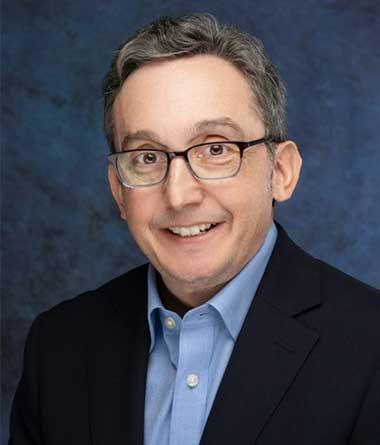
Dr. Okun is Chair of the Department of Neurology at the University of Florida, as well as Co-Director of the UF Center for Movement Disorders and Neurorestoration. Dr. Okun has long been dedicated to the interdisciplinary care concept, and since his appointment as the National Medical Advisor for the National Parkinson Foundation in 2006, he has worked with the 43 international Parkinson’s Foundation Centers of Excellence to help foster the best possible environments for care, research, and outreach in Parkinson disease, dystonia, Tourette, and movement disorders.
In addition to his role as National Medical Advisor for the Parkinson’s Foundation, he is the Medical Advisor for Tyler’s Hope for a Dystonia Cure and Co-Medical Director for the Tourette Syndrome Association (TSA).
Dr. Okun has enjoyed a prolific research career exploring non-motor basal ganglia brain features, and he has participated in pioneering studies exploring the cognitive, behavioral, and mood effects of deep brain stimulation (DBS). Dr. Okun holds the Adelaide Lackner Associate Professorship in Neurology, has published over 200 peer-reviewed articles, is a published poet (Lessons From the Bedside, 1995), and has served as a reviewer for more than 25 major medical journals. He has been invited to speak about Parkinson’s and movement disorders all over the world.
Dr. Okun earned his BA in history from Florida State University and his MD from the University of Florida, with honors. He completed an internship and neurology residency at UF. Following residency, he was trained at Emory University.

Want more?
Don't forget to subscribe! There are many ways to listen: Apple Podcasts, TuneIn (Amazon Echo), Spotify or RSS Feed. (Need help subscribing? See our quick guide.)
For all of our Substantial Matters podcast episodes, visit Parkinson.org/Podcast.