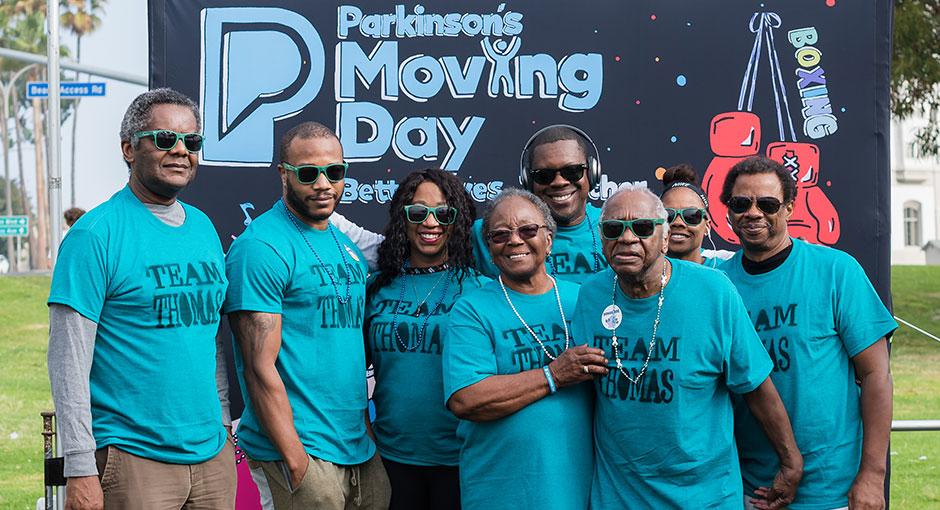
Moving Day is an inspiring and empowering annual fundraising walk event that unites people around the country living with Parkinson’s disease (PD), their care partners and loved ones to help beat PD. Moving Day is more than just a walk. It’s a celebration of movement – proven to help manage Parkinson’s symptoms.
Leading up to the event, participants and teams fundraise to help the Parkinson’s Foundation provide vital resources and deliver quality care to more than 364,000 people living with Parkinson’s and other movement disorders, while improving Parkinson’s treatments through research.
Moving Day proceeds help bring quality care to more people with Parkinson’s, further Parkinson’s research, education and outreach initiatives. Moving Day raises awareness of Parkinson’s both nationally and in the local community.
Join us for a practical conversation about the many ways people can contribute to Parkinson's research, from observational studies and genetic research to clinical trials.
Parkinson’s Champions athletes raise funds and awareness for the Parkinson’s Foundation while competing in some of the world’s most popular races. Every step we take brings us closer to a future without Parkinson’s disease, because Parkinson’s isn’t a sprint, it’s a marathon.
Dr. Oksana Suchowersky 00:00:05
Some patients with Parkinson's disease develop problems with their walking, particularly in more advanced stages. For example, when you stand up and first start to walk, or if you come to a doorway or come to a corner where you have to turn around, you may freeze, and that's called freezing.
Music may be helpful. For example, if the individual starts to hum a song, sings to themselves or even counts to themselves, then that rhythm or that music may get their walking going again, and they will be able to walk quite well.
Dr. Oksana Suchowersky 00:01:05
There's also another interesting phenomenon in PD where individuals who have a lot of problems with their gait may be able to dance to music quite normally.
We have a number of examples where people have a lot of problems with freezing of gait, but as soon as a song that they enjoy comes on, they'll be able to waltz or even polka to the music.
When the music stops, their gait improves for a short period of time. Unfortunately, the effect of this music on walking is transient and goes away after a few minutes.
Dr. Oksana Suchowersky 00:01:46
In patients who do have problems with freezing of their gait, we think that this may in part be due to a problem with multitasking. For example, if you're walking and you come to a doorway, then your attention is focused on the doorway rather than on walking.
Sometimes, if you can refocus your attention on stepping and getting walking again, that will help with the freezing of gait.
As Parkinson’s disease (PD) progresses, people with PD may experience freezing of gait or “freezing” episodes. Freezing of gait is the temporary, involuntary inability to move. Not all people with PD experience freezing episodes, but those who do have a greater risk of falling. Usually, freezing only lasts a few seconds, but it is one of the more frustrating and dangerous symptoms of PD.
You may not always be able to prevent a freezing episode, but you can recognize when this Parkinson’s symptom may happen and what you can do to minimize injury.
The referenced media source is missing and needs to be re-embedded.
Check-in and vendor visits start at 4 p.m. and the program starts at 4:45 p.m.
Navigating Parkinson’s disease involves looking ahead, learning and adjusting as symptoms and needs change. This program addresses some of the challenges of advancing PD and explores strategies to prepare for the future, including how to evolve your care plans and treatments throughout progression, and understanding the importance of financial and legal planning, so you can live your best life with PD now.
Speakers
Elizabeth Zauber, MD
IU Health, A Parkinson's Foundation Center of Excellence
Justin Schuhmacher, Attorney at Law
Indiana Estate and Elder Law
There is no charge to attend, but pre-registration is required. This program is open to people with Parkinson's, their family, friends and the community.
Join us for a practical conversation about the many ways people can contribute to Parkinson's research, from observational studies and genetic research to clinical trials.
Parkinson’s Champions athletes raise funds and awareness for the Parkinson’s Foundation while competing in some of the world’s most popular races. Every step we take brings us closer to a future without Parkinson’s disease, because Parkinson’s isn’t a sprint, it’s a marathon.
What can you expect as Parkinson’s disease (PD) progresses? What are the signs and symptoms of each stage? Although the loss of dopamine is universal for people with PD, each person experiences a unique combination of movement and non-movement symptoms and disease progression.
In our latest Neuro Talk, Chief Scientific Officer James Beck, PhD, discusses the different stages of Parkinson’s disease progression and strategies for living well.
Parkinson's Foundation and Northwestern Medicine Parkinson's Disease and Movement Disorders Center present: Parkinson's Disease Patient and Family Symposium.
This program will feature experts discussing: Tips from a Movement Disorder Specialist, Advances in Parkinson’s Research, and the Benefits of the Creative Arts for PD. Q&A with the experts, will follow each presentation.
Speakers
Tanya Simuni, MD, FAAN
Northwestern Medicine
Danny Bega, MD, MSCI
Northwestern Medicine
Paulina Latapi, MD, MSc
Northwestern Medicine
Carly Liegel
The Joffrey Ballet
Linda Jedrzejek, MT, BC
Neurologic Music Therapist
Lisa Bany
The Second City
Annie Arnold, MA, ATR-BC, LCPC, CATAP
Institute for Therapy through the Arts
This program is open to people with Parkinson's, their family, friends and the community. There is no charge to attend, but registration is required.
10 a.m. Welcome / Opening Remarks Danny Bega, MD, MSCI, Northwestern Medicine Jessica Bartsch, MS, NCC, Parkinson's Foundation
10:15 a.m. Key Note: Top Tips from a Movement Disorders Specialist Paulina Latapi, MD, MSc, Northwestern Medicine (Q&A to follow presentation)
11:05 a.m. Therapeutic Pipeline and Research Update Tanya Simuni, MD, FAAN, Northwestern Medicine (Q&A to follow presentation)
12:05 a.m. Break
12:10 p.m. Be Creative: The Benefit of Visual Art, Music, Dance, and Improv for Parkinson's Disease Danny Bega, MD, MSCI, Northwestern Medicine Carly Liegel, The Joffrey Ballet Linda Jedrzejek, MT-BC, Neurologic Music Therapist Lisa Bany, The Second City Annie Arnold, MA, ATR-BC, LCPC, CATAP, Institute for Therapy through the Arts (Q&A to follow presentation)
Northwestern Medicine Parkinson's Disease and Movement Disorders Center provides innovative, multidisciplinary care for patients and families affected by Parkinson's disease and other movement disorders. The Center's care team works to promote health, education and support for patients. It also supports caregivers, family members, healthcare providers and the community. We continually strive to meet the needs of the Parkinson's community in a variety of ways. In doing this, we have adapted our annual symposium to a virtual setting for the safety and accessibility of the larger Parkinson's community.
This is a virtual program, taking place live, using the online Zoom platform. Instructions on joining the webinar are provided after registering.
Join us for a practical conversation about the many ways people can contribute to Parkinson's research, from observational studies and genetic research to clinical trials.
Parkinson’s Champions athletes raise funds and awareness for the Parkinson’s Foundation while competing in some of the world’s most popular races. Every step we take brings us closer to a future without Parkinson’s disease, because Parkinson’s isn’t a sprint, it’s a marathon.
There are many daily challenges associated with Parkinson’s disease that may lead to social discomfort and ultimately isolation. This webinar will focus on a few that may be less talked about including drooling, urinary incontinence, dyskinesia and even eating in public. We will discuss how each impacts the person with Parkinson’s and address ways to speak to family and friends about how these visible symptoms cause self-consciousness in social situations.
Speaker
Taylor Rush, PhD - Health Psychologist
Director of Behavioral Services and Interdisciplinary Programs
Center for Neurological Restoration
Cleveland Clinic, A Parkinson's Foundation Center of Excellence
There is no charge to attend, but registration is required.
Join us for a practical conversation about the many ways people can contribute to Parkinson's research, from observational studies and genetic research to clinical trials.
Parkinson’s Champions athletes raise funds and awareness for the Parkinson’s Foundation while competing in some of the world’s most popular races. Every step we take brings us closer to a future without Parkinson’s disease, because Parkinson’s isn’t a sprint, it’s a marathon.
4 Ways People with Parkinson’s Can Avoid Common Hospital Complications
For most people, being in the hospital is a stressful experience. People are usually sick or experiencing a health issue. For people with Parkinson’s disease (PD), their symptoms may get worse, and new symptoms, like confusion or thinking changes, can develop because of stress, infection, fatigue, sleep disturbances, surgery or new medications.
A new published review of more than 35,000 hospital admissions of people with Parkinson’s found an increased risk of delirium and aspiration pneumonia as potentially avoidable complications.
As we share in our Hospital Safety Guide, preparation and clear communication can help you minimize complications and recovery time when hospitalized. Understanding the risks you or a loved one with Parkinson’s face and ways to have your needs met can help the hospital care team provide the best possible care.
Know how to identify Delirium
Delirium is a reversible change in a person's level of attention and concentration.
Anti-nausea, gastrointestinal and pain medications, which are routinely given before and after surgery, can worsen existing PD symptoms or cause new, temporary symptoms like delirium. Avoiding these medications can decrease your risk of developing delirium.
Additionally, some common treatments for delirium aren’t appropriate for people with PD, and can make Parkinson’s symptoms and the delirium worse. If you or a loved one develop delirium in the hospital, it is important to avoid the antipsychotic medications that are antidopaminergic, meaning they decrease the amount of dopamine in the brain.
People with Parkinson’s should only be given one of the three antipsychotics that are safe:
Pimavanserin (Nuplazid)
Quetiapine (Seroquel)
Clozapine (Clozaril).
All psychotics, with the exception of these three, should be avoided in nearly all circumstances.
Aspiration pneumonia accounts for 70% of deaths among people with PD, according to an NIH study.
Aspiration pneumonia is an infection that happens when bacteria from your mouth gets pulled down into the lungs and causes an infection. This can happen after a person aspirates, meaning they swallow the wrong way, and something enters their airways or lungs. Aspiration occurs more frequently when someone has issues with swallowing (dysphagia), which is a common Parkinson’s symptom.
To prevent aspiration and aspiration pneumonia, people with Parkinson’s need to be screened for swallowing changes, also known as dysphagia, to safely maintain their medication routine and minimize their risk of aspiration pneumonia and weight loss.
In addition, ensuring that you or your loved one with Parkinson’s get their Parkinson’s medications on time and avoid contraindicated medications that are not safe for people with Parkinson’s can also help prevent the development of new dysphagia or the worsening of mild dysphagia.
Tips to avoid delirium and aspiration pneumonia in the hospital
Tip 1. Avoid medications that are not safe for Parkinson’s.
This can potentially help you to:
Prevent delirium caused by taking contraindicated anti-nausea medications
Prevent worsening of delirium caused by taking contraindicated antipsychotic medications
Review the list of harmful medications on the Parkinson’s Care Summary with your hospital care team before surgery and before any new medication is prescribed.
Tip 2. Take medications on time, every time to help prevent new or worsening swallowing challenges.
If your nurse or speech-language pathologist is concerned about your swallowing ability, discuss safe ways to continue taking your medications, such as with a sip of water or crushed with applesauce.
Use the Medication Form to list all your medications for Parkinson’s and other conditions, including over-the counter medications and supplements in the order that you take them each day. Your list should be clearly labeled with the dosage (usually mg or milligrams) and the specific time that you take each medication.
Tip 3. Tell your nurses if you are having trouble swallowing and ask to see the Speech Language Pathologist (SLP).
Together, your nurse and SLP can provide safety measures to decrease risks.
You may need to temporarily stop eating and drinking if you have a serious swallowing issue (dysphagia) or are scheduled for a medical procedure that requires fasting. If you or your loved one are instructed you cannot swallow pills, show the nurse and SLP “Other Ways to Take your Medication” to explore potential ways to safely continue taking Parkinson’s medications
If you have swallowing or speech symptoms, we recommend you regularly see a speech language pathologist. Once discharged, ask your doctor for a referral, or call our Helpline at 1-800-4PD-INFO (1-800-473-4636).
Tip 4. Reducing the risk of aspiration pneumonia is a two-part process.
Help reduce aspiration pneumonia when hospitalized and at home that involves (1) preventing swallowing issues and (2) reducing bacteria in your mouth by cleaning your teeth and mouth regularly. Learn more about dental health and Parkinson’s.
Prevent aspiration by eating when PD meds are working and you have energy. It can also help to sit up for meals and take smaller bites. Prevent aspiration pneumonia by brushing your teeth, tongue and mouth before and after eating to reduce bacteria.
Read more about the steps you can take to avoid delirium, aspiration pneumonia, and other avoidable complications in our Hospital Safety Guide.
Help Spread the Word
Share this graphic on Facebook to help your friends and family with Parkinson's stay safe in the hospital.
Get out and move with your community! Every dollar raised supports the Parkinson’s Foundation mission to make life better for people affected by Parkinson’s disease (PD). At Moving Day Community Walks across the country, we’re fighting Parkinson’s and celebrating movement — proven to help manage Parkinson’s symptoms — and we’re doing it together. The Moving Day Community Walk Program is a complement to the Parkinson’s Foundation Moving Day, A Walk for Parkinson’s. These walks are family-friendly and help the Foundation make life better for people with PD.
The Community Walk program offers volunteers an opportunity to organize a walk in their own community that does not have a Moving Day event. The program leverages the personal experiences and community leadership of passionate volunteers to promote Parkinson’s awareness and raise funds for the Parkinson’s Foundation.
Join us for a practical conversation about the many ways people can contribute to Parkinson's research, from observational studies and genetic research to clinical trials.
Parkinson’s Champions athletes raise funds and awareness for the Parkinson’s Foundation while competing in some of the world’s most popular races. Every step we take brings us closer to a future without Parkinson’s disease, because Parkinson’s isn’t a sprint, it’s a marathon.
Deep Dive Conversations About 5 Common Non-Movement Parkinson’s Symptoms
When it comes to Parkinson’s disease (PD), non-movement symptoms are often overlooked because they are not as visible as those of their movement counterparts. However, these symptoms can be just as challenging to everyday life. Learning the common signs can help you recognize and manage symptoms.
Explore our podcast episodes where we dive into non-movement symptoms. Each episode highlighted below strives to deepen your understanding of these symptoms, as well as offer strategies for managing them.
Apathy, a lack of interest or motivation, can be an issue for people with Parkinson’s and may interfere with daily activities, social interactions and overall well-being. Movement Disorders Neurologist, Nabila Dahodwala, MD, MS, Director at the University of Pennsylvania, a Parkinson’s Foundation Center of Excellence, explains the impact of apathy on daily life and shares strategies to help address it and find the motivation to exercise.
Depression is often overlooked and undertreated, despite it being a common symptom of Parkinson’s. Veronica Bruno, MD, MPH, a neurologist specializing in movement disorders at the University of Calgary, a Parkinson’s Foundation Center of Excellence, discusses the importance of recognizing and treating depression.
Low blood pressure, also known as hypotension, can be dangerous if not treated. It may cause dizziness, fainting and falls, which can lead to fractures. Jeni Bednarek, RN, BSN, ACRP-CP, the team coordinator at Oregon Health and Science University, a Parkinson’s Foundation Center of Excellence, talks about how people with Parkinson’s can manage low blood pressure.
Nausea, or the feeling of discomfort in the stomach, can sometimes be caused by Parkinson’s, or as a side effect of medications. Andrew Feigin, MD, Professor of Neurology and Director of the Fresco Institute for Parkinson’s and Movement Disorders at New York University Langone Medical Center, a Parkinson’s Foundation Center of Excellence, discusses the causes of nausea, both from PD itself and from medication, and what people can do to help lessen or prevent it.
Difficulty sleeping can impact your overall health and well-being. Dr. Aleksandar Videnovic of Harvard Medical School and Director of the Division of Sleep Medicine at Massachusetts General Hospital, a Parkinson’s Foundation Center of Excellence, discusses the causes of sleep problems, including insomnia, REM sleep behavior disorder and daytime sleepiness.
Subscribe to our podcast. Search for “Substantial Matters: Life and Science of Parkinson’s” on your favorite podcast platform.
The Moving Day Atlanta Corporate Kickoff Breakfast is an opportunity for business and community leaders to come together in support of the Parkinson’s Foundation’s mission to make life better for people living with Parkinson’s disease (PD).
Enjoy a complimentary breakfast while hearing powerful stories from our Parkinson’s community and learning how your organization can get involved with Moving Day Atlanta—the Parkinson’s Foundation’s signature fundraising walk.
Whether you are a long-time supporter or exploring partnership for the first time, this event offers meaningful ways to engage your business, build community impact, and support the Foundation’s vital work to improve care and advance research toward a cure.
Because awareness is moving. Community is moving. Georgia is moving.
There is no charge to attend, but registration is required.
Join us for a practical conversation about the many ways people can contribute to Parkinson's research, from observational studies and genetic research to clinical trials.
Parkinson’s Champions athletes raise funds and awareness for the Parkinson’s Foundation while competing in some of the world’s most popular races. Every step we take brings us closer to a future without Parkinson’s disease, because Parkinson’s isn’t a sprint, it’s a marathon.