Podcasts

Episode 159: Research Series: Expansion of PD GENEration in Dominican Republic and Puerto Rico

Researchers have discovered several genes that are associated with the risk of developing Parkinson’s disease (PD). To better understand this relationship, the Parkinson’s Foundation is conducting a large population study, PD GENEration: Mapping the Future of Parkinson’s Disease, a national initiative that offers genetic testing and counseling for Parkinson's-related genes at no cost for people with PD. Since different ethnic groups may have differences in their genetic backgrounds, possibly affecting the course of their disease, PD GENEration is now expanding beyond the borders of the mainland U.S. to Hispanic communities in Puerto Rico and the Dominican Republic.

Our guest in this episode is Rebeca De Leon, Associate Director of the Clinical Research Department at the Parkinson’s Foundation. She explains why it is important to include people of diverse backgrounds in the study, how and where the Foundation is reaching out to enroll people from a range of communities in PD GENEration, and ultimately, how participation in the study will help scientists better understand the disease.

Released: September 19, 2023

Raise Awareness

3 Ways You Can Help Us Reach Further Toward a Parkinson’s Cure

A Day to Reach Further

The only way we can find a cure for Parkinson’s disease (PD) is through research. Although 10 million people live with the disease worldwide, research in PD is severely underfunded. The Parkinson’s Foundation is committed to closing the funding gaps in research and increasing access to healthcare and quality-of-life programs. The Reach Further campaign is a four-year fundraising initiative that will raise an additional $30 million to support and accelerate progress on these goals.

On September 19, the Parkinson’s Foundation is hosting A Day to Reach Further, a special day of giving that highlights the tremendous progress we have made thus far. As part of this day, Rune Labs, provider of StrivePD, has generously agreed to match all gifts made on A Day to Reach Further up to $10,000.

On A Day to Reach Further, help us fund these vital research initiatives that move us toward a cure:

1. Help Fund Cutting-Edge Scientists

To cure Parkinson’s, we need to know exactly what causes it. Our research team finds and funds scientists who focus on unraveling the basic biology of Parkinson’s. This year, we awarded grants to 30 scientists who are devoted to deciphering PD and finding new ways to attack it and stop progression.

Through our grants, we fund high-risk research that typically does not receive federal funding, which means we are advancing ideas that can lead to high rewards. Studies span from untangling the connections between inflammation, aging and Parkinson’s; to connecting environmental exposures and Parkinson’s through accelerated brain aging; and deciphering gait signaling to improve movement therapies. Meet some of our researchers here.

Our research grants, fellowships and partnerships help scientists explore innovative ideas and keep them in the Parkinson’s research field, ensuring that we continue to fund a pipeline of projects that could lead us to a cure.

2. Help Fast Track New Medications & Treatments

For a new Parkinson’s drug to go from an idea to an available medication it takes funding. Launching a new drug can take years and cost upwards of one billion dollars. We are accelerating this timeline alongside Parkinson’s UK, through the Parkinson’s Virtual Biotech, which is focused on building a pipeline of new drugs exclusively for Parkinson’s.

The Parkinson’s Virtual Biotech is directly investing in 13 medications that either address symptoms or aim to slow, stop or prevent the disease altogether. Some examples of these projects include:

  • Drug to treat dyskinesia in people with Parkinson’s
  • Clinical trial investigating the potential of a drug called ambroxol for slowing down the progression of Parkinson’s
  • Drug aimed to find ways to dial down inflammation in Parkinson’s.

The Parkinson’s Virtual Biotech ensures that promising Parkinson’s treatments are not lost in the development pipeline due to lack of funding. Through this exciting initiative, we believe we can find the next life-changing treatment in years, not decades.

3. Help Accelerate Clinical Trials with Genetics

Genetics research can fast track the discovery of new PD treatments. Right now, pharmaceutical companies are developing early-stage therapies or drugs that target people with specific genetic mutations. These new drugs are being designed to slow or even stop PD. Some studies are already enrolling people in clinical trials. However, it can take years to fill these trials. For just one trial that needs 300 participants with a specific PD genetic mutation, researchers may screen up to 15,000 people.

PD GENEration: Mapping the Future of Parkinson’s Disease accelerates clinical trial recruitment — and their results. Our groundbreaking study offers genetic testing and counseling to people with PD at no cost. So far, more than 10,500 people have enrolled in the study and 12.7% of participants have tested positive for at least one of the seven Parkinson’s-related genes. Seventy-four percent of participants have never participated in a PD research study prior to PD GENEration, opening doors for people to join other research studies and advance the field.

The faster we recruit participants in this study, the sooner clinical trials can begin — and the closer we are to a research breakthrough.

DONATE TODAY

Each year, 90,000 Americans are diagnosed with Parkinson’s disease. By participating in A Day to Reach Further, you are directly investing in research that we believe will lead to new treatments and ultimately, a cure. Make a gift at Parkinson.org/ReachFurtherDay.

Fundraising Events

Moving Day Sacramento

9:00 am to 12:00 pm PDT
Free
Moving Day DC

Moving Day is an inspiring and empowering annual fundraising walk event that unites people around the country living with Parkinson’s disease (PD), their care partners and loved ones to help beat PD. Moving Day is more than just a walk. It’s a celebration of movement – proven to help manage Parkinson’s symptoms.

Leading up to the event, participants and teams fundraise to help the Parkinson’s Foundation provide vital resources and deliver quality care to more than 364,000 people living with Parkinson’s and other movement disorders, while improving Parkinson’s treatments through research.

Moving Day proceeds help bring quality care to more people with Parkinson’s, further Parkinson’s research, education and outreach initiatives. Moving Day raises awareness of Parkinson’s both nationally and in the local community.

Upcoming Events

Fundraising Events

2026 Denver Colfax Marathon Weekend

Parkinson’s Champions athletes raise funds and awareness for the Parkinson’s Foundation while competing in some of the world’s most popular races. Every step we take brings us closer to a future without Parkinson’s disease, because Parkinson’s isn’t a sprint, it’s a marathon.

Denver, CO
Fundraising Events

Moving Day Lexington

9:00 am to 12:00 pm EST
Free
Moving Day DC

Moving Day is an inspiring and empowering annual fundraising walk event that unites people around the country living with Parkinson’s disease (PD), their care partners and loved ones to help beat PD. Moving Day is more than just a walk. It’s a celebration of movement – proven to help manage Parkinson’s symptoms.

Leading up to the event, participants and teams fundraise to help the Parkinson’s Foundation provide vital resources and deliver quality care to more than 364,000 people living with Parkinson’s and other movement disorders, while improving Parkinson’s treatments through research.

Moving Day proceeds help bring quality care to more people with Parkinson’s, further Parkinson’s research, education and outreach initiatives. Moving Day raises awareness of Parkinson’s both nationally and in the local community.

Upcoming Events

Fundraising Events

2026 Denver Colfax Marathon Weekend

Parkinson’s Champions athletes raise funds and awareness for the Parkinson’s Foundation while competing in some of the world’s most popular races. Every step we take brings us closer to a future without Parkinson’s disease, because Parkinson’s isn’t a sprint, it’s a marathon.

Denver, CO
Science News

New Study Finds Promise In Treatment for Parkinson’s-related Constipation

Parkinson's Foundation Science News blogs

The most well-known Parkinson’s disease (PD) symptoms are movement-related — tremor, muscle stiffness, slow movement, trouble moving and walking. However, many people with Parkinson’s find non-movement symptoms — including sleep disturbances, depression, psychosis and constipation —more troublesome and disabling than movement symptoms. 

In Parkinson’s, a protein found in the brain called alpha-synuclein accumulates abnormally in the nervous system, forming clumps. These clumps lead to changes in the normal function of brain cells. Interestingly, alpha-synuclein clumps within the nerves of the gastrointestinal (GI) tract have also been linked to a decrease in the strength and coordination of the bowels, resulting in constipation. More than 60% of people with Parkinson’s suffer from constipation, and for most of those people it can be chronic, severe, and unresponsive to standard treatments.

The results of a new clinical trial published in the Annals of Internal Medicine show a possible treatment for constipation in people with Parkinson’s. The biotech company Enterin has developed ENT-01, a compound designed to act on nerve cells in the GI tract and prevent alpha-synuclein from clumping. An earlier study found that ENT-01 is not absorbed into the body, suggesting it acts only in the gut.

Constipation impacts more than 60% of people with Parkinson’s.

Study Results

Illustration of a stomach

The clinical trial enrolled 150 people with Parkinson’s and constipation, who were randomly given either ENT-01 or a placebo for 25 days. The results of the study showed:

  • People with Parkinson’s and constipation who received ENT-01 had a significant increase in the number of daily bowel movements and had better stool consistency as well as ease of stool passage.
  • There were no serious adverse effects of ENT-01. The most common side effects were nausea (experienced by a third of participants) and diarrhea (experienced by 20% of participants).
  • A small number of participants with psychosis also saw improvements in their symptoms; however, researchers note that the study was not designed to examine improvements in cognitive symptoms.

What does this mean?

In this trial, ENT-01 was shown to help people with Parkinson’s who experience constipation. The compound will undergo further clinical testing to examine the safety and effectiveness of long-term use before it can become available.

What do these findings mean to the people with PD right now?

People with Parkinson’s who experience constipation will not yet have access to ENT-01 and should talk to their doctor about current treatment options. Depending on the clinical trial process, ENT-01 may be a treatment option for the PD community in the next few years.

Can this drug also help with cognitive issues?

A small number of participants in this study who experience psychosis saw improvements in their cognitive symptoms. However, this study was not designed to examine these symptoms, so the Parkinson’s Virtual Biotech has designed a study that is. This new project will assess the potential of ENT-01 and how it may impact people with Parkinson’s who experience memory problems.

Through our collaboration with the Parkinson’s UK, the Parkinson’s Virtual Biotech, is fast-tracking the development of new therapies that could treat, and ultimately cure, Parkinson’s. ENT-01 is one of these new therapies.

Learn More

The Parkinson’s Foundation believes in empowering the Parkinson’s community through education. Learn more about PD and the topics in this article through our below resources, or by calling our free Helpline at 1-800-4PD-INFO (1-800-473-4636) for answers to your Parkinson’s questions.

Fundraising Events

Community Walk Westchester

9:00 am to 12:00 pm CDT
Free
Group of people going through the finish line at a Moving Day Walk

Get out and move with your community! Every dollar raised supports the Parkinson’s Foundation mission to make life better for people affected by Parkinson’s disease (PD). At Moving Day Community Walks across the country, we’re fighting Parkinson’s and celebrating movement — proven to help manage Parkinson’s symptoms — and we’re doing it together. The Moving Day Community Walk Program is a complement to the Parkinson’s Foundation Moving Day, A Walk for Parkinson’s. These walks are family-friendly and help the Foundation make life better for people with PD.

The Community Walk program offers volunteers an opportunity to organize a walk in their own community that does not have a Moving Day event. The program leverages the personal experiences and community leadership of passionate volunteers to promote Parkinson’s awareness and raise funds for the Parkinson’s Foundation.

Learn more about bringing an event to your area

Upcoming Events

Fundraising Events

2026 Denver Colfax Marathon Weekend

Parkinson’s Champions athletes raise funds and awareness for the Parkinson’s Foundation while competing in some of the world’s most popular races. Every step we take brings us closer to a future without Parkinson’s disease, because Parkinson’s isn’t a sprint, it’s a marathon.

Denver, CO

My PD Story

frank_antonicelli.png
People with PD

Frank Antonicelli

Parkinson's disease (PD) has an uncanny ability to catch you off guard, striking when you least expect it. I was 39 years old and living an active life when my first symptoms emerged. My wife actually noticed before I did, when she pointed out that my right arm appeared stiff during a walk.

Soon after, while I was playing golf, I had a moment where my mind and body seemed to exist in two separate worlds, leading to several out-of-control shots. I also noticed that my symptoms were concentrated on my right side, affecting my fine motor skills and leading to a change in my gait.

My symptoms progressed and reached a breaking point when a stumble over my right foot sent me tumbling down the stairs at home. It was a wake-up call and a realization that I needed to find out what was causing these problems.

The following year and a half became a flurry of doctor’s appointments and diagnostic tests in search of answers. After seeking second opinions, the verdict finally arrived in 2007: Parkinson's disease. Accepting this harsh reality was a struggle, followed by the onset of anxiety, fatigue and an apprehension towards even the simplest of tasks. These limitations became my new companions, guiding my decisions.

In pursuit of a better life, I explored different treatment options — acupuncture, hyperbaric oxygen therapy, massage, muscle activation techniques, peptide therapy, IV nutrition therapy and more. Although I was making progress, I needed to go further.

A pivotal turning point was when I engaged with a movement disorder specialist (MDS). This collaboration reshaped my perception of how to manage Parkinson’s. Together, we created a holistic approach to tackle my symptoms head-on, establishing a plan that revolved around exercise, diet and stress management. We connected in a profound way that changed my outlook and helped me learn new techniques for dealing with PD.

I also began looking into resources from the Parkinson’s Foundation to help navigate the disease. I found the Living with Parkinson's section on their website to be a great resource for information. One of my initial challenges after being diagnosed was finding support, so I started incorporating their emotional and mental health tips into my everyday life.

Fueled by positivity and visualization, I envisioned a life free of mobility hindrances, propelling me towards greater activity and diminished fear. This journey of embracing Parkinson's became a lesson in understanding my body and its signals.

However, in February 2020, a setback led me to the emergency room. My Parkinson’s medications had become ineffective, and I felt like my body was betraying me. Three months of at-home care steered me towards a groundbreaking decision — deep brain stimulation (DBS) surgery. After meticulous research and consultations with my neurologists, I underwent the DBS procedure in November 2020. This surgery marked a new chapter in my life, bringing improvements to my mental, physical and spiritual well-being.

Utilizing the lifestyle strategies from my MDS and feeling rejuvenated after DBS surgery, I began exploring creative outlets. Inspired by my love for writing, I established Be Still Publishing, a platform where I share my poetry, lyrics and music. In 2023 I released my first audiobook, "Embracing Parkinson's: A Journey of Acceptance and Healing," featuring one-on-one conversations between me and my MDS, Joe Green, offering insights into the world of a person living with PD and strategies for managing the condition.

In my journey to understand and deal with Parkinson’s, I discovered one of the best ways to manage this disease is through the help of healthcare professionals. I was surprised to learn that only 9% of people with PD receive care from a movement disorders specialist. This hit close to home, as I worked very closely with my MDS for years and it made a huge difference in the way I viewed and managed my Parkinson’s.

I am grateful for the support of my neurologist and MDS, as well as my friends and family. Despite the challenges I face, I refuse to let Parkinson’s sideline my spirit.

People living with Parkinson's who seek expert care have better outcomes. Find expert care near you.

Educational Events

The PD Solo Network

Virtual ( Zoom )
1:00 pm to 2:30 pm EST
FREE
PD Solo event banner of woman staring out the window

Parkinson's Foundation Launches: The PD Solo Network - Living Alone While Living with PD

There are two sessions available: You are welcome to choose one or attend both.
– 1 p.m. to 2:30 p.m. ET
– 7:30 p.m. to 9 p.m. ET

What is the PD Solo Network: 

A virtual network for people living with Parkinson's disease (PD) who live alone, by choice or circumstance. The purpose of this group is to create a community of support for those living without a care partner. People living with PD are the experts about what challenges, changes and accommodations are needed on a daily basis. This network will provide a place to share ideas, concerns, brainstorm strategies, suggestions, resources & to build relationships.

The Parkinson's Foundation is providing the initial funding and support to kick start this network. It will most likely become a very strong network that will operate independently although the Parkinson's Foundation will always be an entity of support & information for the participants. The Foundation will provide resources to launch and maintain the network for a one-year period.

Upcoming Meeting Dates:

– August 8 and August 22, 2023
– September 12 and September 26, 2023
– October 10 and October 24, 2023
– November 14 and November 28, 2023
– December 12, 2023

There is no charge to attend, but registration is required in order to receive the Zoom link.

This is a virtual program, taking place live, using the online Zoom platform. Instructions on joining the webinar are provided after registering.

Upcoming Events

Fundraising Events

2026 Denver Colfax Marathon Weekend

Parkinson’s Champions athletes raise funds and awareness for the Parkinson’s Foundation while competing in some of the world’s most popular races. Every step we take brings us closer to a future without Parkinson’s disease, because Parkinson’s isn’t a sprint, it’s a marathon.

Denver, CO
Educational Events

The PD Solo Network

Virtual ( Zoom )
1:00 pm to 2:30 pm EST
FREE
PD Solo event banner of woman staring out the window

Parkinson's Foundation Launches: The PD Solo Network - Living Alone While Living with PD

There are two sessions available: You are welcome to choose one or attend both.
– 1 p.m. to 2:30 p.m. ET
– 7:30 p.m. to 9 p.m. ET

What is the PD Solo Network: 

A virtual network for people living with Parkinson's disease (PD) who live alone, by choice or circumstance. The purpose of this group is to create a community of support for those living without a care partner. People living with PD are the experts about what challenges, changes and accommodations are needed on a daily basis. This network will provide a place to share ideas, concerns, brainstorm strategies, suggestions, resources & to build relationships.

The Parkinson's Foundation is providing the initial funding and support to kick start this network. It will most likely become a very strong network that will operate independently although the Parkinson's Foundation will always be an entity of support & information for the participants. The Foundation will provide resources to launch and maintain the network for a one-year period.

Upcoming Meeting Dates:

– August 8 and August 22, 2023
– September 12 and September 26, 2023
– October 10 and October 24, 2023
– November 14 and November 28, 2023
– December 12, 2023

There is no charge to attend, but registration is required in order to receive the Zoom link.

This is a virtual program, taking place live, using the online Zoom platform. Instructions on joining the webinar are provided after registering.

Upcoming Events

Fundraising Events

2026 Denver Colfax Marathon Weekend

Parkinson’s Champions athletes raise funds and awareness for the Parkinson’s Foundation while competing in some of the world’s most popular races. Every step we take brings us closer to a future without Parkinson’s disease, because Parkinson’s isn’t a sprint, it’s a marathon.

Denver, CO
Advancing Research

Studying Genetic Links to Better Treat People with Parkinson’s Disease

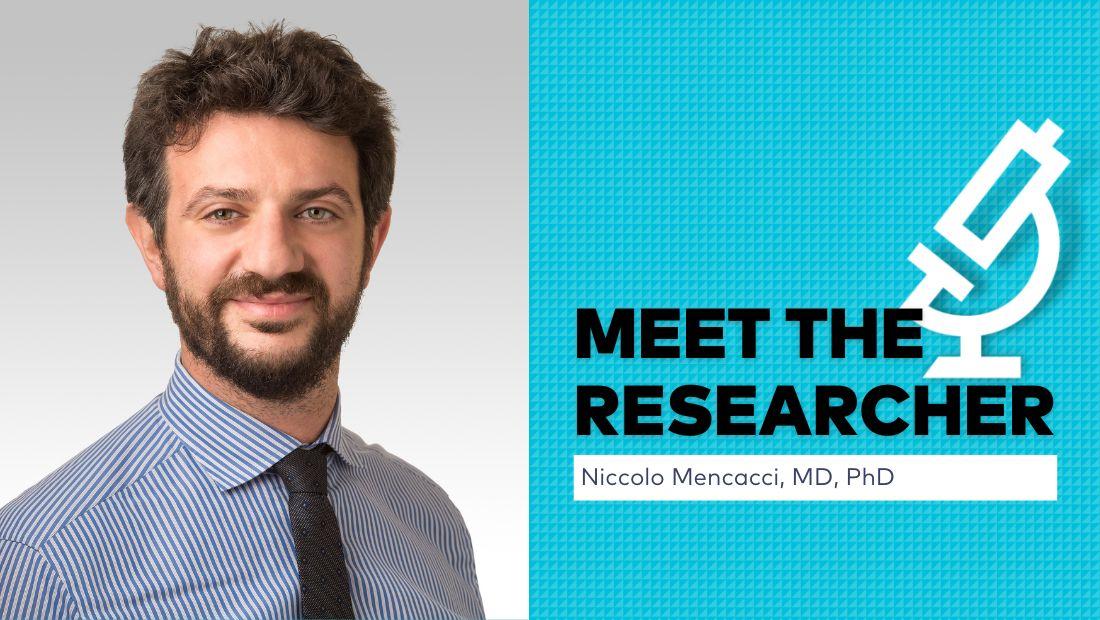
Dr. Niccolo Mencacci

Understanding how genetics play a role in Parkinson’s disease (PD) is a crucial step to uncovering improved treatments and a cure for PD. Niccolo Mencacci, MD, PhD, has dedicated his career to identifying novel disease-associated genes responsible for Parkinson’s disease, dystonia and other movement disorders, and working with patients who have familial or suspected genetic movement disorders.

“When we identify genetic causes of neurodegeneration, we know that those genes are critical in disease mechanisms. So, it doesn’t matter how frequent or rare it is, if a gene is linked to a condition, it means we need to study how it works in the neurons,” he said. “This could pave the way for new understanding of the disease mechanism, potentially leading to new therapeutic approaches.”

Dr. Mencacci is an Assistant Professor of Neurology at Northwestern University, where he runs the movement disorders genetics clinic. The creation of the clinic came from his interest in better understanding the genetics of movement disorders, and it is a multidisciplinary space that includes in-depth neurological assessment and state-of-the-art genetic tools and is run in partnership with a genetic counselor. This combination allows him to study patients and families with Parkinson’s disease and other movement disorders and determine a molecular diagnosis for their condition.

“This is truly the basis for what we call precision medicine, or precision neurology,” he said. “This is a new type of program that not many other centers have, so we are trying to build it ourselves. My expertise is as a movement disorders neurologist, but I also have a PhD in human genetics, so that’s why we decided to shape the clinic this way. It’s a clinic at the border between clinical practice and research, and there’s a lot of back and forth between the two fields.”

Dr. Mencacci is also the co-lead for the Monogenic Hub of the Global Parkinson’s Genetics Program (GP2), a five-year program aimed at identifying new monogenetic causes of Parkinson’s disease around the world. While previous genetic studies have mostly focused on people of white European descent, one of the major goals of the GP2 study is go beyond this group and study more people from historically marginalized populations around the world.

Separately, he is researching the genetic and molecular mechanisms of PD. He was awarded the Parkinson’s Foundation 2021 PD GENEration Fellowship Award for this work. The award allowed him to take this work, which began during his fellowship, into the next stage of his career, protecting some of his clinical time to focus on this important research.

“An exciting part of what I do in the lab in trying to understand how certain genetic mutations linked to rare forms of Parkinson’s disease may affect biological pathways that are important for disease mechanism,” he said. “This research can be hard to continue because it takes a lot of time. The support I received from the Parkinson’s Foundation was instrumental in protecting my role in this research and gave me the enthusiasm to continue this work. It’s very important to support young researchers and their research interests.”

Dr. Mencacci looks forward to the potential his research can have to improve the health and lives of people with PD. His work with people who have genetic links to PD keeps his motivation high.

“On a daily basis, I think about what an exciting time it is for genetics,” he said. “We are finally seeing the first clinical trials for patients who have genetic forms of Parkinson’s disease. For many years, we have been identifying genetic forms of Parkinson’s, but it made little difference in clinical practice. Now, we’re learning more about how genetics can influence how we manage treatment for a patient.”

He is also grateful for the support of the Parkinson’s Foundation and its backing of genetics research in Parkinson’s disease.

“The support the Parkinson’s Foundation offers people with Parkinson’s to help them understand the disease is incredible, but what they are doing to support the research community is also so important,” he said. “I’m grateful for their support of my research and for their incredible PD GENEration study, which is forming the way that genetics can be applied to Parkinson’s disease and makes genetic testing so accessible for people with Parkinson’s. It’s really changing the culture in the field of Parkinson’s disease.”

For more information on our genetics initiative, PD GENEration: Mapping the Future of Parkinson’s Disease, visit Parkinson.org/PDGENEration.

Back to Top