Tips for Daily Living

Non-motor Symptoms: What’s New? Part 1

Man struggling to read

Parkinson’s disease (PD) is largely known for its motor symptoms, slow movement, tremor and stiffness, but other wide-ranging challenges, known as non-motor or non-movement symptoms — can often be most problematic. Treating these non-motor symptoms promotes optimal living.

The following article is part one of a two-part series based on a Parkinson’s Foundation Expert Briefings webinar exploring the latest research and treatments in PD-related non-motor symptoms, by Ronald Pfeiffer, MD, Oregon Health and Sciences University, a Parkinson’s Foundation Center of Excellence.

Early Parkinson’s Symptoms

Early signs of Parkinson’s can appear before a Parkinson’s diagnosis is ever made. Non-movement symptoms can begin decades before a diagnosis. Impaired sense of smell occurs in 70 to 90 percent of those living with PD, often precedes other PD symptoms. Licorice, coconut and banana are some smells people with PD have difficulty with, while scents like chocolate, strawberry and onion, are not impacted.

Another common early pre-movement symptom, constipation, can begin around age 40, sometimes preceding a PD diagnosis by 20 years. Erectile dysfunction, REM sleep behavior disorder, depression and anxiety are often also early non-motor PD symptoms. 

Vision Changes

About 14 percent of people with PD experience vision changes including tired eyes, blurred vision, intermittent double vision or difficulties reading and seeing in dim lighting. Optometrists who look closely may discover convergence insufficiency, impaired color perception, blinking irregularities or reduced contrast sensitivity (the capacity to pick out an object from its background). Playing video games may improve contrast sensitivity, but no PD-specific studies have been done. Fitting glasses with prisms can help PD-related double vision. Both blepharospasm (involuntary eye closure) or apraxia of lid opening (inability to open the eye) may benefit from botulinum toxin A (BOTOX®). At-home eye exercises called “pencil push-ups” may help with convergence insufficiency. Talk to your doctor or optometrist about how to perform these exercises, or to discuss vision treatments.

Pain

Pain related to PD is divided into five categories:

  1. Musculoskeletal: pain that affects the bones, muscles, ligaments, tendons and nerves. It can occur suddenly and be short-lived or long lasting and can occur in one or several areas. Someone with PD may describe this as aching or burning in their muscles or skeleton.
  2. Neuropathic/radicular: chronic pain condition where the body sends pain signals to the brain, not caused by an injury. This sharp pain comes from a nerve or nerve root.
  3. Dystonic: sustained or repetitive muscle twisting, spasm or cramp that can occur at different times of day and in different stages of Parkinson’s. Can stem from rigidity and dystonia.
  4. Akathisia: causes the feeling of restlessness or inability to be still. An example of this outside of Parkinson’s is Restless Leg Syndrome.
  5. Central pain: neurological condition caused by a dysfunction that affects the central nervous system and is resistant to treatment. This pain is usually sharp and burning with no clear cause.

Though muscle relaxers are not usually effective, adjusting PD medications may help minimize “wearing off" episodes. Physical therapy or surgery can improve pinched nerve pain, while BOTOX® injections may improve dystonia.

Autonomic Dysfunctions

Non-motor problems include those with the autonomic nervous system, which controls bodily functions, such as heart rate, blood pressure, sweating, sexual function and both gastrointestinal and urinary function. These can be among the most serious problems for people with PD.

Oral Health Issues

Excess saliva: Experienced by up to 80 percent of people with Parkinson’s, it begins as nocturnal drooling and can progress to heavy saliva outpourings. Drooling isn’t caused by excess saliva; in PD it is due to decreased swallowing frequency and efficiency, as well as tendencies toward an open mouth and stooped posture. While surgery was used in treatment in the past, it is no longer advocated. Hard candy, medications, including sublingual atropine or glycopyrrolate, or BOTOX® injections have all been used in treatment. Discuss options with your doctor.

Dry mouth: Decreased saliva production in PD can cause dry mouth; medications can increase this dryness, raising the risks of cavities and periodontal disease. Artificial saliva products like Biotene®, which contains xylitol and glycerin, can help. Discuss treatments, including medications that increase saliva production, with your doctor or dentist.

Halitosis: Bad breath is common in PD, but rarely discussed. Many factors — dry mouth, inadequate brushing, gum disease, mouth bacteria and not drinking enough fluids — can contribute. Treatment includes adequate cleaning of teeth and mouth and alleviating dry mouth.

Recognizing and Addressing Symptoms

Non-motor PD features may also include sleep disorders, cognitive changes, hallucinations and delusions or weight changes. It’s important to stay abreast of all symptoms, and to discuss treatments with your doctor.

Read the second article in this series now: Non-motor Symptoms: What’s New? Part 2.

Parkinson's Foundation Helpline

Contact our Helpline at 1-800-4PD-INFO (1-800-473-4636) or Helpline@Parkinson.org for answers to your Parkinson’s questions. Helpline specialists can assist you in English or Spanish, Monday through Friday, 9 a.m. to 7 p.m. ET.

Caregiving Topics

Understanding Medicare: Tips for Caregivers

Medicare

Understanding Medicare can be extremely frustrating for many seniors — there are so many parts involved, so many details that require research and potential changes to health care providers and their services, that some seniors become overwhelmed and find it hard to keep searching for the right coverage. As a caregiver, there are many things you can do to help the process along. From looking online for resources and information to helping your loved one make lifestyle changes that will prevent the need for medical attention, there are many simple ways you can assist in finding the right Medicare plan.

Of course, it is extremely helpful to become familiar with common terms and expressions used in Medicare plans as well as those used by doctors to describe various conditions. If your loved one has Parkinson’s disease (PD), it will be especially important to understand what the terminology is as well as what some of the treatments and medications will be. This will allow you to make sure your loved one has everything they need no matter what their health care requirements are.

Here are a few tips on how to help your loved one understand their Medicare options when you’re a caregiver.

Learn the terms

Understanding Medicare takes time, so do a little reading to learn more about the wording and what it all means. Fortunately, there are lots of resources online that explain what certain parts do and will help you sort out the various — and sometimes confusing — details. These will help you find everything from the dates of the open enrollment period to an explanation of a “coverage gap.”

Take specifics into consideration

Parkinson’s disease is considered an existing health condition that will affect coverage. People with PD may need to make sure a certain doctor accepts their plan. Look for an insurance plan that will meet their specific needs, keeping in mind budget. While some parts of Medicare come at no extra cost, medical insurance includes a copay and add-ons like vision coverage, dental care and prescription medication often require out-of-pocket payments.

Find out important dates

Keep track of important Medicare-related dates. There are specific times of the year for sign-ups and changes to existing plans and anyone who falls outside of those dates are subject to penalties. Take note of this crucial information and keep track of it for your loved one, as it can be confusing for many seniors to understand. It’s also a good idea to make sure your loved one has the type of coverage they need according to their current health status; an Advantage Plan will help cover health care needs that Part A and Part B don’t.. 

Talk to the doctor

Some changes in Medicare plans can affect a senior’s ability to have certain parts of care covered, and sometimes, those changes can cause issues with their chosen doctor. Talk to your loved one’s care provider to make sure they still accept the Medicare plan in question and that no changes need to be made to keep it current.

Helping your loved one understand Medicare is important not just for their present needs, but also for their future. In doing so, you’ll be ensuring that the senior in your life is able to get the care they require for years to come, giving them a great quality of life and keeping their health a priority. Talk to your loved one to get an idea of what their needs are, and keep detailed records related to their Medicare coverage.

Article written by Caroline James. Caroline created ElderAction.org, with her husband after becoming caregivers for their aging parents. Through her work with ElderAction, Caroline helps ensure that seniors are able to thrive throughout their golden years.

If you have detailed questions about Medicare or caring for a loved one with Parkinson’s, call our free Helpline at 1-800-4PD-INFO (473-4636).

Advancing Research

Understanding How Aging Affects Dopamine in Parkinson’s

Riding a bike

Over the next three years the Parkinson’s Foundation will invest more than $50 million to Parkinson’s disease (PD) research and clinical care. At the heart of our research initiatives are scientists and researchers who have received Foundation awards to improve our understanding of Parkinson’s, which will ultimately lead us to a cure.

Gulcin Pekkurnaz, PhD

Gulcin Pekkurnaz, PhD, is a Stanley Fahn Junior Faculty Awardee who is working to understand how aging affects dopamine in Parkinson’s.

Parkinson’s disease develops when the cell’s energy factories, called mitochondria, start to fail in dopamine neurons or nerve cells. Dopamine is a brain chemical messenger that carries information between neurons and helps us to move smoothly. People with Parkinson’s have low levels of dopamine in the brain due to dopamine neurons dying.   

People with Parkinson’s do not develop disease symptoms until later in life. This indicates aging-associated changes are involved in the development of the disease. With aging, both mitochondrial function and cellular metabolism decline. We hope to gain a better understanding of why this happens.

Dr. Pekkurnaz at University of California San Diego received a research grant to study the mitochondria from dopamine nerve fibers in animals. Her goal is to identify what happens to dopamine neuron mitochondria before Parkinson’s symptoms start. To accomplish this, she will develop new technology that will allow us to analyze unique mitochondrial features from dopamine neurons as a function of age.

We hope to gain fundamental insights into how the dopamine neuron energy supply works and they start to fail. These findings can lead to potential drug targets for Parkinson’s.

The Parkinson’s Foundation Stanley Fahn Junior Faculty Award helps ensure promising early career scientists stay in the PD research field. This award provides junior investigators the support they need to develop their own independent funding source.

What’s Next: Reporting Our Findings

Parkinson’s Foundation research awards fund Parkinson’s studies than can span up to three years. Scientists submit yearly progress reports to the Parkinson’s Foundation, and we report findings once the studies have concluded. Stay up to date with our latest research findings at Parkinson.org/Blog.

Raise Awareness

PD and Medication: What's New?

Couple buying medication in a store

Since its launch in the late 1960s, carbidopa/levodopa (brand name SINEMET®) is still the most effective Parkinson’s disease (PD) motor symptom treatment. However, it doesn’t address all facets of the disease. Medications to bolster its effectiveness and treat PD-related non-motor symptoms are newly available or just on the horizon.

This article is based on a Parkinson’s Foundation Expert Briefings webinar exploring innovative PD treatments by Rajesh Pahwa, MD, Director, Parkinson and Movement Disorder Division, University of Kansas Medical Center, a Parkinson’s Foundation Center of Excellence.

Pioneering Medicine

It’s an exciting time for PD drug advances. While gene therapy benefits are still being studied, many new medications are on the market or are soon to be. These new treatments are designed to tackle Parkinson’s disease challenges, including:

  • Psychosis – hallucinations and delusions.
  • Orthostatic hypotension – a blood pressure drop when rising or standing.
  • “Off” time – when symptoms and movement difficulties increase.
  • Dyskinesia – abnormal, involuntary muscle movement.
  • Dementia – memory and thinking declines.
  • Falls – PD can cause slowness of movements, increasing falling and other risks.

Current Treatments

Parkinson's Disease Psychosis

PD-associated psychosis can be caused by the disease itself or PD medications. Challenging for people with PD and caregivers, symptoms include confusion, delusions and hallucinations. Report any changes to your medical team.

Pimavanserin (Nuplazid®), newer to the market, is the only approved treatment for PD psychosis. It does not block dopamine or worsen motor symptoms. It can improve hallucinations, delusions, night-time sleep and daytime sleepiness. Side effects include nausea, confusion and hallucinations.

Orthosstatic Hypotension

From 20 to 50 percent of people living with PD experience a significant blood pressure drop upon standing, known as orthostatic hypotension; certain medications can worsen this. This drop can cause lightheadedness or fainting, and other symptoms.

Droxidopa (NORTHERA®) treats lightheadedness. It should not be taken within five hours of bedtime. Side effects include headache, dizziness, nausea, fatigue and high blood pressure when lying down.

"Off"-Time Advancements

Levodopa is synthesized in the brain into dopamine, making it key to PD symptom management. But several factors can interfere with steady, accurate dose delivery. When medication is not taken on time, or absorption is delayed, freezing and other sudden and debilitating motor symptoms can occur. These newer medications can help tackle “off” periods.

Carbidopa/Levodopa Enteral Suspension (Duopa™)

Duopa™ therapy, a newer carbidopa/levodopa treatment, can benefit people with advanced PD who respond well to levodopa and experience three or more “off” hours daily. It’s delivered in gel form (called enteral suspension). Duopa™ users must first have surgery to place a tube in their intestine that is later connected to a pump that delivers Duopa™.

Safinamide (XADAGO®)

Safinamide tablets (XADAGO®) are an add-on treatment for people with Parkinson’s taking carbidopa/levodopa and experiencing “off” times. Safinamide is a monoamine oxidase B (MAO-B) inhibitor that can reduce “off” times up to 55 minutes a day, without dyskinesia. Interactions include other MAO-B class drugs, certain antidepressants and the cold medicine dextromethorphan. Anyone taking a PD medication should talk to their doctor and pharmacist about potential drug interactions.

On-Demand Therapy

Levodopa Inhalation (INBRIJA™)

The levodopa inhalation powder INBRIJA™ is an add-on drug for “off” periods in people taking carbidopa/levodopa. Administered via inhaler, it can be used up to five times a day, improving “off” symptoms as soon as 10 minutes and lasting up to 60 minutes. This can improve symptoms for people with decreased gut motility while waiting for oral carbidopa/levodopa to take effect.

Amantadine ER capsules (GOCOVRI®)

This is the only medication to treat dyskinesia and “off” time in people with PD taking carbidopa/levodopa. It must be taken before bedtime and provides control of dyskinesia upon awakening and throughout the day. It can cause hallucinations and lightheadedness. This medication is different from immediate-release amantadine and amantadine ER tablets (OSMOLEX ER™) which are not approved for dyskinesia or “off” time.

IncobotulinumtoxinA (XEOMIN)

More than 50 percent of people with PD can have excessive drooling, causing skin breakdown around the mouth, odors, embarrassment or choking. Two injections on the face, every 3-4 months of XEOMIN, can manage symptoms.

Future Therapies

Sublingual Apomorphine

Apomorphine is administered through injections under the skin. Sublingual apomorphine, dissolved under the tongue, can relieve “wearing off” episodes for people with Parkinson’s disease in 15 minutes and lasts up to 90 minutes. Side effects can include nausea, sleepiness, and dizziness.

Rimabotulinumtoxin B (MYOBLOC®)

Rimabotulinumtoxin B is currently approved for dystonia and used off-label for drooling. It is undergoing trials to treat drooling. Side effects include dry mouth, mild swallowing difficulty, mild chewing weakness and saliva thickness changes.

Adenosine A2 Antagonist: Istradefylline

A group of brain circuits called the basal ganglia play a role in causing PD symptoms. The basal ganglia have adenosine A2A receptors that are located next to dopamine receptors. Scientists believe that activating the dopamine receptor or blocking the adenosine A2 receptor can improve PD symptoms.

Istradefylline, an adenosine A2A receptor antagonist shows mild motor symptom fluctuation improvements. Approved for use in Japan, Istradefylline has also received U.S. FDA approval.

Subcutaneous Apomorphine Infusion

Available in Europe, subcutaneous apomorphine treatment offers a less invasive motor fluctuation treatment option. A small delivery tube placed under the skin is connected to an apomorphine-filled pumping device. It can reduce daily “off” time and possibly dyskinesia by reducing needed levodopa dose. Those with hallucinations and dementia might not be candidates.

Subcutaneous Carbidopa/Levodopa Pump

Two companies are currently developing pumps for continuous under-skin carbidopa/levodopa therapy to reduce “off” times and motor symptom fluctuations. The pumps can be used around the clock and don’t require surgery.

Carbidopa/levodopa extended release

New tests are underway for extended-release carbidopa/levodopa therapy to reduce “off” times and motor symptom fluctuations.

  • Accordion Pill™, Carbidopa/Levodopa (AP-CD/LD) maker, will begin its Phase 3 clinical trial of new delivery technology. The Accordion Pill slowly releases treatment in the stomach for more steady absorption.
  • IPX203, an investigational extended-release oral carbidopa/levodopa formulation that increases “on” time, is currently enrolling participants in its Phase 3 clinical study.

Opicapone

Experimental opicapone is a COMT (catechol-o-methyl transferase) inhibitor. This drug class can extend levodopa benefits. Available in Europe, opicapone reduces “off” time for people with PD experiencing levodopa effectiveness fluctuations.

If you have any questions about managing Parkinson’s, PD medications or caregiving, call our Helpline at 1-800-4PD-INFO (473-4636) on weekdays from 9 a.m. to 8 p.m. You can also check out these resources:

Tips for Daily Living

These 10 Keys to PD Inspired Us

Group on people sitting outside

This Parkinson’s Awareness Month, we asked our Parkinson’s disease (PD) community to share their keys to Parkinson’s with us. We received hundreds of keys to living well with Parkinson’s!

Whether you are living with PD, are a caregiver or a healthcare professional, thank you for sharing your tips that make life a little easier. We will be posting your keys at Parkinson.org/Blog throughout the year but check out our top 10 keys submitted by YOU.

Exercise

“I listen to audiobooks and love good thrillers. I tease myself into exercising by allowing myself the satisfaction of hearing what happens next only when I’m exercising.”
- Patricia

“Create a playlist for walking. My symptoms get worse towards the end of long walks as I tire. By creating a playlist of songs with a good strong walking beat, the muscle memory kicks in and helps my body finish the walk strong instead of dragging one heel and not having one arm swing.”
- Fred

“For me, I have been blessed to be part of the Rock Steady Boxing (RSB) family for the last 3 plus years. Our coaches encourage us to push ourselves to continue to improve our strength, balance, movements, stamina and endurance. We have class 4 times a week and what a great and supportive new family of friends we have in each other! If you had told me that I would be doing a boxing workout at age 71 for an hour 3-4 times a week, I probably would have laughed. Rock Steady Boxing has given me a whole new positive outlook on my Parkinson's.”
- Wayne

Medication

“I use a black container to put all my husband’s medications in when I get them ready for him to take. I used to use little clear plastic cups that fruit snacks come in, but since most of his pills are white or light colored it was sometimes for him to see if he took them all. Then I found some black sauce cups from an Italian restaurant and he said he could see the pills much better against the black.”
- Susan

“Planning. I am the live-in caregiver for my mom with PD. I set aside a few hours one day a month to set up her pills in four, seven-day containers. That way in case something comes up with her or me at least we have her pills ready. I also set alarm timers in her phone and mine for her pill times. Such a big help!”
- Megan

Daily Living

“My key to living well with Parkinson’s is a metronome. When I get up in the morning, I have trouble walking because of freezing issues. It is very frustrating. There are ways to trick your brain into walking, but the best thing I have found is a metronome. The tick, tick, tick helps me to get going. Now I don’t want to carry a metronome around and as they say, ‘there’s an app for that.’ I have it on my phone and it is my key to get my morning moving!”
- Joyce

“I have rather severe tremors and eating gets pretty messy. I find that if I put my plate of food on top of a large bowl, the distance from plate to mouth is much reduced, which makes more food stay on the spoon or fork during that journey. It is a very small thing but for me, it makes a big difference.”
- Carole

“Use supermarket gift cards so you don't have to sign for a credit card or fumble with paper money and coins.”
- Sandra

“To decrease my leg pain/stiffness when I go to sleep, I do an Epsom salt soak. Heat the water as hot as you can stand it (without sustaining a burn). Add two cups of Epsom salts (there are some that are infused with lavender) and 1/2 cup baking soda. To enhance the experience, light a candle and/or play soothing music. Soak for 20 to 30 minutes.”
- Moises

"Since my hands are weak, I use a Waterpik, face scrubber, button hook, electric toothbrush and hair dryer holder to help me get dressed and out the door faster. My best tip is using a seat belt extender in my car so that I can buckle up with my right hand. These things are small but make life so much easier. Also, it's important to have a 'happy place' and parrots are mine!"
- Martha

Science News

A Possible New Gait Way: Spinal Cord Stimulation

Parkinson's Foundation Science News blogs

Many people with advanced Parkinson’s disease (PD) suffer from gait (walking) dysfunction, freezing of gait and postural instability. These symptoms can cause falling, resulting in a multitude of injuries, a loss of personal freedom, caregiver stress and a reduction in the quality of life (Pirker & Katzenschlager, 2017; Samotus, Parrent, & Jog, 2018). Medications, such as levodopa, rarely helps with these specific motor symptoms, while deep brain stimulation (DBS) results are limited and unpredictable for these particular symptoms. The fact is, current PD medications, therapies or surgical procedures do not effectively address this debilitating unmet need. This lack of options might be changing, due to an intervention called spinal cord stimulation (SCS).

Surgically implanted, SCS is a device that alters nerve activity by sending a low-voltage electrical current to select areas of the spinal cord. These voltage settings are adjustable post-implantation, which allows for personalized optimization. SCS is currently used to treat people with chronic back and nerve pain, as well as for neuropathic pain, such as diabetic neuropathy, and chemotherapy or radiation induced neuropathy. Exploring its usefulness for people with PD has just begun.

scientist in lab

Recently published in the journal of Movement Disorders, a study titled, “Spinal Cord Stimulation Therapy for Gait Dysfunction in Advanced Parkinson's Disease Patients” (Samotus et al., 2018), a six-month pilot study recruited five PD participants with advanced PD. These participants were chosen based on convenience. Participants were an average age of 71 with average disease duration of 14 years. Participants who had a stroke (or any other neurological diseases) and moderately severe parkinsonism in the context of unstable medication treatment (Samotus et al., 2018) were not included in the study. All five participants underwent mid-thoracic spinal cord stimulation surgery and a dorsal spinal cord stimulator was implanted in the epidural space (near the lower back).

This study evaluated SCS efficacy by clinical evaluation and objective gait analysis before and after surgery. A 20-foot gait detection mat equipped with pressure sensors — a relatively new technology (Muro-de-la-Herran, Garcia-Zapirain, & Mendez-Zorrilla, 2014) — was used to measure various features of gait such as step length, stride width, stride velocity, step time, stance, swing, and percentage of time one or two feet are on the ground. To measure freezing of gait, a timed sit-to-stand test was used, as well as an automated freezing detection program that measured changes in foot pressure.

The study also evaluated different frequency and pulse width combinations via gait analysis multiple times 1-4 months after surgery. Eleven frequency and pulse width SCS combinations were tested. Of note, the freezing questionnaire, the Unified Parkinson’s Disease Rating Scale (UPDRS) motor items, Activities-specific Balance Confidence Scale (ABC), and Parkinson’s Disease Questionnaire (PDQ-8) were given to all five participants at every visit.

Results

  • Six months post-implantation, there was an average improvement of 33.5%, in the UPDRS motor score, 26.8% in the FOG questionnaire and 71.4%, in the ABC score.
  • Significant improvement in all participants’ confidence to complete daily activities, especially around and outside the house, occurred in week six and improvements were maintained following week 10, resulting in an average improvement of 71.4% in week 24 compared to before the SCS implantation.
  • The number of freezing episodes captured on the gait mat dropped quickly from an average of 16 before surgery to zero six months after surgery, per study participant, on levodopa and off stimulation.
  • Stride velocity significantly improved by 42.3%, mean step length improved by 38.8% and the time in seconds for a participant to arise from a chair to a standing position improved by 50.3%.
  • By week 24, two of the five participants were able to walk without assistance whereas they needed it before surgery, and three of the five participants reported that their activities of daily living were now only moderately affected by gait dysfunction, whereas they were severely affected before surgery.
  • One participant reported no longer needing to use his wheelchair and was solely using a walker by the end of the study,
  • No adverse effects were reported.

What Does This Mean?

First presented at the 21st International Congress of Parkinson’s Disease and Movement Disorders, this is the first study to use objective gait technology to assess SCS efficacy for people with advanced PD.

Ranging from significant improvement in all study participants’ confidence in performing activities of daily living, to one of the participants no longer needing a wheelchair, to sustained improvements in gait, the pilot study results are encouraging. Stride velocity improved by 42.3%, average step length improved by 38.8% and the time in seconds for a participant to stand up from a chair improved by 50.3%. Perhaps most impressive was the reporting of zero freezing episodes six months after SCS surgical implantation with no adverse effects.

Further, SCS technology proved to be personalized, as doctors were able to adjust technology after implantation in order to provide the optimal therapeutic value. Unlike most surgical procedures, SCS is reversible. Also, important to note, SCS runs on batteries — some are rechargeable, and others last up to 5 years (NIH, 2019).

Although it is a small pilot study, it nonetheless demonstrated that SCS may offer some significant therapeutic value for people with advanced PD. A larger and longer clinical study is warranted to see if these rather remarkable preliminary results can be replicated.

Learn More

The Parkinson’s Foundation believes in empowering the Parkinson’s community through education. Learn more about freezing, balance, gait and falls and Parkinson’s in the below Parkinson’s Foundation resources or by calling our free Helpline at 1-800-4PD-INFO (473-4636).
• Walking with Parkinson’s: Freezing, Balance and Falls
• Expert Briefings: Gait, Balance and Falls in Parkinson's Disease
Podcast Episode 18: Stall the Fall

Advancing Research

Protein May Hold Clues to Development of Parkinson’s

Scientists in a lab


Over the next three years the Parkinson’s Foundation will invest more than $50 million to Parkinson’s disease (PD) research and clinical care. At the heart of our research initiatives are scientists and researchers who have received Foundation awards to improve our understanding of Parkinson’s, which will ultimately lead us to a cure.

scientist in lab


Alpha-synuclein (αSyn)is a protein central to Parkinson’s. In Parkinson’s, this protein misfolds, forming a clump in the brain. Large clumps are known as “Lewy bodies” and disrupt the brain’s normal functioning in people with PD.

Alpha-synuclein is also involved in the regulation of lipids and fatty acids, which help to prevent disease-associated changes in the brain. In Parkinson’s, alpha-synuclein is destabilized. This makes the protein more likely to break down and clump together. What triggers the destabilization of alpha-synuclein in the human brain remains one of the most critical questions in the study of Parkinson’s.

Tim Bartels, MSc, PhD, from Brigham and Women's Hospital Inc., received a Parkinson’s Foundation research grant to gain a better understating of alpha-synuclein in Parkinson’s. He and his research team will analyze the interactions of lipids with different forms of alpha-synuclein in human brain samples. Dr. Bartels hopes to discover which lipids and fatty acids prevent alpha-synuclein aggregation and which ones promote aggregation.

He will also investigate the normal interaction of alpha-synuclein with fatty acids and lipids. Together, these approaches should suggest how to develop drugs that stabilize alpha-synuclein by mimicking the beneficial lipids and fatty acids.

Dr. Bartels team may also find a signature of specific lipids and fatty acids that are associated with PD. This could be an easily accessible biomarker — a biological molecule that is a sign of disease — for Parkinson’s. Having a biomarker for Parkinson’s could lead to earlier diagnosis of the disease. This can improve outcomes for people living with PD.

The Parkinson’s Foundation Stanley Fahn Junior Faculty Award helps ensure promising early career scientists stay in the PD research field. This award provides junior investigators the support they need to develop their own independent funding source.

What’s Next: Reporting Our Findings
Parkinson’s Foundation research awards fund Parkinson’s studies than can span up to three years. Scientists submit yearly progress reports to the Parkinson’s Foundation, and we report findings once the studies have concluded. Stay up to date with our latest research findings at Parkinson.org/Blog.

Advancing Research

Breaking News: Economic Burden of Parkinson’s Disease is $52 Billion

Female doctor and female patient sitting together looking at paperwork

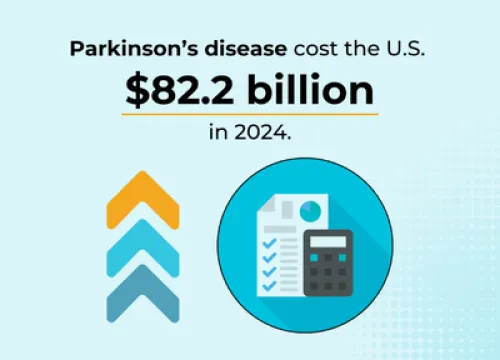
A new study resulting from a partnership of Parkinson’s organizations and industry partners reveals that the economic burden of Parkinson’s disease (PD) in the U.S. is $51.9 billion – nearly double previous estimates.

Study Highlights 

  • $25.4 billion is attributable to direct medical costs, such as hospitalizations and medication.
  • $26.5 billion is attributable to non-medical costs, such as missed work, lost wages, early forced retirement and family caregiver time.
  • The U.S. government accounts for nearly $25 billion in spending related to PD, with $2 billion through Social Security and the remaining $23 billion through Medicare.

Why is this study important?

Understanding the annual economic toll on people with PD, their families and the government helps when advocating for more federal funding for Parkinson’s research. It also allows us to better serve people with PD and their families with programs to help them live better with the disease, touching on areas they are most concerned about and where we can have the most impact.

How was the study performed?

The study, The Economic Burden of Parkinson’s Disease, was sponsored by The Michael J. Fox Foundation, with support from the Parkinson’s Foundation, several industry groups (ACADIA, Adamas, AbbVie, Acorda and Biogen), the American Parkinson Disease Association and The Parkinson Alliance.

The Michael J. Fox Foundation, with support from the Parkinson’s Foundation and other community organizations and industry partners, used data from public databases including Medicare, the Centers for Disease Control and Prevention and the Census Bureau. Several Parkinson’s organizations, including the Parkinson’s Foundation, assisted with data collection through sharing a survey across websites, social media networks and email communications. This joint effort resulted in the most comprehensive assessment illustrating the annual economic toll on the Parkinson’s community and the U.S. government in history.

How can I get involved in Parkinson’s research?

People with PD and their loved ones can help speed the cure and find medications to reverse its course. The Parkinson’s Foundation pairs people in the PD community as primary research partners with scientists, industry and government to prioritize research areas, improve studies and influence stakeholders. Learn more about our Research Advocates program.

Learn More

Another recent large-scale study about Parkinson’s disease is the Parkinson’s Foundation Parkinson’s Prevalence Project. This study established accurate estimates of the prevalence of Parkinson’s throughout North America, which will help the Parkinson’s Foundation attract the attention of federal and state government as well as the pharmaceutical industry to the growing need and urgency in addressing PD.  Read more about the prevalence of Parkinson’s.

Raise Awareness

What’s Hot: What should I do if there is a Sinemet (Carbidopa/Levodopa) shortage?

Woman holding a pill

In this month’s What’s Hot in Parkinson’s disease? column, I review what is becoming a hot topic: a Sinemet shortage. Recently, many people with Parkinson’s disease (PD) have been informed by their pharmacy that there is a shortage of Sinemet or that their brand of Sinemet has been “discontinued.” What should you do?

In 2010-2011 there was a national shortage of Sinemet. This occurred as the brand was transitioned from Merck and Company, Inc. to Mylan Pharmaceuticals, Inc. In 2019 Merck announced that it would no longer be manufacturing Sinemet CR (extended release). These national news stories led to panic.

Generic formulations cause worry. We field many calls to the Parkinson's Foundation Helpline about this topic. Callers are concerned about a wide range of topics from weaker efficacy of the generic, worsening of Motor fluctuations, dyskinesia, allergy and skin rash. When switching to a generic form, people with PD should keep in mind that there may be as much as a 20% difference in treatment effect. However, a generic may sometimes be desired, especially in people with Parkinson’s who experience dyskinesia from tiny medication dosages (some people have referred to these cases as “brittle” PD).

Keep in mind that the U.S. Food and Drug Administration (FDA) approval of a brand name drug requires demonstration of its pharmacokinetics, efficacy, safety and tolerability in both a healthy population and in the Parkinson’s population. In contrast, approval of a generic drug only requires demonstrating its bioequivalence in the blood, but not its clinical treatment effect in Parkinson’s disease.

It is important not to panic when your “brand” or “generic” Sinemet become unavailable. There are many alternatives. Here are a few tips:

  • If you have had Parkinson’s more than five years, in many cases the CR (extended release) tablets offer little to no advantage over standard regular release for many people.
  • Sometimes a CR tablet can be useful for “peak dose” dyskinesia, but it rarely helps extend the life of Sinemet after the first few years following a PD diagnosis.
  • While individuals cannot control the manufacturer that their pharmacist chooses for their medications, talk to your pharmacist and let him/her know how helpful it is for you to have a consistent version of carbidopa/levodopa.
  • If you are able to maintain a pill made by the same manufacturer; then you can adjust the timing and the dose (by as little as ½ or ¼ tablets) to achieve an optimal strategy.

The Eight Sinemet Limit

Another important issue has been the “eight Sinemet limit.” Pharmacies and insurance companies have been citing the language in the original FDA approval of Sinemet and denying prescription requests for people with PD who request more than eight tablets a day. The advent of electronic medical records has worsened this difficult issue for people with PD, as automatic limits are now being set by nationalized computer systems. Once limits are in computer systems, they can be challenging for patients to change. If your insurance carrier or pharmacy blocks filling of your Sinemet prescription purely based on the number of daily pills, we suggest you contact your doctor, send an appeal letter and also contact the Parkinson's Foundation Helpline at 1-800-4PD-INFO (473-4636), as we are here to assist you.

Reasons to try Sinemet CR (ER) or Rytary

  1. Medication dosages taking too long to “kick in” and start working
  2. Medication wearing off before the next scheduled medication dose
  3. Severe on-off medication fluctuation periods (e.g. rapid cycling during the day ranging from feeling completely on medication to completely off medication)
  4. Dyskinesia (too much movement, usually resulting from too high of a blood level of dopamine)
  5. Too many pills
  6. Too many medication dosage intervals (e.g. taking medications every 1-2 hours throughout the waking day)

The below conversion may be useful if trying the extended release Rytary (Hauser et. al.):

Shortage table

Finally, doctors are here to optimize the timing and medication combinations that work best for each patient ― a critical part of that is finding the best dopamine replacement therapy. The “timing is critical principle” from Parkinson’s Treatment: 10 Secrets to a Happier Life should be considered during dose adjustments for any person living with Parkinson’s. Timing is an important element to the success of any Parkinson's treatment. If your formulation changes or a manufacturer discontinues your medication, your care team is here to help you find the best and most positive path forward.

Selected References

Go CL, Rosales RL, Schmidt P, Lyons KE, Pahwa R, Okun MS. Generic versus branded pharmacotherapy in Parkinson's disease: does it matter? A review. Parkinsonism Relat Disord. 2011 Jun;17(5):308-12. Epub 2011 Mar 1. Review.

Okun MS. Parkinson's disease patients cannot get their dopamine replacement: The 8-sinemet limit. Mov Disord. 2011 Dec 9. doi: 10.1002/mds.24038. [Epub ahead 
of print].

Pahwa R, Lyons KE, Hauser RA, Fahn S, Jankovic J, Pourcher E, Hsu A, O'Connell M, Kell S, Gupta S; APEX-PD Investigators. Randomized trial of IPX066, carbidopa/levodopa extended release, in early Parkinson's disease. Parkinsonism Relat Disord. 2014 Feb;20(2):142-8. doi: 10.1016/j.parkreldis.2013.08.017. Epub 2013 Sep 5. PubMed PMID: 24055014.

Hauser RA, Hsu A, Kell S, Espay AJ, Sethi K, Stacy M, Ondo W, O'Connell M, Gupta S; IPX066 ADVANCE-PD investigators. Extended-release carbidopa-levodopa (IPX066) compared with immediate-release carbidopa-levodopa in patients with Parkinson's disease and motor fluctuations: a phase 3 randomized, double-blind trial. Lancet Neurol. 2013 Apr;12(4):346-56. doi: 10.1016/S1474-4422(13)70025-5. Epub 2013 Feb 26. PubMed PMID: 23485610.

Dr. Michael S. Okun

Hauser RA. IPX066: a novel carbidopa-levodopa extended-release formulation. Expert Rev Neurother. 2012 Feb;12(2):133-40. doi: 10.1586/ern.11.195. Review. PubMed PMID: 22288668.

Okun MS. Parkinson’s Treatment: 10 Secrets to a Happier Life. Createspace, 2013.

You can find out more about our National Medical Director, Dr. Michael S. Okun, by also visiting the Center of Excellence, University of Florida Health Norman Fixel Institute for Neurological Diseases. Dr. Okun is also the author of the Amazon #1 Parkinson's Best Seller 10 Secrets to a Happier Life and 10 Breakthrough Therapies for Parkinson's Disease.

Science News

The PD Gut-Brain Connection

Parkinson's Foundation Science News blogs

Parkinson’s disease (PD) results in the loss of dopamine-producing cells in the brain. Because dopamine cannot cross the blood-brain barrier (a safety feature of the brain), people cannot simply take dopamine pills. The drug levodopa (L-dopa) — a precursor to dopamine and the gold standard for treating PD — does have the ability to cross the blood-brain barrier, where it successfully converts into the much-needed dopamine.

Since 1971, scientists were aware that one or more of the many microorganisms living in the human gastrointestinal tract prematurely convert the L-dopa into dopamine before it gets into the brain― but they didn’t know which ones. To combat some of this loss, L-dopa is usually combined with carbidopa to help block the premature metabolism, as well as help with the common side effects of nausea and vomiting.

Only about 44% of the L-dopa makes it to the brain. There are many different types of microorganisms, such as bacteria, viruses and fungi. Understanding which ones may affect this process could help improve the efficiency of levodopa as a treatment for PD.

A study titled, “Discovery and inhibition of an interspecies gut bacterial pathway for Levodopa metabolism” (Maini Rekdal, Bess, Bisanz, Turnbaugh, & Balskus, 2019), sought to decipher the molecular mechanisms by which gut bacteria might be responsible for this degradation of L-dopa en route to the brain. A complex undertaking, researchers used several, highly sophisticated methods, from running tests on the microbiome (trillions of microorganisms that help keep the body running smoothly) to evaluating inhibitors and testing the gut microbiota of people with and without PD.

Results

  • In the gut, some of the L-dopa was converted into dopamine by an enzyme from the common gut bacteria (Enterococcus faecalis).
  • Then, the dopamine (still in the gut) was further metabolized into a compound called m-tyramine, by an enzyme from a second bacterium (called Eggerthella lenta).
  • The enzymes from these two bacteria (Enterococcus faecalis and Eggerthella lenta) appear to be responsible for L-dopa metabolizing first into dopamine and then into m- tyramine, prior to reaching to blood-brain barrier, thereby diminishing how much L-dopa and the dopamine treatment successfully makes it to the brain.
  • Carbidopa is successful in inhibiting the metabolism of L-dopa by human enzymes, but not by the bacterial enzymes in the human gut.
  • When L-dopa was given to lab rodents orally along with a bacterial enzyme inhibitor called AFMT, this prevented metabolism of L-dopa and resulted in improved bioavailability of the drug in the animals’ blood stream.  

What Does This Mean?

Using a complex set of steps, this study identified two enzymes in human gut microbiota (called  Enterococcus faecalis and Eggerthella lenta) that are key to impeding a significant portion of the L-dopa from reaching the brain.

Further, in lab rodents, researchers increased the amount of L-dopa reaching the brain, by manipulating the activity of these enzymes in the gut with a drug, AFMT. This suggests that this approach (inhibiting bacterial enzymes) could possibly be developed for human use. In short, they may have found a drug that can reduce the premature metabolism of L-dopa into dopamine in the human gut, ultimately improving the efficiency of L-dopa treatment.

Back to Top