Fundraising Events

Community Walk Westchester

9:00 am to 12:00 pm CDT
Free
Group of people going through the finish line at a Moving Day Walk

Get out and move with your community! Every dollar raised supports the Parkinson’s Foundation mission to make life better for people affected by Parkinson’s disease (PD). At Moving Day Community Walks across the country, we’re fighting Parkinson’s and celebrating movement — proven to help manage Parkinson’s symptoms — and we’re doing it together. The Moving Day Community Walk Program is a complement to the Parkinson’s Foundation Moving Day, A Walk for Parkinson’s. These walks are family-friendly and help the Foundation make life better for people with PD.

The Community Walk program offers volunteers an opportunity to organize a walk in their own community that does not have a Moving Day event. The program leverages the personal experiences and community leadership of passionate volunteers to promote Parkinson’s awareness and raise funds for the Parkinson’s Foundation.

Learn more about bringing an event to your area

Upcoming Events

Educational Events

Mindfulness Mondays - Mental Wellbeing

Each month, Dr. Rush invites you to slow down, breathe, and reconnect with yourself and your Parkinson’s community through a guided mindfulness practice. Together, we’ll explore simple ways to ground the body, calm the mind, and cultivate compassion and clarity that you can carry into your week.

Virtual

My PD Story

frank_antonicelli.png
People with PD

Frank Antonicelli

Parkinson's disease (PD) has an uncanny ability to catch you off guard, striking when you least expect it. I was 39 years old and living an active life when my first symptoms emerged. My wife actually noticed before I did, when she pointed out that my right arm appeared stiff during a walk.

Soon after, while I was playing golf, I had a moment where my mind and body seemed to exist in two separate worlds, leading to several out-of-control shots. I also noticed that my symptoms were concentrated on my right side, affecting my fine motor skills and leading to a change in my gait.

My symptoms progressed and reached a breaking point when a stumble over my right foot sent me tumbling down the stairs at home. It was a wake-up call and a realization that I needed to find out what was causing these problems.

The following year and a half became a flurry of doctor’s appointments and diagnostic tests in search of answers. After seeking second opinions, the verdict finally arrived in 2007: Parkinson's disease. Accepting this harsh reality was a struggle, followed by the onset of anxiety, fatigue and an apprehension towards even the simplest of tasks. These limitations became my new companions, guiding my decisions.

In pursuit of a better life, I explored different treatment options — acupuncture, hyperbaric oxygen therapy, massage, muscle activation techniques, peptide therapy, IV nutrition therapy and more. Although I was making progress, I needed to go further.

A pivotal turning point was when I engaged with a movement disorder specialist (MDS). This collaboration reshaped my perception of how to manage Parkinson’s. Together, we created a holistic approach to tackle my symptoms head-on, establishing a plan that revolved around exercise, diet and stress management. We connected in a profound way that changed my outlook and helped me learn new techniques for dealing with PD.

I also began looking into resources from the Parkinson’s Foundation to help navigate the disease. I found the Living with Parkinson's section on their website to be a great resource for information. One of my initial challenges after being diagnosed was finding support, so I started incorporating their emotional and mental health tips into my everyday life.

Fueled by positivity and visualization, I envisioned a life free of mobility hindrances, propelling me towards greater activity and diminished fear. This journey of embracing Parkinson's became a lesson in understanding my body and its signals.

However, in February 2020, a setback led me to the emergency room. My Parkinson’s medications had become ineffective, and I felt like my body was betraying me. Three months of at-home care steered me towards a groundbreaking decision — deep brain stimulation (DBS) surgery. After meticulous research and consultations with my neurologists, I underwent the DBS procedure in November 2020. This surgery marked a new chapter in my life, bringing improvements to my mental, physical and spiritual well-being.

Utilizing the lifestyle strategies from my MDS and feeling rejuvenated after DBS surgery, I began exploring creative outlets. Inspired by my love for writing, I established Be Still Publishing, a platform where I share my poetry, lyrics and music. In 2023 I released my first audiobook, "Embracing Parkinson's: A Journey of Acceptance and Healing," featuring one-on-one conversations between me and my MDS, Joe Green, offering insights into the world of a person living with PD and strategies for managing the condition.

In my journey to understand and deal with Parkinson’s, I discovered one of the best ways to manage this disease is through the help of healthcare professionals. I was surprised to learn that only 9% of people with PD receive care from a movement disorders specialist. This hit close to home, as I worked very closely with my MDS for years and it made a huge difference in the way I viewed and managed my Parkinson’s.

I am grateful for the support of my neurologist and MDS, as well as my friends and family. Despite the challenges I face, I refuse to let Parkinson’s sideline my spirit.

People living with Parkinson's who seek expert care have better outcomes. Find expert care near you.

Educational Events

The PD Solo Network

Virtual ( Zoom )
1:00 pm to 2:30 pm EST
FREE
PD Solo event banner of woman staring out the window

Parkinson's Foundation Launches: The PD Solo Network - Living Alone While Living with PD

There are two sessions available: You are welcome to choose one or attend both.
– 1 p.m. to 2:30 p.m. ET
– 7:30 p.m. to 9 p.m. ET

What is the PD Solo Network: 

A virtual network for people living with Parkinson's disease (PD) who live alone, by choice or circumstance. The purpose of this group is to create a community of support for those living without a care partner. People living with PD are the experts about what challenges, changes and accommodations are needed on a daily basis. This network will provide a place to share ideas, concerns, brainstorm strategies, suggestions, resources & to build relationships.

The Parkinson's Foundation is providing the initial funding and support to kick start this network. It will most likely become a very strong network that will operate independently although the Parkinson's Foundation will always be an entity of support & information for the participants. The Foundation will provide resources to launch and maintain the network for a one-year period.

Upcoming Meeting Dates:

– August 8 and August 22, 2023
– September 12 and September 26, 2023
– October 10 and October 24, 2023
– November 14 and November 28, 2023
– December 12, 2023

There is no charge to attend, but registration is required in order to receive the Zoom link.

This is a virtual program, taking place live, using the online Zoom platform. Instructions on joining the webinar are provided after registering.

Upcoming Events

Educational Events

Mindfulness Mondays - Mental Wellbeing

Each month, Dr. Rush invites you to slow down, breathe, and reconnect with yourself and your Parkinson’s community through a guided mindfulness practice. Together, we’ll explore simple ways to ground the body, calm the mind, and cultivate compassion and clarity that you can carry into your week.

Virtual
Educational Events

The PD Solo Network

Virtual ( Zoom )
1:00 pm to 2:30 pm EST
FREE
PD Solo event banner of woman staring out the window

Parkinson's Foundation Launches: The PD Solo Network - Living Alone While Living with PD

There are two sessions available: You are welcome to choose one or attend both.
– 1 p.m. to 2:30 p.m. ET
– 7:30 p.m. to 9 p.m. ET

What is the PD Solo Network: 

A virtual network for people living with Parkinson's disease (PD) who live alone, by choice or circumstance. The purpose of this group is to create a community of support for those living without a care partner. People living with PD are the experts about what challenges, changes and accommodations are needed on a daily basis. This network will provide a place to share ideas, concerns, brainstorm strategies, suggestions, resources & to build relationships.

The Parkinson's Foundation is providing the initial funding and support to kick start this network. It will most likely become a very strong network that will operate independently although the Parkinson's Foundation will always be an entity of support & information for the participants. The Foundation will provide resources to launch and maintain the network for a one-year period.

Upcoming Meeting Dates:

– August 8 and August 22, 2023
– September 12 and September 26, 2023
– October 10 and October 24, 2023
– November 14 and November 28, 2023
– December 12, 2023

There is no charge to attend, but registration is required in order to receive the Zoom link.

This is a virtual program, taking place live, using the online Zoom platform. Instructions on joining the webinar are provided after registering.

Upcoming Events

Educational Events

Mindfulness Mondays - Mental Wellbeing

Each month, Dr. Rush invites you to slow down, breathe, and reconnect with yourself and your Parkinson’s community through a guided mindfulness practice. Together, we’ll explore simple ways to ground the body, calm the mind, and cultivate compassion and clarity that you can carry into your week.

Virtual
Advancing Research

Studying Genetic Links to Better Treat People with Parkinson’s Disease

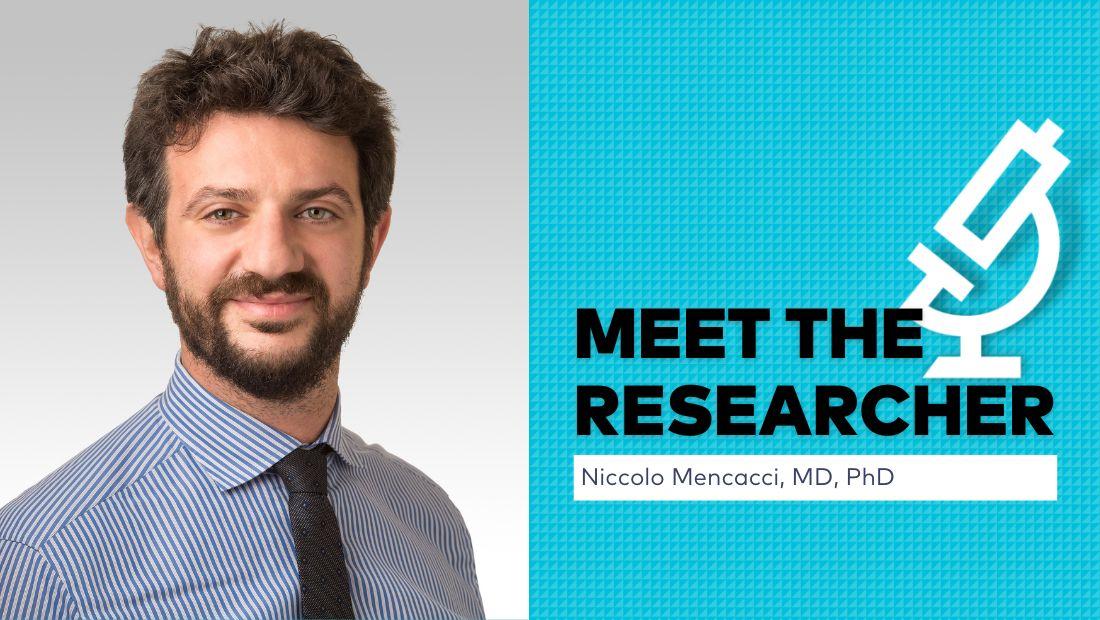
Dr. Niccolo Mencacci

Understanding how genetics play a role in Parkinson’s disease (PD) is a crucial step to uncovering improved treatments and a cure for PD. Niccolo Mencacci, MD, PhD, has dedicated his career to identifying novel disease-associated genes responsible for Parkinson’s disease, dystonia and other movement disorders, and working with patients who have familial or suspected genetic movement disorders.

“When we identify genetic causes of neurodegeneration, we know that those genes are critical in disease mechanisms. So, it doesn’t matter how frequent or rare it is, if a gene is linked to a condition, it means we need to study how it works in the neurons,” he said. “This could pave the way for new understanding of the disease mechanism, potentially leading to new therapeutic approaches.”

Dr. Mencacci is an Assistant Professor of Neurology at Northwestern University, where he runs the movement disorders genetics clinic. The creation of the clinic came from his interest in better understanding the genetics of movement disorders, and it is a multidisciplinary space that includes in-depth neurological assessment and state-of-the-art genetic tools and is run in partnership with a genetic counselor. This combination allows him to study patients and families with Parkinson’s disease and other movement disorders and determine a molecular diagnosis for their condition.

“This is truly the basis for what we call precision medicine, or precision neurology,” he said. “This is a new type of program that not many other centers have, so we are trying to build it ourselves. My expertise is as a movement disorders neurologist, but I also have a PhD in human genetics, so that’s why we decided to shape the clinic this way. It’s a clinic at the border between clinical practice and research, and there’s a lot of back and forth between the two fields.”

Dr. Mencacci is also the co-lead for the Monogenic Hub of the Global Parkinson’s Genetics Program (GP2), a five-year program aimed at identifying new monogenetic causes of Parkinson’s disease around the world. While previous genetic studies have mostly focused on people of white European descent, one of the major goals of the GP2 study is go beyond this group and study more people from historically marginalized populations around the world.

Separately, he is researching the genetic and molecular mechanisms of PD. He was awarded the Parkinson’s Foundation 2021 PD GENEration Fellowship Award for this work. The award allowed him to take this work, which began during his fellowship, into the next stage of his career, protecting some of his clinical time to focus on this important research.

“An exciting part of what I do in the lab in trying to understand how certain genetic mutations linked to rare forms of Parkinson’s disease may affect biological pathways that are important for disease mechanism,” he said. “This research can be hard to continue because it takes a lot of time. The support I received from the Parkinson’s Foundation was instrumental in protecting my role in this research and gave me the enthusiasm to continue this work. It’s very important to support young researchers and their research interests.”

Dr. Mencacci looks forward to the potential his research can have to improve the health and lives of people with PD. His work with people who have genetic links to PD keeps his motivation high.

“On a daily basis, I think about what an exciting time it is for genetics,” he said. “We are finally seeing the first clinical trials for patients who have genetic forms of Parkinson’s disease. For many years, we have been identifying genetic forms of Parkinson’s, but it made little difference in clinical practice. Now, we’re learning more about how genetics can influence how we manage treatment for a patient.”

He is also grateful for the support of the Parkinson’s Foundation and its backing of genetics research in Parkinson’s disease.

“The support the Parkinson’s Foundation offers people with Parkinson’s to help them understand the disease is incredible, but what they are doing to support the research community is also so important,” he said. “I’m grateful for their support of my research and for their incredible PD GENEration study, which is forming the way that genetics can be applied to Parkinson’s disease and makes genetic testing so accessible for people with Parkinson’s. It’s really changing the culture in the field of Parkinson’s disease.”

For more information on our genetics initiative, PD GENEration: Mapping the Future of Parkinson’s Disease, visit Parkinson.org/PDGENEration.

Podcasts

Episode 158: Atypical Parkinsonism Series: Overview, Diagnosis and Prevalence

Considered “atypical Parkinsonian syndromes,” over half of people with progressive supranuclear palsy (PSP), corticobasal degeneration (CBD)/corticobasal syndrome (CBS), and multiple system atrophy (MSA) are initially misdiagnosed with Parkinson’s disease (PD) due to similarities in early symptoms as well as lack of awareness of these rare, neurodegenerative diseases among many healthcare professionals and the general public. 

This is the first of three podcast episodes within our atypical parkinsonism podcast series, organized in partnership with CurePSP and designed to address the overview, treatment and care of PSP, CBD and MSA. 

In this first episode of the series, Dr. Alex Pantelyat, Associate Professor of Neurology at Johns Hopkins University School of Medicine shares an overview of atypical parkinsonism, overlaps and differences with Parkinson's disease, the red flags and how PSP, CBD and MSA are diagnosed.

Dr. Pantelyat has disclosed that he is a Scientific Advisory Board Consultant for MedRhythms, Inc. and a consultant for both Ferrer Internacional, S.A. and SciNeuro Pharmaceuticals. 

Podcast host, Dan Keller, has disclosed that he has no relevant financial disclosures.

Released: September 5, 2023

My PD Story

Erinn_Flowers.png
People with PD

Erinn Flowers

Rarely is there a time that I don’t think about Warren. It’s uncanny. I don’t love him, yet he is with me all the time, so I seek ways to accept him. Warren is the name my three kids and I gave to my diagnosis of young-onset Parkinson’s disease (YOPD). Instead of saying the scary term, “Parkinson’s disease,” we laugh and say things like, “Warren is around,” or “Warren kept me awake all night.” I have no choice but to respect him, as he has taught me about gratitude and the importance of being present.

I was diagnosed with YOPD at 41 years old. Following the diagnosis, I began to realize how many of my symptoms were signs of Parkinson’s. I had lost my sense of smell seventeen years earlier. At the time, I thought my son was especially sensitive to smells, and I often joked that he “took my sense of smell.” I was also a marathon runner and I started to fall a lot during training. My foot also started doing this funky, painful turn. I had no idea that this may have been a symptom of PD.

Two years later, and with much stress in my life, I developed a tremor in my arm and sought medical advice. When I visited a neurologist, she watched me walk and noticed that my left arm did not swing. I had never even noticed that!

I never imagined being diagnosed with YOPD. I was a single mom and a full-time teacher raising three kids. I tried to find child-friendly literature to explain Parkinson’s to my kids; there were some books, but most of them included a surplus of medical jargon. I am currently working on a children’s book to provide families with the springboard they need to discuss this disease and how it may impact them.

I was in denial about PD for a long time, and it was my daughter’s school project that pushed me to accept my diagnosis. She created a carnival “Go Fish” game titled, “Fishing for a Cure for Parkinson’s.” WOW. Kids say the darndest things.

Now ten years later, I “runwa” (run/walk) and try to get my heart rate up nearly every day. I walk “BIG” and do a variety of exercises. I also try to challenge my brain daily. I am stronger than I have ever been, and I put my physical and mental health first. It hasn’t been easy, and Warren sometimes still shows up, but I eat healthy and I have finally figured out how to stay asleep! I work hard to keep a positive attitude.

I was first introduced to the Parkinson’s Foundation through the Community Partners in Parkinson’s Care program. Now that my children are older, I can devote more of my time to supporting the Foundation and assisting the Parkinson’s community! One way I show my support is through fundraising for Moving Day. This past year I raised more than $1,200 for Moving Day Twin Cities, and I plan on surpassing that amount next year.

I look forward to sharing my knowledge about PD and finding more creative ways to raise money for research. I hope that one day, I can finally break up with Warren! 

Learn the 10 early signs of Parkinson’s disease.

My PD Story

chris_runge
People with PD

Chris Runge

I am 63 years old now, but I was diagnosed with tremor-dominant Parkinson’s disease (PD) four years ago. After much encouragement from my children, I decided to visit a neurologist to get answers.

I underwent a 30-minute diagnosis session with my local neurologist. At the appointment, he said, “You have Parkinson’s. You have 10 years to live, and it will not be good.” Then he walked out of the office.

I sat there in shock, not knowing which way to go.

A dear friend connected me to Dr. Joseph Jancovic from Baylor College of Medicine, a Parkinson’s Foundation Center of Excellence. Dr. Jancovic is a specialist in Parkinson’s and movement disorders. After a thorough exam, he affirmed the PD diagnosis but decided to completely change to my medications. Within two days after this appointment my symptoms diminished, and my sense of self returned.

I have retired from work and filed for disability because Parkinson’s has affected my mental capacity, especially when it comes to dealing with stress. Despite this, I am determined to not allow Parkinson’s disease to define who I am.

I do everything I can to exercise and stay active. In the last four years I’ve hiked to tops of mountains in Colorado, taken up long range rifle marksmanship at 1,000 yards or more and continued with my love of Argentine tango. I have also put 1,000 miles in my bicycle in the last three months, and I do not plan on stopping.

I found out about the Parkinson’s Foundation while searching Facebook for Parkinson’s-related groups. I have started looking through the resources on their website for support as I continue to navigate this disease.

My best advice is to live life day by day — and sometimes minute by minute. You never can tell what will happen next.

Find a good a PD care team. Know that there will be good days in there, too, and make the most of them.

Here’s to a cure!

You are not alone. Find expert Parkinson’s care in your area.

Fundraising Events

Moving Day South Alabama

9:00 am to 12:00 pm CDT
Free
Moving Day DC

Moving Day is an inspiring and empowering annual fundraising walk event that unites people around the country living with Parkinson’s disease (PD), their care partners and loved ones to help beat PD. Moving Day is more than just a walk. It’s a celebration of movement – proven to help manage Parkinson’s symptoms.

Leading up to the event, participants and teams fundraise to help the Parkinson’s Foundation provide vital resources and deliver quality care to more than 364,000 people living with Parkinson’s and other movement disorders, while improving Parkinson’s treatments through research.

Moving Day proceeds help bring quality care to more people with Parkinson’s, further Parkinson’s research, education and outreach initiatives. Moving Day raises awareness of Parkinson’s both nationally and in the local community.

Upcoming Events

Educational Events

Mindfulness Mondays - Mental Wellbeing

Each month, Dr. Rush invites you to slow down, breathe, and reconnect with yourself and your Parkinson’s community through a guided mindfulness practice. Together, we’ll explore simple ways to ground the body, calm the mind, and cultivate compassion and clarity that you can carry into your week.

Virtual
Fundraising Events

Moving Day Palm Beach

9:00 am to 12:00 pm EST
Free
Moving Day DC

Moving Day is an inspiring and empowering annual fundraising walk event that unites people around the country living with Parkinson’s disease (PD), their care partners and loved ones to help beat PD. Moving Day is more than just a walk. It’s a celebration of movement – proven to help manage Parkinson’s symptoms.

Leading up to the event, participants and teams fundraise to help the Parkinson’s Foundation provide vital resources and deliver quality care to more than 364,000 people living with Parkinson’s and other movement disorders, while improving Parkinson’s treatments through research.

Moving Day proceeds help bring quality care to more people with Parkinson’s, further Parkinson’s research, education and outreach initiatives. Moving Day raises awareness of Parkinson’s both nationally and in the local community.

Upcoming Events

Educational Events

Mindfulness Mondays - Mental Wellbeing

Each month, Dr. Rush invites you to slow down, breathe, and reconnect with yourself and your Parkinson’s community through a guided mindfulness practice. Together, we’ll explore simple ways to ground the body, calm the mind, and cultivate compassion and clarity that you can carry into your week.

Virtual
Back to Top