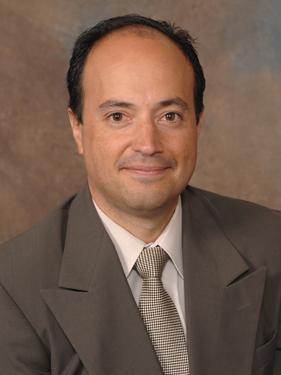
Dan Keller 0:08
Welcome to this episode of Substantial Matters: Life and Science of Parkinson's. I'm your host, Dan Keller. At the Parkinson's Foundation, we want all people with Parkinson's and their families to get the care and support they need. Better care starts with better research and leads to better lives. In this podcast series, we highlight the fruits of that research, the treatments and techniques that can help you live a better life now, as well as research that can bring a better tomorrow. That research is a long and complicated process, moving from laboratory methods to animal testing and hopefully to clinical trials involving people with Parkinson's, and people with Parkinson's can play a valuable role in that research even before the clinical trials begin. Through in-person trainings and an online course, the Parkinson's Advocates in Research program at the Parkinson's Foundation, or PAIR for short, gives people impacted by Parkinson's the knowledge and skills needed to advise researchers on clinical studies. Their perspective helps prioritize research projects and improve the study designs in ways meaningful to people affected by Parkinson's. I spoke with Karlin Schroeder and Kevin Kwok about PAIR. Karlin is the Director of Community Engagement at the Parkinson's Foundation, and Kevin is a research advocate in the PAIR program who holds a Doctor of Pharmacy degree and has been living with Parkinson's for 10 years. I initially tossed the first question to Karlin.
Dan Keller 1:53
Let me ask you about patient engagement in research. This is something that in the old days just wasn't even considered. Why is it important to engage patients at all stages of research?
Karlin Schroeder 2:05
Well, what we say at the Foundation is that it's important to engage people early and often and throughout the research process. And the reason for that is that when you design a clinical trial, you want to reduce as many barriers as you can to participate. And if you have people with Parkinson's contribute to designing the clinical trial, they can point out barriers, like too many study visits, it will be hard for me to get to the site, and so you can design the trial with that in mind. Patient engagement in research for us is really that meaningful partnership between people with Parkinson's and their care partners and researchers to design and implement clinical trials. It's more than just recruiting for a trial.
Dan Keller 2:42
It had been a technique to get patients into trials. I guess that was the engagement that was seen from the research standpoint. But do the researchers accept or welcome patient input at all stages of trial design?
Kevin Kwok 2:59
I think it's an evolving field. But yes, I would say that more and more we're seeing more investigators and industry including patients earlier and earlier on in the design of the trials. It wasn't always that way, but I think you're starting to see more and more of it happening.
Speaker 1 3:14
Kevin, you've got a particular inside view. You had been in the biotech industry before, and now that you're a patient, I guess you have a unique perspective on how the two can work together.
Kevin Kwok 3:29
Oh, absolutely. The other area is, I'm also a clinician. I've trained as a clinical pharmacist. In some ways, I feel like I'm a triple threat. My ability to sort of transcend the industry, though, is really by putting on the eyes and the glasses of a patient, and that is uniquely different. And oftentimes, I'll be in the room with people that are far more experts in their field. And yet, when it comes down to it, they say that Parkinson's is a disease where no two patients are the same. And I think the complexity and the heterogeneity of the disease allows us to sort of speak from the patient voice. So while I do have an industry background, I think I mostly speak from the patient side when I get involved in advocacy.
Dan Keller 4:13
What is the Parkinson's Foundation doing to encourage this and bring more of it together?
Karlin Schroeder 4:19
We train people with Parkinson's and their care partners in the research process so that we have a cadre of people with Parkinson's and their care partners who are ready to engage, and then we also reach out to researchers and explain to them what patient engagement is. It can still be very new to people, although, as Kevin said, it's happening more and more often. So we can provide resources and materials and best practices in patient engagement to research teams. So a lot of it is educating the community and then demonstrating how patient engagement can make an impact, showing how we can make clinical trials more efficient and effective.
Dan Keller 4:53
Do you have anything to add, Kevin?
Kevin Kwok 4:55
No, I think that the training that we receive through the Parkinson's Foundation is tremendous. They get a group of people in a room who, for all intents and purposes, come from all walks of life. There are a few of us that have industry experience, but for the most part, they go through the whole process of, you know, what is an interventional trial versus an observational trial? You know, what are the various stages of endorsing clinical research? One of the biggest issues, I think, that we play is a bridge between academicians and patients and industry. We're sort of right in the middle of that triad, right? And so our role, in some ways, we become almost a reference to other patients who trust us, who say, well, what trial should I get involved in? Right? And so I think we play a very unique role in the way that we are able to sort of catalyze the role of engagement and research.
Karlin Schroeder 5:47
The Parkinson's Foundation also works to move the field of patient engagement in research forward across disease areas. So we work in national and international coalitions to define best practices in patient engagement and push the field forward with innovation, and we also work in coalitions to better define how we measure patient engagement so that we have metrics around our work.
Dan Keller 6:09
Are you educating patient advocates in all aspects of research? I mean things like how research is conducted, the steps in doing a trial, not only how to go out and lobby your congressman?
Karlin Schroeder 6:24
Exactly. So actually, the work in our program doesn't really include policy work, except for with FDA, the Food and Drug Administration, but what we do to educate people with Parkinson's and care partners is train them, as you said, in the different phases of clinical trials. We help them understand what's in the Parkinson's pipeline now. We help them understand how to analyze research and understand how to interpret a journal article and about ethics around research, such as the informed consent process. So we're really talking about all aspects of the research process, even as early as basic science, where we're thinking about therapies that we might want to study that could be on the market in the future in 15 years.
Kevin Kwok 7:02
You bring up an interesting point, though. I think patient advocacy has many dimensions. There's policy, there's research, there's personal, there's the caregiver issues. And so I think that in the journey of a patient advocate, I see the entry point being different places and the involvement being different, but at the end of the day, they somewhat all merge together. There's a research component, there's a policy component. You do develop dimensions as a patient advocate.
Dan Keller 7:31
As part of the Parkinson's Advocates in Research project, are there meetings, or how do you keep people involved and knowing each other and swapping ideas?
Karlin Schroeder 7:41
So there's two of us on staff for the program who have a very in-depth touchpoint with all of our advocates on an ongoing basis. So we talk to people regularly by phone or through teleconference. We travel around the community to see people face-to-face. And we really know the people with Parkinson's and care partners that we work with well. We know their skill sets. We know what stage of Parkinson's they're in, what type of therapies they might have tried. So it's a high-touch program. We do like to bring people together where we can. So we might bring in local advocates to a scientific meeting that's happening in a particular community, like the American Academy of Neurology meeting. So we do convene people locally as much as we can to bring the research advocates together, and we're thinking about right now how we do ongoing continuing education for advocates who've come through our program years ago. So perhaps we can do like WebEx courses on building your skill set to be a research advocate.
Dan Keller 8:36
When did it start? How long have you been doing it?
Karlin Schroeder 8:39
The Foundation's been doing patient engagement in research for over 15 years, and when we initially started, it was about educating the community about clinical trials and training people to be peer-to-peer advocates. But we quickly realized that challenges with getting people into clinical trials were related to how trials were created. The trials may have been created with a lot of burden on people with Parkinson's and their care partners to participate, so maybe a lot of study visits, and if you include people with Parkinson's and care partners early in the process, you can design a study that doesn't have so many burdens. So we shifted to really training people about clinical trials and how to design and implement them.
Speaker 1 9:17
Have you seen results already? Can you put your finger on some things that it has changed?
Karlin Schroeder 9:21
Sure. So one of the things that's most easy for people to understand is that we can help clinical trials recruit more quickly because we help design them so people are more likely to sign up for these trials and stay involved. So we know that we can make research more efficient and effective and get us to the goal that we all want—better therapies and hopefully a cure—but in a very concrete way, some of the things that we do with the trial, for example, we ensure that the trial has better endpoints. So is it important for people with Parkinson's to reduce the number of hours that they're off their medication to two hours or to six hours? What's really important so we can define that. And then when we define that in a clinical trial, we can cut back on the other tests that are involved that might not be so important to that endpoint, because all those other tests can make it very burdensome for somebody to take part in a clinical trial.
Dan Keller 10:14
The trials that come out of it this way, are they just as rigorous and informative or even more so than in the old system?
Kevin Kwok 10:23
I would say they're more rigorous, but they're more meaningful. You know, at the end of the day, we're looking at endpoints that make a difference. It may not necessarily be pure UPDRS rating, but it may be, you know, quality of life. Are you actually feeling better? You know, can you travel again? Can you continue work? These become the patient-reported outcomes that we feel maybe make more of a difference in our lives.
Karlin Schroeder 10:47
We're not trying to change the science. We're trying to change how the science is done. So we know that clinical trials have to be statistically sound, and there are certain things that have to happen, and scientists have their expertise in the science. We're adding the expertise of people with Parkinson's and their care partners to that process so that we can strengthen the process of how the science happens.
Kevin Kwok 11:09
One particular situation where I'm from the Bay Area in California, a local thought leader at one of the teaching institutions there approached me and said, would you review my research and would you write me a letter of recommendation? Because he said, I'm applying for an NIH grant. And so I actually wrote it on letterhead of the Parkinson's Foundation after reviewing it as to why I thought this was really solid research. This happened to me in the field of deep brain stimulation. The notice I got back, the email was, congratulations, we won the grant, and I had no idea the magnitude, but it was several million dollars over a several-year period of time. I now sit on the steering committee of this teaching institution to review updates on the protocol. Are we hitting milestones? And they really, truly do want our input on that. And I was told that the issuance of the grant in a very competitive market was based in part on the strong voice of the patients, you know, to winning that grant.
Dan Keller 12:09
I wonder if other institutions will sort of pick up on this idea also and put people with Parkinson's on their steering committees for those studies.
Karlin Schroeder 12:18
Actually, with NINDS-funded studies, so government-funded studies, it is fairly common for Parkinson's researchers to do this. We have people with Parkinson's not only on the steering committee but the data safety monitoring board, which is a board that looks at safety within the process of the clinical trial. So big Phase 3 clinical trials, such as Study PD and Sure PD, which look at delaying disease progression to see if these therapies can delay disease progression.
Speaker 1 12:45
So how can people get involved if they want to become advocates and join the program?
Kevin Kwok 12:51
You know, it's really funny you asked that question. When I was first diagnosed almost a decade ago with Parkinson's, as I said to my neurologist, you know, I've lived off the back of other patient volunteers in my entire career, and now I am a patient. I feel like I've come full circle. So I want to be involved in my disease. And her comment to me was, what do you mean by that? And I said, I have no real idea. The first place that she recommended then was, I believe that the PAIR program was looking for nominees. And she said, you know, I'd love to fill you out as an applicant for that program. And so that just started off really my “career” in patient engagement. So, you know, my view is that PAIR was a great, great stepping point, because I really had no idea how to formally get involved. Through the program, though, I've gotten other people involved. I've recruited other members into PAIR. You keep an eye out, you know, would this person be a good person? You know, are they inquisitive? Are they curious? Do they want to help others? You know, I think there are certain criteria that we look for in our advocate community.
Karlin Schroeder 13:57
And of course, people can contact me directly. Karlin Schroeder, my number is 646-388-7641, or my colleague, Casey Gallagher, who's an assistant in the program, at 646-388-7612. We run our training programs once a year, but there are ways that we can engage people in between those programs as well.
Speaker 1 14:18
Is there anything important we've missed or to add?
Karlin Schroeder 14:22
I think the main message is just again that people with Parkinson's and care partners are experts at living with their disease, and they have a unique voice to add that would otherwise be missing from the research process, and it makes a real impact in the process.
Kevin Kwok 14:34
We had the chance to testify at the FDA a number of years ago, and afterwards, the head of the neurology division approached us and said, you know, we know a lot about neurology, but hearing your voice really does make a difference, and we heard it.
Dan Keller 14:49
Very good. Thank you both. So far, more than 300 people with Parkinson's and caregivers have gone through training to become research advocates. They work closely with the Parkinson's Foundation and their peer network peers to identify research opportunities, take part in ongoing education, share resources, and to interact with the research community. If you would like to become a research advocate, you can find out more about the program, how it works, what the training entails, and how to get involved by visiting our website at parkinson.org/pair. Applications for the 2019 Learning Institute will open March 1, 2019. The next Parkinson's Foundation Learning Institute will be held June 23 to 26, 2019, in Minneapolis, Minnesota. You can also talk with our PD information specialist on our toll-free helpline. They can answer your questions and provide information about the PAIR program or anything else having to do with Parkinson's. You can reach them at 1-800-4PD-INFO. If you have any questions about the topics discussed today or if you want to leave feedback on this podcast or any other subject, you can do it at parkinson.org/feedback. At the Parkinson's Foundation, our mission is to help every person diagnosed with Parkinson's live the best possible life today. To that end, we'll be bringing you a new episode in this podcast series every other week. Till then, for more information and resources, visit parkinson.org or call our toll-free helpline at 1-800-4PD-INFO, that's 1-800-473-4636. Thank you for listening.