Episode 59: Understanding Biomarkers to Deliver Precise Treatments
-
Dan Keller 0:00
Welcome to this episode of Substantial Matters: Life and Science of Parkinson's. I'm your host, Dan Keller. At the Parkinson's Foundation, we want all people with Parkinson's and their families to get the care and support they need. Better care starts with better research and leads to better lives. In this podcast series, we highlight the fruits of that research, the treatments and techniques that can help you live a better life now, as well as research that can bring a better tomorrow. The treatment of Parkinson's disease has come a long way, mainly beginning in the 1960s with the introduction of L-dopa therapy to a better and more diverse selection of drugs today to deep brain stimulation, among other therapies, but disease-modifying therapies, ones that can slow down or halt the progression of PD, are still elusive. Dr. Alberto Espay of the University of Cincinnati says what's needed is a new way of thinking about PD, one which depends on more precision in defining the underlying biology of the origins of each individual's disease. He proposes a search for biomarkers, those measurable physical or chemical characteristics within people that will better define different variants of PD so that more precise treatments can be targeted to them. In this regard, he compares Parkinson's research today to where the cancer field was 30 years ago. What's the current approach and the traditional approach to Parkinson's disease?
Dr. Alberto Espay 1:51
Essentially, we diagnose Parkinson's as a process of clinical evaluation. We take a story, we examine a patient, and after that process, we then determine the extent to which these features meet criteria, and if they do, we say, "This is Parkinson's." So we refer to this as a clinical diagnosis of Parkinson's disease. We further go on to say to patients that we do not have a test that can confirm our diagnosis, but we reassure them that we're experts and that we have clinical criteria and that that essentially should reassure them that we are right in terms of what we mean when we say Parkinson's disease.
Dan Keller 2:41
Once someone has a diagnosis, a label of Parkinson's disease, is the approach then sort of singular? Parkinson's is Parkinson's; people vary, and there's differences in how they're treated. But essentially, is the idea now it's rather singular?
Dr. Alberto Espay 2:57
Well, this is the very interesting phase of cognitive dissonance that we have in our fields. And by that, I mean that as we make the diagnosis of Parkinson's to a patient, we emphasize that there are many ways in which Parkinson's can present, and also many different slopes of progression, with very good kinds of Parkinson's as well as very bad kinds of Parkinson's—benign and perhaps malignant forms and anything in between. But we address your patient by saying, still we consider Parkinson's a single, if heterogeneous disease, and I think that is sending two conflicting messages to patients. On the one hand, we say this is a disease because we can make a firm clinical diagnosis based on our examination features, but then we're saying, but there are different kinds of Parkinson's, because we know people can have tremor or no tremor, difficulties with memory or not, they can have autonomic dysfunction, which means constipation, orthostatic hypotension and the like, or not. And yet we say at the end of the day, we're still talking about a single Parkinson's disease. That model has been really wonderful as far as treating the symptoms of Parkinson's, because symptoms are common denominators. But it hasn't really worked out well at all when we try to think of strategies to slow down the disease, or what we call disease-modifying treatments.
Dan Keller 4:35
So what's a better way of looking at it, and what technologies or features would you use to distinguish different forms of the disease?
Dr. Alberto Espay 4:46
Here is where the most difficult part of this period is. In our field, we have a variety of technologies that now we can use to start probing into behaviors of different kinds, because we think that if we can characterize patients well, we can determine different types of Parkinson's. The concept behind that is that if we can tell that somebody is different from another person in terms of features, we would predict that what we say is different has behind it a biology—that if we can say somebody has tremor and somebody does not have tremor, that these two are different biological constructs, which may or may not be the case. What the ongoing biomarker discovery cohorts are proving is that there is actually very little consistency of our grouping, meaning when we classify patients into whatever type we can think of them and compare them to other types, both within as well as between cohorts. So we're beginning to reckon that perhaps just because we think that we can create labels clinically does not mean that there is a biology behind each of them. So clinical features are not in any way predictive of what biology is. And so the way that we would have to tackle this is to start thinking the way other fields of medicine have: to begin from biology, from the abnormalities of biology, and then working backwards into the phenotypes. It's not that we say, "Here's the truth. The truth is my diagnosis of Parkinson's. Let's see what correlates with that truth." But rather, to do the opposite type of thinking, which is an analysis, which is: let's study aging. Let's measure as many biological abnormalities as we can measure and determine where are the outliers and who these people are, particularly for the kinds of outliers that may be quite relevant because we may already have therapies for them.
Dan Keller 7:15
So how do you dig down using present technologies, new knowledge that's already existing? How do you dig down to say these are the features or the markers of the biology, which then give the symptoms? It seems like, up till now, you're saying based on these symptoms we deduce there's this underlying biology. Really, you want to get at the biology first. So what do you look at? I take it you'd be looking at biomarkers, but I guess first of all, what do you consider a biomarker?
Dr. Alberto Espay 7:45
A biomarker is defined as an abnormality in the biology that is telling us something about the disease, and particularly about a disease event that's relevant to a progression. Or there are different kinds of biomarkers: there are biomarkers of disease state, there are biomarkers of progression, there are biomarkers of response to therapy. So it depends on what you're looking for. But the important concept here, in terms of this critical need, is that we have been developing biomarkers on the basis of what it is that we think we need. So in other words, we have a group of patients that have tremor, for instance, and we say, well, let's measure as much as we can about them, and then compare them with people who are healthy controls age-matched but do not have what we call Parkinson's, and then we find differences between them—which, of course, is a big deal of overlap, and those differences are not helpful. So to get to where we need to get, we would have to have an agnostic, non-hypothesis-driven approach, meaning we don't know what abnormal aging is, and we would have to then have much larger aging populations measuring as much as we can on them. And the key problem here, in addition to many others, is that we don't even know what we don't know. So there are things that we can measure we think are important, but perhaps the more relevant things in the future are things that we don't yet know how to measure. But we would then say, for instance, we have a therapy that works by a given mechanism of action. We already have thought the therapy doesn't work because we studied it in Parkinson's disease, not otherwise specified. Well, we could potentially think of a way to assay that particular mechanism or the biology of that mechanism in humans that are aging. Some of them might have something that we can call Parkinson's or a combination of other conditions, and then select them precisely, looking at the possibility that they could benefit from therapies that we have given for dead. Biomarkers are important if we can use the measurements and then determine what is it that this person has? That's not what we're doing, unfortunately, with the ongoing biomarker discovery programs at this time.
Dan Keller 10:16
So it sounds like a biomarker is a very broad term. It could be tremor, it could be a blood test, it could be brain waves. It could be how much tremor someone has. If you consider Parkinson's as sort of a singular group of diseases, but certain ones, certain subtypes, might respond to a drug, but you try that drug in everybody, the effect might get diluted out if only 20% have a response. And you've got 100% of people in a group and 80% of them don't show anything, your average is you're not getting a response, whereas 20% of those people might have done well. It sounds like you have to find those things that define the group that might respond.
Dr. Alberto Espay 11:01
That's exactly right. We have many, many years of very interesting molecules that, in animal models, have given us hope for a cure. What we have then done is to say, "Well, if we have been able to cure mice, that is a model of Parkinson's, we should now give it to people with Parkinson's disease." But what we have missed is to determine who among those we call Parkinson's would actually be the best recipients for that particular intervention. So as you're saying, there could have been in every single one of the over 20 studies done of different medications individuals that probably benefited tremendously from the intervention, but they got diluted in an ocean of those that would have no way of responding because they did not have the underlying biology to respond to that mechanistically speaking. So in the future, it's not sufficient to say we have a therapy that, in animal models, has shown to be very helpful, and therefore we should just go on with trials. The answer to the question, "Should we try them in Parkinson's?" is not going to be just early Parkinson's, or even what we call prodromal Parkinson's—people who don't have motor features but have a constellation of non-motor aspects that may render them at risk for developing Parkinson's. But in fact, it should go even beyond that by saying: what is it about the people we want to target that would tell us they have stand a chance of responding? And if we don't have that biomarker, we should really not do the clinical trials. It's tough to think that we should stop, and I'm not suggesting that we should stop altogether, but that we should be very, very cautious of any endeavors in clinical trials where we aren't sophisticated enough to recognize that there is a biology that we should be looking for in any of the therapies. Because it is very unlikely that any therapy will ever work for the vast majority of people we call Parkinson's as far as disease modification. And it's important to always remember that this conversation is making sense only if we think about disease-modifying therapies or therapies with putative neuroprotective potential, not therapies for symptomatic improvement, which, of course, we've done really well on that. But then those are therapies that do act at common denominators—dopamine deficiency, norepinephrine deficiency, other neurotransmitters and so forth—that do happen to be affected, no matter what the biology is, in the individuals across every single subtype of Parkinson's.
Dan Keller 13:46
There seem to be two aspects here. One is modifying the course of the disease. The other would be neuroprotection and essentially stopping the disease. How close are you to having biomarkers for either of those things? Where does the field stand now, and what's the ideal where we're going?
Dr. Alberto Espay 14:05
So the field is at a turning point of sorts. We think we're getting closer to a biomarker of disease or a biomarker of progression, but in reality, we cannot be if we accept that Parkinson's is more than one disease. So this is going back to the concept of cognitive dissonance. I think if you poll a room of 100 experts on Parkinson's and ask the question, "Is Parkinson's one or many diseases?" all of them will raise their hand in support of the many diseases concept. The question you just asked me, "How close are we to finding a biomarker of progression of disease in Parkinson's?"—then you can still have many, many hands raised. People are very optimistic. We're about there. And it is problematic, right? It is dissonant to think that way. In fact, if you read the review papers on biomarkers, the first paragraph starts by saying, "A major challenge in the field is that there are many diseases likely subsumed within that thing we call Parkinson's disease, and that's problematic for the development of biomarkers." The very next paragraph starts by saying, "But let us now summarize the progress made in terms of efforts toward finding a biomarker for Parkinson's disease." Wait a minute—there is a problem there, right? And so it's really, really quite problematic. This era will eventually end, I hope, once we've hit the wall one too many times. We have been there. I think in terms of clinical trials, it's quite interesting that oncology, as a field, had quite an experience, right? They went through the same thought that we have, that cancer was a bad disease, breast cancer was a bad disease of the breast. But when they had their first trial, their first and only trial that compared radical mastectomy to breast-preserving surgery, demonstrated that there were no differences in long-term outcome, they did not do what we neurologists do, which is explain the failure as a problem with the clinical trial design. They did not say the radical mastectomy arm was too conservative, the conservative arm was too radical, the sensitivity of the measurements was poor, and importantly, the patients were just a bit too advanced such that the ability for the radical arm to prevail over the conservative arm was lost. That's what we do. We, unlike oncologists, explain our failures by saying those are artifacts of the clinical trial design. Oncologists have a negative trial, and they say, "All right, we need to reconsider what we were thinking." And it's a major, fundamental change that we need to do. We need to essentially embrace the divergence of thought, the divergence of biology that all cancers have in the mirror-image field of neurodegeneration. Just like there are many pathways for abnormal cell proliferation, there are many pathways to abnormal cell degeneration or aging, and therefore we should really not think that the brain is excepted from the kinds of principles in biology that oncology has embraced.
Dan Keller 17:15
Unfortunately, it makes the picture even more complicated. Using the oncology analogy, they have found biomarkers. A cell has this molecule on it, and that one and that one, so the cell with A, B, and X is different from the cell with B, C, and Y, and every cancer then becomes a rare disease. The more biomarkers you have and the more you slice and dice, the more different types you'll get. Do you envision this for Parkinson's?
Dr. Alberto Espay 17:43
Yes, it has to happen. When an oncologist sees a patient with breast cancer, he or she has no idea what that means. That patient has to be genotyped; the gene mutations have to be looked for. They have to look for sensitivity to receptors of estrogen and progesterone, the types of tissue affected and how the abnormality is distributed, and then and only then the oncologist knows what disease that is, and then only then the treatment is determined. We instead say, "Trust me, you have Parkinson's disease. Here's your treatment." We have no layer of sophistication, in any way remotely to what oncologists do. Now in 1981, when this major trial that I just mentioned was published, oncologists had no way of predicting that. Now, thirty plus years later, 75% of all breast cancers fall into eight very different molecular subtypes of disease, each of which is managed by a different cocktail of therapies, and only 25% of all breast cancers we have no idea what they are—they are negative to any kind of a study we do, but it's taken them decades. And so yes, it has to happen in Parkinson's. I hope that the neurologist of the future will be like the oncologist of the present, when we will then say, "You have Parkinson's," we will then follow that up by saying, "but we don't know what that means in you. Let's do the testing that we can do to try to understand your biology." But we can only get there if we start investing societally in a completely different model of biomarker development. We would have to really study aging, including healthy aging, and study people who have Parkinson's—but in fact, people that have something that looks like Parkinson's, but perhaps we wouldn't call it such. So expand the criteria; not to assume that let's just make sure that we only include individuals with the diagnosis of Parkinson's and nobody else. No, we have to be very inclusive and then include people with Alzheimer's, and then include people with a variety of other conditions, neurodegenerative as well as non-neurodegenerative, right? But then look at the whole population backwards, not from what we think we know, which is our labels, but rather from what we don't know but are interested in understanding the nature of, which is the biology, and then work our way back. It's tough. It's the hardest thing to do, and it will be incredibly more expensive than any investment we have so far made.
Dan Keller 20:22
Very good. I appreciate it. Thank you. To learn more about biomarkers, search our website at parkinson.org/biomarkers. You'll find a blog entry called "What's Hot in PD: The Importance of Imaging Biomarkers to Diagnose and Track Parkinson's Disease Progression." Also, Episode 54 of this podcast series, called "Understanding Brain Imaging in Parkinson's Disease," discusses that technology as a useful biomarker; and Episode 34, "New Pathways and Drug Development," gives insights into PD mechanisms and drug development. There's also a primer on preclinical studies and clinical trials that you can find by searching parkinson.org/clinical-trials, where you will also find many more resources on research. As always, our PD information specialists are available on our helpline. They can answer questions and provide information about this topic or anything else having to do with Parkinson's. You can reach them at 1-800-4PD-INFO. If you have any questions about the topics discussed today, or if you want to leave feedback on this podcast or any other subject, you can do it at parkinson.org/feedback. If you enjoyed this podcast, be sure to subscribe, rate, and review the series on Apple Podcasts or wherever you stream your podcasts. At the Parkinson's Foundation, our mission is to help every person diagnosed with Parkinson's live the best possible life today. To that end, we'll be bringing you a new episode in this podcast series every other week. Until then, for more information and resources, visit parkinson.org or call our toll-free helpline at 1-800-4PD-INFO. That's 1-800-473-4636. Thank you for listening.
While Parkinson’s disease (PD) is a broad category that includes similar symptoms, each person’s disease may have different features, rate of progression, needs and treatments connected to the specific underlying cause of that person’s disease. As we move towards “personalized” or “precision medicine,” which strives to treat each person’s condition according to their unique disease, research in neurology needs the tools to be able to define differences that can allow a truly personalized approach to treatment. Measuring biomarkers, measurable features that are characteristic of a disease, is one of these tools that provides a better understanding of the disease’s underlying biology and causes. They could be imaging such as MRI, chemicals in the blood or brain, brain wave patterns, or even specific signs and symptoms.
Knowing the underlying causes of the disease can help to design and test therapies that could slow down or stop PD. Using biomarkers would be especially helpful for the design of clinical trials for several reasons. It would allow researchers to segment testing of medications by individuals with similar underlying biology in order to understand if it works for all or just some types of Parkinson’s. It would also help us better monitor if and how a drug is working. Neurologist Dr. Alberto Espay of the University of Cincinnati proposes that Parkinson’s research requires a new way of thinking based on biomarkers to know precisely what kind of disease one is dealing with, especially when participating in clinical trials. Drugs that work for one form of PD may not work for another. Dr. Espay compares the precision of treating Parkinson’s today to where the cancer field was 30 years ago.
Released: July 16, 2019
-
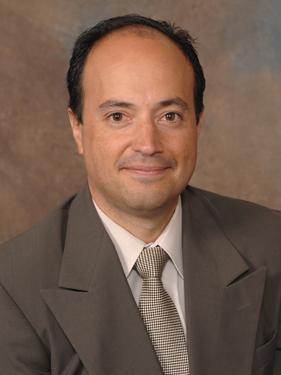
Dr. Alberto Espay is professor and endowed chair of the University of Cincinnati James J. and Joan A. Gardner Family Center for Parkinson’s Disease and Movement Disorders. He trained in neurology at Indiana University as well as in clinical and electrophysiology of movement disorders at the University of Toronto, where he obtained a master’s degree in clinical epidemiology and healthcare research.
Dr. Espay served as chair of the Movement Disorders Section of the American Academy of Neurology; associate editor of Movement Disorders, the official journal of the International Parkinson and Movement Disorder Society (MDS); and in the executive committee of the Parkinson Study Group. He currently serves as chair of the MDS Task Force on Technology and as secretary-elect of the MDS Pan-American Section. Dr. Espay is also an honorary member of the Mexican Academy of Neurology and has received numerous awards, including the Cincinnati Business Courier’s Health Care Hero award, the Patients’ Choice award, the Compassionate Doctor award, and the Spanish Society of Neurology’s Cotzias award.
Dr. Espay has published more than 200 peer-reviewed research articles, 25 book chapters and five books. His research efforts have focused on the measurement of motor and behavioral phenomena in—and clinical trials for—Parkinson’s disease as well as in the understanding and management of functional movement disorders. With his colleagues at the Gardner Center, he recently launched a novel biomarker development program for neurodegenerative diseases with the aim of identifying small but biologically suitable subgroups most likely to respond to therapies already available for repurposing.
Want more?
Don't forget to subscribe! There are many ways to listen: Apple Podcasts, TuneIn (Amazon Echo), Spotify or RSS Feed. (Need help subscribing? See our quick guide.)
For all of our Substantial Matters podcast episodes, visit Parkinson.org/Podcast.


