Episode 178: Maintaining Independence When Living Alone with Parkinson’s
-
Dan Keller 0:02
Welcome to this episode of Substantial Matters: Life and Science of Parkinson's. I'm your host, Dan Keller. At the Parkinson's Foundation, we want all people with Parkinson's and their families to get the care and support they need. Better care starts with better research and le
ads to better lives. In this podcast series, we highlight the fruits of that research, the treatments and techniques that can help you live a better life now, as well as research that can bring a better tomorrow. Living with Parkinson's disease can be challenging for anyone. Living alone can make it even harder. It can affect how you feel, how you connect with others, and what you're able to do each day. As anyone with PD knows, each day brings different situations to deal with, including mood changes, shopping, household chores, staying in touch with friends, and adapting to what each day brings. It's important to know what you can do by yourself and when it's a good idea to ask for help. Today, Susan Englander and Fran Chernowsky, who are members of the PD Solo group, share some of the challenges they face and the strategies they've developed to make life easier. Both of you live alone, so why don't you each tell me what some of the challenges are when you first received your PD diagnosis, and going along on the journey. Susan, Susan Englander 1:46
I had a little bit of a preview for my diagnosis, in that I was diagnosed with Parkinsonism because I didn't have enough symptoms to make a clear diagnosis, and in a way I'm thinking that was helpful to me, because I had a little time to digest and come to the conclusion that I thought they were right, that I did have Parkinson's. So that made it a little easier, I think. The question for most people, when you get a diagnosis, is it's sort of a significant moment, and you don't have much information. I was given very little information, sort of, "You won't die from this," which is not helpful at all. So, the question is, how do you react to the diagnosis? And I think it depends on how you process a crisis. Some people like information, some people just want to digest by themselves. For me, I needed to know as much as I could, and I learned very quickly that there were sources that were advantageous to me to use, and some that just made me more fearful. I think I learned gradually which were the kinds of information that would suit me the best, you know. As I think back, it was a real learning curve. My initial panic settled down, but now that's in the background, and I have sort of a different perspective. What about you, Fran? How did this start for you?
Fran Chernowsky 3:16
Well, I got diagnosed in December of 2017. A few days right before Thanksgiving, I had already been diagnosed with breast cancer—a very aggressive form of breast cancer. So I was not able to really deal with the Parkinson's diagnosis. All I recall is the doctor said to me, "You will have seven to 10 good years," and I think she said I wouldn't die from it, but that was it. And I spent the next year and a couple of months dealing with the cancer situation. I had every type of treatment you can get with cancer, and finally, in 2019, I got ready to start dealing with the Parkinson's. And like you, I knew nothing about it, and I read everything I could online. I found a Parkinson's exercise group at the Y, which was once a week, and I went to it, and I found it very depressing, because most of the people in the group were very far along in the Parkinson's journey, and it was kind of difficult to go. But I went. Living alone, I figured everything I could learn to take care of myself, I should. So I started perusing the internet and perusing YouTube, and I learned a lot that way, and that helped me a lot. During the pandemic, I started exercising at home because there weren't any places to go, and during that time I contacted the teacher of the Parkinson's class that I'd taken at the Y, and arranged to have privates with her. First we did the privates via Zoom, and then I got together with her wearing a mask. That helped me immensely, and then I followed that by joining a group of people who were doing exercises, who were more active than the people at the Y, and that was a very big discovery for me. These people looked much more healthy than I did, they were doing boxing and doing other activities.
Susan Englander 5:22
I think you're making a good point, which is that, you know, you have to pick the resources to suit your situation. In the beginning, I didn't want to participate in groups that had people who were far along in the process, and now I feel quite differently. I'm actually looking to those people, because they have done a lot of learning that I haven't done yet, and they're persevering in a way that I admire, so my perspective has changed. Your example of your breast cancer is a good way of saying you sort of have to take the diagnosis in whatever context you are in life, you know, and make priorities. You were able to put your energy into the cancer first, while somebody else might be in the midst of raising a young child or moving. I mean, you have to take your own needs and the context into account. For me, the focus on the motor part of the illness was really not helpful. When I went to the neurologist, I felt like I was performing like a trained animal, showing the movements that they wanted me to do, and for a while I would feel this kind of momentary sense of pride, like, "Look, I can do this," and then I realized when I came home that I had given up what I was interested in, and they didn't have a clue what my worst symptom was, and what I wanted help with. And so I began to think about the fact that my concerns really weren't about the motor issues, they were about my mood, and how dreadful—I mean, really dreadful—I felt in the morning. I can't describe it, other than putting the word dread on it, you know.
Fran Chernowsky 7:16
And that feeling...
Susan Englander 7:18
But nobody ever told me that the emotional parts of PD are related to PD, that the same neurotransmitters in your brain affect your mood and your rate regulation. Nobody told me that, so I thought I had dread because I wasn't dealing with the disease properly, and it was my fault. And so three years passed and I was on the hunt—nobody was paying attention to this except for me—and I was on the hunt for a neurologist that was trained in psychiatry, and I had a lot of trouble finding one. But the way you talked about your exercise program, I think you really learn a lot by being with other people who have faced these challenges before. Somebody in a bike class said they were depressed, and they went to a neurologist who understood a lot about pharmacology, and I was like, uh-oh, this is my chance. I asked my neurologist if she knew this person and if they were friends, so lo and behold, I found somebody who immediately said, "You feel badly in the morning because your dopamine is very low." I mean, I didn't know there would be a solution. It doesn't solve all my problems with PD at all, but it made me pay attention that I really have to wait, and it took a long time to find the right person, and that probably wouldn't have happened had I not pursued it.
Fran Chernowsky 8:53
Right, there's tremendous emphasis on movement, and not enough on the other elements. In addition to the feeling of dread and all that, many people, and probably myself included, tend to suffer from depression and feelings of isolation, and also just a feeling of life is over, and it isn't.
Susan Englander 9:15
Also...
Fran Chernowsky 9:16
Apathy. Absolutely. Susan,
Dan Keller 9:20
Do you each exercise, and does that help ameliorate your particular individual symptoms?
Susan Englander 9:30
I'm actually going in the other direction. I was walking five miles a day, no matter what, and I'm now, what, five, six years in, and I'm beginning to realize walking just to walk isn't really enough. Twice a week, I meet with somebody, and I do more flexibility and balance and exercise patterns. So, walking for myself, I think, has helped me feel better, but I'm beginning to realize that the number of steps I take isn't what's important. It's getting different types of exercise and varying it, so that I'm not so exhausted. If I walk five miles, no matter what, I'm likely to fall, and I get tired, and I don't pay attention. I have to be really vigilant in whatever exercise I'm doing, so that I don't have an accident, because I'm having much more trouble multitasking. I don't look at my phone, I don't answer calls, I just try and pay attention to my gait.
Fran Chernowsky 10:33
Right. I'm afraid to go out walking by myself, actually, because I live alone, I don't have a live-in companion, and I'm not at a point where I have an aide helping to take care of me. But I do find group classes—unlike my initial experience—I find the group classes really helpful, and it's a way to get to see other people and not feel so isolated.
Susan Englander 10:56
Absolutely, you know what, you might... I don't know if this would help you, but near me, they're giving some pole walking classes now to help people have stability. You might see if you could find that in your area, because it's a way to keep yourself safe. You're making me think of something, which is that I felt a lot of pressure. Everybody has their best PD activity to recommend—ping pong, right, boxing (that's mine), dancing, singing. I was like, I can't do all of these things. I would say to somebody starting this process, find something that you love and you like doing. Don't feel pressured by everybody's recommendations, because there's a new fad every month or so. I think it's confusing because people are proponents of whatever they do, and it's kind of like, "You have to do this, otherwise your disease will progress." That's not true.
Fran Chernowsky 11:55
That's true. That's true. I did prefer ping pong, and I find that very good for balance, and I'm shocked that I can do it. You know, that I can coordinate in a great way.
Dan Keller 12:10
Just a note about the walking poles, they do make them so that they collapse down to about 18 inches. So, if you like to travel, you can just stick them in your luggage. I'll take evening walks with walking poles. First of all, because they give you more exercise since you're swinging your arms, but if you do have balance problems, they're very helpful. Let me ask you, what do your typical days look like? What kind of adjustments have you made to make day-to-day living easier?
Susan Englander 12:38
Well, for me, you know, since the morning's my hardest time, I try not to schedule anything before 10 o'clock. I've had to do things where I had to go somewhere and be somewhere by eight, but that's a hardship. So, if I allow myself more time in the morning, I do very well. It depends, I guess. What I would say is I take every day as it comes. I can't predict in the morning how the rest of the day is going to go. I know that I'll feel less energetic, and in a way, maybe even want to cancel my day in the morning, or think about it, and by 10 or 11 o'clock I'm in a different place and I'm going on about my day and I feel fine. So I'm still doing some work. I lead support groups online and do some restorative justice work, and I do that as the day is going on. I think you just have to be more flexible and regroup. If I'm anxious about something, I'll sit down, I'll change the set, I'll either go outside for a little while or listen to some music, find a way to calm myself, and then I go on with my day. So I have to be more flexible and mindful about what I'm able to do. When do you have the time of day that's better for you?
Fran Chernowsky 14:04
Yeah, well, actually, in the morning I have a little bit more energy, but it's kind of a mixed bag in the morning. Because although I have more energy than I do later in the day, as the day progresses, I start to get exhausted. But in the morning, even though I have more energy, I still have to wait for my medication to kick in before I start my day, and so that's different. I mean, before I had the Parkinson's, I would probably run out of the house early in the morning, and I don't do that anymore. It's a gradual run-out-of-the-house situation. But I will, late morning, go out to a class, and then I will come home, and I will work on my computer. I'm still working as a paralegal. And then, in the evening, every so often, I go out and meet with friends, and my friends are very understanding, and it's very comfortable to be with them. I'm very lucky to have such good friends. Yes, I work very hard to make friends because I've been working at home for years, even before the pandemic. When you don't work at an office, you don't have social contacts. So I met all of my friends by joining a book group, which I highly recommend to anyone, just as a great way to meet people, and just a very pleasurable thing if you enjoy reading, which I do, and my friends have been very supportive. They're very misinformed—they think Alzheimer's and Parkinson's are the same thing, and they keep telling me they can't believe I have Parkinson's because I don't tremor. Does that make you...
Susan Englander 15:38
Mad? I find I get annoyed, I do.
Fran Chernowsky 15:42
Yes, I do get annoyed with them, but I try to explain, you know, not everybody's Michael J. Fox. Well,
Susan Englander 15:51
But I try to say to myself, you know, a lot of the PD symptoms I have that are hardest are invisible. Sometimes I play a trick with myself as I'm walking—I'm looking at people's gaits and wondering what burden are they carrying. We all have something to deal with, but...
Fran Chernowsky 16:11
That's right.
Susan Englander 16:12
I think finding a way to stay connected feels very important to me. You know, initially, I knew no one with Parkinson's. Now I'm a part of probably four different kinds of groups online, and each one is a different flavor, so they might duplicate it. So, do you find that's important?
Fran Chernowsky 16:36
Absolutely, we're all different, those of us who are dealing with it, and there are plenty of people who don't. But those of us who are trying to deal with it and create a positive life with choices and pleasure, and going forward one step in front of the other, will make accommodations for themselves.
Susan Englander 16:58
I think that's really the key, is finding what matters to you, finding your agency. What do you want to protect to make sure you preserve in your life? And I'll do most anything for that, but you need to hold on to what you value and not be distracted. My friends don't really understand, they're sort of like, "Well, you look fine," right? There are some days where I really feel like I have some agency, and I feel secure and confident, and there are other days when I'm like, "This is not what I bargained for, this is really..."
Fran Chernowsky 17:35
Right.
Susan Englander 17:35
I don't want people to think that this is an easy path.
Dan Keller 17:41
Let me ask you, what resources or services have you found to maximize your independence?
Fran Chernowsky 17:52
Well, the PD Solo group that I belong to is fantastic, because we have a different topic. We get together once or twice a month online on Zoom. I get to meet people all over the country who have great suggestions for dealing with living by yourself, such as life hacks. We give each other suggestions about things that help. I find that extremely helpful, and also kind of encouraging. And the other resource that I found—I mean, I'm just a user of the internet and a user of YouTube, and I've just learned so much. There are so many organizations that are very helpful—at least four or five organizations out there that are very helpful for people with Parkinson's, and each of them has their own purpose, and...
Susan Englander 18:40
They have different flavors.
Fran Chernowsky 18:43
Absolutely.
Susan Englander 18:44
Some are stronger on research, some are stronger on the personal impact of Parkinson's, and I think these organizations are very useful tools, because you can pick and choose what's important to you. I found a lot of help on YouTube. I find that the packaging of information is appealing because it's almost bite-sized, you know. It's hard to sit down with a 200-page book, but you can listen to podcasts, I think. As far as resources go, the different foundations, whether it's Davis Phinney or the Parkinson's Foundation or Michael J. Fox, they all have something to offer, and what's useful about them is you can pick what fits you, and that makes it a lot more appealing, and it's information you can trust. I was out there Googling at first, and I was like, getting information that wasn't sound, and I realized, you know, I had to really pull back and look at what sources I was coming up with.
Dan Keller 19:49
One of you mentioned agency, meaning keeping control of things, doing things for yourself. Do you consider using some outside help as giving you agency, such as grocery delivery or a cleaning service or something like that?
Susan Englander 20:06
Oh, absolutely. I have a person that comes in and helps me with heavy cleaning, and she loves to cook, so sometimes I'll buy a bunch of stuff and have her cook it up, so that when I'm feeling exhausted and I don't want to make something, I have something to fall back on. Whenever I make something, I freeze part of it, because I know there are going to be times when I don't feel like cooking, and I don't have that much of an appetite. So it's great backup. Right now, if I have a physical need that I can take care of, I'm very quick to see who I can ask and find to help me, because you can't do this alone. You can live alone, but you have to have backup resources to help you when you can't do it, like in the snow. Here, my driveway is plowed, but the city comes along, makes a big mound in front of the driveway, so I tried to go out and break up the ice. I don't think that was a good idea. I don't think I'd do that again.
Fran Chernowsky 21:11
Yeah, I'm fortunate that my next-door neighbor is a very nice family, and they're a religious family, and they spend a lot of time providing service to other people and volunteering, and they have helped me with a number of things. As a matter of fact, until I found mechanical devices to open jars and cans for me, I would just go knock on their door and bring them a bag of things for them to open for me. They bring my garbage out. Yeah, they're very nice, they're lovely people.
Susan Englander 21:42
I think it's really hard to plan for what you don't know, but all of us are aging, and we all have to do that. But Parkinson's has another layer, so I think of myself potentially moving into a long-term care center that has different levels, but I'm not ready for that yet, but I'm trying to get myself so I can downsize, so it's a work in progress.
Fran Chernowsky 22:07
Right? Right, I'm keeping that option open, but I really would rather not. I would just prefer to stay by myself as long as I can, and stay at home as long as I can.
Susan Englander 22:20
But you know, my worry is that if you wait too long and you need more help, it's a dangerous situation. So I'm always thinking about trying to assess what I need in the moment, and how, if I have a particular problem, is it going to be long-lasting or can I resolve it better, and some things that get better. I mean, balance you can work at, and you can get better at it, but there are other things, you know, multitasking is probably not a good idea for me, because I'm more likely to get into trouble. It's tempting to bring groceries in the house with both arms. I'm able to do that, but it's problematic. I'm going to step on something. I'm constantly looking to see if I'm safe, which is unsettling. I don't like thinking about it.
Fran Chernowsky 23:11
Well, I find mindfulness is very helpful. I have to pay attention to everything that I do. I try not to multitask, but I've been doing little things around the house to make it safer, and I try to go out and shop, but I do rely very much on delivery services for groceries, because there are some days either I'm too busy or too tired to do that, and there are some days I don't feel confident about going out and driving. Some days I just feel I don't want to do that, or maybe I'm just too tired. But what I did do is I hired a contractor, and I had him build a ramp out of my house, because I have to walk up a couple of steps, and they built two ramps for me—one out of the house in the back, and the other one at the garage. So I bought a little cart with wheels that I can use to take my groceries from the garage to the house and take out things to the garage, like take out my trash or whatever, and that helps me. And then I had him come and build a path, because I had a grassy backyard. He built a concrete walkway that helps me roll the cart, which used to be a struggle, and having him do little things, you know, putting in grab bars in the bathroom, and doing other things, and basically little by little I'm turning my house into a safer place to keep me safe as long as I can stay there.
Dan Keller 24:38
I think you've both given excellent tips about maintaining as much independence as you can, and being willing to ask for help when necessary, and planning for the moment and the future. So, I really thank you, and I think this will be a very good discussion for other people who are living alone and starting to navigate how to do it, and maintain as much independence as possible.
Susan Englander 25:03
I don't want people to think that we figured this out. I kind of feel like I'm constantly readjusting. Nothing stays the same, so you have to just keep shifting gears.
Fran Chernowsky 25:17
Absolutely, every day is different. You can take care of yourself, and you can live independently to some degree. You have to look after what it is...
Susan Englander 25:27
That's important to you, because nobody else knows that. You're the only one who can forge that path.
Dan Keller 25:42
Living alone with Parkinson's doesn't mean you have to go through it alone. No matter where you are in your journey, there are resources to support you along the way. Visit our website at parkinson.org and search for living alone. There you'll find a webpage dedicated to those navigating Parkinson's alone. There's also information on emotional challenges, social isolation, diet and nutrition, activities of daily living, travel, and more. We also have monthly virtual meetups exclusively for people living alone with PD as part of our PD Solo network to create a supportive community. Listening to Fran and Susan, it's clear that people with PD are the true experts on the changes and challenges they face. The PD Solo network provides a place to share concerns, ideas, strategies, and resources, and to build meaningful connections. You can sign up by visiting parkinson.org/pdsolo. As we celebrate Parkinson's Awareness Month this April, we're excited to introduce our theme for the year: Meet Pam, your Parkinson's Awareness Month guide. Parkinson's disease can be overwhelming, and one of the biggest challenges for those affected, whether you're living with PD or caring for someone who is, is knowing where to turn for reliable sources and support. Throughout Parkinson's Awareness Month, we'll be sharing valuable insights and stories from the Parkinson's community, and we encourage you to explore all the ways Pam can make your journey with Parkinson's a little easier. Visit parkinson.org/awareness to learn more. If you'd like to leave feedback on this episode, or let us know what other topics you'd like us to cover, visit parkinson.org/feedback. Be sure to subscribe and rate us on Apple Podcasts, or wherever you get your podcasts. At the Parkinson's Foundation, our mission is to help every person diagnosed with Parkinson's live the best possible life today. To that end, we'll be bringing you a new episode in this podcast series eve
ry month. Till next time, for more information and resources, visit parkinson.org or call our toll-free helpline at 1-800-4PD-INFO. That's 1-800-473-4636. Thank you for listening.
Living alone with Parkinson’s disease (PD) presents daily challenges, but it also offers certain benefits, such as the independence to control your own schedule. Whether you choose to live alone, or find that nearby friends and family aren’t as close as you would like, there are resources to support you.
Living alone can also bring physical and emotional hurdles. You may experience feelings of isolation or loneliness, and everyday tasks like cooking and cleaning can become more difficult while juggling PD symptoms. There are strategies that can help you feel more secured and empowered to overcome these challenges. For example, you might consider using a food delivery service on days when preparing meals feels overwhelming, or reaching out to a neighbor for help with shoveling snow. It’s important to prioritize self-care and recognize when it’s time to ask for help.
In this episode, we speak with Susan Englander and Fran Chernowsky, two individuals living alone with Parkinson’s who are also members of the Parkinson’s Foundation PD Solo group. They share their experiences with the initial challenges of receiving a PD diagnosis, the importance of staying open and flexible to new things, and the value of finding a supportive community.
Released: April 22, 2025
Speakers
-
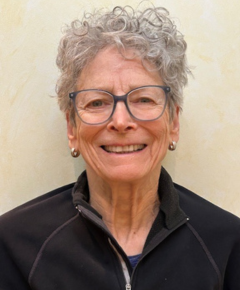
Susan is an almost retired clinical social worker living in Boston. She was diagnosed with PD 6 years ago at 71 years-old and continues to lead groups for the families of cancer patients. She enjoys any outdoor activity and keeping up with old friends. She volunteers at a non-profit, doing restorative justice work with non-violent offenders. She will try anything chocolate, preferably dark varieties.
-
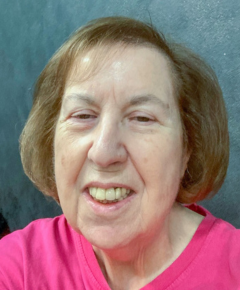
Fran Chernowsky is a volunteer member of the Steering Committee of PD Solo, a group of people around the country with Parkinson's who live alone. Although she is 79, Fran still enjoys her work as a freelance paralegal, which she describes as "ghost writing for lawyers". In her free time, she loves to read, play ping pong and games like Mahjong, studies languages, and loves computers and new technology. She also hosts a monthly book club meeting, travels to mystery writers’ conventions around the country, and tries to cook something interesting for dinner. Born and schooled on the East coast, she currently lives in Los Angeles.


Want more?
Don't forget to subscribe! There are many ways to listen: Apple Podcasts, TuneIn (Amazon Echo), Spotify or RSS Feed. (Need help subscribing? See our quick guide.)
For all of our Substantial Matters podcast episodes, visit Parkinson.org/Podcast.
Related Materials
Related Blog Posts

Tips for Living Alone with Parkinson’s

8 Tips for Traveling with Parkinson’s
