Episode 173: Listening to the Voices of Our Parkinson’s Caregivers
-
Dan Keller 0:02 Welcome to this episode of Substantial Matters: Life and Science of Parkinson's. I'm your host, Dan Keller. At the Parkinson's Foundation, we want all people with Parkinson's and their families to get the care and support they need. Better care starts with better research and leads to better liv
es. In this podcast series, we highlight the fruits of that research, the treatments and techniques that can help you li ve a better life now, as well as research that can bring a better tomorrow, caring for someone else can be taxing and exhausting, but it can also be rewarding. In recognition of November being National Family Caregivers Month, we wanted to share the stories of two caregivers who support their family members with Parkinson's in somewhat different ways. Ripley Hensley is an emergency room nurse and a doctoral student in nursing at the University of Connecticut. Her parents live in Georgia, where her mother is the primary caregiver to her father living with Parkinson's. Tom Graffio works in the sales and marketing department of a downtown hotel in Columbus, Ohio, and lives with his partner, who was diagnosed with young onset Parkinson's. They're both members of the Parkinson's Foundation People with Parkinson's Advisory Council, called PPAC for short, where they actively serve as advisors, providing firsthand feedback to the foundation. Why don't we start by getting a little bit of background on each of your situations and your connection to Parkinson's? So, Ripley, how did you come to be involved with Parkinson's? Ripley Fricano Hensley 2:02 My dad was diagnosed about seven years ago when I was a junior in college. As we began to navigate life with Parkinson's, we looked for ways we could support him, and one of which was through the Parkinson's Foundation. So I'm in a bit of a unique situation as a care partner, because I live in Hartford, while he and my mom are living in Atlanta.
Dan Keller 2:22 Okay, so you're sort of remote at this point. And Tom, what's your situation? And are you still working? Is your partner working, or how do you arrange things?
Tom Graffeo 2:34 My partner was diagnosed about 18 years ago with early onset Parkinson's. He was working at the time, they initially had thought he just had a tremor, a non-essential tremor, so definitely had to do some digging and talk to some specialist, and then finally had the Parkinson's diagnosis. He did work for quite a while after that. He actually developed some back issues and had some surgeries, and now uses a walker, so that really made it challenging for him to work, so he did retire a few years ago, went out on disability, actually, so he no longer works, but he's still able to drive and get around and do a lot of things for himself, and I still work full time, so we'll set him up for the day before I leave for work, make sure he's got what he needs if he's up and about, but for the most part, he's pretty independent, taking care of himself, any of his grooming needs, or dressing. He does all that on his own, and, like I said, he's still driving, so he will get in the car and do a few things throughout the day.
Dan Keller 3:35 Ripley, what stage is your father at? It sounds like Tom's partner is pretty independent for most of the day,
Ripley Fricano Hensley 3:44 right? Yeah, I would say we're the same way. We're lucky. My dad remains very independent any day-to-day care partnering or assistance he does need. My mom takes care of a lot of, but for the most part he is independent with all of his activities of daily life. He did also retire and go out on disability last fall.
Dan Keller 4:08 Your mother is the primary caregiver, and you're definitely more than 1000 miles away. So, how do you arrange being able to participate in his caregiving, or when does that come into play?
Ripley Fricano Hensley 4:22 I feel super fortunate because I've been able to position myself to be able to drop anything if needed, so I work per diem at the hospital, which means I set my own schedule and I pick up shifts as I can, and my graduate program is very understanding, so if I ever needed to be in Atlanta, which has happened before I'm in a position at any time to go, I think most of the day to day long distance care giving is trying to be available as a source of support and encouragement, so telling him to go to the gym, go play pickleball, go spend time with his friends, I myself am doing those as well, so that we have something. To talk about a reason for him to keep going, something we can do together. I like to think that as a nurse and graduate student, I have some ability to field some medical questions I like to share when I've read an interesting article or learned something new, and then to be available to my mom as a source of support for her as well.
Tom Graffeo 5:19 No, just going to say, Ripley, do you find yourself doing similar things, and for your mom, kind of like being her cheerleader and making sure she's getting out and doing things for herself?
Ripley Fricano Hensley 5:30 Absolutely, I feel like it's super easy to get caught up in caring for your person that you forget to care for yourself, so it is a constantly reminding her as well that she will be better off and a better caregiver and partner if she's also taking care of herself.
Tom Graffeo 5:47 Yeah, I think that's very important. I know for myself, I've gone through stages where I used to really enjoy running and getting up on the weekends and exploring the parks and stuff, and at one point I stopped because I felt guilty that he wasn't able to do that or do that with me, and I know that my mental health definitely suffered during that period, one summer in particular, and so I really tried to make a conscious effort to make sure that for the morning I can go out and do my thing, he realizes that I need it for myself, so never really makes me feel bad about it or does any kind of guilt with it? There's been so much more talk the last few years about the caregiver and the importance of caregiving and taking care of yourself, so you can take care of others, and I've really taken that to heart and tried to do that without feeling guilty or feeling bad for putting myself first. Sometimes
Ripley Fricano Hensley 6:39 I think that there's a lot of guilt that can come with caregiving and thinking you needed to do it all, and that's super important to realize that you have to take care of yourself as well.
Dan Keller 6:51 What kind of backup help or support services do each of you, Tom and your mother, Ripley, have, so they get some time off,
Tom Graffeo 7:02 he has some friends that will come and pick him up and take him out for lunch during the work day, so I think that's great, that kind of breaks it up for him a little bit. Then I don't feel as much pressure when I'm home for the day or on the weekends to have to be running around entertaining him, so I think that's one thing. Also, since he is using a walker, which we're not sure is really tied into Parkinson's or not, due to some degenerative back issues, he actually has someone come in and clean the house once a month, and that kind of takes off the burden for me for that week, anyhow, of having to spend my time off making sure the house is clean and everything is taken care of, so that's something that he does, and that makes him feel good that he's contributing in that manner, since he can't actually do it himself. And then he does make a point of doing the dishes every night, he'll do dinner one night a week, and I think that works out for both of us, because then he knows the rest of the week he doesn't really have to worry about it, but that day that he is responsible for it, it's going to take him a lot longer. He's got to balance himself, and of course, make sure he's careful not to fall, and it can be taxing for him if he's doing a lot of walking or moving around, preparing a simple meal. So it's kind of a compromise for both of us, for him just to do it one night a week.
Dan Keller 8:21 And Ripley, does your mother have a chance to get out or have time off or help come in
Ripley Fricano Hensley 8:28 somewhat? She does a lot. She definitely does a lot herself. We're lucky that my grandma, so my dad's mom lives about an hour from them, and she's really healthy, and will come up if my mom, for some reason, has to be somewhere, for instance, if she has a work trip, or her family's in Tennessee, so if she needs to go up to see them for a weekend, so that my dad's not alone, my grandma will come up, and then there's also I'll fly home, or my husband will fly home to be with my dad, and he also has a home health nurse that in times where he's feeling really bad, we will have her come in for some backup support, mostly just at night time, but those are often in rare circumstances, so just day to day it's pretty much just my mom.
Dan Keller 9:21 What sort of challenges have come up that you've overcome, and I assume the situation does change as the disease progresses. So, what kinds of things you're planning for in the future, both of you?
Ripley Fricano Hensley 9:36 Right, I think the biggest challenge, which I think a lot of people in my position could relate to is navigating a new normal while being prepared for that normal to change at any time. Parkinson's is so unpredictable. There's also the emotional strain of watching a parent lose their independence and struggle, and the sadness and guilt of not being able to do more. And then, as someone who lives really. Far, I worry if I'm doing enough. There are so many questions that come with the diagnosis that you hope you never have to think about, and I wonder if I'm doing the right thing, living far away. And even if my husband and I are planning to be back in Atlanta in a couple years, what about all the ways I could be helping now? You think about future planning and future caregiving, and what that's going to look like, and the uncertainty of that, and how to best support my dad while balancing my own life and commitments is something I find myself wrestling with often.
Tom Graffeo 10:31 I agree, and I think with us too, it's been, you know, let's communicate, let's talk about things, what challenges or what's changing. Sometimes it's perception, or you know, maybe just thoughts that you have that you've made up, or you have in your head, or you're projecting, so you really need to talk about it. So, I think that definitely took us a long time to kind of figure that out, and even if it's a silly little thing, just to ask the question, or talk about it, and then you can resolve it real quickly, and then again, just talking, what do you need, or how things change, because you don't know some days are better than others as well, so one day he might need more assistance, or maybe even cognitively might be easier to say, okay, for dinner your choice is a or b, instead of leaving it open-ended, so we've kind of worked through that and kind of helped minimize maybe some frustrations that could really come from just maybe simplifying the question or talking about the situation.
Dan Keller 11:33 Are there assumptions you make that turned out not to be valid, and how do you overcome your initial thought processes.
Tom Graffeo 11:44 Yeah, I think when I mentioned earlier about kind of how I took the summer off from doing much for myself, which is kind of the assumption in my mind that he felt bad or maybe abandoned, that I was gone for a couple of hours in the morning, when after talking to him, the reality of it is, you know, he also had his time. We have pets in the house. It wasn't like he was completely alone, and he knew that was something that I needed for myself. So it was again me just being more in my head than anything. So I would say that's important. And then also we talked earlier about how things change, preparing for the future, but there's so much information out there, and Parkinson's has a newsletter, and a lot of information posted on Facebook, and other educational things that you can attend, and I just think that would be kind of advice that I would give to other people, is just kind of maybe not be overwhelmed in it, but be abreast of things as they change, attend maybe some of the moving days or the educational events, just so you can find out about the latest innovations, and again, there's almost always a care provider aspect to it to kind of help you know keep you on track as well.
Ripley Fricano Hensley 12:54 One thing that I've learned over the last seven years from my original thought process was that it's okay, it's really important for me to be okay with not having the answer to everything, and not to think that I know best, but just because I read a newsletter or read a new article, that citing that and just spitting out facts really isn't always the most effective way to encourage a behavior, in that no matter how much I read, how much time I spend around people with Parkinson's, I do not know what it's like to live with Parkinson's. And for me, that's really important to remember, and to ask my dad what he needs, and to believe it when he tells me.
Dan Keller 13:39 What resources do you each rely on on a regular basis? Do you think
Tom Graffeo 13:46 I'm very involved as far as volunteer? I just came off of the Parkinson's board for the Great Lakes chapter, so being involved, engaged with that, and having our monthly meetings, I felt like I always knew what some of the topics were with the Advisory Council, PPAC. I'm joined that this summer, so it's nice to hear about the different things that are being worked on and different research that's being taken care of, but a lot of it is just the email, the newsletters, and Facebook articles that I see online.
Ripley Fricano Hensley 14:19 Yeah, I've used the educational courses for health professionals offered through the Parkinson's Foundation. My family's used it to find doctors within the global care network. We've used the hospital safety kit when my dad's been admitted to the hospital. We've used the resources in Helpline to understand and manage symptoms that aren't talked about as much, like pain or insomnia, and then, like, constant local chapters, so for us, that's New England and Atlanta, have been huge sources of constant support, and being involved with Moving Day, and being involved with the Parkinson's Champions team feels like you can take some control back from the disease, work towards. The cure.
Tom Graffeo 15:02 Yeah, I think that's a good point, especially, you know, knowledge is power. So, when you don't know, you don't know what to expect. You always think the worst, but when you go to some of those events and you see people being active and engaging, that it kind of gives you some hope sometimes too.
Dan Keller 15:19 If there's one capsule piece of advice you could give to other caregivers. What would it be?
Ripley Fricano Hensley 15:28 Take the help that's offered. Ask your family and friends when they offer to help. Believe them. Utilize it. Use the resources that the organizations, like the Parkinson's Foundation, provide, and take time for yourself.
Tom Graffeo 15:43 Yeah, I think that's perfect. Exactly what Ripley said, you really have to stay vigilant and be an advocate for yourself and for the person with Parkinson's to make sure that you're getting the results and the answers that you want.
Dan Keller 15:59 Very good, I appreciate it. I'm sure also other caregivers will definitely appreciate it. So, thanks for doing this.
Tom Graffeo 16:06 My pleasure.
Ripley Fricano Hensley 16:07 Of course, thank you.
Dan Keller 16:19 As Ripley and Tom just shared caregiving can be complex, and you may not always have the answer, but that's okay. They've learned that it's okay to ask for help, whether by reaching out to nearby friends and family for extra support or hiring outside help when you need time for yourself. November is National Family Caregivers Month, a time to honor those who selflessly care for their loved ones. This year we're highlighting the importance of caregiver well-being and addressing the challenges of burnout. Addressing caregiver burnout is essential, as it can affect both the caregiver's health and the quality of care provided. Take a moment this month to learn about the signs of burnout and discover strategies for effective self-care. Visit parkinson.org/care's partners to find resources and support for caregivers. Together, let's ensure caregivers receive the care recognition and support they deserve. If you'd like to leave feedback on this episode or let us know what other topics you'd like us to cover, visit parkinson.org/feedback's Be sure to subscribe and rate us on Apple Podcasts, or wherever you get your podcasts at the Parkinson's Foundation, our mission is to help every person diagnosed with Parkinson's live the best possible life today. To that end, we'll be bringing you a new episode in this podcast series eve
ry month. Till next time, for more information and resources, visit parkinson.org's or call our toll-free helpline at one 804 pd info, that's 1-800-473-4636 Thank you for listening.
Each November, the Parkinson’s Foundation joins organizations across the country to honor care partners for National Family Caregivers Month. In this episode, we highlight the stories and experiences of two people who care for a person with Parkinson’s disease. Ripley Hensley is an emergency room nurse and a doctoral student at the University of Connecticut School of Nursing. Although she currently lives in Connecticut, she manages to find ways to help support both her mother, who is the primary caregiver, and her father who has Parkinson’s, back in Georgia. Meanwhile, Tom Graffeo lives with his partner, who has young-onset Parkinson’s. Although their caregiving roles differ, they share similar concerns and discuss how they provide care for their loved ones, while also prioritizing their own well-being.
Released: November 12, 2024
-
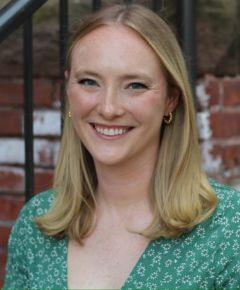
Ripley Fricano Hensley is an Emergency Department Registered Nurse, doctoral student at University of Connecticut, School of Nursing, and daughter to one really cool guy with Parkinson’s disease.
When her dad, Dave, was diagnosed in 2017, Ripley began looking for ways to improve care and quality of life for people with Parkinson’s both in and out of the hospital. She decided to pursue a PhD in Nursing. Ripley’s research at the University of Connecticut focuses on predictors of health behaviors and quality of life in people with PD. In addition to her academic research, her personal and professional experiences have made her especially passionate about hospital care standards, increased education for healthcare providers on PD management, family-centered care and caregiver support, expanded access to specialized care for individuals faced with geographic, financial, or functional barriers, and greater PD awareness and visibility.
In her free time, Ripley loves running, reading, planning trips (up next: Ecuador), and trying new ice cream flavors while she awaits the return of Dairy Queen’s s’mores blizzard. She and her husband, Ben, live in West Hartford, Connecticut with their dog and two cats. Ripley is so thankful for how the Parkinson’s Foundation continues to improve life for her dad, her family, and countless others globally. She is honored and humbled to serve on the People with Parkinson’s Advisory Council in such an incredible company and cannot wait to see what we can accomplish together.
-
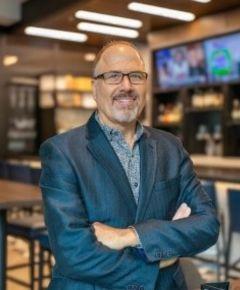
Tom Graffeo has been involved in Hospitality for his entire career. Currently the Director of Sales and Marketing at the Sonesta Columbus Downtown hotel, living just a few miles outside of downtown with his partner and two dogs. He has 3 grown children who still reside in the state of Ohio. In 2006 his partner was diagnosed with early onset Parkinson's. Shortly thereafter Tom reached out to the only local place he could find, The Central Ohio Parkinson's Society (COPS). He started out volunteering at their Walk in the Park and education events. As the years passed and COPS became part of the Parkinson’s Foundation, Tom took on more volunteering responsibilities, eventually joining the Great Lakes Chapter board. Tom’s 10 years on the board concluded with 3 years as the President.
Past volunteer activities have included working the Suicide Prevention hotline, Franklin County Dog Shelter and Stonewall Columbus, supporting the LGBTQ community. In his free time, he enjoys running, traveling and spending quality time with his 3 grandsons. He is very excited to take on the next step in his Parkinson's Foundation journey.


Want more?
Don't forget to subscribe! There are many ways to listen: Apple Podcasts, TuneIn (Amazon Echo), Spotify or RSS Feed. (Need help subscribing? See our quick guide.)
For all of our Substantial Matters podcast episodes, visit Parkinson.org/Podcast.
Related Materials
Related Blog Posts

Finding Balance: 8 Tips for Avoiding Caregiver Burnout

Top 10 Essential Caregiver Resources
