Episode 163: Caregiving Over the Years
-
Dan Keller 0:02 Welcome to this episode of Substantial Matters: Life and Science of Parkinson's. I'm your host, Dan Keller. At the Parkinson's Foundation, we want all people with Parkinson's and their families to get the care and support they need. Better care starts with better research and leads to better lives. In this podcast series, we highlight the fruits of that research—the treatments and techniques that can help you live a better life now, as well as research that can bring a better tomorrow.
The role of care partners in Parkinson's disease is vital. From early in the diagnosis and into the later stages of the disease, their importance cannot be overstated. In this episode, Patsy Dalton shares her experiences and what she learned as she provided care for her husband through the long course of his disease. Although he is now gone, she is still active in the Parkinson's community and continues to share her story as a facilitator of two support groups. Her advice and tips are practical and informed by her own lived experience. I asked her about how her Parkinson's journey with her husband evolved, starting with his diagnosis at the age of 44.
Patsy Dalton 1:33 And he had it for 28 years, which is a pretty big accomplishment. He died last year, and since then, of course, our group has been missing him, but he was a big part of making these groups work.
Dan Keller 1:48 Can you briefly talk about what challenges you may have faced as your husband's Parkinson's progressed—such as when you first noticed changes in his driving or other functions—and figured out that you were going to be the care partner and needed to trust yourself in terms of making this whole thing work?
Patsy Dalton 2:13 David was only 44 when he was diagnosed, so we were pretty early into the whole process of Parkinson's. We had really not even realized what it was. We had never had to deal with such a thing, and so we went to a doctor. The doctor put us through our paces and said, "Try this drug for three weeks," and we did. We came back in and he said, "Well, I see you have Parkinson's." So we went out to the car, got in the car, and both of us looked at each other and said, "Did you hear what I heard?"
From that point on, our lives began to change. We had only been married 10 years, but still things started to happen very gradually. As they were beginning to happen, and as we began to read, learn, and study Parkinson's, and then start our support groups, we knew that everything in our lives would be somewhat dictated by Parkinson's. I, of course, as a newbie caregiver, had no idea even what caregiving really was meant to be. I knew that it would be something that would grow as the years went along, but I couldn't even imagine how much different my own life would be. Thankfully, for my husband and for me, his progression was really slow, so that's why it went 28 years, but still that was 28 years of my life too—because when one of you gets a diagnosis of Parkinson's, both of you get it.
Dan Keller 3:47 How did you manage decision-making? I mean, one person is the caregiver and is fully enabled, and the other person is losing abilities but still is cognitively there. How did you reconcile decision-making?
Patsy Dalton 4:06 Decision-making for us was a joint process right up until about the last 10 years, maybe even the last eight years. My husband had been a CPA, and he was always very active in that, and of course, his disease had progressed slowly. I was taking on more and more responsibilities every month. Sometimes I didn't even realize it, and really, the change really hit me when I began having to take care of the tax returns and the bookkeeping—which, of course, was not what you would expect when you're married to a CPA.
So, as time went along, I began to make all the decisions—of course, consulting him, but also planning everything, making sure that we got places on time, making all the doctor appointments, and sitting in with the doctor. David and I always... I truly believe that you do that as a joint process, even toward the very end, because I wanted David to know that he had a say in his care, and I respected that. It was only in the latter couple, three, or four years that I had to be the dominant one.
Dan Keller 5:25 What did you do for yourself to alleviate the stress that comes with taking on more and more responsibility as a care partner?
Patsy Dalton 5:34 Well, one of the things that happens to you is you don't even realize you're taking on those added duties; you just keep doing them. One day, maybe you're both sharing decision-making, or maybe you're both helping with things around the house or whatever, and then pretty soon you realize it's you, the caregiver, who is making the doctor appointments, you, the caregiver, who's making sure that the drugs are delivered on time, you, the caregiver, who's packing those drugs. Little bit by little bit, you take on more and more responsibility.
You do it with love, of course, because you want to do the very best you can to keep your loved one healthy, but you also want to make sure to respect their identity and let them be part of their whole care system right up until the very end. So it creeps up on you, and then all of a sudden you look and you say, "My gosh, I'm doing everything." Then you realize you need a break, so you start looking for caregiving opportunities outside the home, or even hiring people to come inside the home so you get a break. That's a really important part of the whole process of caregiving. You have to realize that you need to be cared for too, and the one who's going to make sure that happens is you.
Dan Keller 6:54 You're very active in two support groups that you have started—large support groups, really. Could you share what led to creating these support groups and why it's important to be interacting with other people in a similar situation?
Patsy Dalton 7:12 Being interactive with others is a real lifesaver as you go through the process and the progression of Parkinson's. We lived at the Lake of the Ozarks, and one of the first things my husband said was, "Let's start a support group." So we did, and we obtained names from a couple of the different organizations, you know, who lives in what areas. We had our very first meeting at the lake and had like 20 people there, and it was a really fine social opportunity. People were together who saw others like themselves and who began talking right from the start about the challenges that they were facing.
Then later we moved back to Columbia, our hometown, and we picked up the support group that had kind of been limping along for a little while. We picked that group up and started it, and it just took off, and so that's how we got the 300 on the mailing list. Our regular attendance, of course, is not that high, but before COVID it was 100 or 110 each month, now it's about 80. We feel, and always felt, that socialization is extremely important for all of us. We don't ever need to be off by ourselves, struggling and wondering if we're doing it right or whatever.
So, when you go meet other people, and you spend time listening to programs and you discuss the topic, then you see, "Ah, there are other people just like us going through the same thing." Some of them are newly diagnosed people, others are quite experienced veterans with Parkinson's, and of course we went through, from the beginning to the end, 28 years of experience talking with other people. If you just listen to each other, you can pick up tips, you can console one another, and encourage one another. I can't think of anything more important than making sure you have a backup group, and you really grow to be close friends.
Dan Keller 9:20 As you mentioned, your husband died about a year ago. What keeps you going to support groups now?
Patsy Dalton 9:27 Well, one, I love the people. I've loved them for a long time. Some of them have left us by now to death or moving away, but I love the people when they come in new and they're kind of wondering what this is all about, and they're kind of worried. Then we start talking, and then they get to talking to other people, and they enjoy the experience. They learn enough that it's just worthwhile, if nothing else, for the education you get. But I think that my love for the people in the group is what keeps me going, and they are so kind to me because they know that I've been through the whole procedure and the whole progression of Parkinson's.
Dan Keller 10:15 Is there an aspect of wanting to keep using the knowledge that you have obtained over the years and give it to other people, and not lose the resource that you have become?
Patsy Dalton 10:30 I really enjoy being a resource for others. I had a couple of calls today, even from people who were asking questions about how to do something or who to call. In this case, it was where they needed a call for a specialized caregiver. I have had enough experience, and I know the people who provide those caregiving services, and the places you can go and get free wheelchairs and walkers and things like that, so I get a lot of calls and I love being a resource.
I can often tell people where to find things, and I can have the people who provide all these services come to our meetings. We have side-topic tables there where they just stand there at their table, talk about what they have to offer—most of the time free—and then they're available so somebody else knows all about them. So I think it's a perfect opportunity for people to again share information, and that comes in handy right away.
Dan Keller 11:37 You've learned a lot along the way. Can you put your finger on one, two, or three things that you know now and you wish you had known earlier—something that you know can kind of short-circuit the process for people just starting to deal with this sort of thing?
Patsy Dalton 11:57 Well, one of the things I wish I had known was that it is going to progress, it is going to change, and it will never be cured. I know that's kind of a negative thought, but the disease just progresses, that's all there is to it. So I had to realize that for the first 10 years there was hardly any change at all. It was starting to affect us a little bit, but then it sort of picked up steam, and that was something that I had to get used to.
Then I don't think I realized how much it was going to take to be a caregiver of a person with advanced Parkinson's. There were psychological issues, there was dementia. We had to make a decision to find a place for David where he could get care in a skilled nursing setting, and then my life changed because I was over at the skilled nursing facility all the time, and I wanted to do that. I never thought twice about it, but still it's something you're not quite sure of. When I went there, they said, "You know, Patsy, you kept David through two steps that we would normally have said he should be here in the care center." So that's one thing I learned.
Another thing I learned personally was I needed friends, I needed people I could talk to. I needed to know where to get the resources, the help to teach other people about Parkinson's. I also needed to realize that when you have Parkinson's, you're not just educating the two of you, you also need to educate your family—your children, your sisters, brothers, parents—because they're all new to this, and if you don't share the information with them and explain what the changes are, they will never really be able to participate in it or help you with any of this progression.
Dan Keller 13:58 Is there any way to line up the resources, or at least know where to go when the need arises, so that you're not kind of left adrift?
Patsy Dalton 14:09 Definitely, there are ways. You can come to the Parkinson's support groups, for instance, and if you come to one year's worth of meetings, there are so many opportunities again with a support group, but especially just knowing other people who are going through the same thing you are.
Dan Keller 14:28 Besides coming to the support group, is there value in keeping tuned into things that are happening in the community—community events, exercise classes, music kinds of classes, and art and things like that, that can be helpful?
Patsy Dalton 14:44 Sure, we have a group that is a singers group—we call it the Parkinson's Singers—and it is a disguise for the therapies of swallowing and for speech therapy. It's an enjoyable way to do it, and it gives you a chance to join with others and learn songs and perform. We also have other groups that come in and work with us. We are located where there is a University of Missouri, and we are closely aligned with the groups who provide therapy and with groups who lead you into whatever type of therapy you may need, so we have those programs all the time.
But it's important just to know where those people are and how to connect with them, and then once you connect, then you're in the system and you keep moving right along. It's never the type of thing where you want to stop and just give up; never do that. That's when you need to really kick into gear and reach out and see what resources there are. We're in a modest-sized community, and yet we have lots of resources here, and once you get to looking for them, you find that there are all kinds of things that will help you.
Dan Keller 16:02 What goes on in one's own home? It seems like there would have to be some changes to accommodate activities of daily living and disabilities.
Patsy Dalton 16:13 As far as changes in your home, the ideal, of course, would be a one-level home, so that there is not a threshold that you have to come up over or steps. We actually purchased the home that I'm in now because it was all one level, and it was such a joy to be able to just go right in and right out, and not have to worry about steps.
Then, into the later years, we had to think about simple things like, "How do you get from the bed to the bathroom in the middle of the night?" and "Do you have a bedside commode or do you have someone who gets up with you each time?" Then there were things like sitting at the dining table, making it as easy as you can, and how to get in and out of the car. Loading and unloading a wheelchair became quite a challenge for me, and I was determined to manage that challenge.
So I got a wheelchair that was a reasonable size, and my husband was a little on the smaller side, so I learned how to lift it in one smooth movement. I could flip it into the back of the car, and then I could get it out. My greatest challenge was the day I did it 12 times, and I never even hurt my back. So there are things like that. There are special walkers that you need to consider; we progressed gradually from a cane to a walker, then to a wheelchair. My husband was able to manage most of that because the doorways were open enough, wide enough, that we could get that wheelchair through there, so that was a big help. Anything along those lines. There are just so many really fascinating aids that you can get in drugstores, or go online and look at what's available—even eating utensils, so many things that you can get that will make it smoother each and every day.
Dan Keller 18:20 We had a podcast where someone was designing an adaptable house to move into, including like a touchpad for unlocking the front door instead of fumbling with a key or light switches that you just touch, and he said you go to the big-box hardware store, they've got all this stuff.
Patsy Dalton 18:41 Sure, they do. That's become quite an industry. One thing I would encourage people to think about, who have maybe two-story homes and they're going to stay there, is to look into those small elevators that can be installed in a closet or something, and that makes it pretty handy to go from one floor to the other, or chair lifts.
Dan Keller 19:03 Is there anything important we've missed or interesting to add?
Patsy Dalton 19:08 I think one of the important things for people who have Parkinson's is to realize that the caregiver and the person with Parkinson's both need to be in every meeting with the physician. It takes two people to hear everything that is said, because a lot is being thrown at you quickly, and you need to make sure that both people are there to listen and hear what the doctors are saying.
Parkinson's is different for every person; you can't really compare yourself with others. You may not see changes at first, while other people may see changes from the very beginning. There will be discussions about medications and surgical options, and things that you need to work with your partner or your caregiver to help make sure that you both understand and that nothing comes as a surprise. In general, you have to function as a team.
Then there are big decisions you have to make. Sometimes you need to decide about driving, management of finances, household issues, or maybe even some stubborn behavior or power struggles. You need to discuss this, the two of you, and see if you can get things worked out. Of course, you can always reach out to counseling professionals who can help you during that process. There are big decisions, even as far as the progression goes. Is it going to require you to move closer to your children, or for you to find a different home, a simpler place to live? Sometimes those are pretty big decisions, and it's nice if you can talk with experts and talk between the two of you, or three of you, or however many of you are involved. I don't think you should ever put off the decision-making. I think that it is something that you want to involve your loved one in as much as you can.
I also really believe in exercise, and it doesn't have to be the big fancy stuff where you do running and jumping and all that. It can be just walking, taking a yoga class—something that's rather mild-mannered, and yet it gets you out, and it gets you stretching and exercising, and getting to know other people.
As a caregiver, you will have to learn how to say no. That's something that you just have to trust yourself on and say it when it needs to be said. There won't always be complete agreement on things, so I think it's important that you know that as a caregiver you may have to say no. It's hard to do, but there are just some times that you have to take hold of a situation and run with it.
Dan Keller 21:40 Well, thanks. You've given a lot of very useful advice and covered a lot of territory. I appreciate it.
In November, the Parkinson's Foundation joins organizations across the country to honor care partners for National Family Caregivers Month. Every six minutes, a new person is diagnosed with Parkinson's disease. That means every six minutes a family gets the news, and over time, spouses and loved ones begin taking on the role of care partner. We encourage everyone in the PD community to take six minutes to spend time on a care partner in their life. Learn more and get involved at parkinson.org/caregiversmonth.
If you want to find a support group or start one, you can call our helpline specialists at 1-800-473-4636. You can find more information, including a fact sheet and blog post, by searching our website at parkinson.org and typing "support groups." For additional resources focused on care partners, visit our website at parkinson.org/carepartners. As always, our helpline specialists can provide information and resources for all aspects of Parkinson's disease. Just call 1-800-4PD-INFO.
If you want to leave feedback on this podcast or any other subject, you can do it at parkinson.org/feedback. If you enjoyed this podcast, be sure to subscribe and rate and review the series on Apple Podcasts, or wherever you get your podcasts. At the Parkinson's Foundation, our mission is to help every person diagnosed with Parkinson's live the best possible life today. To that end, we'll be bringing you a new episode in this podcast series every other week. Till next time, for more information and resources, visit parkinson.org or call our toll-free helpline at 1-800-4PD-INFO, that's 1-800-473-4636. Thank you for listening. Thank you.
Parkinson’s disease is a chronic and progressive disease that affects both the person with Parkinson’s and the care partner. Considerations need to be made to deal with the present challenges, while also anticipating future caregiving needs. Patsy Ponder Dalton was the caregiver for her husband, David, since he was diagnosed with Parkinson’s at the age of 44. Even after David’s passing, she is still a highly engaged facilitator for two Parkinson’s support groups in Missouri.
In this episode, she provides insight into dealing with the challenges of the disease as it progressed, along with the changes in her caregiving responsibilities. She discusses the dynamic of her and David’s shared decision making over time, provides suggestions for mitigating the physical challenges of the disease by adapting her home environment, and as a care partner, how Patsy needed to make time for her own well-being. Even though David is gone, she still finds comfort and motivation in being part of the Parkinson’s community and maintaining her role in support groups.
Released: November 14, 2023
-
Patsy Ponder Dalton has led Parkinson's Support Groups for the past 17 years in both Columbia and Lake Ozark, Missouri. For more information on the groups, visit their website here.
Patsy's husband, David, died last year after 28 years of Parkinson's. The Daltons worked as a team for all those years. Patsy can be reached at daltonsinc@aol.com.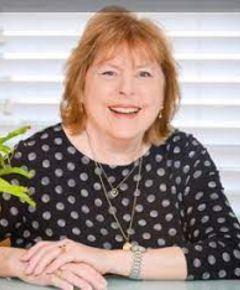

Want more?
Don't forget to subscribe! There are many ways to listen: Apple Podcasts, TuneIn (Amazon Echo), Spotify or RSS Feed. (Need help subscribing? See our quick guide.)
For all of our Substantial Matters podcast episodes, visit Parkinson.org/Podcast.
Related Materials
Related Blog Posts

10 Ways to Support a Loved One with Parkinson’s

How to Address and Prevent Care Partner Burnout
