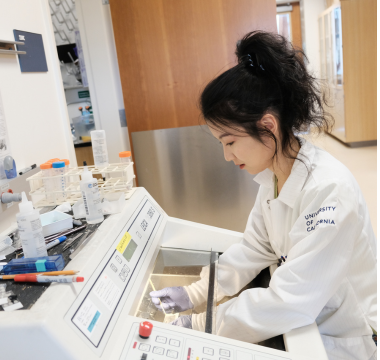
Exploring the Neurochemistry Behind Parkinson’s-related Sleep Disruption
The primary impact of Parkinson’s disease (PD) is a progressive loss of neurons in the brain that produce dopamine. Dopamine is a small signaling molecule used by neurons to relay messages and commands important for many tasks, including coordinated movement. As dopamine levels decline over time, the ability to perform these tasks decreases and manifests as PD symptoms.
It was recently discovered that dopamine likely plays a critical role in regulating sleep. People with PD often experience disrupted sleep as an early symptom of the disease, which significantly impairs health even before movement symptoms begin. Xiaolin (Lindsay) Huang, PhD, a recipient of a Parkinson’s Foundation Postdoctoral Fellowship, is exploring the neurochemistry behind dopamine and sleep, generating new knowledge to guide future therapies that treat PD-associated sleep disruption.
Research suggests that dopamine is important for waking up and staying awake. However, diminishing dopamine in PD does not lead to chronic sleepiness like this finding would suggest. Dr. Huang, under the mentorship of Yang Dan, PhD, at the University of California, Berkeley, is solving this puzzle by investigating how dopamine signaling coordinates with the “sleep pressure” molecule called adenosine, as well as how dopamine deficits affect a sleep-regulating region of the brain called the medialsubstantia nigra pars reticulata (mSNr).
“By uncovering the neural mechanisms driving PD-associated sleep disturbances, the study will shed light on a critical and underexplored aspect of the disease.” - Dr. Huang
While dopamine promotes wakefulness, adenosine promotes sleepiness. Adenosine accumulates in the brain throughout the day and eventually overwhelms dopamine levels, leading to growing tiredness until it is time for bed. Using mice with and without simulated PD, Dr. Huang will utilize highly sensitive brain monitoring techniques to observe how PD affects the balance between dopamine and adenosine and how that disruption may impact sleep behaviors.
Additionally, previous research from Dr. Dan’s lab has revealed that the mSNr region of the brain is important for regulating sleep-wake behaviors. Using the same experimental PD mice, Dr. Huang will assess if and how dopamine loss impairs neuron activity in the mSNr region, further disrupting sleep patterns in those animals.
Altogether, these investigations into how PD-related sleep disruption are related to adenosine levels and mSNr changes can lead to future research and treatment development addressing this debilitating non-movement PD symptom. When asked what this award means for her work and career in PD research, Dr. Huang said “Receiving the Parkinson’s Foundation Postdoctoral Fellowship is both an honor and a pivotal step in my scientific journey. Ultimately, the findings may inform the development of new therapies to improve sleep and enhance quality of life for people living with PD.”
Several genetic variants have been identified that likely contribute to Parkinson’s disease (PD) progression. These variants typically alter the instructions for constructing proteins, the building blocks of the body.
Variants of the gene that create a protein called Leucine-Rich Repeat Kinase 2 (LRRK2) are found in 1-5% of all PD cases. Despite being the second most common PD-associated genetic variant, scientists are still unsure exactly how this altered LRRK2 protein causes or contributes to the disease biologically.
Tatyana Bodrug, PhD, a recipient of a Parkinson’s Foundation Postdoctoral Fellowship, will utilize a wide range of state-of-the-art microscopy and other visualization techniques to literally see how the LRRK2 protein acts in cells. By getting a clear picture of how LRRK2 interacts with other important cell processes, Dr. Bodrug hopes to advance the field toward more targeted and effective therapies.
Research suggests that LRRK2 plays a critical role in repairing lysosomes, the recycling centers of the cell whose dysfunction is closely linked to PD. Under the mentorship of Andres Leschziner, PhD, at Weill Cornell Medicine in New York City, Dr. Bodrug will first use a technology called cryo-electron microscopy (cryo-EM) to take incredibly zoomed-in, high-resolution images of LRRK2 as it interacts with lysosomes to see this biological process at a previously unmatched level.
“This integrative approach will reveal a deeply contextualized view of how LRRK2 is activated at the lysosome to better understand how mutations in LRRK2 lead to PD.” - Dr. Bodrug
This technology will also allow Dr. Bodrug to visualize what other proteins interact with LRRK2. Understanding the distinct biological components affected by LRRK2 could lead to new targets for PD treatment.
To investigate these components further, Dr. Bodrug will use a technique called dynamic mass photometry (dynamic-MP) to witness how LRRK2 associates with a group of proteins called “Rab” proteins. These Rab proteins are modified by LRRK2 and may themselves be involved in PD. This dynamic-MP technology allows individual LRRK2-Rab interaction events to be directly tracked in real time, an impressive technological achievement that is likely to advance the field.
By combining these various cutting-edge imaging procedures, Dr. Bodrug hopes to capture valuable insights into LRRK2 that could break new ground and lead to improved treatments of LRRK2-linked PD. Speaking on the impact of this fellowship, she said “Receiving this award allows me to more broadly explore the mechanisms that underlie Parkinson's disease. Our hope is that this will lead to a clearer understanding of the complexities involved in LRRK2-associated Parkinson's disease and better therapeutics.”
Reclaiming Restful Sleep by Unraveling How Parkinson’s Changes the Brain
Along with the typical movement-related symptoms, many people with Parkinson’s disease (PD) also experience other non-movement health issues. These non-movement symptoms can be quite debilitating and sometimes more difficult to notice by care partners.
One common non-movement PD symptom is difficulty sleeping, often in the form of waking up frequently throughout the night. Pamela Marcott, MD, PhD, a recipient of a Parkinson’s Foundation Postdoctoral Fellowship, is casting a spotlight on the sleep-associated circuits of the brain to understand how exactly PD impacts sleep patterns. By uncovering the mechanisms behind PD-related sleep problems, she hopes to help advance new therapies for such disturbances.
While much of the neuroscience of sleep is still a mystery, researchers do know that staying asleep through the night requires a highly calibrated balance of different signals in the brain. These sleep signals are relayed through brain cells called neurons and can vary in frequency and intensity, depending on their purpose. If these signals become altered and imbalanced, sleep fragmentation occurs with "frequent changes between different sleep and wake states, leading to less consolidated and restful sleep,” said Dr. Marcott.
Under the mentorship of Alexandra Nelson, MD, PhD, and Ying-Hui Fu, PhD, at the University of California, San Francisco, a Parkinson’s Foundation Center of Excellence, Dr. Marcott is investigating how PD changes the behavior of neurons in a specific sleep-regulating region of the brain called the pedunculopontine nucleus (PPN). PPN neurons act like telephone operators, relaying important signals across the brain. Using mice with and without PD-like symptoms, she will measure how the disease affects the ability of PPN neurons to transmit their important sleep signals.
“Results of this study will improve our understanding of the circuit mechanisms that regulate sleep disturbances in PD, which will inform future therapeutic treatments.” - Dr. Marcott
After learning more about how PD changes the sleep-related neurons’ signaling ability, Dr. Marcott will then monitor the brains of the mice as they sleep. She will keep a close eye on how the PPN neurons activate during sleep phase transitions, as she believes PD causes these neurons to be overactive and lead to fragmented sleep. Observing in real time how PD alters sleep regulation in the brain will provide a strong foundation for understanding how to treat this symptom and give restful nights back to people with PD.
“As a physician scientist in this space I am committed to making meaningful discoveries in the laboratory that will benefit my patients, and I am excited to have the opportunity to start this phase of my career with the support of the Parkinson's Foundation,” said Dr. Marcott.
Leveraging AI to Decode the Genetics Behind Parkinson’s
Parkinson’s Foundation researchhasfound that approximately 13% of people with Parkinson’s have a genetic link to the disease. PD-associated DNA mutations affect the production and function of critical proteins, potentially contributing to disease risk or symptom progression. While many high-profile PD-associated mutations have been discovered in genes such as LRRK2, GBA, and SNCA, Jeff Kim, PhD, recipient of a Parkinson’s Foundation Postdoctoral Fellowship, is taking the field further by using artificial intelligence (AI) to:
Understand how overlapping types of PD mutations can affect the chances of developing PD.
Dig deeper into the genetic data to find more subtle, hidden mutations that might impact the risk for developing PD.
At first, genetic studies of PD were focused on finding rare single mutations most associated with disease. As techniques improved, researchers have been able to roughly measure the risk of developing PD by adding up the risk from multiple common mutations. However, “while we know that both rare gene mutations and combinations of common genetic variations can cause PD, we rarely study how these two types of genetic risk work together or change with age,” said Dr. Kim.
With his colleagues in the lab of Dr. Joshua Shulman at the Baylor College of Medicine a Parkinson’s Foundation Center of Excellence, in Houston, Texas, Dr. Kim is utilizing a new statistical tool called the “Causal Pivot Model” to better understand the complexities of PD mutation combinations. This model works on a simple principle: people with PD with rare single mutations usually don't have many common mutations. By looking at this pattern, the model can spot people who likely carry hidden rare single mutations that haven't been found yet. Dr. Kim is also building age into the model, since some mutations cause PD early in life while others strike later - this could help identify people at risk for early-onset disease.
Once the model has been tested and trained on enough data, Dr. Kim’s next goal is to combine the Causal Pivot Model with an advanced AI model called AI-MARRVEL to identify hidden potential PD mutations, ones that have been overlooked in previous analyses but can be spotted by this powerful tool. These mutations can then be tested in fruit flies, observing if they cause Parkinson’s-like symptoms and leading to novel therapeutics in the future.
Thinking beyond the data and computations, Dr. Kim is clear-eyed about the potential impact his AI-powered modeling could have for people with PD.
“Ultimately, this project aims to move us closer to clinically useful genetic information that could eventually guide personalized treatment strategies for people with Parkinson's disease,” said Dr. Kim.
Meet a Researcher Exploring Parkinson’s-related Sleep Disruption
The primary impact of Parkinson’s disease (PD) is a progressive loss of neurons in the brain that produce dopamine. Dopamine is a small signaling molecule used by neurons to relay messages and commands important for many tasks, including coordinated movement. As dopamine levels decline over time, the ability to perform these tasks decreases and manifests as PD symptoms.
It was recently discovered that dopamine likely plays a critical role in regulating sleep. People with PD often experience disrupted sleep as an early symptom of the disease, which significantly impairs health even before movement symptoms begin. Xiaolin (Lindsay) Huang, PhD, a recipient of a Parkinson’s Foundation Postdoctoral Fellowship, is exploring the neurochemistry behind dopamine and sleep, generating new knowledge to guide future therapies that treat PD-associated sleep disruption.
“As a neuroscientist, my long-term goal is to understand why people with Parkinson’s disease (PD) often have trouble sleeping and to find ways to help,” said Dr. Huang. “This interest was shaped by my research experience during college, graduate school and early postdoctoral training. Now, I use state-of-the-art tools to study how brain circuits that control sleep are affected in PD.”
Research suggests that dopamine is important for waking up and staying awake. However, diminishing dopamine in PD does not lead to chronic sleepiness like this finding would suggest. Dr. Huang, under the mentorship of Yang Dan, PhD, at the University of California, Berkeley, is solving this puzzle by investigating how dopamine signaling coordinates with the “sleep pressure” molecule called adenosine, as well as how dopamine deficits affect a sleep-regulating region of the brain called the medialsubstantia nigra pars reticulata (mSNr).
“By uncovering the neural mechanisms driving PD-associated sleep disturbances, the study will shed light on a critical and underexplored aspect of the disease,” said Dr. Huang.
While dopamine promotes wakefulness, adenosine promotes sleepiness. Adenosine accumulates in the brain throughout the day and eventually overwhelms dopamine levels, leading to growing tiredness until it is time for bed. Using mice with and without simulated PD, Dr. Huang will utilize highly sensitive brain monitoring techniques to observe how PD affects the balance between dopamine and adenosine and how that disruption may impact sleep behaviors.
Additionally, previous research from Dr. Dan’s lab has revealed that the mSNr region of the brain is important for regulating sleep-wake behaviors. Using the same experimental PD mice, Dr. Huang will assess if and how dopamine loss impairs neuron activity in the mSNr region, further disrupting sleep patterns in those animals.
These investigations into how PD-related sleep disruption are related to adenosine levels and mSNr changes can lead to future research and treatment development addressing this debilitating non-movement symptom.
“Receiving this award is both an honor and a pivotal step in my scientific journey,” said Dr. Huang. “It provides essential support for me to pursue an exciting project aimed at uncovering novel mechanisms underlying sleep disturbances in Parkinson’s disease. With the Foundation’s backing, I will actively engage with the broader PD research community through symposia and seminars, fostering meaningful collaborations and broadening my perspective on the field. This fellowship marks a critical milestone toward my long-term goal of establishing an independent research lab focused on understanding and treating sleep deficits in PD at the circuit and systems level.”
Golf Course Pesticides, Drinking Water & Parkinson’s Risk
Environmental factors, such as chemical exposure, likely contribute to Parkinson’s disease (PD) risk. Golf courses consume large quantities of these chemicals, including herbicides, pesticides and insecticides. A new study from researchers using the Mayo Clinic–driven Rochester Epidemiology Project shows that living near golf courses could increase the risk of Parkinson’s.
Over the last 20 years, evidence has linked certain chemicals used in agriculture to PD. Farm-workers exposed to the weed-killer paraquat or the insecticide rotenone, for instance, develop Parkinson’s at rates two- to three-times higher than people who have never handled those chemicals. In lab settings, research shows that low doses of these compounds can damage dopamine-producing neurons in the brain — the same cells that are impacted in Parkinson’s.
While golf courses are known to be heavily treated with similar chemicals, no research has directly investigated the potential relationship between PD risk and proximity to golf courses.
This new study on golf courses and chemicals covers 25 years of medical data, from 1991 to 2015, and examines residents of several counties in southeastern Minnesota — a region where there are detailed municipal records, well‐depth charts and groundwater maps. Investigators used this information to study whether people who live close to golf courses face higher Parkinson’s risk. Additionally, they explored whether nearby public water systems explain any extra risk.
Study Results
The research team identified 419 men and women whose Parkinson’s diagnosis occurred during the study window (from 1991 to 2015) and matched them with more than 5,000 people of the same age, sex, race and neighborhood who did not have Parkinson’s.
Researchers then calculated the straight-line distance from each participant’s home to the nearest golf course on the date of PD diagnosis. Those addresses were added on maps of municipal water-service areas, the locations and depths of public wells, and geological charts highlighting regions where groundwater is considered “vulnerable,” meaning the soil or bedrock allows surface chemicals to migrate quickly downward.
Overall, the analysis revealed that people who lived within one mile of a golf course were 126% (or 2.26 times) more likely to receive a Parkinson’s diagnosis than those whose homes were six or more miles away. Being farther from the fairway seemed to help; risk steadily tapered off beyond one mile, with the odds of PD diagnoses decreasing by 9% for each mile of distance from a golf course.
Distance is only part of the story. When researchers looked at households served by a public water system that contained at least one golf course, Parkinson’s risk was 96% higher compared to households whose water systems did not have a golf course within their boundaries, and about 50% higher than people who use private wells. Additionally, when a golf course was in an area with groundwater vulnerable to contamination, the risk of Parkinson’s was 82% higher than in less vulnerable areas with a golf course.
Taken together, the findings suggest that the pesticides and herbicides used to keep putting greens immaculate may be leaching into drinking water, increasing Parkinson’s risk for the surrounding area.
Highlights
Using medical records from 1991 to 2015, researchers pinpointed 419 Minnesotans with a Parkinson’s diagnosis and compared them to a group of more than 5,000 neighbors who were alike in age, sex, race, and residential area with no history of PD.
For every person in the study, researchers measured how close they lived to the nearest golf course, then overlaid addresses onto maps showing city water-service districts, well water depths and locations, and areas where groundwater is more easily polluted.
Those living within one mile from a golf course were 2.26 times more likely to be diagnosed with PD compared to those living 6 or more miles from a course. The odds of PD diagnosis decreased by 9% for each mile of distance from a golf course.
People living in a public-water district with one or more golf courses had almost double the odds of developing Parkinson’s compared to those without a course, and about 50% higher odds than those using private wells.
When a course was on land more vulnerable to pesticide contamination into the community water source, the risk of Parkinson’s was 82% higher compared to regions with a golf course located on more protective geology.
What does this mean?
This study suggests a strong association between living within close proximity to a golf course with an increased risk of developing PD. Additionally, it highlights water sources surrounding golf courses as a primary means of exposure to the chemicals routinely used on golf courses.
However, this study does not prove cause and effect, and the investigators emphasize that more work is needed before drawing firm conclusions. The research lacks direct measurements of pesticide levels in the water over time, and it cannot rule out the impact of other environmental factors related to golf courses, such as higher-income neighborhoods or traffic patterns.
Still, the clear patterns drawn from this study — highest PD risk closest to golf courses, next-highest in the water systems that share ground with a course, and more risk in areas where contaminants travel easily — gives researchers more compelling evidence about how environmental risks play a role in Parkinson’s.
What do these findings mean to the people with PD right now?
The connection between golf courses and increased PD risk may help some people living with Parkinson’s better understand one cause — exposure to environmental contaminants, potentially through drinking water. However, the environmental risk factors for PD that golf courses present are potentially preventable, by individuals and regulators. People can choose not to live near golf courses, knowing that it may put them at an increased risk for developing PD. On the other hand, regulators can also acknowledge the potential risks and improve safety measures surrounding golf courses and water sources.
The prevalence of Parkinson’s is on the rise. These findings — and new, similar studies that will most likely result from this one — highlights the need to push for mitigating risk factors for PD. Studies like this one that tie environmental factors to increased risk are shaping the future of PD research by helping people trace a contributor to their diagnosis — and help identify ways to reduce risk for future generations.
Learn More
The Parkinson’s Foundation believes in empowering the Parkinson’s community through education. Learn more about PD and the topics in this article through our below resources, or by calling our free Helpline at 1-800-4PD-INFO (1-800-473-4636) for answers to your Parkinson’s questions.
2025 Clinical Research Training Scholarship in Parkinson’s Disease
Using Brain Scans to Understand what Causes Parkinson’s-related Dystonia
Many people with Parkinson’s disease (PD) experience dystonia — sustained or repetitive muscle twitching, spasms or cramping that can occur in different parts of the body. These involuntary movements are often more forceful and painful than those of dyskinesia, a potential side effect of some PD medications that are involuntary, erratic movements that can either be fluid, rapid or extended muscle spasms.
Developing effective treatments for PD-related dystonia is difficult because we don’t know a lot about the neuroscience behind the condition. Laura de Lima Xavier, MD, recipient of the 2025 Clinical Research Training Scholarship in Parkinson’s Disease funded by the Parkinson’s Foundation and the American Brain Foundation, in collaboration with the American Academy of Neurology, is comparing brain scans of people with PD with and without dystonia to identify the key brain regions involved in dystonia to search for better therapeutic options.
“These efforts aim to significantly improve diagnostic tools, treatment strategies, and overall quality of life for individuals suffering from PD-related dystonia,” said Dr. Xavier.
Working as a neurologist and movement disorders fellow at Washington University in St. Louis, MO, Dr. Xavier believes that the key to understanding PD-associated dystonia lies with resting state functional MRI (rs-fMRI) scanning. This technology highlights how different regions of the brain are connected, and has already been used to better understand isolated dystonia in people without PD.
Dr. Xavier will compare rs-fMRI data that was previously collected from people in the PD community with and without dystonia, focusing on the sensorimotor network (SMN) area of the brain responsible for coordinating movement.
Identifying which regions in the SMN activate differently in people with dystonia could lead to future treatments that target those regions and alleviate the symptom.
“Future research will include examining different types of PD-related dystonia and using these insights to develop better treatment options,” said Dr. Xavier.
Dr. Xavier is grateful for the support she received to make this research possible and is optimistic about its potential to make a difference for people with PD.
“At a time when funding is scarce and the demand for clinicians and scientists trained in movement disorders is increasing, this support is invaluable. It provides me with the resources necessary to delve deeply into the mechanisms of PD-related dystonia, ultimately driving improvements in clinical care for those affected by Parkinson's.” - Dr. Xavier.
2025 Melvin Yahr Parkinson’s Disease Clinical Research Award
Improving Deep Brain Stimulation Using Artificial Intelligence
Artificial intelligence (AI) provides exciting new opportunities to improve different facets of society, including analysis of complex medical situations and providing guidance to doctors. Hikaru Kamo, MD, PhD, recipient of the 2025 Melvin Yahr Parkinson’s Disease Clinical Research Award, jointly supported by the Parkinson’s Foundation and the International Association of Parkinsonism and Related Disorders (IAPRD), is investigating if AI can be used to automate and optimize deep brain stimulation (DBS) programming.
While medication is the most common way to help manage Parkinson’s disease (PD) symptoms, when drugs begin to lose their effectiveness, DBS may be an option for some. The treatment involves implanting electrodes into the brain that deliver controlled electrical stimulation that counteracts the disruptive symptoms of the disease.
“As DBS technology advances, its complexity increases,” said Dr. Kamo. “Adjusting the stimulation settings requires specialized expertise, which may not always be available. This creates a gap where patients may not receive optimal care unless they are under the supervision of a specialist.”
During his time as chief medical resident at Juntendo University in Japan, Dr. Kamo treated many people with PD and other movement disorders, gaining firsthand experience with providing DBS treatment. Fascinated by this technology, he then earned his PhD by exploring the science behind DBS and how it can be improved.
In 2024, Dr. Kamo received a travel grant from the Japanese Society of Neurology to join the University of Florida and continue his work. It is there that, thanks to the support of this award, he will study how AI could be used to improve DBS treatments for people with PD.
“Preliminary results suggest that AI-generated settings align with physician-determined settings in about 90% of cases,” says Dr. Kamo. “Currently, physicians adjust DBS settings based on clinical evaluation called monopolar-review, which needs more than 30 minutes of evaluation, but as the technology becomes more complex, AI-assisted programming could simplify the process.”
While the AI programming and coding is complicated, Dr. Kamo’s research study is straightforward. Thirty patients with PD will receive one DBS treatment using settings manually set by a physician, and then another treatment using settings generated by a specialized AI program. This study will be blinded, meaning that both the researchers and participants will not know which treatment is which (physician or AI) until after all data is collected and analyzed.
“If successful, this research could demonstrate that AI-driven DBS programming is as effective, if not more, than traditional methods, offering a more consistent and accessible treatment option for patients,” said Dr. Kamo.
Dr. Kamo’s research has the potential to improve DBS in many ways, specifically, making the treatment more effective and usable for people with PD and doctors.
From Parkinson’s Foundation Research Center to Powerhouse: How Yale Became a Leader in Parkinson’s Science
In a landmark investment to accelerate the path to a Parkinson’s disease (PD) cure, in 2019, the Parkinson’s Foundation awarded $8 million to establish four elite Parkinson’s Foundation Research Centers. Each one received $2 million over four years.
In this series of articles, we will share the story of each center — their goals, successes, surprises and the future of their PD research. In this article, we check in with the Parkinson’s Foundation Research Center at the Yale School of Medicine.
Research Centers
The Parkinson’s Foundation selected four centers for their groundbreaking potential to transform PD research. Together, they launched a series of innovative, interlinked studies aimed at deepening our understanding of PD and translating discoveries into real-world impact for people living with the disease.
Studies ranged from basic science (understanding the disease or how PD affects the brain) to applied science (solving real-life problems associated with PD) to clinical research in humans or a combination of these.
Before The Award
At first, despite housing many scientists and clinicians with interests in PD, Yale School of Medicine did not have a hub specifically focused on the molecular mechanisms causing the disease.
To fill this gap, in 2005 Yale established the Interdepartmental Program in Cellular Neuroscience, Neurodegeneration and Repair (CNNR), and began recruiting top researchers with diverse expertise and the shared goal of advancing the understanding of neurodegenerative diseases like Parkinson’s. The first recruited was Sreeganga Chandra, PhD, who had prior postdoctoral experience in PD research.
“Dr. Chandra played an important role in seeding and promoting interest in the cell biology of PD at Yale” said Pietro De Camilli, MD, a cellular neurobiologist and one of the two founding directors of the CNNR program.
At the time, Dr. De Camilli had no prior track record in PD research, but he soon discovered that two major proteins he was studying were products of two genes implicated in familial early-onset PD, leading him to realign his work around PD disease mechanisms.
Another investigator associated with the CNNR, Shawn Ferguson, PhD, also had never worked on PD, but was “an expert in the cell biology of lysosomes, a cell compartment whose importance in PD pathogenesis, and more generally in neurodegenerative diseases, was being increasingly recognized,” said Dr. De Camilli.
When the Parkinson’s Foundation announced its call for Research Center proposals, Dr. De Camilli invited colleagues Dr. Chandra and Dr. Ferguson to apply together. The idea of the team was to focus on a theme that had emerged in PD genetics and was relevant to each of their labs’ research: endolysosomal dysfunction.
Toward this aim, the team proposed original and high-impact projects. The Parkinson’s Foundation recognized their potential, awarding them Research Center funding to launch three major studies:
Understanding how the defect of a protein called auxilin may cause PD (Dr. Chandra)
Investigating the link between PD and lysosomes, the recycling stations of the cell (Dr. Ferguson)
Uncovering how dysfunction of lipids (fats)-building blocks of the walls of endolysosomal compartments may cause PD (Dr. De Camilli)
Cellular Processes Underlying PD
At a cellular level, there are two key problems that occur in PD. One is a drop in dopamine. This is the chemical signal that is used for communication between brain cells called neurons and, in turn, helps the body process movement and moods. The other problem is a buildup of a sticky protein called alpha-synuclein inside neurons.
Both issues are linked to defects in how cells manage their internal transport system. This is the complex movement of materials and nutrients through the cell’s “endolysosomal system.” The endolysomal system uses an intricate array of small containers called vesicles moving inside a cell to handle export, import, sorting, recycling and disposal functions.
To picture this, imagine each neuron as a small city that is in constant communication with other neurons. Each neuronal city depends on the export and import of shipments of supplies through communication centers with other neuronal cities called “synapses.” Cargo is sorted and loaded into the “vesicles,” shipping containers that carry materials where they are needed. There are major centers inside cells, called “endosomes,” where all the material is sorted. Some special cargo is imported into cells via locked containers called “clathrin-coated vesicles.” Once inside the city, these containers are “unlocked” by shedding their clathrin coat so their content can be delivered to endosomes.
After deliveries are made, the vesicles are reused to take any waste to the cell’s recycling center, called a “lysosome.” These lysosome recycling centers break down waste with enzymes and acid in compartments safely tucked away from the rest of the cell. In so doing, lysosomes liberate nutrients that can be used to build new cellular components. These processes collectively support the ability of neurons to communicate with each other while also preventing the accumulation of cellular trash (including alpha-synuclein buildup) and ensuring a supply of building materials to maintain neuronal health.
The three main research projects supported by the Research Center Award focus on understanding and fixing problems in these cellular transport and recycling systems — processes that are disrupted in Parkinson’s.
Unlocking the Connections Between Auxilin & PD: Dr. Chandra
Following the release of dopamine from one neuron to another, the vesicle containers used to deliver dopamine to the synapse need to be rebuilt. Neurons rebuild them using clathrin-coated vesicles, the cell's locked shipping containers. To unlock these containers, neurons use a special "key" protein called auxilin, which was the focus of Dr. Chandra’s research.
Mutations that cause auxilin defects are linked to early-onset PD, but how auxilin dysfunction contributes to the disease was poorly understood. Dr. Chandra and her team first characterized mice that lack auxilin to see if they were a good model for PD research.
Dr. Chandra said, "the mice lacking auxilin develop cardinal features of Parkinson’s disease: age-dependent motor deficits that are responsive to L-DOPA, the death of dopaminergic neurons in the substantia nigra, and alpha-synuclein pathology.”
Next, Dr. Chandra discovered that being unable to unlock the clathrin containers also impacted the neuron’s ability to rebuild packages containing dopamine. Imagine this as a cellular traffic jam, where the locked containers get stuck in transit. This prevents them from bringing in other materials, being unlocked and reused for a new shipment.
The shipment of dopamine, the key signal that declines in PD, was also impacted in this neuronal traffic jam. At the synapses, there were fewer containers for it to be loaded into and released for communication with other neurons. Finding a way to unlock containers and prevent traffic jams would be key to making dopamine more available and improving PD symptoms.
With that in mind, Dr. Chandra collaborated with Dalibor Sames, PhD, at Columbia University to test the effects of a repurposed drug called Ariadne on the auxilin-lacking mice.
They found that this drug had a remarkable impact on restoring balance and mobility in the mice, similar to levodopa. While there is still much more to learn about these drug effects, this collaborative research has brought to light Ariadne as a potential future treatment for people with PD, particularly those with auxilin mutations.
Understanding Links Between Disrupted Disposal of Cellular Waste & PD: Dr. Ferguson
Dr. Ferguson was new to PD research before his Research Center involvement. “This provided an opportunity for me to bring my research focused on the intersection between lysosomes and neurodegenerative diseases into the Parkinson’s field,” said Dr. Ferguson.
Lysosomes, the cell’s recycling centers, are managed by different genes and proteins. Dr. Ferguson hypothesized that the protein LRP10, which has documented mutations linked to familial PD, was a recycling facilitator. After investigating how cells behave when LRP10 is turned off, he and his research team found that LRP10 indeed plays a significant role in facilitating lysosome function.
Following the city metaphor, LRP10 helps navigate delivery containers to lysosomes, bringing in proteins that support lysosomal function. Without LRP10’s help, the cells’ ability to build working recycling centers is disrupted. In PD, when lysosomes don’t break down and recycle waste properly, proteins like alpha-synuclein build up. Alpha-synuclein forms toxic clumps that damage brain cells, leading to tremors, stiffness, and other movement and non-movement symptoms.
Dr. Ferguson and his team also developed mice with genetic mutations of LRP10 and looked at how their brains were affected. They found that the loss of LRP10 impacts a specific type of cell in the brain, called microglia, which protect neurons. Dr. Ferguson also uncovered links between microglia and one of the most well-known PD genes LRRK2, revealing new roles for LRRK2 in regulating lysosomes in microglia that were never known before.
The success and breakthroughs from this project have shifted the focus of Dr. Ferguson’s career to PD.
“This Research Center Award was the gateway for my entry into the Parkinson’s disease field and was thus a catalyst that fueled a much broader Parkinson’s program. I am also committed to recruiting additional colleagues with complementary skills into the PD field to increase our collective chances to make the discoveries necessary to end this disease.” - Dr. Ferguson
Connecting lipid dynamics in the endolysosomal system & PD: Dr. De Camilli
“My interest in PD was sparked by the finding that two proteins studied in our lab were identified by human genetic studies as PD proteins,” said Dr. De Camilli, referring to synaptojanin 1 (Synj1, also known by the name PARK20) and VPS13C (also known as PARK23). Both proteins regulate lipids (fats) - building blocks of the walls of different compartments of the endolysosomal system.
These two proteins function at different steps in the cell’s endolysosomal transport system and link Dr. De Camilli’s research directly to his colleagues: Synj1 is a functional partner with Dr. Chandra’s auxilin at the earliest step (clathrin-coated vesicles), and VPS13C is involved with Dr. Ferguson’s lysosomes (the latest step).
Dr. De Camilli and his team discovered that Synj1 is required to begin the unlocking process of clathrin containers after they are imported by modifying the lipids they are made of. In mice with Synj1 mutations, they observed PD-like symptoms.
Working with Dr. Chandra’s lab, they also found that mice with both auxilin and Synj1 mutations have significantly more issues, highlighting that the two proteins have important, cooperative roles in cells. Ongoing work from both researchers is investigating this overlap further.
Dr. De Camilli’s lab also learned that the protein VPS13C, a lipid transport protein, has an important role in repairing damaged lysosomes. As a lysosome is used heavily in recycling, its walls can begin to break down, threatening to leak toxic enzymes and acids into the cell, VPS13C helps bring the lipids needed to rebuild the walls. Most interestingly, in collaboration with Dr. Ferguson, they found that the PD protein LRRK2 works in tandem with VPS13C in lysosome repair, a new discovery.
Understanding how PD mutations affect neuronal function is crucial in designing new PD treatments.
Dr. De Camilli is now highly committed to continue his studies of PD. “In my own lab, I will continue to expand my research on how mutations in Synj1 and VPS13C result in PD. We are very excited for being part of this new era of PD research.”
Building Collaborations as a Parkinson’s Foundation Research Center
Being a Parkinson’s Foundation Research Center not only supported these three main projects but also inspired the growth of PD research across Yale.
The groundbreaking research of the Yale Research Center team motivated other Yale researchers to explore how their own work could contribute to the understanding of PD. This award's dedicated funding for additional pilot projects allowed those researchers to join the PD field for the first time.
“We have awarded pilot projects to four principal investigators who had never worked on PD, and three of them have continued to work on this disease and are now involved in long-term collaborations with our groups,” said Dr. De Camilli.
“The momentum and enthusiasm for PD research at Yale led to support from numerous other funders devoted to PD scientific breakthroughs, such as Aligning Science Across Parkinson’s (ASAP), the Michael J. Fox Foundation, the Chan Zuckerberg Initiative, the Bumpus Foundation and the McKnight Foundation,” said Dr. Chandra.
This support led to new academic collaborations and joint publications as well, “connecting us to the PD community at large across different institutions in the US and abroad,” said Dr. De Camilli.
What began as three PD experimental proposals being accepted as a Parkinson’s Foundation Research Center has evolved into Yale becoming a nationally recognized hub for PD research.
“Beyond our individual projects, the Parkinson’s disease research community at Yale has grown dramatically over the past five years,” said Dr. Ferguson.
While the Research Center designation has concluded, its impact on the Yale School of Medicine and the scientists investigating PD remains, moving the institution and the greater PD research world toward future new treatments and, someday, a cure.
Learn More
The Parkinson’s Foundation works to improve care for people with PD and advance research toward a cure. Learn more with these resources:
Discover how we are working to close gaps in knowledge about PD: Advancing Research
Learn about and enroll in PD GENEration — a global genetics study that provides genetic testing and counseling at no cost for people with Parkinson’s.
8 Things We’re Looking Forward to at the 2026 World Parkinson Congress
Every three years, the World Parkinson Coalition welcomes the international Parkinson’s community to gather in person to amplify the voices of the more than 10 million people living with Parkinson’s disease (PD) around the world. This event brings together people living with PD, their loved ones and the community of professionals committed to helping them.
For the first time in 10 years, the 2026 World Parkinson Congress (WPC) will be held in North America, from May 24 - 27 in Phoenix, AZ. The Parkinson’s Foundation is proud to be a WPC Champion Double Platinum event partner at next year’s WPC. We’re already looking forward to connecting with the global community and sharing our latest resources and research.
The international research study, which continues to advance, has empowered more than 20,000 people with Parkinson’s with information on genetic risk factors than can influence the course of their disease. The Parkinson’s Foundation will present this and other scientific findings alongside the work of fellow researchers during the WPC poster tours.
See how the Foundation is working to identify the fastest lanes to new therapies for people with PD on our Advancing Research page.
2. Discovering proven strategies to living well with Parkinson’s.
WPC offers a rare opportunity for people with PD, care partners, doctors, scientists and other wide-ranging healthcare professionals to unite as a community and share strategies to actively engage in wellness, including the May 26 “Living Positively with Parkinson’s” panel discussion.
Leading up to the Congress the Red Thread Project, one of the many WPC art, film, music and writing creativity programs, invites members of the Parkinson’s community to take and submit a photograph of themselves holding a red thread for an onsite art installation that will honor the strength of our connections.
We’re looking forward to taking advantage of WPC’s pre-congress educational opportunities. These includes an Advances in Science, Research & Treatment course, as well as a daylong opportunity to dig into the Fundamentals of Parkinson’s— from exploring the basics of PD to understanding early-onset Parkinson’s.
WPC small-group roundtable sessions will give attendees the opportunity for sit-down discussions with different experts in various aspects of Parkinson’s.
Living with Parkinson’s can increase feelings of loneliness and isolation. Opportunities to connect, especially among people who may share common ground, can make us feel understood and supported.
Along with various networking opportunities for healthcare professionals, the WPC offers a Buddies Program which matches interested participants from across the globe, including many first-time attendees, with one another.
Check out the online PD Conversations community to find year-round shared connection and understanding.
7. Practicing renewal.
Making wellness part of the daily routine is essential to living your best with Parkinson’s. WPC offers many opportunities to practice well-being — whether learning about the benefits mindfulness, addressing your needs as a care partner or taking a moment to exercise your body and voice in the Renewal Room.
Stop by the Parkinson’s Foundation booth at WPC to meet staff, explore takeaway items and learn how the Parkinson’s Foundation is here to support you with tools, resources and information to help you build a better life with Parkinson’s.
Contact our Helpline specialists at 1-800-4PD-INFO (1-800-473-4636) to find expert care and support in your area.
Join us! Learn more and register for the 2026 World Parkinson Congress at wpc2026.org.