Episode 190: Raising Awareness About Parkinson’s Through Advocacy
-
Dan Keller 0:02
Welcome to this episode of Substantial Matters: Life and Science of Parkinson's. I'm your host, Dan Keller. At the Parkinson's Foundation, we want all people with Parkinson's and their families to get the care and support they need. Bett
er care starts with better research and leads to better lives. In this podcast series, we highlight the fruits of that research, th e treatments and techniques that can help you live a better life now, as well as research that can bring a better tomor row. A large part of improving Parkinson's care and advancing research is through policy change at the federal and state levels, and a major way to bring about change is through advocacy by individuals and through organizations like the Parkinson's Foundation. To find out about these efforts, I spoke with two people working for policy change. Andi Lipstein Fristedt is the executive vice president and chief strategy and policy officer at the Parkinson's Foundation, and Ken Chason is a Parkinson's Foundation ambassador, US Army veteran, and a person with Parkinson's. I asked Ken how his background led him to become involved in Parkinson's advocacy.
Ken Chason 1:34
My career in public service really started in the early 1990s after law school, when I joined the Army. I spent nearly six years in the military as a lawyer. After that, I moved into federal service here in Washington, DC. I spent the rest of my time in government, recently retired, and spent most of that time in the area of program oversight. So, what that meant was being part of an effort that evaluated certain federal programs and made recommendations for things like enhanced efficiency and effectiveness—basically shining a light on issues so that people can address them. It also involved a lot of engagement with agency leaders, policymakers, including the Congress, talking about findings and recommendations for action. So over time, especially looking back on it, that led to some real changes in policies, practices, and even in the law. That's something that I found very meaningful, and it just felt good to be part of something to drive positive change.
So, about three years ago, I was diagnosed with Parkinson's, and as I started learning about the disease, I realized how much about it that I really didn't know, and how much most people don't know about it, it did seem to me. So that sparked an interest in raising awareness about Parkinson's and getting involved through the Parkinson's Foundation. After I retired from federal service, that naturally grew into advocacy, focusing on policy priorities to improve care, expand access to treatment, and ultimately, and hopefully, drive us closer to a cure.
Dan Keller 3:09
It sounds like you've got a great background for doing things in Parkinson's advocacy that might not be run-of-the-mill. A lot of people form support groups and community outreach, but you seem to have a background where you kind of know the system from the inside out.
Ken Chason 3:27
Right. I'm used to dealing with recommendations for improvement of federal programs and systems, dealing with policies, and dealing with policymakers, so it felt kind of like a natural arc from my professional career into what I'm doing in the Parkinson's space.
Dan Keller 3:44
Andi, from inside the Parkinson's Foundation, what does advocacy in Parkinson's look like to you, and what's your role?
Andi Lipstein Fristedt 3:53
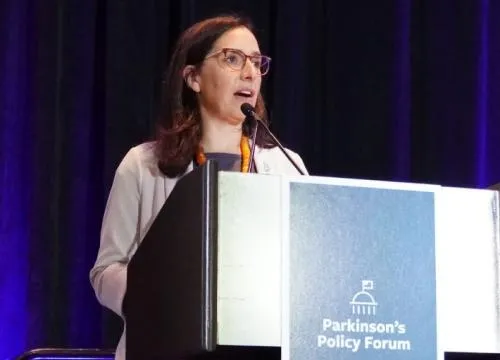
Yeah, absolutely. Well, I gotta say, I think if you looked up advocacy and Parkinson's in the dictionary, as it were, you would find a picture of Ken. Ken, and so many of his counterparts at the People's Parkinson's Advisory Council and other folks that we work with across the foundation, have just been completely instrumental in this work. It can take lots of different forms. Ken, myself, and more than 300 of our closest friends were in Washington, DC, just a couple weeks ago, knocking on doors in the halls of Congress, advocating for really important policy changes around increasing research funding, implementing the National Parkinson's Project—which is a really important new initiative under a law that was passed in 2024—and pushing the government to ban paraquat, a toxic chemical that has been linked to Parkinson's disease.
But there's so many other ways to engage, and so many ways that the Parkinson's Foundation is creating that space for people to engage. You know, we're right on the verge of Parkinson's Awareness Month. By the time this airs, our Parkinson's Awareness Month Day of Action on April 7 will be in the rearview mirror. Some of the things that many of our advocates are going to be doing on that day are great examples of things that people can do anytime, right? Posting on social media, reaching out to your members of Congress, submitting a letter to the editor in your local paper.
We know that when we think about advocacy and what really drives policy changes, it's when people connect to a story and understand how Parkinson's affects—if you're a policymaker—your constituents, or if you're not a policymaker, your friends and your family members. That is what really drives action. So we are really trying to create those spaces for people to do that outreach to policymakers, whether you participate in a lobby day, a rally, a town hall, or organize your own event. In addition to letters to the editor, we've seen really incredible op-eds in this space, or signing or organizing a petition around some of these priorities.
One of the ways that people can do this is through our newly launched Parkinson's Foundation Advocacy Center. You can go to our website and pull that up, and it will give you a tool right in front of you. You don't even need to know who your member of Congress or your representative is. You can just log in right there, and it'll give you the tools to reach out to policymakers that represent you on the issues that you care about most in the Parkinson's space.
Dan Keller 6:28
Are all of the significant policymakers at the federal level, or do they extend down to the states and even communities?
Andi Lipstein Fristedt 6:35
It's a great question. Definitely not all at the federal level. There's no question that when we think about both Congress and federal agencies—whether it be the National Institutes of Health, the Environmental Protection Agency, CDC, or FDA—there are so many important agencies at the federal level, and of course Congress. But we are also seeing incredible action at the state level. We saw a really important bill signed into law in Texas to support research funding specifically related to brain health. Many state legislatures across the country are engaging in legislation related to paraquat and other toxic chemicals during this legislative session. This is a very busy time right now for state legislatures across the country. We're seeing things like Parkinson's disease registries and many other policies, so much of this is critically important at the state level, and there's so much that communities are doing from the ground up.
Dan Keller 7:34
Are some of those policy changes a direct effect of what the Parkinson's Foundation has been doing?
Andi Lipstein Fristedt 7:41
Yeah, there's no question about that. I mean, we've been really excited to see some important policy wins already. When it comes to research funding, we saw the administration propose very deep cuts last year. Congress roundly rejected that, and in fact, we've seen some modest increases in research funding, which is something that we really continue to push for, including $600 million a year in Parkinson's disease research specifically at the National Institutes of Health.
One thing we were really excited to see happen was regarding a proposed policy that would have made it more difficult to access deep brain stimulation. We know this is something that has been so helpful to so many people with Parkinson's, and we were able to engage with the Department of Health and Human Services around that issue and saw that policy change, so that access to that really, really important care can continue.
Dan Keller 8:39
Ken, you've had roles where you're sitting face-to-face with policymakers. If other people are in that situation, what do you want them to know, what should they ask, and how should they behave?
Ken Chason 8:52
Well, here's what I've learned from those experiences. Policymakers are very busy, staff are stretched thin, and issues compete constantly for attention. So if you want to break through, you have to make it matter. Facts, numbers, and statistics are all extremely important, but in my experience, oftentimes they're not enough on their own. You have to connect the dots and explain what it all means. An effective way to do that, as Andi mentioned, is through storytelling. In the Parkinson's space, that human narrative makes the issues real. When people hear directly from those living with the condition and from caregivers, it puts a human face on it and can turn abstract policy into something real and personal.
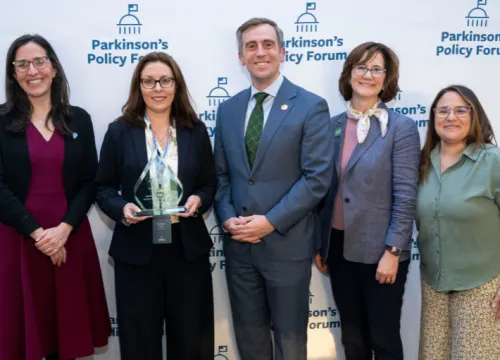
Andi mentioned the recent Parkinson's Policy Forum. I saw a lot of advocates from across the country do that very well there. I also had a recent experience in a different setting, which is kind of a story in and of itself. Another Parkinson's Foundation ambassador and I were giving a "Parkinson's 101" talk at a community center. We were told, "Don't go over 30 minutes because they've got bingo coming up on the agenda right after you guys." So we started in with the basics, talking about symptoms, diagnosis, and treatment. We could tell that people were engaged, but the moment that really clicked—where you could feel the energy shift—was when I worked my own story into the discussion. We ended up going pretty well past our time, and people were asking questions, extremely engaged. Finally, I said, "Are there any more questions?" and somebody yelled, "Bingo!"
So, I took that as a not-so-subtle clue to wrap it up, but even then, as we're packing up, people were coming up and asking questions, forming a line, following us out the door. I think that was a pretty good testament to the power of making it personal, building an understanding, and ultimately supporting concrete policy action. One final thing I'll say about that type of change is that real change, especially through government action, can take time. It's iterative, and it takes patience and persistence. But when people speak up and keep the message going, that's how you start to move the needle. I've seen the needle move across my years in government.
Dan Keller 11:17
When you're facing a policymaker or a staffer—you usually don't get to talk to the ultimate elected official, but the staffers do a whole lot in that regard—do you give them your own personal story, or statistics and numbers? What goes over the best if you give them a background, or are they going to read it?
Ken Chason 11:40
Well, in the recent Parkinson's Policy Forum, those of us with Parkinson's or caregivers told our stories. Of course, there was other information that we provided to staffers with some of the background information about Parkinson's itself. I think it's really important to combine the two things, but adding the perspective of somebody living with Parkinson's is very powerful and often resonates with them. A lot of times, what you find is that the people you're talking to will speak up and talk about a connection they have with Parkinson's, or explain what they didn't know about it. Maybe they didn't know about the non-movement symptoms, or maybe they didn't know about the prevalence of it. So I think it's good to do both, but I have found that adding the personal narrative is a really powerful way of meeting with folks.
Andi Lipstein Fristedt 12:32
I was just going to add one point to everything that Ken said, with which I entirely agree. While it's true that much is handled with staff—and look, I'm a former long-term congressional staffer, so I know how important it is to engage staff—I will say at the recent forum, people with Parkinson's sat down with more than 60 members of Congress as part of that event. I think that really speaks to the moment we're in. It speaks to the resonance of the issues being faced by people with Parkinson's, members of Congress, and state legislators. People are paying attention.
Dan Keller 13:09
It seems that the first problem would be getting an appointment allowed in. Is that a big barrier to talk to policymakers or their staff?
Andi Lipstein Fristedt 13:20
You know, less than you might think. Generally, members of Congress, policymakers overall, and certainly state legislators want to know what their constituents think. So when we reach out to an office on the Hill or in a state capitol and say, "We have someone from your district and they want to come talk to you about the issues that are most important to them," you'd be surprised how much success we have and how many people say yes. Again, calling back to my own time on Capitol Hill, anytime I got a meeting request from someone whom the senators that I worked for represented, the answer was yes. You can do that outreach and make those requests yourself, and we can also help here at the Parkinson's Foundation. If you're someone who wants to engage with your member of Congress and you don't know how, we're here to help you figure out how to do that.
Dan Keller 14:14
What opportunities do you see that could strengthen support policies going forward?
Andi Lipstein Fristedt 14:21
Look, we're in a moment of incredible opportunity. Part of that is given the reality that Parkinson's is the fastest-growing neurodegenerative disease, with more than a million Americans living with Parkinson's and 90,000 new people diagnosed each year. Policymakers have a responsibility to address diseases like Parkinson's that are impacting communities and driving up healthcare costs. We know that research for better treatments and research for cures has always been, and must remain, bipartisan. Again, we've seen that in recent decisions around research funding.
We know that when we think about research, we're in a really pivotal moment. Scientific advancements have been quick in coming, and much more significant advancements are within reach. So we know that it's really a time to be making these investments, and that there's a scientific opportunity, as well as a political and policy opportunity, to really drive research forward.
I'd also note that there's been incredible momentum at the state level for banning paraquat. There are about a dozen bills that have been introduced this year, some of which are still active. A lot more people and lawmakers know about paraquat and its links to Parkinson's today compared to even a few months ago. In some of these states, it would not be the first time that they acted to ban a pesticide to protect their residents; there is a precedent for this kind of action, and in fact, even the EPA at the federal level is taking notice. The administrator of the EPA recently noted that the agency is taking a hard look at paraquat. We are pushing them to move quickly with that reassessment to move us closer to banning paraquat once and for all.
I would also say that, in addition to all these scientific opportunities, it's really important to know that voters want policymakers to take action here. Voters say that the federal government should be doing more in the fight against Parkinson's. It's no surprise, because through polling we learned that 37% of voters say they have a family member or a close personal friend who has been affected by Parkinson's. People know up close and personal what Parkinson's disease means for people they care about and people in their communities, and they're ready to take action.
Dan Keller 16:42
I suppose there's also an economic, budgetary argument to be made to legislators in terms of prevention. If you get these chemicals out of the environment, you may prevent some cases and not put as big a burden on the healthcare system, regarding things like TCE or paraquat.
Andi Lipstein Fristedt 17:00
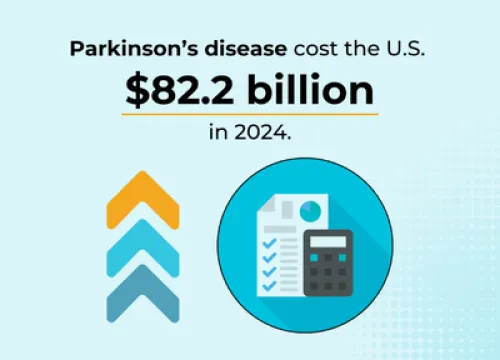
Well, that's absolutely right. First of all, we know that prevention is always a sound investment, right? We know that preventing disease always makes much more sense than treating it on the back end, especially in a place like Parkinson's where we don't yet have disease-modifying therapies. But I'll say also, when you talk about the economics of this, we have data that shows that these diseases cost the US economy $82.2 billion—billion with a B. So it is not complicated to understand that investing in this is the right thing to do for our communities. It's the right thing to do to improve health and quality of life, but when we look at economic impact, the costs are astronomical.
Dan Keller 17:54
Is that $82.2 billion figure annual?
Andi Lipstein Fristedt 17:59
Yep, it was $82.2 billion in 2024.
Dan Keller 18:04
Are there opportunities that could strengthen support policies going forward, and what more could you do to foster that?
Andi Lipstein Fristedt 18:14
Yeah, well, the first thing I would urge anyone to do is get involved. Go to policy.parkinson.org, which is the advocacy center that I mentioned. You can contact policymakers and ask them directly to support the things that you care about most, and the foundation is here to help. You can email us at policy@parkinson.org, and we're happy to help anyone figure out what they want to do. Is it writing that op-ed? Is it planning an event? Is it walking the halls of Congress with Ken? Ken, I'm just offering you up to everybody now! There is a way for anybody and everybody to get involved.
Dan Keller 18:52
Ken, you've been operating in this sphere in one way or another for your whole career—not with Parkinson's, but other kinds of things facing legislators and policy. You're probably pretty well-spoken and bold about it, but for people who feel self-conscious about sharing their stories, do you have any advice?
Ken Chason 19:13
I'll just say that that is obviously a very personal decision that folks have to make about how far to go out with their stories. It took me a little while to get there, and not everybody is comfortable doing that. I have to say that sometimes, even though I've been pretty public about it, it is not always comfortable to talk about all of the aspects of what it's like to live with Parkinson's. So at first, I was pretty guarded about who I shared the diagnosis with, but then after a little bit of time, I broadened the scope of that and went public with it.
But even for folks who aren't comfortable doing that, there are different ways to get involved and different ways to advocate for policy-based solutions. The Parkinson's Foundation has many of the opportunities that Andi mentioned for folks to get involved, and you can do that without sharing your story.
The one thing I will say is that when you do share your story and add that personal touch, it's very powerful. I've found that it goes a long way toward dispelling some of the misunderstandings about Parkinson's, which I think are still out there—that it's just a tremor disease, or that it only affects people above a certain age, which is not always the case. There are a whole host of things that go along with Parkinson's, and it's very important for people to understand the real face of the disease. So the personal story can be very powerful, but not everybody's comfortable sharing that, and there are a lot of different ways you can support policy-based action without taking that step.
Dan Keller 20:52
What gives you hope right now when you think of the future of the Parkinson's field?
Ken Chason 20:57
I'll just say I see a lot of energy around the solutions. Since I started getting involved with the Parkinson's Foundation, just seeing the number of people out there who are really enthusiastic about spreading the message and educating communities and policymakers about Parkinson's—you can just feel the energy. I think Andi mentioned that it seems like we're at a pivotal point with the whole thing, but I can just feel a lot of energy, just like at that community center where we were giving a talk. Well before the bingo game, you could just feel the energy. It was eye-opening to a lot of people, and they wanted to ask questions.
Dan Keller 21:37
How about you, Andi?
Andi Lipstein Fristedt 21:39
Absolutely. I would say a few things. First of all—and it's the easiest top-of-list ever—is people like Ken, right? There are so many. No one's exactly like Ken, but the incredible passion, commitment, and dedication of the Parkinson's community is what matters. That is what gives me hope, and that's the engine for our work every day when we think about the Parkinson's Foundation's policy work.
Two is the incredible work we're doing to find the right policy solutions, because advocacy only matters to the extent that you have really identified policy drivers that will make a difference for people with Parkinson's, and we have done that work. It is happening.
And then the third would be, in a time of extreme partisanship and extreme divisiveness where it can seem hard to get things done, any issue that has the kind of overwhelming support that our priorities have on both sides of the aisle is a really exciting place to be working.
Dan Keller 22:51
Ken, do you have any parting words or a nutshell message to people who want to be engaged in advocacy?
Ken Chason 23:00
Well, I would encourage people to get involved in advocacy if they're thinking about it. Really, the through-line in the whole thing is getting out there, educating people about Parkinson's, spreading the word, and shining a light on the disease, which builds a foundation for policy-based solutions. So, I would just encourage anyone who wants to to take that step and check out the resources that the Parkinson's Foundation offers to do that. I've been very grateful for those opportunities to get involved, hope to be doing that for some time, and enjoy working with others in the community who are doing the same thing.
Dan Keller 23:39
Great, thanks a lot to both of you. I'm sure this will spur some people to start thinking about getting more involved. It's great talking with both of you. Thank you. Take care.
If you would like to find out more about the Parkinson's Foundation's advocacy efforts, or to explore ways you can become involved, take a look at our advocacy center at policy.parkinson.org or visit parkinson.org/policy. You can learn about our policy priorities, take action through one of our active campaigns, or sign up for emails with the latest news and opportunities for action.
As we celebrate Parkinson's Awareness Month this April, we're excited to share our theme: Find Real Answers. Parkinson's disease can be complex and overwhelming, and one of the biggest challenges for people living with PD, care partners, and loved ones is knowing where to turn for reliable information, meaningful resources, and trusted guidance. Throughout Parkinson's Awareness Month, we'll be sharing ways the Parkinson's Foundation helps you find real answers, whether you prefer talking to someone on the phone, searching online, or attending events in person. We offer trusted, accessible support through our helpline, website, social media, and enhanced web tools. Find real answers with the Parkinson's Foundation. Visit parkinson.org/awareness to learn more.
As always, our PD information specialists can answer questions and provide information in English or Spanish about this topic or anything else having to do with Parkinson's. You can reach them at 1-800-4PD-INFO.
If you'd like to leave feedback on this episode, or to let us know what other topics you'd like us to cover, visit parkinson.org/feedback. Be sure to subscribe and rate us on Apple Podcasts, or wherever you get your podcasts. At the Parkinson's Foundation, our mission is to help every person diagnosed with Parkinson's live the best possible life today. To that end, we'll be bringi
ng you a new episode in this podcast series eve ry month. Until then, for more information and resources, visit parkinson.org or call our toll-free helpline at 1-800-4PD-INFO, that's 1-800-473-4636. Thank you for listening. Dan Keller 29:27
Thank you.
There are countless ways to get involved in raising awareness about Parkinson’s disease (PD)- whether it’s striking a conversation with someone at the grocery store, signing a petition, or meeting with your local members of congress. At its core, policy change begins with meaningful conversations. The more we openly talk about PD, the more we build understanding, urgency, and momentum to shape the future of Parkinson’s care and treatment.
The Parkinson’s Foundation recently launched the Advocacy Center as a resource to support anyone looking to get more involved in advocacy. Through this platform, people can receive the latest policy news and find opportunities to engage their legislators to help make an impact in the Parkinson’s space.
In this episode, we speak with Ken Chason, a Parkinson’s Foundation Ambassador, US Veteran, and person with Parkinson’s, alongside Andi Lipstein Fristedt, the Executive Vice President and Chief Strategy and Policy Officer at the Parkinson’s Foundation. Drawing on their experiences in public service, they highlight the many ways to get involved in advocacy, and why this time is especially critical for accelerating change in the Parkinson’s policy realm.
Released: April 14, 2026
-
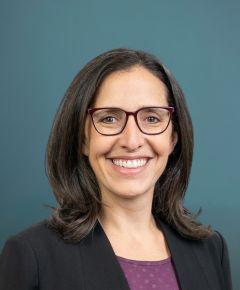
Andi serves as Executive Vice President and Chief Strategy and Policy Officer at the Parkinson's Foundation, providing strategic leadership for the Foundation, ensuring mission programs are addressing the needs of the community, and guiding the Foundation's policy direction to advance impactful federal and state health policies. Andi previously served as Deputy Director and Chief Strategy Officer at the U.S. Centers for Disease Control and Prevention (CDC) and as Deputy Commissioner for Policy, Legislation, and International Affairs at the Food and Drug Administration (FDA). She worked for nearly a decade on the U.S. Senate Committee on Health, Education, Labor, and Pensions (HELP), including as Deputy Health Policy Director, where she led the drafting or negotiation of a wide range of health laws.
Earlier in her career, she served as Campaign Manager and Chief of Staff to an Oregon state legislator and completed a fellowship at the World Health Organization. She holds a B.A. from University of Oregon and a Master in Public Affairs from Princeton University, where she studied health and health policy.
-
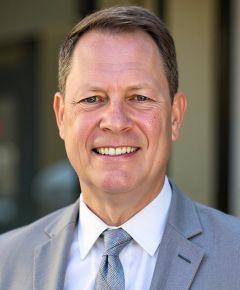
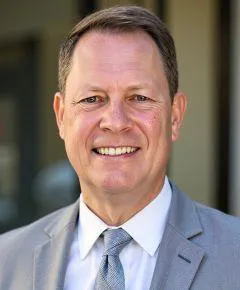
Ken recently retired from a long career in public service as a federal attorney and senior executive, with experience spanning both the legislative and executive branches of the U.S. government. Over the course of his career, he spent 18 years at the National Science Foundation, where he ultimately served as Deputy Inspector General, working on matters aimed at promoting economy, efficiency, and effectiveness in agency programs and operations. He began his legal career in private practice in Georgia before joining the U.S. Army Judge Advocate General’s Corps, where he served on active duty as a military lawyer for more than five years, later transitioning to the federal civilian sector.
Ken was diagnosed with Parkinson’s disease in 2023, and as he learned more about the condition, he became increasingly engaged as a Parkinson’s advocate—focused on raising awareness, connecting lived experience to meaningful action, and advancing policy-based solutions by engaging with policymakers to support improved access to care, increased research funding, and prevention efforts. He currently serves on the Parkinson’s Foundation’s People with Parkinson’s Advisory Council and is also a Foundation Ambassador, working to help ensure that patient perspectives inform programs, research, and priorities, while contributing to broader conversations about care, mental health, and the lived experience of Parkinson’s; he also writes about these themes and his own journey on Substack (kenchason.substack.com).
Want more?
Don't forget to subscribe! There are many ways to listen: Apple Podcasts, TuneIn (Amazon Echo), Spotify or RSS Feed. (Need help subscribing? See our quick guide.)
For all of our Substantial Matters podcast episodes, visit Parkinson.org/Podcast.
Related Materials
Related Blog Posts
5 Ways Policy Affects Your Life with Parkinson’s
Breaking News: $82.2 Billion and Rising, Parkinson’s Economic Burden Toll Arrives 10 Years Early