Episode 168: Celebrating Our Parkinson’s Foundation Volunteers
-
Dan Keller 0:02 Welcome to this episode of Substantial Matters: Life and Science of Parkinson's. I'm your host, Dan Keller. At the Parkinson's Foundation, we want all people with Parkinson's and their families to get the care and support they need. Better care starts with better research and leads t
o better lives. In this podcast series, we highlight the fruits of that research—the treatments and techniques that can help you li ve a better life now, as well as research that can bring a better tomorrow. There are many ways to get involved with the Parkinson's Foundation, whether it's through participating in an online PD Health at Home webinar, calling our helpline, walking at one of our Moving Day events, or becoming a volunteer. This April, we not only celebrate Parkinson's Awareness Month, but we also want to honor and thank our Parkinson's Foundation volunteers. We rely on their energy, skills, and passion to further the foundation's mission in raising awareness and working together to make life better for people living with Parkinson's disease. In this episode, we speak with two foundation volunteers. Tonia Smith is a public service advocate, member of the Parkinson's Foundation People with Parkinson's Advisory Council, and caregiver to her mother living with Parkinson's disease.
Steve Sain is a retired engineer and a person living with Parkinson's. They talk about how they started volunteering with the foundation and the impact it has had on their lives. I began by asking Tonia to share a little about her background. Tonia Smith 1:59 Most importantly, I'm a care partner for my mom, Joanne, who was diagnosed with Parkinson's disease a little more than six years ago. We're from Cincinnati, Ohio, and as far as professionally, I have 25-plus years of public service with the city of Cincinnati. Most of my time in this role with the city has been focused on public health promotion and education, and now I'm leading initiatives and work with the city around aging and accessibility. I'm a registered dietitian by training.
Dan Keller 2:37 Good. When your mom was first diagnosed with Parkinson's, what was her attitude, or how was she handling it?
Tonia Smith 2:46 I would say shock is the best word to use, and that was for myself as well. It's a large burden because you don't know how to respond. There's so much to learn, and although my mom's doctor shared resources at that time, it was just too much to take in. I will say my mom was embarrassed, for lack of a better word, and didn't want to share it with anyone. So I was kind of holding that information; I was the person that she chose to share it with, and so that was stressful for me.
Dan Keller 3:24 Are you the primary or only caregiver? Are other people pitching in?
Tonia Smith 3:30 I'm the primary caregiver. I'm the person that my mom counts on and relies on. I'm so thankful, though—I have a sister, and she contributes to my mom's care, as well as family members. My mom has several sisters, one in particular who checks on her and makes sure she's okay, as well as neighbors. She's been living in her house for over 30 years, so she has wonderful relationships with her neighbors as well.
Dan Keller 4:00 It's quite an endeavor to be a caregiver, but you also decided you wanted to volunteer with the Parkinson's Foundation. How did you come across that?
Tonia Smith 4:12 I think that came from my mom being very... she didn't want to share her diagnosis with anyone, and I wanted to respect her privacy, but it's my nature to want to have someone to talk to. So, in that situation, I went online and just looked at the various resources that were out there related to Parkinson's. Of course, I came across the Parkinson's Foundation and signed up for their emails, and that's how my relationship with volunteering began with the Parkinson's Foundation.
Dan Keller 4:49 You're a member of the foundation's People with Parkinson's Advisory Council, or the PPAC for short. Could you briefly tell me what the PPAC is, and what made you want to become a part of that?
Tonia Smith 5:05 So, PPAC, as we affectionately call it, as you said, Dan, is the People with Parkinson's Advisory Council. It is comprised mostly of persons with Parkinson's disease, in addition to care partners, me being one of them. We advise the Parkinson's Foundation on issues from the perspective of people actually living day-to-day with Parkinson's disease. It was kind of coincidental that I became a member, I guess. I received an email and I said, "Oh, that sounds interesting." I didn't really know—you know, it's a very competitive process to become a member of PPAC. I didn't realize it at the time, and I submitted my application, had a few interviews, but I'm so thankful that the foundation really prioritizes inclusivity. They want to make sure that they can hear the voice of persons from all backgrounds, all racial and ethnic backgrounds, and understand their experience as it relates to Parkinson's disease. I'm an African American woman, and it's been an honor to share from that perspective as well.
Dan Keller 6:18 Besides being in PPAC, have you participated in other events or kinds of presentations that the Parkinson's Foundation is pretty famous for doing all along the way?
Tonia Smith 6:32 Absolutely. Now, while I'm in Cincinnati, Ohio, I have been working with the Columbus, Ohio Moving Day planning committee. Moving Day is an event that occurs in cities and communities across the country, and it consists of a walk—like a short walk, maybe a mile—for people with Parkinson's, of course raising money as well as raising awareness.
So I've been participating in helping to plan the Columbus Moving Day event for three years now, so that's an honor, and it allows me to connect even beyond PPAC, even beyond my local Parkinson's community, but with others in the region around Parkinson's. In addition to that, on behalf of the foundation, I've helped to review some of their community grant applications. I've been interviewed for an AARP article, as well as participated in the AARP Care Partner Facebook group, kind of sharing events that may be going on with the foundation, and just letting people know the resources that are available through the foundation. In addition, I was a panelist for the Midwest Regional Care Partner Summit in 2022, and really any opportunity that I can fit in and share my voice from the perspective of a care partner—really making sure that the voice of the care partner is heard in the context of Parkinson's disease.
Dan Keller 8:06 We always think of volunteers as providing a service, but by volunteering, what have you gotten out of it, or how has it impacted you?
Tonia Smith 8:16 Yes, I share my time and any skills that I have, or am able to, but I feel like I've received the most from my volunteering with the foundation. Really just the connection, being heard, feeling heard, and having other care partners that I can reach out to, ask questions—and in addition to care partners, people with Parkinson's. You know, if my mom experiences something, I can say, "Hey, did you experience this? How did you handle it?" I mean, it's invaluable. Of course, I can call my mom's neurologist, but it's just a different connection when you're calling someone else who's in the same boat that you are, navigating their way through the disease every day.
Dan Keller 9:02 April is Parkinson's Awareness Month.
So, I wonder if there's anything you want to share with other people who are becoming caregivers recently for the first time, or maybe have been a caregiver for a few years now. Tonia Smith 9:19 Absolutely. I would say most importantly for care partners is to find a supportive community for you. I think as care partners we spend so much time, rightfully so, tending to the needs of our loved ones. However, in doing so, there's even more of a need for that support for you as an individual. So find a community, find a support group, go onto Facebook groups, and check out the Parkinson's Foundation—in particular, the Parkinson's Helpline. It's just invaluable as far as the information that you can get from someone just like you who's finding their way just like you, and mental health self-care is so important for the care partners as well.
Dan Keller 10:16 Tonia, stay with us. But I'd like to bring in Steve Sain now. Steve, could you tell us a little bit about who you are, where you're from, and what the area you're from is like?
Steve Sain 10:29 Sure, Dan. I was born and raised in Nashville, Tennessee, but most of my adult life was spent in Birmingham, Alabama. Professionally, I founded my own engineering firm specializing in energy efficiency in existing buildings, and I grew it from scratch to over 120 employees operating throughout the US and several foreign countries. In 2015, I retired and sold my firm to the employees and moved to a picturesque lake near Auburn. Personally, I've been married to my college sweetheart for more than 46 years, and we are blessed with two lovely and intelligent daughters. For fun, I enjoy adventure travel, scuba diving—believe it or not—sports, and 200-pound dogs.
Dan Keller 11:19 Wow, that could eat you out of house and home.
Steve Sain 11:23 They do.
Dan Keller 11:24 Could you share a little bit about when you were first diagnosed with Parkinson's, and maybe some of the initial challenges you faced after getting the diagnosis?
Steve Sain 11:34 Sure, it was 2018, and the main thing was that I was just uncertain about my future. As you probably know, Parkinson's is such an enigma. I was eager to research anything and everything I could get my hands on, and the only advice I was given by my neurologist was to find a support group, and that turned out to be instrumental.
Dan Keller 11:58 Was there a support group near you, or did you have to kind of go online to do that sort of thing?
Steve Sain 12:05 There was one near me. The initial challenges that I had were somewhat typical—a sporadic tremor on one side, that kind of thing. And when I did find a support group in a nearby town, they proved to be the infrastructure of my fight against Parkinson's. During our first meeting, a 20-year Parkinson's veteran kind of pulled me aside, put his arm around my shoulders, and said, "Son,"—I'm not used to being called son, but he said—"Son, whatever your neurologist told you is fine, but your neurologist does not have Parkinson's, we do, and we're going to teach you how to live with it." And that they did. Now I'm trying to pay that forward by helping to facilitate that group and founding a support group in the lake area where I live.
Dan Keller 13:51 You volunteer with the Parkinson's Foundation. So at what point did you start doing that, and was it about the same time that you became chapter board president of the Gulf Coast chapter at the foundation, or was it sometime else?
Steve Sain 13:07 There were two or three years where I volunteered for various things, like reviewing community grants that Tonia mentioned—I did those kinds of things. But my local chapter is the Gulf Coast chapter, which consists of Louisiana, Mississippi, Alabama (where I'm located), and then the Florida panhandle. A few years ago—and a few years after I initially volunteered with the Parkinson's Foundation—the wonderful Parkinson's Foundation staff person running the chapter was trying to form her board of advisors. Somehow she found out that as I sold my engineering firm, I had to design, recruit, and manage a similar board of directors. So her logic was, since I had already done what she needed to do, she recruited me as her board president, and that's how it got started.
Dan Keller 14:57 Sounds like being an organized guy and an engineer really fits well with that role. Have you encountered any challenges related to volunteering because of your Parkinson's, either physical or logistical, being a volunteer in an organization?
Steve Sain 14:15 Oh, sure, there's all sorts of challenges. Perhaps the number one challenge has been energy level. Historically, my work that I had in my engineering firm was usually fueled by grit and drive rather than intelligence or talent. I just had to fight through things, and Parkinson's tends to throw a wet blanket on that energy, but you just have to push through it. What I enjoy are the people that I volunteer with, so I focus on them. I'm a college football fan, so when I can overcome Parkinson's-related obstacles, I refer to it as giving Parkinson's the Heisman straight arm, and that tends to amuse people when I use that expression.
Dan Keller 14:56 What types of volunteer opportunities have you found the most rewarding for you?
Steve Sain 15:01 Oh gosh, most rewarding. I can think of three ways. Number one, working through others involved in our Parkinson's Foundation chapter board of advisors—that's rewarding when you can work through others. Number two is conducting Parkinson's-sponsored educational events. We recently, in my local area, held a very successful public seminar on medical marijuana. We thought that would be a little controversial and get some attention, and it did. And then maybe the third thing is just managing support groups. I like the interaction with support groups.
Dan Keller 15:35 Besides volunteering, your involvement with the Parkinson's community, is there anything else that you feel has helped make a positive impact in your overall health and well-being—emotional, physical, whatever?
Steve Sain 15:50 Oh, absolutely. Staying active, without a doubt, is it. My Parkinson's mantra is "do it while you still can." So, since my diagnosis, I've purchased my first motorcycle. A lot of people usually are amazed at that; getting a Parkinson's diagnosis and then buying a motorcycle doesn't seem to go together. I acquired a stick-shift convertible sports car. I've gone on two overseas scuba diving trips, which prompted circling the planet. In other words, where we went was on the opposite end of the earth, and so instead of flying out there, doing our thing, and coming back, we flew out there, dove, and then kept going, and circled the planet, which was interesting. It's almost as if I'm trying to outrun Parkinson's, so volunteering is certainly a part of that formula.
Dan Keller 16:39 A while ago, I did an interview with a retired cardiac anesthesiologist. He persevered through the early stages of Parkinson's, eventually got deep brain stimulation, and worked a while longer, but then just decided it was time that he give that up. But he did take up rock climbing and mountain biking, so people find new ways to really get into stuff.
Steve Sain 17:04 Sure.
Dan Keller 17:05 Do you have any thoughts or comments that you want to share about how volunteering has and does impact you?
Steve Sain 17:13 Sure, volunteering is largely unselfish, but at least for me, there's a selfish element to it. It keeps me active, it keeps me sharp, it helps me to give Parkinson's the good old Heisman straight arm, and in there, there's value, I suppose.
Dan Keller 17:31 For other people listening, there's opportunities to volunteer with the Parkinson's Foundation, but that's not the only act in town. Even ignoring Parkinson's, there's a whole lot of ways to get involved in lots of things, whether it's youth soccer or your community. So, I think volunteering in general can have a great benefit to everybody. Is there anything you want to share with the community about Parkinson's disease? Maybe just someone like I asked Tonia, who's living with Parkinson's for a few years now.
Steve Sain 18:05 You can sum it up by saying, if you want to stand a chance against Parkinson's, involvement in a support group is as essential as exercise. The insight you can glean from your peers is limitless, and it's free, so you just cannot beat that.
Dan Keller 18:23 Tonia, is there anything Steve's gone over that you'd like to comment on, or you're curious about?
Tonia Smith 18:30 Well, I just want to say that Steve, that's so well said, and I think you're pretty amazing.
Steve Sain 18:38 That's the pot calling the kettle black, because caregivers are incredible—incredible. Where would we be without caregivers? And such patience—you have to have infinite patience to be a caregiver. So, I applaud you, Tonia.
Tonia Smith 18:53 Thank you, Steve.
Dan Keller 18:55 And Steve, anything, if you remember, that Tonia said that you think should be emphasized, or you'd like to ask her about?
Steve Sain 19:04 Everything. I just have a lot of respect for her, and every caregiver. Just kind of a quick little footnote—I don't know if it's applicable to the podcast or not—but Tonia, since we talked last, I've gone to a caregiver support group. It's a support group only for caregivers, and boy, was it interesting. So, if you have a chance to start something like that, or be a part of something like that in Cincinnati, I would definitely encourage you to do that.
Tonia Smith 19:33 Thank you so much. That's absolutely amazing. Thank you.
Dan Keller 19:38 I would think that's certainly valuable for the caregiver, but it certainly gives the person with Parkinson's a lot of insight into what they're going through and some of the challenges they have, I suppose.
Steve Sain 19:49 Sure. Well, in this meeting it was just caregivers—I was the odd person out, I was just an observer—they had some great discussions.
Tonia Smith 19:59 And Steve, let me just say your thanks that you gave to me, it means so much. I think with many care partners, even just for persons with Parkinson's, even to say thank you or to acknowledge sometimes, "Hey, I appreciate your time or your patience"—you know, as care partners, we're not looking for that, but it feels good to hear every now and then.
Steve Sain 20:24 Oh, absolutely. So much emphasis and attention is paid to the patients, but the caregivers are human too. So I try my best. I don't always succeed, but I try my best to acknowledge the caregivers as well as the patients.
Dan Keller 20:39 Good information, good advice. I thank you both. This has been quite productive, and I'm sure it's going to give some insight to our listeners.
We want to thank our volunteers at the Foundation for their continued support. If you're interested in becoming a volunteer, or just want to learn more, visit parkinson.org/volunteers. There are many different opportunities for you to get involved, both in person and at home. This month, we're celebrating not only National Volunteer Month, but also Parkinson's Awareness Month. This year, we're sharing the ABCs of PD. Parkinson's is different for everyone, so we're highlighting the complexities of Parkinson's disease from A to Z. Visit parkinson.org/awareness to find out more.
If you want to leave feedback on this podcast or any other subject, you can do it at parkinson.org/feedback. If you enjoyed this podcast, be sure to subscribe and rate and review the series on Apple Podcasts
or wherever you get your podcasts. At the Parkinson's Foundation, our mission is to help every person diagnosed with Parkinso n's live the best possible life today. To that end, we'll be bringing you a new episode in this pod cast series eve ry month. Till next time, for more information and resources, visit parkinson.org or call our toll-free helpline at 1-800-4PD-INFO, that's 1-800-473-4636. Thank you for listening.
This month, we are honoring and celebrating our Parkinson’s Foundation volunteers. Every volunteer helps make a difference in the everyday lives of people living with Parkinson’s disease, whether it’s by helping organize a local community walk, serving as a research advocate providing feedback and collaborating with scientists on research studies, or speaking at a panel for a community education program. There are many opportunities to get involved with the Foundation.
In this episode, we highlight two volunteers, Tonia Smith, a public service advocate, member of the Parkinson’s Foundation People with Parkinson’s Advisory Council, and caregiver to her mother living with Parkinson’s disease, and Steve Sain, a retired engineer and a person living with Parkinson’s. They share their stories about how they became involved with the Parkinson’s Foundation.
Released: April 2, 2024
-
Member, People with Parkinson’s Advisory Council, Parkinson’s Foundation
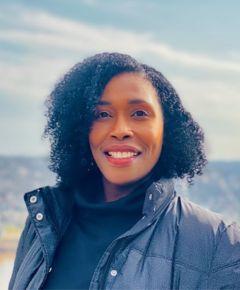
Tonia Smith serves as care partner for her mother, Joanne, who was diagnosed with Parkinson’s disease in 2018. She is a member of the People with Parkinson's Advisory Council (PPAC), which is comprised of people with Parkinson’s disease and care partners who serve as advisors to the Parkinson’s Foundation. A 26+ year public servant with the City of Cincinnati, Tonia currently serves as Chief Advocacy Officer for Aging and Accessibility in the Office of the City Manager. Previously, her work has focused on health promotion and education, health equity, coalition building, policy and system change, and environmental health and safety. Tonia is a Registered Dietitian, Master Certified Health Education Specialist, and Registered Yoga Teacher. She enjoys teaching yoga and dance fitness classes throughout the Greater Cincinnati region.
-
President, Gulf Coast Chapter Board of Advisors, Parkinson’s Foundation
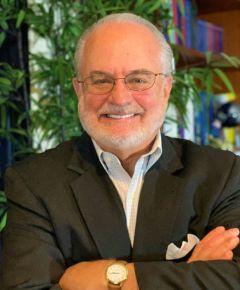
Steve Sain was born & raised in Tennessee, marrying his college sweetheart, and now lovely wife for 46 years. He’s blessed with two wonderful daughters & two 100-lb canine best friends. Steve has lived most of his adult life in Alabama, retiring to a peaceful landscape on Lake Martin. He enjoys SCUBA diving, virtually all sports & adventurous travel.
In 2018, Steve was diagnosed with Parkinson’s and his life changed. He retired, sold his company, and immersed himself in Parkinson’s related activities by volunteering in multiple ways. Steve co-facilitates a nearby support group and has found this to be profoundly educational; so much so that he founded another support group serving his immediate area of Lake Martin. Steve has served on multiple PD expert panels and has also participated in clinical trials.
The primary focus of Steve’s volunteerism has been through the Parkinson’s Foundation. He currently serves as President of the Parkinson’s Foundation Gulf Coast Region, has reviewed grant applications throughout the Southeastern U.S. for the Community Grant Program, assisted with educational events, fundraisers, and provided general counsel to regional staff as part of the Gulf Coast Board of Advisors.


Want more?
Don't forget to subscribe! There are many ways to listen: Apple Podcasts, TuneIn (Amazon Echo), Spotify or RSS Feed. (Need help subscribing? See our quick guide.)
For all of our Substantial Matters podcast episodes, visit Parkinson.org/Podcast.
Related Materials
Related Blog Posts

How Our Volunteers Are Making an Impact

