Episode 141: How Social Workers Can Help Ease Anxiety about the Unknown
-
Dan Keller 0:08 Welcome to this episode of Substantial Matters: Life and Science of Parkinson's. I'm your host, Dan Keller. At the Parkinson's Foundation, we want all people with Parkinson's and their families to get the care and support they need. Better care starts with better research and leads to better lives. In this podcast series, we highlight the fruits of that research, the treatments and techniques that can help you live a better life now, as well as research that can bring a better tomorrow.
Most people don't know the breadth and scope of what social workers do. They are highly trained professionals who can assess needs, find and refer people to appropriate services, and help guide them over the course of a disease. Social worker Lance Wilson of Jefferson Health in Philadelphia, a Parkinson's Foundation Center of Excellence, emphasizes that for someone with Parkinson's disease, it's important to create a support structure beginning at the time of diagnosis. He describes himself as something like the Yellow Pages or as a chameleon—the Yellow Pages in having a wide variety of resources to offer, and as a chameleon in that he adapts to the environment of the person's needs from the time of diagnosis onward.
When somebody gets a diagnosis of Parkinson's disease, it's natural to want to know what lies ahead, which is probably unpredictable in any one case, since each person's course of Parkinson's can be different. What are some ways that they can cope with the uncertainty of what might lie ahead? Essentially, the fear of the future.
Lance Wilson 1:57 Absolutely, I think that's an awesome question, because it does, in fact, look different for everybody. It really depends on, you know, kind of being present there with the individual first and their care partners to figure out what is the best route for them. For some people, they want to be hit with so much information, and so they can learn at their own pace learning. Some people just, you know, just want to shut out the world and kind of grieve that initial diagnosis, but that coping piece is where the supports come in. So, those care partners, those social workers, and the other support staff at the clinics are important because there's a devastation that happens, and we are ready to act when that person gets to a place, or help them to kind of shepherd them into a place, where they're now okay with navigating the disease in a more healthy way, or more appropriate, or optimizing what that looks like for them.
Dan Keller 2:53 Do some people tend to catastrophize thinking of the worst that can happen, and how do you put their minds at ease?
Lance Wilson 3:00 Absolutely, so I think the initial thing that people, once they get the diagnosis, they start thinking about end of life, "Are my affairs in order?", hospice, and a lot of pictures that media has put out. You know, they might think of Muhammad Ali or Michael J. Fox, and I think that the catastrophizing is, of course, going to happen, but it's really about giving people the space to have those things, and then kind of bringing them back. It's almost like an anxiety response. So, how can I now ground you? Because these are great concerns to have, but at the end of the day, we still need to bring you back to what your living your best life looks like, and you can't do that if you're constantly worrying about your demise.
Dan Keller 3:46 Is part of it telling them that the worst doesn't happen to very many people?
Lance Wilson 3:52 Keeping it grounded. We know what this disease typically looks like, progression-wise, and I think that it's going to look different for you, and your care is important, or where you're going is important, because the way that it's going to manifest for you might not be the same way that you've seen your neighbor or your church member, etc., kind of navigate the disease. It's going to look different for you, or it might not, but being okay with that, and helping make sure people are tied into the resources that are necessary, are important.
Dan Keller 4:23 How do support groups fit into that? If someone goes there and sees the worst or sees the best, they get a different impression.
Lance Wilson 4:31 Absolutely, so support groups are very tricky. So you have individuals who will see the person who has the tremor or the rigidity or the sialorrhea, and think automatically, "That's going to be me." So it really turns a lot of people off from going to support groups. So a lot of my social work colleagues and other individual institutions have had to make groups that are specific in who they're talking to—so whether that be a deep brain stimulation group or a young early-onset group, those are good because it allows people to be with their peers. But I also think that, depending on the person, it can be redeeming because I can now get advice from someone who's been navigating this disease 20 years longer than I have. So support groups can be kind of worked out if they keep on track with what the person actually needs.
Dan Keller 5:23 It's such a multifaceted disease. So, is there value in going to a specialized center—a Center of Excellence or a movement disorder center—where they can offer many of the things that you would need? You wouldn't need everything, but they've got everything that you might need.
Lance Wilson 5:40 Yes, I think that it is worth going to a comprehensive center—a center that has accessibility to all of the other disciplines that we sometimes see as operating in silos. So, have the physical therapist, or a speech therapist, or a mental health clinician. All of these things that we would typically refer out to the community, being at one center allows for a full evaluation to develop a baseline. And I always tell people that when we're looking at how you navigate this disease, a care map or a care plan is going to be important, and the best way to do that is to develop a baseline of where you are in all of these spaces.
Dan Keller 6:19 Where does social work fit in?
Lance Wilson 6:21 It fits in everywhere, and the reason I say that is because I constantly tell people to imagine having a broken vase and gluing it back together. We are the glue that is in all those nooks and crannies, and all the spots that you thought would never be able to be held together again. We are the individual who probably knows everybody's job enough that we can explain it, but not necessarily do it, and if we don't, we know where to refer you or who to send you to in order to get that information. So we are kind of like the shadow people, almost, because people don't always realize that they're leaning on us for support, because it comes off so typically eloquently that they're just like, "Oh, I didn't even know that was a skill set or a job." They just show up and, you know, they get the support that they need.
Dan Keller 7:10 I've always been impressed with all the resources social workers can draw on, knowing what they are. It's like a librarian for medicine, you know, they know where to look and how to find stuff.
Lance Wilson 7:22 I always joke and say that we are the yellow pages of whatever discipline or whatever institution we've infiltrated as social workers, whether it be the medical model or another one.
Dan Keller 7:33 Mood changes can accompany Parkinson's disease. So, what are some strategies for coping with changes in emotion or mood?
Lance Wilson 7:42 So I think the thing that I call out first is allowing people to feel what they need to feel. It's a little bit more difficult when you have a care partner or individual that's assisting with care that might not be used to these types of mood swings, if you want to call them that, or this dysregulation in emotion, and typically I tell individuals you need to feel what you need to feel, because you're feeling it for a reason. Now we can get to the core of why you feel that way, you know, once the time has started to pass, but ultimately letting people feel what they need to feel without there being like this self-deprecating behavior or self-deprecating thoughts that go along with that, and allowing their care partners to know that this is not personal towards you. There's a lot of other frustrations that come along with this disease and navigating what could be soon to come, or not so soon to come. And creating space is one of the biggest phrases that I use all the time. You've got to sometimes make space for things that you didn't necessarily anticipate were going to happen, including emotional mood swings.
Dan Keller 8:46 What about sharing one's diagnosis with friends or employers? Is it a good idea, or is it dependent on things?
Lance Wilson 8:54 I think it's dependent on things. So, typically I do a lot of work with helping people navigate from employment to disability or retirement, etc. So, the first thing I usually tell people is that you don't have to disclose. You are there to do a job, and if you feel comfortable disclosing, or you feel like you have relationships in which you feel like disclosing would be appropriate, I'm going to support whatever decision you make.
But the thing is that I just never want to see someone... though we know it's illegal to fire someone or lay off someone due to disability, the reality is you are employed, which means that there's a job that needs to be done, and if you are not able to perform said job due to other issues or other complications from your disease, then we probably need to talk about activating some of those benefits, like FMLA, short-term disability, long-term disability, and talking about what the game plan is. Do you think that you just need some time off, or an altered work schedule, or maybe a lighter work schedule, or do we need to start talking about pulling out of work completely?
But that whole letting people in kind of idea, whether it be friends... some people don't even tell their family members, there are people that don't tell their children about their diagnosis. I always tell people the biggest thing you want to do is create your support. You want to create support. This is not a disease that you want to navigate alone, and it's not one you have to navigate alone if you don't want to.
Dan Keller 10:24 But if someone does disclose to their employer and they are still able to do the job, there are legal protections for them.
Lance Wilson 10:32 There are legal protections, but the way that I put it is that no job will ever fire someone for having Parkinson's. It will be due to an inability to do a job that you were hired to do. So though it might not be explicit about why you might be losing your job—and I'm not going to say that all employers do this, because it is very much other people's interpretation of the disease, how they receive that news, what does that mean for their productivity. There's always a bottom line, and it usually is affiliated with money, but it's something that I leave up to the decision of the individual if they feel comfortable doing that or not.
Dan Keller 11:10 Do you have any suggestions or insights on how a person with PD can cope with others' reactions to their diagnosis? Do people look at them differently?
Lance Wilson 11:21 They do, and it's sad, but it's a hard truth. There's typically this coddling feature that usually comes over individuals when they find out someone has been diagnosed. It puts them in a really weird space, because there's almost like a fighting for autonomy that takes place. It's like, "I'm still me, I am just navigating this disease," and then it's just like that individual has already tempered their own emotions and how they feel about what this disease is going to look like for them, and now they have to do it again with someone else, which is of course why someone would be reluctant to even have this conversation with someone.
But ultimately when they get those reactions, I tell them to take the power back. This is you sharing. It's similar to when we're talking about an individual who has to come out, or someone has to come out with a diagnosis, or come out with something that's taking place with them in their lives. And I tell them—and I really try to have them reframe it in a way—you're letting people in, which means that this is your domain. You should never feel unsafe in your domain or threatened in your domain. So, sometimes it might be hard, but you have to take back your power when people try to put you in a box in which you don't want to be in.
Dan Keller 12:34 You work at a well-regarded center with many facilities and many services available. What's the situation with underserved communities? Are they particularly underserved in this regard?
Lance Wilson 12:46 So, yes, I think that we acknowledge and we work towards, and I'm part of many initiatives—whether it be DEI specific or targeting areas and individuals that are historically marginalized and underserved—I think it's even more so when we talk about specialty care. So, when you get into a specialist, some of these people are lucky to make it to a primary care doctor, let alone a neurologist or a movement disorder specialist. So, there's definitely this ongoing fight for making sure that there's equitable care for all individuals, because we all deserve to live our healthiest and most productive life.
And sometimes life gets in the way of people taking care of their own needs, and they have to make a choice about going to work or going to the doctor, and that is not something I neglect. And then also dealing with access to institutions such as mine or other people's. How does that work when you have a population that is probably or typically under the poverty guidelines? So, what does that look like when you're dealing with state insurance? Do we have centers that can take all of these insurances?
If that's one project I've been working on for our local centers in Philadelphia and the surrounding regions, it is creating an insurance list. So if my institution doesn't take it, oh, we can refer you to this one; this one doesn't take it, and I don't take it, but this institution over here does. So kind of taking out the guesswork is really critical for making sure these underserved populations still get the care that they deserve.
Dan Keller 14:22 So in a nutshell, what can people expect from finding a social worker, and how do they go about it?
Lance Wilson 14:31 Most people don't even know that we exist until they need us. I always joke and say that, like with a high school arts program, we're like the most expendable sometimes, but then once you see that we're here, it's really great to have us. So I typically tell people when they call me, sometimes I have to just do a biopsychosocial assessment on them because they don't know what they were calling me for.
A lot of times the physicians, or our nurse practitioner, or nurse, or genetic counselor, etc., will make a referral to me based off of something they have experienced with that individual or their care partner. But by the time they get to me, either it's a referral basis, which means I'm calling you about something specific and if we uncover something else, that's fine, but if it's not and you're not really sure—and this has come up where you don't know what a social worker can do for you—sometimes it's just to be another layer of support in the office. Maybe it's just having a contact in the office that is not the physician or the nurse, or you know, so-and-so had a really bad night last night, and I just need to decompress with somebody.
So, whether it be support, whether it be actual resources and something tangible, whether it be ordering equipment or navigating employment, the list goes on and on. I usually tell people I don't know what I can do for you until you know what you need, so sometimes there's also that sitting and acknowledging that "I need something," and that's not something that person was used to saying. So we show up in many capacities, and the great and scary thing is that we are chameleons. We adapt to the needs of our individual. I can talk to one person about getting non-skilled home care that's not covered by insurance, and what that looks like and what that process is, or I can talk to somebody who is a young onset person that is trying to figure out how to navigate employment. It all looks different depending on what the person's needs are.
Dan Keller 16:26 So, if they come to you for one thing, can you do some probing to see if there's other things that they need?
Lance Wilson 16:31 Absolutely, and I don't know a good social worker that doesn't know how to probe, and teasing out the things that people don't say is just as important as the things that they think they wanted, and it's come up all the time. An individual will call me about one thing, and now I have a list of 10 things that I probably could help them process, break down, give them resources, and kind of point them in the right direction for.
Dan Keller 16:55 Anything we've missed or is important to add?
Lance Wilson 16:59 I think that people have to get over their innate reactions of what social workers are. I literally had someone say this to me the other day: "All my children are grown, what do I need a social worker for?" So, there's this myth, or this idea, that we only work in child welfare, we only work over children and youth services, and then when we get consulted, there's the assumption that something bad is happening. So I think that's the biggest piece—is that social workers are just here to enhance the journey. We are here as a support, we are here as a resource.
I joke about being a Yellow Pages, but we really are, especially when you've been in the social work game for a little bit. You kind of pick up some tips and tricks that you wish that you could have given someone else, but just like practicing medicine, you pick up things as you go. But I think that everyone should at least check in with their social worker if they have access to one, and if they don't, there are still places that they can find them—whether it be other doctors' offices, acute inpatient hospitals, or some insurance company plans have social workers or care coordination members that can help them in the community, whether it be ordering equipment or other resources that they might be able to link them to. But overall, I'm going to sound biased, because I am: social workers are amazing, and I think that people don't really know what we're able to do until they need us. It would be nice to interact with people on a preliminary, kind of preventative level, as opposed to a tertiary or emergent or crisis type of situation.
Dan Keller 18:31 Great, thank you.
Dan Keller 18:34 As Lance mentioned, it's good to find treatment at a Parkinson's center that can provide all needed services. You can find listings of Parkinson's Foundation Centers of Excellence and comprehensive care centers on our website at parkinson.org. Click on "Living with Parkinson's," and then "Finding Care."
There are also podcast episodes called Team Care for PD: Why It's Important, and The Healing Power of Social Work, which can be further enlightening about the value of speaking with a social worker, even if there's not a Center of Excellence or comprehensive care center near you. Most large medical centers can provide these services through movement disorder centers.
For social work professionals who practice in the Parkinson's area, our website has resources, including educational materials for them, as well as publications, fact sheets, and podcast episodes to share with colleagues and people with Parkinson's. To find these materials, go to parkinson.org, click on "Resources and Support," then click "For Professionals" and scroll down to "Social Workers."
As always, our helpline information specialists are available to answer questions in English or Spanish about today's topic, or anything else having to do with Parkinson's. News and updates about future events and resources are available by joining our email list at the bottom of our website's homepage. If you want to leave feedback on this podcast or any other subject, you can do it at parkinson.org/feedback. If you enjoyed this podcast, be sure to subscribe and rate and review the series on Apple Podcasts or wherever you get your podcasts.
At the Parkinson's Foundation, our mission is to help every person diagnosed with Parkinson's live the best possible life today. To that end, we'll be bringing you a new episode in this podcast series every other week. Till next time, for more information and resources, visit parkinson.org or call our toll-free helpline at 1-800-4PD-INFO. That's 1-800-473-4636. Thank you for listening.
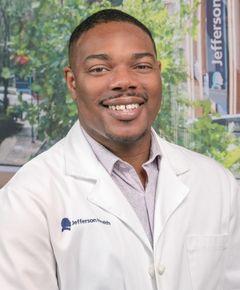
The news of a Parkinson’s diagnosis can be overwhelming. So many questions arise, including how it will change the person’s life, what lies ahead, and what to do first. Social workers can be a vital resource in helping a newly diagnosed person, care partner, and family navigate the road ahead, as well as provide ongoing support through the course of the disease. They are the health professionals who know and can coordinate many of the most helpful resources. Or as social worker Lance Wilson, LSW, C-SWHC, ASW-G, the education outreach coordinator for the Jefferson Health Comprehensive Parkinson’s Disease and Movement Disorder Center in Philadelphia, a Parkinson’s Foundation Center of Excellence, puts it, social workers are the Yellow Pages for health care, tying people into the resources they need. He says social workers can help put people’s minds at ease by assessing their needs and lining up professionals who can provide medical, mental health, spiritual services, and more.
Released: December 13, 2022
-
Lance M. Wilson, MSS, LSW, C-SWHC, ASW-G is a Neuroscience Medical Social Worker who works with patients, families, and care partners impacted by the diagnoses of movement disorders, such as Parkinson's Disease.
Lance is a Licensed Social Worker (LSW) in the State of Pennsylvania. Lance holds a C-SWHC (Certified Social Worker in Health Care) and ASW-G (Advanced Social Worker in Gerontology) both specialty certifications from the National Association of Social Workers.
Lance holds a bachelor’s degree in science (BS) in Human Services from Lincoln University of PA and a master’s degree in Social Service (MSS) in Clinical Social Work from Bryn Mawr College’s Graduate School of Social Work and Social Research. Currently, Lance is pursuing his clinical supervision for his licensure in clinical social work (LCSW) and is currently a PhD student of Social Work at Widener University’s College of Health & Human Services.

Want more?
Don't forget to subscribe! There are many ways to listen: Apple Podcasts, TuneIn (Amazon Echo), Spotify or RSS Feed. (Need help subscribing? See our quick guide.)
For all of our Substantial Matters podcast episodes, visit Parkinson.org/Podcast.
Related Materials
Related Blog Posts

7 Helpful Tips for Finding Your Ideal Mental Health Counselor

Charting a Course for Parkinson’s Care
