Episode 2: The Parkinson's Foundation’s Role in Improving Standards of Care
-
Dan Keller
Welcome to the second episode of substantial matters, life and science of Parkinson's. I'm your host, Dan Keller. At the Parkinson's Foundation, we want all people with Parkinson's and their families to get the care and support they need. Better care starts with better research and leads to better lives. In this podcast series, we highlight the fruits of that research, the treatments and techniques that can help you live a better life now, as well as research that can bring a better tomorrow.Dan Keller
Today, we're speaking with Peter Schmidt, PhD, Senior Vice President and Chief Mission Officer of the National Parkinson Foundation, a division of the Parkinson's Foundation. He was interviewed at the World Parkinson Congress last September by Lotta Levy, our Corporate Relations Manager. They discussed improving standards of care for people with Parkinson's and where to go for great interdisciplinary care. Key to those discussions are the Parkinson's Foundation Centers of Excellence and Parkinson's Outcomes Project. Currently, 42 Parkinson's Foundation Centers of Excellence deliver care to about 110,000 people with Parkinson's in the United States and around the world. These top tier Parkinson's centers comprise an international network where dedication to patient care is paired with groundbreaking research. Leading the way in research, the Parkinson's Outcomes Project is the largest ever clinical study of Parkinson's disease. Nearly 10,000 patients from four countries are enrolled, along with almost 6000 caregivers, leading to new discoveries and best practices in care that will change the course of Parkinson's. Lotta first asked Dr Schmidt to explain the vision and focus of the Parkinson's Foundation.
Dr. Peter Schmidt
So when we talk about, what is our vision, what are we trying to do with the work that we focus on? We have a center of excellence program where we evaluate the structure in which care is provided. We have our Parkinson's Outcomes Project, where we look at what patients are being provided in their care and what outcomes are being achieved through that process. And our goal with this is to every day, every month, every year, measure the things that are occurring in the context of Parkinson's care, look for the things that are delivering the best outcomes, and push our centers to shift their care to the things that achieve the greatest good for their population. And as, over time, we introduce new therapies, the things that work for patients are going to change, and we need to continuously pursue and continuously optimize the care patients receive so that they're getting the things that make a difference in their lives. With a process of continuously measuring and improving care, I know that we can make a difference, and I am reminded of the John F Kennedy line when he was talking about the Apollo program and launching the Apollo program, where he said, we choose to do these things, not because they are easy, but because they are hard. These are hard problems. By facing them and fighting to achieve the goals that are possible with our capabilities, we can make a difference for people. And it may not be easy, but it is worth doing. Two years ago, we hired a great neuroscientist who understood the treatment of neurological disorders but was not a Parkinson's specialist, and we said to him, talk to the neurologist in our community, and let us think about what is the science that's going to drive forward the best benefit to patients. And he came back to us and he said, Pete, there is a false dichotomy between care and cure. The things that we can do to deliver better outcomes to our patients are going to help them, and they're going to help scientists to develop new therapies and get them through the process of proving that they work and distributing them into the community. If we can treat patients in the ways that can most effectively manage their disease, then the first thing that we do is we give them a great quality of life, but the second thing that we do is we make clinical trials better. It is easier to find patients who are well managed and who can be included in a clinical trial and will have low variability with other similar patients, so that when we look at the effect of a new drug or a new therapy or a new way of organizing a clinic, that we can see that effect faster and with fewer patients, driving our goal of lower cost and faster access for everyone with the disease. So my team and I all believe that the things that we do to help people live a better life with Parkinson's today are going to pay dividends for those people now, and are going to pay dividends down the road in terms of faster insight into how this disease can be effectively treated.Lotta Levy
So with your Parkinson's Outcomes Project, what is it that you hope to learn, and how are you achieving success in that?Dr. Peter Schmidt
So what we're looking at now is, what are the aspects of care that make a difference in patients' lives? What are the things that drive the greatest capabilities to improve the status of people with the disease? One of our early findings, we've all looked at exercise and physical therapy and occupational therapy and speech therapy and all these different modalities of care, and we know that those things are making a difference in patients' lives, but the fundamental feature of treatment that enables all the rest of those things is great medication, getting patients to a neurologist who knows the way to manage the symptoms of the disease. The whole interdisciplinary team model of care for Parkinson's stemmed out of the introduction of levodopa, the introduction of a medication that can effectively replace the dopamine that patients lose when they have this disease. Prior to that, exercise was not enough. We really couldn't effectively manage the disease. With adequate dopamine replacement therapy, we can take the other modalities of care and use them to make a difference and to help patients to live a better life and to prevent falls. So our first focus in this is to figure out what is optimal medication, what are the things that change patients' life and can enable them to engage in the other activities that are going to ensure that they're more mobile and able to engage in the activities that they enjoy. But the fundamental feature of this is getting patients the medications that are going to help them replace the lost dopamine.Lotta Levy
Based on what you've gathered so far, what kind of places can patients go that deliver that level of care?Dr. Peter Schmidt
So we wish that patients could get that level of care in any setting, but in today's healthcare system, the best place to go is a center that's got a academic movement disorder neurologist who practices medicine in the context of a great interdisciplinary team. And that team may not be all co resident in the same clinic, but can be dispersed across the system. If for patients who have to drive an hour or two hours to see their neurologist, a great neurologist will know who to send them to in their own community, who can help them with their disease. But the fundamental feature is the first thing that you need to find is a neurologist who truly understands Parkinson's disease, and those neurologists are movement disorder specialists.Lotta Levy
So what is the most interesting thing that you've seen in the data so far?Dr. Peter Schmidt
So I think there are three really interesting things we've been able to discern from the data so far. The first one is that by looking at the patients in our cohort, we've been able to construct a delayed start trial of exercise. The delayed start trial is the way that people show whether or not a treatment will change the course of the disease, change the way a patient experiences the disease. Now we're not looking at the biology of the disease, we're looking at how patients experience their lives with it, but at the end of the day, if patients are happier and feeling better and experiencing their symptoms less, we've made a change that makes a difference in people's lives. So what we found is we were able to identify patients who, at baseline, did not exercise, and who by the time two years had gone by had started to exercise. And then we split those into two groups, the people who started to exercise in their first year in the study, and the people who started to exercise in their second year, and we were able to show that the earlier patients started exercising, the greater the benefit that they were able to achieve, and the longer it lasted. The insight from that is it's not about early in the disease course, it's about early from now. If you're not exercising, start exercising now. That's where the difference comes. Don't wait. So that's the first really interesting thing that we've been able to do in the database. A second thing we've been able to do, we've been able to basically construct a trial of a medication. So we've done this with a drug called amantadine very recently. Amantadine is to treat dyskinesia, and we are able to look at patients who did not take amantadine and did not experience dyskinesia, who then started to experience dyskinesia and were treated with amantadine, versus patients who did not. And we were able to show that the patients who experienced dyskinesia and were treated with amantadine had a significantly higher probability of a reduction in their dyskinesia, showing us that that drug appeared to be effective. Now this is the gold standard for a clinical trial, is a randomized clinical trial with blinded raters so nobody knows who's getting the drug and who's getting the placebo. But those things can take years and can take an enormous amount of money. We were able to create this analysis in an afternoon, and so the fact that we were able to draw this insight in such a short time and in such a compelling way can help us to jumpstart, it can help us to screen out those clinical trials that we might initiate and might wait 18 months or two years to get an answer from. If we could say I believe that this is going to work or I believe this thing is not going to work based on the data that we've got, then we can say to people don't spend your time or money or effort on this trial, let's look at something else that might really make a difference. So the data that we've collected on amantadine has said to us we should be looking at this. This does seem to be a powerful treatment for dyskinesia. And the third thing we've looked at is psychosis. So one of the things that we try to identify are what are the factors that have the greatest impact on quality of life in patients with Parkinson's, and we've identified a couple of things. If you suffer from depression, that has a very strong impact on quality of life, or if you've been hospitalized, that has very strong impact on quality of life. Both depression and hospitalization affect a large number of people. A much smaller number of people in any given year experience psychosis, but when they do, it has a much more dramatic impact than either depression or hospitalization. So although it is less common, it is much more dramatic in its impact. And so we've been spending some time looking at psychosis and looking at the treatment of psychosis and what works and what doesn't work, and we found that in many cases psychosis may be caused by medication, and by changing medication that's able to address the psychosis. But in some cases, patients experience psychosis because of changes in their physiology because of the disease, and in those cases we've been able to show that often the use of an antipsychotic drug can make a difference in their lives. These are all things that for the most part were not well understood. So if you look at trials of antipsychotic drugs, it always starts with the patient having psychosis. But because we've got this very large data set where we followed patients for many years, we're able to back up and look at those patients at the beginning of the problems. How were they doing before the neurologist even identified that they were experiencing psychosis? So we've been able to look at that and look at how that condition develops over time, and be able to get greater insight into what can be done early in the course, what can be done at the very first signs that somebody is experiencing a challenge of a hallucination or confusion, and what are the things that we can do to help address that. And I think that we're going to be able to provide recommendations to clinicians that will help them to address those things.Lotta Levy
So it sounds like you have done a large volume of analysis already. Do you feel like you're going to have a point in which you want to make this data available to qualified researchers and let them do their own analysis?Dr. Peter Schmidt
Probably the majority of the analyzes we've done have been ones that have been asked of us by researchers out in the community, so we have to date never told anyone no, you may not have access to the data, and it may not have an analysis from it. This is designed to be a resource for the community. In our grant making, we think of the funds that we're able to provide in issuing a grant as a resource that we use to help improve care by funding research that's going to change the way care is provided. Similarly, we can provide data to be a resource that researchers can use to better understand Parkinson's. We've created infrastructure around this database that can then help other people to very quickly identify issues that they can treat or to plan trials that they can do to improve care.Lotta Levy
Thank you so much.Dan Keller
I hope you are excited about the research Dr Peter Schmidt described, and that you will start to put together your interdisciplinary care team. For help finding expert care near you or to get involved in a research study, call our helpline. I'll give you the number in a minute, and if you want to leave feedback or comment on this podcast or any other subject, you can do it at parkinson.org/feedback. We will respond to some questions in future episodes. At the Parkinson's Foundation, our mission is to help every person diagnosed with Parkinson's live the best possible life. To that end, we'll be bringing you a new episode in this podcast series twice a month. Coming up in our next episode will be a conversation with Dr Boss Bloom, explaining why exercise is so valuable for people with Parkinson's. Till then, for more information and resources, visit parkinson.org or call our toll free helpline at 1 804 4PD Info, that's 1-800-473-4636. Thank you for listening.
Dr. Peter Schmidt of the Parkinson’s Foundation explains where people with Parkinson’s can go to receive the best interdisciplinary care and how the Foundation is improving standards of Parkinson’s care around the world. The Foundation's Centers of Excellence network and the Parkinson's Outcomes Project are key aspects of the discussion.
-
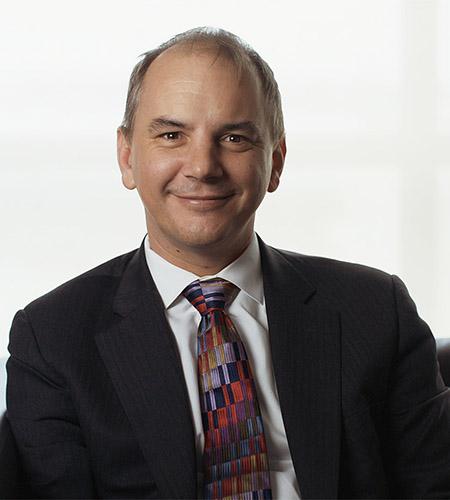
Peter Schmidt, PhD is Senior Vice President, Chief Research & Clinical Officer at the Parkinson’s Foundation and oversees research, education, and outreach initiatives. Dr. Schmidt leads the Parkinson’s Outcomes Project, the largest clinical study ever conducted in Parkinson’s disease, and is active in research on diverse clinical areas in Parkinson's.
Schmidt serves as an advisor to several government, industry, and foundation initiatives. His focus has been setting clinical standards, and he is involved in several national-scale quality initiatives, including the US National Quality Forum and the Fresco Network in Italy. Schmidt is bringing to Parkinson's ideas from across health care and is on advisory committees for projects in wearable sensors, Huntington’s disease, Glut1 deficiency syndrome, cystic fibrosis, inpatient rehabilitation, and telemedicine. His work has been covered widely in the press and he has contributed to AHRQ and Commonwealth Fund publications; he has been an invited speaker for the NIH, and internationally at patient and professional conferences.
Schmidt joined the Parkinson’s Foundation from Cronus Partners, an investment bank, where he focused on health care innovation. Previously, Schmidt created chronic disease management systems and served as Chief Operating Officer of a joint venture of Oxford, Stanford, and Yale delivering on-line education.
Schmidt earned his bachelor's degree at Harvard University and was awarded an MS and PhD from Cornell University, Sibley School of Mechanical Engineering, where he studied gait and balance and total joint replacement. He completed a fellowship at the Hospital for Special Surgery in New York.

Want more?
Don't forget to subscribe! There are many ways to listen: Apple Podcasts, TuneIn (Amazon Echo), Spotify or RSS Feed. (Need help subscribing? See our quick guide.)
For all of our Substantial Matters podcast episodes, visit Parkinson.org/Podcast.