Episode 195: Nutrition Tips for Eating Well with Parkinson’s
-
Dan Keller 0:08
Welcome to this episode of Substantial Matters: Life and Science of Parkinson's. I'm your host, Dan Keller. At the Parkinson's Foundation, we want all people with Parkinson's and their families to get the care and support they need. Better care starts with better research and leads to better lives. Today, I'm talking with Dr. Lisa Deuel of the University of Vermont Medical Center for some nutrition tips for eating well with Parkinson's disease. There is no specific diet recommended for people with PD, but in general, eating what's good for the heart is also good for the brain. In this regard, she gives some attention to the Mediterranean diet and the MIND diet, as well as the value of consulting with a nutritionist who would take all of one's medical conditions into account. I first asked Dr. Deuel what a healthy diet for someone with Parkinson's looks like.Lisa Deuel 1:11
A healthy diet for someone with Parkinson's kind of means the same as it does for someone without Parkinson's disease, and by that I often tell people there really is no specific Parkinson's diet, but anything that you might consider a heart-healthy diet, like the Mediterranean diet, would also be considered a brain-healthy diet. So things like the MIND diet kind of branch off of that as well. So these are the types of diets that you would probably talk to anybody about, Parkinson's or no. In some sense, what we're doing is just emphasizing higher intake of healthy fats and complex carbohydrates, things that support the blood vessels, the same type of blood vessels in your heart that travel up to the brain as well and throughout the body. So anything that you do that's going to have a positive impact and lower your risk of heart disease is also going to theoretically lower your risk of brain disease as well. So, again, I would suggest a healthy diet for somebody with Parkinson's disease the same way I would recommend that for somebody without.Dan Keller 2:18
How does the food we eat affect the brain? You alluded to blood vessels in the brain, but are there other ways that food really specifically affects the brain?Lisa Deuel 2:30
The best ways that I talk about it or think about it is that sometimes we get these ideas ingrained that fats are bad, that we don't want to eat too much fat, and we don't want to eat too much carbohydrates, and all of that is bad. But ultimately, in actuality, we need all of these things. We need them in the right balance. And again, there's certain types of fats that are healthier or better for us, and there are certain amounts of proteins that is important to help with a lot of the functions in our brain and body to keep everything working properly. Same with carbohydrates, because this idea that you have to be on a low-carb diet and you can't take in carbohydrates, but we need these carbohydrates. We need those sugars to provide energy throughout our body and our brain. So again, thinking about things that are healthy for brain are just the core nutrients, macronutrients, and vitamins and minerals that allow all these functions throughout our bodies, allow our cells to communicate to each other, and keep cells alive. Whether that's nerve cells or other type of cells, they all require all these nutrients to really function. So, if you deprive your body of any of these nutrients, you're going to run into trouble. You're not going to be able to have the energy that the cells need to stay alive, and then on a broader scale, the energy to be able to function and do any of our day-to-day activities and stay active.Dan Keller 4:03
After all these years of research and funding, sounds like we're getting back to what my mother always told me: everything in moderation. So,Lisa Deuel 4:13
Yeah, I use that phrase a lot too because, again, it's almost, I think, a bad thing to think about food as being good or bad. Obviously, there are types of foods that you want to take in on a higher level and things you want to minimize. I try to tell my patients, you know, I don't want to tell you you can't have anything good, anything that you enjoy, but you really want to think about the big picture and try to minimize processed foods or really fatty foods or things that are fried. Doesn't mean you can't indulge here and there, but when you're really thinking about your overall health, your brain health, there are certain things that you want to—you want to be eating and consuming more routinely.Dan Keller 5:03
You had mentioned a variety of kinds of nutrients, fats, carbohydrates, protein, micronutrients. Specifically on protein, that can interfere with the action of levodopa, the absorption of it. So, how does timing of meals and timing of medication go together?Lisa Deuel 5:24
Sure. Yeah. Sometimes I feel like I'm giving people at any given time some conflicting information. The most important thing to remember is that, again, your body needs protein. It needs those amino acids to be able to do any sort of functioning. We need that to maintain muscle mass, to be able to be active and provide energy. So protein is really important. But you alluded to a very important point, which is the medication that we think about that most people with Parkinson's take at some point is carbidopa-levodopa, and that medication uses the same transporters to get into the body, and then once they're in the body, they use those same transporters to get up into the brain as certain amino acids that come from protein that are the building blocks of protein. So there's a theoretical risk that if you took your Parkinson's medication, you took your carbidopa-levodopa, but you ate a really high-protein meal at the same time, you might effectively saturate those transporters, so there's not enough to really pick up all that levodopa and let it cross into your body and let it make its way up into the brain. So we usually recommend that folks separate. So again, it doesn't mean you don't eat protein at all. It just means if you're going to eat protein, that you take your medicine before a high-protein meal or before you eat on an empty stomach if you can, and that way you allow your medication to get broken down and absorbed into your system. Again, I usually say about 30 minutes after that point. If you ate a meal, even if it had a lot of protein in it, the medicine would already kind of be doing its thing and having an effect, and then you could eat the protein after. The other option or something to think about would be taking in protein, kind of in a consistent amount throughout the day. So we don't want one big high-protein meal where we really know that could impact the medication. But if you eat a small amount of protein throughout the day, then in some ways it's just very predictable. Even if there is a little bit of an interaction between that protein and the medication, it's generally speaking the same throughout the day, and you can just balance that out with maybe a slightly higher dose of medication. All of that is a little bit theoretical as well, though. I have plenty of people who take their medication. They try to take it on an empty stomach, but, you know, things happen, and maybe you've eaten lunch and realized that you forgot your dose of medicine. I still recommend people take the medication. I wouldn't wait; otherwise, you'd be waiting a couple of hours before you take your pills and might experience more trouble with the medication wearing off. So I still recommend people take it, and then only if you notice that maybe this dose didn't kick in quite as well as it usually does, you might take a little bit extra, but at the same time, I also have a lot of people who experience some nausea or even vomiting with the medication. That's one of the most common side effects that we see with the carbidopa-levodopa. So some people can't take it on an empty stomach. It just won't sit well with. The main take-home is I ask patients not to really drive themselves crazy with this idea of, I can't take my medicine at the same time of a meal, or I can't take it with protein. At some level, it just becomes more burdensome trying to plan out when you're going to do certain things, so as long as you're pretty consistent throughout the day, most people do pretty well, and I haven't run into too many times where it's been a big issue.Dan Keller 9:11
There's terms like neuroprotective and anti-inflammatory that get thrown around a lot in conversation about Parkinson's and nutrition, as well as other settings. So, what do these terms really mean, and what do we currently know about the role of foods in terms of neuroprotection or inflammation?Lisa Deuel 9:35
It's kind of a tricky topic, and I'll start off by saying, to my knowledge, there are really not any specific foods where I say to my patients, eat this or consume this food, so it slows down your Parkinson's. So I just don't think that data exists specifically for Parkinson's disease. There is, I'll say, the one caveat to that: there are some types of beans and legumes that have naturally occurring levodopa in them, so it could actually treat Parkinson's symptoms, but not doing anything to change the disease process. So again, we're really on the lookout for that. The whole goal, you know, we have symptomatic treatments for Parkinson's, but we don't have anything from a treatment standpoint to slow disease progression, and we've looked at things like coenzyme Q10 in large studies, which, in theory, in knowing the mechanisms, should have some benefit on cell death and being neuroprotective, but just haven't panned out in long-term studies. But the more general idea of, say, anti-inflammatory and neuroprotective foods and nutrients is the idea that you could protect cells and help support the clearance of toxins that might build up and injure the cells. So I think that's still important, thinking about overall health and how our bodies function. We kind of have these built-in mechanisms anyways, right? If there's some sort of toxin in the body, our cells have ways of clearing that toxin to keep them healthy, and if too much toxin builds up, it can send it on a pathway to cell death so that those toxins don't spread. But I think the problem is, you know, again, those are just mechanisms that are built in naturally to deal with the health of our cells as a whole. But they haven't been shown to be helpful for the specific cell death in this specific area of the brain that we see in Parkinson's disease. Then again, we've looked at this in large studies. Supplements and treatments might be neuroprotective, but so far it doesn't look like there's anything, even if they're anti-inflammatory or thought to be neuroprotective, that actually slows down the cell death that we see in Parkinson's disease.Dan Keller 12:01
There's always talk about the latest diet or other ones coming back to be part of the fad of the moment, and a lot of them claim to improve brain health. You have alluded to what's good for the heart is good for the brain because blood vessels that get clogged up in the heart also can get clogged up in the brain. Can you walk us through some of the more common diets, like Mediterranean and MIND, along with any potential benefits or limitations?Lisa Deuel 12:32
Sure. My general take-home on diets in general is, like we talked about, that are too restrictive, maybe, and saying you can never do this, or you have to always do this. I like the Mediterranean, the MIND diets because I think they're a little bit more flexible and just really focuses on foods, again, that are higher in antioxidants, so things like fruits, berries, things that are high in fiber, again, more fruits and vegetables, beans, healthy fats. So I know a big component of the Mediterranean diet is fish as a source of omega-threes and healthy fats, avocados. I think the idea with all of this is by taking in more of these healthy, high-fiber, high-in-antioxidant types of food, then you just naturally tend to eat less of other types of foods that are more processed, more fried. Again, I try to move away from that idea of this is a bad food and that you should feel bad about yourself if you eat it, but just the types of food that provide less nutrients. I think a diet, again, if you're going to follow a diet, it's one that really kind of promotes doing more of the good things and not telling you you can't do these other things, but maybe you do that in moderation, or maybe by doing more of these good things, you're just less likely to have some of the less nutritious types of food.Dan Keller 14:05
Some years ago, I interviewed a cardiologist from the University of Massachusetts, and he did cardiac rehabilitation. People had already had a cardiac event, and he said some responded well to making incremental changes in their diet to eat more healthy foods and eliminate the unhealthy ones. He said others responded much better by acting. I would tell them, "You've moved to a new country. This is the kind of way they eat there, like the Mediterranean diet," as opposed to them trying to say, "A little bit of this, and I can't have some of that." But he said some of them just wanted to, in their head, move somewhere else. So for somebody feeling overwhelmed with all the nutrition advice, what are some realistic steps they can take to support their health as well as overall well-being besides Parkinson's?Lisa Deuel 15:00
Sure. I think one thing that is probably underutilized is talking to a nutritionist. Usually, they're available, if not through a primary care office, somewhere in the community. So, somebody who's trained to really be able to understand the nuances of different diets and what an individual person needs in terms of calories, and again, calculating protein that somebody should take in on a daily basis and carbohydrate. So, I think it's underutilized, but that's a great resource. You know, Parkinson's is not in a bubble. There are other things going on here. So, you know, I have my recommendations because of my biases towards brain health and heart health. But somebody may have other medical issues, dietary restrictions that can be really challenging to balance out. If, for example, somebody's, you know, dealing with blood pressure issues, that might contradict some of the things that I would say to do for their Parkinson's diet and vice versa. I guess my point being, people are much more complex than just the Parkinson's. So having somebody that can look at the big picture and say, well, for the Parkinson's we would recommend this, and for your other medical issues we might recommend this, but also to see what's actually feasible. That would be my other thought about this: is really on an individual basis exploring what seems to be feasible for a person. So it doesn't make sense for me to tell somebody that they have to eat certain foods, certain fruits or vegetables, if they don't like them. So I think that's part of it too, is kind of looking at what the recommendations is for certain types of food, and then deciding or picking things off the list that you like. And then again, maybe instead of being excluding things from your diet, saying, "Well, what are the things on this list that are brain healthy, that are high in fiber, that are high in nutrients that I do like?" And then working from that mindset to kind of introduce those or increase how much of that you're taking in, and then as a result, again, being less restrictive and saying, "I can't eat this," but maybe you eat less of it just because you're finding healthier alternatives.Dan Keller 17:21
Finally, have we missed anything important or interesting to add?Lisa Deuel 17:27
I think, you know, my overall take-home is, you know, we talk about brain health and we talk about health overall, but just how doing all of this, like you said, you're, you know, the food that you eat is feeding your body, it's providing energy, and it's allowing you to do the things that you need to do on a daily basis, and allowing you to be more active. And ultimately, that comes down to this core principle in Parkinson's disease that we emphasize all the time: is we want people to be active. We know even if there's not a specific diet out there that's been proven to slow Parkinson's, we do think that physical activity may be neuroprotective. And by eating a good diet and taking in those nutrients and taking in foods that can give you more energy and feel better, then the hope is that the downstream effect of this is that you'll be more active, and you'll be able to engage in more physical activity and aerobic exercise that can have a positive impact on the disease progression as a whole.Dan Keller 18:36
Very good. Thanks a lot. It's a lot to digest. No pun intended. Yeah, your brain digests things too.Lisa Deuel 18:45
True, and I think when it feels overwhelming, that really is the time to ask your doctors or see a nutritionist rather than trying to figure all this out on your own. There's so much information out there, like you said. How do you figure out what works for you? How do you process all this and digest the information that's out there to make it fit to you? And that's what we're all here for—is to help out with that.Dan Keller 19:17
For more tips on diet and nutrition, search our website at Parkinson.org for nutrition. You'll find a blog post called "Nourishing Wellness: How to Harness Food as Medicine for Parkinson's," which goes over many of the topics covered in this episode. Our PD library also has a fact sheet that lists specific foods and their impact on the body. We'll include the links to these resources in the show notes. As always, our PD information specialist can answer questions and provide information in English or Spanish about this topic or anything else having to do with Parkinson's. You can reach them at 1-800-4PD-INFO. If you'd like to leave feedback on this episode or to let us know what other topics you'd like us to cover, visit Parkinson.org/Feedback. Be sure to subscribe and rate us on Apple Podcasts or wherever you get your podcasts. At the Parkinson's Foundation, our mission is to help every person diagnosed with Parkinson's live the best possible life today. To that end, we'll be bringing you a new episode in this podcast series every month. Till then, for more information and resources, visit Parkinson.org or call our toll-free helpline at 1-800-4PD-INFO. That's 1-800-473-4636. Thank you for listening.
Nutrition plays an important role in supporting overall health, but despite the many diets and wellness trends out there, there is no Parkinson’s disease-specific diet scientifically proven to slow Parkinson’s progression.
In this episode, we speak with Dr. Lisa Deuel from the University of Vermont Medical Center to dispel myths about nutrition in Parkinson’s. She shares why it’s more helpful to think about balance and moderation rather than restricting and labeling food as “good” or “bad”. She explores the evidence behind diets like the Mediterranean and MIND (known as Neurodegenerative Delay) and breaks down commonly used terms like “neuroprotective” and “anti-inflammatory” so you can make more confident food choices.
Key Takeaways:
- Reframe thinking of food as “good” or “bad” to seeing food as fuel for your body.
- Research is still lacking on whether certain foods can slow the progression of Parkinson’s.
- Follow a sustainable approach that is individualized to your unique needs and preferences.
Released: October 13, 2026
-
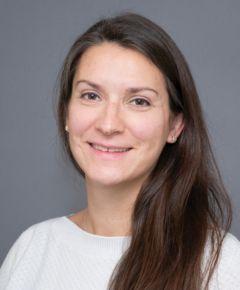
Dr. Deuel is a Neurologist and Movement Disorder specialist at the University of Vermont Health Network in Burlington, VT. She completed her Neurology residency at Albany Medical Center in Albany, NY followed by a two-year Movement Disorder fellowship at the University of Colorado in Aurora, CO.
In her current role, she provides comprehensive, patient-centered care for individuals with PD and other movement disorders. She has particular interest in gastrointestinal symptoms associated with PD, especially the relationship between gut health, environmental exposures, and inflammation on symptoms and disease progression.

Want more?
Don't forget to subscribe! There are many ways to listen: Apple Podcasts, TuneIn (Amazon Echo), Spotify or RSS Feed. (Need help subscribing? See our quick guide.)
For all of our Substantial Matters podcast episodes, visit Parkinson.org/Podcast.
Related Materials
Related Blog Posts

Start 2026 Strong: Simple Resolutions for Better Health

