Episode 164: Reintroducing Our Podcast Moderator
-
Danielle Apollo 0:08 Welcome to this episode of Substantial Matters: Life and Science of Parkinson's. I'm Danielle Apollo, senior coordinator of the Community Engagement Team here at the Parkinson's Foundation. At the foundation, we want all people with Parkinson's and their families to get the care and support that they need. Better care starts with better research and leads to better lives. In this podcast series, we highlight the fruits of that research—the treatments and techniques that can help you live a better life now, as well as research that can bring a better tomorrow.
If you have been listening to our podcast for a while now, you may have noticed a different voice than who you normally would hear from. As we start the new year, we thought it may be nice to switch gears and reintroduce our podcast host and moderator, Dan Keller. This time around, we speak with Dan about what brought him into the Parkinson's field and ask him to share about his work as our podcast moderator. Hi, Dan. Let's start off by having you share a little bit about who you are and where you are from.
Dan Keller 1:21 Okay, I started out as a laboratory researcher. I have a PhD in immunology and microbiology, and when I was doing research at the University of California, San Diego, I felt that I wanted to get out and around more different topics every day, not be in the same room with the same people on the same project for months to years on end. So I went back to school and did coursework equivalent to a degree in journalism with a broadcast emphasis, and then I had an opportunity to work for an organization out of Connecticut called Physicians Radio Network, which broadcasts medical news to physicians on a special receiver. I was a freelancer for them in San Diego for some years, and then went to work in-house with them in Connecticut.
Eventually, they went out of business, and I was firmly entrenched in broadcasting at that point. Since then, I've done a radio series for a few years running a while ago for the American Heart Association, and I have some European clients. I've guest-hosted the Talk of the Nation radio show and some other things in broadcast.
Then a colleague of mine approached me and said, "Well, you know radio and audio," and he was heading up a project in multiple sclerosis, but he said he needed someone who also knew something about science and immunology, as well as broadcast. Did I know anyone? And I said, "Bob, that's me." So we did that series for a couple of years in multiple sclerosis.
Then what happened was I was at a neurology meeting, and I was standing at a poster session where people put up their trial results on posters, and there was a person standing next to me. His name tag said Peter Schmidt, Parkinson's Foundation Chief Mission Officer, and I said, "What does the Chief Mission Officer do?" and he said, "I give out the money." I said, "Oh, okay. Do you want a podcast series?" and he said, "Send me something." I sent him a couple-page proposal, and we were off and running. So I'm a freelancer and a contractor to the Parkinson's Foundation, not an employee, but that's how we kicked this off.
Danielle Apollo 3:51 So you've been involved with as many different types of diseases, whether it's heart disease, multiple sclerosis, or you've done work with immunology as a researcher. Ever since you've joined the Parkinson's Foundation and been our moderator for the past five years or so, I'm just curious to see if you've been more involved in it. Have you been doing your own work as far as seeing what's going on update-wise with the Parkinson's field, or just if you've been involved in Parkinson's disease a lot more now since getting involved with the foundation?
Dan Keller 4:25 Absolutely, and I've learned a lot. When my colleague Bob approached me about the multiple sclerosis, I was never really that deeply into neuroscience, so that got me into it. Then, fortuitously, this podcast series with the Parkinson's Foundation has also brought me deeper, and I find it fascinating, and I've learned a lot.
One thing I've learned is there are effective treatments, and that people can lead productive lives in spite of Parkinson's disease. I've also learned a lot about the medicine involved. We've done a fair number of scientifically based episodes, and we've talked about drugs; we've talked about things coming along, such as stem cell therapy, cell-based therapies, and gene-based therapies. So it's really an exciting field at this point, and I'm pretty well committed to it.
Also, the Parkinson's community is pretty vibrant, and I've found out that there are a lot of people working in it to advance the field, and also a lot of people volunteering, so I actually see good things coming along. I don't know how long it will take to find a cure, but if you can stop the disease in its tracks, that would be a major accomplishment.
Danielle Apollo 5:47 I'm curious to see if there were any episodes in particular—and I know you just named a few topics—but any episodes that might come to the top of your head, whether it's one of your favorites or just stood out in memory?
Dan Keller 6:01 I'd say that I've talked to a lot of interesting people, whether they're clinicians, scientists, people with Parkinson's, or other healthcare professionals, such as occupational or physical therapists and speech-language therapists. But to name a couple of actual podcasts we've done, I remember one with Tanya Simuni, and she was talking about participation in research, and it is a very vital but demanding sort of way to participate. People have to show up on time for their trials, but I think it's very rewarding, and Tanya Simuni laid out why participation in research is important and how to get involved.
Another one I did was with a high school student named Erin Smith in Kansas, and she had designed a system to do videos of people's faces while they watched certain commercials—ones that she had chosen for the project—and analyzing facial movements, she could actually diagnose Parkinson's disease quite early, probably before symptoms even appeared. She was an outstanding high school student, to say the least, and when I said to her, "What do you want to do next?"—meaning how do you want to develop this—she sort of laid out her life plan. She said, "Well, I'm going to go to Stanford, and then I'm going to start a company, and then we're going to develop more things like this." It was really amazing to hear, and I'm glad there are really people like that out there—young, enthusiastic, and motivated.
Danielle Apollo 7:46 I will say we are very intentional in the topics that we choose and the speakers that we invite to our podcasts. We choose topics that are based on the direct feedback from our community members, whether it's sifting through paper evaluations from in-person programs out in the community, or through PD Health @ Home, our online educational webinar series. We also get feedback from folks that fill out an online survey pushed through our social media channels, like Facebook or Instagram, or also just directly from our podcast survey. The foundation encourages feedback, both good and bad, and we look through them and see how to best adjust our programming to better meet the needs and interests of the Parkinson's community.
I always find it fascinating, all of the different people that are involved in putting our podcast together and selecting topics and inviting speakers, anywhere from a neurologist to a high schooler developing research, and just seeing all of the different range of people that are just very dedicated to the Parkinson's world and trying to do our duty as far as trying to find a cure, trying to find a better way to manage, and improve the lives of people living with Parkinson's. So, Dan, I know you've spoken with such a range of experts for the podcasts. Is there a common theme that you seem to hear in your conversations with them?
Dan Keller 9:16 I think a few themes have emerged. One is very practical, and it's: have a good support team. A movement disorders neurologist, a team that can access physical therapy, occupational therapy, social workers, and counselors at the Parkinson's Centers of Excellence. Those, I think, exist in aggregate and they're already put together, but even if you're in an area that doesn't have a Center of Excellence, you can usually find a good movement disorders team—either they exist already, or you can be referred to them and draw in the services you need.
Another theme that has emerged is that of exercise. Exercise seems to be the only thing right now that can slow down the progression of Parkinson's disease, possibly. I talked to someone who's a Hollywood writer, and he said he's really gotten into exercise every day, and I said, "Were you exercising before?" He said, "No, but this has really motivated me to do it, and now I'm very dedicated to doing it." So, I think you can incorporate it into your lifestyle pretty well, and it has other benefits too, obviously, for cardiovascular health, just movement, and even gastrointestinal function. So, exercise is really important.
Another thing that's come out from all of this is that the Parkinson's Foundation website is an amazing resource in breadth and depth, and you can find almost anything you need there. If you can't find something, call and ask a helpline specialist at the Parkinson's Foundation.
I think one of the most important overriding considerations is Parkinson's disease does not define people. People still have lives. Parkinson's is something they have to deal with, but they can still pursue many aspects of life and enjoy it. So, when someone gets a diagnosis, I know it can be overwhelming—so I've heard from many people—but one thing to dispel is that this is going to take over your life, and it doesn't have to, because you can deal with it, work with your healthcare providers, and enjoy life.
Danielle Apollo 11:38 So, it sounds like the common theme is find a movement disorder specialist, get involved in exercise, find resources, or reach out to let our Parkinson's Foundation helpline know if there is a resource that isn't available but maybe the foundation could help develop that resource, and then finally all of these different common themes are really one of the best ways to help maintain a quality of life with Parkinson's.
Dan Keller 12:06 Absolutely.
Danielle Apollo 12:08 So Dan, as a journalist, you've seen and produced many different types of media. What makes podcasts different?
Dan Keller 12:17 One thing is it's on-demand and it's niche-focused. Broadcast radio stations today are losing listeners; people want to program what interests them. In that sense, podcasts aren't broadcasting, but they're narrowcasting and appeal to certain audiences. Obviously, if you have a condition or a disease that interests you, you want to hear from people with common interests. You want to hear expert opinions about the disease or the condition.
Obviously, there are podcasts on all sorts of things: fiction, mystery, science, documentary. But I think healthcare podcasts are vital. The other thing is, since they're portable, you can take them on your cell phone, your tablet, laptops, or put them on an MP3 player, stream them, send files that you've downloaded to friends, or bring them to a support group meeting. So you can stream our podcasts or download them; they are on-demand, you can choose what to listen to, and like most other podcasts, they're archived, so you can go back and search for previous ones that may be topics of interest.
Danielle Apollo 13:31 I agree. I think of podcasts as really another form of receiving education and resources, whether it's through the foundation or other Parkinson's organizations. There's so many different types of education, whether it's printed books, digital fact sheets, Zoom webinars, YouTube, in-person programs. I mean, the list goes on as far as all the different ways to receive information, and I think podcasts are just another method for folks who maybe prefer the shorter length of our episodes, or maybe just want the highlights of a topic without needing to go too much into detail as far as the background goes. So, Dan, it's been over five years since you first started moderating for the podcast. What motivates you to continue being our moderator?
Dan Keller 14:22 Well, I've come to appreciate our audience and some of the things that they're going through with PD, and although I don't have it, I do feel a commitment to serve this population, both through the podcast and otherwise. In that vein, it motivated me to enroll in a year-long PD study as a healthy control at the University of Pennsylvania. I'm in the Philadelphia area, and besides adding to the data by participating in the study, it showed me the time commitment involved and also the personal reward for having contributed in some way to advancing the science of the field at Parkinson's.
So I understand what people may go through if they participate in a clinical trial or other kind of study, and I would encourage people to look into it for themselves. It's really rewarding. It helps advance the field, and I think the time commitment and even the involvement can be rewarding. You get to see what's going on in the clinical setting, talk to the researchers—obviously, their time is a bit limited, but you do have interaction with them. In that sense, Parkinson's clinical science advances one participant at a time. All these little drops of water together make up an ocean. So by participating one person at a time in research in aggregate, you're adding to a big knowledge base about Parkinson's disease and how it can advance.
Danielle Apollo 16:00 Yeah, getting involved in research is definitely one of the things that the foundation really pushes for. It helps advance research, but also just helps scientists and researchers try to better understand the disease so that they can better think of how treatment options can be adjusted to hopefully make things a little bit better for people with Parkinson's—so getting involved in research, for sure. And then I think just pushing the point: you're not alone. There are many other people who are going through similar things as you, whether as a person with Parkinson's, or whether as a care partner or a loved one of someone with Parkinson's. Just knowing that you are not alone in this world and that there are resources and support available for you to reach out to. So, in the next five years, Dan, what are you hoping you would see happen in our podcasts?
Dan Keller 16:53 Well, I'm a little biased. I mean, my background is in science, so I'd like to do some more episodes focusing on the biology of the disease and treatments that address the underlying biology, especially focusing on new things coming along. As for the format of it, I think I'm pretty happy with it, but one idea I've had is that possibly people could call in to a recorded line at the Parkinson's Foundation and leave questions that we can have experts answer. Maybe we would do an episode here and there where we combine a few questions and have an expert or two address the answers to those. Also, starting in 2024, we're going to once-monthly English episodes instead of every two weeks, and those will be interspersed with occasional Spanish-language episodes, and I'd be glad to hear from listeners whether they think that schedule will be sufficient for them and just get their feedback.
Danielle Apollo 17:53 Yes, always, always, always open to feedback. So, for folks listening, just filling out our feedback survey, we always want to hear about what our listeners think about our episodes, what topics they would like to hear about, and what speakers they would potentially want the foundation to invite. So always open to any sort of feedback from the community. Now, as we wrap up, is there anything else you would like to share with our listeners, whether they may be new to our podcast or have been an avid follower since we first started?
Dan Keller 18:28 I think for new listeners, my suggestion would be to go to the archive of past podcasts at parkinson.org/podcasts and browse through them. Clicking on a title will bring up a synopsis of that episode, and people can see whether they want to listen to it or are interested. Also, they should poke around the website and find what other resources may be helpful, because there's a vast amount of information there, and there is a search function on the website to look for specific things. For people who've been listening to the podcast all along, once again, I'd like to hear their feedback about what they want to hear in future episodes, and that would be the best indication of how we can best serve the Parkinson's community.
Danielle Apollo 19:14 Thank you again, Dan, for enlightening me and switching roles for today's episode. I turn it back to you to close out the episode.
Dan Keller 19:23 Okay, thanks, Danielle. As always, our helpline specialists can provide information and resources for all aspects of Parkinson's disease. Just call 1-800-4PD-INFO. If you do want to leave feedback on this podcast or any other subject, you can do it at parkinson.org/feedback. If you enjoyed this podcast, be sure to subscribe, rate, and review the series on Apple Podcasts, or wherever you get your podcasts. At the Parkinson's Foundation, our mission is to help every person diagnosed with Parkinson's live the best possible life today. To that end, we'll be bringing you a new episode in this podcast series every month. Till next time, for more information and resources, visit parkinson.org or call our toll-free helpline at 1-800-4PD-INFO, that's 1-800-473-4636. Thanks for listening. Thank you.
As we start the new year, we wanted to turn the tables on our podcast host and moderator, Dan Keller. Dan has hosted our Substantial Matters podcast series since it began more than five years ago. In this episode, we share some insight into his background, his experience, and how he came to host this series, starting as a laboratory researcher, to journalism student, to medical journalist and broadcaster. He talks about the rewards of reaching the Parkinson’s community through podcasts, and shares his suggestions for new, as well as seasoned, listeners.
We invite our listeners to share your feedback by visiting Parkinson.org/Feedback. We want to hear your thoughts so we may continue to improve our podcasts and explore topics that are relevant to you.
Released: January 9, 2024
-
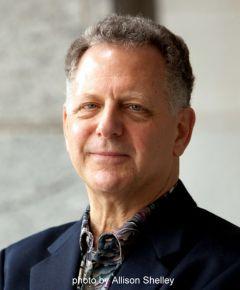
President, Keller Broadcasting, Inc.
Dan holds a PhD in immunology and microbiology and has also done research in hematology and neuroendocrinology. Combining this background with print and broadcast journalism training, he reports from major medical conferences worldwide as well as produces and hosts video segments and podcast series for clinicians, researchers, and patients and care givers. He has produced radio series and hosted call-in science shows for the public airing nationwide and has earned both print and broadcast awards.

Want more?
Don't forget to subscribe! There are many ways to listen: Apple Podcasts, TuneIn (Amazon Echo), Spotify or RSS Feed. (Need help subscribing? See our quick guide.)
For all of our Substantial Matters podcast episodes, visit Parkinson.org/Podcast.
Related Materials
Related Blog Posts


5 Honest Reactions to a Parkinson’s Diagnosis
