Episode 133: Channeling Creativity Throughout the Parkinson’s Journey
-
Dan Keller 0:02 Welcome to this episode of Substantial Matters: Life and Science of Parkinson's. I'm your host, Dan Keller, at the Parkinson's Foundation. We want all people with Parkinson's and their families to get the care and support they need. Better care starts with better research and leads to better lives. In this podcast series, we highlight the fruits of that research—the treatments and techniques that can help you live a better life now, as well as research that can bring a better tomorrow.
Parkinson's disease can be an overwhelming diagnosis, and while it may require some adjustments and accommodations, many people continue to work, enjoy life, and stay positive. Today's guest, Barry Blaustein, has continued to work as a Hollywood writer, producer, and director while living with PD. He and his writing partner developed many of the Eddie Murphy characters on Saturday Night Live, and notably wrote Murphy's movies, Coming to America, and its sequel, Coming 2 America—that title having the numeral two in the middle of it. In this episode, he describes how he has continued to work, what accommodations he has made, how he has taken to heart the advice to exercise, and how he views himself in light of his PD and maintains a positive attitude.
When were you first diagnosed with Parkinson's?
Barry Blaustein 1:43 This February was five years ago.
Dan Keller 1:46 Have you noticed any changes since then?
Barry Blaustein 1:50 In the beginning, I didn't notice any changes. In the last couple of months, I've noticed a slight regression, then I'm tremoring a little more, I'm getting a little more tired. And I have to remember, when I question that, I got to remind myself: You have Parkinson's, so there's a natural reason why. But I work out six days a week, and I hate working out, but I do it, and that's really kept the Parkinson's from getting much worse.
Dan Keller 2:21 So it sounds like you were not a workout fan before your diagnosis.
Barry Blaustein 2:27 No, no, I never worked out. Now I box three days a week. I just did a Pilates class before this interview. I did tai chi. You name it, I do it.
Dan Keller 2:41 What was your reaction when you first received the diagnosis?
Barry Blaustein 2:46 I was, you know, surprised, shocked, taken back. What happened is my mom had died about three weeks before, and she noticed—she was saying, "Barry, you're talking so low and your voice is getting... I can't hear you." And I would say, "Well, it's because you're old and your hearing's going." I made a promise to her that I'd see a doctor about this. Someone got me in to see a very good doctor, my doctor at Cedars. I got to see this doctor at Cedars, and he just said, "You have it." They do that test that seems so simple and say, "You have it."
And I was shocked, taken back, but I had to go teach, and I took the news with me down to the school. And the week before, I mentioned in class I might be a little late the following week because I was going to a neurologist because some people think I have Parkinson's, and I made a joke about it. And a student started crying, and she's going, "Oh, my father has Parkinson's, it's not enough to make fun of and all that." And I said, "I'm not making fun of it." And I remember talking to her before the next class, I just came back with it: "I do have Parkinson's. Would you be upset if I talked about it?" She said, "No, you can talk about it."
And I talked about it, and I live about an hour away from where I teach, and by the time I came home, three students had sent me articles they downloaded about Parkinson's and diet, and Parkinson's and exercise, and various things. So I knew I wasn't alone in this battle.
Dan Keller 4:18 It sounds like you were a bit ahead of the curve. I've heard of many people it takes a couple of years to get a diagnosis, but I guess first Dr. Mom sent you on your way, and then you found a good doc who could nail it down pretty quickly.
Barry Blaustein 4:33 Yeah, what happened is it was through a connection at Cedars that my daughter's ex-boyfriend—ex-boyfriend's mother did work for Cedars, raising money, and so she got me in to see a top doctor quite quickly. Otherwise, I would have had to wait months.
Dan Keller 4:54 What was your mood those days?
Barry Blaustein 4:58 I very much was like... I didn't pity myself. The doctor said, "The best thing you can do is exercise, which you have to do." Yeah, and I just decided that's what I'm going to do. My fiancée and my daughter found trainers for me immediately. They did the legwork, and I just hit the ground running. There are moments when I feel bad I have it, you know. My attitude is everybody gets something, and so I got Parkinson's. It was funny because the doctor said—the doctor's assistant said, "Parkinson's won't kill you. You can still get leukemia and cancer." I said, "This is so strange that you go to a doctor and the good news is you can get leukemia and cancer."
Dan Keller 5:42 Yeah, I did an interview with Michael Okun, and he said, "I tell my patients it's not cancer, you know?" I try to put it in perspective.
Barry Blaustein 5:54 I thought... first thing that flashed through my mind was years ago, like 1980s, mid-80s, I was at an event in Las Vegas, and Muhammad Ali was there. He was in this phase of his life where he could barely talk, and I was sitting at a table next to Muhammad Ali, who was one of the greatest people of my generation growing up. And I was trying to talk to him, and he was talking, but he was mumbling and trying to do his magic tricks, and sadly, I couldn't wait to get away from the table. And my first thought was: I didn't want to talk to Muhammad Ali, who's going to want to talk to me with this disease?
Dan Keller 6:39 As a comedy writer, do you somehow incorporate into your career and creativity any aspects you've picked up from your Parkinson's? I don't mean mentioning it necessarily, but how does it affect your work, really, is the question.
Barry Blaustein 6:58 You know, I have a naturally dark sense of humor, so this feeds into it naturally. I've never addressed it in my writing, the Parkinson's. I'm writing now a one-man play about my experience with Parkinson's that I hope to finish by the end of the year. Otherwise, it hasn't really affected it. I told my agent—my ex-agent and ex-manager—that I have Parkinson's, and they were like, "Well, you've had a great career, and so and so and so and so." So I go, "It's not over. It's not going to stop me."
You go home and you read all of Michael J. Fox. That's the first thing I did was read all Michael J. Fox's books. They were tremendously inspiring, but he would talk about, you know, it was the best thing that ever happened to him because his life was really screwed up before he got Parkinson's, and I'm going, "Well, that's good for him. My life wasn't screwed up, I was very happy." And his disease put things in perspective for me.
Dan Keller 8:04 In your case, it sounds like your cardiovascular health has benefited from all your workout that it wouldn't have otherwise.
Barry Blaustein 8:13 Thanks to Parkinson's, I'm in the best shape of my life. I lost 20 pounds, and I'm in great shape—I just can't do anything. It answered a lot of questions, like for me when I was diagnosed, like my tennis game. I played tennis all my life, and I was a decent player, like a B player. But I noticed in the last five years my game was getting terrible, terrible, terrible, and I couldn't figure out why. I'm going, "I'm not that old. It shouldn't be that falling apart." And then the first person I called was my tennis partner, and I said, "Hey, I know why my game's falling apart. I have Parkinson's." So it gave me a lot of excuses to use everything.
Dan Keller 8:57 "Hey, buddy, your game hasn't gotten so much better. It's mine was getting worse." You mentioned you've been feeling some fatigue. Does that interfere with your work, or have you had any cognitive issues that would interfere with creativity or actual work time?
Barry Blaustein 9:18 I have to concentrate more on work time. I started off writing on Saturday Night Live. My partner and I wrote a lot of stuff, most of Eddie Murphy's material. And when he came back to host the show, I was hired to be a writer on the show again, and those hours are killer hours. On Monday, on Tuesdays you're practically working from noon to about four in the morning, and I realized I didn't have the energy to do that anymore. I realized going into it I probably wouldn't have the energy to do it anymore at that same rate, and you know, the question was, do I work till midnight or 1:00 a.m. or do I work till 5:00? 5:00 in the morning, and I just said, "I'm opting out for my health. I'm leaving at midnight or one." That's the only time I felt it worked, and I don't know if I could have the energy to direct a film anymore. I would have the energy, I just want to do other things with my life.
Dan Keller 10:18 No one can accuse you of being a slacker for only working till 1:00 a.m.
Barry Blaustein 10:22 Right.
Dan Keller 10:24 Without sugarcoating it, what do you say to someone to stay upbeat in the face of problems or limitations?
Barry Blaustein 10:32 You've got to stay upbeat, you've got to be realistic, but you've got to stay upbeat because you can't let a disease defeat you. It wants you to stay home, or wants you to lie down, wants you to go into your shell. That's not a way to live a life. You've got to fight it. You got to fight it. You know that saying is, "If you meet one person with Parkinson's, you've met one person with Parkinson's." It's true. I made a lot of friends through these classes, the Parkinson's—know a lot of people with Parkinson's now—and they're all fighters, they're all fighters. You just can't let something like this defeat you.
Dan Keller 11:12 When I was talking with Bas Bloem, who's a pretty high-powered Parkinson's researcher in the Netherlands, he said, "I tell my patients, you have Parkinson's. You are not Parkinson's. You have a whole life to live besides this."
Barry Blaustein 11:28 Right. Right. And I wound up using it a lot. I got a disabled parking placard, which is a great sticker, which is fantastic. And I use it to get out of stuff all the time, like, "I don't feel like going to your sister's house tonight, I have Parkinson's." No, and you can get away with anything. So I use the Parkinson's card, because I might as well. I got it, I might as well use it.
But there are times it's frustrating. I'm a teacher and a professor now, and like sometimes plugging things like little cords into my computer, my hands will tremor a little, so I have to ask my students to help me. I begin every semester telling the students I have Parkinson's. I say, "If you see me shake a little, that's a tremor, that's because of my Parkinson's. If I speak a little low, that's Parkinson's. Just tell me to speak a little louder. But if I ever say anything really mean to you, that's not the Parkinson's. That's exactly how I feel about you." And they all laugh, and they all feel comfortable.
Dan Keller 12:31 I think I looked you up when I saw that you're teaching, and you get pretty good reviews, so I guess...
Barry Blaustein 12:37 You read those reviews. Some of those can be vindictive, but generally students like me. I'm a tough teacher, though—a tough grader.
Dan Keller 12:50 You usually find people on these reviews sort of split 50/50. Some appreciate learning a lot, even if it's tough, and the others just want to cruise through a course, so that affects their opinion. You had mentioned Michael J. Fox before. There's always this feeling that people in the same industry know each other. You're not in a support group with him and Alan Alda and other guys, are you?
Barry Blaustein 13:16 No, no, I've never met Michael J. Fox, and I wrote Alan Alda when he got diagnosed because I went out to dinner with him like 15, 20 years ago. I just offered support and all that stuff, and he wrote back. I'd love to meet them. I'd love to meet Michael J. Fox. I think he's done tremendous, tremendous work, and I think the Curb Your Enthusiasm that he did, having Parkinson's, was hilarious. I think I saw it before I had Parkinson's, I thought it was funny. Now I really appreciate it even more.
Dan Keller 13:53 What have we missed, or do you think you'd like to add, if anything, to people with Parkinson's?
Barry Blaustein 13:58 It's not cancer, it's not leukemia, it's not anything else, and it's not... what you said that the researcher said. It's just a part of who you are. It's not the definition of who you are. I tell people—people ask me—I tell people all the time I have Parkinson's. If they need to know, you shouldn't feel guilty. It's not something... there's nothing different I could have done in my life. If I had a heart attack and I was overweight, maybe I should have not eaten such fatty foods; if I had cancer, maybe I shouldn't smoke cigarettes, lung cancer. But I couldn't have done anything differently in my life, I still would have got Parkinson's. So it's nothing we did to get it, and it can be fought, and it can be fought. I think having a positive attitude towards it helps a lot as a big fighter in disease. It doesn't make the disease go away, it explains stuff.
Dan Keller 15:00 Do you find your bringing it up puts other people at ease and makes it easier interacting for both of you?
Barry Blaustein 15:07 Yes. If I am having a bad experience... I get nervous at airports. I don't know why, going through luggage when you board a plane, and I'll usually tell the flight attendant that I have Parkinson's. I'll say, "I have Parkinson's," and they'll usually bump me up a class seat. That's what I've even done. As guilty as good, I go on up and say, "Excuse me, I just wonder if you could help me. I'm in the back of the plane, and I have Parkinson's. I was wondering... I'll be comfortable but I might make people around me uncomfortable." And then I'll do a fake tremor to say, "Oh no, we'll move you up to, you know, business class or, you know, extended leg seating." I go, "Thank you, that's very nice of you."
Dan Keller 15:54 That's good. You just don't want to give other people ideas about people who don't have any conditions. I'm sure some would capitalize on it.
Barry Blaustein 16:03 I just wrote a movie for Paramount, and then Amazon released the sequel to Coming to America. Eddie Murphy asked me to write it. I had had Parkinson's for about a year, and I didn't tell him because I didn't want the studio to know, because I thought they would never hire me after they knew I had Parkinson's—plus I'm past an age of where they hire people. And then I finally told Eddie about it. He was very supportive, and couldn't believe it. He says, "You can't tell you have it."
Dan Keller 16:37 How do you pronounce the name of the sequel? I mean, it's got a numeral in the middle.
Barry Blaustein 16:44 Coming 2 America. Well, you put air quotes—you put, you put air quotes.
Dan Keller 16:54 Well, it's been a real pleasure talking with you. Thanks a lot.
Barry Blaustein 16:59 It's been a pleasure talking to you, and I want people out there not to give up.
Dan Keller 17:05 That's the whole point of, you know, so many of these podcasts, and a lot of the stuff that the Parkinson's Foundation does.
Barry Blaustein 17:12 Yeah, they're a tremendous group. I...
Dan Keller 17:23 Barry brought up several important issues for many people with Parkinson's: the ability to keep working, the importance of regular exercise, engaging in life, avoiding social isolation, and maintaining a positive attitude and self-image.
Given the importance of regular exercise, our website at parkinson.org has many resources on the topic. Just search for exercise. A recent podcast called Using the New Parkinson's Exercise Recommendations as Part of Your Treatment Plan describes the latest thinking on the subject, as does a fact sheet and infographic listed under the title New Exercise Recommendations for the Parkinson's Community and Exercise Professionals. Even more resources, including past podcasts, as well as our book called Fitness Counts, are available in our library at parkinson.org/library—just select exercise from the drop-down list of topics.
For work-related issues, just search our website for work. You may want to read our article called When and How Should I Talk to My Employer and My Coworkers, as well as listen to the podcast titled Talking to Your Employer About PD Series, Part Two: Disability Inclusion and Accommodation at Work. Employer accommodations, as provided for under the Americans with Disabilities Act, may facilitate your being able to continue working with PD. For one person's own accommodations for his job, see the article called Five Things I Think I Know About Surviving on the Job with Parkinson's Disease.
Finally, a positive attitude goes a long way in this regard. Our book, Mood: A Mind Guide to Parkinson's Disease, covers anxiety, depression, and other mood issues. To see it, as well as links to relevant expert briefings, podcasts, and more, go to our library and select depression as the topic and any as the type of resource.
As always, our helpline information specialists are available to answer questions in English or Spanish about today's topic or anything else having to do with Parkinson's. News and updates about future events and resources are available by joining our email list at the bottom of our website's homepage. If you want to leave feedback on this podcast or any other subject, you can do it at parkinson.org/feedback. If you enjoyed this podcast, be sure to subscribe and rate and review the series on Apple Podcasts or wherever you get your podcasts.
At the Parkinson's Foundation, our mission is to help every person diagnosed with Parkinson's live the best possible life today. To that end, we'll be bringing you a new episode in this podcast series every other week. Till next time, for more information and resources, visit parkinson.org or call our toll-free helpline at 1-800-4PD-INFO, that's 1-800-473-4636. Thank you for listening.
Many people with Parkinson’s disease (PD) continue to work, socialize, and enjoy life, making accommodations as necessary to fit the disease into their lifestyles. And while no one would choose to have PD, some people have even found or created benefits of having it. One of them is Barry Blaustein, an award-winning Hollywood writer, director, and producer, who wrote several of Eddie Murphy’s movies and developed several of his Saturday Night Live characters, writing many of Murphy’s skits with his writing partner. When we spoke, he had been living with PD for five years, working during that time in Hollywood and teaching screen writing at the university level. In this episode, he describes how he has dealt with his disease, continued to work, and maintained an upbeat attitude.
Released: July 26, 2022
-
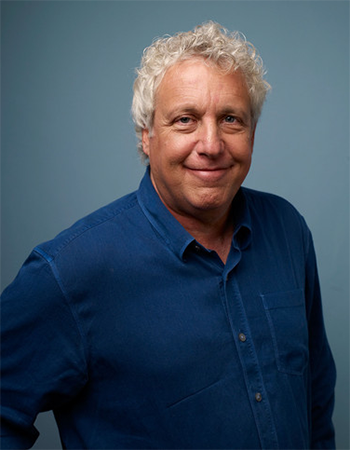
Barry W. Blaustein is an award-winning writer, director and producer whose career has spanned over 40 years.
Along with his writing partner David Sheffield, Mr. Blaustein’s feature writing credits include COMING 2 AMERICA, COMING TO AMERICA, NUTTY PROFESSOR, NUTTY PROFESSOR 2: THE KLUMPS and BOOMERANG, on which they also served as co-producers.
As head writers and supervising producers on “Saturday Night Live”, Blaustein and Sheffield also wrote and developed many of Eddie Murphy’s more famous characters including Buckwheat, Velvet Jones, Gumby and Mr. Robinson. They also co-wrote and produced “What’s Alan Watching” for CBS, which won the National Television Critics Award as best special of the year.

Want more?
Don't forget to subscribe! There are many ways to listen: Apple Podcasts, TuneIn (Amazon Echo), Spotify or RSS Feed. (Need help subscribing? See our quick guide.)
For all of our Substantial Matters podcast episodes, visit Parkinson.org/Podcast.
Related Materials
Related Blog Posts

Painting with Parkinson’s: All About Art Therapy

Feel the Rhythm: Music Therapy and Parkinson's Disease
