Episode 58: Talking to Your Employer About PD Series Part 2: Disability Inclusion and Accommodation at Work
-
Dan Keller 0:08
Welcome to this episode of Substantial Matters: Life and Science of Parkinson's. I'm your host, Dan Keller. At the Parkinson's Foundation, we want all people with Parkinson's and their families to get the care and support they need. Better care starts with better research and leads to better lives. In this podcast series, we highlight the fruits of that research, the treatments and techniques that can help you live a better life now, as well as research that can bring a better tomorrow. Getting your job done efficiently and effectively can be difficult for anyone if your workplace or job isn't set up to meet your needs. This can be especially true for someone with Parkinson's who may find obstacles within their physical environment that require additional tools or technology to accommodate tremors, changes in speech, or other symptoms that get in the way of everyday tasks. Other unpredictable symptoms, such as fatigue, slowness, and stiffness, may require flexibility over the course of the day. Fortunately, the Americans with Disabilities Act, or ADA, requires employers to make reasonable accommodations for employees with disabilities if an employee has informed management of their need for them. One company that has gone beyond the ADA requirements is JPMorgan Chase & Co., a global financial services provider. I spoke with Jim Sinocchi, Managing Director of the Global Office of Disability Inclusion at Chase. As the name of his office denotes, the goal is inclusion into the workplace for people with disabilities. Jim himself has a disability and therefore has firsthand knowledge of why inclusion is important for both employee and employer. He emphasizes the importance of open communication with your manager to best accommodate you as an employee, and describes how the company assimilates employees with disabilities into the work environment while focusing on what evens the playing field for all employees: an application process focused on talents, not disabilities.
Dan Keller 2:31
What is Chase doing in terms of including people with disabilities in its offices worldwide?
Jim Sinocchi 2:38
The firm decided in 2016 to get into the disability inclusion environment full force. That means that they wanted to make disability inclusion a standard, as they have done with women, Blacks, Hispanics, Asians, and other diversity-type groups, but that meant a whole different process. How do we think about hiring people with disabilities, providing accommodations on the first day of interview, for example? How do we get the right accessibility tools so that when they're interviewing and when they're at the firm, they can engage with the recruiters or the technology that they may be likely to use while they're interviewing? And the other two issues would be around attitude and assimilation—meaning, how do we feel about people who are different coming in that may have specific needs that are not common? And finally, once they're in the firm, how do you think about assimilating those folks into a culture that's very competitive, very talented, and very fast-paced?
Dan Keller 3:52
It sounds like you're facilitating, making it easier to interview and easier to be there, but are there any special accommodations made for their disability per se, or do they essentially have to achieve to advance?
Jim Sinocchi 4:09
Both of your questions are right, and so is the assumption. In order to work here, we have to make sure we could provide tools that a specific person needs. Or if you're blind, you may need screen readers on your desk. If you are deaf, you may need an interpreter or technology to help you work your phone meetings with other people, etc. And if you're mobility impaired, you may need ramps, automatic doors, accessible bathrooms. Finally, if you have a mental illness, you'd want to feel comfortable working at a bank like ours that understands your needs, but knows how to treat you and knows how to get you help if you need it, but not hold that against you in terms of the job that you're doing. And then we have people in all of those categories that are performing terrifically well, and the culture is one where people are very comfortable in their roles and feel included and valued.
Dan Keller 5:10
Our audience is mainly people with Parkinson's disease and caregivers and families. Can you give me an example of what might be an accommodation for someone with a movement disorder?
Jim Sinocchi 5:22
Sure. There are things that help mitigate tremors, like, for example, IBM Corporation developed the tremor mouse that would absorb the tremor and still let the mouse focus on what was needed to use a laptop computer, etc. So that was a small step forward. The other part of the Parkinson's disease issue is: what can the firm do from its benefits plan to make sure people with Parkinson's or anything else have the right medical plan in order to help them navigate the job, but get the right medical care? But most of all, we want an employee with Parkinson's or being blind or deaf or mobility impaired/wheelchair to be able to ask my manager, "You know, where can I get help? Because this is happening to me," and feel good about it—that those requests won't be held against them.
Dan Keller 6:22
Not everyone can work at Chase. Can this model be exported to other workplaces?
Jim Sinocchi 6:28
Oh, I believe so. I had created part of my "four A's," which I described at IBM, and I only had three of them. I only had attitude, accessibility, and accommodations. And as I got along in my career, the one thing we didn't emphasize was assimilation, because we just don't want people to just come and work here. We want them to advance. And I like to use the cliché, which I borrowed from an IBM executive who coined it: we want to make sure people can move from the mailroom to the boardroom, given that they have skills and they have the tenacity and they have the education and they have the talent. And this is all about talent. And what we're trying to do is use technology as the great equalizer to allow people to work as efficiently as they can and to achieve whatever level of capability that they have. In our business, you have to be qualified to work here. No one is giving you a job because we like you or you're a nice, nice person. So when you work here, you have to believe—and it's true—that you are hired because of your talent and your strengths.
Dan Keller 7:41
If someone were in a different workplace? Obviously, people work all over the country, not just for Chase. Do you have any tips for how they could get their workplace to implement at least the beginnings of this, and possibly in the end, have some plan as comprehensive as yours?
Jim Sinocchi 8:00
The crux of this is making able-bodied people comfortable with people who are different, and that goes across the spectrum. When able-bodied people meet disabled people, a couple of things happen. Number one, they're afraid of saying the wrong thing to a disabled person. Number two, they may be afraid of what we have or don't have with us. And you do that by building relationships based on what we have in common. We may be married, we may have children, we may have grandchildren, we may have hobbies, and that's what I spend a lot of time with, you know, making people feel comfortable with people who are different.
Dan Keller 8:40
I think there might be a concern about the finances of this—getting people comfortable in the managerial position and even at the top, to think: "Are these people going to cost me money and healthcare?" and the flip side of that is, "Do they have skills and talents they're going to add to the bottom line?" So, are these competing interests, or is there not really a concern that disabled people may cause some increases in insurance costs or other costs?
Jim Sinocchi 9:09
I think that's a fair point. I think the studies that I've seen say people with disabilities are more loyal, they're more reliable, and their costs are exceedingly low, and their absenteeism is low. So look, you know, I take that with a grain of salt. I think that's true. I think it averages out, but there are some costs that come into play naturally for everyone. So you know, you think of a person that has a heart attack or a car accident and you're working for a company—well, those will cost quite a bit. On the other hand, you have people that have to manage their disabilities, and medical plans are there to do that. However, if you're hired and valuable, those are costs of doing business, and I think we have to think about it that way. Now to be a little snarky about this, the cost is not doing this. This means that there's litigation and lawsuits. Remember, we have the Americans with Disabilities Act, we have OSHA requirements around ergonomic tools and desks and furniture, and unfortunately, during our lifetime, 70% of us will face some kind of disability as they age.
Dan Keller 10:21
If people listening to this want to make their workplace more disability-friendly, especially with mobility problems, movement disorder problems, are there any roadmaps or programs in place that they could refer to and bring into their company to try to get it done?
Jim Sinocchi 10:40
We have our own program here, but there are outside organizations, like the National Organization on Disability. There's Disability:IN; there's also our government, ODEP (Office of Disability Employment Policy), where companies can go get information and then figure out what is it that they're looking to do. I think in the 21st Century, I think we have the ability, given the advancements in medical technology and just technology itself regarding accessibility, it's much better than it was when I broke my neck in 1980 due to a surfing accident and then became quadriplegic. I drive, I use computers, I do everything that many people do. I'm a little slower, but in other areas, I'm a little faster.
Dan Keller 11:30
For the perspective of someone who had worked at Chase, I turned to Brian Baker, who has young-onset Parkinson's. He describes his experiences there and gives his take on some workplace issues, including how to get job accommodations implemented in a timely manner. In general, what was your overall impression with Chase's Disability Inclusion Initiative?
Brian Baker 11:55
Overall, I was very satisfied with their outreach to help include everybody with disabilities to feel comfortable in the work environment. The reason I got diagnosed was with the management support that I had there, noticing that I was typing one-handed and doing things that are a little bit different, and they're liking me to get checked out—you know, suggesting I get to the doctor.
Dan Keller 12:18
So did that become the main thing that you needed accommodation for, or did things progress while you were there?
Brian Baker 12:26
Things progressed a little bit there. After being diagnosed, I was typing one hand instead of two hands and my mouse, those types of things. The management noticed that, and was recommending that, you know, I go get checked out. They were supportive, I guess, being diagnosed.
Dan Keller 12:40
Did you also, at any point, come out or notify colleagues? So how did they react?
Brian Baker 12:46
I'm very open with it, and it's a very personal decision that everybody has to make, but I'm very open with my Parkinson's. I had people that were very good friends of mine that thought I had a drinking problem because I would kind of move slow or I would stumble. And these were a few that saw me quite often, and I didn't want that perception to be at work that I had a drinking problem. I also wanted to be able to explain that, listen, we're trying different kind of medications here. Some of the stuff's making me tired, and the other day, I may doze off on one medication. I was literally like, just almost falling asleep right at my desk. And I wanted them to be aware of these.
Dan Keller 13:22
I take it they were somewhat accommodating in that regard.
Brian Baker 13:26
The overall experience of Chase is a wonderful experience for me myself. I work in HR and human resources, so I know the variety of people to reach out to. That was one benefit that I had, as far as navigating the system.
Dan Keller 13:40
Did you bring what you learned of the good things that Chase was doing to your new job?
Brian Baker 13:47
Yes, I'm very open with the Parkinson's, and once at the new job, I was very upfront with my current manager and manager staff that I have it. You know, I always try to make light of it and keep a positive attitude and, you know, tell them it's okay to ask questions, to joke around about it—you're not gonna offend me.
Dan Keller 14:06
Did you find any impediments or encouragement for advancement at Chase? Were you any different from anybody else? I guess is the question.
Brian Baker 14:16
I don't feel any different than anybody else. The advantage I had over other people that I know in Chase that were diagnosed—I knew the right people to contact or question the concerns.
Dan Keller 14:25
I think that's an important point. If somebody listening to this who is in a work environment and needs an accommodation or something, how do they navigate a system to find the right person or programs or facilities that would help them?
Brian Baker 14:42
I think, reaching out to your person in charge of your human resources initially and your manager at the same time. Don't just settle with one manager. In companies of size, people are put in positions and they don't know where to turn to, so they think they're helping you—they put in a request and are waiting on those things to happen. Sometimes the right people aren't involved, so getting hold of your HR person, the person that's in charge of your inclusion and diversity initiatives, making sure that they're aware that you put this request in, because they can move things along a lot quicker than maybe somebody in a new supervisory management position that doesn't know the right people to reach out to.
Dan Keller 15:22
Did you find anything that could be improved at Chase? Did you have any suggestions for improving their program? It seems like they're very forward-thinking as is, but maybe there's something they're missing.
Brian Baker 15:34
They are very forward-thinking. And the one I just mentioned—I think getting the word out to the management staff supervisors: if things aren't moving quickly, you need to escalate it.
Dan Keller 15:43
Is there anything we've missed or you think is important to add?
Brian Baker 15:49
I have had no negative responses from any of the three employers that I've had. They've all been willing to accommodate me and anything I needed.
Dan Keller 15:59
I appreciate it. Thanks for all the information. I'm sure it'll be helpful to the rest of the people out there listening to this. For more of your rights under the ADA, as well as other legal rights as a person with Parkinson's or a care partner, see parkinson.org/rights. And as we mentioned in our previous podcast on employment with PD featuring occupational therapist Julia Wood from the University of Pennsylvania, we have two additional documents of interest on our website. One, called "When and How Should I Talk to My Employer and My Co-workers?" is at parkinson.org/employer. It discusses the decision to disclose one's Parkinson's disease, protections and exceptions in the Americans with Disabilities Act, things to do before talking with one's boss, and how to document the conversation. The second document provides a brief overview of the provisions of the ADA. As always, PD information specialists are available on our helpline. They can answer questions and provide information about this topic or anything else having to do with Parkinson's. You can reach them at 1-800-4PD-INFO. If you have any questions about the topics discussed today, or if you want to leave feedback on this podcast or any other subject, you can do it at parkinson.org/feedback. If you enjoyed this podcast, be sure to subscribe and rate and review on Apple Podcasts or wherever you get your podcasts. At the Parkinson's Foundation, our mission is to help every person diagnosed with Parkinson's live the best possible life today. To that end, we'll be bringing you a new episode in this podcast series every other week. Until then, for more information and resources, visit parkinson.org or call our toll-free helpline at 1-800-4PD-INFO. That's 1-800-473-4636. Thank you for listening.
Many people with Parkinson’s disease want to continue to work and contribute their skills in the workplace. Sometimes all it takes is recognition of their condition by their employer and accommodations to compensate for disabilities. In fact, the Americans with Disabilities Act (ADA) provides certain protections in the workplace for people with disabilities once they reveal their situation to their employers, who are then required to make reasonable accommodations to do the job. In this second of two parts on talking to your employer about PD, Jim Sinocchi, Managing Director of the Global Office of Disability Inclusion at JPMorgan Chase & Company, a multinational investment bank and financial services company based in New York City, describes how the company recruits people with disabilities in their offices worldwide and assimilates them into the work environment. As the name of his office denotes, Chase considers inclusion an important aspect of facilitating the best job performance from everyone. From an employee’s perspective, Brian Baker, an executive recruiter and a former employee of JPMorgan Chase, describes his experience while there and gives his take on some workplace issues as a person with young onset Parkinson’s disease, including how to get job accommodations implemented in a timely manner.
Released: July 2, 2019
-
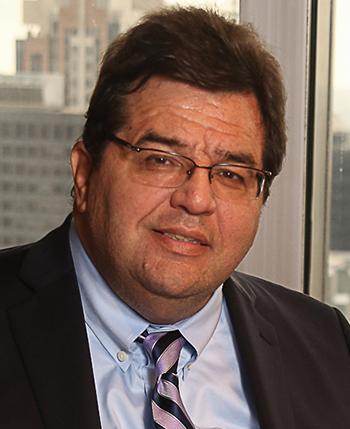
Jim Sinocchi is Head of the global Office of Disability Inclusion at JPMorgan Chase. He works closely with senior leaders across the firm to establish consistent standards and processes to better support employees with disabilities. The office also supports employees who care for disabled family members.
Sinocchi joined the firm in 2016 to head the newly established office.
Having sustained a spinal cord injury early in his business career, Sinocchi is keenly aware of the issues and challenges facing people with disabilities. He actively creates awareness and understanding of disability inclusion through his blog, View from the Chair. Sinocchi has served on the boards of Jawonio, an organization focused on the well-being and equality of people with disabilities, and the Human Rights Commission in Rockland County, N.Y. He currently serves as a board member of the Viscardi Center’s Board of Directors Inc., a K-12 school in New York for severely disabled students affiliated with The Viscardi School; United Spinal Association, a nonprofit that seeks to enhance the quality of life for people living with spinal cord injuries and disorders; and RespectAbility, a nonpartisan, nonprofit organization dedicated to fighting stigmas and advancing opportunities for individuals with disabilities.
Sinocchi joined the firm from IBM, where he led global workforce communications, creating awareness and understanding of IBM’s Human Resources and Diversity programs, policies and initiatives. He also served as the Corporate Communications Director for IBM’s Workforce Communications organization, ensuring their HR programs complemented their image as a technology leader and employer of choice. In addition, he was the lead co-chair executive for the IBMers with Disabilities Global Council.
Sinocchi received a Master’s degree in Public Administration from New York University and a Bachelor of Arts from Colgate University. He is married with two grown children and two grandchildren, and resides in the Boston area.
-
Brian Baker grew up in a small town in central Ohio. After graduating high school he enlisted in the US Coast Guard where he spent 4 years before returning to Columbus, OH where he attended Mt. Vernon Nazarene graduating with a BA in Business. He is a single father of a 16 year old son Gabriel. Brian was diagnosed with early onset Parkinson in December of 2015 at the age of 40. Three years later he still continues to work full time as an Executive Recruiter and takes part in several PD related exercise programs 3-4 days a week. He lives by the philosophy “I don’t have time to feel sorry for myself I have a life to live.”

Want more?
Don't forget to subscribe! There are many ways to listen: Apple Podcasts, TuneIn (Amazon Echo), Spotify or RSS Feed. (Need help subscribing? See our quick guide.)
For all of our Substantial Matters podcast episodes, visit Parkinson.org/Podcast.