Episode 12: What We’ve Learned from the Hispanic Parkinson’s Community
-
Dan Keller (00:08)
Welcome to this episode of Substantial Matters: Life and Science of Parkinson’s. I’m your host, Dan Keller. At the Parkinson’s Foundation, we want all people with Parkinson’s and their families to get the care and support they need. Better care starts with better research and leads to better lives. In this podcast series, we highlight the fruits of that research, the treatments and techniques that can help you live a better life now, as well as research that can bring a better tomorrow. As we mentioned in our last episode on community outreach, only about 40% of people with Parkinson’s in the US see a neurologist for their care, and even fewer see a specially trained movement disorder specialist. For certain communities, for example geographic areas or some racial or ethnic groups, the proportions may be even less, so whole communities may lack crucial Parkinson’s information, resources, and medical care. Targeted outreach can help bring the much needed information and resources into the community, but it has to be tailored by more than just language. The messaging needs to be culturally appropriate and delivered by a trusted source. In recognition of Hispanic Heritage Month, which takes place every year from September 15 through October 15, today we’re discussing outreach efforts that bring Parkinson’s information and services to Spanish language communities. Dr. Claudia Martinez, the Hispanic Outreach Coordinator at the Muhammad Ali Parkinson’s Center at the Barrow Neurological Institute in Phoenix, Arizona, a Parkinson’s Foundation Center of Excellence, describes the methods she uses to help Hispanic people with Parkinson’s get the best possible care. She also talks about Parkinson’s programs that are available to Spanish speakers in Phoenix, across the United States, and around the world.Dr. Claudia Martinez (02:13)
We embrace the Hispanic culture is not a fact of translating services or just translating programs, but instead reshaping them so that they are culturally sensitive, and many times, not only reshaping programs, but also creating new programs or developing programs to respond to the specific needs of the Hispanic community that we serve.Dan Keller (02:38)
What are some of those cultural differences that you would make specific to this community?Dr. Claudia Martinez (02:44)
For example, we have a program that is very unique, our promotores program, and that program was born in order to respond to families who were very isolated in the Phoenix metro area because of a series of factors. For example, transportation is a big issue because many of the Parkinson’s patients and their spouses came to the country because their grown children brought them to the United States in their 60s, 70s. They didn’t drive in their hometowns. They didn’t need to. Public transportation was way more available than there is in Phoenix, and then when they move in Phoenix, they depend on their adult children, who work full time and have their own families, to move around. So that’s why many of them are isolated, or it’s very difficult for them to attend our programs like support groups, educational classes, exercise classes. So I realized that was a big barrier to start with, transportation, with type of age population. Then there’s also the trust factor, because of immigration policies, because of the difference in the language and the culture. So people have certain fear of, you know, approaching an organization where they might think that no one speaks their language or understand their culture. So we end up with these families who we knew needed the help but couldn’t come to us. So that’s why our promotores program was born with volunteers who had a family member with Parkinson’s, wanted to give back to the organization, and received specific training in Parkinson’s disease and also on how to be good community health workers or promotores. And they helped us put together a flip chart with basic topics taken from our Parkinson’s 101 seminar that helped themselves and their family members to better understand Parkinson’s disease and live with it on a daily basis, and this flip chart was developed with their own experiences on a very simple language with everyday expressions from, you know, what is common in their cultures, and that’s how we break that barrier, because it’s lay people belonging from the community, the ones who deliver these educational sessions that are in home. So they visit the families, and it’s one visit per week for a total of 13 weeks. And during that time, not only relationship of trust but also friendship is born. And many times, these promotores help these isolated families to start coming to trust the organization, to trust the center, to come out of their homes and start reaching or joining some of our programs. For those who have the transportation barriers during the weekdays, then we have weekend programs that are run on Saturdays, and then they join those programs.Dan Keller (05:37)
How do you find them? Or they find you to begin with, if they’re isolated? Is it through neurologists? Or how do they find you?Dr. Claudia Martinez (05:43)
It’s a variety of avenues. Our neurologists are one of them. Community health centers that we reach out to are another avenue. The media, Hispanic media, has been very helpful, too, in helping us get the word out about our programs and also a lot of other community based organizations who work with Hispanic families.Dan Keller (06:06)
So it sounds like your outreach has to be pretty broad. You’re contacting the media. You’re contacting probably churches and community groups so they can contact the people who need your services.Dr. Claudia Martinez (06:16)
Yes, definitely. Networking has been very valuable since the very beginning of putting together our outreach program, and right now, for example, our outreach has expanded thanks to social media and thanks to the capability of the Barrow of webcasting many of our seminars, educational seminars in Spanish and our conferences. Just last weekend, we had our annual conference, our Muhammad Ali annual conference in Spanish, and it was webcasted live as a resource that is available for anyone who would like to view it on demand. And so this is also another way that we are enlarging our outreach outside of Phoenix into the United States and also into other Spanish speaking countries that now are part of a network that we’ve been kind of growing. So right now, we have people joining our conferences from close to 16 different countries in Latin America.Dan Keller (07:17)
Are there even cultural differences there that you have to address, or is the language the unifying factor? Or do you find different cultural kinds of barriers or things you have to deal with, from say, Mexico versus Chile, or something like that?Dr. Claudia Martinez (07:32)
Oh, yes, because Hispanics are very diverse in many different ways that you point out, language and many cultural factors, such as food and music, but we also have factors that are common to us and that we can share, and the way that you approach it is what makes the difference, because if you approach it in a culturally sensitive and respectful way, it’s enriching. So we learn from each other, and we kind of embrace those differences, and it’s something that we always like to learn, like learn some new things from each other. For example, in our groups in Phoenix, most of the participants are from Mexico, but we also have participants from countries in Central America, like El Salvador and Guatemala, and we have a few from South America like Ecuador and Peru, and when we get together, like for events such as our support groups, that are not called support groups, but comadres, compadres, which means like pals or close friends, one of the nice things that we like to do is share our different food from different countries. So it’s one of the things that people take pride on to bring something that is typical from their homeland and share with the rest, and kind of explain what ingredients. So it’s always a nice experience for me. I am from Colombia, and when I first started, it was a challenge for me also to learn some of those words, and I will say it right at the start this close. I’m from Colombia, and I may use some words that might not be familiar for you, or that might not even exist in your country, or that might even get me in trouble sometimes. So please keep that in mind and help me and teach me. So that’s been a very enriching experience for all of us.Dan Keller (09:17)
Is there any kind of overriding advice for someone who wants to put together a program in any culturally different community, not only Hispanic, but if it’s Chinese or something else, what’s your advice to do the outreach and get people to trust you and come in?Dr. Claudia Martinez (09:34)
Well, a few words of advice will be being culturally competent, which many times we think we are, but we probably are not, and being part of the culture or speaking the language doesn’t make you to be culturally competent. So if you can get that type of training, if you think you might need it, that will be wonderful. And another great advice is to use the available resources in the community. So try to learn the culture that you want to approach. Try to learn what organizations are already working with that particular community. Attend their events, like kind of try to get kind of more in the middle of the way they do their events, even if it’s not related to your specific job and to neurology, but if it’s a diabetes event, or it is something related to faith based organizations, just attend the events just to see the interaction and what’s important for that community, what’s the way that they communicate, who are the community key partners that you need to get in touch with. I think that’s very valuable.Dan Keller (10:41)
Anything we’ve missed or is interesting to add?Dr. Claudia Martinez (10:45)
In our Hispanic Outreach Program, we have series of resources that are available for people living with Parkinson’s disease who are Spanish speakers, and they don’t need to live in Phoenix. They can contact us via email. They can also reach us by phone, and we have newsletters. We have two newsletters per year in Spanish that are called Vida Positiva, or positive life, that we can send out via mail or via email. And we also have recordings of our educational seminars and our conferences that are also available online, so they can reach us at the Muhammad Ali Parkinson’s Center or at my direct line, which is 602-406-2453.Dan Keller (11:31)
Great. Thanks.Dan Keller (11:41)
Many Parkinson’s centers have outreach coordinators or case managers who can connect you to resources and care. If you need help finding services in your area, call our toll free helpline at 1-804-PD-INFO. Our PD Information Specialists speak English and Spanish, and they can help you find community programs, wellness activities, health care providers, and allied health services such as physical, speech, and occupational therapy. You can also order any of the Parkinson’s Foundation educational materials through our helpline. This includes resources in both English and Spanish. If you have any questions about the topics discussed today, or if you want to leave feedback on this podcast or any other subject, you can do it at parkinson.org/feedback. We’ll respond to some questions in future episodes. At the Parkinson’s Foundation, our mission is to help every person diagnosed with Parkinson’s live the best possible life today. To that end, we’ll be bringing you a new episode in this podcast series twice a month. If you or someone you know is more comfortable learning about Parkinson’s in Spanish than in English, we have plenty of resources available for you at www.parkinson.org/espanol.Dan Keller (13:10)
Till then, for more information and resources, visit parkinson.org or call our toll free helpline at 1-804-PD-INFO, that’s 1-800-473-4636. Thank you for listening.
When you have a chronic, progressive condition like Parkinson’s disease, there is always something new to learn. But access to information and resources about Parkinson’s varies for individuals and communities. Dr. Claudia Martinez, the Hispanic outreach coordinator at the Muhammad Ali Parkinson Center at the Barrow Neurological Institute in Phoenix, Arizona, a Parkinson’s Foundation Center of Excellence, describes the methods she uses to help Hispanic people with Parkinson’s get the best possible care. She also talks about Parkinson’s programs that are available to Spanish speakers in Phoenix, across the United States, and around the world.
-
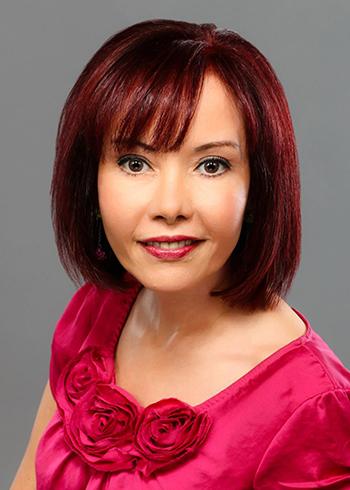
Claudia Martinez graduated as a primary care physician in her native Colombia, where she practiced in underserved communities. After she moved to Arizona, she completed a graduate certificate in gerontology at Arizona State University. In 2007, with the support of a Parkinson’s Foundation grant, she started the Hispanic Outreach Program at the Muhammad Ali Parkinson Center (MAPC). Since then she has developed a comprehensive and culturally sensitive program for Hispanic families living with PD that is currently recognized as the largest in the country.
In the last four years, Dr. Martinez has expanded the MAPC Hispanic Outreach program overseas. She has developed a strong international network by delivering ongoing PD-specific educational webinars. Currently, the network includes support groups, individuals and organizations from 16 Spanish-speaking countries. In 2016 Dr. Martinez was invited to join the World Parkinson Congress (WPC) Communications Committee to represent the Spanish-speaking PD community worldwide and to present at the WPC Leadership Forum.
In addition to her work with the Hispanic community, Dr. Martinez coordinates the MAPC expressive art workshops for people with PD and their caregivers. She was also instrumental in the launching of a PD awareness tool that uses the power of music: the song written by songwriter and singer Jose Maria Lobo, “I am the beat of another song.” A recognized artist herself, Dr. Martinez is passionate about combining her creative personality with her impactful works in the PD community.

Want more?
Don't forget to subscribe! There are many ways to listen: Apple Podcasts, TuneIn (Amazon Echo), Spotify or RSS Feed. (Need help subscribing? See our quick guide.)
For all of our Substantial Matters podcast episodes, visit Parkinson.org/Podcast.