Episode 89: Retention Rates in Longer Clinical Studies
-
Dan Keller 0:08
Welcome to this episode of Substantial Matters: Life and Science of Parkinson's. I'm your host, Dan Keller. At the Parkinson's Foundation, we want all people with Parkinson's and their families to get the care and support they need. Better care starts with better research and leads to better lives. In this podcast series, we highlight the fruits of that research—the treatments and techniques that can help you live a better life now, as well as research that can bring a better tomorrow.
Clinical studies are the foundation upon which all new therapies are built, whether a drug or device. It has to be tested rigorously in a sufficient number of people to give meaningful results. And it's not just the number of people who enter a study that's important, it's really the number at the end that determines how much data can be analyzed to result in a solid conclusion of whether a product is safe and effective for a particular use.
Long studies can be problematic in terms of retaining volunteers from start to finish. People are free to drop out at any time for any reason or for no reason at all—a part of informed consent that protects participants' rights. They may get tired of frequent appointments, have an adverse reaction to a drug, get bored with a long study duration, or object to long or costly travel. They may not like inconvenient procedures, they may experience disease progression, may lack social support, or may move out of the area. So, making studies easier on the participants and even enjoyable is important to keep them coming back.
I asked Nurse Christine Hunter, Research Director of the Parkinson's Disease Center and Movement Disorders Clinic at Baylor College of Medicine, about what kinds of studies Baylor is conducting, the ways in which she finds people willing to participate in them, and how she facilitates and encourages participants to stay in the studies. First of all, how do you find people who are willing to participate at all?
Christine Hunter 2:22
Okay, that's an interesting question. So, we go various places. So, first we go to our support group. So, we have a local support group, the Houston Area Parkinson's Society, and most cities have, or centers have, a support group affiliated. So, that's a good place to start. We talk to patients in the clinic when they're there for their visits. We go to the major advocacy groups, like the Parkinson's Foundation. We also post on the Michael J. Fox Trial Finder, and then we also post most clinical trials on ClinicalTrials.gov, and so patients can look there to see what studies may be in their area, and that kind of, kind of tends to hone it down a little bit, so that they're looking locally and not just globally.
Dan Keller 3:04
When trials have a long time frame, such as to follow progression of any disease, is there a problem in keeping people coming back?
Christine Hunter 3:15
It can be. I think it goes down to the relationship that the participants have with their coordinator, with their medical director at the center, and that relationship really drives the retention in the studies. But again, things change over time, so you have every intention of starting the trial and finishing it, but as things progress and things get tougher, it may be difficult. So we try to think of things like try to make the visits as efficient as possible, pay for parking, try to get them lunch while they're there, try to make it a pleasant experience so that they don't dread coming. And then they keep coming back over time. We have retention events sometimes for longer trials that go on for years. We'll have retention events so that everybody can meet each other, and it becomes more of its own support group.
Dan Keller 4:01
What kind of things are these trials researching or looking for?
Christine Hunter 4:05
Most of the longer studies that go on long time, there are some genetic studies, but we're looking for biomarkers. So biomarkers are things like a test for maybe prostate disease has the PSA, cholesterol, you can measure cholesterol level, that kind of thing. There isn't anything for Parkinson's yet, and so we're looking for those biomarkers that can either tell us that the person's going to develop the disease or measure progression of the disease. So we're looking for all of those kinds of things in various and eccentric places—skin, CSF, blood, urine—looking everywhere.
Dan Keller 4:40
So you're looking at various chemicals. It seems like kind of a shotgun approach, and then following them and seeing which of those things correlate with the progression or state of their disease.
Christine Hunter 4:51
Right? Right. And the biggest one of those trials is run by the Fox Foundation, and that's the PPMI—it's the Parkinson's Progression Markers Initiative. And there are close to 700 people that are involved in that trial over time. We have healthy controls, we have people with Parkinson's, and then lately we've had some genetic cohorts, which are also looking a little bit more specifically for cues as to what these genetic diseases mean. So, if you have LRRK2, for instance, we don't know exactly what the probability of developing Parkinson's is with that, so we're looking at those too and following people that are affected and unaffected over time.
Dan Keller 5:29
What are some of the barriers to people staying in a trial, coming back?
Christine Hunter 5:33
I think a lot of it is things change as disease progresses. And we start out with people in a very early stage of Parkinson's, but as things progress, it gets harder to get there. They may not drive anymore. Work commitments, family commitments—all of those things can impact someone's participation and willingness to stay in a trial. So we try to mitigate as many of those as we can, and sometimes you can't.
Dan Keller 5:58
What are some of the consequences of dropouts if you expect to have a certain number and you end up with some number less?
Christine Hunter 6:05
It does impact the trials, and that's why we make every effort to make sure that people can stay in a trial. The trial goes on longer if you have to try to replace people. To replace the numbers, that may take longer to get the answers that you want, and some you just can't replace. The numbers are finite, and so it does impact the trial in that we don't have the total number at the end. And so, you know, statisticians can do so much with data, but we do need the people to actually stay in trials.
Dan Keller 6:35
Does patient or caregiver or advocacy organization engagement help design trials that are easier for people to stay in, but still yield useful results?
Christine Hunter 6:48
Absolutely. I think that the more we involve the persons with Parkinson's in the design of these trials, we get a more realistic view. We tend to—scientists and researchers try to rewrite these protocols and put all this stuff in there that is a burden and can be a burden for the patient and the caregiver. And so having that patient input or caregiver or advocacy group input really can make the trial much more efficient and much more realistic.
Dan Keller 7:17
This sounds like what this PCORI Institute does—Patient-Centered Outcomes Research—and really centering on the patient and what's important ultimately to their care.
Christine Hunter 7:27
Right. And that's why we do clinical trials. We're looking at bringing new therapies to people with Parkinson's, but if we burden them so much and we can't get people in trials, then we can't bring them new therapies and enhance their lives. So our trials take so long that you don't get an answer for years. So we want to get the fast turnaround of these trials and get new therapies to people with Parkinson's.
Dan Keller 7:54
Is there any evidence, even anecdotal, that having patients involved in trial design, prioritizing outcomes—you don't just add point after point that you're looking at—really have an effect on keeping people in?
Christine Hunter 8:07
You know, I think it does. We have the advocates that are part of the Parkinson's Foundation advocates, they have—the Fox Foundation has their own ambassadors, that kind of thing, that keep us real. And I think that's a very important message to researchers is that we need to keep it real because we need these people to participate. And so I think having them involved upfront really takes away some of the extra things that we could just throw into trials just to keep them going.
Dan Keller 8:36
Trials, when done right, ideally are pretty clean. You have a certain defined group, and you do something—either give them a medication or not, or whatever—but that's not the real world. I mean, there's inclusion and exclusion criteria. If you have this and this in addition to what you have, you can't come in our trial. Real-world trials, called pragmatic trials, seem to be more what people will experience in their day-to-day real world out there. So are pragmatic trials looking at people in the community and how they're followed and what the outcomes are? Are they useful?
Christine Hunter 9:10
They are. They have a place, and I think really for pharmaceutical trials, that kind of thing, nothing replaces the double-blind, placebo-controlled trial for the stringency of clinical trial research. But I think the pragmatic trials maybe follow up on some of the trials that have been done. So you have phase one, which is just healthy volunteers; stage two is a smaller number; then stage three becomes the bigger number of people, and in that, sometimes the inclusion/exclusion stretches out a little bit—it's not quite as strict. And then a lot of times you'll do a phase four, which is after that big trial is done, and that's the more realistic study that's done without as many exclusions or inclusion criteria that would be more stringent.
Dan Keller 10:57
And when some of the adverse effects come out that you didn't see in a 2,000-person trial, but when you've got 100,000 people on it—
Christine Hunter 11:03
You'll see those.
Dan Keller 11:05
Do you have in mind some next steps to retain patients in trials better?
Christine Hunter 11:11
You know, as we hear and include more people and their care partners in clinical research and try to make it more patient-focused, I think those next steps would be to include more people in these clinical trials. The FDA may be rethinking that maybe not every study has to be placebo-controlled. You might do smaller studies that are placebo-controlled just to make sure you have a signal, and then maybe do more pragmatic studies bringing forth newer therapies. So, we have a couple new studies coming that are open-label, but it's a new formulation of a drug that's already approved, so we don't have to be as stringent. You don't have to have as many inclusion/exclusion as you would the first time a drug is tested in people.
Dan Keller 11:55
In some other areas, they're doing what's called adaptive trial design, where a drug enters it and if it shows reasonable efficacy, it moves on to a more formal trial, or it fails. It either succeeds—as they call it, graduates—or fails. Are they doing that in Parkinson's at all?
Christine Hunter 12:11
Yes, we have done some of those trials. And then even in some of the newer studies, where you have a drug, you test it in the first six people. If you don't have side effects, then you can continue at that dose and enroll the next 12. Then for the next dose cohort, you subject six more people to that newer dose, and if that's safe and tolerated, then you move to a larger group. And so they're doing a lot more of that as we're dose-finding and trying to find the right doses, so you don't expose a whole population and take a long time to enroll a bunch of people in that kind of trial. So I think those adaptive trials are becoming more popular, and it changes with things as they go along. As you find out that's safe and tolerated, then you can move on to the next phase a little quicker.
Dan Keller 12:56
Is there anything interesting to add, or that we've missed, that's important?
Christine Hunter 12:59
I just want to encourage people with Parkinson's to talk to your centers, talk to your coordinators, find out how you can participate—even registry trials where there's no intervention. Those give us a lot of information, and they're very important as well. And you're helping yourself, as well as other people with Parkinson's. So encourage all people with Parkinson's to participate in trials.
Dan Keller 13:23
Great, thank you. The Parkinson's Foundation feels very strongly about the value of basic scientific research and of clinical studies. These are the seeds that bear the fruit of advances against the disease. This is one reason that we feature podcast episodes on the subject, as well as articles on our website.
If you would like to consider participating in a clinical trial or other study, go to parkinson.org/clinicaltrials for descriptions of the kinds of studies there are, the benefits and risks, reasons to participate, and a list of resources to find clinical studies that are recruiting and may be right for you. Some studies are purely observational and others may be interventional, meaning they test a drug, device, or other form of therapy.
For more about clinical studies, listen to some of our past episodes in this podcast series. Numbers 14 and 15 describe the process of clinical trials and how to participate in Parkinson's research. Number 45 talks about how people with Parkinson's and care partners engage with scientists, industry, and government to better design studies through our Parkinson's Advocates in Research, or PAIR program. As Christine Hunter mentioned, biomarkers have the potential of better defining each person's disease. For more on biomarkers, listen to episode 59 where Dr. Alberto Espay talks about how biomarkers have led to a new way of thinking about Parkinson's. Rounding out our coverage of clinical research are episode 79 about how these studies help people with PD, and episode 88 on how participation in research is essential to bring new treatments to market.
As always, you can talk with our PD Information Specialists on our helpline, where they can answer questions and provide information in English or Spanish about today's topic, or anything else having to do with Parkinson's. You can reach them at 1-800-4PD-INFO. To receive news and updates about future events and resources, you can opt into our email list at the bottom of our website's homepage. If you have questions or want to leave feedback on this podcast or any other subject, you can do it at parkinson.org/feedback, or if you prefer, email us at podcast@parkinson.org.
If you enjoyed this podcast, be sure to subscribe and rate and review the series on Apple Podcasts, or wherever you get your podcasts. At the Parkinson's Foundation, our mission is to help every person diagnosed with Parkinson's live the best possible life today. To that end, we'll be bringing you a new episode in this podcast series every other week. Until then, for more information and resources, visit parkinson.org or call our toll-free helpline at 1-800-4PD-INFO, that's 1-800-473-4636. Thank you for listening.
Clinical studies, studies that involve people, first use healthy people to test a drug’s safety and then use people with a disease or condition to prove that the drug works as intended. They are essential for bringing any new therapy to the public. Getting U.S. Food and Drug Administration approval for devices require rigorous studies, as well. Recruiting enough people to participate is often a long process, and for trials that may go on for a year or more, retaining people in the studies is often a challenge. People may get bored, find multiple study visits burdensome, have an adverse reaction to a drug being tested, move away, or drop out for a multitude of other reasons. If too many people discontinue the study, it will not have enough statistical ”power” to give a meaningful answer when the data are analyzed.
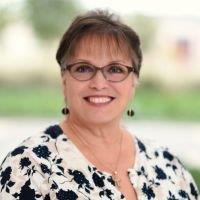
Christine Hunter, BSN, RN, Research Director of the Parkinson’s Disease Center and Movement Disorders Clinic at Baylor College of Medicine in Houston, a Parkinson’s Foundation Center of Excellence, describes how her center finds people with Parkinson’s disease who may want to participate in trials, what factors drive retention in trials, and ways to facilitate retention.
Released: September 8, 2020
-
Christine Hunter, RN, BSN is a registered nurse and has worked in ICU and CCU, charge nurse on the step-down cardiac unit, and in Quality Management for the Memorial Hospital System. She joined Baylor College of Medicine Parkinson Disease Center and Movement Disorders Clinic (PDCMDC) in 1996. She has been an active member of the Parkinson Study Group (PSG) as well as Huntington Study Group (HSG) during this time and has served in several different capacities within these groups, such as the Coordinator representative on the Executive committee, serves on the steering committee for an HD trial, served on the credentialing committee, and budget committee. She has extensive experience in Clinical Trials for all Movement Disorders. She has been the Parkinson Foundation Center Coordinator at Baylor College of Medicine since 1996 and an active member of the Task Force for the PF Mentoring and Networking Program.

Want more?
Don't forget to subscribe! There are many ways to listen: Apple Podcasts, TuneIn (Amazon Echo), Spotify or RSS Feed. (Need help subscribing? See our quick guide.)
For all of our Substantial Matters podcast episodes, visit Parkinson.org/Podcast.