Episode 78: Benefits of Self Awareness with PD
-
Dan Keller 0:08
Welcome to this episode of Substantial Matters: Life and Science of Parkinson's. I'm your host, Dan Keller. At the Parkinson's Foundation, we want all people with Parkinson's and their families to get the care and support they need. Better care starts with better research and leads to better lives. In this podcast series, we highlight the fruits of that research—the treatments and techniques that can help you live a better life now, as well as research that can bring a better tomorrow.
Being aware of one's own thoughts, emotions, motivations, behaviors, strengths, and weaknesses, among other aspects of the self, is known as mindfulness. This self-awareness that can be found through mindfulness allows us to intentionally manage aspects of the self, which can lead to heightened peace and happiness. The good news is that people can learn, practice, and cultivate self-awareness to set goals, change behaviors, and manage emotions. I spoke with neurologist Dr. Carsten Eggers about some of the techniques that people can use to become more self-aware, how self-awareness and health confidence go together, and how health confidence can help people manage a disease such as Parkinson's. First of all, what is self-awareness as it pertains to Parkinson's or any disease, and why would that be important?
Dr. Carsten Eggers 1:42
I think self-awareness is something which is crucial for every day's life of every person, but especially in Parkinson's as you have to be aware of your body, of yourself. This has an impact—a better understanding of the disease, signs, and symptoms. So it's something which has to do with coping of symptoms which, if you have an understanding and see and feel what is your body talking to you, it's just about understanding and accept situations where you are in. And lastly, you can develop better self-management strategies once you realize and recognize what your body is telling you.
Dan Keller 2:22
How does health confidence come into play? There is this term about self-awareness and health confidence being used to manage your illness.
Dr. Carsten Eggers 2:32
I think health confidence is something which can give you back control about your body. If you are in a specific situation, you have a better control what your body is telling you in a specific moment, and on the long term, you have a better idea how to cope with symptoms.
Dan Keller 2:53
How does it manifest? What does someone with health confidence do differently?
Dr. Carsten Eggers 2:57
I think if a patient with Parkinson's is able to perceive what he is feeling in a specific situation—if he's understanding what his or her body is telling him or her—they are in the best case that they can take over action again. I'd like to give you an example. If a patient with dyskinesias is not really realizing that he or she is dyskinetic, he might tend to fall. And if he is aware what is really going on with his body—that he is dyskinetic—he can develop strategies how to, first of all, realize that he is suffering of this dyskinesias. And lastly, what he can do in terms of self-management.
Dan Keller 3:41
Can self-awareness be taught? And does health awareness underpin health confidence?
Dr. Carsten Eggers 3:47
Yes, absolutely. I think talking about how you can really teach self-awareness, it's talking about mindfulness. And mindfulness is an issue—a topic which came up quite a lot in the last years. So if you are talking about mindfulness, it's that you are conscious of a very single moment, that you are aware of symptoms and do not judge them, and at least that you accept the situation how it is. And this is something which can be taught. There are several techniques which include, for example, yoga or body scanning or something like that. Unfortunately, the evidence for that is still rather limited, but many research centers are working on that. Some of the Centers of Excellence of the Parkinson's do have research projects currently investigating how mindfulness can be used in Parkinson's to increase the self-awareness.
Dan Keller 4:44
What about things like information gathering and list making, just to be more self-aware—learning what to be aware about, and also then having a guideline for what to be aware of?
Dr. Carsten Eggers 4:58
I think that's finally what you have to be taught. But if you are not aware what your body is telling you, you are not able to draw the consequences out of that. So first of all, I think being more mindful what your body is telling you, then taking back control, and then you have to be educated what to make out of the specific situation. And this is definitely an issue of education.
Dan Keller 5:24
There's one thing to be self-aware. There's another aspect of, how do you remediate the problem once you're aware of it?
Dr. Carsten Eggers 5:33
Yes, absolutely. So this is what I think—what I just wanted to explain is, after you realize there's a symptom going on, you need strategies how to resolve them. And this is what you should learn through education, through self-management programs. Unfortunately, there are not that many self-management programs in its complexity available, but there are educational materials which teach you how to react, for example, in a situation with freezing of gait. But first of all, you have to be aware that you do have this specific symptom, and if you have not learned how to recognize what the specific symptom is telling you, you are not able to use the self-management technique.
Dan Keller 6:18
It sounds like it may be worthwhile looking beyond what the Parkinson's Foundation and other organizations provide that specifically deal with Parkinson's and just find more mind-body kind of programs out in the community.
Dr. Carsten Eggers 6:34
Actually, yes. We at Philipps University are working on that, because I think you can't use just these general programs because they have not been adopted to Parkinson's patients. For example, you can't use all these specific yoga settings because, for example, we use yoga sitting on a chair, which is definitely different from many popular yoga classes. And so you have to adopt it both to the patients and to the individual signs and symptoms of the patients. So yes, it makes sense to look for more general techniques, but you have to adopt them to Parkinson's specifically.
Dan Keller 7:12
We've been talking about self-awareness to set goals and change behavior. Can it also be applied to the body itself—body mechanics, how you move and how to relieve pain?
Dr. Carsten Eggers 7:25
So far, we know that if you are aware of your symptoms and if you're mindful, it can reduce both stress and anxiety. And as we know that many of the symptoms exaggerate or worsen in a situation which is stressful, it's more a kind of indirect effect. But as far as I know, it's not possible that you have a direct connection through mindfulness towards the symptoms. So it's more or less, yeah, what I said, an indirect effect.
Dan Keller 7:56
Is there value in the caregiver or care partner participating in these sorts of things to some extent?
Dr. Carsten Eggers 8:03
Absolutely. So first of all, I think the patient has to be aware of its symptoms, but especially for communication, it's crucial that the caregivers are aware that the symptom perceivement of the patient is completely different. So there's the subjective perceivement and the objective perceivement of both caregivers or professionals. And it's something that caregivers have to learn that in terms of communication, it might be necessary that patients have to be educated and told about impaired self-awareness. And this is something which I would like to stress, yes.
Dan Keller 8:40
What else is important to add or helpful?
Dr. Carsten Eggers 8:44
I think that this is a rather new field of research. I'm very happy that many of the research centers within the Center of Excellence are working on that. Yes, and I'm very delighted that this has found broader research interests.
Dan Keller 8:59
Are you doing research in this area?
Dr. Carsten Eggers 9:01
Yes, we are doing quite a lot of that. So we have developed a specific scale to measure impaired self-awareness of motor symptoms. Currently, we are working on impaired self-awareness of cognitive symptoms. For example, patients with mild cognitive impairment do not see how they are cognitively impaired. And we are working on imaging these networks within the brain through MRI or PET techniques. So yes, there's a broad field coming up. This year, for example, there's actually a mindfulness conference which we are participating in, which is just trying to establish the connection between neuroscience and mindfulness. So there's a lot going on, and we are doing some research as well. Yes.
Dan Keller 9:48
How do you compare what the patient is self-aware of with the reality? Do you ask the caregiver, or do you do objective testing if they have a good picture of themselves?
Dr. Carsten Eggers 9:57
In terms of motor symptoms, we do video recording, and then we do have the subjective perceivement of symptoms. So patients do tell us, do they have a specific symptom asked for? And we do have the objective rating of a rater. And the discrepancy between the subjective and objective impairment, this is what we call the impaired self-awareness. And you can do that for motor symptoms or cognitive symptoms or whatever.
Dan Keller 10:24
Is there a take-home message for people who may want to develop self-awareness?
Dr. Carsten Eggers 10:29
I think, first of all, you have to use the basic techniques of mindfulness. So just get a better feeling for your body. Be conscious what your body is telling you, but don't judge that, and take your mind toward this specific moment and accept it like it is. And this gives you a better idea and impression after that how to deal with these specific symptoms.
Dan Keller 10:55
Very good. Thank you. Self-awareness does not involve only what is going on in one's mind as it relates to Parkinson's. Deficits in self-awareness may extend to failing to notice movement problems, including levodopa-induced dyskinesias, softened speech, or a diminished sense of smell. Nevertheless, mindfulness training leading to self-awareness may benefit people with PD, especially in the areas of mood, emotion, and motivation. We encourage you to get recommendations from trusted members of your healthcare team on these training techniques.
In the meantime, the Parkinson's Foundation is dedicated to bringing you virtual educational and wellness programs through PD Health @ Home. During a time of social distancing, we don't want members of our community to emotionally isolate, which is why PD Health @ Home will host weekly online events designed for you to engage and join us virtually for these events, which include Mindfulness Mondays, kicking off your week with calmness as you take part in guided relaxation techniques to help boost brain power and reduce stress. Visit parkinson.org/pdhealth to register today.
And speaking of awareness, this time in a slightly different sense, April is Parkinson's Awareness Month, and you can help people with Parkinson's in your community by participating in it. So please visit parkinson.org/awareness to help us raise awareness of PD. This year's theme is #PlanForPD, highlighting the importance of planning ahead when living with Parkinson's disease.
As a reminder for an upcoming event in May, our signature walk event, Moving Day, a Walk for Parkinson's, is going virtual this year. While we may not be able to move together in person, we can still unite in the fight against Parkinson's from the comfort of our homes. Join us online Saturday, May 9, for a virtual walk, when we'll celebrate the power of exercise by moving and fundraising to beat Parkinson's together. Learn more and register at movingdaywalk.org.
As always, our PD Information Specialists can answer questions and provide information in English or Spanish about today's topics or anything else having to do with Parkinson's. You can reach them at 1-800-4PD-INFO. To receive news and updates about future events and resources, you can opt into our email list at the bottom of our website's homepage. If you have questions or want to leave feedback on this podcast or any other subject, you can do it at parkinson.org/feedback.
If you enjoyed this podcast, be sure to subscribe and rate and review the series on Apple Podcasts or wherever you get your podcasts. At the Parkinson's Foundation, our mission is to help every person diagnosed with Parkinson's live the best possible life today. To that end, we'll be bringing you a new episode in this podcast series every other week. Until then, for more information and resources, visit parkinson.org or call our toll-free helpline at 1-800-4PD-INFO, that's 1-800-473-4636. Thank you for listening.
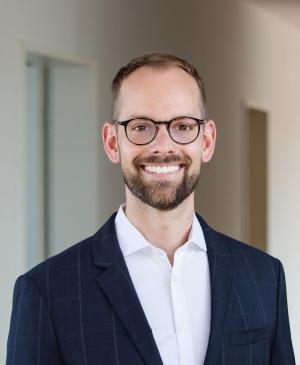
Self-awareness is an ability to focus on one’s own thoughts, actions, and emotions and evaluate and manage them according to what standards and values you set for yourself. Being self-aware from moment to moment can lead to better self-understanding and an ability to manage thoughts, emotions, strengths, weaknesses, beliefs, and motivations, with a goal of a more peaceful existence. Fortunately, self-awareness can be learned and cultivated using some simple techniques. Dr. Carsten Eggers, Professor of Neurology and Co-director of the Parkinson’s Foundation Center of Excellence at Philipps University in Marburg, Germany, discusses self-awareness and how health confidence, the confidence to be able to manage health problems, relates to it.
Released: April 7, 2020
-
Prof. Dr. Carsten Eggers, MD, Professor of Neurology, serves as the vice-chairman of the Department of Neurology, Phillips-University Marburg, Germany (2016 to present). He completed his medical studies in 2005 after visiting the University of Hamburg, Germany, University of Cologne, Germany and University René-Descartes V in Paris, France. His medical thesis was on “Implementation of an interactive informed consent programme before gastric banding in morbid obesity”. He completed his postgraduate education at the Department of Neurology in Cologne, Germany (Prof. Fink) with research projects in the Neuroelectrophysiological Lab of Prof. Rothwell, Institute of Neurology, Queens Square, London, UK and the Neuroimaging Lab at the Feinstein Institute for Neuroscience (Prof. Eidelberg). He received his board certification in 2011, his habilitation on “Neuroimaging of Parkinsonian Subtypes” was finalized in 2013. He was appointed as consultant of the Department of Neurology, Cologne, Germany in 2014.
His research focus are Neuroimaging of Movement Disorders, Neuropychological characeristics, symptoms and therapies of Parkinson’s Disease and integrative care research in Parkinson’s Disease. In this context he founded the Cologne Parkinson’s Network in 2011, where he established an extensive care programme with interactions between neurologists in private practice and the Department of Neurology of the University of Cologne. Since 2017 he chairs the MDS-task force on “Integrated Care in Movement Disorders” and since 2018 the German Parkinson Societies Work Group on Parkinson Networks. Since 2012 he is project leader of one project within the DFG-funded Clinical Research Group 219: “Basal-ganglia-cortex-loops: pathological interactions and their therapeutic modification” on “Connectivity changes as a pathological link between striatal and cortical changes within subtypes of Parkinson’s Disease”. He is the medical director of the Parkinson Center of Excellence and chairman of the Parkinson Network Alliance Marburg. He is author of >120 publications, including 70 peer-reviewed, and has an H-Index of 22.

Want more?
Don't forget to subscribe! There are many ways to listen: Apple Podcasts, TuneIn (Amazon Echo), Spotify or RSS Feed. (Need help subscribing? See our quick guide.)
For all of our Substantial Matters podcast episodes, visit Parkinson.org/Podcast.
Related Materials
Intimacy and PD
Mood: A Mind Guide to Parkinson’s Disease
Managing Anxiety in Parkinson's
Related Blog Posts


Extreme Weather Emergency Preparedness
