Episode 53: A Look Behind the 2019 World Parkinson Congress
-
Dan Keller 0:07
Welcome to this episode of Substantial Matters: Life and Science of Parkinson's. I'm your host, Dan Keller at the Parkinson's Foundation. We want all people with Parkinson's and their families to get the care and support they need. Better care starts with better research and leads to better lives.
In this podcast series, we highlight the fruits of that research—the treatments and techniques that can help you live a better life now, as well as research that can bring a better tomorrow. The fifth World Parkinson Congress is coming up in early June in Kyoto, Japan. This meeting, held every three years, brings together people living with Parkinson's, caregivers, physicians, nurses, scientists, and rehabilitation professionals to share research findings, treatment advances, and best practices.
More than 3,000 people from more than 60 countries are expected to attend. The overriding idea is that by bringing together these diverse constituencies, the cross-pollination of ideas will help expedite advances in the Parkinson's field. To find out what will be happening in Kyoto, I spoke with Eli Pollard, VP of Education at the Parkinson's Foundation and Executive Director of the World Parkinson Coalition, the parent organization of the World Parkinson Congress. She described the goals of the Congress, the kinds of sessions at the gathering, and the city of Kyoto as a meeting venue.
Eli Pollard 1:48
The goals for this Congress are to offer a stimulating, high-level scientific Congress that looks at a wide range of aspects of Parkinson's, whether treatments, scientific advances, or care options, but that uniquely brings the whole community together. Our goal is to build these opportunities for people to cross-pollinate, because we think that researchers, leaders, and people in the space do better when they actually meet each other and get out of their specific silos. So, our goal is to really continue to shake things up and force the community under one roof for this really exciting four-day program.
Dan Keller 2:25
Most medical conferences are just for health-related professionals. This one welcomes people with Parkinson's and caregivers. So, what does each side get out of it—the Parkinson's community and the healthcare professionals?
Eli Pollard 2:39
I think it's such an incredible opportunity. Since we launched the first one in 2006, a lot of organizations in the Parkinson's space now do bring people with Parkinson's into their meetings in different and unique ways. But I think for the WPC, because it does such a deep dive on the science and clinical aspects of Parkinson's, it's really unique.
Of course, for people with Parkinson's who may read about the science—you know, the average person with Parkinson's who comes to the WPC is a pretty motivated person. These are the patients who often read the science; they know what's going on with their disease and they're highly engaged. They participate in clinical trials, but they still don't have many opportunities to actually meet and hear from the scientists and the clinical researchers themselves. For them, it's an opportunity to see them in person and engage with them.
We have a variety of sessions: large room lectures, smaller workshop rooms, and even roundtable rooms where you could sit down with a world-renowned scientist with only 10 other people and have 90 minutes to really talk to them about what they're doing with their research. It's a really unique setup. For the people with Parkinson's, it's just that opportunity to have face-time with the leaders and the people whose articles they're reading.
For the researchers, particularly the basic scientists who almost never see patients—they're not clinicians, so they rarely interact with people with Parkinson's—every single Congress we get feedback from neuroscientists who say, "This was the first time I ever met with or sat down with a patient." That just blows my mind. Even today, though we knew that would happen in the beginning, I feel like times are changing quickly, but not quickly enough. We still hear a lot of scientists say that.
Then, even for the clinicians who come, when they're seeing patients in their clinic, they're seeing them in a relationship of a doctor and a patient whom they're treating. When they're at the Congress, these are not their patients. They're not treating these people. It gives them an opportunity to hear the patient perspective outside of the clinic and outside of their office. Sometimes that is a really valuable opportunity for them to hear something in a different environment.
Dan Keller 4:46
Besides the roundtables, which are small group sessions, what other kinds of presentations are there, and what kind of topics?
Eli Pollard 4:54
Well, the presentations are varied. We try to offer a few different ways that people interact. We have the opening morning plenary, which is typical at most scientific congresses, where we try to bring everybody into the same space at the same time. Nothing else is competing at that time.
Then we have some extra special lunch lectures; one of them is being presented by a Nobel Prize winner, Dr. Shinya Yamanaka. He'll be speaking about his Nobel Prize work on iPS cells, which is very exciting. In the afternoons, we break out into a number of different sessions. You mentioned the roundtables. We like to drill down, so we have what we call "parallel talks," which might be 500 or 600 people in a huge lecture hall. It's hard to ask questions in that setting, so we then offer workshops for about 200 people with a panel that engages more with the audience, and finally the roundtables.
What we like to do is ask all of our presenters to do a variety of things throughout the Congress. You might have a plenary speaker who speaks in the morning, chairs a workshop in the afternoon, and then hosts a roundtable themselves. It's nice because you can find the people you really want to talk to, see where they are popping up on the program in multiple places, and track them. Your chances of getting one of them at a roundtable are really good. We really try to encourage those presenters to host roundtables because we think that's a huge part of the learning process.
Dan Keller 6:36
Having attended one, I also noticed people are just sitting around in casual settings and interacting a fair bit—patients with other patients, and healthcare professionals with patients.
Eli Pollard 6:47
Yeah, there's huge cross-pollination just in that social atmosphere in the hallway. We have this dynamic scientific program, but outside of that, we have all these other things happening. We have a section called "Wellness Way" where people can take exercise classes during the day. Caregivers or care partners can join and meet each other in the Care Partner Room. They can go into a massage and Reiki room.
We even have a table tennis room this time. We try to get people to work not only their brain but their body at the Congress. That opens up a lot of fun conversations. I still remember back in 2006, our founder, Dr. Stanley Fahn, got pulled into the renewal room and was engaging in a ping pong game with a patient from Israel. I've never forgotten that. He thought it was fabulous. It was good fun for him to see how well the patient was doing when he had a table tennis paddle in his hand; he seemed a little more rigid and stiff until he stood in front of the table and suddenly was playing rapid table tennis. We've now incorporated that into Wellness Way. It frees up the rigid concepts of what a scientific Congress needs to look like and gives people the freedom to look at Parkinson's from a more holistic perspective.
Dan Keller 8:10
Are there also sessions specifically for people with Parkinson's and caregivers without health professionals in them, so they can toss around ideas among themselves?
Eli Pollard 8:21
We do not have specific sessions where we only have people with Parkinson's, nor do we have specific sessions where there are only scientists. We do cluster the program using tracks and little icons to indicate if it is a basic science session, a clinical science session, or a comprehensive care session. We actually rank the level of the session: Is it highly technical, moderately technical, or "Cross Talk" (meaning it’s accessible to everyone)?
We do not keep people out of any talk. If a scientist wants to attend a session that might be more attractive to people with Parkinson's and caregivers, he or she would be totally welcome. We encourage that. To be honest, outside of the Congress, people with Parkinson's often have many opportunities to see each other and share stories. This is the one time where we do not separate anybody out.
Dan Keller 9:17
You mentioned that a lot of the people with Parkinson's attending are really up on the studies, but are there any sessions that are like tutorials to bring people up to speed who aren't quite there yet?
Eli Pollard 9:31
Absolutely. That's a great question. On our pre-Congress day, we have five different courses. One is called "Fundamentals of PD: The Journey of Parkinson's." If someone comes to the Congress who isn't yet an engaged or active patient, that is a great course for them. It gives them up-to-date information on where we currently are with our understanding of non-motor and motor symptoms, clinical research, and treatment options. It helps bring people up to speed before the next three days begin and gives them an idea of what they might like to learn more about.
Dan Keller 10:19
Have you checked to see that Kyoto is a fairly accessible city?
Eli Pollard 10:23
Yes, we definitely looked at that. Not only is the city absolutely spectacular, but it is also very accessible. They have a dynamic subway system, and while a station might have several different entrances, one will always have an elevator or an escalator. It might not be totally clear which entrance has it at first glance, but they always have one. No matter where you go, you can get in and out. The hotels are clustered near the convention center, which is fully accessible as well.
Dan Keller 11:11
I found the subway system excellent. The only trouble was the ticket machines had a button that said "English," you pressed it, and that was the last English on the machine!
Eli Pollard 11:21
Well, I think they've gotten a little better! I've used those machines quite a bit. Usually, once you find the button, you can decipher it pretty well.
Dan Keller 11:30
For people who are not attending the World Parkinson Congress, is there any way they can see the proceedings? Is there something published, or audio or video?
Eli Pollard 11:42
We're working on taping more sessions, but the biggest resource is our mobile app. We put all the PowerPoint presentations and the scientific abstracts on there. Even if someone can't attend, they can download the app and get the PowerPoint slides (as long as they aren't proprietary). We will also publish the abstracts through our provider, IOS Press. It will be available on the web as a PDF file, which we'll link on our website as soon as it's ready.
Dan Keller 12:29
Is there anything we've missed that's important to add?
Eli Pollard 12:30
It's encouraging to see how many people are interested in traveling from around the world. We have so many people from outside of Asia who have already booked. It's a unique event that only happens once every three years. If someone hasn't made a decision yet, we hope this will tip the scale and they'll join us in Kyoto.
Dan Keller 12:49
Great. Thank you. For more information on the World Parkinson Congress, go to WPC2019.org. Discounted registration fees are available until May 20. You can also visit the official blog at WorldPDCongress.org.
The Parkinson's Foundation will have a booth at the Congress in Kyoto. For information on that, go to our website at Parkinson.org and search for "World Parkinson Congress." As always, PD information specialists are available on our helpline to answer questions at 1-800-4PD-INFO (1-800-473-4636). If you have feedback on this podcast, you can leave it at Parkinson.org/feedback.
At the Parkinson's Foundation, our mission is to help every person diagnosed with Parkinson's live the best possible life today. We'll be bringing you a new episode every other week. Until then, visit Parkinson.org. Thank you for listening.
More than ten million people around the world live with Parkinson’s disease (PD). The World Parkinson Coalition (WPC) is a nonprofit organization that provides an international forum on the disease and every three years holds the World Parkinson Congress. The 2019 congress will be in Kyoto, Japan in early June, bringing together people with PD, care givers, physicians, scientists, nurses, and rehabilitation therapists for a worldwide dialogue to improve and expedite advances in treatment practices. Through large forums and smaller sessions, attendees will share knowledge and ideas. Eli Pollard, VP of Education at the Parkinson’s Foundation and Executive Director of the WPC, says its goal is to bring these diverse constituencies together to engage in high level discussions of a wide range of aspects of Parkinson’s, including treatment, scientific advances, and care options.
Released: April 23, 2019
-
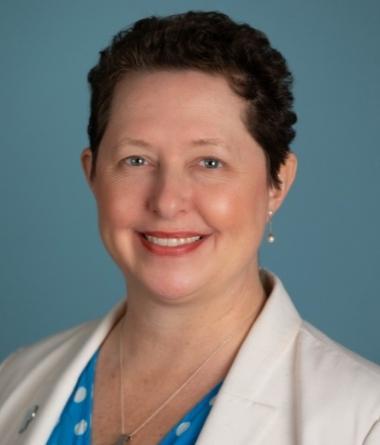
Eli Pollard designs and oversees the foundation’s Professional Education and online programs. She recognized early on that the best way to ensure people with Parkinson’s receive quality care is to ensure that health professionals better understand Parkinson’s. She leads the foundation’s push to make training and educating healthcare providers a top priority from early on in their professional training.
She started working in the Parkinson’s field in 2004, when she began overseeing the creation of the World Parkinson Congress. She splits her time between the foundation and the World Parkinson Coalition. She is passionate about social justice issues, including access to information and education, which she feels can eliminate inequities and help people with Parkinson’s live better lives. This includes ensuring people with Parkinson’s understand the disease, have access to treatment options and qualified healthcare professionals.
Eli holds an M.A. from the School for International Training in Vermont, a B.A. in Education from Michigan State University and a certificate of African Studies from the University of Zimbabwe. After earning her degree, she spent almost 10 years living in Zimbabwe, Switzerland and Japan.

Want more?
Don't forget to subscribe! There are many ways to listen: Apple Podcasts, TuneIn (Amazon Echo), Spotify or RSS Feed. (Need help subscribing? See our quick guide.)
For all of our Substantial Matters podcast episodes, visit Parkinson.org/Podcast.