Episode 44: Talking to Children About Parkinson's
-
Dan Keller 0:07
Welcome to this episode of Substantial Matters: Life and Science of Parkinson's. I'm your host, Dan Keller. At the Parkinson's Foundation, we want all people with Parkinson's and their families to get the care and support they need. Better care starts with better research and leads to better lives. In this podcast series, we highlight the fruits of that research, the treatments and techniques that can help you live a better life now, as well as research that can bring a better tomorrow. When one member of a family has Parkinson's disease, it affects all members. It is especially important to help children understand why mom or dad's hand or leg is shaking, what it means and how it will affect that person and the rest of the family over time. So keeping children informed will help them cope with having a parent, grandparent or other family member with Parkinson's. Soania Mathur is both a family physician in Toronto, Canada and a person with Parkinson's. She received a diagnosis of young onset PD when she was 27 years old, just as she was embarking on her medical career and starting a family. Over the past 20 years, she has developed some views and advice on how to talk with children about PD, where to look for resources, and how to help children cope with PD in the family over the course of the disease. She says that when a person first receives the diagnosis, it's important for them to recognize that the whole family will be affected, including children at different ages.Soania Mathur 1:54
And children are particularly vulnerable to it because they witness changes in their loved ones, yet are not usually spoken to about it, because patients are trying to cope with it themselves or discuss it more with the adults in the family, which is quite uncomfortable for a child. So I think it's important to address that issue. If it's a grandkid or child or niece, nephew, it doesn't matter really. I think it needs to be discussed with all children.Dan Keller 2:19
At what point should people bring it up with kids and how?Soania Mathur 2:24
That's a very good question. I think that topic of disclosure is very important for patients to think about. It really depends on the family. It's very individual to each family. It depends on the age and education level of the child. It depends on their maturity level. But I think once you notice that children are noticing the physical challenges that their loved one might be experiencing, it's important to then start the discussion. And the level of discussion will really depend on the child, but children are very intuitive, so if you don't tell them what's going on, they'll often make up in their own mind something that's often much worse than reality itself. So disclosure is really important. How you approach it again depends on the child and what you feel comfortable doing, but I think there are some major guidelines to consider when discussing it with your child.Dan Keller 3:10
What are some of those?Soania Mathur 3:11
I think it's important first of all, to be honest in your disclosure. Children, as I said, are very intuitive and know something's going on, so it's important to acknowledge that something is going on. I think it depends on the educational level of your child. Using the appropriate language is important. In one of my books that I've written, sort of incorporating a discussion with a child, I've sort of called the brain the big brain, and dopamine is kind of like the messenger that runs around the body, making muscles move. Using analogies to expand on the disease itself is important, but also using certain language that will not only connect with the child but teach the child. So there's no harm in using technical terms if the child is of the age to understand. I think it's also important to express hope for children. Children are naturally optimistic and probably more hopeful than we are as adults, and I think there's something to be learned by that, and to honor that hope is really important, because children also react depending on how the parent or grandparent reacts. So it's much like when a child falls down as a toddler, they look to their parents to see whether they should cry or not. So they very much model themselves after the adult in their lives' reaction. So I think it's important to express hope, not to be dishonest if you're having a bad day or if the disease is affecting you in a certain way, but overall try to express hope is very important as well.Dan Keller 4:28
Are there a lot of resources for kids that they can look at at their leisure or on their own pace?Soania Mathur 4:35
There are books that are up and coming that can be used sort of as conversation starters. A number of them are available on the internet. But I think the most important resource for parents is other parents. I think the experience of other parents or grandparents that have dealt with the situation is invaluable, and if you can get in touch with others in your support group or online that may have gone through the same situation, I think that's often an overlooked resource.Dan Keller 5:02
What about normal parenting roles? Do kids try to get away with stuff? Or how do you say, “Listen, this has not changed the entire world. We still expect of you anything that we had in the past”?Soania Mathur 5:16
Yeah, I think that's a tricky question. I think it depends also when your children were exposed to the disease. For myself, I had all three children after my diagnosis, so for them it was normal to have a shaking mother, and they treated me like a parent. It wasn't the Parkinson's, it was me. I think though, as a parent, sometimes we have a little bit of guilt from perhaps not feeling as though we've adequately experienced certain things with our children, participated in certain activities that maybe we weren't able to participate in because of our symptoms, and that can sometimes lead to a little bit of guilty parenting, which is really important not to get into because ultimately our children need that kind of direction and structure that all parents should give their children.Dan Keller 5:59
How do you keep them from looking up stuff that's just pretty much wrong?Soania Mathur 6:05
Well, that's tough for adults to do too with this disease, so let alone children. And children are much more technically savvy than us, and their first resource is often the internet, but I think keeping the lines of communication open so that your children feel comfortable coming to you when they have questions, because even though you might disclose it when they're, say, age seven or eight, their level of understanding and questions are going to change as the disease progresses and your symptoms will change, so more questions will arise. So I think keeping that level of communication open is very important. Giving them other resources, other adults in their lives that may be able to field some of their questions they should feel comfortable with, and then directing them, depending on their age, of course, to online resources that you find are valid and appropriate.Dan Keller 6:51
As you said, you had all three of your children after you received your diagnosis, so it'd be hard to compare, but do you think that kids sort of rise to the occasion, become very self-sufficient because of this, or is it all downside? Or is there some upside?Soania Mathur 7:06
No, there's very much an upside to it. I think that my children, personally, are now 19, 17, and 13, so they've lived with this for a long time, as I was diagnosed over 20 years ago, but they've learned a level of compassion and empathy and charity that perhaps they may not have learned had this life challenge not been theirs. And I think that's actually another thing that they've learned—that life is not perfect, that they will face challenges in their lives, and it depends on how you face those challenges is what's going to define you as a person. So they've gotten a lot of strength from it. It's actually probably been more of a blessing than a curse in some ways.Dan Keller 7:43
Were there any privacy issues? Did you want to keep some people in the loop and some out of the loop? And how do your kids maintain that?Soania Mathur 7:50
Yeah, I mean that was very interesting for me as a physician. I wanted to keep it private for the most part. So for the first 10 years of my diagnosis, I didn't really disclose it to much of anybody except for my immediate family and some close friends. But again, I never told my children they couldn't tell other people if they wished to, because I think that puts it into the line of something that's a stigma and something they should be embarrassed about or ashamed about. So I never told them they couldn't disclose it to friends or family that they felt they needed to talk about. But again, because my children had only lived it, it really wasn't much on their minds at times. You know, they always looked at me as their mother, not the mother with Parkinson's.Dan Keller 8:31
Does instilling optimism in kids help—that you're getting good treatment, that research is underway, and things like that?Soania Mathur 8:39
Absolutely. I think not only giving optimism but empowering children is really important, because they often feel helpless when they can't do something about it. So giving them ways to help is really important as well, whether it's helping you around the house or helping a grandparent with getting groceries if the grandparent has Parkinson's, that sort of thing, and also doing more altruistic work such as fundraising for research or raising awareness in their school. So giving them concrete ways in which they can help out is really empowering for them and helps to add to their optimism. And you're right. I think we have to be optimistic ourselves, as I said, and telling them that there is a lot of research going on in the world today to help with finding a cure for this disease, and if you're optimistic there, that will sort of rub off on them as well.Dan Keller 9:27
Do you have young adult parents in your practice? I mean, do you particularly attract them?Soania Mathur 9:35
Yes, I now have sort of retired from clinical practice, but I had a lot of young families in my practice, not necessarily dealing with Parkinson's, but sometimes other chronic illnesses that were much the same approach is required for most chronic illnesses. Certainly in my work in the Parkinson's community since then, I've had a lot of young parents approach me, knowing that I've raised three kids through this and asking for advice. That's why I had mentioned that other parents that have gone through this are often the best resources to approach.Dan Keller 10:05
So it sounds like a support group or some kind of circle of other Parkinson's people would be helpful.Soania Mathur 10:11
Absolutely. The bond of Parkinson's disease is there anyway, and when you add into that parenting with Parkinson's disease, you tend to develop a close community of people that are going through the same life experience.Dan Keller 10:25
There's support groups for kids of addicts and alcoholics and everything else. Are there support groups for kids whose parents have chronic neurological diseases?Soania Mathur 10:37
I don't know the answer to that. I think there's lots of informal groups of kids of parents who happen to become friends through this diagnosis. I'm not sure if there are any formal groups. It wouldn't be a bad idea. I think given the prevalence of children that are probably affected by this, it might be more feasible to do it online as opposed to in person, but it's a good idea.Dan Keller 10:58
What about someone for kids to talk to who's not their parent? I mean, do they want to express their frustrations or anger or something else with other people?Soania Mathur 11:08
I think that's an important point. I think children should understand that they have the option. Sometimes they may not want to talk to their parents or the loved one that's affected with Parkinson's because they don't want to add to the stress of the parent or grandparent, or they don't want to ask questions that they feel might be embarrassing or insulting to the parent if they notice something physical that they're worried or concerned about. So I think first of all, the other parent who's not affected is probably a good resource for them to approach, but also if they need to seek medical attention or they want to go with you to your neurologist appointment, that's often a good resource. But you might even have to, especially with children that are having trouble coping with it, get some professional counseling, and there are some social workers or counselors that can deal with children affected by chronic illness in general.Dan Keller 12:06
For more resources on parenting with Parkinson's, you can find two new fact sheets that our previous interviewee, Elaine Book, helped create. Visit parkinson.org/parent fact sheet to see them: PD and your children and teenagers, and my parent has PD, what does it mean? You can also find Elaine's expert briefing available on the website in which she discusses parenting with Parkinson's and its impact on children and young adults. In addition, Dr. Mathur has written books about talking with children about PD. One is Shaky Hands: A Kid's Guide to Parkinson's Disease, and the other is My Grandpa's Shaky Hands. You can find them online. As always, our PD information specialists are available on our toll-free helpline. They can answer questions and provide information about this topic or anything else having to do with Parkinson's. You can reach them at 1-800-4PD-INFO. If you have any questions about the topics discussed today or want to leave feedback, you can do it at parkinson.org/feedback. At the Parkinson's Foundation, our mission is to help every person diagnosed with Parkinson's live the best possible life today. To that end, we'll be bringing you a new episode in this podcast series every other week. Till then, for more information and resources, visit parkinson.org or call our toll-free helpline at 1-800-4PD-INFO, that's 1-800-473-4636. Thank you for listening.
Receiving a diagnosis of Parkinson’s disease, especially when it occurs at an early age, can be seen as disrupting an entire life plan. But it doesn’t have to. Soania Mathur, MD, CCFP, a family physician in Toronto, Canada, was diagnosed with young onset PD at age 27, just when she was starting her own medical career, as well as starting a family. She has developed some views on raising children when a parent or other family member has PD. In this second episode of our two-part Holiday Series: Families and Parkinson’s, she offers advice about how to talk to children about the disease, where to turn for resources, and even how having a parent, grandparent, or other relative with a chronic disease can have positive aspects for a child.
Released: December 18, 2018
-
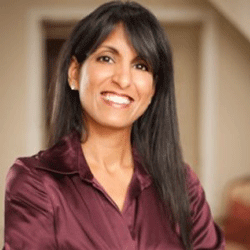
Dr. Soania Mathur is a family physician living outside of Toronto, Canada who had to resign her practice as a result of her Young Onset Parkinson's Disease 12 years after her diagnosis at age 27. Now she is a dedicated speaker, writer, educator and Parkinson's advocate. She speaks passionately about the challenges of adjusting physically and emotionally and the coping strategies available to patients.
Dr. Mathur is an active speaker in Canada and the US at patient-directed conferences. She works with The Michael J. Fox foundation for Parkinson’s Research and serves as Co-chair of their Patient Council. She serves on the Board of Directors for the Davis Phinney Foundation, is a member of The Brian Grant Foundation Advisory Board, the Medical Advisory Board for Parkinson Canada and also works with Parkinson’s Movement UK on North American initiatives. Dr. Mathur has valued her involvement with World Parkinson Congress as a speaker and committee member. Locally she is a member of the Board of Directors for the Lakeridge Health Foundation. She has authored a number of published papers and online pieces and is a regular contributor to Huffington Post Blog. She is the founder of Designing A Cure Inc., which was created to raise awareness of Parkinson's and now serves as a platform to educate and inspire those living with this disease to take charge of their lives. Dr. Mathur has a special interest in helping educate the youngest affected by the stress of this chronic disease. To help facilitate dialogue between children and their loved ones, she has authored two books: “My Grandpa’s Shaky Hands” and “Shaky Hands – A Kid’s Guide To Parkinson’s Disease”. All proceeds from the sales of these books (available on Amazon) will be donated to support Parkinson’s research and other efforts that serve the PD community.

Want more?
Don't forget to subscribe! There are many ways to listen: Apple Podcasts, TuneIn (Amazon Echo), Spotify or RSS Feed. (Need help subscribing? See our quick guide.)
For all of our Substantial Matters podcast episodes, visit Parkinson.org/Podcast.