Episode 187: Breakthroughs Take Time: Looking at the Future of Parkinson’s Research
-
Dan 00:08
Welcome to this episode of Substantial Matters, Life and Science of Parkinson's. I'm your host, Dan Keller. At the Parkinson's Foundation, we want all people with Parkinson's and their families to get the care and support they need. Better care starts with better research and leads to better lives. In this podcast series, we highlight the fruits of that research, the treatments and techniques that can help you live a better life now, as well as research that can bring a better tomorrow. Research on Parkinson's disease has come a long way, investigating new therapeutics with an eventual goal of finding a cure. Discovery is a stepwise process, with new research building upon past results and leading to new findings. I explored the state of Parkinson's research with Maggie Caulfield, the Director of Research Programs at the Foundation, and Connor Courtney, the Associate Director in Medicine. Most all clinical and therapeutic advances start with basic science research, so I asked Connor just what that means.
Connor 01:25
So the term basic science typically refers to laboratory research that is done to explore fundamental principles about science or technology. In the context of Parkinson's disease, basic science experiments seek to better understand the biology behind what causes Parkinson's disease, and then to better understand how this biology can drive new, innovative treatments for the disease. Basic science laboratory research is almost always the first step of major breakthroughs in medicine, as it establishes the basis for which future clinical studies can follow up on.Dan 02:05
Do you have any examples where basic science discoveries have opened a door to new science or to clinically applicable treatments?Connor 02:17
One clear example of basic science success is actually the drug levodopa. Before levodopa could become the transformative medication that we know today, it was laboratory experiments from the 1950s that provided the initial proof of concept that levodopa could potentially treat the symptoms of Parkinson's disease in humans, and all these years later, levodopa is still the gold standard medication for treating the symptoms of PD. And so, like the initial experiments with levodopa, the Parkinson's Foundation believes that funding basic science research is the most effective way to lay the groundwork for future treatments for Parkinson's disease.Dan 03:02
The Foundation puts a strong emphasis on supporting researchers in the early stages of their careers. What's the advantage of doing that?Connor 03:12
There are a couple of reasons for this, but at its core, Parkinson's disease is a condition that we've known about for well over a century now, and while we've made progress with regards to treatments, we still do not have a cure or a disease-modifying therapy for this disease. The field needs new innovative ideas to tackle this disease, and we believe that the next generation of researchers are the ones who will bring innovations that could potentially transform the field. By investing in the most talented researchers early in their careers, we help ensure that these scientists stay committed to Parkinson's disease research for the duration of their careers.Dan 03:56
I know it's sometimes hard to tell who's going to be the superstar, but I think it's especially critical today that they get funding because the government has cut back, so is the Parkinson's Foundation doing anything in that regard?Connor 04:14
Well, yes, as you correctly point out, the scientific community is currently going through a difficult time due to massive changes in the federal funding landscape, and so in the current climate, it really has never been more important that we invest in talented young researchers, to not only convince them to stay in science, but to have them stay committed to Parkinson's disease research, because the PD community needs these researchers now more than ever.Dan 04:44
Maggie, shifting from basic science and lab work, can you give our listeners a quick overview of the PD generation study and what makes it different from other Parkinson's studies?Maggie 04:58
I'd love to. PD generation is our international genetic study. We provide genetic counseling to anyone over the age of 18 with the diagnosis of Parkinson's disease. Our primary gene panel focuses on seven Parkinson's disease-associated genes. These include GBA one, LRRK2, SNCA, PARKIN, PINK1, PARK7, and VPS35. Changes to these genes all have significant research supporting the role of Parkinson's disease risk or outcome. And a lot of this is originally based in this basic research world that we've just talked about. There are a few really unique attributes of PD generation. One is that it's truly an all-comer study—we like to call it this. There are no restrictions besides being an adult and having a PD diagnosis. Something else unique is that participants receive their genetic testing results back to them during a meeting with a certified genetic counselor. This allows for some time and space to ask questions and discuss their results. This has not been historically part of clinical trials that use genetic sequencing for screening of participants. Those participants do not get those results back. Another unique thing about PD generation is that we allow for participation completely remotely, meaning someone with PD never has to come into a clinic to participate if they don't want to. We offer a Tasso kit, which is an FDA-approved self-collection kit for blood, which can be shipped to a participant's house, and then they can pop it back into the mail to be sent off for genetic sequencing.Dan 06:39
I've been doing a couple of other interviews lately, and it sounds like some of the genes underlying a risk for Parkinson's disease may actually interact, especially at the level of the mitochondria. So it sounds like a rather complicated process to sort out all of their effects.Maggie 06:58
Absolutely, and it's becoming more evident, again, a lot of times through this basic research platform, that there are overlapping mechanisms that are affected by multiple genes, as you're alluding to. So the mitochondria is one—the energy powerhouse of the cell. Another one is what I always call taking out the trash, the lysosome. This is what degrades proteins that are either misfolded or no longer needed, and multiple of these genes play into those pathways.Dan 07:26
Thinking about the PD generation study, what are some of the goals, particularly around enrollment and expanding diversity?Maggie 07:37
As I mentioned, PD generation is global. We're not only in the United States, but we're in Canada, Israel, and 10 countries in Latin America. We were able to accomplish this through collaboration with another group called large PD. We're continuing to expand. We have a very diverse cohort, as compared to other genetic registries, where about 14% of our participants identify as Hispanic or Latino. This is not something you'll see in other international, global registries. We have had pretty large participant enrollment goals. We enrolled our 30,000 participants in PD generation on December 1 of this year. This is a major milestone for the study. Our original goal was to have 15,000 enrollees by December 2025, and we were able to double that. Wow, it's a huge number. The next probably largest studies of this type are in the 1,000 to 2,000 participant range, so we are getting quite large. We've also leveled out in the last few months, just around a 12% positivity rate for our primary seven-gene panel, so just about 12% of our enrollees tested positive for a variant in one of those seven primary genes. We also have expanded our gene panel recently. In the last year or so, we have included a second PD-associated gene panel. We call it the secondary finding gene panel. This is because changes in these genes are either associated with rare forms of PD or there's evidence of an association that's just coming to light through basic research mechanisms or other preclinical research. Many of these genes are also known to play a role in other disorders such as frontotemporal dementia or Wilson's disease. Currently, we have about 7,000 results from this panel, and this is a really exciting contribution of data to research efforts to allow us to better understand these less well-understood genes in the context of PD.Dan 09:38
Are there any other recent highlights or key learnings at this point from the study, or are those the main ones?Maggie 09:47
I would consider those to be the main ones. A lot of our efforts have been pointed towards operational, logistical mechanisms to continue to expand this program. Really, the power comes from the numbers, and the more people we have participating, the greater amount of data we can contribute to the scientific community, and the more we will contribute to the understanding of genetics and Parkinson's disease.Dan 10:15
Right now, the main way to slow down progression of Parkinson's disease is regular, vigorous exercise, but people are looking at disease-modifying therapies. What does that term really mean?Maggie 10:31
Disease-modifying therapies, or DMTs, are therapies that actually change the underlying problems that result in a disease. These treatments try to slow or halt progression by inhibiting things like clumping of proteins, energy issues, as we mentioned before, and waste issues that are common to neurons that are damaged in the Parkinsonian brain. I like to say, as I mentioned before, dopamine neurons have issues making enough energy and are bad at taking off the trash. We need to help those cells do things better, or the disease will continue to progress.Dan 11:05
What's on the horizon that looks promising in that area? Anything you can put your finger on?Maggie 11:12
So I think there are a couple of things that have come out that are exciting, but they also reiterate some of the challenges with these types of therapies. I recently attended a conference called the Parkinson's Study Group Conference in San Diego a few weeks ago, and we reviewed some positive results from a couple of stem cell replacement therapy studies that recently had positive results. They were fast-tracked from a phase two clinical trial based on efficacy to a phase three, which is pretty unheard of for this kind of trial. It's really exciting for them. Researchers have been studying stem cell replacement therapy for PD for many decades, probably close to five now. If you lose your dopamine-replacing neurons, just put them back in and you'll cure the disease. But the disease is so incredibly heterogeneous, so different between each and every person living with PD, and so complicated on the cellular level that it just hasn't been that straightforward. It's taken us many decades to get to where we are now, where it might actually be something that can be used for certain people living with PD. There are a couple of other new, fresh ideas about how we have a good sense of the molecules we're trying to target, or the things that are wrong with the cells, but how to get the therapies actually into the right place in the brain, into the right cells, and target those molecules is a real challenge. And there are some new ideas coming out about how to do this. So a lot of it, again, is kind of a logistical question about how to get in the right location at the right time. And there's also a number of different types of molecules that are being studied. So some affect genes, some affect proteins, some change the way proteins clump, some change the way genes are expressed, some express extra genes. And so now that there are all of these different ways we're trying to come at this problem, that gives me a lot of hope that there will be multiple options that come to market, and clinicians will be able to choose the best therapy for their specific patient and not rely on a one-size-fits-all approach, which is really going to be what's needed for Parkinson's. All of us have heard that if you meet one person with Parkinson's, you've met one person with Parkinson's, and while there are common underlying disease mechanisms for people with Parkinson's disease, everyone's disease is a little bit unique, and we need to be able to have personalized therapies for people living with Parkinson's disease.Dan 13:42
It really sounds like this almost circles back to PD generation and being able to tell what the underlying gene defect is in some people, or also obviously incorporating clinical signs and symptoms. But personalized medicine seems to be the way to go, especially for a disease where each patient really has almost their own disease.Maggie 14:05
Absolutely. If you don't mind, I would like to comment on that a little bit. And it's not just genetics that we can use as biomarkers. That's kind of the overarching term for those types of understandings of people's individualized disease. So we could understand the genetics. We can take biomarkers. Some of those are just clinical presentations, so how people move or function in the clinic. Other signs include issues with the GI tract, sleep issues, and cognitive decline. All of these give us a sense of the greater picture of disease for each person. There's also different proteins, inflammatory markers in the blood and cerebrospinal fluid that we can use to sort of group people living with PD into different buckets so that treatments can be more specific for those groups of people.Dan 14:54
You mentioned that a phase three trial is starting. That's a big leap going from a phase two to a phase three, because in phase two you're looking at drugs to see if they actually work in any way, and so many candidate drugs go by the wayside at that point. So being able to take it into a phase three is quite an advance.Maggie 15:16
Absolutely, and especially for something like stem cell therapy, that's relatively—well, it's pretty invasive as far as therapies go. It's a surgical intervention, and you're putting in cells that, in this case, are not from the person's body into their brain in multiple locations deep inside the brain. It's really exciting to see this sort of therapy make it through phase two, because it is where most trials kind of come to an end, and move into phase three, where they can expand, put it into more people who are interested and willing to take the risk associated with the surgical intervention, and see if it can be more widely used.Dan 15:56
Connor, how does research participation help move the work forward, and what do you think is most promising or exciting on the realistic horizon?Connor 16:08
Well, I think everything that Maggie just said was right on point, so I'm going to go a little bit of a different direction and say one thing that I find very encouraging is the growing acceptance among both the scientific community and the general population regarding the extent to which environmental factors contribute to the development of Parkinson's disease. While this is not a new concept, there have been a number of recent high-profile studies demonstrating the strong link between exposure to environmental toxicants like pesticides and air pollution and Parkinson's disease. I hope that more research will continue in this area, and perhaps more importantly, that the impact of this research will continue to raise awareness on this topic and hopefully lead to some meaningful regulation down the road.Dan 17:00
I did some writing for the National Institute of Environmental Health Sciences, and one of the studies that I reviewed showed that environmental factors actually overwhelmed the genetic influence. Now they may interact—you may have an underlying genetic type, which then a second insult comes along and activates it—but it was quite remarkable how environmental factors were very important in the development of many neurodegenerative diseases.Connor 17:35
And that dual-hit hypothesis that you alluded to is very relevant, and a lot of research is really looking into that at the moment. Environmental exposures are critical to neurodegenerative diseases, and we're only just scratching the surface as to what we know on that topic.Dan 17:55
Maggie, can you add anything to that about how research participation helps move the work forward? I know studies are always looking for people with a disease or without it—healthy controls—to enter the study.Maggie 18:09
Absolutely, and so this is more in the context of a clinical trial, but all of our disease-modifying therapies for PD are currently in some stage of preclinical or clinical research. We don't have any FDA-approved therapies for disease modification in PD—we only have symptomatic treatments. It can be really difficult to fully enroll clinical trials. There are so many barriers to enrollment, things like simply not even knowing the trials are taking place, not knowing your genetic background, which could play a role in whether or not you can be included, not having access geographically, and the burden or risk level that people may or may not be comfortable with. But if we're unable to enroll these trials and move this research forward, we'll never really know if these potentially promising therapies can change the course of disease. So we really need to work together—researchers, clinicians, and participants—to help ourselves, our community, and future generations.Dan 19:15
Is there anything to add? Either of you think of something we've missed or is important to add?Maggie 19:20
I don't know if this is helpful or not, but when I talk about genetic and environmental factors, I like to use an analogy of a jar with marbles in it. So everyone starts out with an empty jar, and your genetic predisposition for Parkinson's disease is a certain number of marbles—some have more, some have fewer. Then you add environmental factors, which continue filling the jar. And then the third factor is age, which is the highest risk factor. For some people, those combined factors fill the jar, and they develop Parkinson's disease. But the way those things combine is unique to each individual.Dan 20:20
Good analogy. Is there any final message to our listeners?Maggie 20:30
I think sometimes it's easy to get discouraged because there are a lot of challenges, but there are also so many advances being made. When you attend conferences or talk to clinicians, you can see that ideas are really coming together. I truly believe we're on the edge of breakthroughs. A lot depends on clinical trial participation and funding for basic research.Connor 21:37
I think Maggie summed it up well. It is a truly exciting time in Parkinson's research, and I encourage anyone listening to participate and help move research forward.Dan 21:51
Thank you both for your time. I'm sure this helps fill in a lot of gaps for our listeners about what goes on with research and why it matters.Dan 22:17
To learn more about ongoing research and how the Parkinson's foundation is advancing discovery, go to parkinson.org and near the top of the page, click on advancing research. There, you'll find information on our PD generation genetic study and find other ways to get involved, like joining research studies or sharing your thoughts through surveys. There are also opportunities on how to advocate for research and even participate in designing studies and drug development to see some of the people doing the research and what they are investigating. Search our website for Research Spotlight for more on this topic, or anything else having to do with Parkinson's. Our PD information specialist can answer questions and provide information in English or Spanish. You can reach them at 1-800-4PD-INFO. If you'd like to leave feedback on this episode or to let us know what other topics you'd like us to cover, visit parkinson.org/feedback. Be sure to subscribe and rate us on Apple podcasts, or wherever you get your podcasts. We want to thank this episode's podcast sponsor, Blue Rock therapeutics for supporting our mission at the Parkinson's Foundation. Our mission is to help every person diagnosed with Parkinson's live the best possible life. To that end, we'll be bringing you a new episode in this podcast series every month. Till then, for more information and resources, visit parkinson.org or call our toll free helpline at 1-800-4PD-INFO.
There is still much to learn about Parkinson’s disease (PD), and it remains an ongoing challenge for scientists and researchers. The Parkinson’s Foundation recognizes the importance of supporting new and innovative ideas to advance research toward a cure.
Research takes time- from a conceptual idea to early laboratory work, with the hope of eventually progressing to clinical stages and, ultimately, a breakthrough. PD GENEration: Powered by the Parkinson’s Foundation is a global research initiative that offers genetic testing and counseling to people with Parkinson’s. The goal is to use the genetic data collected to accelerate current and future clinical trials aimed at developing better, more personalized treatments for Parkinson’s.
In this episode, we speak with Connor Courtney, PhD, Associate Director of Research Programs at the Parkinson’s Foundation. He takes a deep dive into how basic science lays the groundwork for future research and highlights the importance of supporting young scientists throughout their career in Parkinson’s research. We later invite Maggie Caulfield, PhD, Director of Research Programs, who shares recent key insights from the PD GENEration study and discusses current challenges in Parkinson’s research. Together, Maggie and Connor emphasize the vital role individuals can play by learning more about and participating in research.
Released: December 30, 2025
We want to thank this episode’s podcast sponsor, BlueRock Therapeutics, for supporting our mission.

-
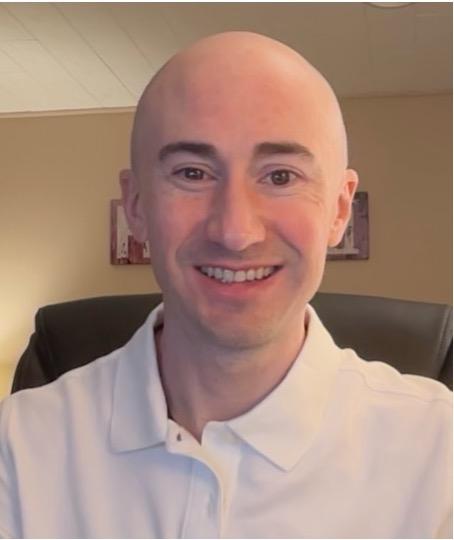
Connor D. Courtney received his PhD in Neuroscience from the University of Illinois at Urbana-Champaign and completed a Postdoctoral Fellowship at Northwestern University’s Feinberg School of Medicine. His postdoctoral research, supported by a Parkinson’s Foundation Postdoctoral Fellowship, investigated new cellular and circuit-based therapies for Parkinson’s disease. He subsequently joined the Parkinson’s Foundation as the Associate Director of Research Programs in 2024. His work in the field is inspired by his father, who lives with Parkinson’s disease.
-
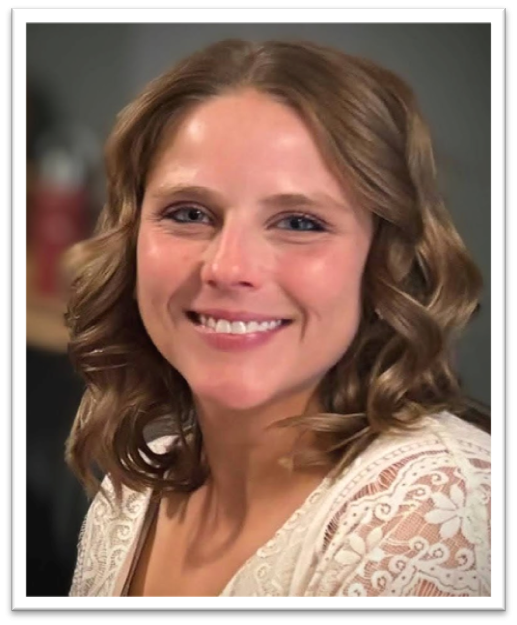
Maggie is the Director of Research Programs at the Parkinson's Foundation where she supports the scientific efforts that build upon the landmark genetics study, PD GENEration. Additionally, Maggie leads the industry consortium at the Foundation and manages many cross- Foundation efforts prioritizing genetic testing and counseling for those living with PD in an effort to fast track new therapies and potentially a cure.
Starting with her PhD at Northwestern and continuing over the last 15 years, Maggie has worked in several academic and clinical settings including Mayo Clinic, focusing on immunology, neuroscience, and scientific pedagogy. Prior to joining the Foundation, Maggie was an assistant professor in a renown PD research lab at Michigan State University where she focused on pre-clinical testing of gene therapies for the reduction of levodopa- induced dyskinesia.


Want more?
Don't forget to subscribe! There are many ways to listen: Apple Podcasts, TuneIn (Amazon Echo), Spotify or RSS Feed. (Need help subscribing? See our quick guide.)
For all of our Substantial Matters podcast episodes, visit Parkinson.org/Podcast.
Related Materials
Related Blog Posts

Celebrating 12 Milestones that Defined 2025

From Parkinson’s Foundation Research Center to Powerhouse: How Yale Became a Leader in Parkinson’s Science
