Episode 186: Prioritizing Parkinson’s Care
-
Dan Keller 0:03
Welcome to this episode of Substantial Matters: Life and Science of Parkinson's. I'm your host, Dan Keller. At the Parkinson's Foundation, we want all people with Parkinson's and their families to get the care and support they need. Better care starts with better research and leads t
o better lives. In this podcast series, we highlight the fruits of that research, the treatments and techniques that can help you live a better life now, as well as research that can bring a better tomorrow. The Parkinson's Foundation is involved in many levels for people with Parkinson's and their care partners, for healthcare professionals, and at state and national levels. For this episode, I spoke with retired cardiologist Kathleen Blake, herself a person living with Parkinson's for eight years, and the current chair of the foundation's People with Parkinson's Advisory Council. She was joined by Sneha Mantri, a movement disorders neurologist at Duke University, and the chief medical officer of the Parkinson's Foundation. Together they discussed how individuals with Parkinson's can make the most of their clinic visits, the importance of care partners and multidisciplinary support, and the foundation's national efforts to improve access to high-quality PD care, influence policy, and train the next generation of clinicians. Our guests highlighted how personal advocacy and storytelling can drive change from the clinic to the community and all the way to Congress. Let's talk about things on an individual level, and then on maybe a more national or global level, so Kathy, on the individual level, can you tell me about the Optimizing Care initiative?
Dr. Kathleen Blake 2:11
Sure, so one of the things that we know is that there's never enough time in a physician's office to cover everything that we might want to cover, and sometimes people feel sick or they're nervous, and so the Parkinson's Foundation pulled together a whole group of people, including a number of people with Parkinson's disease, and said, "What is it that we can do to help people optimize those precious minutes that they have with their movement disorder specialist, neurologist, primary care doctor?"
And so we said, first and foremost, realize that it can be difficult to speak up for yourself, so it helps to bring a care partner or a good friend, a trusted advisor with you to those appointments. Pre-visit planning is crucial—that you want to be able to go into the visit having already decided what are your top priorities, the must-dos, while you are there, because the temptation is to spend the first maybe five minutes of sort of social time, but really you need to get right to work. The other thing we've worked with people on is how to ask questions based on what they hear, so that when they leave they are ready to implement whatever was discussed during the visit.
And then lastly, we're really focusing a lot on what we would call the entire team who takes care of and contributes to the care of someone with Parkinson's. So I might see my movement disorder specialist twice a year, but I work with a physical therapist. I may see a dietitian at other times, it may be a speech therapist. So knowing who you've got, so to speak, in your court, in your corner, is a way of optimizing your care.
Dan Keller 4:12
I suppose there's three phases to this: one is the pre-visit thinking what you want to talk about, getting right to the point when you are with the movement disorder specialist, and then afterwards there's a long gap, as you said, you see your movement disorder specialist twice a year. Should you be jotting down notes, taking them, and keeping them for the next visit?
Dr. Kathleen Blake 4:36
Absolutely, and I think not just that, but having that second set of ears, whenever possible, another person, so that you can, quite frankly, on the way home, compare notes and make sure that you heard what was being said correctly. And note taking—I would also add to note taking: keeping your eye on the clock. We're all trained to not be looking at the clock when we're in the doctor's office, but we should, because if a third of your appointment is done, you need perhaps to move on to the next topic, the next priority. So, usually I think people are able to cover about three hot topics in that one visit.
Dan Keller 5:28
I know physicians have to stay on schedule, they have to see a lot of patients, but they never really say, "Here's the timeframe." Is it worth that, or does that just make the patient feel rushed? But knowing the time frame, they probably are going to organize their thoughts to get everything in in that amount of time.
Dr. Kathleen Blake 5:49
I've always been a strong advocate. This was during my own practice. It's now that I'm someone with Parkinson's. I want people to know, I want everybody in the room to know how much time we have, because that's fair. It's fair to the clinician who might be seeing me. It's fair to me and my care partner, and it's fair to the other individuals who are in the waiting room who would like to be seen relatively on time. So I think that's absolutely needed, appropriate, and it is not rude or disruptive to know the time.
Dan Keller 6:33
Do you want to now toss it to Sneha?
Dr. Kathleen Blake 6:37
You know, if you think about these conversations, Sneha has worked a long time with people with Parkinson's.
Dr. Sneha Mantri 6:49
Yeah, exactly. And I would echo everything that Kathy just said. I've been taking care of people with Parkinson's for over a decade now, and every person with Parkinson's is a unique person, right, and has a different set of challenges and a different set of priorities and goals for their own life. And so that's why some of this pre-visit preparation is so important for patients to do, because as the movement disorders neurologist, I have a lot of information, and I know a lot about the mechanics of Parkinson's disease and the physical limitations and the non-motor symptoms that people can have, but every single person's kind of set of symptoms or grouping of symptoms is going to be very unique.
And so it's important for me, as I'm, you know, getting to know my patients and taking care of them to understand what are their top priorities. So that's why, for instance, making that list of the top two or three things that you really want to make sure get covered in the session that you have together can be so helpful at making sure that that time is spent efficiently.
And then, as Kathy alluded to, you know, your movement disorders neurologist, or your general neurologist, or your primary care doctor, even they're not the only people in your corner, you know. Taking care of a condition like Parkinson's requires a lot of coordination and a lot of other people with different forms of expertise in the room. So you know, seeing your physical therapist, seeing your occupational therapist, being proactive about those appointments, and setting realistic goals for yourself.
And then this is the part that I think everybody sometimes struggles with, is doing the homework, if you will, between visits. If your physical therapist, for instance, wants you to do a particular set of exercise, making sure that you really plan that out, put that on your calendar, make it a commitment, because that's the things, those are the things that will help people with Parkinson's live as well as possible for as long as possible. But it does take some sort of active planning and active effort on the part of the person with Parkinson's, and often, you know, those who support them—their family members, their care partners, their friends who can help be sort of team players and coaches in this space.
Dan Keller 9:17
Besides being a working clinician and seeing patients all the time, you're the chief medical officer of the Parkinson's Foundation, so can you fill us in somewhat on national efforts by the foundation to improve patient care? And at this point I've seen estimates there's a million people in the United States with Parkinson's, and that's estimated to grow by 20% in the next five years, so this is a major effort. What's the Parkinson's Foundation doing on a national level?
Dr. Sneha Mantri 9:48
Yeah, that's an excellent question, because you're right, there's now over a million people with Parkinson's, and 90,000 people are diagnosed every year—that's about one person every five or six minutes, you know. So this is a huge challenge for individual people and families, but also for the healthcare systems that we're, you know, working in and trying to help support.
The way the foundation is addressing this is kind of in a multi-pronged approach, multiple avenues. One is efforts to improve access to care for all people with Parkinson's, regardless of where they are or how long they've been living with the condition. So this includes things like workforce development training to make sure that primary care doctors and general neurologists and advanced practice providers, like nurse practitioners and physician assistants, are comfortable and confident in taking care of people with Parkinson's. We know that only a handful of people with Parkinson's, about 9%, are actively receiving care by a movement disorder specialist, and so one of our key priority areas is helping make sure that non-movement disorder specialists, who are caring for the vast majority of people with Parkinson's, both sort of have that confidence to know what to do, and also have the ability to almost like phone a friend, if you will, and reach out to higher levels of care when appropriate and when needed, so that's part of the access and workforce development initiative.
We also have a number of initiatives around environmental triggers and prevention, and trying to sort of stem that rising tide, you know. Can we change the numbers of people diagnosed every year from 90,000 to maybe 60,000 to 30,000? I would love it if we could make it zero, right? Like, and trying to make sure that we're addressing not only people who currently have Parkinson's, but the people who are at risk of Parkinson's, through both looking at potential environmental triggers, looking at potential genetic causes through our initiative called PD Generation to enhance and expand access to genetic testing for people with Parkinson's disease and their family members.
Dan Keller 12:16
In terms of environmental hazards, Paraquat, which is an herbicide, is still on the market. I'm sure it's not the only environmental risk, but what's the foundation doing in that sphere?
Dr. Sneha Mantri 12:30
Yeah, banning paraquat is one of our key asks at the congressional level at this stage. There's a lot of data demonstrating the link between paraquat and other herbicides, but particularly paraquat on increased risk of Parkinson's, on worsened progression of people who already have Parkinson's, and so we have entire policy initiatives, sort of around these environmental health threats, who are actively, you know, trying to work with EPA and Congress to move forward on a paraquat ban.
Dan Keller 13:08
Can individual citizens do anything, take an active role? I mean, what should they do to change policy? It's a big issue.
Dr. Sneha Mantri 13:19
So, yes, policy is a major issue that I think no one individual will be able to change on their own, but I really believe the collective voice of people with Parkinson's disease, their care partners, clinicians who are caring for people with Parkinson's disease, all of us sort of speaking together and saying, like, these are challenges, and these are active and urgent issues that need to be addressed.
So, for instance, writing to your congressional representatives and senators, working on the local level in policy—I think that sometimes gets forgotten when we only talk about, or we only think about federal policy, but there's a lot of state level policy that can be implemented. There's local municipal level policies that can be addressed and implemented. So, you know, taking an active voice as an active and concerned citizen is really, I think, critical in helping policy makers understand, you know, not only the scientific data behind all of this, but the real human impact. And the individual stories of people who are affected by this condition can go a long way to helping move the needle, if you will, on some of these major policy issues.
Dan Keller 14:40
There's something called the National Parkinson's Plan. This was enacted during the last presidential administration. So, first of all, is it still active, and what are its goals and programs or initiatives?
Dr. Sneha Mantri 14:55
Yeah, great question. So, the National Parkinson's Plan was, as you said, enacted by the Biden administration, and is still a law on the books. One component of that is to identify and seat a national advisory committee, and so we at the Parkinson's Foundation, as well as other Parkinson's-related organizations, have been urging Congress to meet that goal and seat the advisory council. That's one component. Another component is to fund and look at research into, for instance, environmental triggers, genetic risk factors, and other proximate causes of Parkinson's disease, and then lastly to expand access to high-quality care for people with Parkinson's disease.
Dan Keller 15:51
Getting back to something you said earlier about 9% of people with Parkinson's being seen by specialists in that area, specialists tend to congregate in major cities, leaving people in outlying areas and rural areas kind of in the lurch. Is telemedicine, which seemed to become popular during the pandemic, still alive and reasonable for reaching these people?
Dr. Sneha Mantri 16:19
Absolutely. I mean, as a practicing movement disorders neurologist, I strongly believe in the promise of telemedicine for helping, particularly people who live in rural communities, access information and access care in a way that would otherwise require them to travel very long distances. My clinical practice is based in Durham, North Carolina, which is right in the center of North Carolina, and I see people from, you know, as far away as Kentucky, the southern borders of Virginia. Some patients even travel from West Virginia or South Carolina to see me, and that's hours in the car for, you know, a 30-minute or, you know, 40-minute appointment.
And so telemedicine really helps patients not have to put quite so much burden on themselves or their family members or friends or other community members who have to drive them three, four, or five hours each way. So, yes, I very much believe in telemedicine as an opportunity for expanding access, and particularly to underserved communities and rural communities. I really do hope, both from a clinical perspective and from an access perspective, that we are able to continue to see people with Parkinson's disease via telemedicine moving forward, because, as you said, it became very widespread for a lot of reasons during the pandemic, and I think we've really seen the promise, both in terms of delivering care and checking on symptoms and medications, and so on, in between those maybe more extensive in-person visits.
Dan Keller 17:59
You had mentioned the paucity of neurologists overall, and in these rural areas, and I think that was a topic of discussion during the national roundtable. Is there more to that, other sectors and perspectives that are covered?
Dr. Sneha Mantri 18:16
Yeah, there's a lot of different issues around workforce development and workforce management in neurology and in movement disorders, particularly. There's, you know, fewer than 700 movement disorder specialists across the country, and as you said, most of us are kind of centered in larger cities or in academic medical centers, so you know, there's huge regions of the country where there may be, you know, no movement specialist at all, or even no general neurologist.
There's a lot that's being done at the student and trainee resident level to encourage students to go into movement disorders as a field. A lot of the time, quite honestly, it's about simple exposure, you know. Many medical students, or even neurology residents, may not have had much exposure, if at all, to the range of possibilities for people with Parkinson's disease. So, it doesn't even enter their mind as an option, because they've never sort of been exposed to that.
So that's an area that I've been very heavily involved in, both before I joined the foundation, and particularly in the last several months. For instance, two weeks ago, we held a team training for neurology residents who came from across the country, spent three days with us and learned all about Parkinson's disease, not only from the movement disorder specialist perspective, but also they were learning alongside physical therapists and occupational therapists and speech therapists and social workers about all of the different possibilities and perspectives that these different professions can bring into ensuring that people with Parkinson's are receiving the best possible care. It was a really rewarding and phenomenal three days, and we're planning to hopefully continue this in the future again to expose more neurology residents to this really amazing and active field of clinical care and research and policy.
Dan Keller 20:26
Kathy, I'm sure many of the points that Sneha has covered resonate with you. Do you have any comments on anything she was talking about?
Dr. Kathleen Blake 20:36
So, I have to say, I agree with everything that Sneha has said, so I'm really going to address my thoughts, my comments to our audience, the individuals who have Parkinson's, as well as their care partners. So, doing nothing is not a choice, or it is a choice that we do not want you to make, and so telling your story is really important. And it may be that you tell your story in an interview at a Moving Day in your community, or at a bike ride, or at a marathon.
And having people hear that story, what has often been my experience is they then say, "Gee, you might be the first person I know who has Parkinson's disease." They go home and they find out it was their high school coach who now has Parkinson's, or a parent, or a sibling. So, I would urge people to share their story, because other stories will emerge.
The second part is that the foundation can help you with preparing what might be called sometimes an elevator speech, so if you're meeting with a member of Congress, one of your US senators, or someone at the local level, you're able to get to the point of why you have Parkinson's disease, why you are there, and what you hope that they will consider. You can't ever tell an elected official they must do something, but you can give them the case for why doing something is important. We've seen this with the veterans. Veterans are at higher risk of Parkinson's. There is now a law. It ensures that veterans exposed to a variety of environmental contaminants, their health care is assured for them, and oftentimes for their family. So advocacy may take time, and there may be setbacks, but it works, and I think that would be the message at the national and local level that I would share with our audience.
Dan Keller 22:59
There's certainly the human aspect of one person or many people someone might know having Parkinson's disease or any other disease, but if you're talking to a policy maker or a politician, is there any preparation they can get for making the economic aspect, workforce issues, disability, GDP? Even—
Dr. Kathleen Blake 23:25
So, I might comment, and then defer to Sneha. My sort of simple way of thinking about this is that every day that I am able, as a person with Parkinson's, to be independent and live in my own home is a plus on the kinds of ledgers that you are talking about, the economic ledgers. The days when I'm not able to cost all of us, not just in time but money and output. So everything that we can do, as Sneha has said, and the mantra for the foundation to make people's lives better is absolutely essential. Sneha, your thought?
Dr. Sneha Mantri 24:12
Yeah, absolutely. I would 100% echo that. You know, I think when you're looking at the economic models of Parkinson's, and the ways that the cost, the true cost of having Parkinson's, is, you know, not simply the cost of your medication or your copay at the doctor's office, although those are substantial costs for many people, but there's also a huge kind of often unwritten cost of leaving the workforce early, or family members having to take time out of the workforce to help care for a person, or drive them to appointments.
Having those numbers at your fingertips can be tremendously helpful when talking, particularly, I think, to your, you know, senators, representatives, and to folks at the local level, you know, your city council members, about what is the cost of care for somebody with Parkinson's disease in this city? What does it feel like, and what does it look like, and what does a day look like for someone with Parkinson's in this city? And how can that be made better?
Dan Keller 25:14
It sounds like this goes all the way from the individual level to group level to population and even national level in terms of policy, so I applaud the Parkinson's Foundation for taking this on at so many different levels. So, thanks for the discussion. I'm sure people are going to have their eyes open by a lot of this.
To help you make the most efficient use of your time at your doctor's visits, the Parkinson's Foundation has developed worksheets and fact sheets. Just visit parkinson.org/healthcarevisits. There's also a podcast highlighting Kathleen's suggestions on how to structure your time with your doctor to make sure that you get all your issues addressed. It's titled Make Every Minute Count: Optimizing Your Parkinson's Doctor Visits. If you'd like to read up on what the foundation is doing to influence the future of PD care, search for National Parkinson's Project.
As always, our PD information specialist can answer questions and provide information in English or Spanish about this topic or anything else having to do with Parkinson's. You can reach them at 1-800-4PD-INFO. If you'd like to leave feedback on this episode, or to let us know what other topics you'd like us to cover, visit parkinson.org/feedback. Be sure to subscribe and rate us on Apple Podcasts, or wherever you get your podcasts. At the Parkinson's Foundation, our mission is to help every person diagnosed with Parkinson's live the best possible life today. To that end, we'll be bringing you a ne
w episode in this podcast series eve ry month. Till then, for more information and resources, visit parkinson.org or call our toll-free helpline at 1-800-4PD-INFO, that's 1-800-473-4636. Thank you for listening. Dan Keller 27:37
Thank you.
One of the key missions of the Parkinson’s Foundation is to increase access to high-quality care for everyone living with and affected by Parkinson’s disease (PD). As more people are diagnosed with PD each year, the availability of PD specialists remains limited. During a recent visit to Washington, DC, the Foundation led a National Roundtable on Parkinson’s Care and Innovation with the goal of convening a multidisciplinary group of experts to provide input and help shape the future of PD care. This multi-pronged approach recognizes the importance of having patient-centered care at the forefront of decision making, ensuring that people with Parkinson’s and key community members are actively involved in the conversation.
While the Foundation continues to influence policy at the federal and state level, there are also meaningful steps individuals can take to improve their care. The Foundation encourages people with PD and members of their care team to take an active role in managing their care by being proactive before, during, and after a doctor’s visit.
In this episode, we invite Dr. Kathy Blake, a retired cardiologist and person living with Parkinson’s, and Dr. Sneha Mantri, a movement disorders neurologist and the Chief Medical Officer at the Foundation. Together, they highlight the resources available to help prepare for a doctor’s visit and talk about the Foundation’s ongoing efforts to influence PD care nationwide. They emphasize the importance of self-advocacy and raising awareness about Parkinson’s.
Released: December 9, 2025
-
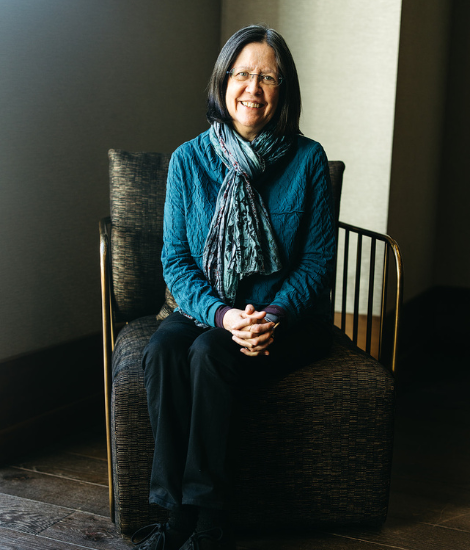
Dr. Kathleen Blake is a retired cardiologist and senior health policy advisor, formerly serving as Vice President for Healthcare Quality at the American Medical Association (AMA) until 2021. Her AMA work spanned quality measurement, health equity, medical device policy, AI, cybersecurity, and value-based care. She was co-chair of the Health IT Policy Committee for the Office of the National Coordinator and helped lead the National Evaluation System for Health Technology (NEST). Diagnosed with Parkinson’s disease in 2017, Dr. Blake is a passionate advocate for Parkinson's patients, serving as vice-chair of the Parkinson’s Patient Advisory Council. She promotes research funding, patient safety, and engagement in hospital care. Dr. Blake earned her medical degree from the University of Chicago and completed her training at Stanford University and Johns Hopkins. She practiced cardiology in New Mexico for over two decades, and is currently a part-time faculty member at Johns Hopkins.
-
Sneha Mantri, MD, MS, FAAN, is a movement disorders neurologist and Chief Medical Officer of the Parkinson's Foundation. She completed her medical education at Columbia University, residency at the University of Virginia, and movement disorders fellowship at the University of Pennsylvania and Philadelphia VA Medical Center.
A nationally-recognized clinician-educator, Dr. Mantri's work has centered on interprofessional education and care initiatives, outreach to underserved communities, and narrative medicine to improve patient-clinician communication. She has published extensively in both medical and lay journals and has been recognized as a Macy Faculty Scholar and a Fellow of the American Academy of Neurology. At the Foundation, she leads national and international efforts to improve access to care for all people with Parkinson's disease, no matter where they live or how long they've had the disease.


Want more?
Don't forget to subscribe! There are many ways to listen: Apple Podcasts, TuneIn (Amazon Echo), Spotify or RSS Feed. (Need help subscribing? See our quick guide.)
For all of our Substantial Matters podcast episodes, visit Parkinson.org/Podcast.
Related Materials
Related Blog Posts


The Latest on The National Parkinson's Project
