Episode 165: Community Conversations – Re(building) Trust and Sharing Resources
-
Dan Keller 0:02 Welcome to this episode of Substantial Matters: Life and Science of Parkinson's. I'm your host, Dan Keller. At the Parkinson's Foundation, we want all people with Parkinson's and their families to get the care and support they need. Better care starts with better research and leads to better lives. In this podcast series, we highlight the fruits of that research—the treatments and techniques that can help you live a better life now, as well as research that can bring a better tomorrow.
As we celebrate Black History Month, we want to take a moment to appreciate and recognize the contributions of Black and African Americans to the Parkinson's disease community. In this two-part podcast episode series, we will hear from a panel of clinicians who will discuss educating the community about Parkinson's disease, building and maintaining relationships, and providing resources at the right time and place. They will also address the impact of the Parkinson's Foundation Learning Institute, which trains people with Parkinson's and care partners to become research advocates and learn to work collaboratively alongside researchers.
First, we'll hear from Kimberly Gamble, program coordinator at Atrium Health and President-Elect of the Parkinson's Foundation Carolinas Chapter Board. Later in the episode, Amasi Kuma, Director of Research Partnerships at the Parkinson's Foundation, will speak with Lance Wilson, who is a licensed social worker and the center coordinator for Jefferson Health's Comprehensive Parkinson's Disease and Movement Disorder Center. I started off talking with Kimberly about the work that she does with the Black and African American community. Kim, welcome. What work do you currently do in the Black and African American community regarding Parkinson's disease?
Kimberly Gamble 2:15 My first obligation is to educate the community, depending on where they are and how much they know, but to support them, starting from the Parkinson's 101 education through the mid and advanced disease. The second part is to connect the patients and families with the resources that they need while they're living on the journey with Parkinson's disease. My third function is the outreach and community education for the general broad PD community, and then the last function is the liaison between patients, families, and healthcare providers to connect everyone with the different resources, whether it's through education or outreach. My passion is the facilitating of the three African American support groups that I have started and been able to maintain virtually.
Dan Keller 3:04 I take it you discuss research studies and getting involved with research with them, is that right?
Kimberly Gamble 3:11 That's correct.
Dan Keller 3:13 Is it any different speaking with them versus a non-African American community?
Kimberly Gamble 3:20 I don't find that there is a lot of difference. I find that most of the communities have never been introduced to research, and I find that that is a common thread across all communities. I think with anybody, you have to be ready to receive the information about research, and building the trust and the partnerships is what I find doesn't differ from one community to the next. I think it's all in how the information is approached initially with the patient and the families, and that's where I work to educate patients and families, as well as the healthcare team that I work with, to better facilitate research in the African American community.
Dan Keller 4:06 I take it building trust is an ongoing and long process. Is that right?
Kimberly Gamble 4:13 It is. You have to build the relationship and establish some type of rapport with patients and families before you can even begin the conversation with research—is the way I approach it.
Dan Keller 4:28 What do people think about research? Do they think it's a big time sink and they don't have the time, or they're eager to get into it, or what they're going to get out of it, or what other people might derive from it?
Kimberly Gamble 4:40 What I find most is there are a lot of misconceptions about research—that they just don't understand research, they don't understand the process, they don't understand the why. So I think we as a community have to do better to educate on the why and how research is actually performed and the end results, and kind of connecting the dots as to when you participate in a research study, this information is going to help drive future treatment options for your particular disease state.
Dan Keller 5:13 What do you recommend for healthcare providers who are currently facing similar challenges?
Kimberly Gamble 5:21 The biggest strategy, I think, is to introduce the concept prior to the patients and families having the need. I think we wait and kind of rush because we have this research study that is here and now, and they need people enrolled, and we've never had a conversation about research with patients and families. So you have to introduce concepts early on in the conversations with people so that they understand, and that way, when you get to that point that you need them to participate, you've already laid that foundation of the relationship, and it doesn't require you taking up the majority of the time during one particular visit.
The second thing I think that is important and they have to pay attention to is active listening, you know? If you're introducing and talking about research to a patient, a person's nonverbal language and body language is going to tell you a lot about how they're receiving that information. As healthcare providers, I don't think they pay enough attention to that. To me, you can watch that, and you tailor what you say and how you say it to a patient so that the patient is able to receive the information that you're trying to share with them.
Dan Keller 6:33 In a larger sense—sort of a big, looking-down sense—do you have any recommendations for healthcare institutions and Parkinson's organizations that are looking to engage the Black and African American community? You've been talking about sort of the one-on-one, hands-on, but what strategies can these organizations and institutions use to encourage this?
Kimberly Gamble 6:57 I think it's the same thing—they have to incorporate it into the large-scale and the big future plans. As they're building program management plans and what their plans are, they have to incorporate this at the ground level. This is not something that you can just kind of pick up and think it's going to be done immediately or overnight. It's one of those that's going to take a give-and-take on both sides, and it's going to take time for that.
Dan Keller 7:24 Does it help to have a patient who is an advocate for research—someone who's already done a clinical trial or been involved in research—to talk with the other people who might be interested?
Kimberly Gamble 7:36 That is definitely a plus. Again, I think you have to see where the patient is in that process to actually see where it's going to be beneficial for them to talk to a research advocate. Research advocates definitely are helpful in that process, and we utilize those on a regular basis. I kind of call them my ambassadors, and so definitely talking from a patient perspective is going to hit better and easier with the patient and family. Sometimes, as a healthcare provider, you know, we're on the outside looking in, and we haven't been through that process, and we have to be able to share that with the patient. You know, I'm speaking hypothetically on this side—this is what I know about it—but to speak to a patient and get the patient perspective from a patient advocate is invaluable.
Dan Keller 8:27 I know to some degree what it takes. I volunteered as a healthy control for a year-long Parkinson's study here. One of the sites was the University of Pennsylvania, and I'm in Philadelphia. It does take some time commitment and effort, but there is great reward in doing it, so I think people can figure out whether they want to contribute this way, and it is pretty rewarding. Is there anything important on this topic we've missed, or you'd like to add?
Kimberly Gamble 8:55 Like I said, I think it's just one of those where it's definitely a partnership is kind of the first thing, you know? The education piece is really huge that we've touched on, and then just a collaboration and just time and understanding and listening to each other.
Dan Keller 9:13 Good, thanks. I'm going to toss it to Amasi now, who's going to speak with Lance Wilson, social worker. Amasi, take it away.
Amasi Kuma 9:23 Thank you so much, Dan. Such a pleasure to speak with you today. Lance, I wanted to kick off today's call with first having you share impactful work that you've done within the Parkinson's community. More importantly, really highlighting the positive changes and support you've been able to make to individuals with Parkinson's.
Lance Wilson 9:48 Sure, so I think that if I'm talking about the Parkinson's disease community as a whole, I definitely interact with individuals and their families and care partners in more of a case management type of role. So, helping them navigate the day-to-day employment and other needs that they might have along the Parkinson's journey, but I also act as an educator to kind of get them up to speed as to things they should know, things that would be beneficial for them to know, kind of take out some of the guesswork about what the Parkinson's journey might look like, and also outreach—because I also need to inform other individuals about Parkinson's and why it's important, and why people need to pay attention to it. So, I think collectively in those three realms specifically, I feel like my most impactful and changing contributions are put forth to the Parkinson's community.
Amasi Kuma 10:47 Delving into your work in the Black and African American community, can you paint a picture of the strategies you've employed to build strong relationships, engaging community health workers, and also emphasize diversity in your outreach efforts?
Lance Wilson 11:05 Yes, so in my case, being at Jefferson Health, this was, I think, something that a lot of the entities and organizations around me had tried to do single-handedly. So, in Philadelphia, we have constructed and kind of came together under Diversity PD. For us, that is our local regional organization, the Parkinson's Council, sponsored by David Finney, who is helping us reach out to and engage with the stakeholders and community leaders. So, when I'm mentioning those individuals, those people could be trusted organizations, they could be local health organizations, they could be religious communities. So, just kind of going out into the community and taking the information to the person and to the people, as opposed to waiting for them to come to one of our centers, I think has been impactful. Also, showing up to the events that typically are considered overlooked or not necessarily as widely attended—I think that even something as simple as a health fair has the impact to reach several people, whether it be educating them about Parkinson's or kind of drawing them into the cause to understand why Parkinson's is something that people need to be knowledgeable about.
Amasi Kuma 12:26 Thank you, Lance. Reflecting on your experiences, as you mentioned just now about in Philadelphia, could you narrate the story behind the necessity of your work there? How did you create genuine relationships within the community as you activate the local events and intentionally build connections that contribute effectiveness to your role beyond being a healthcare provider?
Lance Wilson 12:55 Sure, one thing that's helpful specifically in our group of Diversity PD is that we have representation from all of the major centers. So we have Jefferson Health represented, we have Penn represented, Cooper, the VA, two religious organizations, as well as Temple. And so if you create a net, you've pretty much covered most of the greater tri-state area and the greater Philadelphia region. I think by having representation from so many different organizations, it allows people to feel like they can trust the individuals.
When it comes to building those specific relationships, I think the most important thing is showing up. I think historically there has been this idea that "build it and they will come," and I don't think that that is a good model to use when you're talking about individuals who are from communities who have been marginalized and historically underserved. So I think that in regards to building those relationships, you show up, you show that you care, you build those intimate relationships. Having representation from different centers that they may or may not go to is certainly helpful, but ultimately it's really about maintaining those relationships by showing up, and you're consistent about it. You don't go in, do one event, and leave. You constantly show up, you figure out ways to partner with those local stakeholders and those community leaders.
Amasi Kuma 14:27 Exploring your active role in the Learning Institute, could you elaborate on its significance and share some of the notable contributions it's made so far? If you can give us a glimpse of what makes the Learning Institute a valuable asset.
Lance Wilson 14:44 The most recent Learning Institute that I had the ability to attend focused on the Black and African American community. I felt as though its significance is very hard to quantify. I think that there was, especially, an initial shock factor. I don't think that many of the people that attended were ready or necessarily were prepared to see so many other Black and African American lives that have been impacted and changed by Parkinson's, and so I think that its significance is otherworldly at this point because it created a safe space for other people of similar cultural and similar ethnic backgrounds—and all of the other things that come along with that—to have and share that space.
I think that my role in particular was simply just as the social work representative, to give insights as to why people might need social workers and dispel some of the myths around what social work is—since we don't, as Black and African American folks, always have the most positive thought process when we think of what a social worker might be introduced into our lives for. So that was my role there, but I also got to connect with many different people from many different places who were able to give me their story and kind of tell me about what their journey with Parkinson's has looked like, allowing us to connect and to kind of—again thinking of it like in a web or like a net—expand our reach and our understanding.
Amasi Kuma 16:19 As a social worker, what unique considerations do you bring to your interactions with Parkinson's patients that other healthcare providers might overlook? How do you approach holistic patient care, resource distribution, and tailor your support based on factors like education and literacy levels?
Lance Wilson 16:43 As a social worker, I think the considerations that I make are person-specific. I think that there is a general way to quote-unquote "social work," but special considerations would certainly be that I tailor my care based off of the assessment I make and just having conversations. You know, there are so many things that the chart can tell you and so many things that demographics can tell you on the admission paperwork, but getting to know people on a more intimate level and understanding how they connect and interact with their environment—not just in the clinic space, but what happens when they go home? What's happening to them during the week? What's happening to them as they are not in the clinic space, when they're in between those clinic appointments? Because I think that's the picture that we don't always see, especially clinicians, because they have a very limited time to engage the client—or the patient, rather—and their care partners in an appointment, which could easily be 30, 45 minutes, maybe an hour, and that's not a lot of time when three, four months have gone by.
So, especially for me, I get to kind of sit and bear witness a little bit more, and kind of really hear what's happening to them outside of the clinic space, and based off of that, I can provide brief therapy, I can intervene and connect them with resources that might have gone missed in the clinic appointment. So, a lot of my stuff is tailored specifically, and it's really based off of the assessment—biopsychosocial, spiritual assessment—and an understanding of where the patient and the care partners are to figure out what ways I can best assist them.
Amasi Kuma 18:27 Are there specific resources that you find yourself frequently sharing with your Black and African American patients with Parkinson's? And can you speak to the impact these resources have on their care and well-being?
Lance Wilson 18:42 Most recently, the resource that I've been sharing has been the PD Movers book that Dr. Shah and Dr. Quinn and some other individuals put together at Columbia. I think it has been very impactful. I think that we constantly hear the phrase that "representation matters," but I don't think that people understood what that meant until that book was able to be shown, having Black and African American figures navigate their Parkinson's journey. It acted as a lightning rod for other people to want to tell their story and other people to resonate with the story. Some people even use that book to have conversations with children and to provide information about their diagnosis to their family, so I think that's probably the number one resource most recently I've used to help facilitate conversations and to kind of normalize a conversation about what it is—not just about Parkinson's, but Black and African American folks and Parkinson's.
Amasi Kuma 19:45 Considering your experience, are there any resources you wish were more readily available among healthcare providers to address disparities in care and services, particularly for individuals dealing with Parkinson's?
Lance Wilson 20:01 So, that's a hard question, because I think that some of the resources don't necessarily exist. I think that the way that we think about reaching certain communities—the resources, or building upon the resources that we already have—is the quickest and the easiest approach, but I think that we need to consider that the resources for healthcare providers to address disparities may not be readily available. It might need to be something that we create.
I think that specifically when we're talking about the Black and African American community, resources have to be grounded; they have to make sense to the community that they're being provided to. And so I think that there's a call on the community. I think that there is a call for individuals to go out into that community and build those relationships and ask the community what they need, but the flip side to that is, how do you also avoid causing damage? How do you avoid tokenization of a Black and brown body? When I think of what resources do I wish were more readily available, I don't know if I have a specific answer, because I think that this work is ongoing and there's no clean "put this in the box" type of way of thinking about this, if that makes sense.
Amasi Kuma 21:27 Thank you, Lance. I will now pass this over to Dan Keller.
Dan Keller 21:33 Either Kim or Lance, from what you heard from the other person, is there anything you'd like to add or even ask?
Lance Wilson 21:42 I think that the other thing I wanted to point out—or I wanted to ask Kim, because she also attended the Learning Institute—what was your opinion about the readiness or the insights that the Black and African American individuals that we were all engaging with, their feelings and thoughts and insights about research after the Learning Institute?
Kimberly Gamble 22:07 I kind of agree with what you said. I felt like the fact that this was probably the first time that most of them had been in a room with other Black and African Americans living the Parkinson's journey—I felt like that was very overwhelming for them at that point, and I think it just takes time for that to kind of sink in. I felt like, you know, the first part, and really probably two-thirds of the journey while we were there participating in the Learning Institute, was where their mind focus was—that, you know, there are others, and coming together to build that community and a network, and just having conversations and being in the same safe space for them to actually converse with each other. So I felt like the Learning Institute came on the back burner for that part of it. I felt like the Learning Institute is a great tool to use in the community, but I feel like we could have better prepared and maybe done some additional work on the front end before we sit them down and start trying to teach them how to become research advocates. I feel like they were just not ready to absorb that information at that point.
Dan Keller 23:26 Lance, you agree?
Lance Wilson 23:28 Oh, I absolutely agree. I think that there was certainly a shock factor that happened, and due to limited time, programming had to move on, but I think that certainly some time needed to kind of happen to let some of that shock dissipate. That's what I witnessed as well.
Dan Keller 23:46 Well, as Kim said earlier, you build trust over time. Maybe revisiting it and bringing people back in, or working with them in their communities, can help dispel that shock aspect. I really appreciate it. Thank you both for all the time and the information. You've really rounded out the subject for our listeners. So, thanks, Amasi. You got anything else to add?
Amasi Kuma 24:11 I just want to sincerely thank Kim Gamble and Lance Wilson. They're leaders within this space. I'm really honored to be able to have them as a part of this podcast today.
Dan Keller 24:34 Thank you for joining us in this special episode as part of Black History Month. We hope you will continue to celebrate with us as we highlight articles and resources all month long. Read our blog post highlighting our Research Training Learning Institute tailored to the Black and African American Parkinson's community at parkinson.org/blog. Listen to our podcast episode, titled Parkinson's Disease in the Black Community, featuring a woman with Parkinson's disease who has been highly involved in raising awareness about PD in the Black community by visiting parkinson.org/podcasts.
If you're interested in getting involved in a Parkinson's research study, visit parkinson.org/pdgeneration. For resources on Parkinson's disease and the Black and African American community, visit parkinson.org/blackcommunity.
If you want to leave feedback on this podcast or any other subject, you can do it at parkinson.org/feedback. If you enjoyed this podcast, be sure to subscribe, rate, and review the series on Apple Podcasts, or wherever you get your podcasts. At the Parkinson's Foundation, our mission is to help every person diagnosed with Parkinson's live the best possible life today. To that end, we'll be bringing you a new episode in this podcast series every month. Till next time, for more information and resources, visit parkinson.org or call our toll-free helpline at 1-800-4PD-INFO, that's 1-800-473-4636. Thank you for listening. Thank you.
Black and African American people diagnosed with Parkinson’s disease (PD) face disparities in healthcare access and outcomes, potentially leading to decreased access to care, resources, and research opportunities. It is crucial to recognize their unique needs and experiences so that scientists can better understand how PD impacts diverse communities. The Parkinson’s Foundation aims to identify these healthcare disparities to better serve and support the community.
In this first episode of our Black History Month special, Kimberly Gamble, Program Coordinator at Atrium Health, and Lance Wilson, Licensed Social Worker and Center Coordinator at Jefferson Health’s Comprehensive Parkinson’s Disease and Movement Disorders Center, share real-life examples of outreach strategies that they have used when engaging with the Black and African American community to dispel common misconceptions about research studies, and emphasize the importance of representing and showing up for your community.
Released: February 20, 2024
-
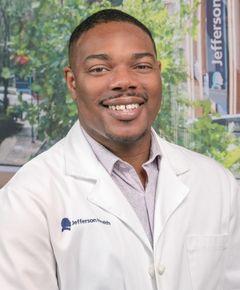
Lance M. Wilson is the social worker, outreach and education coordinator at Jefferson Health’s Comprehensive Parkinson’s Disease and Movement Disorders Center in Philadelphia, PA. Lance is a Licensed Social Worker (LSW) in the State of Pennsylvania and holds a C-SWHC (Certified Social Worker in Health Care) and ASW-G (Advanced Social Worker in Gerontology) which are both are specialty certifications from the National Association of Social Workers. Lance has professionally worked in the medical, mental health, and public health field for over a decade. In addition to his work with individuals impacted by Parkinson’s Disease and their care partners, Lance is also working on his PhD in Social Work at Widener University, where he hopes to add to the research of best practices within the Parkinson’s community.
-
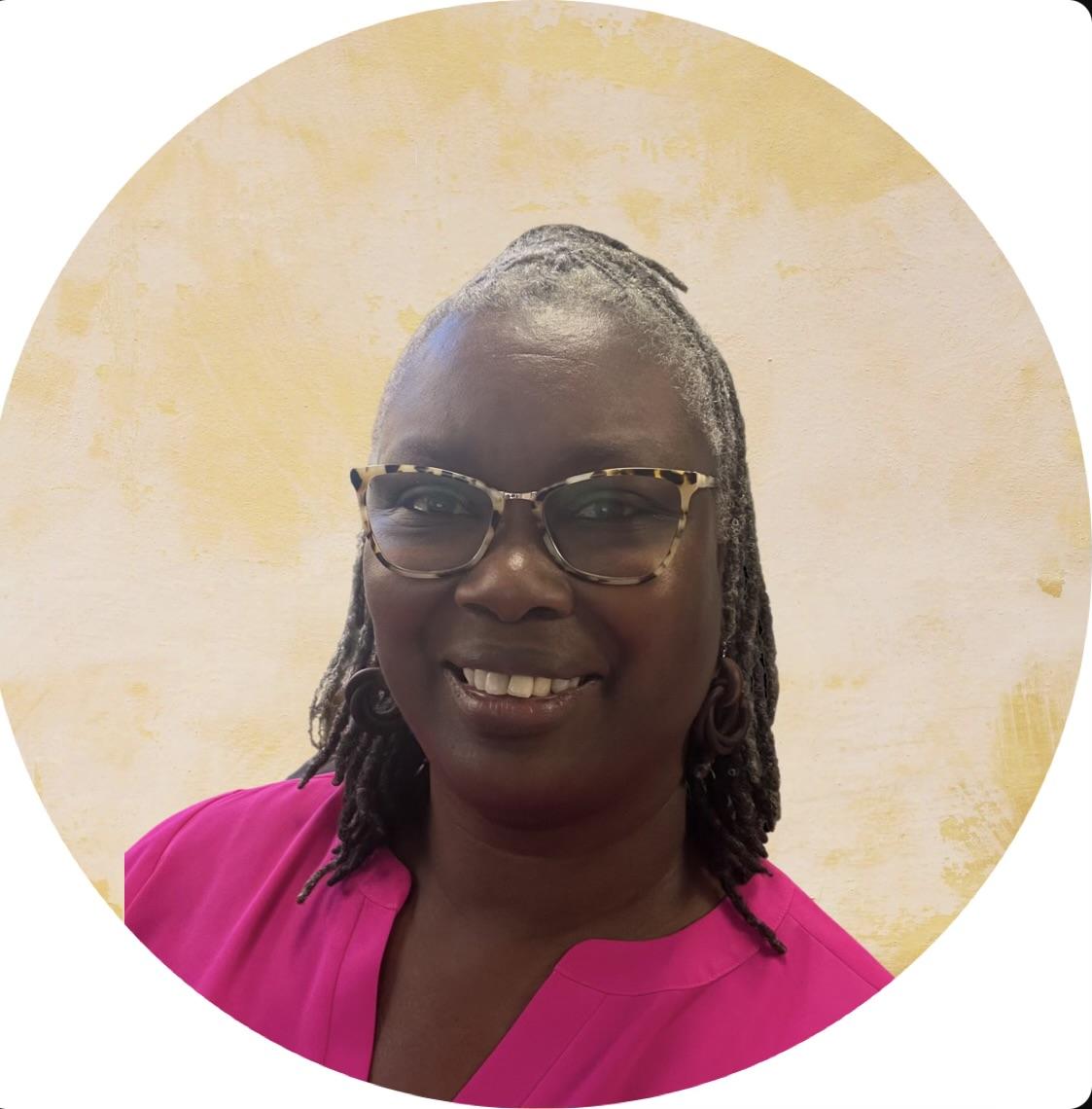
Kimberly Gamble started her journey with the Parkinson’s community by God’s grace in 2004 when she applied for a position as a sleep center coordinator. By the end of the interview with the Director of Neurosciences, Kim found out she was overqualified for the position and was recommended to apply for the movement disorder coordinator position. Kim’s role as a Movement Disorder Center Coordinator spans across 20 years and three healthcare systems. Her job includes care coordination, patient navigator, community outreach and education, project management and support for patients and families on the journey with Deep Brain Stimulation (DBS). Kim is the one point of contact for patients, staff, physicians and the PD community. Her purpose is to be a resource and connect individuals with the resources needed on the journey living with PD. Kim’s passion is to spotlight diversity and inclusion in the PD community. Knowing that PD is not an exclusive diagnosis, she works to educate underrepresented communities, provide resources and connect them to others who look like them and share their experience. Kim’s goal is to remove barriers, educate patients and families and empower them to live their BEST life.


Made possible by support from Robert W. Woodruff Foundation.
Want more?
Don't forget to subscribe! There are many ways to listen: Apple Podcasts, TuneIn (Amazon Echo), Spotify or RSS Feed. (Need help subscribing? See our quick guide.)
For all of our Substantial Matters podcast episodes, visit Parkinson.org/Podcast.
Related Materials
Neuro Talk: PD GENEration and the Black Community
Getting Involved in Research
Related Blog Posts

Partnering with Morehouse School of Medicine to Diversify Genetic Data

