Episode 120: A Health Professional’s Experience Living with Parkinson’s Disease
-
Dan Keller 0:02 Welcome to this episode of Substantial Matters: Life and Science of Parkinson's. I'm your host, Dan Keller. At the Parkinson's Foundation, we want all people with Parkinson's and their families to get the care and support they need. Better care starts with better research and leads to better lives. In this podcast series, we highlight the fruits of that research—the treatments and techniques that can help you live a better life now, as well as research that can bring a better tomorrow.
In this podcast episode, Dr. Jonathan Lessin candidly describes his journey as a cardiac anesthesiologist diagnosed with young-onset Parkinson's disease. Anesthesiology requires manual dexterity to insert breathing tubes and intravascular catheters, to administer drugs, and to operate very technical devices. An anesthesiologist also needs stamina for long operations, often more than one in a day. After several years of medical school and postgraduate training, and early in his career, Jonathan suspected something was wrong, and his suspicions were correct.
After his Parkinson's diagnosis, he was able to work some more years, always keenly aware of patient safety. Eventually, he himself underwent surgery to implant a deep brain stimulator, giving him more time to practice, but eventually he knew it was time to stop. When we spoke, he described his journey with Parkinson's, how it affected his practice of cardiac anesthesiology, and how he lives his life now. What were your first symptoms or what kind of raised your suspicion?
Dr. Jonathan Lessin 2:06 Well, I was having trouble with my right side. My hand was weak and I had trouble pouring Coke, and I had trouble scooping ice cream, and that's what brought me to the doctor.
Dan Keller 2:19 How long did it take to get a diagnosis? Many people, it takes a long time before it's zeroed in on.
Dr. Jonathan Lessin 2:26 Well, the person I saw was actually a friend of mine. He was actually a neurologist, and he told me that he had been watching me for years, and he knew that I had Parkinson's disease, because I guess Parkinson's disease is a clinical diagnosis.
Dan Keller 2:43 But he never let on?
Dr. Jonathan Lessin 2:45 But he never let on, and so when I asked to see him, he told me, "I know what's wrong with you," and I said it was a relief, because I now have something to deal with.
Dan Keller 2:58 Right. How old were you at the time?
Dr. Jonathan Lessin 3:01 I was 38 years old.
Dan Keller 3:04 And how long did it take you to decide on deep brain stimulation?
Dr. Jonathan Lessin 3:11 I was on medication, which actually helped me a lot for five years, and I was always waiting for the meds to kick in and waiting for them to wear off. I knew about deep brain stimulation because I had done anesthesia for it many times, and I asked my doctors if I'd be a good candidate for that, and they said, "Yes, you'd be a great candidate for that."
At the same time, I was freezing in the operating room, I was having trouble with movement, and I was asked to take an involuntary leave of absence for patient safety. I was asked to get a fit-to-work test at a non-MedStar facility, and I went to Hopkins, and he recommended that I look into DBS.
Dan Keller 3:59 Did you work after getting DBS?
Dr. Jonathan Lessin 4:02 Yes, I worked for four years. The DBS was fantastic. It was like the meds that were always on, and you could dial it up or down, so if you had dyskinesias, you could dial it down, and the dyskinesias would go away.
Dan Keller 4:16 Did you have realistic expectations for DBS—what it could do and what it doesn't do?
Dr. Jonathan Lessin 4:24 I think so. I was waiting for it for so long, I was always saying, "When I get my wires, I'll be able to do this and that." They told me that it wouldn't help my balance, but it does help my balance, because I'm able to move my feet more quickly beneath me to catch myself if I'm about to fall. And I was able to ski with DBS. I was able to Ride the Rockies, which is a week-long, 90-miles-a-day bike ride through the Rocky Mountains. I was able to rock climb.
Dan Keller 4:55 I read your piece for the Davis Phinney Foundation, and you said when you were riding, you could adjust your DBS as the hill climbs and the terrain needed.
Dr. Jonathan Lessin 5:06 Yeah, I reached back and grabbed my remote. If I had a hill coming up, I would increase the amplitude, which would make my face contort, but it made my legs move much easier, and I would crank it up, and I would be able to cruise up the hills.
Dan Keller 5:20 I guess there might have been a little bit of a surprise in that it helped your balance. Were there any other things you didn't expect that occurred?
Dr. Jonathan Lessin 5:29 Basically, when I woke up in the morning, I was able to get out of bed more easily. I was able to do my activities of daily living around the house more easily. It kept my off-times to 80% on, so I didn't freeze anymore. The only things I wasn't able to do is scuba dive and ride roller coasters. Those are the two things that I like to do.
Dan Keller 5:53 But you were back to skiing moguls.
Dr. Jonathan Lessin 5:57 I was back to skiing moguls. It wasn't like I was 25 again; I was 43. I could ski my favorite run in Vail, Highline, which is a mile-long mogul run. I could ski it once instead of 10 times like I used to when I was younger.
Dan Keller 6:16 I guess the handwriting on the wall for your career was really kind of imposed by the employer, is that right? Or did you, after having DBS and still working, decide it was time to give up the career?
Dr. Jonathan Lessin 6:30 Well, my first consideration was always patient safety, and my second consideration was always keeping the surgeons and the patients happy, and my third consideration was myself. Because I had trained for so long to become a cardiac anesthesiologist, and I had become echo-certified, and I was chief resident, and I was working at my dream job, which was the third busiest heart center in the country.
And one day I was just moving more slowly than I'd like, and before I had a complaint from a surgeon or patient, I decided that everybody should have a neuro-intact anesthesiologist, just like when you get on an airplane, you should have a neuro-intact pilot. So I decided to look into my disability insurance.
Dan Keller 7:15 I think some physicians, when they can't do all the tasks, take to consulting or administrative stuff. That didn't interest you at all?
Dr. Jonathan Lessin 7:25 Anesthesia is really a hands-on field, and so I didn't really have the option to do administrative things.
Dan Keller 7:33 Do you still keep up on what's going on in the field?
Dr. Jonathan Lessin 7:37 Yes, I do. I still am very interested in anesthesia and helping people. Mostly, what I do is I help people with Parkinson's disease now who are undergoing surgery. They have questions about the anesthetic, they have questions about what to do when they go in the hospital.
Dan Keller 7:54 I guess anesthesia is both a manual and a cognitive kind of endeavor. Did you have any cognitive problems that you noticed while you were working?
Dr. Jonathan Lessin 8:05 No, I didn't have any cognitive problems. It turns out that I had the LRRK2 gene, which is a hereditary form of Parkinson's disease, which rarely has dementia associated with it. So I was able to think normally.
Dan Keller 8:21 Just as a side note, what attracted you most about being an anesthesiologist in the field?
Dr. Jonathan Lessin 8:29 Well, it was acute care. You showed up in the OR in the morning, you were the first person in the hospital, and you did things that helped the patients, and you saw your results right away. It wasn't like you were waiting six months after you gave a pill to look for results, and you were able to help people immediately. And you didn't have a patient load—you didn't have 3,000 patients that you had to think about all the time. You had one patient at a time, and it was procedure-oriented. I liked the procedures. I liked placing tubes and lines and working with the heart surgeons, doing heart surgery, because the heart surgeons were working on the same organs that the anesthesiologist was interested in, so it was a very active case.
Dan Keller 9:16 I suppose it's sort of like physiology and pharmacology on the run.
Dr. Jonathan Lessin 9:21 Yeah, my favorite case to do was actually a renal cell tumor in which you did circulatory arrest, where you drain the blood out of the patient after you cool the patient down, and you actually arrest the patient for 45 minutes while you remove the renal cell tumor from the inferior vena cava. So it was a very consuming case where you work with the surgeon very closely.
Dan Keller 9:51 Given your experience, both as someone who has received DBS, as well as a physician who was deeply into physiology as a career, what advice do you have to other people with Parkinson's who are considering DBS?
Dr. Jonathan Lessin 10:08 It's fantastic. It's like the medication kicks in and the DBS works even better, because if it's too high and you're having dyskinesias, you can turn it down. And so it's important to know that when you get the DBS, to go ahead and let the programmer program it over a year, and don't be impatient in not knowing when the DBS is going to work fully. Eventually it'll work fantastically, but you have to be patient.
Dan Keller 10:39 What have we missed, if anything, or anything interesting to add?
Dr. Jonathan Lessin 10:44 It's just amazing, the support I got from the chairman of anesthesia. And because of the Americans with Disabilities Act that George Bush finally signed and put through, I was able to prove that I was fit to work, and I always worked with a senior resident, so patient safety was not an issue, and I never got a complaint from a surgeon or a patient. It was amazing.
Dan Keller 11:15 I wonder if all employees would be so fortunate as to have an employer who adheres to the ADA and would be so willing to work with an employee who presents with a problem.
Dr. Jonathan Lessin 11:28 Yeah, and it's also important to have good disability insurance when you've worked so long and trained so hard for your job, to leave voluntarily. The disability insurance allowed me to retire and still maintain my current lifestyle.
Dan Keller 11:44 How active are you now?
Dr. Jonathan Lessin 11:47 I still ride a Peloton bike inside, and exercise is very important for Parkinson's. So, I try to exercise every day.
Dan Keller 11:55 Did you increase your exercise after your diagnosis, or were you always pretty active?
Dr. Jonathan Lessin 12:02 It's funny, because I thought I was active until I got diagnosed, and then I increased my exercise. I actually started rock climbing, which I'd never done before. I actually started a rock climbing group—we have 50 people with Parkinson's.
Dan Keller 12:16 I suppose during your training it may have been hard to fit in exercise.
Dr. Jonathan Lessin 12:22 Yeah, it was during medical school and residency. Actually, the first five years out, I was still training, and it was hard to fit in exercise, but I didn't need it—it wasn't as important as it was after I was diagnosed with Parkinson's disease.
Dan Keller 12:39 Absolutely, yeah. Well, I appreciate all the time and the information. I think you put a pretty good light on what people might expect from DBS, so I appreciate it. Thank you.
For extensive resources on deep brain stimulation, including fact sheets, past podcasts, and more, search our website at parkinson.org and our PD library at parkinson.org/library for deep brain stimulation. You can also find a free book called Surgical Options: A Treatment Guide to Parkinson's Disease that you can read online, download to your computer, or download to your Kindle. The same page showing the book has a list of five relevant podcasts that you can listen to.
Just search on ADA to find information on your rights under the Americans with Disabilities Act, job accommodations, income replacement policies, and podcasts, as well as disability income under Social Security.
Jonathan was physically active earlier in his life, but as he mentioned, he has taken to heart the need for regular exercise. It is now the only known way to possibly slow the progression of Parkinson's. Plus, in the short term, exercise can improve both motor and non-motor symptoms. Once again, our library has many useful resources for whatever your level of fitness and abilities; just search the library on exercise.
The Parkinson's Foundation has teamed up with the American College of Sports Medicine to produce recommendations for four domains of exercise: aerobic activity, strength training, balance/agility/multitasking, and stretching. If you search on exercise, you can find a one-page infographic illustrating each of these in the article titled New Exercise Recommendations for the Parkinson's Community and Exercise Professionals. This is available in other languages and can be downloaded.
And, of course, our helpline information specialists can provide more resources. As always, they are available to answer questions in English or Spanish about today's topic or anything else having to do with Parkinson's, you can reach them at 1-800-4PD-INFO. News and updates about future events and resources are available by joining our email list at the bottom of our website's homepage.
If you want to leave feedback on this podcast or any other subject, you can do it at parkinson.org/feedback. If you enjoyed this podcast, be sure to subscribe and rate and review the series on Apple Podcasts or wherever you get your podcasts. At the Parkinson's Foundation, our mission is to help every person diagnosed with Parkinson's live the best possible life today. To that end, we'll be bringing you a new episode in this podcast series every other week. Till then, for more information and resources, visit parkinson.org or call our toll-free helpline at 1-800-4PD-INFO, that's 1-800-473-4636. Thank you for listening. Thank you.
It is a long road to become an anesthesiologist – four years of medical school and another four years of postgraduate training and residency. To subspecialize in cardiac anesthesiology requires at least one more year. And Dr. Jonathan Lessin, our guest today, did all of that before he was diagnosed with Parkinson’s disease in his late 30’s, forcing him to adjust his career path.
Anesthesiology is a very “hands on” practice, requiring dexterity to insert and manipulate breathing tubes, intravascular catheters, and imaging, ventilatory, and other mechanical devices. It also requires stamina for long operations. Jonathan was able to continue working for some time after implantation of a deep brain stimulator (DBS). But, taking into account the safety of his patients, he eventually knew it was time to give up the profession he loved. In this episode, he relates his history, how he came to receive a Parkinson’s diagnosis from a friend, how he persevered as long as was practical, and what his DBS allows him to do now.
Released: January 11, 2022
-
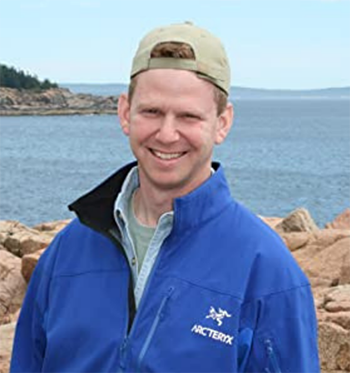
An adventurer at heart, Jonathan Lessin was the cardiac anesthesiology residency director at MedStar Washington Hospital Center, as well as an assistant professor of anesthesiology at Georgetown University Medical School in Washington, D.C. He was the first recipient of the Lessin Award, given by the residents of the University for inspirational leadership in preoperative care. Jonathan was diagnosed with Parkinson's at age thirty-eight and received his Deep Brain Stimulator (DBS) at age forty-three. He became a cyclist and avid sportsman just to prove he could, despite his diagnosis. In 2012, several years after his diagnosis, he voluntarily stepped into retirement to pursue life fulfillment. Jonathan now finds happiness encouraging his fellow "Parkies" to attempt things they thought they could never do. He currently lives in Chevy Chase with his wife and two daughters.

Want more?
Don't forget to subscribe! There are many ways to listen: Apple Podcasts, TuneIn (Amazon Echo), Spotify or RSS Feed. (Need help subscribing? See our quick guide.)
For all of our Substantial Matters podcast episodes, visit Parkinson.org/Podcast.