Episode 119: Meet the Researcher - Learning About Dystonia
-
Dan Keller 0:02 Welcome to this episode of Substantial Matters: Life and Science of Parkinson's. I'm your host, Dan Keller, at the Parkinson's Foundation. We want all people with Parkinson's and their families to get the care and support they need. Better care starts with better research and leads to better lives. In this podcast series, we highlight the fruits of that research—the treatments and techniques that can help you live a better life now, as well as research that can bring a better tomorrow.
In this podcast episode, we meet a Parkinson's disease researcher and clinician who has received funding support from the Parkinson's Foundation during his career, Dr. William Dauer. We profile him in his own words, highlighting his interests in movement disorders, career development, and contributions to the field. Dr. Dauer works at the University of Texas Southwestern Medical Center and has had a special interest in dystonia. These involuntary muscle contractions can cause painful twisting and problems performing daily tasks.
Early in his career, Dr. Dauer trained in neurology at Columbia University, which has been the home to some of the most prominent and accomplished clinicians and researchers in the movement disorders field. I first asked him how that professional environment helped spur his lifelong focus on movement disorders.
Dr. William Dauer 1:48 I was a resident in the neurology department at Columbia University, and one of the preeminent groups at Columbia was led by Dr. Stanley Fahn, who is probably the preeminent movement disorders physician in the world. In addition to him, he had a whole cadre of amazing faculty, and so as a resident, I came into contact with many of these people. They were, first and foremost, just terrific doctors who deeply cared about patients, and that really caught my attention. My background is that my family has a lot of physicians; I always cared about being a physician, and I very much resonated with them and how they approached patients.
Then, of course, there were the patients themselves. Movement disorders are unique in that you make the diagnosis by looking. Even now, our diagnoses remain clinical. This idea of using clinical expertise to make a diagnosis was really captivating to me. It's not a blood test, it's not an MRI scan—it's really by a careful, classic neurologic examination that you make a diagnosis.
Thirdly, movement disorders generally are just fascinating and important diseases. Parkinson's, obviously, is very common, but there was a lot of fantastic science—and continues to be fantastic science—about the underlying mechanisms at a root-cause molecular level, and also on how the brain circuits function and how signals travel around the brain. Movement disorders, in many ways, continue to be the vanguard as a way to understand how the brain works, so that was also very attractive.
All of these things—the science that underlay the conditions, the types of patients that I really enjoyed interacting with and was captivated by, and then also just the people, Dr. Stan Fahn and his group, and how outstanding, expert, and captivating they were—got me really interested in movement disorders. There was really no close second, honestly.
Dystonia specifically captured my attention in a classic way: I had a patient with dystonia, in particular, a form of dystonia that is caused by taking a type of medication that blocks dopamine receptors. This relatively young guy had a type of dystonia called tardive dystonia, and it was just really fascinating to me how a drug could change the brain and cause a permanent movement disorder for life. I became deeply interested in what's called brain plasticity, and how dystonia might be a clue to how the brain changes over time, both in adaptive ways but also, obviously, in pathologic ways. That has borne out in my work. That is really how I got interested from that one patient. To go back to the people, it just turned out that because Stan Fahn's group was so active, they were doing some of the most cutting-edge research, and I was able to get involved in that and learn about it. All those things combined really got me on my way.
Dan Keller 4:54 Did you get support from the Parkinson's Foundation early on, and if you did, what did it allow you to do?
Dr. William Dauer 5:02 The Parkinson's Foundation was absolutely pivotal in my entry into research and supporting me early in my career, which is really the vital time that people need backing. I did get support, and I received it in several different ways. First of all, there was a research group at Columbia at the time that was supported by the foundation—then the version known as the Parkinson's Disease Foundation—and so I became a member of that group early on. I received startup support for my laboratory from the Parkinson's Foundation, as well as support after that for various research projects and initiatives that I wanted to pursue over time.
There are two aspects of that funding that are critical. One aspect is that it provided a great infrastructure, both human and otherwise, where I could establish a lab. I knew that because of the ongoing support of the Parkinson's Foundation, there was a baseline level of support that was going to be there. That just creates a certain stability and certainty that is incredibly valuable.
Secondly, and critically, they were there when I had those sort of "out there" ideas. The NIH is a critical funder of research, obviously, but as a government organization, they are traditionally more conservative in terms of what they fund. The Parkinson's Foundation, in addition to providing foundational support, is really able to fund new, different ideas—things that maybe are less proven and are more high-risk, high-reward, which is critical to any vibrant research environment and program. They did that for me, and they allowed me to make some types of discoveries that I think I might not have otherwise had the courage or the backing to pursue. It was incredibly important.
Dan Keller 6:58 In lay terms, can you describe briefly what some of those discoveries were, or what the clinical applications were?
Dr. William Dauer 7:06 Dystonia is a complicated problem. There is a type of disease where the only problem that patients experience is dystonia, which is a form of abnormal involuntary movement that causes the body to twist or turn abnormally. You can have that on its own, a so-called primary or isolated dystonia, but you can also get dystonia in Parkinson's disease. It can be a very disabling symptom in Parkinson's disease as well.
In the dystonia realm, what was key was identifying a group of cells in an area of the brain called the striatum that are really important in why people develop dystonia. Increasingly over time, as that's been investigated, we've found that they are not only important in this so-called pure form of dystonia, but they also seem to be important in the abnormal movements that occur in Parkinson's disease. We really went from knowing almost nothing about dystonia on a cellular level to having a real, specific target for future research and therapeutic targeting in a variety of disorders—including Parkinson's, pure dystonia, and other dystonias that we're working on now—which has been really wonderful.
The one other thing I would say is that when I started, it was also a very exciting time because the first gene for Parkinson's disease was identified—the gene that encodes alpha-synuclein. It was the Parkinson's Foundation that allowed me and other colleagues to do some of the first genetic modeling of that disease in mice. Those models continue to be used today, all these many years later, and they allowed us to learn things about synuclein and its role in nerve cells that continue to be explored. It was really impactful in a lot of ways.
Dan Keller 8:59 People often talk about "bench to bedside," meaning taking discoveries from the laboratory bench and bringing them to the clinic. But since Parkinson's disease is largely a clinical diagnosis, and even following its progression depends on questionnaires, rating scales, and metrics that look at activities of daily living, motion, and other symptoms, is there an aspect where you take insights from the bedside back to the bench in your research?
Dr. William Dauer 9:27 First of all, I think it's a great question, and the answer is absolutely yes. I did laboratory research, certainly, before honing in on dystonia, but my work in dystonia and Parkinson's really started at the bedside.
There are two levels to that. One is simply caring for patients with these illnesses, becoming very interested, and quite frankly, frustrated with our inability to do more for them. That drives the desire to go back into the lab and to learn things about these illnesses. That's one very foundational form of bedside to bench, and I think it's very important.
Secondly, our work in dystonia, whether in Parkinson's or otherwise, is very much informed by the clinical characteristics of the disease. In Parkinson's, most of the focus is traditionally on slowness, stiffness, and tremor, which are the cardinal manifestations of the disease. But it's only by working with patients who are suffering from dystonia or dyskinesias that you begin to realize that these are incredibly important aspects of the disease that can be deeply disabling. It's that clinical recognition that sends you into the lab to study things like dystonias and dyskinesias within the context of Parkinson's; otherwise, you might just remain stuck on the classic descriptions of tremors and things of that sort. That's a very clear example of identifying an aspect of a disease that may not be its most well-recognized feature, but one that is very important to patients and can cause a lot of disability and unhappiness.
Additionally, we've used our understanding of a form of dystonia called DYT1 dystonia, which actually emerges in children. By understanding exactly when it happens during their development, we can go back into the lab and look at specific points in time as the brain is maturing to understand why the dystonia begins at that particular age rather than another. That has provided really important clues as to why the disease happens. Looking at the timing in patients and trying to replicate that timing in the lab is another example of bedside to bench. It really is a collaboration between the bench and the bedside, rather than a one-way arrow, and I think it's that back-and-forth collaboration—and having great people on both ends who are deeply interested in the other side—that is vital for the best science and for truly changing people's lives, which is ultimately what we're trying to do here.
Dan Keller 12:11 Science itself is not done in a vacuum; it's a human endeavor, and there's competition alongside collegiality. Do you find that the Parkinson's Foundation helps pull together or support the whole ecosystem of research in this area?
Dr. William Dauer 12:28 It very much does. I have been thoroughly impressed with the foundation over a long career of watching them, back when it was the Parkinson's Disease Foundation, and now even more so as the Parkinson's Foundation. They are clearly looking at the whole spectrum of needs for the research community. They are funding early-career researchers, which I think is so critical. They are also funding multidisciplinary grants now, where they're asking investigators in a grassroots way to identify a problem that they can attack through collaboration.
More and more, it's very clear that all of these complex problems in Parkinson's, or in neurologic disease generally, are not going to be solved by a single genius working isolated in an attic or a basement. They require groups of people practicing "team science," because there is just so much specialized expertise involved and so many different elements to the problem. I think funding those sorts of multidisciplinary groups is outstanding. They also convene people, acting as an important piece of glue for the community, to be honest with you. The field simply would not be where it is today without the kind of work they're doing—that's just a fact.
Dan Keller 13:48 What do you see coming along? What are either the big areas or the specific developments that excite you in the field right now?
Dr. William Dauer 13:56 Probably the two biggest areas in Parkinson's during my career have both been incredibly important. One is the genetic discoveries. When I was a resident, I was taught by really smart people that Parkinson's disease was not a genetic disease, but obviously, we know that's now completely wrong. There are now more than 20 genes implicated in Parkinson's disease, and many of those are what we would call strong genes, meaning they have a major effect, alongside many smaller genetic factors.
The other area is neuromodulation, such as deep brain stimulation or high-intensity focused ultrasound. This involves modifying brain circuits to improve symptoms of the disease, even as we simultaneously try to understand the root cause from genetics to slow or stop the disease.
Looking forward in the field of genetics, we're learning more and more every day. There are now multiple clinical trials underway based on that genetic understanding. So far, we have not been fully successful, which has been frustrating to us all, but as I look ahead, there is just a lot to learn and the pieces are coming together. What I am looking forward to from that is a targeted therapy based on the root molecular cause of the illness to either slow or halt its progression, which would be wonderful. I think we're closer to it than we've ever been, but we have to keep pushing along that road.
In the deep brain stimulation area, the classic way of doing this has just been having electricity travel into someone's brain at a fixed rate, a particular voltage, and so forth. But more and more now, the technology is advancing to where engineers are developing devices that listen to parts of the brain to know exactly when there should be a stronger signal or a weaker signal—a so-called closed-loop system. It's really like a brain-machine interface that is dynamically responding to what's happening in the brain in real-time, rather than just delivering a pre-programmed menu that gets set in the clinic. I think that will be very helpful in the future to be able to respond to different brain states and, bottom line, give patients a better quality of life, which is always the ultimate goal.
In both the root-cause genetic research and the neuromodulation field, there will be better and better things coming. Instead of just directing a standard electrical pulse, systems are detecting what the consequences of that pulse are for the brain at the circuit level. Alternatively, people may soon be wearing little micro-transducers on their limbs so the device knows dynamically if you're shaking. That's very much what people are designing, and there's a tremendous merging happening. We're already aware of biomedical engineering as a truly integrated field between biology and engineering, and biomedical engineering and neuroscience are merging closer every day, adapting deep brain stimulation for Parkinson's and for other diseases of the brain related to movement disorders and tremors. These advances are coming; it's just a matter of time, and there are a lot of really bright young people involved, which makes the job of the Parkinson's Foundation all the more important to keep amplifying these efforts.
I'll tell you about a very quick thing, which is not exactly for Parkinson's pathology itself, but is approved for people with really intractable tremor, or for essential tremor that's intractable. You don't even need to get an implantable stimulator now. You can receive a treatment called high-intensity focused ultrasound, where you sit in an MRI machine for an hour and sound waves are delivered to your brain, all focused on one precise point to make a tiny lesion about the size of a half a grain of rice. You walk out of that scanner with greatly reduced or no tremor for many years at least, and we're still actively studying the long-term data. This is an incredible revolution. To think that you could walk into a hospital, not have an incision, not require general anesthesia, undergo a procedure where sound waves are directed into your brain, and experience symptom reduction or elimination—that really sounds like science fiction, but it's not. It's actually what's happening today.
It's not for everyone; it's for a highly defined subset of patients at this point, but it represents tangible progress showing that all of the research we've been doing over time is paying off. Similar lines of research in biomedical engineering, pure engineering, and physics are all integrating in new ways to generate novel ideas.
By the way, while the pandemic was, of course, horrible for everyone—especially people with Parkinson's and other chronic diseases—this connection that researchers now have through Zoom and other digital tools is only accelerating the pace of global interaction, so I think the future is very bright. I don't downplay the challenges by any means, and I'm certainly not a Pollyanna, but I am an optimist. The future is bright. It's just a matter of the government and foundations, like the Parkinson's Foundation and others, helping to spur these efforts, secure the funding that's needed, and attract the smartest minds to the job.
Dan Keller 19:04 That is a wonderful note to end on. Thank you very much, Dr. Dauer.
To find out more about how the Parkinson's Foundation supports the career development of young researchers, and what funding support it provides to established investigators, search our website at parkinson.org for "career development" and "research we fund." You can also click on the "Research" tab on our homepage, where you'll find a dedicated section with information for researchers. For example, one program, the Launch Award, aims to cultivate a strong cohort of new and talented independent investigators dedicated to Parkinson's research. The award supports mentorship in research training and career development, followed by independent research. In today's very competitive environment for research funding, this award prepares the best and brightest domestic and international early-stage investigators to become independent leaders heading up their own research teams. This is only one among very many research awards, grants, and programs that the Parkinson's Foundation sponsors.
As Dr. Dauer discussed, he has had a special interest in dystonia throughout his career. To read more about dystonia, search for "dystonia" on our website. Among other resources, there is a dedicated article on strategies and tips for dealing with dystonia, including suggestions directly from people living with Parkinson's and from care partners. Also, by searching our library at parkinson.org/library for "dystonia," you can find an article called Dystonia in Parkinson's Disease, as well as links to several past podcast episodes covering the topic.
Of course, our Helpline information specialists can provide additional resources. As always, they are available to answer questions in English or Spanish about today's topic or anything else having to do with Parkinson's. You can reach them directly at 1-800-4PD-INFO. News and updates about future events and resources are available by joining our email list at the bottom of our website's homepage.
If you want to leave feedback on this podcast or suggest any other subject, you can do it at parkinson.org/feedback. If you enjoyed this podcast, be sure to subscribe, rate, and review the series on Apple Podcasts or wherever you get your podcasts.
At the Parkinson's Foundation, our mission is to help every person diagnosed with Parkinson's live the best possible life today. To that end, we'll be bringing you a new episode in this podcast series every other week. Until next time, for more information and resources, visit parkinson.org or call our toll-free Helpline at 1-800-4PD-INFO, which is 1-800-473-4636. Thank you for listening.
In this podcast episode, we ‘Meet the Researcher’, featuring a prominent investigator who has received support from the Parkinson's Foundation. We illustrate how a research career develops, what motivates people to study what they do, and to give some insight into what support from the Parkinson’s Foundation can accomplish in understanding the disease better and finding solutions.
In this episode, Dr. William Dauer, Director of the Brain Institute at the University of Texas Southwestern Medical Center in Dallas, describes his career path and how he came to be interested in movement disorders and in dystonia in particular, a condition in which muscles contract involuntarily, causing repetitive or twisting movements. He has long been involved in basic science research as well as in clinical practice, and what he has found in each area he has been able to apply to the other.
Released: December 28, 2021
-
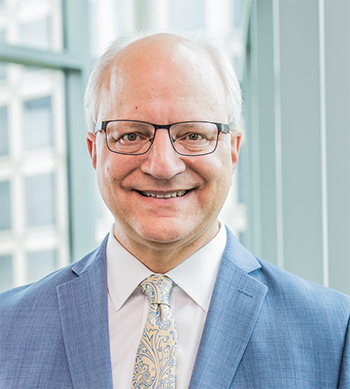
William (Bill) is Professor of Neurology & Neuroscience and the inaugural Director of the Peter O’Donnell Jr. Brain Institute at the University of Texas Southwestern Medical Center in Dallas, Texas. His academic career includes a medical degree from Washington University School of Medicine in St. Louis followed by internship and fellowships at Beth Israel Hospital in Boston and Columbia University in New York. He is a leader in the study of Parkinson’s disease and dystonia. For almost two decades, the team he leads has performed groundbreaking research focused on the molecular basis of dystonia and the mechanisms of neurodegeneration in Parkinson’s disease. Bill is an elected member of the American Society for Clinical Investigation, and his work has been recognized with the Dystonia Medical Research Foundation’s Fahn Award, the Michael J. Fox Foundation Bachmann-Strauss Prize for Excellence in Dystonia Research, and the Harold and Golden Lamport Award for excellence in clinical science research from Columbia University.

Want more?
Don't forget to subscribe! There are many ways to listen: Apple Podcasts, TuneIn (Amazon Echo), Spotify or RSS Feed. (Need help subscribing? See our quick guide.)
For all of our Substantial Matters podcast episodes, visit Parkinson.org/Podcast.
Related Materials
Related Blog Posts

Meet the Researcher Dedicated to Dopamine

How One Researcher Collaborates to Better Understand Parkinson’s
