Episode 101: Support Group Benefits and How to Start One
-
Dan Keller 0:08
Welcome to this episode of Substantial Matters: Life and Science of Parkinson's. I'm your host, Dan Keller. At the Parkinson's Foundation, we want all people with Parkinson's and their families to get the care and support they need. Better care starts with better research and leads to better lives. In this podcast series, we highlight the fruits of that research—the treatments and techniques that can help you live a better life now, as well as research that can bring a better tomorrow.
Participating in a Parkinson's support group is a rewarding experience for many people with the disease and their care partners. Sharing experiences, problems, emotions, and tips with other people in like situations can provide knowledge, solutions, and emotional support. In this episode, based on their years of involvement with support groups, licensed clinical social workers Allison Allen and Ann Kosem of Duke University talk about the benefits that people with PD and their care partners can derive from participating in a support group. They also discuss some of the considerations for starting a new group. First, Allison put their cards on the table and admitted their bias about support groups.
Allison Allen 1:33
Because we love them! We're social workers, and we've seen folks benefit from them. So, at our center, we've actually got about three groups, and Ann and I co-facilitate two of them, and we're starting a new one in 2021.
Ann Kosem 1:47
You know, I think one of the things that happens all the time for us when we mention a group to someone—a new patient or someone we've seen for the first time—sometimes we get this look like they're hesitant or reluctant to visit a group. And I think a lot of times people have some fears. They're nervous about sharing their story, they're worried about it being a negative place or sad stories that they might hear, or they're just worried about seeing people who have more advanced symptoms of PD. But we encourage people to try at least one meeting. There's no commitment, and certainly with a virtual format, they can easily do that.
Allison Allen 2:25
We really hope that people will experience some of the benefits, you know, on a first meeting, and we totally understand these concerns, but we don't want one bad experience to really turn you off from finding a group that could be a perfect fit for you. Again, we totally understand some of these concerns, but truthfully, this has not been what our experiences have been, or what we've seen. Most of our groups feel full of hope and solution-focused, full of positivity, and just making connections and learning from each other. I mean, those right there are the biggest benefits, and they take time.
Ann Kosem 2:57
In terms of a benefit, is people so often have family and friends and people in their life who want to be supportive, but they don't know anything about Parkinson's. And when they go to a group, they're finally surrounded by people who get it, who totally are where they are, you know, they've been there, and that is usually the biggest benefit that a group can offer.
Allison Allen 3:18
Yeah, it's really cool to see folks participating in the group—the folks that are newer to the group, and perhaps more experienced in a group situation—because it's a two-way street. So, for folks that have been around for a while, they're having an opportunity to make meaning out of maybe a tough experience, could be Parkinson's, for example. So, it's truly an opportunity to give and take. It goes both ways,
Ann Kosem 3:40
And of course they share resources, solutions from what they've been through as well.
Dan Keller 3:47
Right? I was wondering some of the specifics about what goes on that makes these beneficial encounters.
Allison Allen 3:55
It's a way to learn and a way to learn together. So our group actually sat down a couple years ago, even though we had been together for a while, one of our groups sat down a couple years ago and decided to define a mission statement. We created it together as a group, and we decided together that one of the goals was education and learning together.
So, for example, at that time we changed our format. We meet monthly, but every other month we bring in a speaker, an expert speaker on a relevant topic, we have an activity, and then on the alternate months we really have pure psychosocial support groups, where we meet in small groups and have the opportunity to connect with each other one on one. Sometimes we do that on shared experiences, perhaps folks that are newly diagnosed, or in smaller groups of care partners or caregivers, and other times we just kind of do it randomly. It's really neat to find and make new connections.
Ann Kosem 4:46
A side note, too, to that format and moving to that format, is it allows people who are a little nervous or hesitant that they can come for the first time when it's a topic. So that's pretty non-threatening, because we're all learning together, and they don't have to really participate. They could sort of come experience alongside everybody and get their feet wet before they come to one that's more of a sharing type of month.
Dan Keller 5:12
What makes a group successful? I take it you do have to put some energy into them to keep them attracting people and being interesting enough to support itself.
Allison Allen 5:24
Yeah, that's a really good point. So, showing up is just half the battle here. There's a lot of work that goes on behind the scenes to find something that, you know, works for you, perhaps as a facilitator. But for members, even though they may be connected on a shared experience, they may be in very different stages of their experience or life. So, one of the pieces of good news is that there's a lot of different types of groups, so you can kind of experiment a little bit.
I mean, right now, pretty much everything is virtual, right? But in the old days, you could decide, "Is this a virtual group or an in-person group?" So, you want to find something that fits for your population, for your folks. So, you know, if you've got a lot of folks who are going to work during the day, you might need to think about the time of day, or perhaps a virtual group would be a better fit. There you need to think about how you advertise, how you reach people, and things like that.
A lot of groups had to make really sudden transitions last year, about this time, or, you know, 10 months ago, or something like that. And we were blown away, because we were a bit unsure—this group that we had, a solid group that had been meeting in person for years, you know, would we continue to be successful at supporting each other and making connections with a new or a different model? But it's been great. We've really been blown away by how adaptive everybody has been. It's been a group experience to learn together, to learn a new way, and truthfully, it's actually opened some new doors to opportunities that that particular group meeting model didn't have before. We can bring in speakers from out of town, folks who had maybe more serious mobility issues can participate more easily now, and really just the list goes on and on from kind of the planning perspective, the logistic part,
Ann Kosem 6:57
And I would say for support group leaders, often they're tempted to gauge the success of their group on the number of people who attend. But when I think of success of a group, it's, "Are the people who attend getting what they need out of it?" And some of the most impactful, powerful group moments I've been a part of throughout my career have come when it's a smaller group. So I would just say not to get caught up as a leader on the numbers and how many people come, but is it what you want it to be, and are people really walking away feeling like they got something?
Allison Allen 7:32
Yeah, that's a really good point. I mean, groups are living, breathing things on their own, and they're malleable, and you can change. So as a support group leader or a support group member, you know, feel free to make suggestions, you know. Does your group have a more formal agenda and education, or is it more of the support group model? Like I said before, one of our groups kind of has a hybrid, as opposed to this new group that will be starting this year, which is more of a meetup style, for example. You can also talk about, you know, having a peer facilitator versus a professional facilitator. So there's lots of things that go into planning that can make it successful, but, like Ann said, the folks that are benefiting from the group are the ones to gauge the success the most.
Dan Keller 8:13
I suppose you don't have to be just going to one support group. You can kind of shop around. Just because you're in North Carolina doesn't mean you can't go online and say, "I'm going to Zoom participate in this one in San Diego."
Ann Kosem 8:26
Absolutely! I mean, that's exactly right, and we encourage that, because the key really is finding what works for you, what is the best fit for you. You know, they can change over time. So maybe even one that somebody visited one time, they go a year later, and it's kind of a different dynamic, or different new people who are there, you know.
I also think for people with Parkinson's and their care partners, you know, sometimes they'll want to go together. Sometimes the person with Parkinson's isn't really interested in a group and doesn't want to go, but it is fine for the care partner to go by themselves or vice versa. It's just a matter of finding what works for you. And you know, some of our cool group ideas have come when our people have gone to other places or heard about other things and come back and said, "Hey, can we try this?" So we really encourage everybody doing what works for them, and hey, if it works, bring it back so we can try it.
Dan Keller 9:22
Besides going to an already existing group, if there's nothing in your area and you do want something local, what kind of advice do you have for people who want to start a group?
Allison Allen 9:33
Starting a group, just like any new project, can be overwhelming, particularly if there aren't a lot of groups in your area, or you haven't had a lot of opportunity even to attend a group, for example. So, right out the gate, what I would think about is who could you partner with for this project? So, nobody is purely an expert on their own group effort. Combining skills, combining forces, I think, is really the way forward here. We've actually found collaboration to really be the most effective way to reach the most people.
So for example, Ann and I work together with what we call sort of a support group planning committee for one of our very large—our largest—groups. That committee is made up of Ann and myself, as well as folks with Parkinson's, and several care partners who volunteer, who've just said that they want to be involved. It really helps to widen the ideas. We get more diverse ideas, diverse speakers, and also just to share the responsibilities, for example, with note-taking and things like that.
A lot of times, like Ann mentioned, these ideas come up super organically. Like, for example, we've been talking with the folks who have young-onset Parkinson's about some of the gaps in resources, and we were talking about how we could support each other, and it came up that, you know, possibly a new and kind of unique group would be the way forward, and we all recognize that working together would be the best way. Ann and I have some facilitation skills as social workers, but the folks that came to us are really the ones with the real expertise, and there's just no replacement for that. This has been an opportunity to show working together from the very beginning. Also—
Dan Keller 11:03
Are there any caveats or things to watch out for being in a group? I take it it's not always smooth sailing.
Ann Kosem 11:12
Of course not. You're bringing together very different personalities. And, you know, sometimes there's people who are more outspoken, opinionated, have thoughts about everything, and then you have other people who tend to be a little more reserved and may be reluctant to speak up. And what I think is really important with a group is starting with some ground rules and establishing those together—of just the importance of no interrupting, letting everybody take a turn. Let's have it be a goal that we give everybody who wants to share an opportunity to share, and just reiterating that at the beginning of each group.
And certainly, everything that is said in the group stays in the group. Confidentiality is very important so that people can feel safe sharing, you know. I think that's something to watch out for, but the beauty is all the resources available to someone who wants to do this, you know, as Center of Excellence coordinators, clinical social workers. While we have a couple of groups that we specifically lead, certainly we have been contacted over the years by other groups who've called to ask us questions or thoughts. We are available that if any of our folks wanted to start something in Wilmington or another part of the state that we're not in, if they had questions and concerns, and "How do I deal with a challenging participant?" or "How should I handle this?", we would be very willing and ready to help. And I'm sure that all the COE coordinators and social workers would feel the same, because our goal is to get everybody the resources they need.
Allison Allen 12:46
There's one really solid resource that we actually refer to ourselves when we're kind of making a change, or as we've been starting this new group, for example. So, the Parkinson's Foundation has a resource guide for folks who are looking at starting a group. It goes through a lot of those logistical things that I mentioned before—everything from your space, if it is in person, the time of day that you're going to meet, how you're going to advertise, how you're going to connect, what is the purpose of the group, what are you hoping to gain from it, all those things—and some of those difficult situations are really filled out there.
The main takeaway from that is that there's so many different ways to care for each other in this way. You want to, if you're looking for a group, find the one that is a good fit for you and know that there's other options out there. And if you're starting a group, know that you're not sort of committed to one way.
Dan Keller 13:33
I take it these are sort of dynamic organizations—people coming in, leaving, coming occasionally, people having different goals or personalities. So it sounds like, as with anything dynamic, it requires input of energy to keep it moving. So, how do you come up with the energy? Who's in charge? Is it a facilitator? Is it a leader? Is it on a rotating basis? What would you suggest?
Ann Kosem 14:01
Our group, we tend to co-lead it right now. As we said, it's moved to a virtual platform, so Allison and I are both on there as co-hosts, and we share the responsibility of leading it. And then, certainly, if it's a topic-based meeting, then we do an introduction, do some announcements, and then hand it over to the speaker. If it's one of our groups that is an interactive group, we tend to start together, and then we will break up into breakout rooms so that we have smaller groups of people able to talk and really connect.
Allison Allen 14:34
You know, this group has been going on for many, many years, and I've been a part of it for five or six years now, I guess five years. What I have found, or what I first was worried about, I guess, was repeating sort of topics, or repeating ways of connecting with each other. But really, doing things more than once, and over time, is good. That's how you build on things, and, like you said before, there are always new folks.
Our groups are open groups, which means you can come at any time. There are groups where they're more curricula-focused, sort of eight-week skills groups or things like that, and that's not what we're talking about in these situations. So, I would just have to go back to that collaboration. It's a group effort. No one person has all the ideas, I promise you. So, it is okay to kind of recycle ideas and come at them with a new perspective or a new speaker, because your audience will be changing. And let's face it, we get different things from the same information at different points in our life. But also, just working together and collaborating is just going to get you more bang for your buck here. I feel that it would be silly for me to sort of lead this group without the input of folks that are really living well with Parkinson's and care partners.
Dan Keller 15:38
What have we missed, or would be interesting to add?
Ann Kosem 15:42
My best suggestion is, if you haven't been a member of a group before, or haven't attended a group, or have been thinking about it, give it a try. Figure out what works for you, try some different things, and see what happens. Some people have had a bad experience before in some other kind of group, and not everything's for everybody, but we all learn differently. It's very rare that we have people attend our groups who didn't have some experience or get some kind of help from it. At least, that's the feedback that we get. And I think if someone's even listening to this podcast, there's probably some curiosity there about groups. So, my suggestion would be: just try it.
Allison Allen 16:21
I totally have to agree. These are a lot of the concerns that we hear, but if you can look past them, here are the benefits, and we know that they're there—we know that they're out there. But now is a great time. Things that are virtual, it's not nearly as big of a deal to sort of sign in and maybe turn your camera on, or maybe not turn your camera on, and benefit from a conversation over Zoom. So, I feel like now is a really good time to give a group a try, if you're considering it.
Dan Keller 16:47
Any other nutshell messages or parting words?
Ann Kosem 16:52
Just remember the resources you have at your fingertips. I think it's easy for the people who live right next to a Center of Excellence, or who already go to one, to feel like they have more access to resources, but the reality is the Parkinson's Foundation has established these Centers of Excellence so that they can be available to all. So I would really welcome and encourage folks who feel like they need some help, or they want to get connected to a group, or they want to start a group—you know, use your social workers, your Center of Excellence coordinators, to help you find the right support services for you.
Dan Keller 17:27
And certainly use all the resources of the Parkinson's Foundation. The website really has so much on it.
Ann Kosem 17:33
Absolutely, there's so much available for folks. No one should feel alone with this. Everybody should feel like there's areas and modes of support for them. It's just a matter of finding out which is the best for them.
Dan Keller 17:47
Very good. I really appreciate it. Thanks for all the information. We've covered a lot of ground, and I think it's a good starting point for anybody who wants to get into a group or start one.
Dan Keller 18:06
For more on today's topic, you can visit parkinson.org/supportgroups. Here you will find an outline of the resources we have available to the Parkinson's community and ways that you can use them within your support group. You can also submit your support group for public listing, or make changes to a listed support group within the subpage called "List Your Support Group." We encourage you to visit our PD library at parkinson.org/library to download our support group guide. It covers starting one, facilitating one, keeping it going, and more, as well as sections for care partners. You can also call our helpline at 1-800-4PD-INFO to find a group, as well as for more advice on starting and running one. If you let them know you're starting one, you can provide contact information for people who would like to attend. Our helpline representatives can send you a support group starter kit and more resources to share with your group members.
April is Parkinson's Awareness Month, and this year we want you to join our Know More PD campaign, that's K-N-O-W M-O-R-E P-D. Take the Know More PD quiz to see how much you know about Parkinson's disease, and then share with your family and friends. The quiz will have weekly prize drawings throughout the month, and at the end of the month, there will be a grand prize drawing for a Kindle Paperwhite loaded with all 12 of our educational books on PD. Visit parkinson.org/awareness to find out more.
If you have questions about today's topic or anything else having to do with Parkinson's, our information specialists can provide answers in English or Spanish. You can reach them at 1-800-4PD-INFO. News and updates about future events and resources are available by joining our email list at the bottom of our website's homepage. If you want to leave feedback on this podcast or any other subject, you can do it at parkinson.org/feedback. If you enjoyed this podcast, be sure to subscribe and rate and review the series on Apple Podcasts or wherever you get your podcasts. At the Parkinson's Foundation, our mission is to help every person diagnosed with Parkinson's live the best possible life today. To that end, we'll be bringing you a new episode in this podcast series every other week. Until then, for more information and resources, visit parkinson.org or call our toll-free helpline at 1-800-4PD-INFO, that's 1-800-473-4636. Thank you for listening.
Parkinson’s is a multifaceted disease, and as such, there are many ways people with Parkinson’s disease (PD) can find help, including through medications, exercise, occupational and physical therapy, dance and music therapy, and meditation and mindfulness practices. Another important way is to join a support group to share experiences, learn from peers, and express problems and emotions. Such groups are not just for the person with PD, and care partners often attend and benefit.
In this episode, Allison Allen and Anne Kosem, both licensed clinical social workers and co-coordinators of the Parkinson’s Foundation Center of Excellence at Duke University in North Carolina, talk about their experiences and relate some of their knowledge derived from their years facilitating support groups. They discuss how to find a suitable group, what to expect, and how to participate. They also offer some of the considerations for starting a group if one is not already available in an area. These days, with the COVID-19 pandemic, many groups have gone online, widening the choices by opening up possibilities for choosing groups not in one’s own geographic area.
Released: March 23, 2021
-
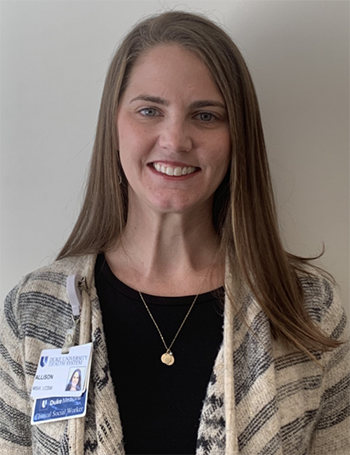
Allison Allen is a Licensed Clinical Social Worker and Center of Excellence Coordinator at the Duke Movement Disorders Center, a Parkinson’s Foundation Center of Excellence. As a member of the interdisciplinary Movement Disorders team, she has particular interest in mental health, non-motor symptoms, crisis support, family centered care and facilitating support groups. She also works with the World Parkinson’s Coalition, having facilitated programs at the World Parkinson’s Congress 2019 in Kyoto, Japan, presented in the recent carepartner webinar series on Mental Health and is currently on the planning committee for the Carepartner Lounge at the upcoming Congress in 2022. Allison is also a member of the Parkinson's Outcomes Project Mental Health Work Group. In 2020, Allison was awarded the Duke Brandy McDaniel Clinical Social Worker of the year at Duke University Medical Center.
-
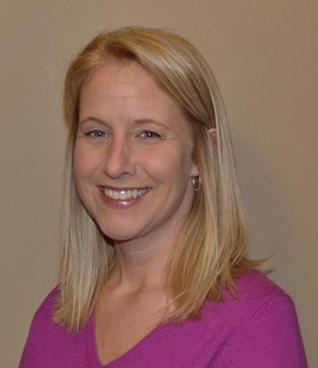
Anne Kosem joined the Duke Movement Disorders team in 2019 as a Clinical Social Worker and Center of Excellence Co-Coordinator. She has worked at Duke for 22 years providing counseling and support to patients and their carepartners around difficult diagnosis, adjustment to illness, palliative care and end of life issues. She created and facilitated carepartner support groups and educational programs in the Bone Marrow Transplant Clinic and the Pediatric Oncology Division. She is currently co-leading two support groups in the Movement Disorders clinic: one for patients with Parkinson’s disease and their carepartners and the other for patients with Huntington’s disease and their carepartners and is in the process of developing a group for patients with Early Onset Parkinson’s disease. She has served as the President of the Association of Pediatric Oncology Social Work and also President of the North Carolina Social Work Oncology Group. She has a special interest in training the next generation of Social Workers. She has served as a field instructor for the University of North Carolina School of Social Work for many years and co-developed and presented a workshop for new Pediatric Oncology Social Workers at the Association of Pediatric Oncology Social Work national conference for 6 consecutive years. She also served as a Team Leader in the Duke Department of Social Work for 10 years providing supervision and training to team members.


Want more?
Don't forget to subscribe! There are many ways to listen: Apple Podcasts, TuneIn (Amazon Echo), Spotify or RSS Feed. (Need help subscribing? See our quick guide.)
For all of our Substantial Matters podcast episodes, visit Parkinson.org/Podcast.