Episode 41: Palliative Care as Supportive Care in PD
-
Dan Keller 0:00
Welcome to this episode of Substantial Matters: Life and Science of Parkinson's. I'm your host, Dan Keller. At the Parkinson's Foundation, we want all people with Parkinson's and their families to get the care and support they need. Better care starts with better research and leads to better lives. In this podcast series, we highlight the fruits of that research, the treatments and techniques that can help you live a better life now, as well as research that can bring a better tomorrow. While palliative care has often been associated with cancer or end of life care and hospice, that is a rather limited view of its scope and benefits. Palliation means to ease the burden of the symptoms of a disease, whether that burden is physical, emotional, or spiritual, without necessarily curing the disease. Dr Benzi Kluger, director of the University of Colorado's neurology and supportive care clinics, says that palliative care should begin at the time of diagnosis of any major disease and should be referred to as supportive care. When we spoke at the Parkinson's Disease and Movement Disorders International Congress in Hong Kong last month, he told me about the meaning of palliative care and some barriers to its implementation. He described new evidence from a study on palliative care for Parkinson's and how it benefited the participants who received it and incorporated the care into their daily routine.Dr Benzi Kluger 1:49
The study, which was funded by the Patient-Centered Outcomes Research Institute, was comparing usual care, which we defined as people with Parkinson's disease seeing their neurologist and a primary care physician and whatever other resources that they're able to gather, to usual care plus team-based palliative care. In this case, our palliative care team included a neurologist. There was a palliative medicine specialist available for consultation, a social worker, a chaplain, and a nurse. We had randomized 210 patients with Parkinson's disease who had moderate to high palliative care needs to both groups, and we followed them for a year. What we found at the end of the year, which was what we had hoped to find, is that patients in the palliative care arm of the study had improved quality of life, and that was seen as early as three months, and it was statistically and clinically significant. We also found that caregivers had less burden, and that was something that was gradually apparent and statistically significant at 12 months. In the study, we also found that people in the palliative care arm had decreased grief, defined as sadness from loss in their life, and something very distinct from depression. They had improved symptom burden. Also, interestingly, they had improved motor function, which we think may have been that people who had these open and honest conversations, as well as discussions around what their goals in life were, were more activated and energized to pursue them, as opposed to people in the usual care arm who tended more to kind of, I would say, almost live in the dark, not knowing exactly what the future was going to hold and what they needed to watch out for.Dan Keller 3:21
So it sounds like the people took advantage of their increased abilities and mobility and decided that there was still some life left in them.Dr Benzi Kluger 3:29
Absolutely. And one of the key parts of palliative care is what we call goals of care discussions. And so what a goals of care discussion is, is that we take time to really try to find out how this person defines themselves, find out what they enjoy, who they were prior to having Parkinson's disease, what they value, and then we use that information to develop a plan of care. There's actually a great article in The New York Times and elsewhere talking about goals of care discussions that centered around people's bucket lists. So one of the things that we found in our qualitative interviews, where we interviewed people at the end of the study, was that people in the palliative care arm really found that these discussions were helpful for them, for finding opportunities for joy in their life, and that there were a number of people who set up or attended family reunions, who took trips that they had been meaning to take, because they were able to kind of live life with their eyes open and see what the future might hold and what they can do right now.Dan Keller 4:22
I assume it wasn't part of the study. Maybe it was. But did you find that doing things led to doing more things? They found out their abilities as well as their limits?Dr Benzi Kluger 4:34
Yeah, absolutely. Again, one of the more heartwarming parts of the story—these aren't things that we necessarily captured in any kind of quantitative scale. Actually, one woman who was one of the last people we saw in our study ended up getting in touch with a high school sweetheart, and they're, you know, I think going to be getting married over the next year. You know, it's kind of an interesting outcome, and I think it really stemmed from conversations that this woman had, particularly with our chaplain, regarding resilience and spiritual well-being, and kind of finding her sources of strength and sources of joy, and really encouraging her to kind of push herself to the limit in pursuit of things that she found to be meaningful. And that's really a core part of palliative care, is trying to focus on joy and meaning and ways that we can find those despite the limitations of Parkinson's.Dan Keller 5:16
Was this a large study that involved a lot of people? And how long did it go?Dr Benzi Kluger 5:21
Yeah, it was a fairly large study. So it involved three sites: University of Colorado, the University of Alberta, where Janice Miyasaki was PI, and University of California, San Francisco, with doctors Katz and Galifianakis. There were 210 patients, and about 85% of those patients also had caregivers. So it ended up being close to 400 people who took part in the study.Dan Keller 5:44
This was particularly in Parkinson's disease. But do you think this kind of thing would extend to other conditions, heart failure or cardiovascular disease in general, as well as orthopedic limitations or anything?Dr Benzi Kluger 5:55
Yeah, so you're asking, would palliative care approaches apply to other general medical conditions? So absolutely it does. And that was actually part of our inspiration. Neurology, in general, has been kind of late in the game getting into palliative care. You know, I think this would be as good a time as any to define what I mean by palliative care, because there's a lot of misperceptions. I think a lot of the time when people hear the word palliative care, they think about hospice, and they think about end of life, and they think about cancer. I mean, there's good reasons for that, namely that the modern palliative care movement really arose out of the hospice movement in the United Kingdom, and the majority of people getting those services were people getting hospice. Really, over the last 10 to 15 years, there's been an expansion of what palliative care means. And really the heart of palliative care, it's an approach that's focused on improving quality of life for people affected by serious illness, and palliative care focuses on medical symptoms. It focuses on spiritual well-being. It focuses on difficult emotions. It helps people with planning for the future. And so with palliative care thus broadly defined, one can think—and there's actually a lot of evidence showing—that palliative care needs really begin at the time of diagnosis, and that's definitely true in Parkinson's disease. And in our interviews with people with Parkinson's, they felt that the time of diagnosis and the year after diagnosis was very emotionally difficult and challenging. And going back to your original question, part of our inspiration for the study actually came from work in the heart failure realm, which has shown benefits for palliative care and other chronic illnesses, such as heart failure, end-stage renal disease, and pulmonary disease. And now in neurology, there's an increasing amount of work that's looking at applying palliative care models and palliative care approaches to trying to improve the quality of life for both patients as well as family members who are affected by these serious illnesses, and moving beyond cancer and also moving beyond the last six months of life in hospice.Dan Keller 7:42
I suppose you don't need data to implement these things, but now they have data in hand. How do you carry it forward and put it into practice more generally, broadly?Dr Benzi Kluger 7:53
So that's a great question, and it's actually part of the motivation for the study. Over the course of the study, we gave a number of talks to patient support groups about palliative care. And once we got through the initial misconceptions about what palliative care is, I would say the most common question is, why isn't everyone already doing this? This seems so intuitive and so straightforward and obvious that taking care of people in this way is going to improve their quality of life and improve quality of life for their caregivers. And I would say the two, possibly three, biggest barriers for implementing palliative care more widely: one is these misperceptions. And so the Center to Advance Palliative Care, among others, is definitely working on the PR issues around palliative care and trying to get better information out there. I've seen in a number of articles that are out there that palliative care is often called the best-kept secret in medicine, because people just don't really understand what palliative care is. And that doesn't just apply to patients. I would say the second barrier is that it applies to physicians. And after we started our clinic in 2013, and other people have had the same experience, patients would bring up palliative care with their doctors, and their doctors would tell them that they're not ready for this. And so that's the second major barrier, is training and teaching neurologists about palliative care, and not just primary palliative care approaches, but also the underlying philosophy of palliative care, so that we can enhance referrals and enhance fully integrated care. And then the last part is with healthcare systems and with payment. In some systems such as Kaiser and the VA and also some socialized medicine systems, palliative care is much more easy to obtain, and it's promoted. And in these closed-loop systems, palliative care works because it's a cost savings measure, and we found the same thing in our clinic, that people in our clinic are much less likely to die in the hospital, much more likely to die at home, to get hospice. We hope that it also prevents caregivers from burning out and nursing home stays. And so if you have a closed-loop system and you have ability to benefit from cost savings, then palliative care saves money, and there's great incentives for it. Unfortunately, in the United States, the majority of people are in a fee-for-service model, and in the fee-for-service model there probably are going to be incurring additional costs. We have a health care economist who's involved in a lot of our studies. I mean, we're looking to see what the costs are. My suspicion is that it may be cost neutral, but that's yet to be seen. Nonetheless, in a fee-for-service system, it's kind of more difficult to justify having a two-hour visit, spending that much time with a person that doesn't involve a surgical procedure or something else like that that's going to be a big money generator. So hopefully this will go some ways to encouraging other physicians, as well as encouraging insurance companies and policy makers to start broadening their conception of palliative care to include patients with neurodegenerative illnesses like Parkinson's.Dan Keller 10:31
Maybe just needs a rebranding. All the same stuff, but a different term, like PC is not just politically correct, it's palliative care, but palliative care is XYZ.Dr Benzi Kluger 10:40
That's actually something that we're looking at right now. There have been a number of studies in the oncology world that have shown that patients are much more likely to go to a supportive care clinic than a palliative care clinic, even if those clinics are doing the exact same thing. And I would say for every neuro palliative care clinic that I know of in the US and Canada are not called simply palliative care. So we're supportive and palliative care at the University of Colorado. I think at Oregon they're called The Next Step Clinic. In Alberta it's Complex Symptom Management Clinic. And so people are, I think, very purposefully avoiding the term palliative care. And that may be the way things move forward, is that we just call it supportive care. And if physicians and patients are happy with that, then we'll not argue about it. When we started our clinic, I think, like a lot of people in the palliative care world, I was very gung ho, and this is palliative care and we're going to call it palliative care. And within a month I changed the name to supportive care, because patients were not wanting to go to the palliative care clinic. And when we describe what this clinic does, they were wanting to sign up for that other clinic, but not for palliative care.Dan Keller 11:41
Very good. Thanks. For more information on palliative care and Parkinson's disease, visit parkinson.org/palliative to sign up for an upcoming webinar with Dr Janice Miyasaki on November 27 titled Advanced PD and Palliative Care in the 21st Century. The goals of the webinar are to help people understand the benefits of palliative care, regardless of the stage of disease, learn about non-traditional symptoms of PD, and understand how palliative care can be incorporated into a medical practice. And of course, you can call our toll-free helpline to speak with our PD information specialists. They can answer questions and provide information about this topic or anything else having to do with Parkinson's. You can reach them toll-free at 1-800-4-PD-INFO. If you have any questions about the topics discussed today, or if you want to leave feedback on this podcast or any other subject, you can do it at parkinson.org/feedback. At the Parkinson's Foundation, our mission is to help every person diagnosed with Parkinson's live the best possible life today. To that end, we'll be bringing you a new episode in this podcast series every other week. Till then, for more information and resources visit parkinson.org or call our toll-free helpline at 1-800-473-4636. Thank you for listening.
Palliative care is not often thought of in relation to Parkinson’s disease, but as people understand its relevance and benefits, more people with Parkinson’s are adding it to their usual care. Palliation means to ease the burden of the symptoms of a disease, whether that burden is physical, emotional, or spiritual, and that burden can extend beyond the person with the disease to caregivers. Benzi Kluger, MD, MS, director of the University of Colorado’s Neurology and Supportive Care clinics, says that palliative care should begin at the time of diagnosis. He describes the results of a new study on palliative care in Parkinson’s and how it benefited the study participants who received it and viewed it as ‘supportive care’, as well as how palliative care can be incorporated in the day to day routine of people with Parkinson’s.
Released: November 6, 2018
-
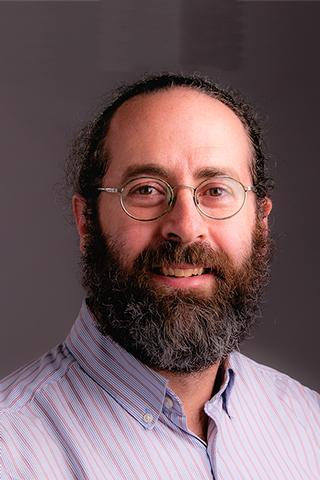
Dr. Kluger is a Colorado native who completed an undergraduate degree in psychology, medical school and neurology residency at the University of Colorado before going to the University of Florida to complete fellowships in movement disorders and behavioral neurology. He is currently a professor of neurology and the director of the neurology supportive and palliative care program at the University of Colorado Anschutz Medical Campus. In addition to seeing patients in the supportive and palliative care clinic, he directs a very active research program working towards improving therapies for non-motor symptoms (e.g. Fatigue, dementia) and improving standards of care for patients and caregivers through supportive and palliative care models. His research has been funded by the Michael J Fox Foundation, the National Institutes of Health, the Department of Defense, the Colorado Clinical and Translational Sciences Institute, the Davis Phinney Foundation and the Patient Centered Outcomes Research Institute.

Want more?
Don't forget to subscribe! There are many ways to listen: Apple Podcasts, TuneIn (Amazon Echo), Spotify or RSS Feed. (Need help subscribing? See our quick guide.)
For all of our Substantial Matters podcast episodes, visit Parkinson.org/Podcast.