Episode 100: Nutrition Advice - Part 2
-
Dan Keller 0:08
Welcome to this episode of Substantial Matters: Life and Science of Parkinson's. I'm your host, Dan Keller. At the Parkinson's Foundation, we want all people with Parkinson's and their families to get the care and support they need. Better care starts with better research and leads to better lives. In this podcast series, we highlight the fruits of that research—the treatments and techniques that can help you live a better life now, as well as research that can bring a better tomorrow.
This podcast marks something of a milestone in our series, now having produced 100 episodes. We hope they're helpful, and we invite you to give us your input as we continue the series. Later, we'll tell you how diet and nutrition are central to a healthy lifestyle and to stave off serious illness. Even with a chronic disease like Parkinson's, people can help manage their symptoms and maximize their overall health by paying attention to how and what they eat. For example, fluid and fiber intake can help with constipation, and as they say, what's good for the heart is good for the head. So, a heart-healthy, plant-based diet may be good for cognition, and even stave off dementia.
In this second episode in our two-part series with Dr. John Duda of the Parkinson's Center at the Veterans Affairs Medical Center in Philadelphia, he gives us practical advice on what to eat, why, what specific nutrients you should be aware of, and possible laboratory tests that can be informative for good nutrition with Parkinson's disease. And since people with Parkinson's often have a diminished sense of smell, I asked him what kinds of flavorings can make foods more palatable, helping to fend off weight loss. The sense of smell is so intrinsic to the taste of foods, and in Parkinson's disease, people often have a diminished sense of smell. Does this affect their diet, affect their nutrition, their enjoyment of food, what they would be eating? I would think everything would be bland.
Dr. John Duda 2:28
Yeah, that's a very important question that has actually, obviously, been brought up with COVID-19 as well, because one of the early symptoms or prominent symptoms of COVID-19 infection is a loss of your sense of olfaction or smell. In fact, most of your sense of taste that we think of is actually smell. There are only five things or so that you can taste with your taste buds, but most of how you appreciate your food is through the sense of smell. And people with Parkinson's disease do almost universally lose their sense of smell to varying degrees, and it is a big problem that does affect how you appreciate the food and your appetite.
What I recommend to patients if that is the case—if they have noticed that everything tastes bland and they just don't feel like eating because they've lost some of the pleasure from eating—is to try to use foods that have really robust flavor profiles. So for example, using as many and as much spices, herbs, and things like that as you want, because number one, spices and herbs are loaded with things called antioxidants and anti-inflammatory compounds, so they have really good health benefits, but they also obviously are very strong-tasting in many cases. So, if you add more of those to your food, you can overcome some of the bland flavor, because for the most part, people with Parkinson's disease do not have no sense of smell, they have an impaired sense—and sometimes a highly impaired—but they can still taste things. They don't necessarily know exactly what it is they're tasting, but if you increase your food intake that way, it can be helpful.
Dan Keller 4:10
Do people with tremor burn more calories? Do they need more food intake and caloric intake than people without tremor?
Dr. John Duda 4:19
That's a great question, and there is some evidence to support that, including not just tremor, but dyskinesias as well. As you know, there are more than one symptom of Parkinson's disease that involve excess movement, and dyskinesia, which is a side effect of long-term levodopa therapy, is another one. There is evidence that, obviously, if you're tapping your foot on the ground day and night, or your arms are always moving from a tremor, you're burning calories. So your caloric balance will be shifted, and there is a high prevalence of malnutrition and weight loss in Parkinson's disease. It's not clear—some people actually gain weight, especially early on in Parkinson's disease, but weight loss is a common symptom, and so needs to be adjusted for.
And it is actually a big concern for a lot of my patients who do try to adopt more of a Mediterranean-style diet, where they're not eating a lot of highly processed foods that in general contain large amounts of sugar or fat and other high-caloric foods. So things that I recommend are increasing the amount of nuts and seeds, which have a high caloric density, and other kind of plant-based sources of lots of calories to make sure that you maintain your equilibrium and don't lose too much weight.
Dan Keller 5:38
I suppose that eating a lot of high-fiber food, you may feel full and satisfied, but those nutrients don't give you as many calories as a more processed diet might.
Dr. John Duda 5:53
Yeah, it is true. In general, a whole-food, plant-based diet, or foods like that, have a lower caloric density, and that's why it's one of the few diets that's actually been proven to help people lose weight and maintain a healthy weight. You can eat a whole plate full of broccoli and not get the same calories as you would get in a couple chicken nuggets or something like that, or some other highly processed foods. So that's the nice thing, also, about eating that kind of diet. You can eat basically as much as you want and not have to worry about weight gain. It's another one of the advantages of this type of diet.
Dan Keller 6:31
Oils carry a lot of calories. Are there good oils, better oils that people should be using?
Dr. John Duda 6:37
A great question. You know, every time I get asked, "Is there something in particular that I should be eating or not eating?" I always remind people that you have to ask compared to what. So oils are good sources of fat and calories, which is an advantage for certain things and a disadvantage for others. The oils that we think are more anti-inflammatory and antioxidant-related are oils that have a high omega-3 fatty acid content. There's several different types of fatty acids, which are the building blocks of oils, and omega-3s are the ones that we think are helpful in the long term for health. They tend to come from fishes, as well as some nuts and seeds, so there are certain oils that are better than others.
Fish oil as a source of omega-3 is a reasonable addition to your diet, but then for cooking, there are different questions that again, compared to what? So everybody talks about extra virgin olive oil as being a healthy fat, and in many ways it is, but it's still a high-caloric food, and the one problem with extra virgin olive oil is that it breaks down pretty quickly under heat, so it depends what you're using it for. I think good choices for cooking are avocado oil, and perhaps canola oil, or rapeseed oil. For non-cooking purposes, then extra virgin olive oil and grapeseed oil, and some of these other ones that have a high quantity of phytonutrients are a good choice. When I say phytonutrients, so extra virgin olive oil compared to olive oil or non-extra virgin olive oil...
There's a lot of people who ask me about coconut oil, and in general, I think coconut oil is not a terrible choice for cooking because it is relatively heat-stable, but the coconut oil has a lot of saturated fatty acids. And saturated fatty acids are the things that we are pretty sure are causing some of the detrimental health effects of animal-based fats like butter and lard and things like that. So, coconut oil and palm oil are the two plant-based oils that are more likely to have a larger percentage of saturated fatty acids, which we know are bad for long-term cardiovascular health.
Dan Keller 8:58
If someone is about to take steps to change their diet, or has already started to adopt things, are there specific lab tests that would be useful?
Dr. John Duda 9:08
Yes, I think there are two, for sure, and then many others that you could consider. I think two tests that I think everybody with Parkinson's disease should have drawn by their clinician—but they are not routinely drawn in many instances—are vitamin D and vitamin B12. We know that both of these vitamins in people with Parkinson's disease are often low. There's debates about why that might be, but vitamin D, which is the sunshine vitamin, may be related to the fact that people with Parkinson's disease don't spend a lot of time outside, but it's probably more complicated than that. And almost everybody I test with Parkinson's disease has low vitamin D and ends up getting supplemented, because it's actually pretty hard to eat enough leafy greens and beans and things like that to get adequate levels of vitamin D.
And vitamin D is an interesting compound because it functions almost like a hormone in many cases, and so it likely is involved with cognitive function and mood and things like that. So, there's a particular level of vitamin D that we know will help prevent rickets, which is the classic vitamin D-related bone dysfunction, but there's higher levels that we think are actually more conducive to overall health, and those are the levels that I tend to aim for on that 50 to 70 range that almost always requires supplementation with pills.
Vitamin B12 is kind of similar. It is a vitamin that for the most part only comes from animal foods, so anybody adopting a vegan or entirely plant-based diet should almost certainly be on a vitamin B12 supplement. It is water-soluble, so it doesn't hurt you if you take too much of it, and it is involved with many different processes in the brain as well. And actually, one of the byproducts of B12 metabolism, a compound called homocysteine, is actually increased in people who have insufficient levels of B12 or folate, and also increased in people who take levodopa to a certain extent. So it is particularly worthwhile checking in people with Parkinson's disease and supplementing B12, folate, and perhaps pyridoxine, if necessary, to get homocysteine levels down.
Dan Keller 11:27
From what you've been saying, just in general, it sounds like color in food is a good indication—dark green leafy vegetables, orange things, red things, blue things, blueberries, peppers, things like that, carrots. Should people just, as a simple guide, should they look for color?
Dr. John Duda 11:45
Yeah, one catchphrase is to "eat the rainbow." The compounds that make all of these fruits and vegetables the different colors that you mentioned are, for the most part, the same compounds that we believe have antioxidative and anti-inflammatory properties, so eating a diet that is loaded with different colors is a great idea. And in general, if you have a choice—again, compared to what?—if you want to eat cabbage, well, red cabbage is a better choice compared to white cabbage, and red onions are a better choice compared to white onions, and blueberries are a better choice compared to other berries that aren't so bright in color. So that's a great general rule, that you want to eat the rainbow on your plate, and the more bright-colored foods of every color, the better.
Dan Keller 12:35
It seems that most physicians don't have a great grounding in nutrition. Is it worth it for someone with Parkinson's to see a nutritionist who works with people with PD?
Dr. John Duda 12:49
That's a great question, Dan. I think the general population doesn't realize how little training doctors get in nutrition, and most doctors really do not know that much about how nutrition can affect Parkinson's disease. I only learned because I was interested and learned it on my own. I think there are some nutritionists out there that can be helpful, but in general, many nutritionists do not have that much training either in some of the things we're talking about.
There are good sources out there you can find online for whole-food, plant-based information. One website that I encourage people with Parkinson's disease to check out is called The Science of Parkinson's Disease. It's a blog that Simon Stott puts together that is actually very informative and very approachable, presenting highly complex material in a very layman-friendly way, and a great source of information. I often check out his posts to learn new things. If you find a nutritionist who's a strong believer in either whole-food, plant-based nutrition or the Mediterranean diet and things like that, then I think those would be a good choice. There are a lot of nutritionists out there who haven't had as much of an education in the benefits of those types of diets, so you have to be careful what you get.
Dan Keller 14:10
Have we missed anything important or anything interesting to add?
Dr. John Duda 14:14
One question that I get a fair amount when I'm speaking to patients and caregivers with Parkinson's disease is, "What about organics?" There's a fairly robust body of literature suggesting that exposure to pesticides may increase your risk of Parkinson's disease, and we don't honestly know if eating organic foods and decreasing your exposure to pesticides once you get Parkinson's disease will make a difference in the progression of the disease. However, I think for Parkinson's disease and for health in general, I think it's reasonable to try to reduce the amount of pesticides you're being exposed to.
And one, I think, worthwhile way to do that is to go to the Environmental Working Group website, who have developed something called the Clean 15 and the Dirty Dozen. It's a list of 12 different fruits and vegetables that they believe you should try to eat organic if possible, and in general, these include fruits and vegetables that use a lot of pesticides in their production and you eat the outer layer, so like apples and berries and things like that, and lettuce. And the Clean 15, on the flip side, is a lot of fruits and vegetables that it doesn't make that much sense to try to eat organic because either they don't use much pesticide in the production of those foods, or something like a pineapple, where most of the pesticide will be bound up in the outer layers that you don't consume, or oranges and things like that, or like asparagus, because as soon as it sprouts out of the ground, it's harvested, and it's not really exposed to pesticides. So, I think, in general, that's a reasonable way to approach it—not trying to eat everything organic, but being smart about it and eating the things that would likely expose you to higher levels of pesticide if you did consume them.
Dan Keller 16:07
I suppose it's worth noting that not all pesticides can be washed off. Some plants will actually incorporate them into their tissues.
Dr. John Duda 16:15
Yeah, certainly. I think, in fact, there's little evidence that washing makes a huge difference in the pesticide levels, even the ones that are on the surface. There's some studies that have suggested that bathing them in salt water—fairly high concentration salt water—and then rinsing off the salt water may be helpful. But for things like berries and stone fruits, like nectarines and apples and plums and things, I think it is worthwhile trying to find organic sources of those.
And I always encourage people also to try and find, you know, local sources of their foods, so that they can actually talk to the farmers and find out how they're producing them. I mean, there are certain chemicals we know are potentially involved in the risk of Parkinson's disease. They're allowable in organic agriculture because they're natural products. So, just because something says it's organic doesn't mean it doesn't have pesticides, and doesn't mean it doesn't have pesticides that are potentially worrisome for people with Parkinson's disease.
Dan Keller 17:19
Finally, in a nutshell—and maybe it really does involve nutshells—what do you recommend that your patients eat? Is there any way to summarize a lot of what we've just been talking about?
Dr. John Duda 17:31
In general, I recommend people eat seven to nine servings of fruits and vegetables a day, which to most people sounds crazy, but it actually isn't that hard because you can get many servings in one meal if you focus most of your food on fruits and vegetables. I think increasing consumption of nuts and seeds, eating a lot more spices, herbs, and high-antioxidant compounds like that, cruciferous vegetables—which are broccoli, cauliflower, kale, cabbage, things like that—have sulforaphane, which there are many different ways that sulforaphane may help people with Parkinson's disease. So, increasing your consumption of those vegetables, beans, and greens are two things that I think most Americans don't eat enough of, and basically any bean or bean product that you like, which includes lentils, split peas, beans, chickpeas, tofu, anything like that, as well as any kind of greens that you like. I mean, iceberg lettuce is the least helpful, but it's better compared to some other foods.
And again, eating less processed foods, so starting more whole foods. Eating more mushrooms—there's a very interesting compound in mushrooms that can't be found in any other food sources, called ergothioneine, that may be helpful in general. I recommend that people eat a tablespoon or two of flaxseed a day. If you can make one change to your diet, I would recommend that because it's a great source of fiber and lignans and omega-3 fatty acids, so just eating one tablespoon of ground—has to be ground up, or it'll go right through you—is a good choice.
And then again, eating like whole-grain foods. So there's a lot of people who ask me about the "grain brain," and "Is gluten bad for Parkinson's disease?" And I don't think there's strong evidence to suggest that gluten is bad for most people with Parkinson's disease. A couple percent of people are truly gluten-intolerant, and a couple more percent may be gluten-sensitive, but for the vast majority of people, whole grains are a beneficial part of a healthy diet, including lots of fiber. So shifting from processed flours to whole-grain flours and whole grains themselves is another great choice.
Finally, drinking adequately. Other people have noted that a lot of people with Parkinson's disease don't drink enough fluids, and that's probably one of the reasons they get constipated. But I think drinking four ounces every two hours throughout the day is a rough estimate, and you can actually find cups and bottles online that help you do that. It'll help you because most of that will be absorbed. You won't be running to the bathroom all day, and staying adequately hydrated, as I said, improves your constipation, but also probably improves your cognition and other things.
So in a nutshell, those are the kinds of recommendations that I make, and most importantly, to not stress out if you really desire to have some other kind of food that isn't on that list that makes you happy. It's okay to cheat every once in a while, just to try to eat healthy choices the majority of the time, and then you'll be winning the battle.
Dan Keller 20:42
Excellent, thanks a lot. For more from Dr. Duda and other experts, search our website at parkinson.org for diet. There you'll find an article by Dr. Duda called The Latest in Nutrition and Parkinson's Disease that summarizes many of the points in this podcast. You can also find this article, as well as an expert briefing, by searching the site for Duda, that's D-U-D-A. His first podcast episode on diet and nutrition was titled Nutrition Advice, Part One. Another podcast of interest is called The Importance of Good Nutrition for People with Parkinson's. More on nutrition is available by going to our website and clicking on Living with Parkinson's, and then selecting the tile called Managing Parkinson's. Much of this information can also be reached by going to parkinson.org/library and in the topic list selecting nutrition and digestion. Nothing can substitute for nutrition advice based on your own situation. You may be able to find a nutritionist with expertise in PD through your Parkinson's care team, or by calling our helpline at 1-800-4PD-INFO.
As I mentioned earlier, this being our 100th episode in our podcast series, we want to continue to bring you news and information most relevant to your managing and learning about Parkinson's disease. As always, you can leave us feedback at parkinson.org/feedback, but we also would like to solicit your input for future podcasts through a survey we're running. You can find it at parkinson.org/podcast. Please take a look and help provide feedback for our podcast series by sharing your experience tuning in.
If you have questions about today's topic or anything else having to do with Parkinson's, our information specialists can provide answers in English or Spanish. You can reach them at 1-800-4PD-INFO. News and updates about future events and resources are available by joining our email list at the bottom of our website's homepage. If you enjoyed this podcast, be sure to subscribe and rate and review the series on Apple Podcasts, or wherever you get your podcasts. At the Parkinson's Foundation, our mission is to help every person diagnosed with Parkinson's live the best possible life today. To that end, we'll be bringing you a new episode in this podcast series every other week. Until then, for more information and resources, visit parkinson.org or call our toll-free helpline at 1-800-4PD-INFO, that's 1-800-473-4636. Thank you for listening.
Nutrition is a vital component of maintaining and preserving good health. It may be an especially important consideration when one has a disease or other health condition that may impose certain dietary requirements or restrictions. At the same time, the standard recommendations for good health still stand – heart healthy eating, weight control, adequate fluid intake, limiting alcohol consumption, and more. With Parkinson’s disease, dietary choices and habits can help alleviate some symptoms. For example, fluid and fiber intake may help with constipation, increasing fluid intake may alleviate orthostatic hypotension, the feeling of dizziness when standing up, and a high protein meal can interfere with levodopa absorption, leading to fluctuations in medication effectiveness. In this second of two episodes with Dr. John Duda, Director of the Parkinson’s Disease Research, Education and Clinical Center at the Philadelphia Veterans Affairs Medical Center and Professor of Neurology at the University of Pennsylvania, a Parkinson’s Foundation Center of Excellence, he tells what he recommends about diet and nutrition for his Parkinson’s patients, including when to look for organically grown produce.
Released: March 9, 2021
-
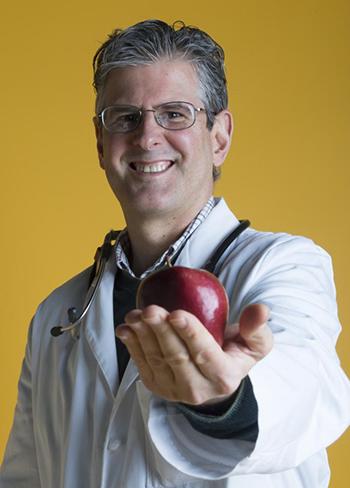
John Duda, MD is the Director of the Parkinson's Disease Research, Education and Clinical Center (PADRECC) and Co-Director of the Center for Neurotrauma, Neurodegeneration and Restoration of the Cpl. Michael J. Crescenz VA Medical Center and a Professor of Neurology at the Perelman School of Medicine at the University of Pennsylvania. For the past 19 years, he has worked with his colleagues in Philadelphia to provide state-of-the-art care for thousands of Veterans with PD and related disorders.
His research activities have included basic science investigations into the role of Lewy pathology in the pathophysiology of Parkinson’s disease and related disorders as well as investigations into the mechanisms involved in traumatic brain injury. He has also conducted clinical research in Parkinson’s disease with studies of deep brain stimulation therapy, transcranial magnetic stimulation, the benefits of a plant-based, whole food diet, and the use of olfaction as a biomarker of disease diagnosis and progression. He has received research grants from the Department of Veterans Affairs, NIH, the Michael J. Fox Foundation for Parkinson Research, and the Department of Defense. He has been recognized as a BLR&D Senior Clinical Research Scientist and authored more than 120 scientific publications including articles in JAMA, Science, Neuron, The New England Journal of Medicine and Neurology.

Want more?
Don't forget to subscribe! There are many ways to listen: Apple Podcasts, TuneIn (Amazon Echo), Spotify or RSS Feed. (Need help subscribing? See our quick guide.)
For all of our Substantial Matters podcast episodes, visit Parkinson.org/Podcast.