Episode 8: A Vaccine for Parkinson’s?
-
Dan Keller 00:00
Welcome to this episode of Substantial Matters: Life and Science of Parkinson's. I'm your host, Dan Keller. At the Parkinson's Foundation, we want all people with Parkinson's and their families to get the care and support they need. Better care starts with better research and leads to better lives.In this podcast series, we highlight the fruits of that research, the treatments and techniques that can help you live a better life now, as well as research that can bring a better tomorrow. Although Parkinson's symptoms can be treated effectively with drugs such as levodopa and other therapies, the disease is still progressive. So a big question for people affected by Parkinson's, health care providers, and researchers is how to slow the disease down or stop it altogether.
A relatively new target for treatment is alpha-synuclein, a protein in the human brain that is associated with the development of Parkinson's. Some of the research in this area is looking to the immune system to help get rid of alpha-synuclein. Antibodies are blood proteins produced in response to a specific threat, a bacteria, virus, or other substance the body recognizes as foreign.
Parkinson's researchers are studying whether we can fight Parkinson's using antibodies against alpha-synuclein. One option is to infuse antibodies into people with PD. Another option is immunization, basically giving people a vaccine so they can make their own antibodies.
I spoke with Dr. Mark Guttman, Director of the Center for Movement Disorders in Toronto, Canada, during a break at a convention on Parkinson's, and he discussed what is known and unknown about the role of alpha-synuclein in Parkinson's and the potential for using immune therapies.
Two terms that came up in our conversation are PET scans and biomarkers, a shortened term for biological markers. Biomarkers are characteristics of the body that you can measure. They're important to medicine in general, and to drug development in particular, because they tell us how the body is doing and can help identify disease risk or disease progression, as well as if a therapy is working. A PET scan is an imaging test that can identify the presence and amounts of certain biomarkers in the body.
Dr. Mark Guttman 02:40
I think one of the take-home messages for Parkinson's patients and their families is that we still don't know what causes Parkinson's, but we know more about a common element in the pathology. So in the nerve cells that are affected with Parkinson's, we know there's these deposits called Lewy bodies, and these are basically bundles or balls of protein, and we've learned in the last 15 years that that protein is alpha-synuclein.So there's an accumulation of alpha-synuclein in the nerve cells that somehow is toxic and associated with cell death. So one of the themes that's coming forward is if we can try and take that alpha-synuclein that's accumulating, that's in these Lewy bodies, and take it out or prevent new alpha-synuclein from being accumulated, then maybe we can reverse some of the degenerative process so that more nerve cells don't get damaged.
So there's two ways of doing that. One is turning on the body's immune system to create antibodies against the alpha-synuclein — that's a vaccination program — or the other strategy is alpha-synuclein antibodies. So you can have antibodies that are made, and infusions are going to be given through an intravenous route to see if that can improve Parkinson's.
We don't know what the outcome measures should be. How do we monitor this? Do we take a whole bunch of early Parkinson patients and do a placebo-controlled study and see if the ones getting this have a slower rate of progression? This has been tried many times without success before with neuroprotective trials, but this is the first theoretical concept that gets to the basic mechanisms of Parkinson's, so it may work.
Or do you do a vaccination, which is a one-shot deal? So, you know, one of the questions is, what are the adverse events? Is it a good thing or a bad thing to do this? And how reversible do you want to make this? If you have a vaccine, it's a one-shot deal. You're stuck with it the rest of your life. If it does harm in some way, that's a problem. Whereas with infusions, if you have a side effect, you can just stop them.
We know in Alzheimer's disease this kind of thing has been attempted, and some of the studies actually found that the patients actually got worse. So it'll be interesting to see how that happens.
I was talking to a colleague who's in drug development at one of the major pharmaceutical companies, and they're very excited about their alpha-synuclein antibody infusion project. So these things are coming forward. They're in patients now, so they're coming forward in the next short time.
Dan Keller 05:11
The way you've been putting it, sounds like there's an assumption that alpha-synuclein is causative of what you see in Parkinson's. Could it be just a biomarker, just a bystander, and attacking it is not going to get at the root cause?Dr. Mark Guttman 05:26
Absolutely. So the fellow that I did my training with, Donald Calne, I always felt that they were a tombstone, a death marker after the fact, and Lewy bodies can occur in other conditions that are not associated with Parkinson's. So is this sort of a cell death pathway that has this as a marker? So we don't know. We're not sure.Dan Keller 05:47
Does alpha-synuclein monomer, not aggregated, have some real function in the body, and if you immunize against the native alpha-synuclein, are you going to potentially do harm?Dr. Mark Guttman 05:59
This is a possibility. We don't really know why it's there, and if we get rid of it, or how much do you have to block it down to have a negative effect. So we're really not sure. There's some speculation that alpha-synuclein can actually move from cell area to cell area, brain area to brain area, and almost transmit the bad stuff in Parkinson's going on.So is cell damage and the degenerative process somehow facilitated by alpha-synuclein particles maneuvering around. And we've come a long way in this concept, that maybe alpha-synuclein somehow spreads the damage. So even if it's not causative, if it's involved in the spread, getting rid of it may be helpful. So we're not, not sure of how this is going to pan out.
Dan Keller 06:51
Where do any trials stand now? Are they still on animals, or are they approaching human testing?Dr. Mark Guttman 06:56
And the alpha-synuclein antibodies are going into phase two studies now, so that's in Parkinson's patients. They've been tested in normal controls. I think — I know that there was the hope that the equivalent in Alzheimer's, the protein accumulation there, they actually have PET scan markers, positron emission tomography markers, and they found that the PET scans got better, but the patients got worse. So that's not a good thing.We need to treat patients, not PET scans, and we don't have the equivalent of a PET scan ligand for alpha-synuclein at this time. But we need biomarkers, and biomarkers is an important part. How do we measure success in these things? I think dealing with patients, we need to see the patients get better, but it's hard with the variability in patients to try and do a succinct study to get an answer quickly. So that's why the biomarkers will be helpful, but it certainly needs to correlate with clinical benefit with the patient.
Anything we've missed or important to ask? I tell patients, I think the alpha-synuclein story is probably the most exciting stuff that's coming along, as far as possibility of disease modification. In other words, can we alter the progression of the condition? But I think that all the fancy new drugs that we had in the late '90s haven't really made a big impact in our treatment of Parkinson's, and the better delivery mechanisms for levodopa hopefully will improve that. Probably deep brain stimulation has been the most significant advance in my career over the last 30 years, and that's made a major difference for patients.
Dan Keller 08:30
Very good. I appreciate it. Thank you.Dan Keller 08:41
As always, research is the way to new treatments, including ones that may be found to slow the progression of Parkinson's. Clinical trials are part of that process. If you think you may want to participate in one, call our helpline at 1-800-4PD-INFODan Keller 08:58
to find out about what research is going on in your area. Much of it is conducted at our Centers of Excellence around the country and internationally.At the end of our conversation, Dr. Guttman said he hopes new delivery methods for levodopa will improve outcomes for people with Parkinson's. To learn more, listen to our podcast episode, New Levodopa Delivery Methods for Parkinson's. In it, Dr. Guttman describes methods that are currently available and ones that are being studied.
If you have any questions about the topics discussed today, or if you want to leave feedback on this podcast or any other subject, you can do it at parkinson.org/feedback
Dan Keller 09:43
We'll respond to some questions in future episodes. At the Parkinson's Foundation, our mission is to help every person diagnosed with Parkinson's live the best possible life today. To that end, we'll be bringing you a new episode in this podcast series twice a month.Dan Keller 10:00
Month. Till then, for more information and resources, visit parkinson.orgDan Keller 10:06
or call our toll-free helpline at 1-800-4PD-INFODan Keller 10:11
PD-INFO, that's 1-800-473-4636Dan Keller 10:18
Thank you for listening
There are many drugs and therapies for Parkinson’s, but none halt progression of the disease. This is partly because we still do not understand exactly what causes Parkinson’s, so it is hard to figure out how to prevent it or slow it down. One potential target for new therapies is alpha-synuclein, a protein found in the human brain that is associated with the development of PD. Scientists are looking at ways to clear abnormal forms of alpha-synuclein from the brain using various immune therapies. Dr. Mark Guttman discusses these approaches based on what is known and unknown about Parkinson’s today.
Released: August 1, 2017
-
If you’ve heard of alpha-synuclein, it was likely in the context of Lewy bodies. Lewy bodies are abnormal clumps of alpha-synuclein that are found in the parts of the brain that control movement, thinking, and behavior, and they are related to the development of Parkinson’s. Lewy body dementia is a general term that includes both Parkinson’s disease dementia (when you have Parkinson’s and dementia develops later on) and Dementia with Lewy bodies (DLB) (when dementia comes on before or within one year of Parkinson’s motor symptoms).
Another term used in this episode that you might not be familiar with is “ligand.” A ligand is a molecule that binds to another molecule. Ligands are used in imaging, such as PET scans, to help doctors visualize different parts of the body, including the brain. Currently there is no ligand for alpha-synuclein to let us see how Lewy bodies are forming, or how they might be cleared by a potential therapy.
Dr. Guttman remarks that the alpha-synuclein story is the most exciting development to date in terms of potential for altering the progression of Parkinson’s. It has taken the PD community a long time to reach this point. The first revolution in Parkinson’s care came in the 1960s, with the discovery that Parkinson’s is a disease of dopamine. One hundred and fifty years after James Parkinson’s Essay on the Shaking Palsy, researchers developed a treatment to greatly improve PD symptoms. Over time, many variations of levodopa have provided additional modest benefits for people with PD, and now new delivery methods for levodopa promise to improve outcomes.
Decades later the next breakthrough in care came when the FDA approval deep brain stimulation for the treatment of PD. Today, we know that Parkinson’s is a synucleinopathy – a disease of alpha-synuclein – which brings us to the therapeutic approaches being discussed in this episode.
-
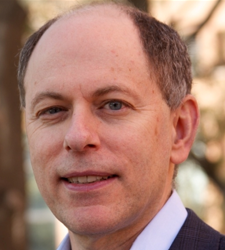
Dr. Guttman is a movement disorder neurologist at the Centre for Movement Disorders in Toronto, Canada. He provides specialized neurological services to people with movement disorders and is involved with clinical research at the Centre and at the University of Toronto.

Want more?
Don't forget to subscribe! There are many ways to listen: Apple Podcasts, TuneIn (Amazon Echo), Spotify or RSS Feed. (Need help subscribing? See our quick guide.)
For all of our Substantial Matters podcast episodes, visit Parkinson.org/Podcast.