Episode 62: Driving with PD: Limitations, Risks & Adjustments
-
Dan Keller 0:08
Welcome to this episode of Substantial Matters: Life and Science of Parkinson's. I'm your host, Dan Keller. At the Parkinson's Foundation, we want all people with Parkinson's and their families to get the care and support they need. Better care starts with better research and leads to better lives. In this podcast series, we highlight the fruits of that research, the treatments and techniques that can help you live a better life now, as well as research that can bring a better tomorrow. Driving is central to many people's lives. It allows independence, convenience, travel, social engagement, and often the ability to work. And we usually take this action for granted, but it's a complex set of skills and behaviors, many of which can be affected by Parkinson's disease, including movement, vision, reaction time, balance, cognition, daytime sleepiness, and mood. Dr. Ergun Uc, Professor of Medicine and Director of the Division of Movement Disorders at the University of Iowa, a Parkinson's Foundation Center of Excellence, has studied driving and PD for many years and has found that drivers may not even be aware that they are becoming impaired. He says understanding how driving performance deteriorates in PD is a necessary step to develop interventions to help prevent crashes for people with PD, because the disease will persist and progress over many years. Driving impairment may also worsen over time. In today's episode, he shares the importance of developing and validating tests to measure driving safety for people with Parkinson's.
Dr. Ergun Uc 2:00
Initially, patients may have only problems at night due to decreased contrast sensitivity. Over time, they may develop further problems with cognition and visual perception and processing. So, for example, executive dysfunction can affect their decision-making and multitasking while driving. Visual perception may decrease their ability to identify hazards and react to them, and also the motor dysfunction can further decrease the reactions and can lead to increased risk for crashes. But this is a continuum, and patients with Parkinson's disease may be able to drive safely, depending on the involvement of different characteristics, for a good number of years. So the critical message is that only a diagnosis of Parkinson's disease is not enough to declare them unfit to drive. So one should do a more fine-grained testing to determine that.
Dan Keller 3:15
What are some of those? How do you tell?
Dr. Ergun Uc 3:17
So it's really important to get a good history. So if somebody is already having problems—history of recent crashes or near misses that could be predictive of the future—then it's really good to have a collateral history from care partners, caregivers, and other healthcare providers to see if they are concerned, and if a family member does feel safe to drive in a car with them where the Parkinson's patient is a driver. So after getting a history, if there is any concern, the next thing to do would be, typically, neuropsychological testing, which involves testing of cognition and visual perception in detail, and also, if necessary, I would certainly recommend a visit to ophthalmology to test vision as well.
Dan Keller 4:21
Are these kinds of testing facilities available widely?
Dr. Ergun Uc 4:25
Yeah, neuropsychological testing and ophthalmological vision testing is certainly available in tertiary hospitals, many university hospitals. So it's important to check for vision across all levels. You know, vision starts at the eye level, but there are also brain components of vision—you know, visual processing and interpretation of visual information. You can test for all these different aspects using various tools. In addition to these two non-driving related testing, one can do simulator testing, and of course, road testing. Simulators are a good way of testing driving without exposing the patient to direct physical risk, but they may not completely be realistic and have to be validated against real-life driving before using them as a tool to make determinations of driving fitness. Then, of course, there are road tests, especially state road tests used for licensing. So those tests are also important to take.
Dan Keller 5:39
Is there any way to improve all of these aspects—driving overall, or any aspects that are found to be deficient? Is there something you can do, or is it just going to be progressive anyway?
Dr. Ergun Uc 5:52
So in terms of improvement, so Parkinson's disease is a progressive disease, and unfortunately, there is no cure for it at this point, and we know that the vision and cognition and motor function will deteriorate over time. So first, with good medical treatment, with the help of physicians and other healthcare providers who are experienced in Parkinson's disease, the patients can be kept functional for longer.
Dan Keller 6:24
Can people do things just on a daily basis? I mean, stay more fit physically, get good sleep, or even use devices like GPS to take some of the burden off their brain of figuring out directions?
Dr. Ergun Uc 6:38
I think this is a very good question. So our research shows that if you increase the burden of driving by adding additional tasks—dual tasks—or having the patient drive in unfamiliar settings, then patients are more likely to make driving errors and be less safe. So therefore, improving sleep would certainly improve a number of functions, especially visual perception, ability to react timely. And then staying fit, in general, is good for your health, and there is at least preliminary evidence that it may also improve cognition and motor function in Parkinson's disease, so therefore it can [be] indirectly helpful. And we are about to embark upon a study to see if exercise compared to health education can improve the underlying functions, such as cognitive and motor function, and also improve driving as a result. That remains to be tested further in terms of using GPS. So by using GPS, you may be relieving the stress of getting lost. However, considering that many Parkinson's patients are elderly and may not be very technologically savvy, one has to make sure that these are easy-to-use, well-functioning systems, and do not confuse the patient further by sending the patient into unexpected areas or continuously rerouting the patient. But with the advancement of technology, I think these problems are decreasing. So whenever new technology is used, so one has really to test them in different populations. And to my knowledge, these technologies have not been yet tested in Parkinson's disease, but they make intuitive sense to decrease the risk of driving.
Dan Keller 8:41
What's the relationship and the role of the healthcare provider, especially the physician? I mean, they have a relationship with this person, but it's kind of traumatic to tell them your driving days are over.
Dr. Ergun Uc 8:55
Certainly, it's very difficult to take the independence away of a person. So one, of course, has to balance the need for independence and autonomy against risk to the individual and the society. I think good communication is critical, and also one should be aware of the techniques to use, of the limitation of techniques that we use for fitness of driving, and one should use many sources to make that determination, as I said earlier, starting with impressions of the family, other healthcare providers, as well as cognitive vision testing and empirical driving testing. After all these data are collected, so one should have a frank talk and discuss why the provider is recommending one course versus the other. So in my practice, considering that Parkinson's disease has been a long-standing chronic disease and I have been in the same hospital for a long time, so with many of my patients, I have great rapport and long-standing relationship. And this does not happen overnight, you know, or one day. So it's a continuing dialogue and periodical assessments as needed, and usually there is not too much disagreement between me and the patient and the family when the time comes to tell them that it may not be in their best interest to drive, and most patients are receptive to that. Of course, before we come to this stage, one can recommend compensation strategies. For example, we already know that driving in inclement weather, poor lighting conditions, congested traffic, or under the effect of certain medications can increase the risk. So we can try to optimize these circumstances. Maybe ask the patient to limit their driving to their local town, drive mainly during the day, avoid driving during snow or other inclement weather over time. Even that may not be enough, and with this gradual approach, we can probably avoid a confrontational situation in terms of driving recommendations.
Dan Keller 11:31
What about medication timing?
Dr. Ergun Uc 11:33
So this is a good question. So as we know, Parkinson's patients have wearing off and dyskinesias, so when they wear off, you know, they usually get slower. However, usually patients who show still such distinct fluctuations with medication typically are not cognitively very badly impaired, and they tend to arrange their driving around their "on" times. So actually, loss of these fluctuations also somewhat correlates with progression of disease. So of course, it's better to prolong the "on" time and keep them more functional. But as I said, most patients seem to be adjusting their schedule—driving schedule—accordingly. But there are more research needs to be done on that. So one problem with the existing driving research is the testing is done typically in the "on" state, because we don't want to expose patients to risk on the road, so we are just getting a snapshot when the patient is relatively safe for testing. So it may not be completely realistic. An ideal way would be to do naturalistic driving studies in which you outfit the patient's own car with a black box to record their driving electronically and visually and have them drive the car for several weeks, so that we can have a better understanding of their driving in their natural circumstances. So that requires further study, but I truly think it's more the cognitive and the visual aspects of the disease, rather than the motor fluctuations itself, are the more limiting factors.
Dan Keller 13:29
Another aspect of a snapshot is when you do the testing and you do a clinical exam—that's a snapshot right then. So what determines the periodic reevaluation? Would it be your clinical impression? Or do you set a schedule every number of months?
Dr. Ergun Uc 13:46
So let's say a patient is rather early in the disease. They are relatively young—early 60s, late 50s—so you wouldn't expect a very quick deterioration. Maybe you could do driving tests every two years, but if there is mild cognitive impairment, a hint of difficulty, then I usually recommend a reevaluation of road testing once a year. In special circumstances, it could be even more frequent, but periodic evaluation is really critical, because our research has shown that even people who were driving like people without Parkinson's disease at baseline might get much worse two years later, have a much steeper decline compared to people without Parkinson's disease. So therefore, the schedule would be different for each patient depending on their clinical severity, age, level of cognitive impairment. So it's kind of an art to determine that. Yes, but a periodical assessment is the key.
Dan Keller 15:04
And I take it people who develop hallucinations are much later in the disease. So are they already at the point that they would have stopped driving? Is that true?
Dr. Ergun Uc 15:14
So hallucinations come in different levels of severity, so it could perhaps start as passage phenomena or flutters or illusions. They are not really that predictive of severe cognitive problems, but eventually patients start seeing complex shapes, and first they might have insight that they are not real, but once they start losing the insight, that usually correlates with the onset of severe cognitive problems and dementia. So the hallucinations by themselves may not be perhaps predictive of driving by themselves, because already the ensuing cognitive impairment might have disqualified them from driving. So it's kind of rare to have complex visual hallucinations without any insight and not to have dementia that would preclude driving on its own.
Dan Keller 16:21
Is there any sort of take-home message you can give to people with Parkinson's about driving and about assessment and dealing with the future possibility that they may not be able to drive?
Dr. Ergun Uc 16:33
So first I would tell them that Parkinson's disease—the diagnosis itself—is not an immediate judgment on their fitness to drive, but they should be in constant dialogue with their healthcare providers and be open to them about their driving so that appropriate monitoring and testing can take place, which would help them to keep driving as long as possible, but also intervene timely if driving becomes unsafe. And in the meantime, so patients should do their best to stay fit, stimulate their cognition, and try to get the best treatment for their Parkinson's disease possible so that they can remain functional and keep driving.
Dan Keller 17:27
Very good. Thanks a lot. Dr. Uc was the lead author of an analysis combining 50 previous studies on driving and PD published in October 2018 in Neurology. Today, it found that PD patients were more than six times as likely to fail an on-road driving test compared to healthy control individuals, and they had two and a half times more risk of crashing in a driving simulator test. Interestingly, people with PD did not report any more actual crashes, possibly because they gave up driving sooner or stuck to familiar routes. You can find many more resources and personal stories related to driving and PD on our website at parkinson.org/library. Simply type "driving" in the search bar and you'll find a fact sheet on the subject and expert briefing slides from our past webinar titled "Driving and Parkinson’s: Balancing Independence and Safety." You might also want to listen to episode nine in this podcast series titled "The Keys to Driving with Parkinson’s" at parkinson.org/podcast. As always, our PD Information Specialists can answer questions and provide information in English or Spanish about this topic or anything else having to do with Parkinson's. You can reach them at 1-800-4PD-INFO. For questions about the topics discussed today, or if you want to leave feedback on this podcast or any other subject, you can do it at parkinson.org/feedback. If you enjoyed the podcast, be sure to subscribe and rate and review the series on Apple Podcasts or wherever you get your podcasts. At the Parkinson's Foundation, our mission is to help every person diagnosed with Parkinson's live the best possible life today. To that end, we'll be bringing you a new episode in this podcast series every other week. Until then, for more information and resources, visit parkinson.org or call our toll-free helpline at 1-800-4PD-INFO. That's 1-800-473-4636. Thank you for listening.
Driving is a complex skill and behavior but something that we often take for granted since it is a common and crucial part of modern life. It involves attention, vision, perception, cognition, memory, anticipation, motor control, reaction time, and more. Parkinson’s disease (PD) can affect several of these abilities, and as the disease progresses, driving may become more of a problem. So it is crucial that people with PD establish a good rapport with their health care providers to make sure that they are competent and safe on the road for their own sake as well as for the safety of others.
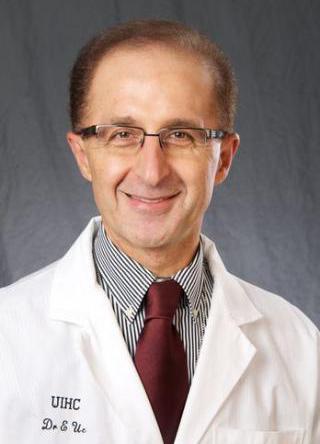
For many years, Dr. Ergun Uč of the University of Iowa has been studying driver safety in PD. He is the director of the Division of Movement Disorders at the university, which is a Parkinson’s Foundation Center of Excellence. He says decisions about fitness to drive should not be based solely on the medical diagnosis or age as these measures alone may unfairly deny people their mobility and independence or may mistakenly allow unfit drivers to stay on the road. In making the decision about fitness to drive, he advocates adding empirical observations of performance, and thus, his research has focused on validating tests to judge driving safety of people with PD.
Released: August 27, 2019
-
Dr. Uc is a professor of neurology and director of the Division of Movement Disorders with University of Iowa Hospitals & Clinics, a Parkinson’s Foundation Center of Excellence. He is also the staff neurologist at the Veterans Affairs Medical Center in Iowa City. Dr. Uc is certified by the American Board of Neurology and Psychiatry. He graduated from the Istanbul Faculty of Medicine, Istanbul University in Turkey and completed his neurology residency and movement disorders fellowship at the University of Iowa. His research focuses primarily on Parkinson's disease, especially on cognition, driving, physical exercise and cognitive training. He has received research support from the National Institutes of Health, Department of Veterans Affairs, as well as American Parkinson Disease Association, Parkinson's Disease Foundation, and Michael J. Fox Foundation. He served as the chair of Behavior/Cognition Working Group of the Parkinson Study Group. He serves as an associate editor for the journal Parkinsonism and Related Disorders, is widely published and has lectured nationally and internationally on PD.

Want more?
Don't forget to subscribe! There are many ways to listen: Apple Podcasts, TuneIn (Amazon Echo), Spotify or RSS Feed. (Need help subscribing? See our quick guide.)
For all of our Substantial Matters podcast episodes, visit Parkinson.org/Podcast.